
Houndstooth Design Jacquard Fabric for Fashion, Tailoring, and Interior Applications
Houndstooth design jacquard fabric is a distinctive knitted textile created for brands, garment manufacturers, wholesalers, and designers who require a fabric with recognizable visual impact, comfortable hand feel, practical elasticity, and dependable production consistency. The classic houndstooth pattern has remained influential in fashion and interiors because it communicates refinement, movement, and contrast without depending on complex color combinations. When this pattern is produced through jacquard knitting rather than simple printing, it gains depth, texture, durability, and a more premium appearance.
This fabric is produced as a knitted jacquard fabric using imported computerized jacquard machinery. The technology allows the houndstooth pattern to be formed directly in the textile structure, giving the surface a textured, three-dimensional effect. Compared with ordinary printed fabric, the pattern is not merely placed on top of the surface; it is integrated into the construction. As a result, the fabric can present a stronger sense of layering, more stable pattern definition, and a more valuable hand feel for finished garments and decorative products.
The material is suitable for coats, pants, suits, dresses, bags, drapes, roman blinds, rugs, and upholstery applications. Its soft and comfortable touch, elastic knitted structure, customizable pattern, and adjustable thickness make it a versatile choice for product development across multiple markets. For buyers seeking a fabric that combines classic style with modern production efficiency, houndstooth design jacquard fabric offers a strong balance between visual identity, wearability, and manufacturing reliability.
Houndstooth Design Jacquard Fabric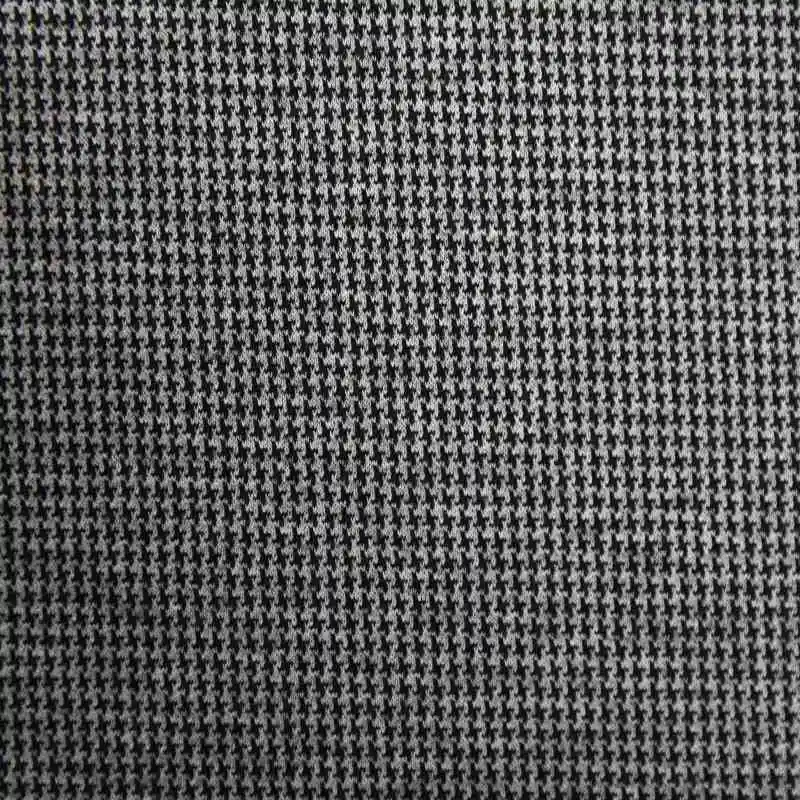
1. Product Overview
Houndstooth design jacquard fabric belongs to the knitted jacquard fabric category. It is characterized by a classic broken-check pattern that creates a tessellated visual effect. The pattern is widely recognized in apparel and interior design, making it especially useful for products that need to appear elegant, confident, and timeless. The fabric can be produced in different pattern scales and thicknesses, allowing customers to develop seasonal collections, formalwear lines, casualwear, decorative textiles, and customized textile projects.
The fabric is weaved or knitted by imported computerized jacquard machines. This equipment provides accurate pattern control and consistent repeat performance, which is important for houndstooth designs because the geometry must remain sharp and balanced. If the pattern alignment is unstable, the fabric may look distorted after cutting and sewing. Computerized jacquard technology helps maintain the intended design from production to finished product.
The knitted construction gives the fabric comfort and elasticity. Unlike rigid woven houndstooth materials, knitted jacquard fabric can adapt more easily to body movement. This makes it suitable for garments such as dresses, pants, suits, and coats that require both structure and wearability. The soft touch also improves comfort when the fabric is used in close-to-body or semi-fitted styles.
Another important advantage is customization. Pattern size and fabric thickness can be adjusted according to customer requirements. A small-scale houndstooth may be appropriate for formal suits and refined dresses, while a larger pattern may be used for statement coats, decorative cushions, or interior textile products. The ability to control fabric thickness also gives buyers flexibility for spring, autumn, winter, and multi-season applications.
2. Why Houndstooth Remains a Strong Design Choice
Houndstooth is one of the most recognizable textile patterns in global fashion. Its visual identity comes from repeated abstract four-point shapes that interlock across the fabric surface. The pattern is often associated with tailoring, heritage fashion, and sophisticated styling, yet it can also be reinterpreted for modern streetwear, contemporary womenswear, accessories, and interior decoration.
One reason houndstooth remains popular is its ability to provide contrast without excessive decoration. It looks dynamic from a distance and detailed up close. This makes it useful for designers who want a fabric that can become the central feature of a product without relying on embroidery, complex printing, or additional surface ornamentation.
Another reason is its compatibility with many product categories. A houndstooth coat can appear classic and formal, while houndstooth pants can look fashionable and structured. A houndstooth dress can be elegant or playful depending on scale and color. In interiors, the pattern can provide visual rhythm for drapes, blinds, rugs, upholstery, and accent furniture.
The tessellated nature of the pattern also contributes to its commercial value. Repeating geometric structures are easier for consumers to identify and remember. In retail environments, a houndstooth product can stand out among solid fabrics and ordinary patterns. For wholesalers and manufacturers, this recognition can help support product differentiation and market positioning.
3. Advantages of Jacquard Knitting Over Printed Houndstooth Fabric
Many houndstooth fabrics in the market are made by printing the design onto a base cloth. While printed fabric may be economical for some uses, it often lacks the dimensional quality, tactile richness, and premium appearance of jacquard fabric. Houndstooth design jacquard fabric offers several advantages because the pattern is created by the fabric structure rather than by surface color application alone.
First, jacquard construction provides a stronger three-dimensional effect. The pattern can be felt and seen through the arrangement of yarns and stitches, creating a more textured surface. This gives finished products greater depth and a higher perceived value. In coats, dresses, and suits, the difference between printed and jacquard houndstooth is especially noticeable when the garment moves or catches light.
Second, jacquard fabric often has better pattern durability. Printed designs may fade, crack, or lose clarity after repeated use, washing, or friction, depending on printing method and finishing. A jacquard pattern is built into the fabric itself, helping it maintain its character over time. This is important for garments and interior items expected to endure regular handling.
Third, jacquard knitting supports better integration between visual design and fabric performance. The pattern does not simply sit on the surface; it interacts with stretch, thickness, and hand feel. This allows a designer to achieve both appearance and function in one material. The result is a fabric that looks designed rather than decorated.
Fourth, knitted jacquard fabric can provide better comfort than many stiff printed bases. The elasticity of the knitted structure improves movement, drape, and wearability. For pants, dresses, and tailored casualwear, this can be a major advantage over rigid materials that restrict motion.
4. Key Product Features
The core features of houndstooth design jacquard fabric include classic pattern texture, soft and comfortable touch, elasticity, three-dimensional appearance, custom pattern options, and adjustable thickness. These features make it suitable for both aesthetic and functional applications.
The classic pattern texture gives the fabric a recognizable identity. Because houndstooth is already accepted in global fashion markets, manufacturers can use it to develop products with lower design risk and strong consumer familiarity. However, the jacquard construction gives the traditional pattern a modern upgrade.
The comfortable and soft hand feel is valuable for apparel. Consumers increasingly expect garments to provide both style and comfort. A fabric may look impressive on a hanger, but if it feels stiff, rough, or restrictive, it may not perform well in daily use. The knitted structure of this fabric helps improve comfort while maintaining an elegant appearance.
Elasticity is another important feature. It supports body movement and allows garments to maintain better shape during wear. For pants and dresses, elasticity can improve fit. For coats and suits, it can make structured silhouettes easier to wear. For interiors, elasticity and resilience can help with handling during fabrication and installation.
The three-dimensional jacquard effect helps the fabric stand out from flat alternatives. Surface depth can enhance the perception of quality, especially in premium apparel and decorative textile products. When used in black-and-white, neutral, or customized color combinations, the raised or textured effect can make the pattern appear more refined.
Customization of pattern and thickness allows customers to match the fabric to their own market positioning. A thicker version may be suitable for winter coats and upholstery, while a lighter version may be developed for dresses, fashion pants, or decorative panels. This flexibility helps buyers reduce the need for multiple unrelated suppliers.
5. Material and Performance Considerations
Houndstooth design jacquard fabric can be developed using blended yarn systems suitable for knitted jacquard production. The company’s broader production experience includes polyester, rayon, spandex, and DTY polyester yarn processing, which provides a strong foundation for creating fabrics that balance softness, elasticity, strength, and dimensional stability.
Polyester contributes durability, shape retention, and practical care properties. It is widely used in modern apparel and interior fabrics because it can resist wrinkling better than many natural fibers and can maintain performance through repeated use. In jacquard fabric, polyester can also help preserve pattern definition.
Rayon can improve softness, drape, and comfort. It is valued for its smooth touch and elegant fall, making it useful for dresses, suits, and fashion garments. When blended appropriately, rayon can help reduce excessive stiffness and improve the fabric’s skin-friendly character.
Spandex, when used in relevant fabric constructions, can enhance elasticity and recovery. This is useful for modern garments that require movement and comfort. Even in structured fashion items, controlled stretch can improve wearability and reduce restriction.
DTY polyester yarn, or drawn textured yarn, is important because texturing improves bulk, softness, and stretch characteristics compared with flat filament yarn. The company’s ability to produce and process DTY polyester yarn supports better control over upstream material quality, which is a competitive advantage in fabric manufacturing.
6. Manufacturing Strength: From Yarn to Finished Fabric
A major advantage behind this houndstooth design jacquard fabric is the integrated manufacturing capability that covers yarn production, fabric processing, dyeing, finishing, and sales. This integrated approach gives the manufacturer better control over consistency, lead time, cost management, and product development.
The production process begins with yarn selection and preparation. For jacquard fabrics, yarn quality is critical because uneven yarns can create defects in pattern clarity, surface smoothness, and fabric strength. Consistent yarn contributes to stable knitting performance and reduces the likelihood of visible faults.
In cases where DTY polyester yarn is used, texturing can improve the yarn’s bulk and elasticity. Drawn textured yarn is produced through a process that changes the physical character of polyester filament, creating a yarn with better volume and a more textile-like feel. This can support the soft and elastic characteristics required for knitted jacquard fabric.
After yarn preparation, computerized jacquard design programming is used to convert the houndstooth pattern into machine-readable instructions. This step is essential because houndstooth depends on accurate repetition and clear geometric contrast. The ability to adjust pattern scale digitally allows customers to request different visual effects without completely changing the product concept.
Imported computerized jacquard machines then produce the fabric with controlled stitch formation. Advanced equipment helps improve productivity, repeat accuracy, and fabric uniformity. Compared with less precise machinery, computerized jacquard systems can create more complex textures and more stable patterns, which directly improves the value of the finished fabric.
During knitting, tension control is important. If yarn tension is unstable, the fabric may show uneven density, distorted pattern lines, or inconsistent elasticity. Skilled operators and proper equipment settings help maintain balance across the fabric width and length.
After knitting, the greige fabric is inspected and prepared for dyeing and finishing. Inspection helps identify defects early, reducing waste in later stages. Dyeing must be carefully controlled to achieve the required color tone and pattern effect. Finishing then adjusts the hand feel, thickness, surface appearance, and dimensional stability of the fabric.
Heat setting and finishing processes can help stabilize the knitted structure. This is particularly important for elastic and textured fabrics, because uncontrolled shrinkage or distortion can affect garment cutting and sewing. Proper finishing ensures the fabric is easier for customers to process into finished products.
The final fabric is inspected for appearance, pattern clarity, hand feel, elasticity, width, thickness, and other customer requirements. This quality control process helps ensure that bulk orders match development samples and that the fabric performs consistently across production batches.
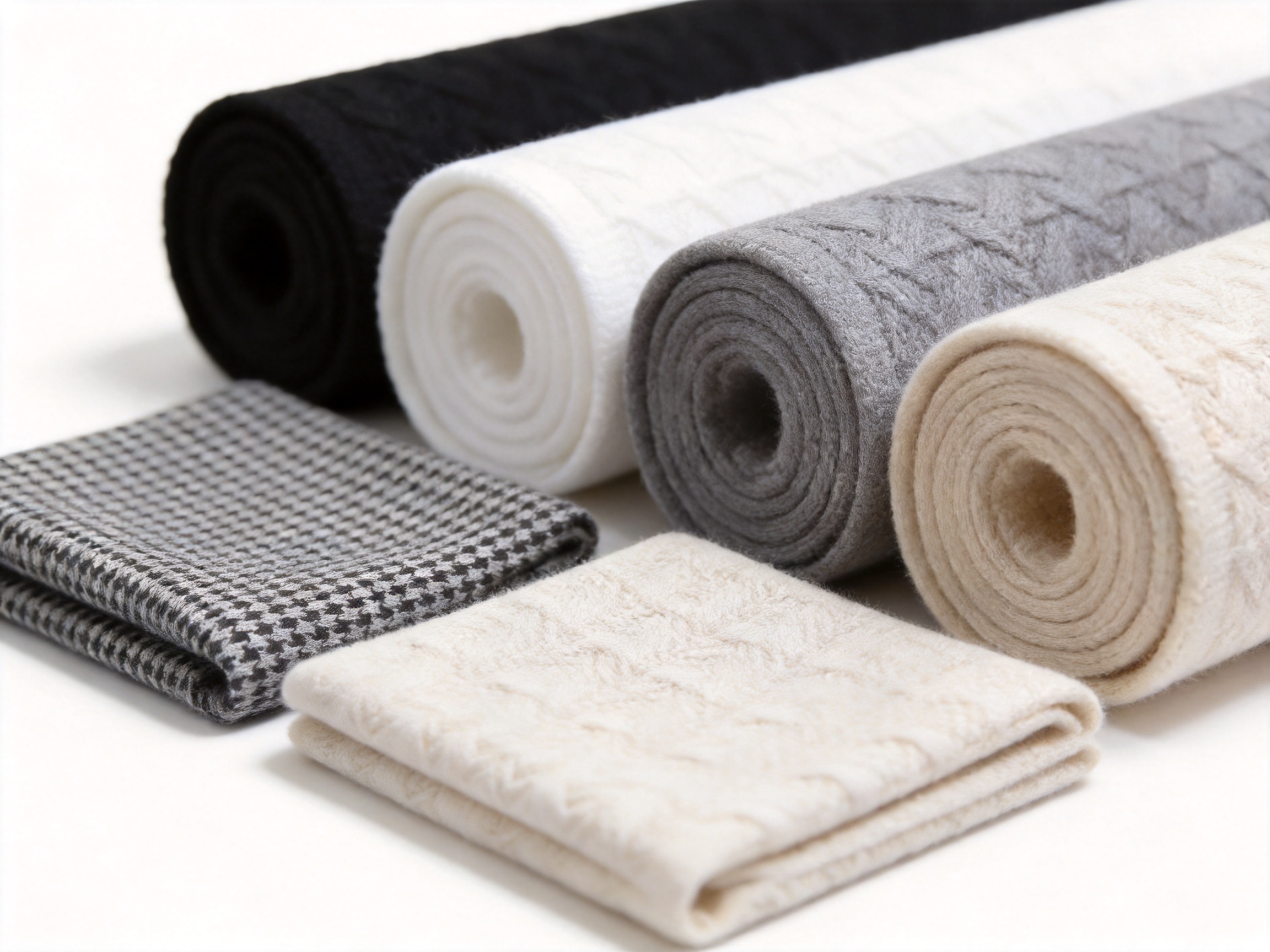
7. Competitive Advantages Over Ordinary Suppliers
In a competitive textile market, buyers need more than an attractive pattern. They need reliable quality, stable supply, customization support, manufacturing experience, and practical communication. Houndstooth design jacquard fabric has several advantages over common alternatives offered by suppliers with limited production control.
One major advantage is advanced jacquard production equipment. Imported computerized jacquard machines provide higher pattern accuracy and more consistent fabric structure than basic machines. This directly affects the look and quality of the final textile. For buyers producing garments at scale, pattern consistency is essential because each roll must cut and sew predictably.
A second advantage is customization. Some suppliers may only offer standard houndstooth patterns and fixed fabric weights. This product can be customized in pattern and thickness, allowing customers to develop unique collections. Customization helps buyers differentiate their products instead of purchasing the same standard fabric available to competitors.
A third advantage is integrated manufacturing. Suppliers that only trade finished fabric may have limited control over yarn quality, dyeing, finishing, and delivery. An integrated manufacturer with production and processing capabilities can respond more effectively to technical requirements and quality issues. This creates stronger accountability throughout the supply chain.
A fourth advantage is experience with blended fabrics and DTY polyester yarn. Understanding yarn behavior is essential for developing knitted jacquard fabric with the right balance of softness, elasticity, body, and durability. A supplier with yarn and fabric knowledge can better support customers during sampling and production.
A fifth advantage is application versatility. The fabric is not limited to one market. It can be used for apparel, accessories, and interior products. This versatility gives wholesalers and brands more opportunities to use the same design language across different product categories.
8. Application in Coats
Houndstooth design jacquard fabric is especially suitable for coats because the pattern has a strong visual presence and classic tailoring association. A coat made from houndstooth jacquard can become a statement piece while still remaining elegant and wearable. The three-dimensional pattern adds texture, helping the garment appear more luxurious than a plain printed fabric.
For autumn and winter collections, the fabric thickness can be adjusted to provide a more substantial feel. A thicker jacquard version can give coats better body and structure. At the same time, the knitted character can make the coat more comfortable than stiff woven alternatives.
Coat manufacturers benefit from fabric with consistent pattern repeat because panels, collars, cuffs, and pockets may need visual alignment. Computerized jacquard production supports stable pattern formation, making cutting and sewing more predictable. This can improve finished garment appearance and reduce production waste.
9. Application in Pants
Fashion pants require a balance of structure, movement, and shape retention. Houndstooth design jacquard fabric can provide a refined surface while offering elasticity for comfort. Compared with rigid houndstooth fabrics, knitted jacquard may allow better movement when walking, sitting, or bending.
The pattern scale can be adjusted for different styles. Smaller houndstooth patterns are suitable for formal pants and office wear, while larger patterns can create a stronger fashion statement. The fabric can be used for straight-leg pants, slim pants, wide-leg pants, and coordinated sets.
For garment manufacturers, fabric stability is important. Pants require reliable recovery and minimal distortion after sewing. Proper finishing and quality control help ensure that the fabric maintains its intended appearance during production and wear.
10. Application in Suits
Suits made from houndstooth design jacquard fabric can combine classic menswear influence with modern comfort. The pattern has long been associated with tailored clothing, but the knitted jacquard structure gives it a contemporary update. This is useful for fashion brands that want to offer suits with comfort, stretch, and visual distinction.
In womenswear, houndstooth jacquard suits can be used for office collections, fashion sets, and seasonal capsules. In menswear or unisex fashion, the pattern can support heritage-inspired jackets and coordinated trousers. The fabric’s softness and elasticity can make suits more comfortable for daily wear.
Compared with plain suiting fabrics, houndstooth jacquard offers stronger shelf appeal. Compared with printed suit fabric, jacquard provides a more premium texture. This gives manufacturers an opportunity to position finished suits in a higher-value segment.
11. Application in Dresses
Dresses benefit from fabrics that combine drape, comfort, and visual interest. Houndstooth design jacquard fabric can be used for fitted dresses, A-line dresses, knit dresses, sleeveless dresses, and fashion separates. The classic pattern adds sophistication, while the knitted structure supports comfort and movement.
For dresses, the hand feel is especially important because the fabric may contact the skin or move closely with the body. A soft jacquard surface improves wearability and consumer satisfaction. Elasticity can also improve fit and reduce restriction.
Designers can use different houndstooth scales to create different effects. Fine houndstooth can appear subtle and professional, while oversized houndstooth can become bold and modern. Custom pattern development gives brands more control over their final look.
12. Application in Bags and Accessories
Houndstooth patterns are also widely seen on bags and accessories. Jacquard fabric can provide a more textured and premium surface than printed fabric, making it suitable for tote bags, fashion handbags, cosmetic bags, hats, scarves, and decorative accessories. The pattern is instantly recognizable, which helps accessories stand out in retail displays.
For bag applications, fabric thickness and backing requirements may vary. A heavier jacquard fabric may be selected for stronger structure, while lighter fabric may be combined with lining or reinforcement. The ability to customize thickness helps meet different accessory manufacturing needs.
13. Application in Interiors
Houndstooth design jacquard fabric can also be used in interiors, including drapes, roman blinds, rugs, and upholstery. In interior settings, houndstooth can create a classic yet dynamic atmosphere. It works well in modern, retro, minimalist, and luxury-inspired spaces depending on color and scale.
For drapes and roman blinds, the pattern adds movement and visual texture. For upholstery, the jacquard surface can enhance the appearance of chairs, cushions, benches, and accent furniture. For rugs or decorative textile panels, houndstooth provides geometric energy without relying on floral or abstract artwork.
Interior applications often require durability and stable appearance. Jacquard construction is advantageous because the design is integrated into the textile surface. This can provide a richer and longer-lasting visual effect than simple surface printing.
14. Product Comparison Table
| Feature | Houndstooth Design Jacquard Fabric | Ordinary Printed Houndstooth Fabric | Basic Woven Houndstooth Fabric |
|---|---|---|---|
| Pattern Formation | Pattern is created through jacquard structure | Pattern is printed on the surface | Pattern is formed by weaving |
| Visual Effect | Textured and three-dimensional | Usually flat | Classic but often less elastic |
| Comfort | Soft knitted hand feel with elasticity | Depends on base fabric | Can be firm or rigid |
| Customization | Pattern and thickness can be customized | Pattern can be changed by printing | Customization may require complex setup |
| Durability of Design | Pattern is integrated into fabric structure | Print may fade or lose clarity depending on use | Generally durable but less flexible |
| Best Uses | Coats, pants, suits, dresses, interiors, accessories | Low-cost fashion and decorative items | Traditional tailoring and heavier apparel |
15. Customization Opportunities
Customization is one of the most valuable features of this fabric. Customers may request different pattern scales, thicknesses, weights, colors, and hand-feel effects based on the needs of their market. This enables brands to develop exclusive products rather than relying on standard market goods.
Pattern customization can influence the final style dramatically. A micro houndstooth pattern may suit business clothing and subtle fashion items. A medium houndstooth pattern may work well for coats, skirts, and suits. A large houndstooth pattern can be ideal for statement garments, bags, or interior decoration.
Thickness customization supports seasonal product development. Lightweight versions may be used for spring and autumn dresses, while heavier versions may be developed for coats or upholstery. Customers can also request finishing adjustments to achieve a softer, fuller, smoother, or more structured hand feel.
Customization also helps buyers respond to market trends. When designers need to develop new collections quickly, a flexible jacquard supplier can adjust pattern and fabric parameters to support faster sampling and product approval.
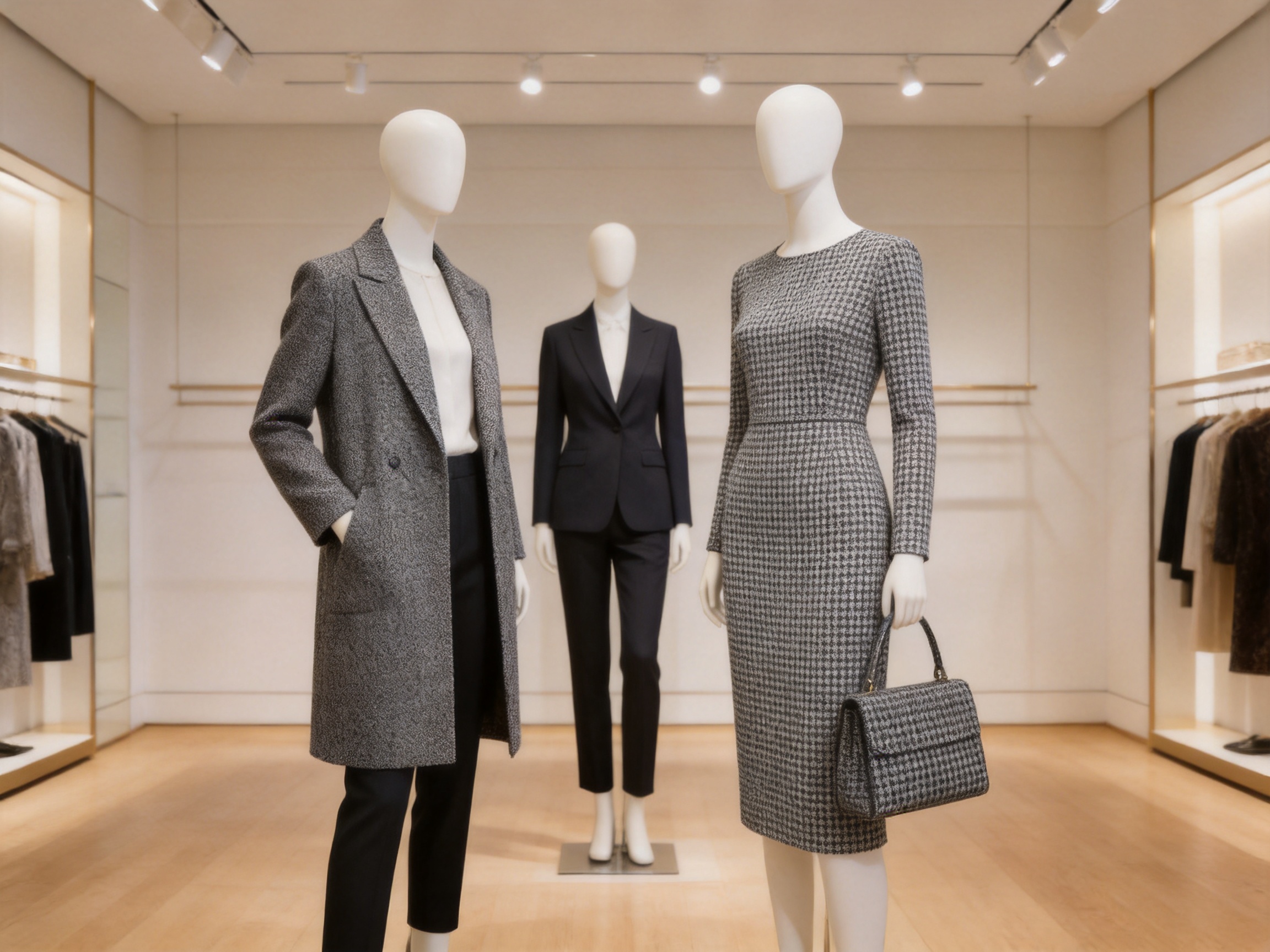
16. Quality Control and Consistency
Quality control is essential for jacquard fabric because both structure and appearance must meet expectations. A defect in pattern alignment, yarn tension, color uniformity, or finishing can affect the value of the finished product. The manufacturer’s integrated production capability helps support stable quality from yarn to finished fabric.
Quality control begins with raw material assessment. Yarn must be checked for consistency, strength, and suitability for jacquard knitting. During production, machine settings and fabric tension must be monitored to maintain pattern clarity and fabric uniformity.
After knitting, fabric inspection identifies defects such as broken yarns, uneven stitches, stains, holes, or pattern irregularities. Early inspection helps reduce waste and prevents defective material from moving into dyeing and finishing.
Dyeing quality is also important. Houndstooth designs often depend on contrast and clear definition. Uneven dyeing can reduce the sharpness of the design. Proper dyeing management helps maintain color consistency across batches.
Finishing quality affects final hand feel, elasticity, width, thickness, shrinkage, and surface appearance. A well-finished fabric is easier for customers to cut, sew, upholster, or install. Final inspection confirms that the bulk fabric meets order requirements before delivery.
17. Manufacturing Base and Company Strength
The producer is located in an industrial area in Xiaoshan District, Hangzhou, Zhejiang Province. The manufacturing base covers 32.6 acres and includes a plant area of approximately 18,000 square meters. This production scale supports stable manufacturing capacity and provides the foundation for professional textile processing.
The company is engaged in production, processing, post-dyeing, finishing, and sales of blended fabrics such as polyester and spandex fabrics. It also produces, processes, and sells DTY polyester yarn. This combination of yarn and fabric capability gives the company a stronger understanding of textile performance from the raw material stage to the final fabric stage.
The company integrates research and development, production, and sales. This structure is valuable for customers who need technical communication, sample development, and bulk production support. Instead of only offering existing products, the company can work with customers to develop fabric solutions according to practical application needs.
As a self-operated export company, it serves customers at home and abroad. Export experience is important because international buyers often require clear communication, stable quality, and reliable delivery. A manufacturer with export capability can better support global sourcing programs.
The company follows a cooperation and win-win business philosophy. For fabric buyers, this means the supplier aims to build long-term relationships rather than only complete single transactions. Long-term cooperation is especially important in textiles because repeated orders require consistency, trust, and technical improvement.
18. Role of DTY Polyester Yarn in Fabric Excellence
DTY polyester yarn is an important foundation for many modern knitted fabrics. Drawn textured yarn is made by processing polyester filament to create bulk, elasticity, and a softer textile character. Compared with flat filament yarn, DTY can provide better volume and a more comfortable feel.
In houndstooth design jacquard fabric, yarn quality affects the appearance of the pattern and the comfort of the finished fabric. A high-quality yarn can help produce a more uniform surface, clearer pattern, and better elasticity. Since the company has DTY polyester yarn production and processing capabilities, it can maintain stronger control over this important input.
DTY yarn also supports efficient knitting because consistent yarn performance reduces machine interruptions and fabric defects. This improves production stability and helps ensure that customers receive fabric with fewer quality problems.
For buyers, this upstream yarn capability can translate into more reliable bulk production. When a supplier understands both yarn and fabric, it can solve technical issues more efficiently and develop better-performing textiles.
19. Design Value for Fashion Brands
Fashion brands need fabrics that help create identity. Houndstooth design jacquard fabric gives designers a recognizable visual language that can be adapted across product categories. A brand can use the fabric for coats, suits, dresses, skirts, accessories, or coordinated capsule collections.
The fabric supports both classic and modern styling. In black and white, it appears timeless and formal. In neutral tones, it can feel refined and commercial. In bold colors, it can become youthful and expressive. Pattern scale also changes the mood, giving designers more creative control.
Because the fabric has texture, it photographs well and can improve product presentation online and in stores. In e-commerce, surface interest can help a garment stand out in product images. In physical retail, the hand feel and three-dimensional effect can encourage customers to touch the garment, improving perceived value.
For brands competing in crowded markets, using jacquard houndstooth instead of basic printed fabric can strengthen product differentiation. Customers can see and feel the difference, making the product easier to position as higher quality.
20. Value for Garment Manufacturers
Garment manufacturers require fabric that performs well during cutting, sewing, pressing, and finishing. Houndstooth design jacquard fabric offers stable pattern formation and customizable specifications, helping manufacturers match fabric characteristics to garment requirements.
Pattern consistency is especially important when producing coats, suits, and pants. If the design repeat is irregular, garment panels may not align correctly, creating a poor finished appearance. Computerized jacquard production helps reduce this risk.
The fabric’s elasticity can improve sewing performance when properly handled. It allows garments to move with the body and can reduce strain on seams during wear. For manufacturers producing comfortable tailoring or fashion knitwear, this is a practical advantage.
Custom thickness allows garment factories to choose the right fabric for their equipment and product type. A fabric that is too thin may lack structure, while one that is too thick may be difficult to sew. Adjustable development helps solve these issues before bulk production.
21. Value for Wholesalers and Distributors
Wholesalers and distributors need fabrics with broad market appeal. Houndstooth design jacquard fabric is commercially attractive because the pattern is widely recognized and suitable for multiple end uses. This helps reduce inventory risk compared with highly experimental designs.
The fabric can be marketed to apparel manufacturers, accessory producers, and interior textile buyers. Its versatility allows distributors to serve different customer groups with one strong product category. Customization options also allow distributors to develop exclusive versions for specific markets.
Because the fabric offers a premium jacquard effect, it can support better price positioning than ordinary printed fabric. This may improve margins for distributors who target mid-range and higher-value customers.
22. Sustainability and Practical Efficiency Considerations
Modern textile buyers increasingly care about efficient production, durable products, and responsible material use. While sustainability depends on many factors, a fabric that maintains its appearance and performs reliably can contribute to longer product life. Jacquard patterns integrated into the fabric structure may reduce the need for additional decorative processes.
Integrated manufacturing can also improve production efficiency by reducing communication gaps between yarn processing, knitting, dyeing, and finishing. When these stages are managed together, technical adjustments can be made more quickly, reducing waste caused by mismatched specifications or delayed problem-solving.
Durability is also a practical sustainability factor. If a fabric resists rapid visual deterioration, finished products may remain usable and attractive for a longer time. This is particularly relevant for coats, upholstery, and other items expected to last beyond one season.
23. How to Select the Right Houndstooth Jacquard Fabric
Buyers should consider application, pattern scale, fabric thickness, hand feel, elasticity, color, and finishing requirements before placing an order. A coat fabric may need more body and warmth, while a dress fabric may require softer drape. Upholstery may need different structural characteristics than apparel.
Pattern scale should be selected according to product size and design intention. Large patterns may look impressive on coats and furniture but may overwhelm small accessories. Small patterns can be more versatile for formalwear and commercial fashion.
Thickness should match season and construction. Lightweight fabric may suit dresses and indoor garments, while heavier fabric may be better for outerwear and interiors. Customers should communicate target use clearly so the manufacturer can recommend suitable specifications.
Color development should consider market trends and brand identity. Traditional black-and-white houndstooth remains popular, but beige, gray, navy, brown, red, and other combinations can create fresh interpretations. The jacquard effect can be enhanced by thoughtful color contrast.
24. Care and Handling Considerations
Care instructions depend on the specific fiber blend, dyeing method, and finishing process used for the final fabric. Buyers should request technical guidance for each order and test finished garments or products before large-scale distribution. General handling should protect the fabric from excessive stretching, sharp abrasion, and unsuitable heat exposure.
During garment production, cutting should consider pattern direction and repeat. Sewing should use appropriate needles, thread, and tension settings for knitted jacquard fabric. Pressing temperature should be selected according to fiber content and finishing requirements.
For interior applications, fabric should be evaluated for the intended end use, including wear, light exposure, cleaning method, and dimensional stability. Upholstery and drapery production may require additional testing based on market standards.

25. Q&A Section
Q1: What is houndstooth design jacquard fabric?
It is a knitted jacquard fabric featuring the classic houndstooth pattern. The design is created through jacquard structure, giving the fabric a textured and three-dimensional appearance rather than a flat printed surface.
Q2: What are the main advantages of this fabric?
The main advantages include classic pattern appeal, soft hand feel, comfortable elasticity, three-dimensional jacquard texture, customizable pattern, adjustable thickness, and broad application in apparel and interiors.
Q3: How is jacquard houndstooth fabric different from printed houndstooth fabric?
Printed houndstooth fabric has the design applied to the surface, while jacquard houndstooth fabric forms the pattern through the textile structure. Jacquard fabric generally offers better texture, stronger visual depth, and a more premium appearance.
Q4: Can the pattern size be customized?
Yes. The houndstooth pattern can be customized in scale to suit different products, including formal suits, fashion dresses, statement coats, bags, drapes, and upholstery.
Q5: Can the fabric thickness be customized?
Yes. Thickness can be adjusted according to the intended application. Lighter versions may be suitable for dresses and fashion pants, while heavier versions may be used for coats or interior textile products.
Q6: What products can be made from this fabric?
The fabric can be used for coats, pants, suits, dresses, bags, drapes, roman blinds, rugs, upholstery, cushions, and other fashion or decorative textile products.
Q7: Is this fabric comfortable for apparel?
Yes. The knitted construction provides softness and elasticity, making it more comfortable than many rigid alternatives. It is suitable for garments that require movement and wearability.
Q8: Why is computerized jacquard machinery important?
Computerized jacquard machinery allows accurate control of complex patterns, stable repeat formation, and consistent fabric quality. This is especially important for geometric patterns such as houndstooth.
Q9: What manufacturing strengths support this product?
The manufacturer has capabilities in DTY polyester yarn production, blended fabric processing, post-dyeing, finishing, research and development, production, sales, and export. These strengths support quality control and customization.
Q10: Is this fabric suitable for international buyers?
Yes. The company operates as a self-managed export enterprise and serves customers in domestic and overseas markets. Its integrated production structure supports communication, sampling, and bulk order development.
26. Conclusion
Houndstooth design jacquard fabric combines a classic pattern with modern textile engineering. Its value comes from more than visual style. The fabric offers softness, elasticity, three-dimensional texture, customization flexibility, and broad application potential. Compared with printed houndstooth fabric, jacquard construction provides a richer and more durable design effect. Compared with many rigid woven alternatives, knitted jacquard fabric offers improved comfort and movement.
The product is supported by advanced manufacturing processes, including imported computerized jacquard machinery, yarn preparation, controlled knitting, dyeing, finishing, inspection, and customization. The company’s experience in blended fabrics and DTY polyester yarn strengthens its ability to manage quality from raw material to finished textile.
For fashion brands, garment manufacturers, wholesalers, and interior textile buyers, this fabric provides a strong combination of recognizable style and practical performance. It can be used to create coats, pants, suits, dresses, bags, drapes, roman blinds, rugs, upholstery, and many other textile products. With customizable pattern and thickness, it supports both classic collections and innovative design development.
In a market where products must be attractive, comfortable, reliable, and differentiated, houndstooth design jacquard fabric offers a competitive solution. It transforms a timeless pattern into a modern material suitable for contemporary manufacturing and global commercial use.
References
1. Spencer, D. J. Knitting Technology: A Comprehensive Handbook and Practical Guide. Woodhead Publishing.
2. Kadolph, S. J. Textiles. Pearson Education.
3. Sinclair, R. Textiles and Fashion: Materials, Design and Technology. Woodhead Publishing.
4. Gong, R. H., and Wright, R. M. Fancy Yarns: Their Manufacture and Application. Woodhead Publishing.
5. Elsasser, V. H. Textiles: Concepts and Principles. Fairchild Books.