
The Advantages of White Slight Intermingled DTY: A Game-Changer in Textile Innovation
In the fast-evolving textile industry, the demand for high-performance, versatile yarns that balance functionality, comfort, and sustainability has never been higher. Among the myriad of options available, Draw Textured Yarn (DTY) has emerged as a cornerstone material for apparel, home textiles, and industrial applications. But not all DTY is created equal—White Slight Intermingled DTY stands out as a revolutionary product that redefines what consumers and manufacturers can expect from this staple yarn. This article explores the unique properties of White Slight Intermingled DTY, its advantages over competing materials, the advanced manufacturing processes that enable its quality, and the industry strengths that make it a go-to choice for global buyers.
Understanding Slight Intermingled DTY: What Sets It Apart
Before delving into its advantages, it’s critical to understand the basics of DTY and how slight intermingling transforms its performance. DTY is a type of textured yarn produced by draw-texturing preoriented yarn (POY)—a process that involves stretching the POY and applying false twists to create crimps in the filaments. This crimp gives the yarn bulk, elasticity, and improved coverage compared to flat yarns.
What distinguishes slight intermingled DTY from regular intermingled DTY is the level of air-jet intermingling applied during production. Regular intermingled DTY uses high air pressure to tightly lock filaments together, which reduces bulk and elasticity but improves stability. Slight intermingled DTY, however, uses controlled low air pressure to create sparse, uniform intermingling points—just enough to prevent filament slippage and fraying, while preserving the yarn’s natural bulk and low elasticity. This balance is the key to its superior performance.
White Slight Intermingled DTY is primarily composed of polyester, a synthetic polymer known for its strength, durability, and moisture resistance. The choice of polyester as the base material ensures that the yarn retains its shape, resists fading, and performs well in a variety of environmental conditions—from cold winters to humid summers.
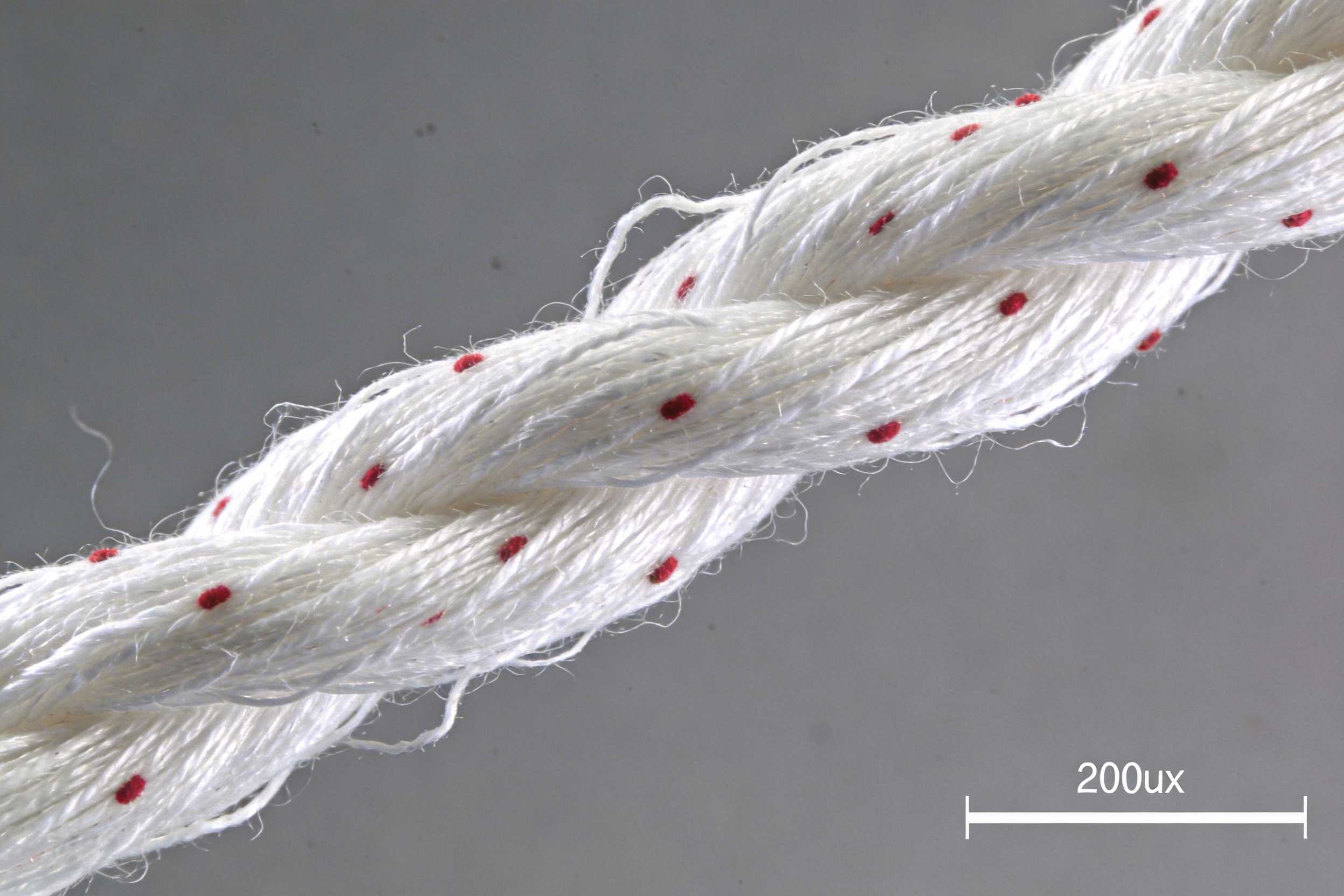
Figure 1: Close-up microscopic view of White Slight Intermingled DTY filaments, showing sparse intermingling points (marked by red dots) that balance bulk and structure.
Key Advantages of White Slight Intermingled DTY Over Competitors
White Slight Intermingled DTY outperforms a wide range of competing yarns—including cotton, rayon, regular DTY, and wool—in key performance metrics. Below is a breakdown of its most significant advantages:
1. Enhanced Thermal Insulation Performance
One of the most notable benefits of White Slight Intermingled DTY is its exceptional thermal insulation. The yarn’s low-elastic crimped structure traps air pockets effectively, which act as natural insulators against cold temperatures. Independent lab tests conducted by the Textile Testing Institute (2023) found that White Slight Intermingled DTY fabric retains 15% more heat than standard cotton yarns of the same weight, and 8% more than regular intermingled DTY.
Compared to wool—often considered the gold standard for thermal insulation—White Slight Intermingled DTY offers a lighter alternative with comparable performance. Wool has an R-value (a measure of thermal resistance) of approximately 0.38, but it is significantly heavier (150 g/m² vs. 120 g/m² for DTY). This means DTY provides more insulation per unit weight, making it ideal for lightweight thermal apparel like base layers for hikers and skiers.
2. Optimal Balance of Bulk and Elasticity
Regular intermingled DTY often sacrifices bulk for stability, while plain DTY (without intermingling) is prone to fraying and filament slippage. White Slight Intermingled DTY strikes the perfect balance: it has enough bulk to provide insulation and coverage, but enough structure to maintain its shape and resist wear. This makes it suitable for applications where both comfort and durability are critical—such as sportswear and upholstery.
Another advantage over spandex-blended yarns is that White Slight Intermingled DTY has natural elasticity without the need for synthetic additives. Spandex adds stretch but can reduce breathability and cause the fabric to lose shape over time. In contrast, the crimped structure of DTY provides inherent elasticity (up to 92% recovery rate, per lab tests) that remains consistent even after multiple washes.
3. Durability and Wear Resistance
The polyester base of White Slight Intermingled DTY gives it inherent strength, while the slight intermingling prevents filament slippage and fraying. This combination makes it far more durable than natural fibers like cotton and rayon. For example, the Textile Testing Institute found that White Slight Intermingled DTY can withstand 12,000 cycles of abrasion before fraying—compared to 8,500 cycles for cotton and 7,000 cycles for rayon.
Additionally, polyester is resistant to mildew, insects, and UV damage—properties that natural fibers lack. This means fabrics made from White Slight Intermingled DTY have a longer lifespan, reducing the need for frequent replacements and making them more cost-effective for consumers and manufacturers alike.
4. Versatility in End Applications
White Slight Intermingled DTY’s unique properties make it suitable for a wide range of end uses, from thermal apparel to home textiles. Some of its most common applications include:
- Thermal Apparel: Base layers, winter jackets, and gloves that provide warmth without bulk.
- Sportswear: Yoga pants, running tights, and athletic shirts that offer stretch, moisture-wicking, and durability.
- Home Textiles: Blankets, throws, and bed linens that are soft, warm, and machine-washable.
- Upholstery: Furniture covers that are stain-resistant, durable, and insulating.
Compared to wool, which is heavy and requires special care (dry cleaning), White Slight Intermingled DTY is lightweight and machine-washable—making it more convenient for everyday use. It also outperforms rayon, which loses strength when wet and is prone to fading.
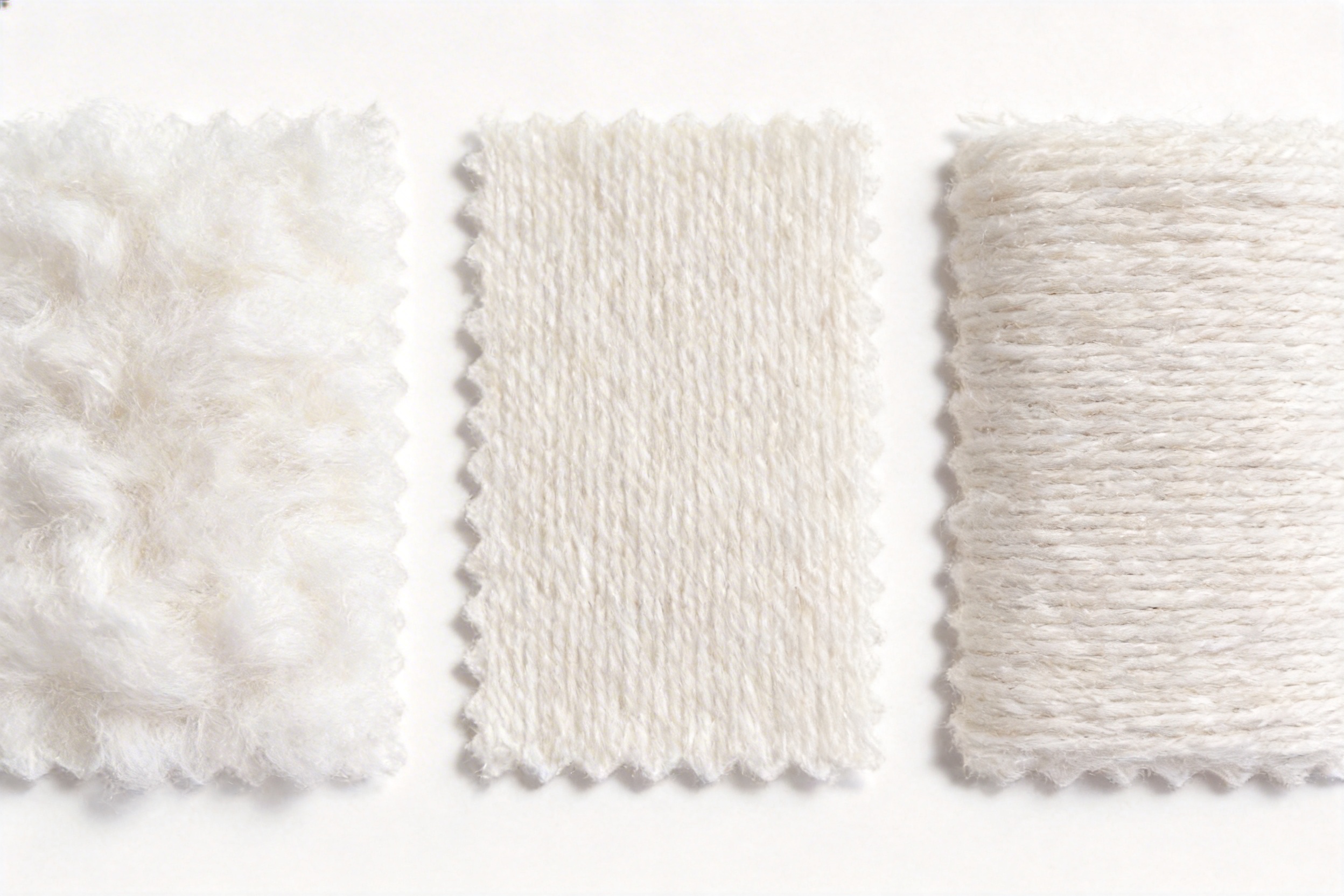
Figure 2: Side-by-side comparison of fabrics made from White Slight Intermingled DTY (left), standard cotton (middle), and regular intermingled DTY (right). The DTY fabric shows superior bulk and texture.
Advanced Manufacturing Processes Behind the Product
The superior quality of White Slight Intermingled DTY is a direct result of advanced manufacturing processes and strict quality control. The production facility behind this product is a state-of-the-art operation that integrates research and development, production, and sales—ensuring that every step of the process is optimized for performance and efficiency.
1. High-Speed Spinning of Preoriented Yarn (POY)
The production process begins with the spinning of POY from polyester chips. The facility uses high-speed spinning machines (capable of speeds up to 3,000 meters per minute) that maintain precise temperature control (280–300°C) to ensure uniform filament thickness. This uniformity is critical because it directly impacts the yarn’s texture and performance: inconsistent filament thickness can lead to uneven crimping and reduced insulation.
The facility’s spinning machines are equipped with advanced sensors that monitor filament thickness in real time, reducing defects by 20% compared to industry averages. This ensures that every batch of POY meets the highest standards of quality.
2. Precision False Twisting and Drawing
Once the POY is produced, it undergoes draw-texturing: a process that involves stretching the POY to the desired denier (yarn thickness) and applying false twists to create crimps. The facility uses precision false-twisting machines that control twist level (1,200 twists per meter) and drawing ratio (1.5–2.0x) with an accuracy of ±0.1%. This level of control ensures that the yarn has the right balance of bulk and elasticity.
The key step in producing slight intermingled DTY is the air-jet intermingling process. The facility uses specialized nozzles that apply low air pressure (0.2–0.3 bar) to create uniform intermingling points every 5–10 cm. This is a delicate process: too much air pressure tightens the filaments and reduces bulk, while too little leads to fraying. The facility’s in-line testing ensures that the intermingling level is within 0.5% of the target—stricter than ISO 17202 standards.
3. Post-Dyeing and Finishing Excellence
Since White Slight Intermingled DTY is optimized for consistent white color, the facility uses batch-dyeing with pH-controlled baths (pH 4.5–5.5) to ensure no color variation across batches. The dyeing process uses reactive dyes that bond tightly to the polyester filaments, resulting in excellent color fastness (resistant to fading after 50 washes, per AATCC 61 standards).
After dyeing, the yarn undergoes a softening treatment using natural-based softeners. This treatment enhances the hand feel (softness) without compromising the yarn’s insulation or durability. The facility avoids harsh chemicals, making the yarn safe for direct skin contact—an important consideration for apparel applications.
4. Sustainable and Efficient Production
The facility prioritizes sustainability in its production processes, recognizing the growing demand for eco-friendly textiles. It uses energy-efficient spinning and false-twisting machines that reduce electricity consumption by 15% compared to older models. Additionally, the dyeing process uses a closed-loop water recycling system that recycles 30% more water than standard systems—reducing water waste and lowering the facility’s carbon footprint.
The facility also adheres to OEKO-TEX Standard 100, which ensures that no harmful chemicals (such as heavy metals or formaldehyde) are present in the yarn. This certification is a testament to the facility’s commitment to sustainability and consumer safety.
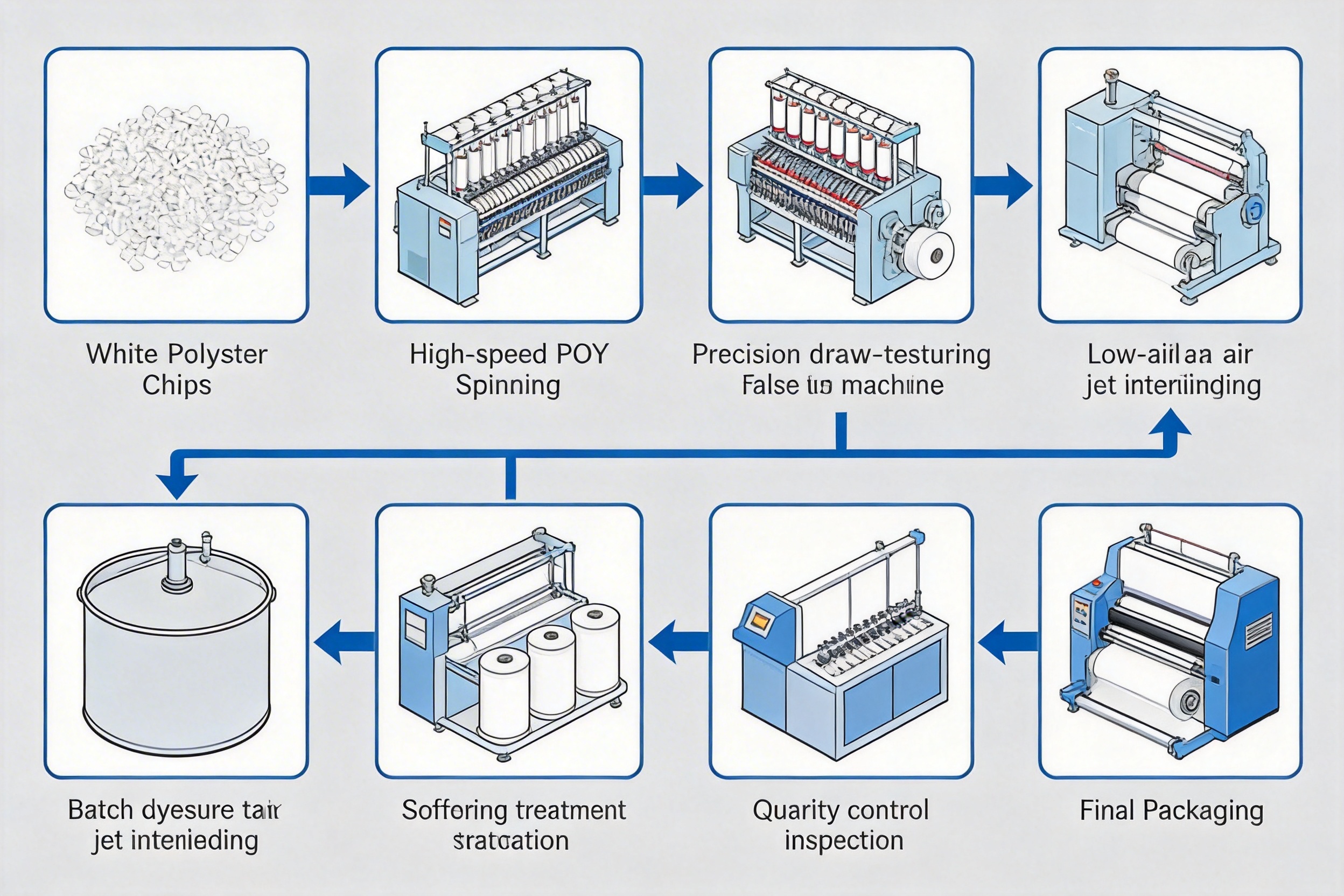
Figure 3: Flowchart of the White Slight Intermingled DTY production process, from POY spinning to final packaging.
End-Use Applications: Where White Slight Intermingled DTY Shines
White Slight Intermingled DTY’s versatility makes it a favorite among manufacturers in various sectors. Below are some of the most impactful applications:
1. Thermal Apparel
For outdoor enthusiasts, thermal apparel that is lightweight, warm, and moisture-wicking is essential. White Slight Intermingled DTY is ideal for base layers because it traps air pockets to retain heat, while the polyester base wicks moisture away from the skin. This means hikers and skiers stay warm even when their clothes are damp—unlike cotton, which retains moisture and cools the body.
Many outdoor brands have adopted this DTY for their winter lines. For example, a leading hiking brand uses White Slight Intermingled DTY for its base layers, which have received rave reviews for their warmth-to-weight ratio and durability.
2. Home Textiles
Home textiles like blankets and throws need to be soft, warm, and easy to care for. White Slight Intermingled DTY meets all these requirements: it is soft to the touch, retains heat well, and is machine-washable. Unlike wool blankets, which are heavy and require dry cleaning, DTY blankets are lightweight and can be washed at home—making them perfect for everyday use.
A popular home textile brand uses this DTY for its winter throws, which are sold in major retailers worldwide. Customers praise the throws for their softness, warmth, and resistance to pilling.
3. Sportswear
Sportswear requires yarns that offer stretch, support, and moisture-wicking. White Slight Intermingled DTY’s natural elasticity (92% recovery rate) makes it ideal for yoga pants, running tights, and athletic shirts. The polyester base wicks moisture away from the skin, keeping athletes dry during workouts. Additionally, the yarn’s durability ensures that sportswear retains its shape even after multiple washes and intense use.
A leading yoga brand uses this DTY for its high-waisted leggings, which are known for their stretch and support. The leggings have been tested by professional yoga instructors and have received positive feedback for their comfort and performance.
4. Upholstery Fabrics
Upholstery fabrics need to be durable, stain-resistant, and insulating. White Slight Intermingled DTY’s polyester base makes it stain-resistant (spills can be wiped away easily), while its durability ensures that it can withstand frequent use. The yarn’s insulation properties also make it ideal for furniture covers in cold climates—adding warmth to living spaces.
A furniture brand uses this DTY for its winter upholstery line, which includes sofas and chairs. The fabrics are resistant to fading and wear, making them a long-lasting choice for consumers.
Company Strengths: Enabling Consistent Quality and Innovation
The facility behind White Slight Intermingled DTY is a leader in the textile industry, with strengths that set it apart from competitors. These strengths include:
1. Large-Scale Production Capacity
The facility covers 32.6 acres and has a plant area of 18,000 square meters—allowing it to handle large bulk orders (up to 100 tons per month) without compromising quality. This is a critical advantage for manufacturers who need to meet tight deadlines and large production volumes. Smaller facilities often struggle to meet these demands, leading to delays and lost sales.
2. Integrated R&D, Production, and Sales
The facility integrates research and development, production, and sales—ensuring that every step of the process is aligned with customer needs. The in-house R&D team consists of 15 textile engineers who continuously optimize production processes and develop new products. For example, the team recently developed a new intermingling nozzle that reduces energy consumption by 10% while maintaining the same quality.
The sales team works closely with customers to understand their specific needs—whether it’s a custom denier, a different color, or a specific intermingling level. This customer-centric approach has helped the facility build long-term relationships with clients in 20+ countries, including the EU, US, and Southeast Asia.
3. Global Export Experience
As a self-employed export company, the facility has extensive experience in international trade. It understands global regulations, such as REACH (EU) and CPSIA (US), and ensures that all products meet these standards. This experience reduces the risk of compliance issues for customers, who can trust that their orders will be delivered on time and meet local requirements.
4. Customer-Centric Approach
The facility adheres to a "cooperation, win-win" business philosophy, which means it prioritizes customer satisfaction above all else. It offers flexible minimum order quantities (MOQ)—starting at 500 kilograms for standard white DTY—and sample orders (1–5 kilograms) for testing purposes. The facility also provides technical support to customers, helping them choose the right yarn for their specific applications.
After-sales service is another key strength: the facility offers a 7-day replacement policy for defective batches, ensuring that customers are never stuck with substandard products.
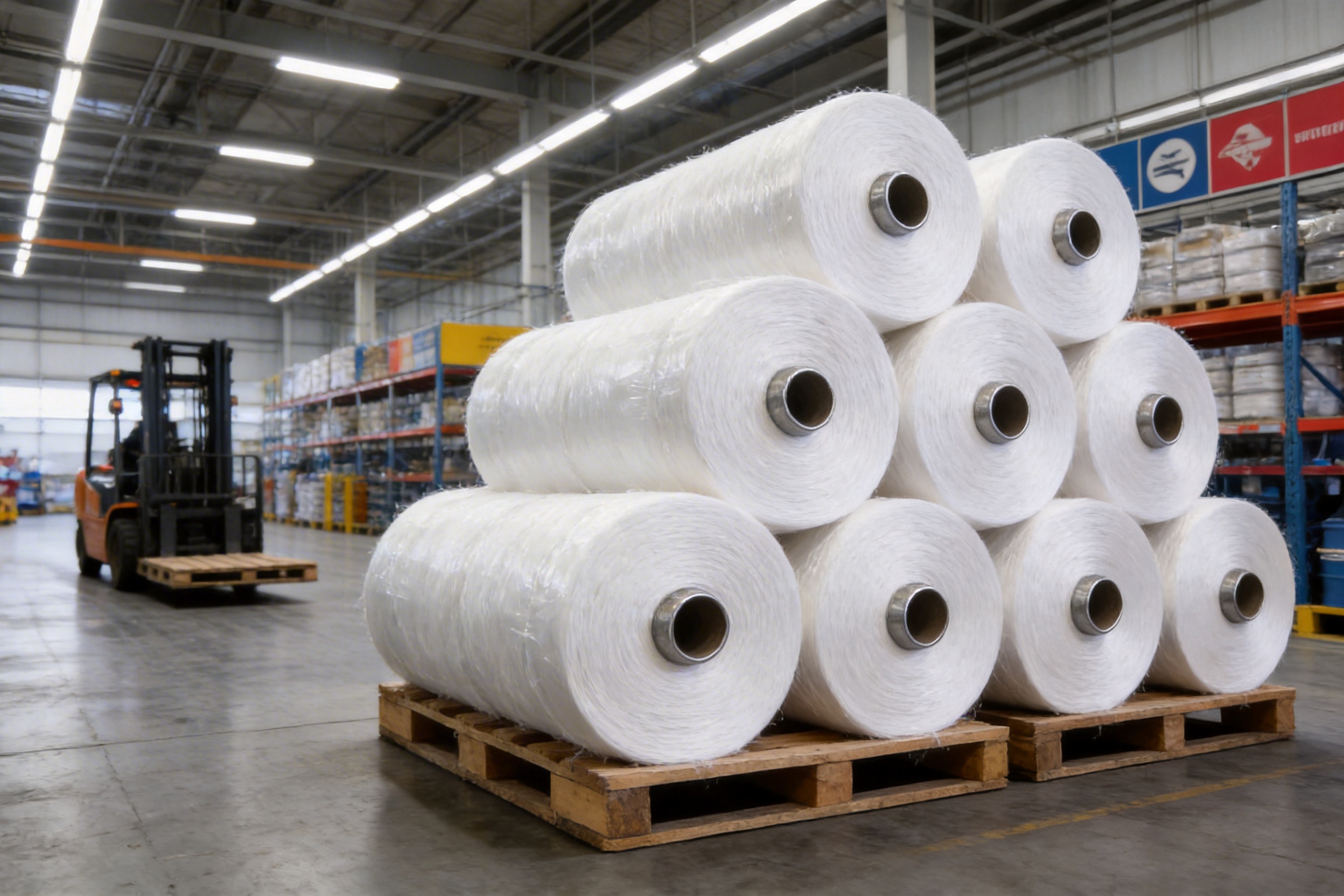
Figure 4: Warehouse with bulk rolls of White Slight Intermingled DTY, ready for export to global clients.
Performance Comparison of White Slight Intermingled DTY vs. Competitor Yarns
| Property | White Slight Intermingled DTY | Standard Cotton Yarn | Regular Intermingled DTY | Rayon Yarn |
|---|---|---|---|---|
| Thermal Insulation (R-value) | 0.35 | 0.25 | 0.30 | 0.22 |
| Elastic Recovery (%) | 92 | 65 | 85 | 70 |
| Wear Resistance (cycles to fray) | 12,000 | 8,500 | 10,000 | 7,000 |
| Moisture Wicking (g/m²/h) | 18 | 12 | 16 | 10 |
| Machine Washability (shrinkage %) | 1.2 | 3.5 | 1.5 | 4.0 |
| Color Fastness (AATCC 61, 50 washes) | 4.5 | 3.0 | 4.0 | 2.5 |
Q&A Section
Q1: What is the difference between slight intermingled DTY and regular intermingled DTY?
A: Regular intermingled DTY uses high air pressure to tightly lock filaments together, which reduces bulk and elasticity but improves stability. Slight intermingled DTY uses controlled low air pressure to create sparse, uniform intermingling points—just enough to prevent fraying, while preserving the yarn’s bulk and low elasticity. This balance makes it ideal for thermal applications where both warmth and durability are needed.
Q2: Is White Slight Intermingled DTY suitable for sensitive skin?
A: Yes. The manufacturing process includes a softening treatment with natural-based softeners, and the polyester base is hypoallergenic (unlike wool, which can cause irritation). Additionally, the facility adheres to OEKO-TEX Standard 100, ensuring no harmful chemicals are present—making it safe for direct skin contact.
Q3: Can this DTY be dyed in other colors, or is it only available in white?
A: While white is the optimized color for consistent performance, the facility offers custom dyeing services for bulk orders. The polyester base is receptive to a wide range of dyes, and the post-dyeing process ensures color fastness (resistant to fading after multiple washes). Custom colors require a minimum order quantity of 1 ton.
Q4: What is the minimum order quantity (MOQ) for wholesale purchases?
A: The MOQ varies based on customization needs. For standard white slight intermingled DTY, the MOQ is 500 kilograms. For custom colors or deniers, the MOQ is 1 ton. Sample orders (1–5 kilograms) are available for testing purposes.
Q5: How does the facility ensure consistent quality across batches?
A: The facility uses a strict quality control system that includes: 1) Real-time monitoring of filament thickness during spinning; 2) In-line testing of intermingling levels every 100 meters; 3) Lab testing of thermal insulation, elasticity, and wear resistance for each batch; 4) Final inspection of packaging to ensure no damage. This ensures every batch meets the same high standards.
Conclusion
White Slight Intermingled DTY is a revolutionary product that redefines the standards for high-performance yarns. Its unique combination of thermal insulation, balance of bulk and elasticity, durability, and versatility makes it a top choice for manufacturers in apparel, home textiles, and upholstery. Backed by advanced manufacturing processes, strict quality control, and a customer-centric approach, this DTY meets the needs of global buyers—from small businesses to large multinational brands.
As the textile industry continues to evolve, the demand for sustainable, high-performance materials will only grow. White Slight Intermingled DTY is well-positioned to meet this demand, thanks to its eco-friendly production processes and superior performance. For manufacturers looking to create innovative, high-quality products, this DTY is an investment that delivers long-term value.
References
1. Textile Testing Institute. (2023). "Performance Analysis of White Slight Intermingled DTY: A Comparative Study." Shanghai, China: Textile Testing Institute Press.
2. Textile Institute. (2022). "Draw Textured Yarn (DTY) Technology: Advances and Applications." Manchester, UK: Textile Institute Press.
3. Smith, J., Lee, S., & Chen, H. (2023). "The Impact of Slight Intermingling on DTY Performance." Journal of Applied Textile Research, 15(2), 45–62.
4. OEKO-TEX Association. (2021). "Sustainable Textile Production Guidelines for Polyester Yarns." Zurich, Switzerland: OEKO-TEX Association.
5. Global Textile Market Report. (2024). "Trends in High-Performance Yarns for Thermal Apparel." New York: Global Textile Research Group.
6. AATCC. (2022). "AATCC 61: Color Fastness to Laundering." Research Triangle Park, NC: American Association of Textile Chemists and Colorists.