NR Roman Fabric in Cotton and Viscose: Performance, Comfort, and Manufacturing Excellence

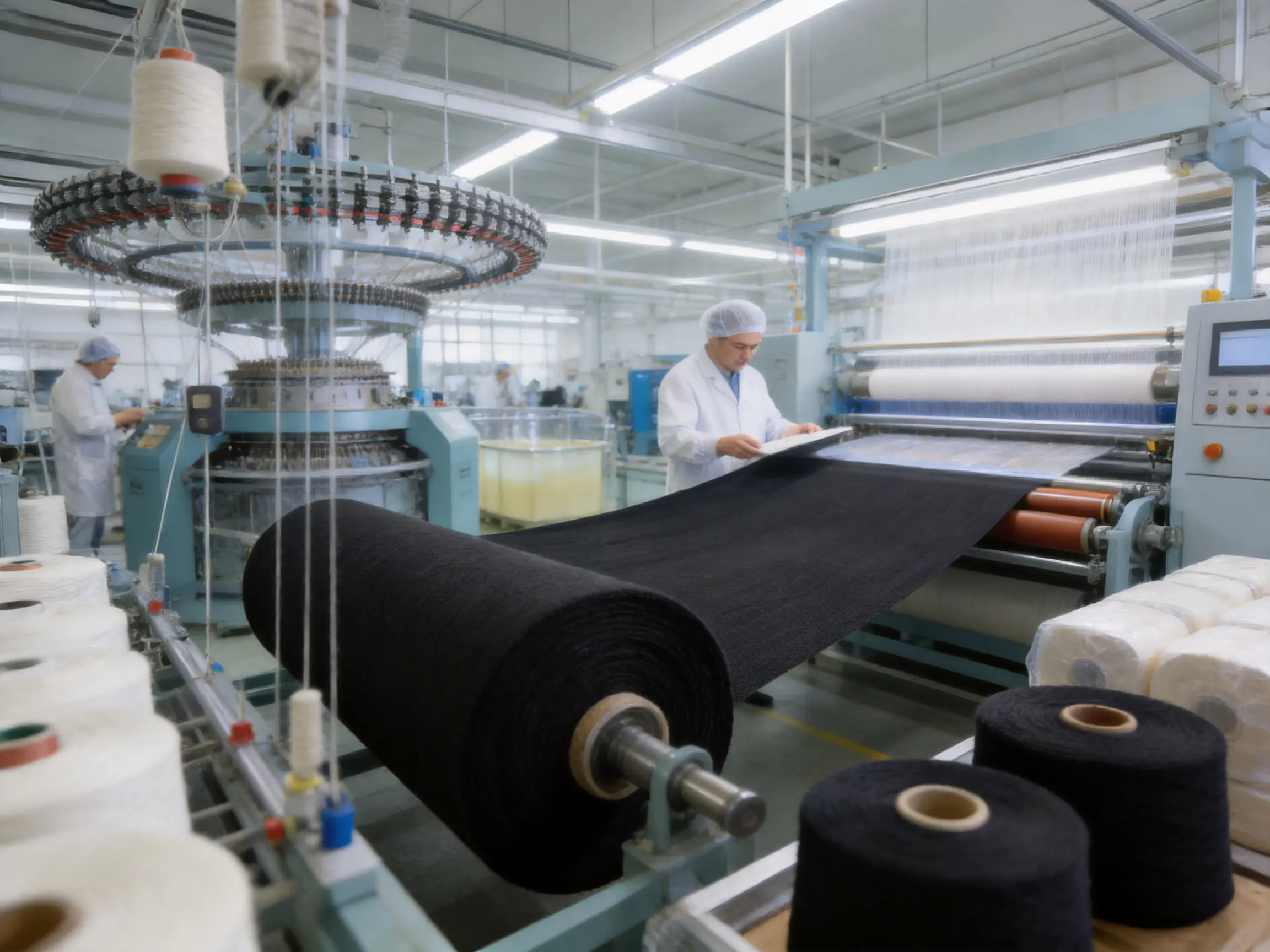
NR Roman fabric made from cotton and viscose is a versatile knitted textile developed for apparel manufacturers, fashion brands, wholesalers, and garment designers seeking a balanced combination of softness, drape, stretch, stability, and visual appeal. Its Roman-knit construction gives the material a structured yet comfortable handle, while the cotton and viscose blend brings together natural comfort and smooth, flowing movement. The result is a fabric suitable for contemporary dresses, tops, skirts, cardigans, lightweight jackets, baby clothing, and many other garments requiring both wearability and an attractive finish.
In an increasingly competitive textile market, fabric selection affects nearly every part of a garment business, from design and sewing efficiency to customer satisfaction and product durability. A fabric that is too soft may lack shape retention. A material with excessive structure may feel uncomfortable. A highly elastic textile may recover poorly after wear, while a fabric with insufficient flexibility may restrict movement. NR Roman fabric is designed to offer a practical middle ground. It can provide a refined surface, comfortable contact with the skin, moderate body, and adaptable performance across different apparel categories.
Hangzhou Jinfeng Textile Co., Ltd. produces and supplies blended fabrics and DTY polyester yarn, with capabilities covering production and processing, post-dyeing, finishing, and sales. Its operations are located in Jingjiang Street Industrial Park, Xiaoshan District, Hangzhou, Zhejiang Province. The company combines research and development, manufacturing, finishing, and export services, allowing customers to work with one textile partner across several stages of product development.
Understanding NR Roman Fabric
NR Roman fabric is a knitted fabric generally associated with a firm, compact, and stable knit structure. In this product, the principal fiber composition is cotton and viscose. The “NR” designation identifies the fabric category used by the supplier, while “Roman” describes the characteristic knit construction. Depending on the exact knitting parameters, yarn specifications, finishing route, and final weight, the fabric may show different levels of stretch, thickness, softness, drape, and surface definition.
The cotton component contributes a familiar natural feel, breathability, and comfortable skin contact. Viscose contributes smoothness, fluid drape, color receptivity, and a soft appearance. When combined in a carefully controlled knitted structure, these fibers can create a fabric that feels more polished than many basic cotton knits while retaining a comfortable, approachable character.
Unlike a lightweight single jersey, Roman fabric usually has more body and dimensional stability. This makes it particularly useful when a garment needs to hold a clean silhouette without becoming rigid. Compared with many woven materials, the knitted construction provides greater flexibility and a more forgiving fit. Compared with very loose knits, the compact structure can offer improved coverage and a more substantial hand.
Key Characteristics of the Cotton and Viscose Blend
Cotton and viscose complement each other in several important ways. Cotton is valued for its natural origin, familiar comfort, and breathable feel. Viscose is appreciated for its smooth surface, soft touch, and ability to create an elegant drape. A blended fabric can therefore offer a more balanced performance than a textile relying on only one of these fibers.
The fabric may be selected for garments where softness is important but excessive fluidity is undesirable. Viscose alone can create a very fluid appearance, while cotton alone may produce a drier or more casual hand. In a Roman-knit blend, the fiber combination and construction can produce a surface with a more controlled appearance and a body suitable for structured fashion styles.
Because exact performance depends on the blend ratio and finishing specifications, buyers should confirm the technical data for each production lot. Important information includes fiber composition, fabric width, weight, stretch percentage, recovery, colorfastness, shrinkage, pilling performance, and washing recommendations.
Advantages of NR Roman Fabric Over Competing Materials
Fabric performance should always be evaluated according to the intended garment. No textile is ideal for every application. However, NR Roman fabric offers several competitive advantages when compared with thin jersey, ordinary single-knit fabrics, some woven materials, and less carefully finished blended textiles.
Balanced Comfort and Structure
One of the strongest advantages of NR Roman fabric is its balance between comfort and structure. Lightweight jersey is soft and flexible, but it may cling to the body, show outlines, curl at the edges, or lose its shape in certain garment designs. A woven fabric can maintain shape effectively, but it may not offer the same ease of movement or softness.
Roman construction can provide a stable platform for garments that need clean lines. Dresses can appear more refined, skirts can hang with greater control, and cardigans can maintain a more substantial visual presence. At the same time, the knitted format allows the material to flex as the wearer moves. This balance is particularly valuable for clothing intended for regular use rather than occasional wear.
Soft Hand and Skin-Friendly Wearability
The cotton and viscose blend is suitable for products where tactile comfort influences purchasing decisions. The cotton component gives the fabric a natural, familiar feel, while viscose helps create a smooth surface and soft drape. This combination can be attractive for dresses, blouses, lounge-oriented garments, and children’s apparel.
Softness is not only a sensory benefit. It can also support product positioning. A garment described as comfortable, smooth, and easy to wear may appeal to customers looking for practical clothing that remains presentable throughout the day. For fashion brands, this makes the fabric adaptable to both casual and semi-formal collections.
Controlled Drape
Drape refers to the way fabric falls, folds, and follows the shape of a garment. Excessively stiff fabric can make a design appear bulky, while an overly fluid textile may lack visual control. NR Roman fabric can offer a controlled drape in which the garment follows the body without appearing excessively loose or limp.
This quality makes the fabric useful for flowing dresses, comfortable skirts, relaxed blouses, and soft cardigans. It can also support more tailored silhouettes when the fabric weight and finishing specifications are selected appropriately. Designers can use gathers, pleats, panels, and layered construction while retaining a relatively stable overall appearance.
Versatility Across Garment Categories
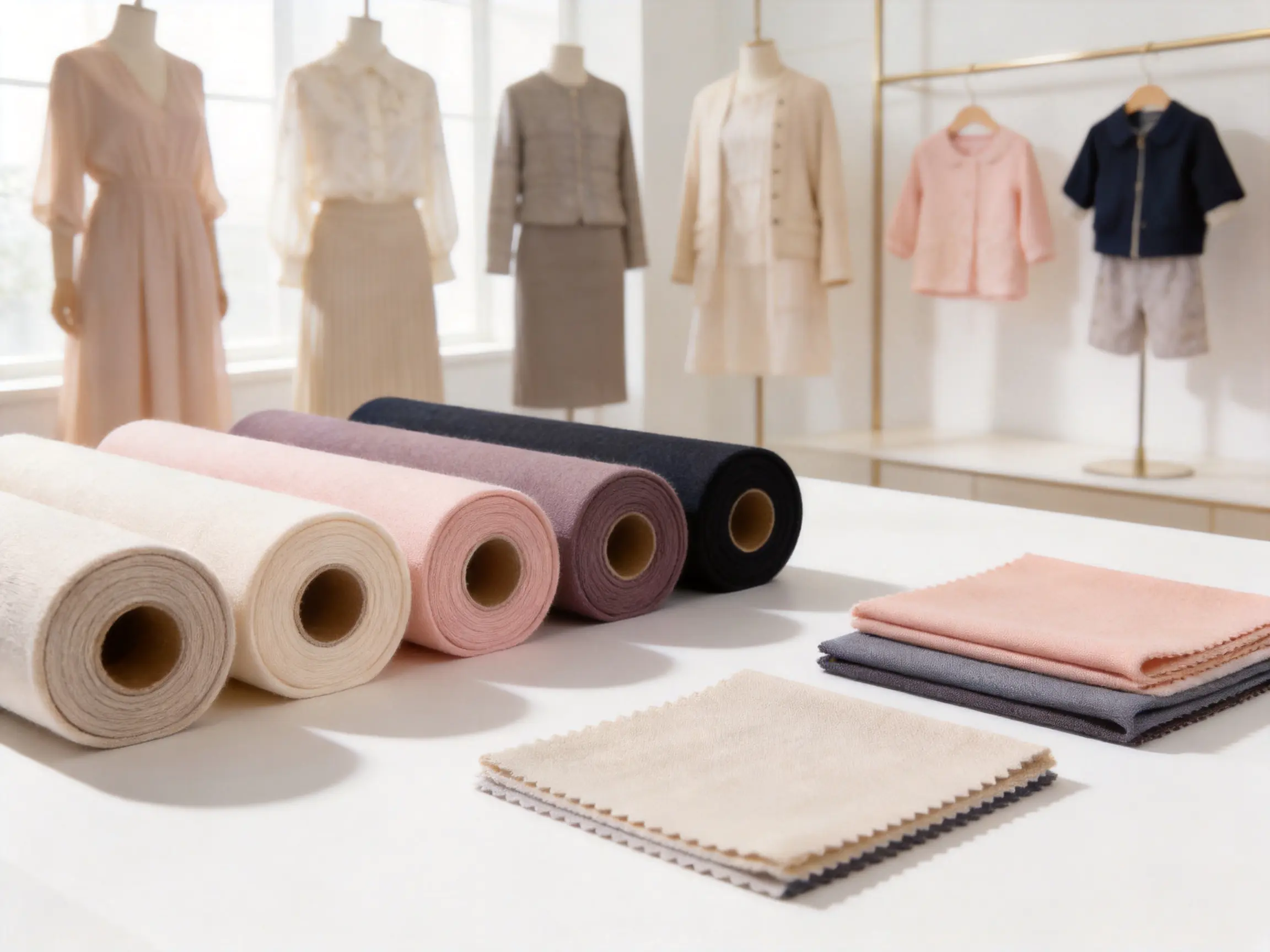
NR Roman fabric is not limited to one clothing segment. Its combination of softness, body, and flexibility supports a broad range of applications, including women’s dresses, blouses, skirts, cardigans, lightweight jackets, casual sets, children’s garments, and selected baby clothing.
For dresses, the material can provide comfortable movement and a smooth fall. For blouses, it can deliver a soft surface with more body than an extremely thin knit. For skirts, the compact structure may assist with shape control. For cardigans, it can create a substantial but comfortable layer. In children’s clothing, the soft hand and flexibility may help support freedom of movement, subject to the final product’s safety, testing, and care requirements.
Color and Pattern Adaptability
Blended knitted fabrics can be produced in a wide variety of colors, allowing manufacturers to respond to seasonal fashion directions, core-color programs, private-label collections, and custom development requests. Viscose is known for accepting color effectively, while the knitted surface can display color with a smooth and attractive visual quality.
Color selection can be combined with different surface effects, weights, and finishing treatments. Neutral shades may be used for workwear-inspired garments and everyday basics. Bright shades can support seasonal collections. Deeper tones may emphasize the fabric’s body and create a more refined appearance. Buyers should evaluate shade consistency across bulk production and confirm colorfastness requirements before approval.
Ease of Sewing and Garment Development
NR knitted fabric is generally easier to integrate into apparel production than highly unstable or excessively slippery textiles. Its structure can make cutting and handling more manageable, especially when the fabric is properly relaxed before spreading. The material may also support efficient garment construction because it combines flexibility with a relatively controlled surface.
Even so, sewing settings should be adjusted according to fabric weight, stretch, needle size, thread type, seam design, and the equipment used. A test garment is recommended before large-scale production. Differential-feed settings, suitable stitch selection, and careful handling can help reduce seam distortion and unwanted waviness.
Improved Design Freedom
A fabric with both stretch and body gives designers more freedom than a material with only one of these qualities. The designer can create close-fitting shapes without completely sacrificing comfort, or introduce relaxed silhouettes without making the garment appear shapeless. The fabric may also support layered looks, panel construction, and varied hem treatments.
Because Roman fabric often has a stable appearance, it can be used for designs that require a cleaner outline. At the same time, the cotton and viscose blend keeps the fabric from feeling excessively technical or synthetic. This makes it a useful choice for brands that want a balance between modern performance and natural-looking comfort.
Manufacturing and Processing Strengths
The quality of finished fabric depends on more than fiber composition. Yarn selection, knitting control, greige inspection, dyeing, finishing, testing, storage, and packing all affect the final product. A supplier with capabilities across these stages can respond more effectively to quality requirements and development schedules.
Hangzhou Jinfeng Textile Co., Ltd. operates as an integrated textile enterprise combining research and development, production, processing, post-dyeing, finishing, and sales. Its product scope includes polyester blended fabrics, spandex-related blended materials, cotton-blended fabrics, and drawn textured yarn. This broader manufacturing background supports technical understanding across both knitted fabric and yarn-related processes.
Integrated Production and Processing
An integrated production approach can reduce communication gaps between different stages. When development, processing, dyeing, and finishing are coordinated by one supplier, technical information can be transferred more consistently. This is useful when customers require adjustments to weight, width, color, hand feel, surface appearance, or dimensional stability.
Integration also supports more efficient problem solving. If a finished fabric shows unexpected shrinkage or a surface issue, the supplier can examine earlier stages instead of treating the final symptom alone. Knitting parameters, yarn condition, dyeing tension, drying conditions, and finishing settings can all influence fabric behavior. A coordinated manufacturing system makes it easier to identify the relevant variables.
Research and Development Support
Textile development is often a process of refinement rather than a single decision. A customer may begin with a target appearance and then request changes to softness, weight, color, stretch, drape, or surface texture. Research and development capability helps transform these commercial requirements into practical production specifications.
For NR Roman fabric, development work may involve selecting a suitable cotton and viscose blend, adjusting yarn counts, optimizing knitting density, and determining the appropriate finishing route. The desired result may differ according to the intended garment. A dress may require a softer drape, while a skirt may require greater body. A children’s garment may prioritize softness and comfort, while a fashion cardigan may emphasize surface appearance and weight.
Knitting Control
Knitting is fundamental to the performance of Roman fabric. The arrangement of loops, yarn tension, machine settings, gauge, and fabric density all affect the final textile. Consistent knitting control helps create an even surface and predictable width. It also supports better repeatability between sampling and bulk production.
During production, attention should be given to visible defects such as dropped stitches, needle lines, holes, uneven courses, barre effects, oil marks, and variations in density. Fabric inspection procedures can help identify problems before dyeing or finishing, when correction may be more difficult. A disciplined inspection process also protects the customer’s cutting efficiency and reduces the risk of finished-garment defects.
Dyeing and Color Management
Post-dyeing is an important part of the company’s stated manufacturing and finishing capabilities. For cotton and viscose fabrics, dyeing must be managed carefully to achieve an attractive shade while protecting the fabric’s hand and dimensional stability. Temperature, time, chemical balance, liquor movement, and fabric tension all influence the result.
Color management includes more than matching a laboratory standard. The supplier must also consider shade consistency within a roll, roll-to-roll uniformity, reproducibility between batches, and the effect of finishing on the final color. A controlled approval procedure can help ensure that the bulk fabric corresponds to the customer’s approved standard.
Colorfastness is another essential consideration. Depending on the end use, buyers may request testing for washing, rubbing, perspiration, light, and water. Requirements vary by market and garment category, so specifications should be agreed before production rather than assumed after delivery.
Finishing for Hand Feel and Stability
Finishing gives the fabric its final sensory and functional characteristics. A finishing route may influence softness, smoothness, fullness, compactness, width, shrinkage, and surface appearance. For NR Roman fabric, the goal is to preserve the comfort of cotton and viscose while achieving a stable and attractive textile suitable for garment production.
Finishing must be balanced carefully. Excessive mechanical or thermal treatment may affect softness, color, or recovery. Insufficient treatment may leave the fabric unstable or inconsistent in width. A suitable process can help the fabric reach the required hand feel without compromising its practical performance.
Scale and Facility Resources
The company is located in an industrial park in Xiaoshan District, Hangzhou, and occupies approximately 32.6 acres with a plant area of about 18,000 square meters. This physical base provides space for production, processing, storage, and operational coordination. Facility scale alone does not guarantee quality, but it can support organized manufacturing and the handling of different product categories.
For customers, a well-organized facility can contribute to more reliable scheduling, improved material flow, and better separation between greige fabric, dyed fabric, finished goods, and packing operations. These factors are especially relevant for export orders, repeat programs, and customers managing several fabric qualities at the same time.
Technical Considerations for Buyers
Before ordering NR Roman fabric, buyers should define the technical requirements in writing. The product title identifies a cotton and viscose Roman fabric, but final performance depends on specific construction and finishing choices. A clear specification reduces misunderstandings and allows the supplier to recommend an appropriate production route.
| Specification Area | Why It Matters | Recommended Buyer Action |
|---|---|---|
| Fiber composition | Influences comfort, drape, care, appearance, and compliance. | Confirm the blend ratio and required testing documentation. |
| Fabric weight | Affects opacity, body, warmth, drape, and garment cost. | Specify the target weight and acceptable tolerance. |
| Usable width | Influences marker efficiency and fabric consumption. | Confirm finished width after relaxation and finishing. |
| Stretch and recovery | Affects fit, movement, comfort, and shape retention. | Request test data under an agreed method. |
| Shrinkage | Can change garment measurements after laundering. | Set dimensional-change limits and test before bulk use. |
| Colorfastness | Protects appearance during washing, rubbing, and wear. | Define testing standards according to the destination market. |
| Surface and hand feel | Directly affects consumer perception and design suitability. | Approve a physical standard or sealed sample. |
| Packaging | Protects fabric during storage and transportation. | Confirm roll length, labeling, moisture protection, and packing method. |
Weight and Width
Fabric weight affects both garment appearance and commercial planning. A lighter Roman fabric may be suitable for blouses, soft dresses, and layering pieces. A heavier quality may work better for structured skirts, cardigans, or garments requiring increased coverage. The appropriate weight depends on season, silhouette, target price, and market expectations.
Usable width is equally important. The finished width may differ from the greige width because of dyeing and finishing. Buyers should use the finished usable width when calculating consumption and preparing cutting markers. Confirming width tolerances before production can reduce fabric waste and prevent unexpected changes in garment costing.
Stretch, Recovery, and Dimensional Stability
Knitted fabric naturally offers flexibility, but stretch should not be assumed to be identical from one construction to another. Stretch may vary in the course and wale directions. Recovery also matters because a fabric that stretches easily but returns slowly may create bagging at elbows, knees, waistlines, or other areas exposed to repeated movement.
Dimensional stability should be evaluated after the intended care process. Buyers may conduct laundering tests to determine lengthwise and widthwise changes. Relaxation time before cutting is also important because knitted fabric can change dimensions after being removed from tension during rolling or finishing.
Surface Appearance and Pilling
The surface of cotton and viscose fabric can influence perceived quality. Buyers should inspect for evenness, clean color, acceptable luster, smoothness, and the absence of visible knitting faults. Pilling performance should also be considered, especially for garments that receive frequent rubbing during wear or laundering.
Pilling depends on fiber properties, yarn construction, knit density, finishing, and use conditions. No general statement can replace product-specific testing. A buyer should request a sample and evaluate it under a method appropriate to the intended market. If a garment will be worn under outerwear or in areas of high friction, additional testing may be advisable.
Garment Applications
Dresses
NR Roman fabric is well suited to dresses that require a combination of comfort and shape. It can be used for simple shift dresses, fitted styles with controlled stretch, relaxed day dresses, and layered designs. Its body may help the garment maintain a clean outline, while the knitted construction supports movement.
For a fitted dress, designers should consider recovery, seam placement, and the direction of stretch. For a flowing dress, weight and drape become more important. A sample garment can show whether the fabric falls as intended and whether additional lining is needed for opacity or support.
Blouses and Tops
In blouses and tops, the fabric can provide a soft alternative to rigid woven materials. It may support clean necklines, comfortable sleeves, and relaxed silhouettes. Designers can use the fabric for work-inspired tops, casual pullovers, soft layering pieces, and everyday basics.
Because the material has more body than some lightweight jerseys, it may be less prone to appearing excessively thin. However, the final result depends on color and weight. Pale shades and lightweight constructions may still require a lining or a carefully selected underlayer.
Skirts
Skirts often benefit from a fabric that offers both movement and shape control. NR Roman fabric can be used for pencil-style skirts, comfortable A-line designs, pull-on skirts, and casual midi silhouettes. Its stretch may make waist construction simpler in selected designs, while its body can help maintain a more polished appearance.
Pattern engineers should evaluate the fabric’s recovery around the waistband and seat area. A suitable waistband construction and accurate shrinkage testing can help preserve garment dimensions after laundering.
Cardigans and Layering Garments
Cardigans made from a substantial knitted fabric can offer comfort without the bulk associated with some heavier sweaters. NR Roman fabric may be used for open-front cardigans, cropped layering pieces, longline styles, and soft jackets. The cotton and viscose blend can give these garments a more refined surface than a basic casual knit.
Edges, hems, and front openings should be tested because these areas may stretch during construction or wear. Stabilizing techniques may be appropriate depending on the garment design and fabric weight.
Children’s and Baby Clothing
The fabric can be considered for children’s clothing and selected baby garments because of its soft hand and flexibility. However, suitability for these applications should be confirmed through product-specific testing. Requirements may include fiber verification, colorfastness, dimensional stability, seam safety, accessory safety, and compliance with regulations in the target market.
Children’s products also require careful attention to comfort and care instructions. Garments should not become excessively stiff after washing, and the fabric should be evaluated for surface changes under repeated laundering. Parents often prioritize easy care, softness, and durability, making these factors important during product development.
Production Workflow from Concept to Finished Fabric
A professional fabric program generally begins with a product brief. The buyer identifies the intended garment, target season, color range, price level, performance requirements, and estimated order volume. The supplier then reviews the brief and recommends a suitable construction and finishing route.
Sampling follows specification review. A sample allows the buyer to evaluate color, hand feel, drape, weight, width, stretch, surface quality, and sewing behavior. If changes are required, the supplier can adjust the construction or finishing before bulk production.
After sample approval, production planning covers yarn availability, machine scheduling, dyeing capacity, finishing, inspection, packing, and delivery. At this stage, clear communication is essential. Any change to composition, color, weight, or finishing should be documented because even a small change can affect fabric behavior.
During bulk production, inspection may be carried out at several stages. Greige fabric inspection can identify knitting problems. Dyeing inspection checks shade and visible defects. Final inspection confirms width, weight, appearance, packing, and other agreed specifications. A documented quality process gives customers a stronger basis for repeat orders and claim management.

NR Roman Fabric(Cotton + Viscose)
Quality Assurance and Customer Value
Quality assurance is not limited to finding defects at the end of production. It begins with accurate specifications and continues through material selection, process control, inspection, and communication. For a product such as NR Roman fabric, customer value comes from receiving fabric that performs consistently in cutting, sewing, finishing, and wear.
Consistency is particularly important for brands with repeat collections. If a fabric quality changes significantly between seasons, garment fit, color appearance, and sewing performance may also change. A supplier capable of recording technical parameters and maintaining approved standards can help improve repeatability.
Another source of value is flexibility. Fashion customers may need different colors, seasonal weights, or adjusted finishes. A manufacturer involved in both knitted fabric production and blended textile processing may be able to provide more practical development support than a purely trading-based supplier.
Export experience is also relevant. International orders require attention to documentation, packing, delivery coordination, product labeling, and communication across different time zones and business practices. An export-oriented company that integrates research, production, sales, and service can simplify the purchasing process for overseas customers.
Responsible Product Selection and Care
Although cotton and viscose are commonly selected for comfort and appearance, responsible sourcing requires buyers to examine the complete product specification. Fiber origin, processing, dyeing, finishing, packaging, and care instructions all affect the textile’s overall impact and commercial suitability.
Correct care labeling can help maintain fabric performance. Depending on the final construction and finishing, the recommended care method may involve machine washing, gentle washing, reduced heat, or flat drying. Buyers should not apply generic care instructions without testing. The finished garment must be evaluated because garment construction, trims, and interlinings can influence the appropriate care method.
Proper storage is also important. Fabric should be protected from excessive moisture, direct sunlight, contamination, and compression that could affect its appearance. Rolls should be identified clearly by quality, color, lot, and production date where appropriate. Good warehouse practices reduce avoidable problems before the fabric reaches the cutting room.
Comparison with Other Common Fabric Choices
NR Roman fabric occupies a useful position between lightweight jersey and more rigid woven materials. Single jersey may be lighter and more flexible, but it may have less body and can be more vulnerable to curling or distortion. Woven cotton may offer excellent stability, but it generally does not provide the same knitted flexibility. Synthetic-heavy fabrics may offer strong recovery or easy-care properties, yet some customers prefer the natural-feeling comfort of cotton and viscose.
Compared with lace knit, NR Roman fabric is generally more compact and less open. Lace knit can provide decorative transparency, limited sheen, and visual delicacy, making it useful for overlays and fashion details. Roman fabric is better suited when the garment requires coverage, body, and a cleaner foundation. The two materials may also be combined in one garment, with Roman fabric used for the main body and lace knit used for panels, sleeves, or overlays.
Compared with ITY fabrics, Roman fabric typically offers a different balance of structure and drape. ITY is often selected for fluid dresses, blouses, skirts, and soft garments because of its smooth surface and flowing movement. NR Roman fabric may be preferred when the designer wants a more stable and substantial hand. The most suitable choice depends on the design, season, fit, and desired visual effect.
Why Work with an Experienced Textile Manufacturer
A fabric supplier’s value is measured by more than the ability to provide a sample. Reliable production requires technical knowledge, process coordination, quality control, and responsive communication. An experienced manufacturer can help a buyer move from a general concept to a commercially workable textile specification.
Hangzhou Jinfeng Textile Co., Ltd. brings together production and processing, post-dyeing, finishing, research and development, and sales. Its broader product portfolio includes blended fabrics and DTY polyester yarn, providing experience with different yarn and fabric requirements. This combination can support customers that purchase more than one textile category or seek coordinated development across fabric programs.
The company’s stated business principle emphasizes cooperation and mutual benefit. For customers, this approach can be reflected in transparent specification discussions, practical sampling, attention to quality, and continued support after the initial order. Strong cooperation is especially important when products require repeated color development, seasonal updates, or customized finishing.
Located in Hangzhou’s Xiaoshan textile area, the company is positioned within a region known for textile manufacturing and related supply-chain activity. Regional access to yarn, processing, equipment, logistics, and technical services can support efficient communication and production coordination.
Q&A About NR Roman Fabric
What is NR Roman fabric?
NR Roman fabric is a knitted fabric with a relatively compact and stable Roman-knit construction. The product discussed here is made from cotton and viscose. It is designed to combine soft comfort, controlled drape, flexibility, and a more substantial hand than many lightweight jersey fabrics.
What are the main benefits of the cotton and viscose blend?
Cotton contributes a natural-feeling handle and comfortable wearability. Viscose contributes softness, smoothness, drape, and color appeal. Together, the fibers can create a balanced fabric suitable for everyday apparel and fashion garments.
Is NR Roman fabric suitable for dresses?
Yes. It can be used for many dress styles, including relaxed day dresses, fitted designs, shift dresses, and layered silhouettes. The correct weight, stretch, recovery, and finishing should be selected according to the design.
Can it be used for skirts and cardigans?
Yes. The fabric’s structure can provide shape control for skirts and a comfortable, substantial layer for cardigans. Designers should test hems, waistbands, openings, and seams to ensure that the fabric behaves correctly in the intended construction.
Is the fabric easy to sew?
It is generally suitable for apparel production and may be easier to handle than highly unstable or very slippery fabrics. However, sewing settings should be tested. Needle selection, stitch type, thread, differential feed, and seam design can affect the final result.
Does NR Roman fabric stretch?
As a knitted fabric, it generally offers flexibility, but the exact stretch and recovery depend on the blend, yarn, knit density, and finishing. Buyers should request product-specific test data rather than relying on a general category description.
Is the fabric suitable for baby clothing?
It may be considered for baby and children’s clothing because of its soft hand and flexibility. Suitability must be confirmed through appropriate testing for comfort, colorfastness, dimensional stability, chemical compliance, and other requirements in the target market.
How does it compare with ITY fabric?
ITY is commonly associated with a smooth and fluid drape. NR Roman fabric generally offers more body and structural control. ITY may be preferable for highly flowing designs, while Roman fabric may be better when the garment needs a more stable silhouette and substantial feel.
How does it compare with lace knit?
Lace knit is typically more open, decorative, or sheer and may be used for overlays and fashion details. NR Roman fabric is more compact and suitable as a main garment fabric when coverage, comfort, and structure are priorities.
What information should be confirmed before ordering?
Buyers should confirm fiber composition, fabric weight, usable width, color, stretch, recovery, shrinkage, pilling, colorfastness, surface requirements, packaging, minimum order quantity, lead time, and inspection standards. A physical sample or sealed standard should be approved whenever possible.
Can the fabric be customized?
Customization may be possible in areas such as color, weight, width, hand feel, and finishing. The final options depend on the production plan and technical requirements. Customers should provide a detailed development brief so the supplier can evaluate feasibility accurately.
Why is finishing important?
Finishing influences softness, width, dimensional stability, smoothness, surface appearance, and overall hand feel. A suitable finishing process helps the fabric achieve the performance and appearance required for the intended garment.
What makes an integrated manufacturer valuable?
An integrated manufacturer can coordinate development, production, dyeing, finishing, inspection, and sales support. This may reduce communication gaps, improve problem solving, and make it easier to maintain consistency between samples and bulk orders.
Conclusion
NR Roman fabric made from cotton and viscose offers a practical and attractive solution for apparel applications requiring comfort, flexibility, controlled drape, and moderate structure. Its balanced characteristics distinguish it from very lightweight jerseys, rigid woven materials, highly fluid fabrics, and decorative open knits. The fabric can support dresses, blouses, skirts, cardigans, children’s clothing, and other garments where both appearance and wearability matter.
The product’s final quality depends on the full manufacturing process. Yarn selection, knitting control, dyeing, finishing, inspection, and packing must work together to produce reliable fabric. Hangzhou Jinfeng Textile Co., Ltd. combines these capabilities with research and development, blended-fabric production, DTY polyester yarn experience, post-dyeing, finishing, and export-oriented sales support.
For buyers, the best results come from defining technical requirements clearly, approving samples carefully, testing performance under realistic conditions, and maintaining communication throughout production. When these steps are followed, NR Roman fabric can become a dependable foundation for comfortable, refined, and commercially competitive garments.
References
1. International Organization for Standardization. Textile Testing and Performance Evaluation Principles.
2. American Association of Textile Chemists and Colorists. Colorfastness and Textile Quality Testing Methods.
3. Textile Institute. Textile Terms and Definitions.
4. Textile Research Journal. Studies on Knitted Fabric Structure, Stretch, Recovery, and Dimensional Stability.
5. International Trade Centre. Textile and Apparel Product Development Guidelines.
6. Cotton Incorporated. Cotton Fiber, Comfort, Care, and Fabric Performance Resources.
7. Manufacturer-provided product information for NR Roman Fabric, Cotton and Viscose.
8. Manufacturer-provided information concerning blended-fabric production, post-dyeing, finishing, research and development, and DTY polyester yarn manufacturing.
For product inquiries, buyers may contact the textile supplier through the business information provided in the product documentation and request current specifications, samples, color options, testing details, and production terms.