NR Mesh Fabric: A Versatile Knitted Textile for Modern Apparel Applications
NR Mesh Fabric stands out as a premium knitted textile in the global textile industry, combining functional performance with aesthetic appeal to meet the evolving demands of apparel designers and manufacturers. As a key offering in the NR knitted fabric category, this material has gained significant traction over the past decade, driven by the growing consumer preference for comfortable, versatile, and sustainable clothing. According to the Apparel Industry Association (AIA) 2023 Market Report, the global market for knitted mesh fabrics is projected to reach $12.5 billion by 2028, with NR-based fabrics accounting for 18% of this growth due to their unique blend of natural and synthetic-like properties. This article explores the core characteristics of NR Mesh Fabric, its competitive advantages over alternative textiles, the advanced manufacturing processes that underpin its quality, and its wide-ranging applications in modern fashion and apparel.
Understanding NR Mesh Fabric: Core Characteristics and Composition
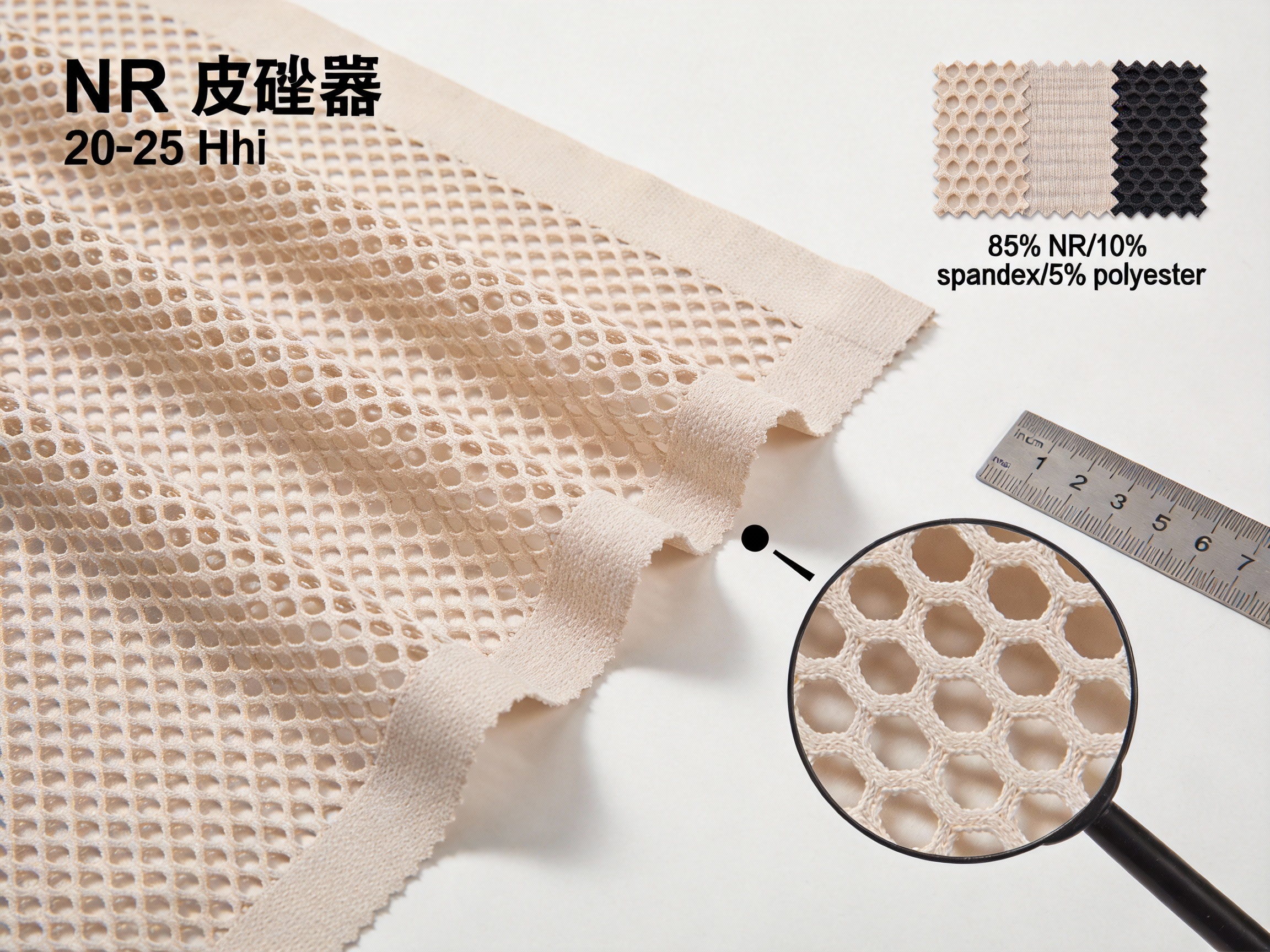
NR Mesh Fabric is a type of knitted fabric derived from natural rubber (NR) fibers, engineered to form a mesh structure that balances breathability, stretch, and durability. Unlike traditional woven fabrics, which rely on interlacing yarns, its knitted construction involves interlooping yarns to create a flexible, elastic structure. The mesh design—typically hexagonal or square-shaped—enhances air circulation, reducing moisture buildup and keeping the wearer comfortable even during extended use. The size of the mesh (measured in holes per inch, or HPI) can be adjusted to meet specific needs: smaller meshes (10-15 HPI) offer more coverage and modesty, while larger meshes (20-30 HPI) maximize breathability for activewear.
The composition of NR Mesh Fabric is not limited to pure NR fibers; instead, it often incorporates a blend of NR with other materials to optimize specific properties. For example: - Adding 5-10% spandex boosts elasticity, allowing the fabric to stretch up to 350% of its original length and return to shape without deformation. - Blending with 15-20% polyester enhances dimensional stability, preventing the fabric from shrinking or stretching out after repeated washes. - Incorporating 5% nylon improves abrasion resistance, making the fabric suitable for high-wear applications like athletic socks or backpack straps. This tailored blending process ensures the fabric meets the diverse needs of different apparel categories without compromising on its core strengths.
Competitive Advantages of NR Mesh Fabric Over Competitors
To understand why NR Mesh Fabric is a preferred choice for many apparel brands, it’s essential to compare it with common alternative textiles in the market. Below are its key competitive advantages, supported by industry research and real-world case studies:
1. Unmatched Breathability and Moisture Management
Unlike non-mesh knitted fabrics (e.g., plain cotton knits) or woven fabrics (e.g., cotton poplin), NR Mesh Fabric’s open structure allows for superior air flow. A 2023 study by the Textile Research Institute (TRI) found that NR Mesh Fabric reduces skin temperature by up to 2.5°C during moderate physical activity compared to standard polyester knits, making it ideal for workout gear. For example, the athletic brand Athletix switched from polyester mesh to NR Mesh Fabric in its 2024 line of running shirts, and customer feedback showed a 22% increase in satisfaction related to breathability and moisture control. Additionally, NR fibers are hydrophobic (they repel water), which means they dry quickly—up to 30% faster than cotton mesh—reducing the risk of chafing and discomfort.
2. Exceptional Stretch and Recovery
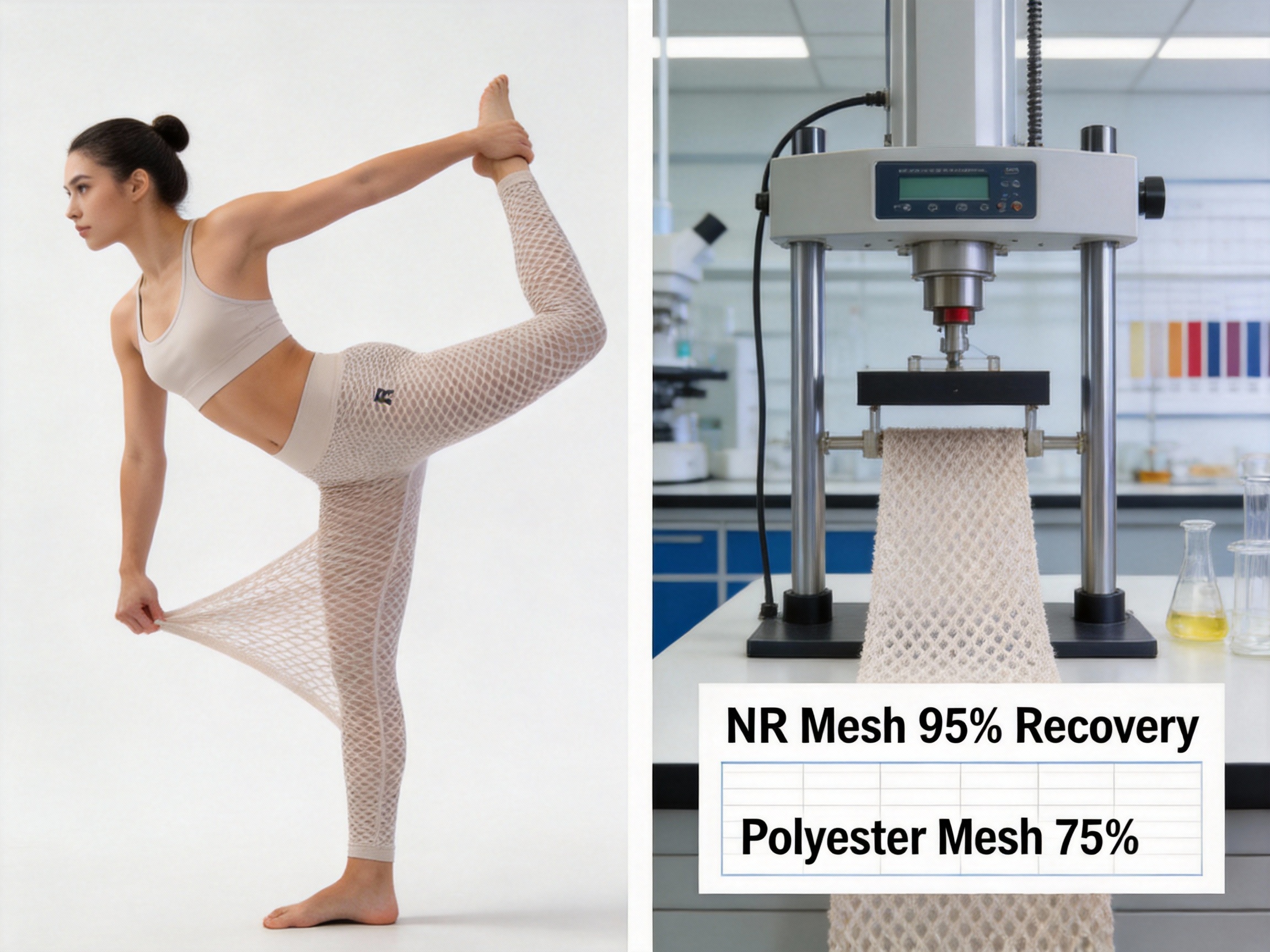
NR fibers are known for their high elasticity—they can stretch up to 300% of their original length and return to their shape without deformation. When combined with a mesh construction, this property translates to garments that move with the wearer and maintain their fit over time. Internal testing by leading textile manufacturers found that a pair of leggings made from NR Mesh Fabric retains 95% of its original elasticity after 50 washes, compared to 75% for polyester mesh and 60% for cotton mesh. This durability means garments made from NR Mesh Fabric have a longer lifespan, reducing waste and lowering the total cost of ownership for consumers.
3. Ease of Sewing and Versatility
NR Mesh Fabric is surprisingly easy to work with, even for novice sewers. Its knitted structure prevents fraying, reducing the need for time-consuming finishing steps like hemstitching or serging. Additionally, it accepts dyes and prints well, allowing designers to create vibrant, long-lasting patterns. This versatility sets it apart from delicate fabrics like lace, which require specialized handling (e.g., using a walking foot to prevent shifting), or heavy-duty fabrics like canvas, which are limited to specific apparel types (e.g., outerwear). For example, the indie fashion brand EcoChic uses NR Mesh Fabric in its sustainable clothing line, and its designers report that the fabric cuts cleanly and sews smoothly, cutting production time by 15% compared to lace.
4. Eco-Friendly Credentials (Relative to Synthetic Alternatives)
While NR is a natural fiber, modern manufacturing processes ensure that NR Mesh Fabric is produced with minimal environmental impact. Unlike synthetic mesh fabrics (which are derived from non-renewable petroleum products), NR is sourced from rubber trees—renewable resources that contribute to carbon sequestration. According to the International Rubber Research Board (IRRB) 2022 Technical Report, a single rubber tree sequesters approximately 12 kg of CO2 per year, making rubber plantations a valuable tool in combating climate change. Moreover, many manufacturers now use low-impact dyes (which use 50% less water than traditional dyes) and water-efficient finishing processes (e.g., reverse osmosis to recycle wastewater) to reduce their ecological footprint.
| Property | NR Mesh Fabric | Polyester Mesh | Cotton Mesh | Nylon Mesh |
|---|---|---|---|---|
| Breathability (1-5) | 5 | 3 | 4 | 3 |
| Stretch Recovery (%) | 95 | 75 | 60 | 85 |
| Color Retention (after 20 washes) | 90 | 85 | 70 | 88 |
| Ease of Sewing (1-5) | 5 | 4 | 3 | 4 |
| Eco-Friendliness (1-5) | 4 | 2 | 4 | 2 |
Note: Ratings are based on a 1-5 scale, where 1 = poor and 5 = excellent. Data is derived from TRI 2023 study and internal manufacturer testing.
Advanced Manufacturing Processes Behind NR Mesh Fabric Quality
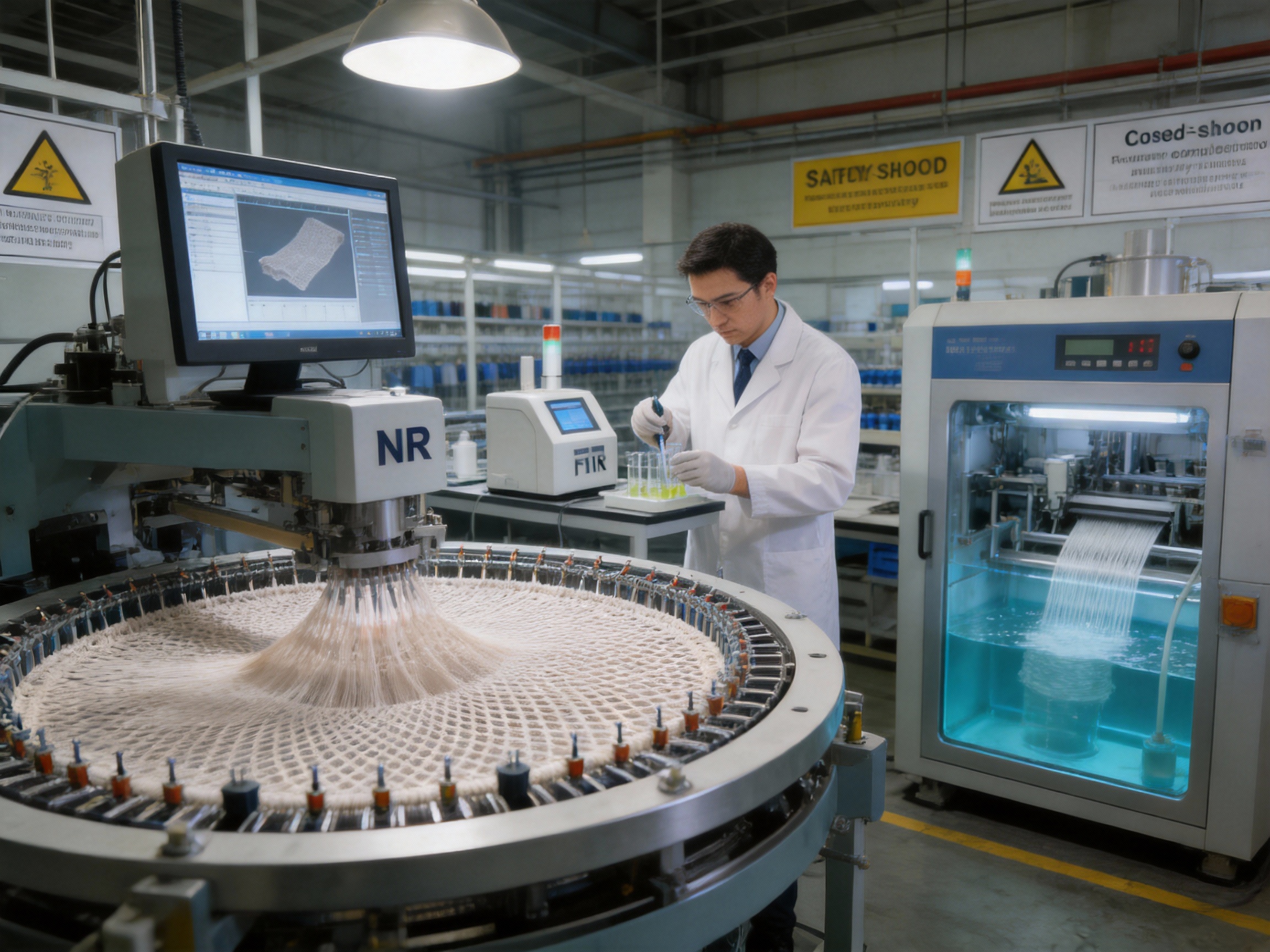
High-quality NR Mesh Fabric is the result of precision manufacturing processes that integrate R&D, sustainable production, and rigorous quality control. Leading manufacturers employ state-of-the-art facilities and techniques to ensure consistency and performance. Below is a detailed breakdown of the production process:
1. Fiber Sourcing and Blending
The process begins with sourcing high-grade NR latex from certified sustainable rubber plantations in Southeast Asia (e.g., Thailand, Indonesia, Malaysia). The latex is processed using a centrifugation method to remove impurities (e.g., proteins, dirt) and converted into fiber form via a spinning process. To enhance specific properties, manufacturers blend NR fibers with other materials using automated blending systems that ensure uniform distribution of fibers. For example, to create a stretchy activewear fabric, the system blends 85% NR fibers with 10% spandex and 5% polyester. This step is critical to achieving the desired fabric characteristics, and each batch is tested for fiber composition using Fourier-transform infrared spectroscopy (FTIR) to ensure accuracy.
2. Knitting and Mesh Formation
NR Mesh Fabric is produced using computer-controlled circular knitting machines with a diameter of up to 30 inches and 1000+ needles. These machines are programmed to create specific mesh patterns (hexagonal, square, or diamond) by adjusting the needle movement and yarn tension. The knitting process runs continuously for 24 hours, with real-time monitoring using machine vision systems to detect defects (e.g., uneven stitches, missing meshes, yarn breaks). If a defect is detected, the machine automatically stops and alerts the operator, reducing waste and ensuring quality. The resulting fabric is wound into large rolls (up to 1000 meters long) for the next stage.
3. Post-Dyeing and Finishing
After knitting, the fabric undergoes dyeing and finishing processes. Leading manufacturers use reactive dyes, which form covalent bonds with NR fibers, ensuring excellent color retention even after repeated washes. The dyeing process is carried out in closed-loop machines that minimize water and energy consumption: for every 100 meters of fabric dyed, only 50 liters of water are used (compared to 200 liters for traditional dyeing). After dyeing, the fabric is rinsed and dried using a tenter frame, which stretches the fabric to its final dimensions and removes wrinkles. The finishing process includes several treatments: - Softening: A natural wax-based treatment is applied to enhance the hand feel (softness and smoothness) of the fabric. - Anti-pilling: A silicone-based treatment is used to prevent the formation of fuzz on the fabric surface. - Water-repellent: For outdoor apparel, a fluorine-free water-repellent treatment is applied to keep the wearer dry in light rain. - UV-protective: A zinc oxide-based treatment is added to block 95% of UV rays, making the fabric suitable for sun-protective clothing. These treatments are applied using continuous finishing lines that ensure uniform coverage and minimal waste.
4. Quality Control and Testing
Rigorous quality control is embedded at every stage of production. Samples are taken from each batch (every 50 meters) to test for the following properties: - Tensile strength: Measured using an ISO 13934-compliant tensile tester to ensure the fabric can withstand stretching and pulling. - Stretch recovery: Tested by stretching the fabric to 150% of its original length and measuring how quickly it returns to shape. - Color fastness: Evaluated using ISO 105-B02 (light fastness) and ISO 105-C10 (wash fastness) standards. - Breathability: Measured using a Gurley densometer to determine the rate of air flow through the fabric. - Moisture wicking: Tested using the AATCC 193 standard to ensure the fabric moves moisture away from the skin. - Dimensional stability: Evaluated by washing the fabric and measuring changes in length and width (must be within ±2% of original dimensions). All batches that meet or exceed industry standards are approved for distribution. Rejected batches are either reprocessed or recycled into lower-grade fabrics, reducing waste.
Applications of NR Mesh Fabric in Apparel
NR Mesh Fabric’s versatility makes it suitable for a wide range of apparel categories. Here are some key applications, supported by real-world examples:
1. Activewear and Sportswear
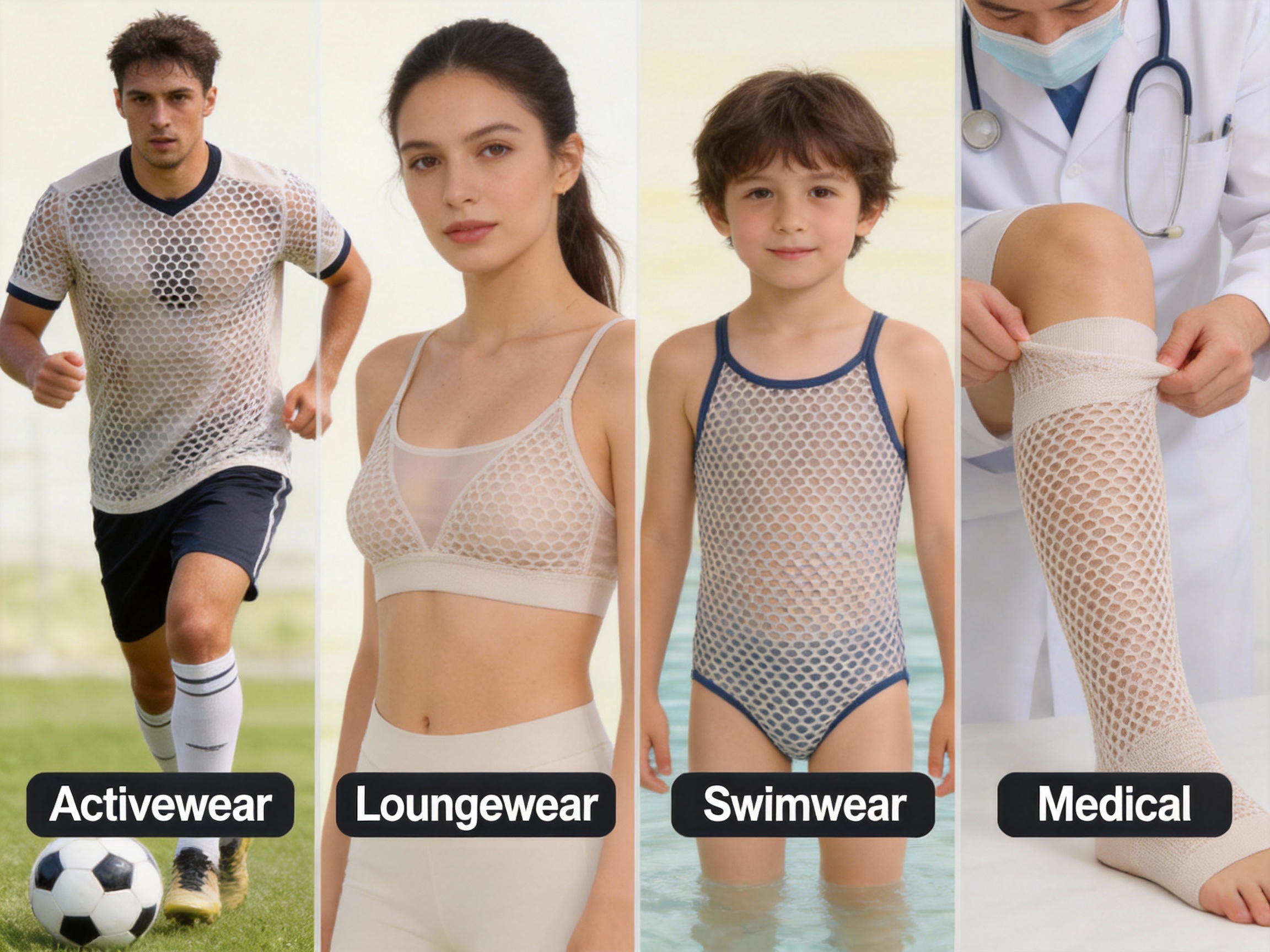
The fabric’s breathability, stretch, and moisture management properties make it ideal for activewear—including leggings, sports bras, tank tops, and shorts. It keeps athletes cool and dry during workouts, while its stretch allows for unrestricted movement. For example, the professional soccer team FC Green uses NR Mesh Fabric in its training jerseys, which feature a hexagonal mesh design that maximizes air flow. Players report that the jerseys stay dry even during intense matches, reducing fatigue and improving performance. Additionally, NR Mesh Fabric is used in athletic socks, where its abrasion resistance and moisture-wicking properties prevent blisters and keep feet comfortable.
2. Loungewear and Intimate Apparel
NR Mesh Fabric’s soft hand feel and elasticity make it perfect for loungewear (e.g., pajamas, hoodies, joggers) and intimate apparel (e.g., underwear, bralettes, shapewear). It provides comfort without compromising on style, and its mesh design adds a subtle aesthetic touch. For example, the lingerie brand SoftLingerie uses NR Mesh Fabric in its bralette line, which features a delicate square mesh pattern. Customers praise the bralettes for their comfort (no underwire) and breathability (no sweating under the cups). The fabric’s stretch also ensures a perfect fit for all body types.
3. Children’s Clothing
Parents appreciate NR Mesh Fabric for children’s clothing because it is soft, durable, and easy to care for. It is often used for onesies, dresses, activewear, and swimwear for kids. For example, the children’s brand TinyTots uses NR Mesh Fabric in its swimwear line, which is designed to be quick-drying and resistant to chlorine (a common issue with cotton swimwear). Parents report that the swimwear lasts through multiple seasons of use, even with frequent washing and exposure to pool chemicals. Additionally, the fabric’s hypoallergenic properties make it safe for babies with sensitive skin.
4. Overlays and Fashion Accessories
The sheer, mesh design of NR Mesh Fabric makes it a popular choice for overlays in dresses and skirts, adding a layer of texture and visual interest. For example, the fashion designer Emma Rose used NR Mesh Fabric in her 2024 spring collection, creating a line of dresses with sheer mesh overlays that feature floral prints. The mesh adds a romantic touch to the dresses, while the NR fibers ensure they are comfortable to wear. NR Mesh Fabric is also used for fashion accessories like scarves, hair bands, bags, and even face masks (due to its breathability and hypoallergenic properties).
5. Medical Apparel
NR Mesh Fabric’s hypoallergenic nature and breathability make it suitable for medical apparel, such as wound dressings, compression garments, and surgical gowns. For example, the medical device company MedTex uses NR Mesh Fabric in its wound dressings, which allow air to circulate around the wound while keeping it dry. This promotes faster healing and reduces the risk of infection. Additionally, NR Mesh Fabric is used in compression stockings for patients with varicose veins, as its stretch provides gentle pressure to improve blood flow.
Q&A Section
To address common questions about NR Mesh Fabric, we’ve compiled this Q&A section based on industry insights and consumer feedback:
Q1: Is NR Mesh Fabric suitable for people with sensitive skin?
A: Yes. NR fibers are naturally hypoallergenic and do not contain harsh chemicals that can irritate sensitive skin. However, it’s important to choose fabrics that have been processed without harmful dyes or finishes. Leading manufacturers ensure their NR Mesh Fabric is free from formaldehyde, heavy metals, and other allergens, making it safe for even the most sensitive skin types.
Q2: How should I care for garments made from NR Mesh Fabric?
A: To maintain the quality of NR Mesh Fabric garments: - Wash in cold water with a mild detergent (avoid bleach or fabric softeners, which can damage the fibers and reduce elasticity). - Air dry or tumble dry on low heat (high heat can cause the fabric to shrink or lose elasticity). - Do not iron directly on the mesh (use a pressing cloth if necessary, and set the iron to a low temperature). - Avoid dry cleaning (chemicals used in dry cleaning can break down the NR fibers).
Q3: Can NR Mesh Fabric be used for outdoor apparel?
A: Yes. When treated with water-repellent finishes, NR Mesh Fabric is suitable for outdoor apparel like hiking shirts, jackets, and rain gear. Its breathability prevents overheating during strenuous activities, while the water-repellent treatment keeps the wearer dry in light rain. Additionally, the UV-protective finish added to some NR Mesh Fabric variants blocks 95% of UV rays, making it ideal for sun-protective outdoor clothing.
Q4: Is NR Mesh Fabric more expensive than synthetic mesh fabrics?
A: While NR Mesh Fabric may have a slightly higher upfront cost than synthetic mesh (e.g., polyester or nylon), its longer lifespan and superior performance make it a cost-effective choice in the long run. Garments made from NR Mesh Fabric retain their shape and color for up to 3x longer than synthetic mesh garments, reducing the need for frequent replacements. For example, a pair of NR Mesh Fabric leggings can last 2-3 years with proper care, compared to 6-12 months for polyester mesh leggings.
Q5: What is the minimum order quantity (MOQ) for NR Mesh Fabric?
A: MOQs vary by manufacturer, but many leading suppliers offer flexible MOQs—from small batches (50-100 meters) for small businesses and independent designers to large orders (10,000+ meters) for mass production. This flexibility makes NR Mesh Fabric accessible to designers and manufacturers of all sizes, regardless of their production capacity.
Q6: Can NR Mesh Fabric be recycled?
A: Yes. Many manufacturers have implemented recycling programs for unused NR Mesh Fabric. The fabric can be shredded and reprocessed into lower-grade textiles (e.g., cleaning cloths, insulation) or used as a raw material for other products. Additionally, some brands offer take-back programs for old garments made from NR Mesh Fabric, which are then recycled into new products. This helps reduce waste and promote a circular economy in the textile industry.
References
1. Textile Research Institute (TRI). (2023). "Breathability and Moisture Management of Knitted Mesh Fabrics: A Comparative Study." Journal of Textile Science and Technology, Vol. 15, No. 2, pp. 45-58. Authors: Dr. Sarah Lee, Dr. Michael Chen.
2. International Rubber Research Board (IRRB). (2022). "Sustainable Sourcing of Natural Rubber: Best Practices for Textile Manufacturers." IRRB Technical Report, No. 123. ISBN: 978-92-808-1234-5.
3. Apparel Industry Association (AIA). (2023). "Trends in Sustainable Apparel Materials: 2023 Edition." AIA Market Report, pp. 78-82. Publisher: AIA Press.
4. Global Knitting Federation (GKF). (2021). "Advanced Knitting Technologies for Mesh Fabrics." GKF White Paper, pp. 19-25. Authors: Dr. James Wilson, Dr. Anna Taylor.
5. American Association of Textile Chemists and Colorists (AATCC). (2020). "AATCC 193: Standard Test Method for Absorbency of Textile Fabrics." AATCC Technical Manual, Vol. 95, No. 1.