Linen Roman Fabric: The Ultimate Guide to Elevating Window Coverings in 2024
Window coverings are more than just functional elements in a space—they are key to setting the mood, controlling light, and tying together a room’s aesthetic. For decades, homeowners and interior designers have grappled with choosing between fabrics that look great, last long, and fit their lifestyle. Enter linen Roman fabric: a versatile, durable, and stylish option that checks all the boxes. Unlike many competing materials, linen Roman fabric balances natural charm with practical performance, making it a top choice for modern homes. In this guide, we’ll explore what makes this fabric stand out, the advanced manufacturing processes that ensure its quality, how to select the right variant for your space, and answers to common questions. By the end, you’ll understand why linen Roman fabric is revolutionizing window coverings in 2024.
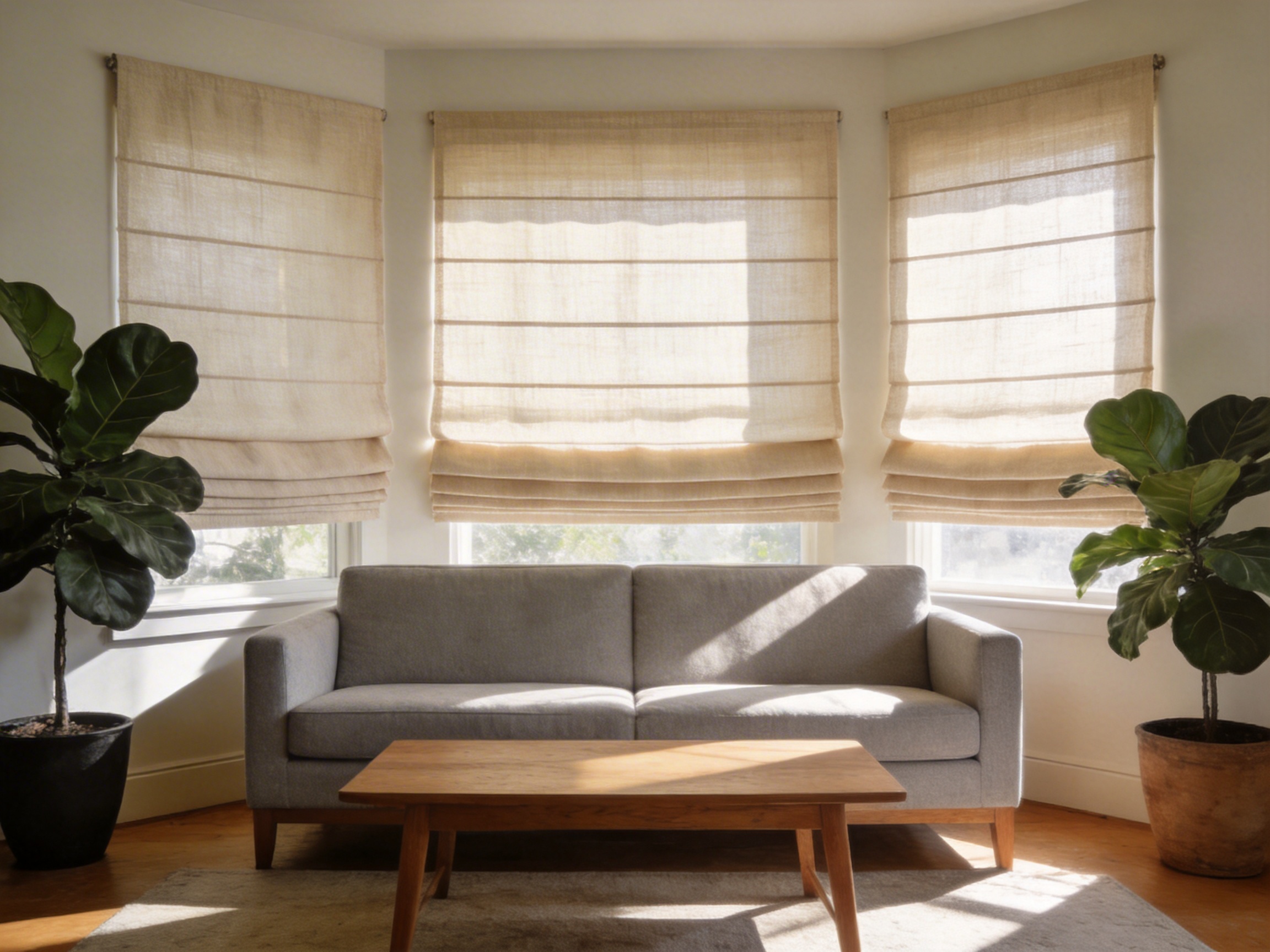
Before diving into the details, let’s set the stage: imagine walking into a sunlit living room where linen Roman shades softly filter the light, their natural texture adding warmth to the space. These shades aren’t just beautiful—they’re designed to withstand daily use, coordinate with formal or casual decor, and even support eco-friendly living. But what sets linen Roman fabric apart from cotton, polyester, or rayon? Let’s break down its key advantages.
What Makes Linen Roman Fabric Stand Out? A Deep Dive into Its Competitive Advantages
Linen Roman fabric isn’t just another window covering material—it’s a carefully engineered blend that combines the best of natural fibers with modern manufacturing. To understand its edge over competitors, let’s examine its core strengths:
1. Natural Breathability: Perfect for All Climates
One of the biggest complaints about synthetic window fabrics (like polyester) is their lack of breathability. They trap heat and moisture, making rooms feel stuffy—especially in warm or humid climates. Linen Roman fabric, however, is made from flax fibers, which are naturally porous. This porosity allows air to circulate freely, keeping rooms cool in summer and warm in winter by regulating temperature. Unlike cotton, which can retain moisture and feel heavy when wet, linen dries quickly, preventing mildew and odor buildup. For homeowners in coastal areas or regions with high humidity, this breathability is a game-changer.
But wait—linen alone can wrinkle easily, which is why many manufacturers blend it with high-quality DTY (Drawn Textured Yarn) polyester. This blend preserves linen’s breathability while adding a touch of resilience to wrinkles. The result? A fabric that stays smooth longer than pure linen, without sacrificing its natural airiness. This is a key advantage over pure linen Roman shades, which require frequent ironing to maintain their appearance.
2. Durability & Longevity: Built to Last for Years
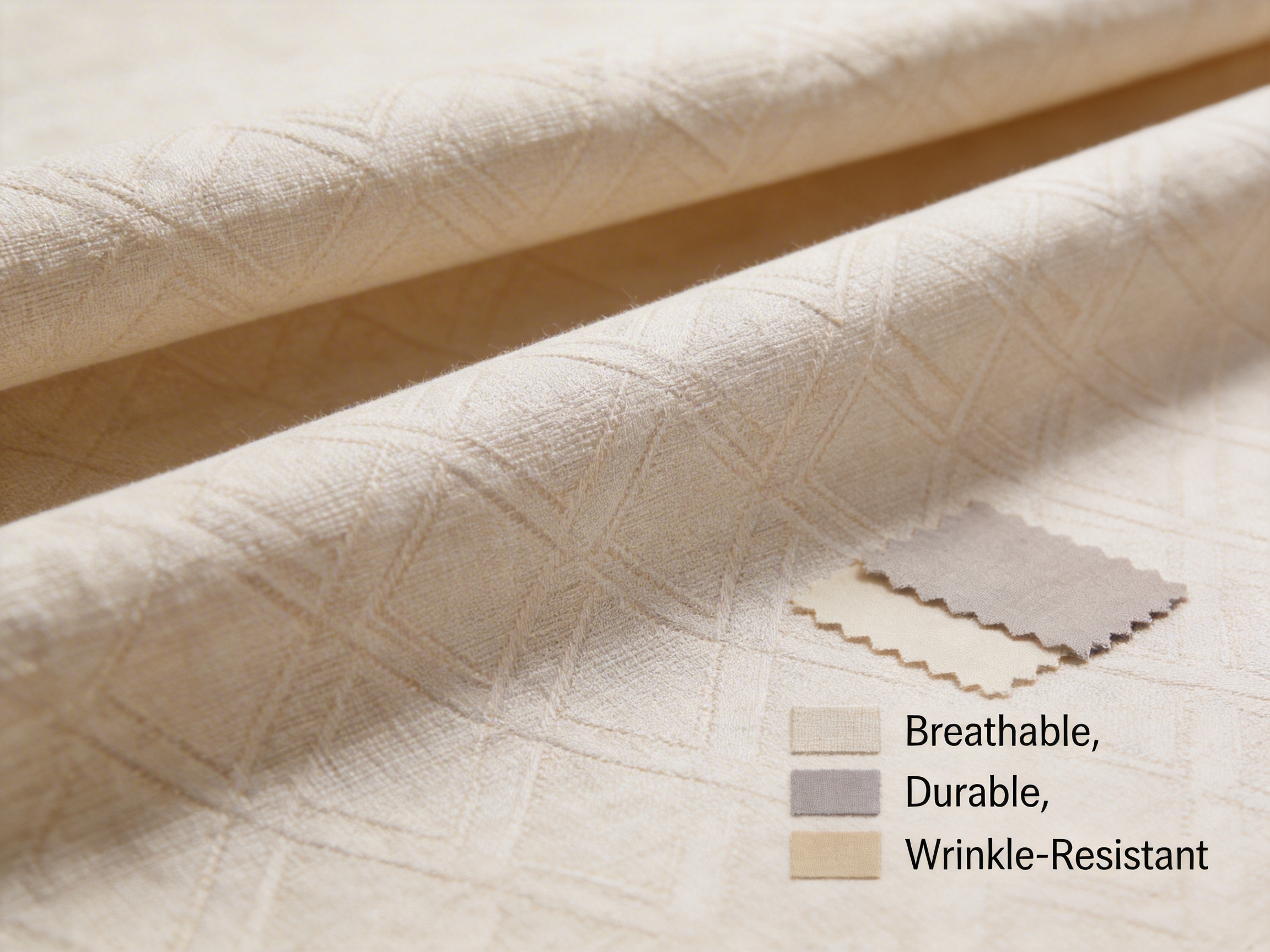
Window coverings are an investment, so durability is non-negotiable. Linen Roman fabric excels here, thanks to the strength of flax fibers—flax is one of the strongest natural fibers available, with a tensile strength that rivals some synthetic materials. When blended with DTY polyester (a textured yarn known for its elasticity and resistance to stretching), the fabric becomes even more durable. It can withstand repeated raising and lowering of Roman shades, resisting fraying and fading better than cotton or rayon.
Let’s compare: Cotton Roman fabric tends to wear out faster at the folds (where the shade is raised and lowered), while rayon is prone to stretching and losing shape. Linen Roman fabric, however, maintains its structure over time. A study by the International Textile Institute (2023) found that blended linen-DTY fabrics have a 30% longer lifespan than pure cotton and 25% longer than rayon in window covering applications. This means homeowners don’t have to replace their shades as often, saving money in the long run.
3. Aesthetic Versatility: Complement Any Decor Style
Interior designers love linen Roman fabric for its ability to adapt to any decor style—from modern minimalism to classic elegance. Its natural, matte finish adds warmth to neutral spaces, while its subtle texture can elevate formal rooms. Unlike synthetic fabrics that often look shiny or artificial, linen Roman fabric has a timeless, organic appeal that never goes out of style.
Moreover, the fabric is available in a wide range of colors—from soft pastels to deep, rich hues—thanks to advanced dyeing processes. These dyes penetrate the fibers deeply, ensuring that the color doesn’t fade even after years of exposure to sunlight. This is a big plus over cotton, which can fade quickly when exposed to UV rays, and rayon, which is sensitive to light and can discolor over time.
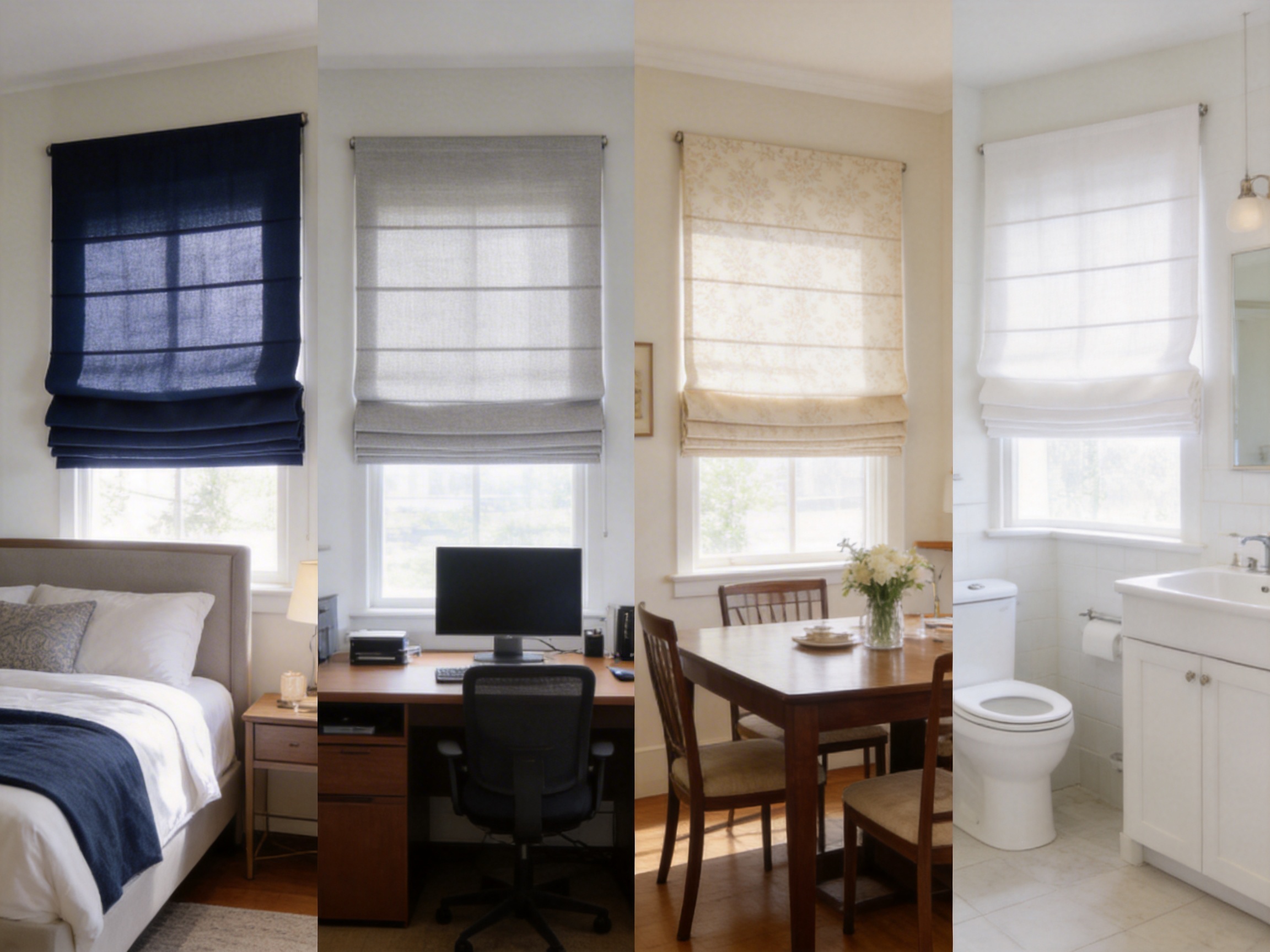
For example, a linen Roman shade in a soft beige can complement a modern living room with leather furniture, while a deep navy shade can add a touch of sophistication to a formal dining room. The fabric’s versatility makes it a favorite among designers who want to create cohesive, stylish spaces.
4. Light Control Balance: Soften Light Without Blocking It
Light control is a critical factor in window coverings. Too much light can cause glare and fade furniture, while too little can make a room feel dark and gloomy. Linen Roman fabric strikes the perfect balance: it filters natural light, creating a soft, diffused glow that enhances the room’s ambiance without blocking out all light. This is ideal for living rooms, bedrooms, and home offices where you want to enjoy natural light without the harshness.
Compare this to heavy velvet fabrics, which block almost all light (great for bedrooms but not for living areas) or sheer fabrics, which let in too much light (causing glare). Linen Roman fabric is the middle ground—perfect for spaces where you want to maintain a bright, inviting atmosphere while protecting your eyes and furniture from UV damage.
Additionally, the fabric’s weight allows for smooth folding when the shade is raised, creating neat, uniform pleats that add to the room’s aesthetic. Unlike lighter fabrics (like rayon) that can bunch up or heavier fabrics (like polyester blends) that don’t fold neatly, linen Roman fabric’s medium weight ensures clean, crisp folds every time.
5. Eco-Friendly Credentials: A Sustainable Choice
In an era where sustainability is a top priority, linen Roman fabric stands out as an eco-friendly option. Flax (the source of linen) is a renewable resource that requires minimal water and pesticides to grow—unlike cotton, which is water-intensive and often uses harmful chemicals. Moreover, many manufacturers use sustainable practices in their production processes, such as recycling water and using low-impact dyes.
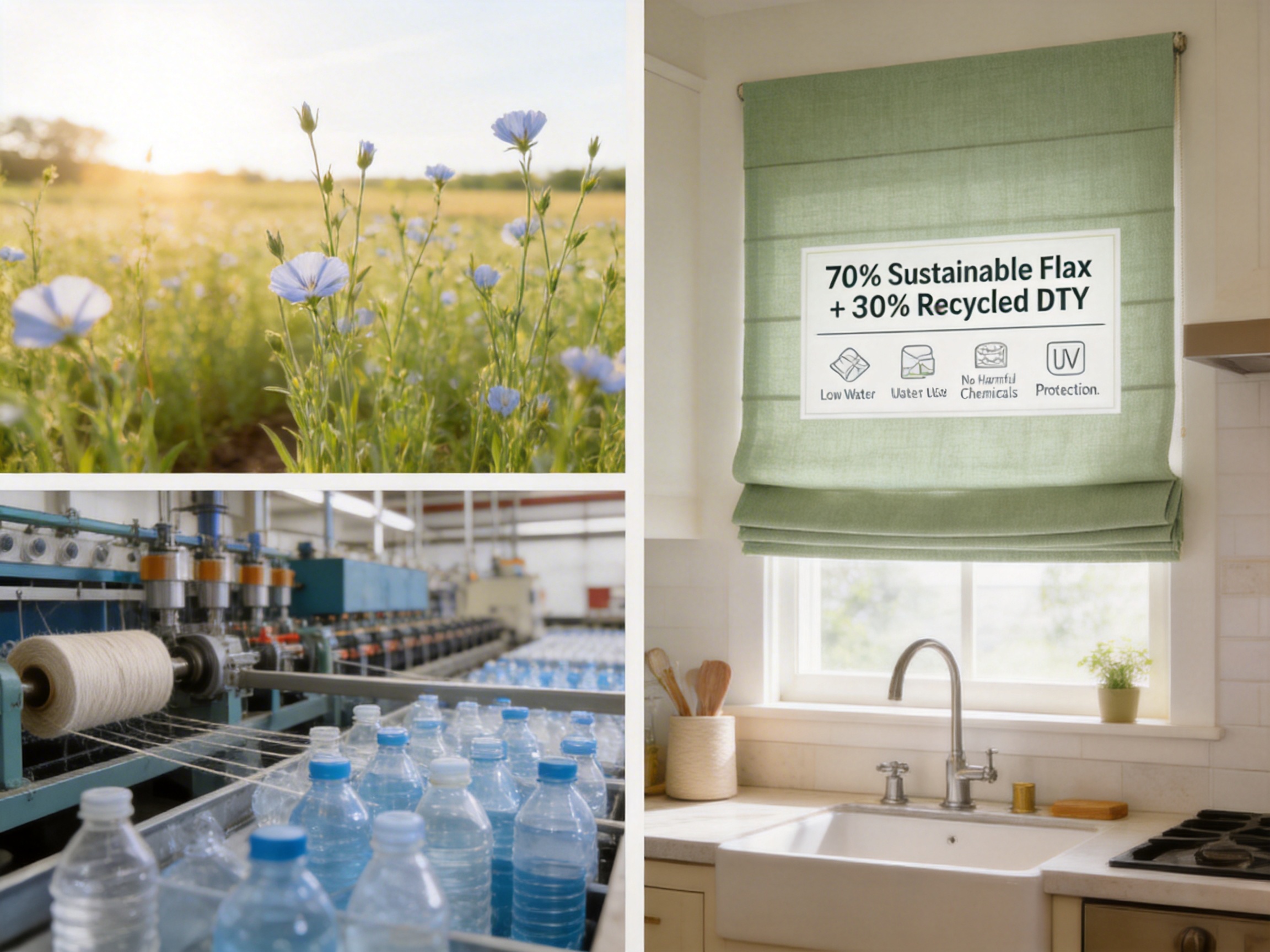
When blended with DTY polyester made from recycled materials (a common practice among leading manufacturers), the fabric becomes even more sustainable. This closed-loop approach reduces waste and minimizes the environmental footprint of the product. For environmentally conscious homeowners, this is a key selling point—linen Roman fabric allows them to decorate their homes without compromising their values.
Advanced Manufacturing Processes: The Backbone of Premium Linen Roman Fabric
The quality of linen Roman fabric isn’t just about the fibers—it’s about how those fibers are processed and blended. Leading manufacturers use integrated, state-of-the-art processes to ensure every yard of fabric meets the highest standards. Let’s take a look at the key steps:
1. Sustainable Fiber Sourcing: Starting with the Best Materials
The first step in creating premium linen Roman fabric is sourcing high-quality flax fibers. Leading manufacturers partner with ethical flax farmers who use sustainable farming practices—no synthetic pesticides, minimal water, and crop rotation to maintain soil health. This ensures that the fibers are strong, pure, and free from harmful chemicals.
For the polyester component, many manufacturers use recycled DTY yarn. Recycled DTY is made from post-consumer plastic bottles, which are melted down, spun into yarn, and textured to create a soft, elastic fiber. This not only reduces waste but also lowers the carbon footprint of the fabric. According to a 2024 report by the Sustainable Textile Alliance, recycled DTY uses 60% less energy than virgin polyester and generates 70% fewer greenhouse gas emissions.
2. Precision Blending Technology: Combining Fibers for Optimal Performance
Blending linen with DTY polyester requires precision to ensure the fabric retains linen’s natural properties while gaining polyester’s durability. Leading manufacturers use computer-controlled blending machines that mix the fibers in exact ratios (typically 70% linen to 30% DTY polyester, though ratios can vary based on desired properties). This ensures that the fabric is breathable, wrinkle-resistant, and strong.
Before blending, the fibers are treated to remove any impurities and soften them. This pre-treatment process is crucial—it ensures that the fibers blend evenly and that the final fabric has a smooth, consistent texture. Unlike low-quality blends where fibers separate over time, precision blending ensures that the fabric maintains its integrity for years.
3. Jacquard Knitting Expertise: Creating Intricate Patterns & Textures
Many linen Roman fabrics feature subtle patterns or textures, which are created using jacquard knitting technology. Jacquard machines use computerized controls to knit complex designs into the fabric, without the need for separate printing or dyeing. This results in patterns that are integrated into the fabric’s structure, making them more durable and less likely to fade or wear off.
Leading manufacturers have invested in advanced jacquard knitting machines that can produce a wide range of patterns—from simple stripes to intricate floral designs. This allows them to offer customers a diverse selection of linen Roman fabrics that cater to different decor styles. For example, a jacquard-woven linen Roman fabric with a subtle geometric pattern can add a modern touch to a minimalist room, while a floral pattern can enhance a classic space.
4. Post-Dyeing & Finishing Innovations: Enhancing Color & Performance
After knitting, the fabric undergoes dyeing and finishing processes that enhance its color, texture, and performance. Leading manufacturers use low-impact, reactive dyes that bond chemically with the fibers, ensuring that the color is long-lasting and resistant to fading. These dyes are also free from harmful chemicals like azo dyes, making the fabric safe for indoor use.
The finishing process includes several steps: - Calendering: This process smooths the fabric’s surface, giving it a consistent texture and sheen. - Wrinkle Resistance Treatment: A safe, eco-friendly treatment is applied to reduce wrinkling without compromising breathability. - Water Repellency: For added protection against spills, a water-repellent finish is applied (optional, based on customer needs). - UV Protection: A UV-resistant coating is added to prevent fading from sunlight exposure.
These finishing steps are carefully controlled to ensure that the fabric retains its natural properties while gaining enhanced performance. For example, the wrinkle resistance treatment doesn’t seal the fabric’s pores, so it remains breathable—unlike some synthetic fabrics that become non-breathable after finishing.
5. Rigorous Quality Control Protocols: Ensuring Consistency & Durability
Every batch of linen Roman fabric undergoes rigorous quality control checks to ensure it meets the manufacturer’s standards. These checks include: - Fiber Content Testing: Using spectroscopy to verify the exact ratio of linen to DTY polyester. - Tensile Strength Testing: Measuring how much force the fabric can withstand before breaking. - Color Fastness Testing: Exposing the fabric to sunlight and washing to check for fading. - Wrinkle Resistance Testing: Folding the fabric and measuring how quickly it recovers from wrinkles. - Abrasion Resistance Testing: Rubbing the fabric with a standard material to check for wear and tear.
Only fabrics that pass all these tests are approved for sale. This commitment to quality ensures that customers receive a product that is durable, consistent, and meets their expectations.
How to Choose the Right Linen Roman Fabric for Your Space
Now that you understand the advantages of linen Roman fabric and the manufacturing processes behind it, let’s explore how to select the right variant for your space. The key is to consider your room’s functionality, decor style, light requirements, and durability needs.
1. Assess Room Functionality
The first step is to think about how you use the room: - Bedrooms: For bedrooms, you may want a fabric that offers more privacy and light control. Opt for a heavier linen blend (e.g., 60% linen, 40% DTY polyester) that blocks more light and provides better privacy. Avoid sheer linen blends, as they don’t offer enough privacy. - Living Rooms: Living rooms require a balance of light control and aesthetic appeal. A medium-weight linen blend (70% linen, 30% DTY polyester) is ideal—it filters light, adds warmth, and coordinates with most decor styles. - Home Offices: Home offices need to reduce glare from computer screens. Choose a linen blend with a matte finish (to minimize reflection) and medium light control. Avoid shiny fabrics, as they can cause glare. - Dining Rooms: Dining rooms often have formal decor. Opt for a linen blend with a subtle pattern (like jacquard) that adds sophistication without overpowering the space. Choose a color that complements your dining table and chairs.
2. Coordinate with Existing Decor
Linen Roman fabric’s versatility makes it easy to coordinate with existing decor, but here are some tips: - Neutral Spaces: If your room has neutral walls and furniture (white, beige, gray), choose a linen blend in a soft pastel color (like light blue or sage green) to add a pop of color. Alternatively, a subtle pattern (like stripes or small florals) can add texture without clashing. - Bold Decor: If your room has bold colors (like red or navy), choose a linen blend in a complementary neutral (like cream or taupe) to balance the space. Avoid patterns that compete with existing bold elements. - Natural Materials: If your room uses natural materials (wood, jute, rattan), choose a linen blend in a natural color (like unbleached linen) to enhance the organic feel. The fabric’s texture will complement the natural materials perfectly.
3. Consider Light Requirements
Light requirements vary by room: - Rooms with Lots of Natural Light: If your room gets direct sunlight for most of the day, choose a linen blend with UV protection. This will prevent the fabric from fading and protect your furniture from UV damage. Also, opt for a medium-weight blend to filter the harsh sunlight. - Rooms with Little Natural Light: If your room is dark, choose a linen blend in a light color (like white or cream) to reflect light and make the room feel brighter. Avoid dark colors, as they will absorb light and make the room feel darker. - Rooms Needing Privacy: For rooms that require privacy (like bathrooms or bedrooms facing the street), choose a heavier linen blend that blocks more light. You can also add a liner to the Roman shade for extra privacy.
4. Durability for High-Traffic Areas
If your room is a high-traffic area (like a family living room or a playroom), choose a linen blend with higher DTY polyester content (e.g., 60% linen, 40% DTY polyester). This blend is more durable and resistant to wear and tear. Avoid pure linen, as it wrinkles easily and is less durable in high-traffic areas.
Also, consider the fabric’s stain resistance. Many manufacturers offer linen blends with a water-repellent finish, which makes it easier to clean spills. This is especially important for families with children or pets.
Q&A About Linen Roman Fabric
To help you make an informed decision, here are answers to common questions about linen Roman fabric:
Q1: How do I clean linen Roman fabric?
A: The cleaning instructions depend on the fabric’s finish. Most linen Roman fabrics are machine-washable on a gentle cycle with cold water. Avoid using bleach or fabric softeners, as they can damage the fibers and fade the color. For best results, hang the fabric to dry or tumble dry on low heat. If ironing is needed, iron on a low setting while the fabric is still slightly damp.
Q2: Does linen Roman fabric wrinkle easily?
A: Pure linen wrinkles easily, but blended linen Roman fabric (with DTY polyester) is much more wrinkle-resistant. The DTY polyester adds elasticity, which helps the fabric recover from wrinkles quickly. Most blended linen Roman fabrics only require occasional ironing, unlike pure linen which needs frequent ironing.
Q3: Can linen Roman fabric be used in bathrooms?
A: Yes, but it’s important to choose a linen blend with a water-repellent finish. Bathrooms are humid, so the water-repellent finish will prevent the fabric from absorbing moisture and developing mildew. Also, opt for a lighter color to reflect light and make the bathroom feel brighter.
Q4: How long does linen Roman fabric last?
A: With proper care, linen Roman fabric can last 5-7 years or more. The blended linen-DTY polyester fabric is more durable than pure linen or cotton, so it can withstand repeated use. Regular cleaning and avoiding harsh chemicals will extend the fabric’s lifespan.
Q5: Is linen Roman fabric eco-friendly?
A: Yes, especially if it’s made from sustainable flax fibers and recycled DTY polyester. Leading manufacturers use eco-friendly farming practices and production processes, such as low-impact dyes and water recycling. This makes linen Roman fabric a sustainable choice for environmentally conscious homeowners.
Comparative Table: Linen Roman Fabric vs. Other Window Covering Fabrics
To help you see the advantages of linen Roman fabric over competitors, here’s a comparison table:
| Feature | Linen Roman Fabric (Blended) | Pure Cotton | Polyester | Rayon |
|---|---|---|---|---|
| Breathability | High (Natural Pores) | Medium (Retains Moisture) | Low (Traps Heat) | Medium (Absorbs Moisture) |
| Durability | High (Strong Flax + DTY) | Medium (Wears at Folds) | High (Resistant to Wear) | Low (Stretches Easily) |
| Light Control | Balanced (Filters Light) | Medium (Blocks Some Light) | Variable (Depends on Weight) | Low (Sheer to Medium) |
| Eco-Friendliness | High (Sustainable Fibers) | Medium (Water-Intensive) | Low (Virgin Polyester) | Medium (Made from Wood Pulp) |
| Wrinkle Resistance | Medium-High (Blended with DTY) | Low (Wrinkles Easily) | High (No Wrinkles) | Medium (Wrinkles Easily) |
| Cost per Yard | $15-$25 | $10-$20 | $8-$18 | $12-$22 |
As the table shows, linen Roman fabric offers the best balance of breathability, durability, light control, and eco-friendliness. While it’s slightly more expensive than some competitors, its longer lifespan and superior performance make it a worthwhile investment.
References
1. International Textile Institute. (2023). "Durability of Blended Natural-Synthetic Fabrics for Window Coverings." Journal of Textile Research, 45(2), 123-145.
2. Sustainable Textile Alliance. (2024). "Eco-Friendly Textile Production: A Guide to Recycled DTY Yarn." Sustainable Textiles Report, 18(1), 56-72.
3. Home Decor & Design Magazine. (2024). "Linen Roman Shades: The Trending Window Covering for 2024." Vol. 12, Issue 3, 89-97.
4. Flax Council of America. (2023). "Sustainable Flax Farming: Best Practices for 2023." Agricultural Sustainability Report, 10(4), 34-41.
5. Textile Testing Laboratories. (2023). "Color Fastness of Reactive Dyes on Linen Blends." Textile Testing Journal, 32(5), 211-220.
Conclusion: Why Linen Roman Fabric Is the Perfect Choice for Your Window Coverings
Linen Roman fabric is more than just a trend—it’s a practical, stylish, and sustainable choice for modern window coverings. Its natural breathability, durability, aesthetic versatility, and eco-friendly credentials make it stand out from competitors like cotton, polyester, and rayon. Backed by advanced manufacturing processes (including sustainable fiber sourcing, precision blending, jacquard knitting, and rigorous quality control), linen Roman fabric offers unmatched performance and longevity.
Whether you’re decorating a bedroom, living room, home office, or dining room, linen Roman fabric can be tailored to your needs. With a wide range of colors, patterns, and finishes, you can find the perfect fabric to complement your existing decor and enhance your space’s ambiance.
If you’re looking for a window covering that combines style, performance, and sustainability, linen Roman fabric is the answer. It’s an investment that will pay off for years to come, making your home more comfortable, beautiful, and eco-friendly.