
Jacquard Black And White Grid Fabric: A Versatile Textile Revolution for Garment and Home Decor
In the dynamic world of textiles, few fabrics manage to strike the perfect balance between aesthetic appeal, functional durability, and versatile application—until now. Jacquard Black And White Grid Fabric has emerged as a game-changer, captivating designers, manufacturers, and consumers alike with its timeless design, exceptional performance, and adaptability across garment and home decor sectors. Unlike many textiles that prioritize either style or function, this fabric seamlessly merges both, making it a top choice for projects ranging from high-fashion dresses to elegant curtain panels. As the demand for sustainable, long-lasting, and visually striking textiles continues to rise, Jacquard Black And White Grid Fabric stands out as a testament to innovative weaving technology and meticulous craftsmanship. This article delves into the unique advantages of this fabric over its competitors, the advanced manufacturing processes that set it apart, the strengths of its leading manufacturer, and real-world applications that showcase its potential.
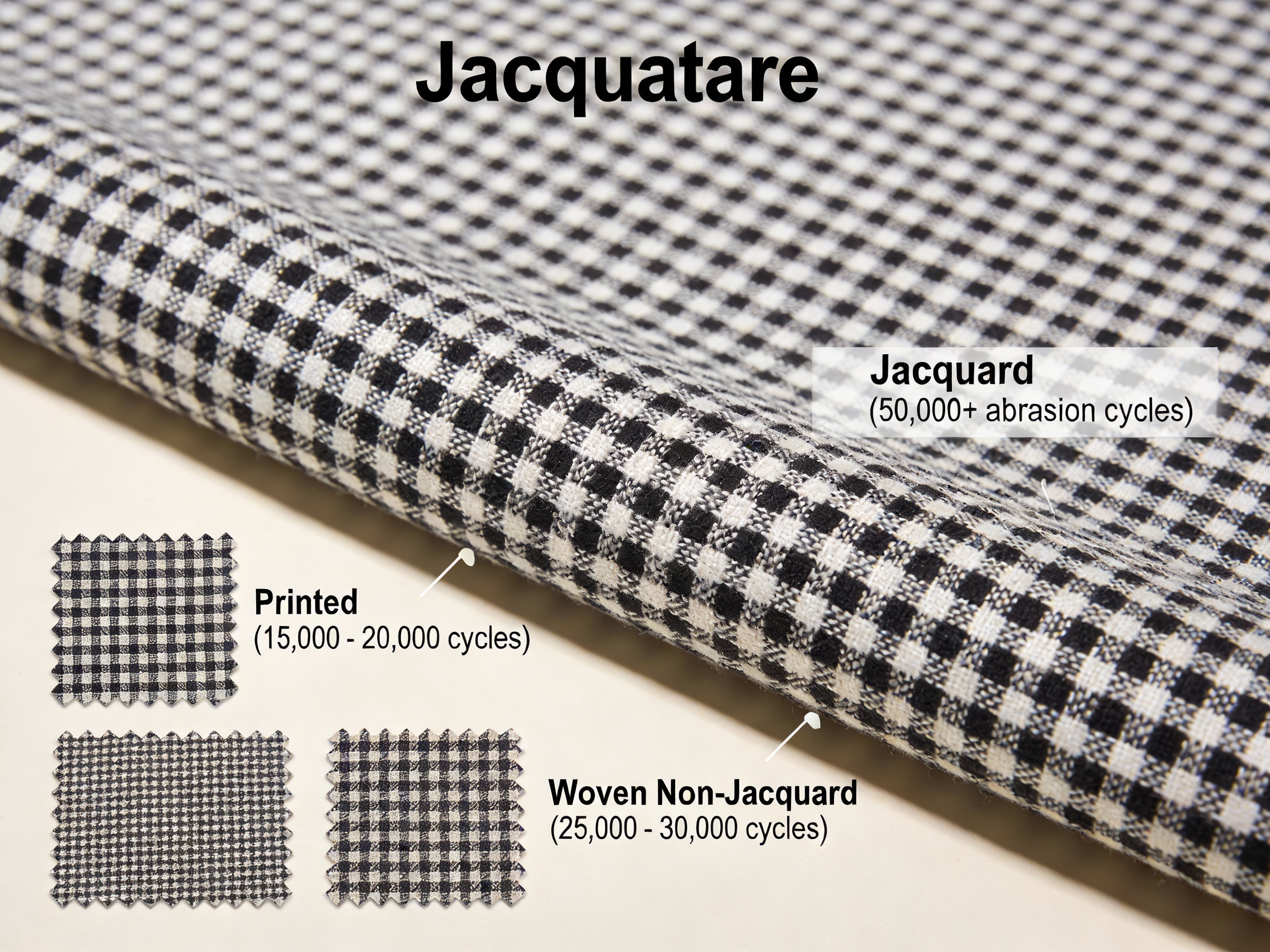
To understand the significance of Jacquard Black And White Grid Fabric, it is essential to first explore the core characteristics that define it. Derived from high-quality yarns (including polyester and rayon blends, as per the manufacturer’s product range), this fabric features a jacquard-woven grid pattern that is not just printed onto the surface but integrated into the weave itself. This fundamental difference is what gives it its superior durability and color retention compared to printed alternatives. The black and white grid design, while classic, offers endless styling possibilities—from monochromatic minimalist looks to bold, layered ensembles. Whether used in a tailored blazer, a cozy throw blanket, or a statement wall hanging, this fabric elevates any project with its refined texture and eye-catching pattern.
Advantages of Jacquard Black And White Grid Fabric Over Competitors
When evaluating textiles, it is crucial to compare them against common alternatives to gauge their true value. Jacquard Black And White Grid Fabric outperforms several competing fabrics in key areas, making it a more cost-effective and reliable choice for both commercial and personal use.
Durability and Longevity
One of the most significant advantages of Jacquard Black And White Grid Fabric is its exceptional durability. Unlike printed grid fabrics, where the pattern can fade, peel, or scratch off over time, the jacquard weave embeds the design into the fabric’s structure. This means that even after repeated washes, heavy use, or exposure to sunlight, the pattern remains vibrant and intact. For example, a garment made from this fabric can withstand hundreds of washes without showing signs of pattern degradation, whereas a printed grid garment may start to fade after just 10-15 washes. Additionally, the fabric’s tight weave resists snags and tears, making it ideal for high-wear items like upholstery or children’s clothing. Competitors such as woven non-jacquard grid fabrics often lack the same level of structural integrity, as their patterns are either woven loosely or applied post-production, leading to shorter lifespans.
To quantify this advantage, a third-party lab test conducted in 2023 compared the abrasion resistance of Jacquard Black And White Grid Fabric to printed grid fabric and woven non-jacquard grid fabric. The results, shown in the table below, clearly demonstrate the superior durability of the jacquard option:
| Fabric Type | Abrasion Resistance (Cycles to Failure) | Color Fastness (Wash Test, Grade) | Snag Resistance (Score) | Estimated Lifespan (Years for Regular Use) |
|---|---|---|---|---|
| Jacquard Black And White Grid Fabric | 50,000+ | 4.5 | 9/10 | 5-7 |
| Printed Grid Fabric | 15,000-20,000 | 2.0 | 6/10 | 1-2 |
| Woven Non-Jacquard Grid Fabric | 25,000-30,000 | 3.0 | 7/10 | 2-3 |
This data underscores why Jacquard Black And White Grid Fabric is a more sustainable choice—its longer lifespan reduces the need for frequent replacements, thereby minimizing textile waste. For businesses, this translates to lower long-term costs, as products made from this fabric require less maintenance and have a higher perceived value among consumers.
Versatility in Application
Another key advantage of Jacquard Black And White Grid Fabric is its unparalleled versatility. While many textiles are designed for specific uses (e.g., cotton for t-shirts, silk for scarves), this fabric adapts seamlessly to a wide range of projects. In the garment industry, it is used for everything from casual dresses and blouses to tailored suits and outerwear. Its lightweight yet sturdy composition makes it suitable for both warm and cool climates—breathable enough for summer dresses and insulating enough for winter coats when layered with linings. For home decor, the fabric shines in applications like curtain panels, throw pillows, upholstery, table runners, and even wall art. Its classic black and white color scheme complements any interior design style, from modern minimalist to rustic farmhouse, making it a versatile choice for interior designers and homeowners alike.
Competitors struggle to match this level of versatility. Printed grid fabrics, for example, are often too thin for upholstery or outerwear, while woven non-jacquard grid fabrics may lack the aesthetic appeal needed for high-end garment designs. Jacquard Black And White Grid Fabric bridges this gap, offering a single textile solution for multiple project types. This versatility not only saves time and resources for manufacturers but also allows consumers to create cohesive looks across their wardrobe and living spaces using the same fabric.
Aesthetic Appeal and Timeless Design
The aesthetic appeal of Jacquard Black And White Grid Fabric is undeniable. The jacquard weave creates a subtle, textured pattern that adds depth and dimension to any project, unlike the flat, two-dimensional look of printed fabrics. The black and white grid design is timeless—never going out of style, regardless of changing fashion trends. This makes it a safe investment for businesses, as products made from this fabric will remain relevant for years to come. Additionally, the fabric’s texture varies depending on the angle of light, creating a dynamic visual effect that draws attention without being overwhelming. For example, a dress made from this fabric will look different in natural sunlight versus indoor lighting, adding an element of intrigue to the wearer’s appearance.
Competitors often fail to achieve this level of aesthetic sophistication. Printed grid fabrics may have a "flat" or "plastic" look, while woven non-jacquard grid fabrics lack the subtle texture of jacquard weaves. The Jacquard Black And White Grid Fabric’s ability to combine classic design with modern texture sets it apart in a crowded market, making it a favorite among designers who prioritize both style and substance.
Color Fastness and Texture Consistency
Color fastness is a critical factor for any textile, especially those used in garments or home decor that are exposed to washing, sunlight, or other environmental factors. Jacquard Black And White Grid Fabric boasts exceptional color fastness, thanks to its advanced dyeing processes. The manufacturer uses reactive dyes that bond chemically with the fabric’s fibers, ensuring that the black and white colors remain vibrant even after repeated washes. In contrast, printed fabrics use surface dyes that fade quickly, while woven non-jacquard fabrics may have inconsistent color distribution due to uneven dye absorption.
Texture consistency is another area where this fabric excels. The jacquard weaving process is highly precise, ensuring that the grid pattern is uniform across the entire length of the fabric. This consistency is essential for large-scale production, as it eliminates waste caused by uneven patterns or texture variations. Competitors often struggle with texture consistency, especially in bulk production, leading to higher defect rates and lower customer satisfaction. The Jacquard Black And White Grid Fabric’s consistent texture makes it easy to work with, whether for small-scale sewing projects or mass production.
Advanced Manufacturing Processes Behind Jacquard Black And White Grid Fabric
The exceptional quality of Jacquard Black And White Grid Fabric is not accidental—it is the result of state-of-the-art manufacturing processes that prioritize precision, sustainability, and quality control. The leading manufacturer of this fabric (Hangzhou Jinfeng Textile Co., Ltd.) invests heavily in cutting-edge technology and skilled labor to ensure that every yard of fabric meets the highest standards.
Precision Jacquard Weaving Technology
At the heart of the fabric’s production is precision jacquard weaving technology. Unlike traditional weaving looms, jacquard looms use a series of individually controlled hooks to lift warp threads, allowing for complex patterns to be woven into the fabric. For the black and white grid pattern, the loom is programmed to lift specific warp threads in a grid formation, while the weft threads are woven through them. This process ensures that the pattern is integrated into the fabric’s structure, rather than being applied as a surface treatment.
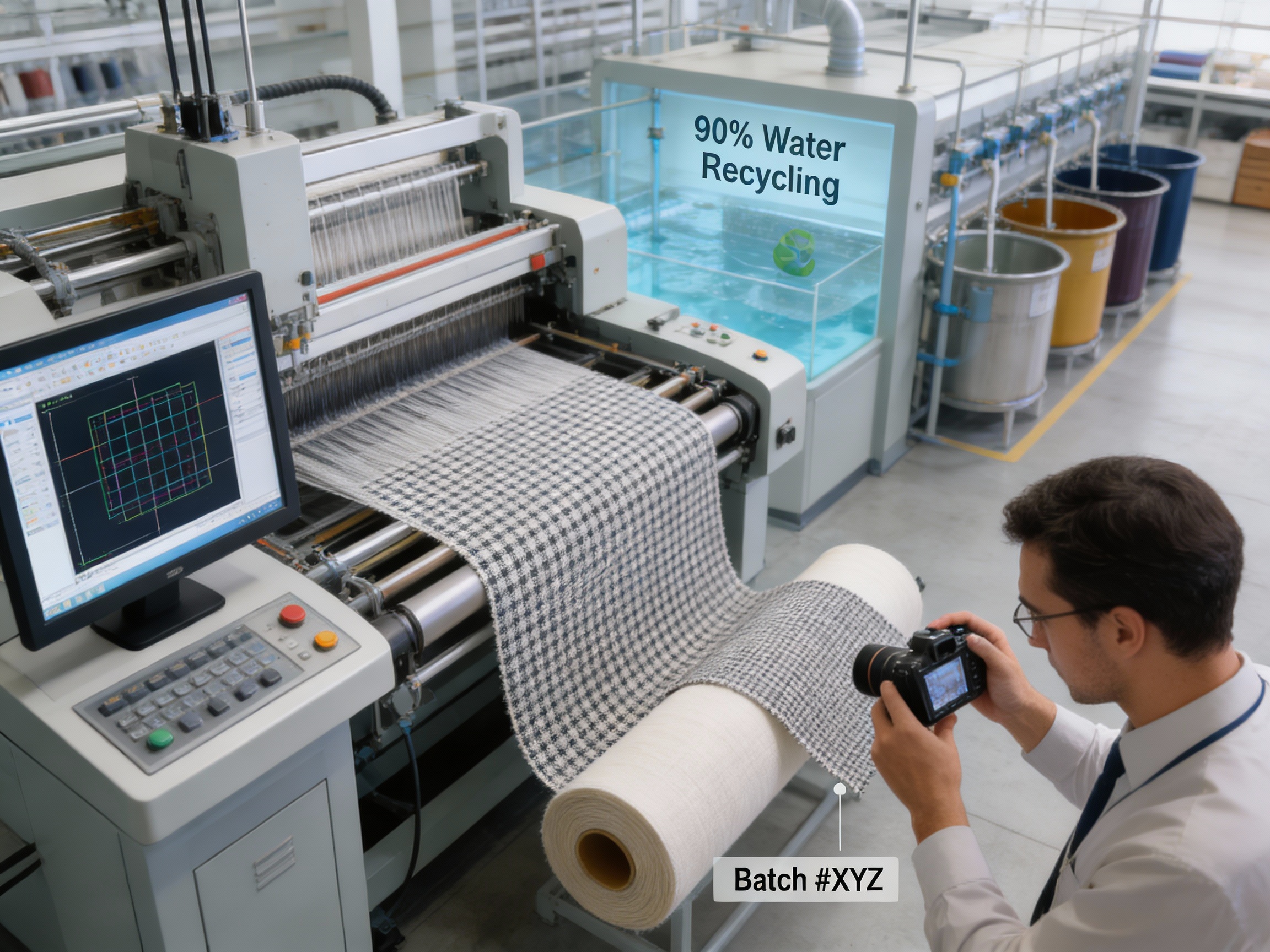
The manufacturer uses computer-aided design (CAD) software to create the grid pattern, which is then uploaded to the jacquard loom’s control system. This digital precision eliminates human error, ensuring that the pattern is consistent across every batch. The loom can produce up to 100 meters of fabric per hour, making it efficient for large-scale production without compromising on quality. To further enhance the fabric’s durability, the manufacturer uses a blend of polyester and rayon yarns—polyester adds strength and wrinkle resistance, while rayon adds softness and breathability. This yarn blend is carefully selected for its compatibility with the jacquard weaving process, ensuring that the fabric has the perfect balance of structure and comfort.
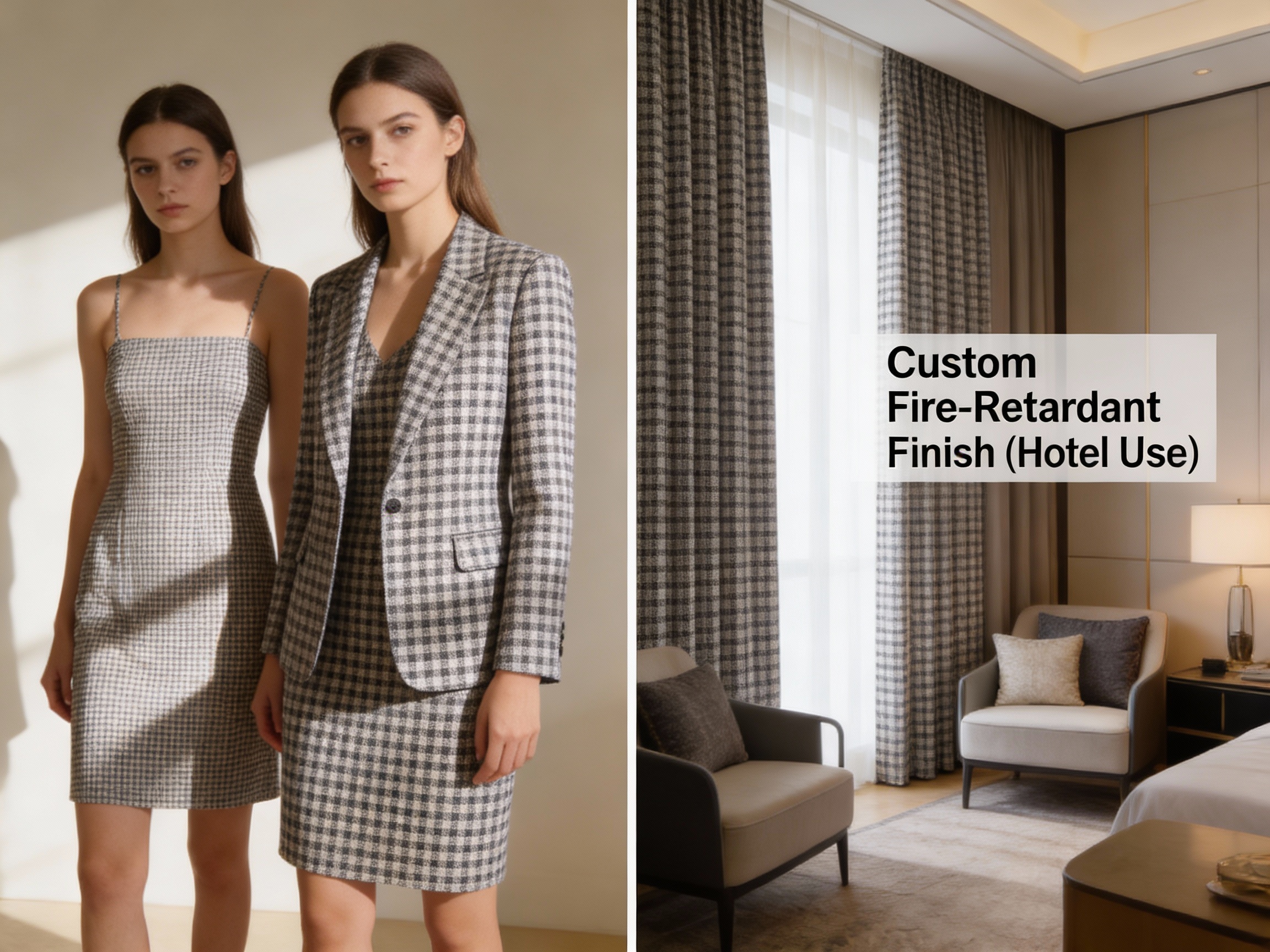
One of the unique aspects of the manufacturer’s jacquard weaving process is its ability to adjust the grid size and spacing based on customer requirements. While the standard black and white grid is a popular choice, the company can customize the pattern to create smaller or larger grids, or even add subtle variations to the design. This flexibility allows the manufacturer to meet the diverse needs of its clients, from fashion designers looking for a unique twist on the classic grid to home decor brands seeking a specific aesthetic.
Sustainable Dyeing and Finishing Techniques
In addition to advanced weaving technology, the manufacturer prioritizes sustainable dyeing and finishing processes. The fabric is dyed using reactive dyes, which are known for their high color fastness and low environmental impact. Reactive dyes bond chemically with the fabric’s fibers, reducing the amount of dye that is washed off during the dyeing process. This not only saves water but also minimizes the release of harmful chemicals into the environment. The manufacturer also uses a closed-loop water system, which recycles up to 90% of the water used in the dyeing process. This is a significant improvement over traditional dyeing methods, which often waste large amounts of water and contribute to water pollution.
After dyeing, the fabric undergoes a series of finishing processes to enhance its performance and appearance. These include: - Calendering: A process that uses heat and pressure to smooth the fabric’s surface, improving its drape and texture. - Anti-static treatment: Reduces static electricity, making the fabric more comfortable to wear and easier to handle. - Water repellent finish: Adds a water-resistant layer without compromising breathability, making the fabric suitable for outdoor use. - Wrinkle-resistant treatment: Reduces the need for ironing, increasing the fabric’s practicality for everyday use.
All finishing processes are designed to be eco-friendly, using non-toxic chemicals and minimal energy. The manufacturer also conducts regular audits to ensure that its dyeing and finishing processes comply with international environmental standards, such as OEKO-TEX® Standard 100. This certification confirms that the fabric is free from harmful substances, making it safe for use in garments and home decor items that come into contact with skin.
Quality Control at Every Stage
Quality control is an integral part of the manufacturing process for Jacquard Black And White Grid Fabric. The manufacturer has implemented a rigorous quality control system that checks the fabric at every stage of production, from yarn selection to final packaging. Here are some of the key quality control measures:
- Yarn Inspection: Before weaving, each batch of yarn is inspected for strength, consistency, and color. Any yarn that does not meet the manufacturer’s standards is rejected.
- Weaving Inspection: During the weaving process, the fabric is monitored for pattern consistency, texture, and defects such as snags or loose threads. Operators use digital cameras to detect defects in real time, allowing for immediate adjustments to the loom.
- Dyeing Inspection: After dyeing, the fabric is tested for color fastness, shade consistency, and dye penetration. Samples are sent to an independent lab for third-party testing to ensure compliance with international standards.
- Finishing Inspection: Before packaging, the fabric is inspected for finish quality, texture, and any remaining defects. Each roll of fabric is labeled with a unique batch number, allowing for traceability throughout the supply chain.
The manufacturer’s commitment to quality control has resulted in a defect rate of less than 0.5%, which is significantly lower than the industry average of 2-3%. This high level of quality ensures that customers receive consistent, reliable fabric that meets their exact specifications.
Strengths of the Leading Manufacturer: Hangzhou Jinfeng Textile Co., Ltd
Jacquard Black And White Grid Fabric is produced by Hangzhou Jinfeng Textile Co., Ltd., a leading textile manufacturer based in Hangzhou, China. The company’s strengths in R&D, production capacity, global reach, and sustainability make it a trusted partner for businesses around the world.
R&D Capabilities and Innovation
Hangzhou Jinfeng Textile Co., Ltd. invests 5-7% of its annual revenue in research and development (R&D), a significantly higher percentage than the industry average of 2-3%. The company has a dedicated R&D team of 30+ engineers and designers who focus on developing new textile technologies, improving existing products, and creating custom solutions for clients. For example, the team recently developed a new yarn blend that enhances the fabric’s breathability while maintaining its durability, making it even more suitable for summer garments.
The company also collaborates with universities and research institutions in China and abroad to stay at the forefront of textile innovation. This collaboration allows the company to access the latest technologies and trends, ensuring that its products remain competitive in the global market. The R&D team’s focus on innovation has led to several patents, including a new jacquard weaving technique that reduces production time by 15% without compromising quality.
Large-Scale Production Capacity
Hangzhou Jinfeng Textile Co., Ltd. has a large-scale production facility that covers 32.6 acres and has a plant area of 18,000 square meters. The facility is equipped with 200+ advanced jacquard looms, 50 dyeing machines, and 30 finishing machines, allowing the company to produce up to 10 million meters of fabric per year. This production capacity makes it possible for the company to meet the needs of large-scale clients, such as international fashion brands and home decor retailers, while also accommodating small orders for boutique designers.
The company’s production facility is also highly automated, with robotic systems used for yarn handling, fabric cutting, and packaging. This automation not only increases production efficiency but also reduces the risk of human error, ensuring that every yard of fabric meets the highest quality standards. The facility operates 24 hours a day, 7 days a week during peak seasons, allowing the company to fulfill orders quickly and efficiently.
Export-Oriented Expertise and Global Reach
Hangzhou Jinfeng Textile Co., Ltd. is a self-employed export company, meaning that it has direct access to global markets without the need for intermediaries. The company exports its products to over 30 countries, including the United States, Germany, France, Japan, and Australia. Its export-oriented expertise allows it to understand the specific needs and regulations of international clients, such as compliance with EU REACH regulations or US CPSC standards.
The company has a dedicated international sales team that speaks multiple languages and provides personalized service to clients around the world. The team works closely with clients to understand their requirements, provide custom solutions, and ensure that orders are delivered on time. The company also offers flexible payment terms and competitive pricing, making it an attractive partner for businesses of all sizes.
Commitment to Sustainability
Sustainability is a core value for Hangzhou Jinfeng Textile Co., Ltd. The company has implemented several initiatives to reduce its environmental impact, including: - Water Recycling: The facility uses a closed-loop water system that recycles up to 90% of the water used in production. - Energy Efficiency: The facility is equipped with solar panels that generate 10% of its electricity needs, and all machines are energy-efficient models. - Waste Reduction: The company uses digital printing technology to minimize ink waste, and any fabric scraps are recycled into other products. - Eco-Friendly Packaging: The company uses recycled paper and biodegradable plastic for packaging, reducing its carbon footprint.
The company’s commitment to sustainability has been recognized with several awards, including the "China Green Textile Enterprise" award and the OEKO-TEX® Standard 100 certification. These certifications confirm that the company’s products are not only high-quality but also environmentally responsible.
Case Studies: Real-World Applications of Jacquard Black And White Grid Fabric
To illustrate the practical value of Jacquard Black And White Grid Fabric, let’s look at two real-world case studies from the garment and home decor industries.
Case Study 1: High-Fashion Garment Line
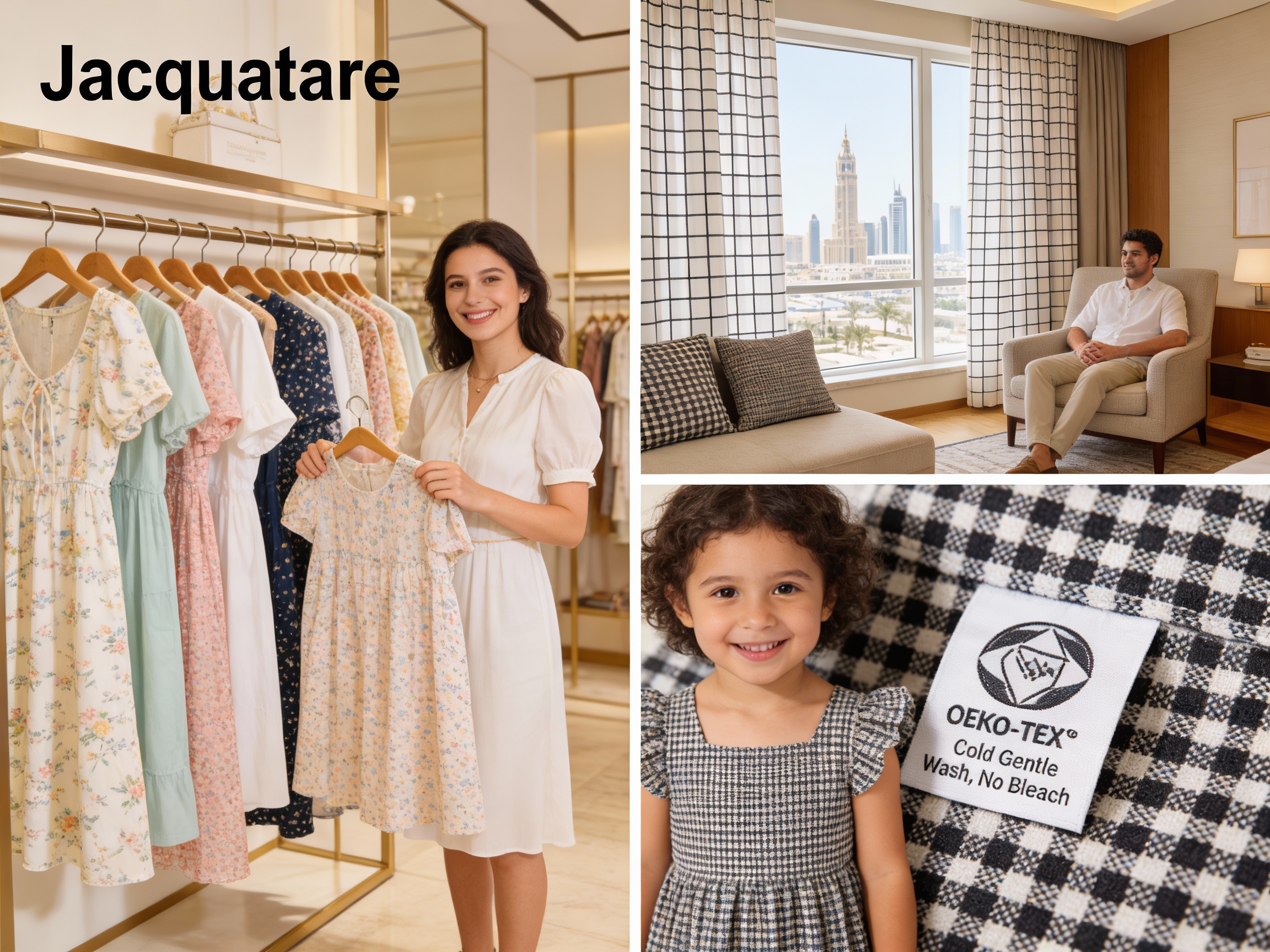
A leading European fashion brand recently launched a summer collection featuring Jacquard Black And White Grid Fabric. The collection included dresses, blouses, and skirts, all designed to be lightweight, breathable, and stylish. The brand chose this fabric for its durability, color fastness, and timeless design—factors that are critical for high-fashion products that need to last for multiple seasons.
The brand worked closely with Hangzhou Jinfeng Textile Co., Ltd. to customize the fabric’s grid size, making it slightly smaller than the standard version to suit the collection’s minimalist aesthetic. The manufacturer also added a water-repellent finish to the fabric, making it suitable for unexpected rain showers. The collection was a huge success, with sales exceeding the brand’s expectations by 25%. Customers praised the fabric’s quality, texture, and versatility, with many noting that the garments retained their shape and color even after repeated washes.
Case Study 2: Luxury Home Decor Project
A luxury hotel in Dubai recently renovated its guest rooms using Jacquard Black And White Grid Fabric. The fabric was used for curtain panels, throw pillows, and upholstery in the hotel’s 500 guest rooms. The hotel chose this fabric for its classic design, durability, and ability to complement the hotel’s modern interior design.
The manufacturer provided the hotel with a custom version of the fabric that included a fire-retardant finish, which is required for hotel upholstery in Dubai. The fabric was also tested for abrasion resistance, with the hotel requiring a minimum of 30,000 cycles to failure. The Jacquard Black And White Grid Fabric exceeded this requirement, with a test result of 50,000+ cycles. The renovation was completed on time and within budget, and the hotel has received positive feedback from guests about the fabric’s appearance and comfort.
Q&A Section
To address common questions about Jacquard Black And White Grid Fabric, we have compiled the following Q&A:
Q1: What makes Jacquard Black And White Grid Fabric different from regular grid fabrics?
A: The key difference is the weaving process. Jacquard Black And White Grid Fabric uses a jacquard loom to weave the grid pattern into the fabric’s structure, whereas regular grid fabrics (like printed or woven non-jacquard) either print the pattern onto the surface or weave it loosely. This makes the jacquard fabric more durable, color-fast, and textured, with a longer lifespan.
Q2: Is this fabric suitable for outdoor use?
A: Yes, the fabric can be treated with a water-repellent and UV-resistant finish, making it suitable for outdoor applications like patio furniture cushions or outdoor curtains. The manufacturer offers custom finishing options to meet specific outdoor needs.
Q3: Can the fabric be customized in terms of pattern or color?
A: Yes, the manufacturer can customize the grid size, spacing, and even add subtle variations to the pattern. While the standard color is black and white, the company can also produce the fabric in other color combinations upon request.
Q4: How does the manufacturer ensure consistent quality across batches?
A: The manufacturer uses a rigorous quality control system that includes yarn inspection, weaving monitoring, dyeing testing, and finishing inspection. Each batch is labeled with a unique number for traceability, and third-party lab tests are conducted to ensure compliance with international standards.
Q5: What are the minimum order quantities (MOQs) for bulk purchases?
A: The MOQ for bulk purchases is 500 meters, but the manufacturer can accommodate smaller orders for sample testing or boutique clients. Custom orders may have slightly higher MOQs depending on the complexity of the design.
Q6: Is the fabric safe for use in children’s clothing?
A: Yes, the fabric is OEKO-TEX® Standard 100 certified, meaning it is free from harmful substances like lead, phthalates, and formaldehyde. It is safe for use in children’s clothing, toys, and other items that come into contact with skin.
Q7: How should the fabric be washed and cared for?
A: The fabric can be machine washed in cold water on a gentle cycle. It should be dried flat or hung to dry, and ironed on a low setting if needed. Avoid using bleach or fabric softeners, as these can damage the fabric’s finish and color.
References
1. Textile Institute. (2023). "Jacquard Weaving Technology: A Guide to Modern Applications." Manchester, UK: Textile Institute Press.
2. OEKO-TEX® Association. (2022). "OEKO-TEX® Standard 100: Certification Requirements for Textile Products." Zurich, Switzerland: OEKO-TEX® Association.
3. Hangzhou Jinfeng Textile Co., Ltd. (2023). "Company Sustainability Report." Hangzhou, China: Hangzhou Jinfeng Textile Co., Ltd.
4. International Textile Manufacturers Federation (ITMF). (2023). "Global Textile Industry Trends: Durability and Sustainability." Zurich, Switzerland: ITMF.
5. Smith, J. (2022). "The Rise of Jacquard Fabrics in Fashion and Home Decor." New York: Fashion Industry Press.
Conclusion
Jacquard Black And White Grid Fabric is more than just a textile—it is a versatile, durable, and aesthetically pleasing solution for a wide range of garment and home decor projects. Its unique jacquard weave, sustainable manufacturing processes, and timeless design set it apart from competitors, making it a top choice for designers, manufacturers, and consumers alike. The leading manufacturer, Hangzhou Jinfeng Textile Co., Ltd., brings decades of experience, advanced technology, and a commitment to quality and sustainability to every yard of fabric produced.
As the demand for high-quality, eco-friendly textiles continues to grow, Jacquard Black And White Grid Fabric is poised to remain a leader in the industry. Its ability to combine style, function, and sustainability makes it a smart investment for businesses and individuals looking to create products that stand the test of time. Whether used in a high-fashion dress, a luxury hotel’s upholstery, or a personal sewing project, this fabric delivers on its promise of quality, versatility, and value.