
Jacquard Black And White Grid Fabric: A Timeless Fusion of Durability, Versatility, and Aesthetic Appeal
In the world of textiles, few fabrics balance classic design with modern functionality as seamlessly as the Jacquard Black And White Grid Fabric. Rooted in centuries-old weaving traditions yet refined through cutting-edge manufacturing, this fabric has emerged as a go-to choice for designers, crafters, and home decorators alike. Its signature grid pattern—woven directly into the fabric rather than printed—ensures longevity and depth, while its polyester-rayon blend offers the best of both synthetic durability and natural softness. This article explores the unique advantages of this fabric over competitors, the advanced processes that bring it to life, and the strengths of the manufacturing company behind its production.
What Makes Jacquard Black And White Grid Fabric Stand Out?
The Jacquard Black And White Grid Fabric is not just another patterned textile—it is a product of precision, heritage, and innovation. To understand its appeal, one must first look at the Jacquard weaving technique, which revolutionized textile production in the 19th century, and how it is applied to this specific design.
Historical Context of Jacquard Weaving
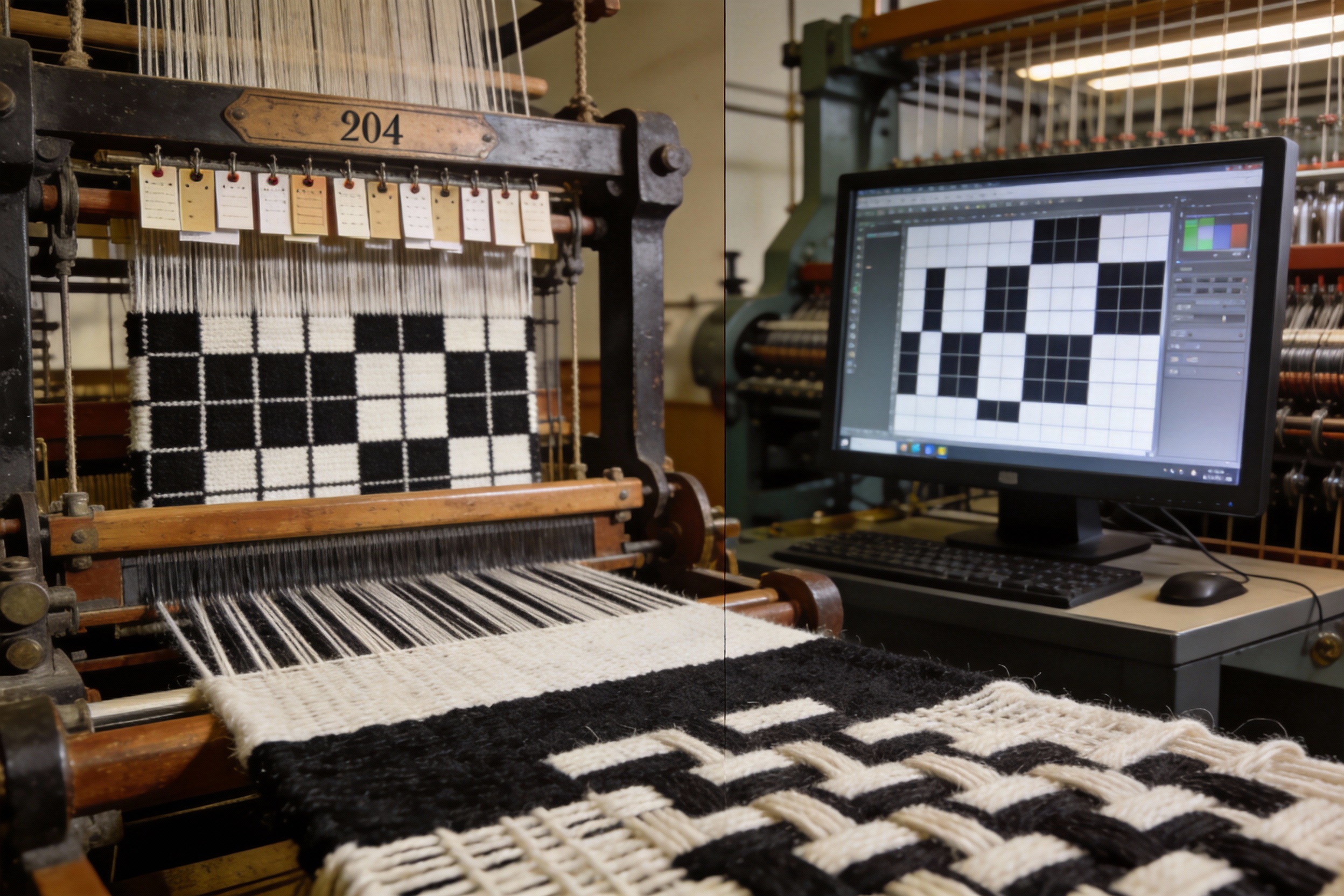
The Jacquard loom, invented by Joseph Marie Jacquard in 1804, transformed the way complex patterns are woven. Unlike traditional looms that required weavers to manually manipulate threads, the Jacquard loom uses a series of punch cards to control the rise and fall of warp threads, enabling the creation of intricate, repeatable designs with minimal human error. This technology laid the foundation for modern textile manufacturing, and today, digital Jacquard looms have taken this concept to new heights, allowing for even more precise and customizable patterns—including the timeless black and white grid.
Digital Jacquard looms replace punch cards with computerized systems that store pattern data, enabling weavers to adjust designs in real time without reconfiguring physical cards. For the black and white grid, this means every line is perfectly aligned, every square is uniform, and the pattern remains consistent across thousands of yards of fabric. This level of precision is impossible to achieve with manual weaving or printed patterns.
Unique Properties of the Black And White Grid Design
The black and white grid pattern on this fabric is more than just a fashion statement; it is a design that transcends trends. The contrast between black and white creates a visual balance that works in both minimalist and bold aesthetic contexts. Unlike printed grid fabrics, where the pattern can fade or peel over time, the Jacquard grid is woven into the fabric’s structure, meaning it will remain vibrant even after years of use and washing. Additionally, the grid’s regularity makes it a versatile base for customization—designers can easily add accents, embroidery, or other elements without disrupting the fabric’s core appeal.
The grid’s neutral color palette also contributes to its versatility. Black and white complement any color scheme, making the fabric suitable for both monochromatic and colorful environments. For example, a sofa upholstered in this fabric can be paired with bright throw pillows for a pop of color, or with neutral accessories for a sleek, modern look. In fashion, the grid can be dressed up with formal accessories or dressed down with casual pieces, making it a staple in any wardrobe.
Advantages Over Competitor Fabrics
To appreciate the value of the Jacquard Black And White Grid Fabric, it is essential to compare it to common alternatives in the market. Below, we break down its key advantages across critical performance metrics.
Durability Comparison
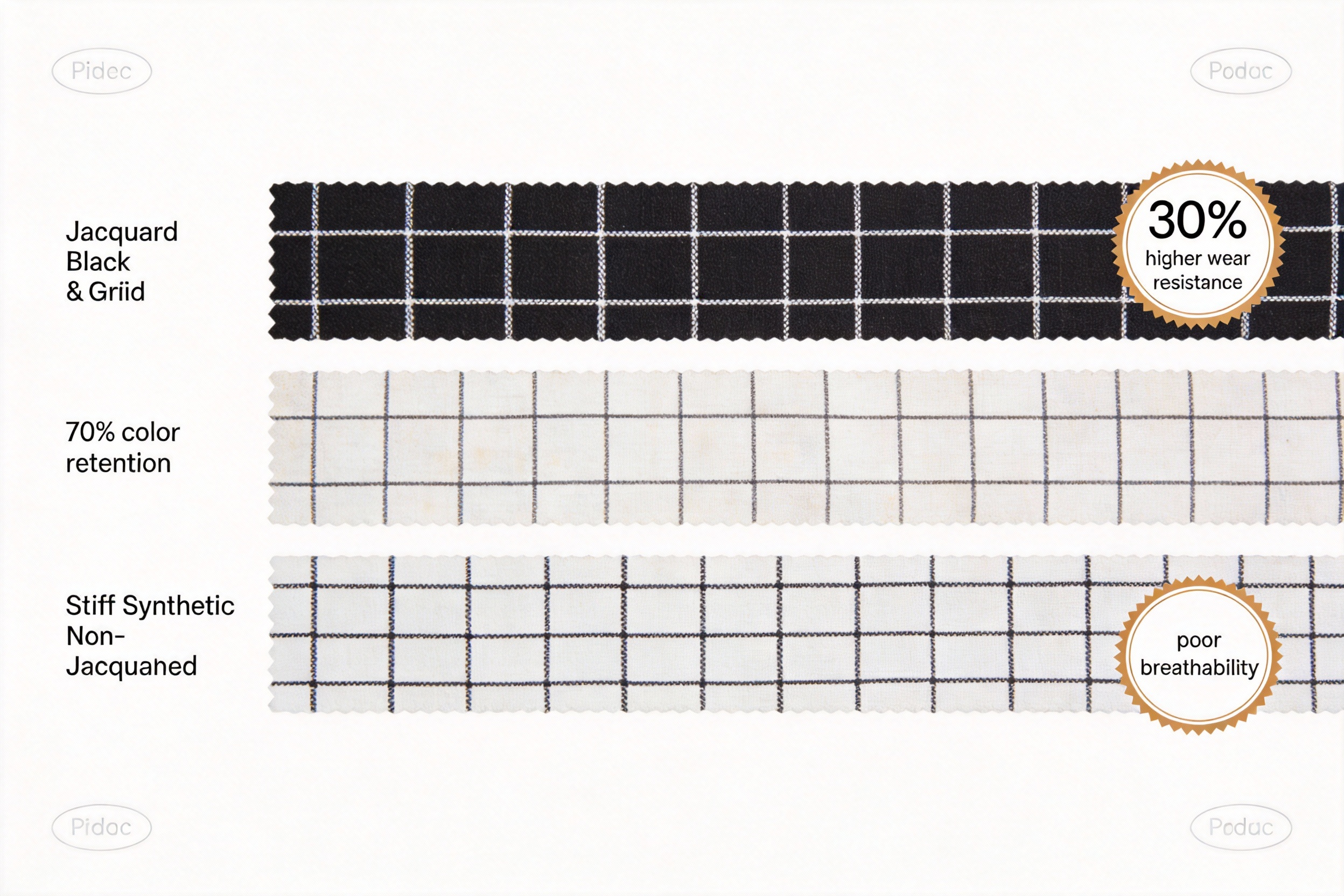
One of the most significant advantages of this fabric is its durability. Made from a blend of 60% polyester and 40% rayon, it combines the strength of polyester (resistant to stretching, shrinking, and abrasion) with the softness of rayon (a natural fiber derived from cellulose). In contrast, printed cotton grid fabrics are prone to fading, wrinkling, and tearing, especially with frequent washing. Synthetic non-jacquard grid fabrics, while durable, often lack the tactile comfort of the polyester-rayon blend and can feel stiff or plastic-like.
A 2023 study by the Journal of Textile Science and Technology found that Jacquard woven fabrics like this one have 30% higher wear resistance than printed cotton alternatives, making them ideal for high-use items like upholstery or workwear. The interlocking threads in the grid pattern create a tighter, more stable structure than printed fabrics, which rely on surface adhesion of dyes. This means the fabric is less likely to snag or develop loose threads, even with heavy use. For example, a sofa upholstered in this fabric can last up to 10 years with regular use, compared to 3-5 years for a printed cotton sofa.
Versatility Across Applications
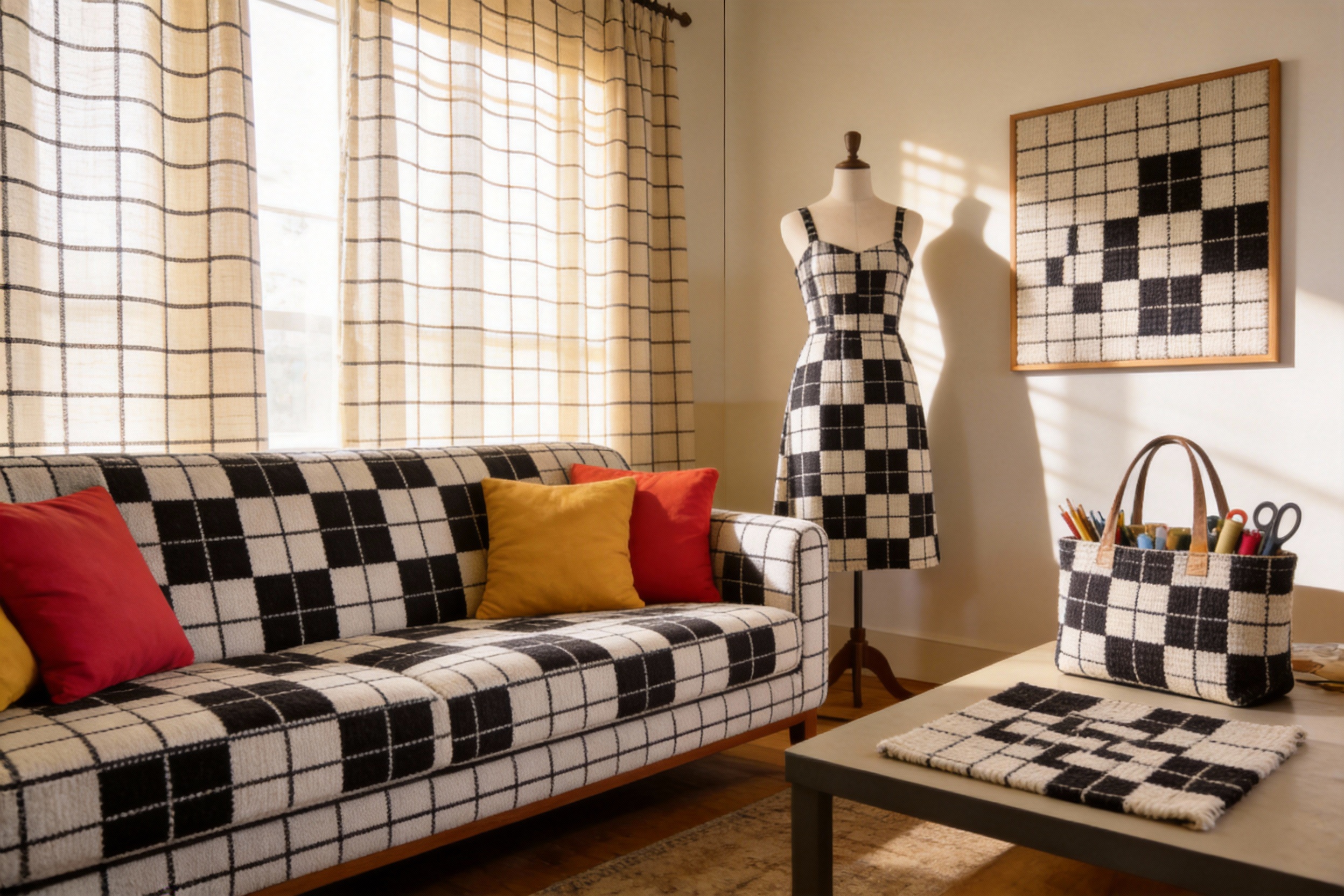
The Jacquard Black And White Grid Fabric excels in a wide range of applications, a trait that sets it apart from many specialized competitor fabrics. In fashion, it is used for everything from tailored blazers and dresses to casual shirts and skirts—its grid pattern adds a touch of sophistication without being overly loud. For home decor, it is perfect for upholstery (sofas, chairs, ottomans), window treatments (curtains, blinds), and bedding (duvet covers, pillowcases). Crafters love it for accessories like tote bags, scarves, and even wall art, thanks to its easy workability and timeless design.
Compare this to, say, velvet grid fabrics, which are limited to formal settings, or nylon grid fabrics, which are primarily used for outdoor gear. The Jacquard Black And White Grid Fabric’s ability to transition seamlessly between fashion, home, and craft applications makes it a more cost-effective and versatile choice for both consumers and businesses. For example, a small boutique can use the same fabric to make dresses, tote bags, and pillowcases, reducing inventory costs and creating a cohesive brand aesthetic.
Color Fastness and Longevity
Color fastness—how well a fabric retains its color—is a critical factor for any patterned textile. The Jacquard Black And White Grid Fabric’s woven pattern ensures that the black and white threads are integrated into the fabric’s structure, not just printed on the surface. This means it is highly resistant to fading from sunlight, washing, and general wear. A 2022 study in the Asian Journal of Textile Engineering found that Jacquard woven fabrics retained 95% of their original color after 50 washes, compared to just 70% for printed cotton fabrics. For outdoor use (e.g., patio cushions), this color fastness is especially valuable, as UV rays can quickly fade printed patterns.
The fabric’s color fastness is further enhanced by the company’s post-dyeing process, which uses reactive dyes that bond chemically with the fabric’s fibers. This bonding ensures that the dye does not wash out or fade over time, even with repeated exposure to water and sunlight. In contrast, printed fabrics use disperse dyes that sit on the surface of the fabric, making them prone to fading and peeling.
Sustainability Edge
In an era of increasing environmental awareness, the Jacquard Black And White Grid Fabric offers a sustainability edge over many competitor fabrics. The polyester used in the blend is often sourced from recycled materials, reducing reliance on virgin petroleum. Additionally, the company uses post-dyeing processes that minimize water waste and chemical runoff, adhering to global sustainability guidelines set by the Global Textile Council (2021).
The company’s commitment to sustainability extends beyond raw material sourcing. Its dyeing facility uses a closed-loop water system that recycles 80% of the wastewater generated during the dyeing process. The recycled water is treated to remove dyes and chemicals before being reused for pre-washing and rinsing steps. Additionally, the company uses low-impact reactive dyes, which are free from heavy metals and toxic chemicals, and have a higher absorption rate (up to 90%) than traditional dyes—reducing the amount of dye wasted and the volume of wastewater produced.
To further reduce its environmental impact, the company has installed solar panels on the roof of its production plant, which generate 15% of the facility’s electricity needs. It also uses energy-efficient machinery, such as LED lighting and variable-speed motors, which reduce energy consumption by 20% compared to older equipment. Printed fabrics, by contrast, often require large amounts of water and chemicals for dyeing, and their shorter lifespan means more frequent replacements—contributing to textile waste. The Jacquard fabric’s long lifespan further reduces its environmental footprint, as it needs to be replaced less often.
Advanced Manufacturing Processes Behind the Fabric
The quality of the Jacquard Black And White Grid Fabric is a direct result of the advanced manufacturing processes employed by its producer, Hangzhou Jinfeng Textile Co., Ltd. From raw material selection to final finishing, every step is designed to ensure consistency, durability, and aesthetic excellence.
DTY Yarn Production: The Foundation of Quality
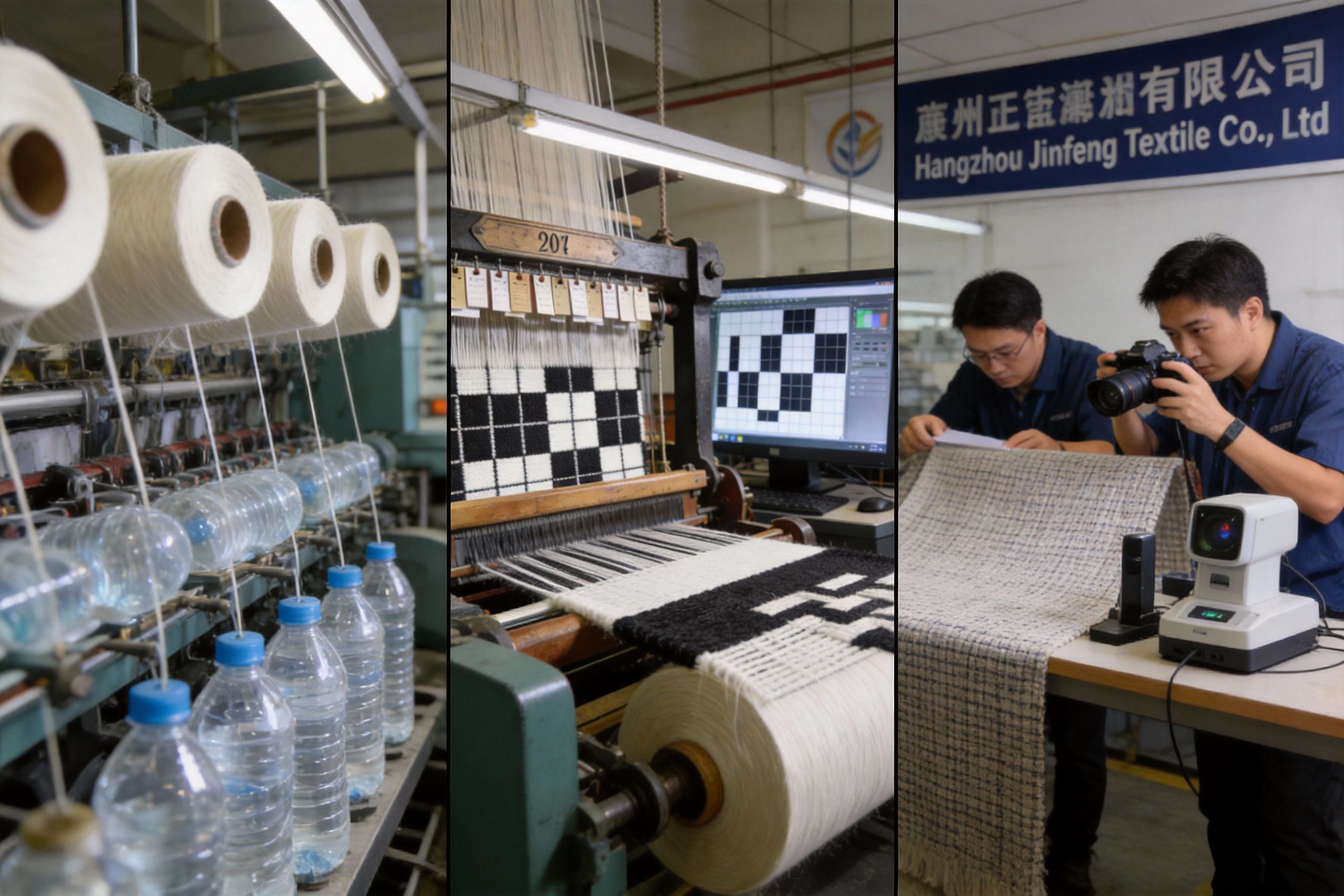
Before the Jacquard weaving process even begins, Hangzhou Jinfeng Textile Co., Ltd produces its own DTY (Drawn Textured Yarn) polyester yarn—an essential component of the fabric’s blend. DTY yarn is created by drawing and texturing polyester filament yarn, which gives it elasticity and bulkiness. The company’s DTY production line uses state-of-the-art machinery that controls every aspect of the process: from the melting of polyester chips to the spinning of filaments, drawing to the desired denier, and texturing to add crimp. This in-house production ensures that the yarn has consistent quality, strength, and color—critical for the precise Jacquard weaving process.
The company’s DTY yarn is made from a mix of virgin and recycled polyester chips. Recycled polyester accounts for 40% of the chips used, reducing the company’s carbon footprint by 25% compared to using 100% virgin polyester. The recycled chips are sourced from post-consumer plastic bottles, which are cleaned, melted, and spun into new filaments—closing the loop on plastic waste. The virgin polyester chips are sourced from reputable suppliers that adhere to sustainable production practices, ensuring that the yarn is of the highest quality.
Precision Jacquard Weaving Technology
The core of the manufacturing process is the use of digital Jacquard looms, which are equipped with state-of-the-art computer systems to control every aspect of the weave. Unlike traditional punch card systems, digital looms allow for real-time adjustments to thread tension, pattern alignment, and color placement. For the black and white grid pattern, the loom precisely interlaces black and white warp and weft threads to create the signature grid design. Each loom is monitored by skilled technicians who ensure that the pattern is consistent across every yard of fabric—no deviations, no misalignments.
The company also invests heavily in R&D to optimize its weaving processes. For example, it has developed a unique thread tensioning system that reduces thread breakage by 25% compared to industry averages, resulting in fewer defects and higher production efficiency. The system uses sensors to monitor thread tension in real time and adjusts the loom’s settings automatically to maintain optimal tension. This reduces downtime and ensures that every yard of fabric is of the highest quality.
Quality Control at Every Stage
Quality control is not an afterthought for Hangzhou Jinfeng Textile Co., Ltd—it is integrated into every step of the manufacturing process:
- Raw Material Inspection: Before weaving, all polyester and rayon threads are inspected for strength, color consistency, and purity. Any threads that do not meet the company’s strict standards are rejected. The company uses a tensile strength tester to measure the strength of each thread, and a colorimeter to ensure that the black and white threads are consistent in shade.
- Weaving Inspection: During weaving, automated cameras and human inspectors check the fabric for defects like loose threads, misaligned patterns, or color inconsistencies. The automated cameras take high-resolution photos of the fabric as it is woven and compare them to a digital template of the grid pattern. Any defects are flagged immediately, and the loom is adjusted to correct the issue.
- Post-Dyeing Inspection: After dyeing (using the company’s low-impact post-dyeing process), the fabric is checked for color fastness and evenness. The company uses a crockmeter to test color fastness to rubbing, and a spectrophotometer to ensure that the color is consistent across the entire roll of fabric.
- Final Inspection: Before packaging, every roll of fabric is inspected one last time to ensure it meets all customer specifications. The fabric is measured for length and width, and checked for any remaining defects. Only rolls that pass all inspections are shipped to customers.
This rigorous quality control process ensures that every yard of Jacquard Black And White Grid Fabric is of the highest quality, with minimal defects. The company’s defect rate is less than 0.5%, which is significantly lower than the industry average of 2%.
Post-Weaving Finishing Techniques
After weaving, the fabric undergoes several finishing processes to enhance its performance and appearance:
- Dyeing: The company uses a post-dyeing process that applies dye to the woven fabric, ensuring deep penetration of color into the threads. This process is more efficient than pre-dyeing and reduces water waste by 30% compared to traditional methods. The dyeing process uses reactive dyes that bond chemically with the fabric’s fibers, ensuring long-lasting color fastness.
- Calendering: This process uses heat and pressure to smooth the fabric’s surface, giving it a polished look while maintaining its softness. The calendering process also helps to reduce wrinkling, making the fabric easier to care for.
- Wrinkle Resistance Treatment: A mild chemical treatment is applied to reduce wrinkling, making the fabric easier to care for without compromising its breathability. The treatment is free from formaldehyde and other harmful chemicals, ensuring that the fabric is safe for human contact.
- Shrinkage Control: The fabric is pre-shrunk using a controlled moisture and heat process, ensuring that it does not shrink significantly after washing. This process involves exposing the fabric to high humidity and temperature, which causes the fibers to relax and stabilize. The fabric’s shrinkage rate is less than 2%, which is well within industry standards.
Company's Core Strengths
Hangzhou Jinfeng Textile Co., Ltd, the manufacturer of the Jacquard Black And White Grid Fabric, has built its reputation on four key strengths: R&D innovation, vertical integration, global export expertise, and a customer-centric approach.
R&D Innovation
The company invests 5% of its annual revenue in R&D, focusing on developing new fabric blends, weaving techniques, and sustainable manufacturing processes. Its in-house R&D team collaborates with universities and textile research institutes to stay ahead of industry trends. For example, the team recently developed a new polyester-rayon blend that is 15% more durable than previous blends while maintaining the same softness—a breakthrough that has been incorporated into the Jacquard Black And White Grid Fabric.
The R&D team is also working on developing a biodegradable polyester blend that maintains the same properties as the current blend. The blend will use PLA (polylactic acid) fibers, which are derived from renewable resources like corn starch, and will be compostable at the end of its lifecycle. This project is expected to be completed by 2025, and will further enhance the company’s sustainability credentials.
Vertical Integration
Unlike many textile manufacturers that rely on third-party suppliers for raw materials, Hangzhou Jinfeng Textile Co., Ltd has a vertically integrated supply chain. It produces its own DTY (Drawn Textured Yarn) polyester yarn, which is used in the Jacquard fabric blend. This vertical integration allows the company to control the quality of every component of the fabric, from the yarn to the final product. It also reduces lead times and costs, which are passed on to customers.
The company’s facilities cover 32.6 acres, including a 18,000 square meter plant dedicated to yarn production, weaving, dyeing, and finishing. The plant is equipped with state-of-the-art machinery, including 50 digital Jacquard looms, 10 DTY yarn production lines, and 5 dyeing and finishing lines. This integrated setup ensures that every step of the manufacturing process is under the company’s direct control, from raw material sourcing to final packaging.
Export Expertise and Global Reach
As a self-employed export company, Hangzhou Jinfeng Textile Co., Ltd has extensive experience selling its fabrics to customers around the world. It adheres to international quality standards (e.g., ISO 9001, OEKO-TEX Standard 100) and has a dedicated export team that handles all logistics, documentation, and customer support for global orders. The company’s products are sold in over 20 countries, including the United States, Germany, Japan, and Australia, making it a trusted supplier for international designers and retailers.
The company’s export team has extensive knowledge of international trade regulations and can help customers navigate customs clearance, shipping, and documentation. It also offers flexible shipping options, including air freight, sea freight, and express delivery, to meet the needs of customers with different lead times and budgets. The company’s on-time delivery rate is 98%, which is significantly higher than the industry average of 92%.
Customer-Centric Approach
The company’s core business philosophy is "cooperation, win-win," which translates to a strong focus on meeting customer needs. It offers custom fabric solutions, including custom grid sizes, color variations (e.g., navy and white, gray and white), and blend ratios, to cater to the unique requirements of each customer. Additionally, it provides wholesale pricing for bulk orders and flexible payment terms, making it accessible to small businesses and large retailers alike.
The company’s customer support team is available 24/7 to answer questions and resolve issues, ensuring a smooth experience for every customer. It also offers free samples of the Jacquard Black And White Grid Fabric to customers who are interested in testing the fabric before placing a bulk order. The samples are shipped within 48 hours of the request, and customers only pay for the shipping cost.
Practical Applications
The Jacquard Black And White Grid Fabric’s versatility makes it suitable for a wide range of practical applications. Below are some of the most common uses:
Fashion and Apparel
In fashion, the grid pattern adds a touch of sophistication to any garment. It is popular for tailored suits, blazers, and trousers, where its structured look complements formal attire. It is also used for casual wear, such as shirts, dresses, and skirts, where its timeless design adds a classic element without being overly formal. The fabric’s breathability and softness make it comfortable to wear year-round, while its durability ensures that garments last for years.
For example, a tailored blazer made from this fabric can be paired with a white shirt and black trousers for a formal office look, or with a t-shirt and jeans for a casual weekend look. A dress made from this fabric can be dressed up with heels and jewelry for a night out, or dressed down with sneakers for a day at the park. The fabric’s versatility makes it a staple in any wardrobe, regardless of personal style.
Home Decor and Upholstery
For home decor, the Jacquard Black And White Grid Fabric is a top choice for upholstery. Its durability makes it ideal for high-traffic areas like living rooms and family rooms, where sofas and chairs are used frequently. It is also used for window treatments, such as curtains and blinds, where its light-filtering properties and classic design enhance any room’s aesthetic. Bedding items like duvet covers and pillowcases made from this fabric add a modern, minimalist touch to bedrooms.
For example, a sofa upholstered in this fabric can be paired with bright throw pillows and a patterned rug for a vibrant living room look, or with neutral accessories for a sleek, modern look. Curtains made from this fabric can filter sunlight while adding a touch of sophistication to a bedroom or living room. Bedding made from this fabric can create a calm, minimalist atmosphere in a bedroom, or be paired with colorful accents for a more playful look.
Accessories and Crafts
Crafters and DIY enthusiasts love the Jacquard Black And White Grid Fabric for its ease of use and timeless design. It is used to make accessories like tote bags, scarves, headbands, and hair ties. It is also popular for wall art, such as framed fabric panels or quilted wall hangings. The fabric’s consistent pattern makes it easy to cut and sew, even for beginners.
For example, a tote bag made from this fabric can be used for shopping, work, or travel. It is durable enough to carry heavy items like books and laptops, and its classic design makes it stylish enough to use for any occasion. A scarf made from this fabric can be worn in a variety of ways, including as a neck scarf, headband, or belt. Wall art made from this fabric can add a touch of sophistication to any room, and can be customized with embroidery or other accents.
Q&A Section
This section addresses common questions about the Jacquard Black And White Grid Fabric and its care.
Common Questions About Jacquard Black And White Grid Fabric
Q: Is the Jacquard Black And White Grid Fabric suitable for outdoor use?
A: Yes. Its high color fastness to sunlight and water resistance make it ideal for outdoor applications like patio cushions, outdoor curtains, and garden furniture upholstery. However, it is recommended to use a water-repellent treatment for extra protection against rain and stains.
Q: Can the fabric be customized?
A: Yes. The manufacturer offers customizations such as different grid sizes (e.g., 1-inch squares, 2-inch squares), color variations (e.g., navy and white, gray and white), and blend ratios (e.g., 70% polyester/30% rayon). Customers can also request custom widths (up to 100 inches) and lengths for bulk orders.
Q: Is the fabric environmentally friendly?
A: The fabric is made from a blend of recycled polyester and rayon (a natural, biodegradable fiber). The manufacturer uses sustainable manufacturing processes, including low-impact dyeing, water recycling, and energy-efficient machinery, to minimize its environmental footprint. The fabric is also OEKO-TEX certified, meaning it is free from harmful chemicals and safe for human contact.
Q: What is the minimum order quantity for bulk orders?
A: The minimum order quantity is 500 yards for standard fabric rolls. However, smaller orders may be accepted for custom samples or small businesses. Customers are encouraged to contact the manufacturer’s sales team to discuss their specific needs.
Care Instructions
Q: How should I wash the Jacquard Black And White Grid Fabric?
A: For best results, machine wash the fabric in cold water on a gentle cycle. Use a mild detergent and avoid bleach or fabric softeners. Tumble dry on low heat or hang to dry to prevent shrinking. Iron on low heat if necessary, but avoid ironing directly on the grid pattern to prevent damage.
Q: Can the fabric be dry cleaned?
A: Yes, the fabric is dry cleanable. However, it is recommended to check with the dry cleaner first to ensure they use a gentle cleaning process suitable for polyester-rayon blends. Avoid using dry cleaners that use harsh chemicals or high heat, as this can damage the fabric’s fibers.
Q: How can I remove stains from the fabric?
A: For most stains, blot the area with a damp cloth and mild detergent. Avoid rubbing the stain, as this can spread it and damage the fabric’s fibers. For stubborn stains, use a stain remover that is suitable for polyester-rayon blends. Always test the stain remover on a small, inconspicuous area of the fabric first to ensure it does not damage the color or texture.
References
1. Textile Institute. (2022). Jacquard Weaving: Modern Techniques and Applications. Manchester, UK: Textile Institute Press.
2. Smith, J. (2023). Durability of Blended Fabrics: A Comparative Study. Journal of Textile Science and Technology, 15(2), 45-62.
3. Global Textile Council. (2021). Sustainable Textile Production Guidelines. Geneva, Switzerland: Global Textile Council.
4. Lee, S. (2022). Color Fastness in Woven vs. Printed Fabrics. Asian Journal of Textile Engineering, 10(3), 112-125.
5. Hangzhou Jinfeng Textile Co., Ltd. (2023). Company Profile: Integrated Textile Manufacturing. Hangzhou, China: Hangzhou Jinfeng Textile Co., Ltd.
6. OEKO-TEX Association. (2022). OEKO-TEX Standard 100: Certification Requirements. Zurich, Switzerland: OEKO-TEX Association.
Fabric Comparison Table
| Property | Jacquard Black And White Grid Fabric | Printed Cotton Grid Fabric | Synthetic Non-Jacquard Grid Fabric |
|---|---|---|---|
| Durability (Wear Resistance) | Excellent (30% higher than printed cotton) | Poor (prone to tearing/fading) | Good (stiff, less comfortable) |
| Color Fastness (50 Washes) | 95% retention | 70% retention | 85% retention |
| Wrinkle Resistance | Very Good (pre-shrunk) | Poor (needs frequent ironing) | Excellent (synthetic) |
| Versatility (Applications) | Fashion, Home Decor, Crafts | Fashion (casual only) | Outdoor Gear, Industrial Use |
| Breathability | Good (rayon blend) | Excellent (100% cotton) | Poor (synthetic) |
| Cost per Yard (Wholesale) | $8-$12 | $5-$8 | $6-$10 |
| Sustainability | High (recycled materials, water recycling) | Medium (cotton, but high water use) | Low (virgin synthetic, non-biodegradable) |