Grid Jacquard Pattern Fabric: Structure, Performance, and Versatile Apparel Applications
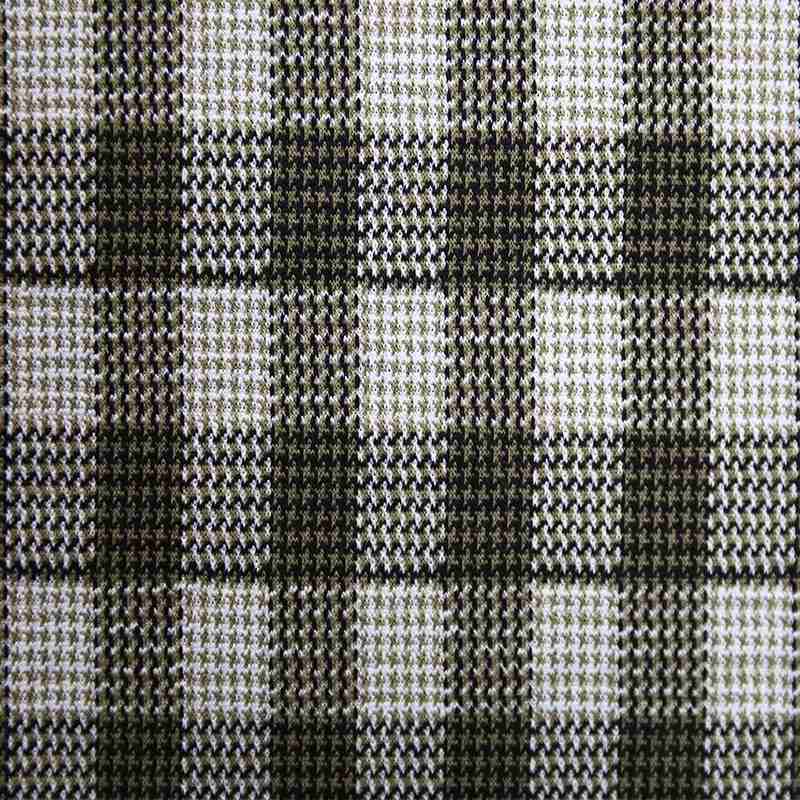
Grid jacquard pattern fabric combines decorative texture, dimensional structure, and practical wearing performance in a knitted construction. Its geometric grid appearance gives garments a refined visual identity, while the combination of viscose, polyamide or nylon, polyester, and spandex can provide softness, resilience, stretch, and shape retention. Unlike a plain knitted fabric that depends mainly on color to create visual interest, a jacquard fabric develops its pattern through the arrangement of knitted loops and floating yarns. This creates a surface with depth that can be appreciated by sight and touch.
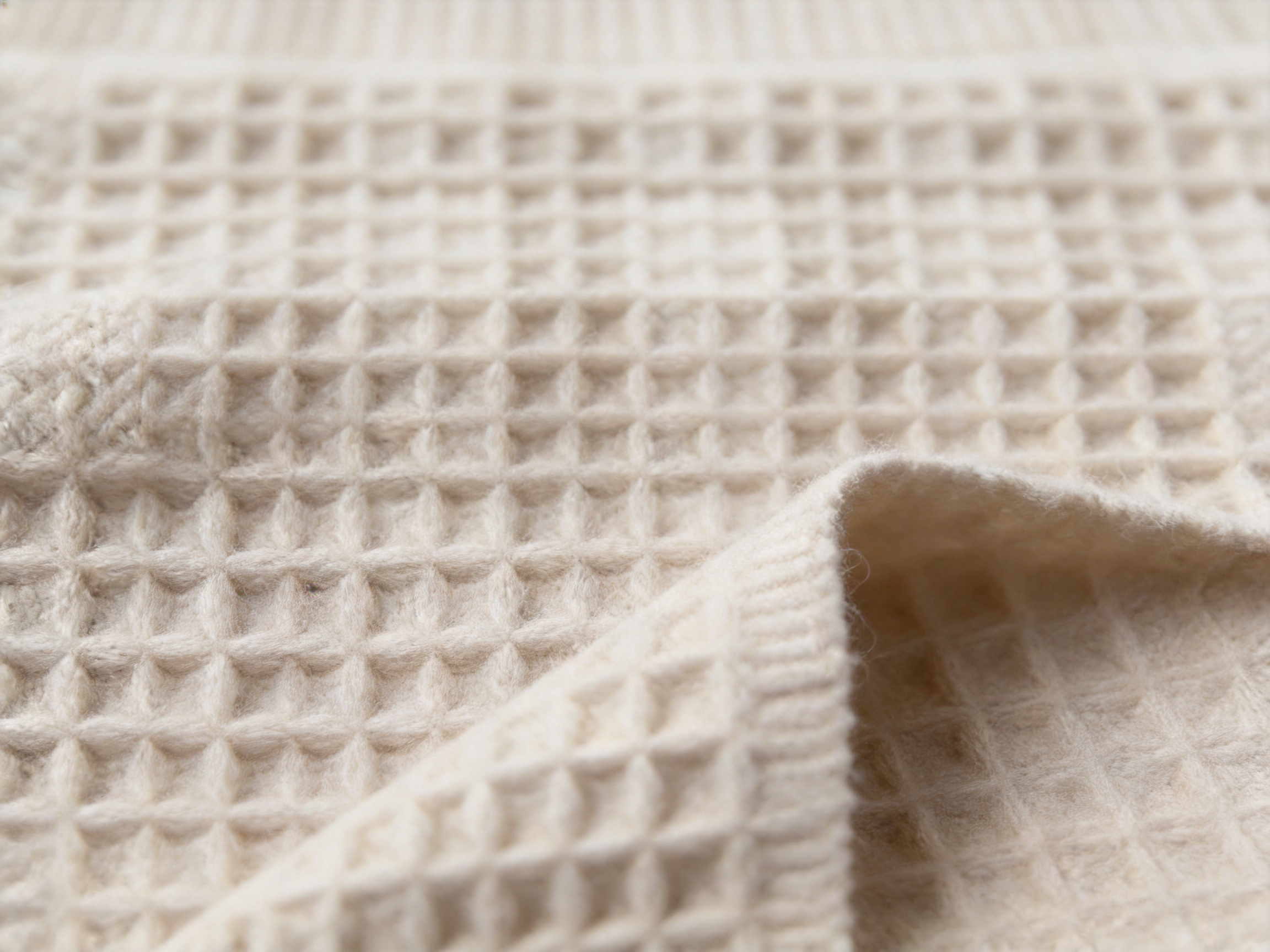
The fabric described in this article is designed for wholesalers, garment manufacturers, designers, and sourcing professionals who need a patterned knitted textile suitable for sweaters and a broad range of fashion products. It is available in various colors and has a characteristic two-sided structure. The patterned side is slightly convex, while the reverse side is concave. Because the fabric can be reversible, manufacturers may use either side as the visible face depending on the desired garment effect.
Its minimum order quantity is 500 grams, making it suitable not only for large-volume production but also for sample development, small-batch collections, boutique manufacturing, and product testing. The material specification is listed as viscose plus polyamide or nylon, polyester, and spandex. The precise blend ratio, finished width, weight, colorfastness level, and stretch recovery should be confirmed for each production order because these factors may vary according to the intended end use and finishing requirements.
For buyers comparing patterned knits, grid jacquard fabric offers an important balance between appearance and function. It can create a premium surface without relying on complicated surface printing, and its knitted construction can support comfort and movement. The fabric is also adaptable: it can be produced in restrained neutral tones for office and premium casualwear, or in brighter colors for seasonal fashion and statement garments.
Understanding the Grid Jacquard Construction
Jacquard knitting is a method of forming patterns directly within the textile structure. Instead of applying a design after the fabric has been manufactured, different yarns are selected and arranged during knitting to create a planned motif. In a grid design, the pattern may appear as intersecting lines, blocks, checks, or a fine geometric surface. The exact appearance depends on yarn count, loop density, color contrast, machine settings, and the organization of the knitting program.
The fabric’s slightly raised patterned side is created by the relationship between knitted loops and the selected pattern yarns. The reverse side presents a corresponding concave effect. This difference between the two surfaces gives the textile a tactile quality that is not usually found in a flat printed fabric. It also means that light reflects differently from the raised and recessed areas, helping the grid remain visible even when the color contrast is relatively subtle.
Unused yarns may float over one another as the pattern continues across the fabric. These floats are an inherent part of many jacquard structures. They help connect the visual elements of the design and contribute to the reverse-side appearance. During production, float length and yarn tension must be carefully controlled. Excessively long floats may affect snag resistance, comfort, or garment construction, while controlled floats can support a clean, stable, and attractive fabric.
Because the design is knitted into the textile, the grid pattern is not simply a coating on the surface. This can provide a more integrated appearance than certain printed alternatives. The design is less dependent on surface pigment adhesion and can maintain its visual character across the fabric’s structured face. Nevertheless, proper washing, dyeing, finishing, and quality control remain essential to preserve the pattern and prevent distortion.
Two-Sided Visual Character
A notable advantage of this fabric is its reversible character. The front and reverse sides are not identical, but both can contribute to a finished garment. The convex side generally presents the primary decorative effect, while the concave side can provide a more restrained or textural appearance. Designers may use the two sides in contrasting panels, cuffs, collars, pocket details, or reversible garments.
This flexibility can help reduce the need for multiple fabrics within one product. A single fabric can create visual variation through side selection, panel placement, and color coordination. This is particularly useful for knitwear collections that require coordinated designs without appearing repetitive.
Material Composition and Performance Potential
The supplied material description identifies viscose, polyamide or nylon, polyester, and spandex as the principal fibers associated with the fabric. In textile terminology, polyamide and nylon generally refer to the same broad fiber family. Polyester may be included as a blended component, and the final composition should be verified through the technical specification issued for a particular lot.
Viscose
Viscose contributes a smooth hand, fluid drape, and comfortable contact against the skin. It is often selected for apparel because it can create a soft, elegant appearance that is especially suitable for fashion knitwear. In a jacquard structure, viscose can soften the visual and tactile effect of the raised pattern, helping the fabric feel more refined rather than overly rigid.
Viscose also accepts dye effectively, which can support a broad color range and clear tonal development. However, viscose requires careful control during wet processing because moisture can affect dimensional stability and handling strength. Appropriate knitting tension, relaxation, washing, and finishing are therefore important when producing a consistent final width and surface.
Polyamide or Nylon
Polyamide, commonly known as nylon, is valued for strength, abrasion resistance, and flexibility. In a blended knitted fabric, it can reinforce the construction and improve resistance to everyday wear. This is beneficial for garments that experience repeated movement or friction, including sweaters, fitted tops, cardigans, fashion dresses, and light outer layers.
Polyamide can also contribute to a smooth surface and help the textile retain a neat appearance after repeated use. Its compatibility with stretch fibers makes it useful in fabrics that need both resilience and comfort. The exact performance will depend on the yarn specification, knitting density, finishing method, and proportion of each fiber.
Polyester
Polyester is widely used in blended fabrics because of its strength, dimensional stability, and resistance to wrinkling. It can help a knitted fabric maintain its shape during handling and wear. When combined with softer fibers, polyester can provide structural support without defining the entire hand feel of the finished product.
Polyester is also suitable for a wide range of dyeing and finishing processes. Depending on the chosen yarn and dye system, it can help develop stable colors and consistent production results. For buyers who need repeatable bulk manufacturing, the presence of polyester may support reliable performance across coordinated garment programs.
Spandex
Spandex contributes elasticity and freedom of movement. Even a relatively small amount can improve stretch comfort in areas such as the body, sleeves, cuffs, waistbands, and fitted panels. This is particularly valuable in knitted garments, where consumers expect the fabric to accommodate body movement without feeling restrictive.
Spandex also assists recovery after stretching. Good recovery helps the garment return toward its original shape after wearing, sitting, dressing, or repeated movement. Recovery performance depends not only on spandex content but also on yarn quality, knitting structure, heat setting, finishing, and garment construction. Buyers should request stretch and recovery test data when the fabric will be used for close-fitting products.
Advantages Compared with Conventional Patterned Fabrics
Grid jacquard pattern fabric has several potential advantages over plain knits, printed fabrics, and some woven patterned textiles. These advantages should be evaluated according to the intended application, but they explain why jacquard knits remain important in contemporary apparel development.
Integrated Pattern Formation
The pattern is formed during knitting rather than being applied only after fabric construction. This creates a design that is structurally connected to the textile. The resulting surface can appear more substantial and premium than a simple printed grid, especially when the pattern includes raised and recessed areas.
An integrated pattern also enables designers to build texture into the garment itself. The fabric can remain visually interesting even when used in a single color. This makes it useful for monochromatic collections, where texture must replace strong color contrast as the main source of visual detail.
Dimensional Surface Appeal
The slightly convex patterned side creates depth and shadow. When light moves across the garment, the grid may appear differently from different angles. This dynamic surface effect can help a basic silhouette look more sophisticated without adding embroidery, appliqué, or heavy embellishment.
Dimensionality is especially valuable in sweaters and knit dresses because the fabric can support a warm, tactile impression. It can also be used in lightweight garments when the stitch density and yarn selection are adjusted to produce a finer surface.
Reversible Design Possibilities
Many patterned fabrics have one clearly usable face. The reversible character of this grid jacquard construction offers more design freedom. The raised face may be selected for a prominent fashion statement, while the reverse can be used for a quieter appearance or as a contrast detail.
This can support reversible jackets, double-sided scarves, two-way cardigans, contrasting sleeve panels, and garments with turned-back hems. It may also simplify collection planning because one fabric can perform several visual roles.
Comfort and Movement
Unlike many rigid woven jacquard fabrics, a knitted jacquard can provide natural flexibility. The looped structure allows movement, and the addition of spandex can increase stretch comfort. Viscose can improve softness, while polyamide and polyester can contribute durability and recovery.
The final comfort level depends on fabric weight, yarn size, finishing, and garment design. A dense structure may feel more supportive and warm, whereas a lighter structure may offer improved breathability and drape. Buyers should select the construction according to season and end use rather than relying on the pattern alone.
Broad Color and Styling Options
The fabric is available in various colors, allowing it to serve different market segments. Light neutrals can emphasize the grid’s shadows and create an understated luxury effect. Dark shades can make the surface appear sleek and compact. Contrasting yarn colors can make the grid more prominent, while tonal colors can create a subtle texture suitable for premium basics.
Color selection should consider the fiber blend and dyeing process. When several fiber types are present, shade matching may require specialized process control because different fibers can absorb or respond to dyes differently. A professional supplier should confirm the color standard, lot consistency, and fastness requirements before bulk production.
Manufacturing Process and Quality Control
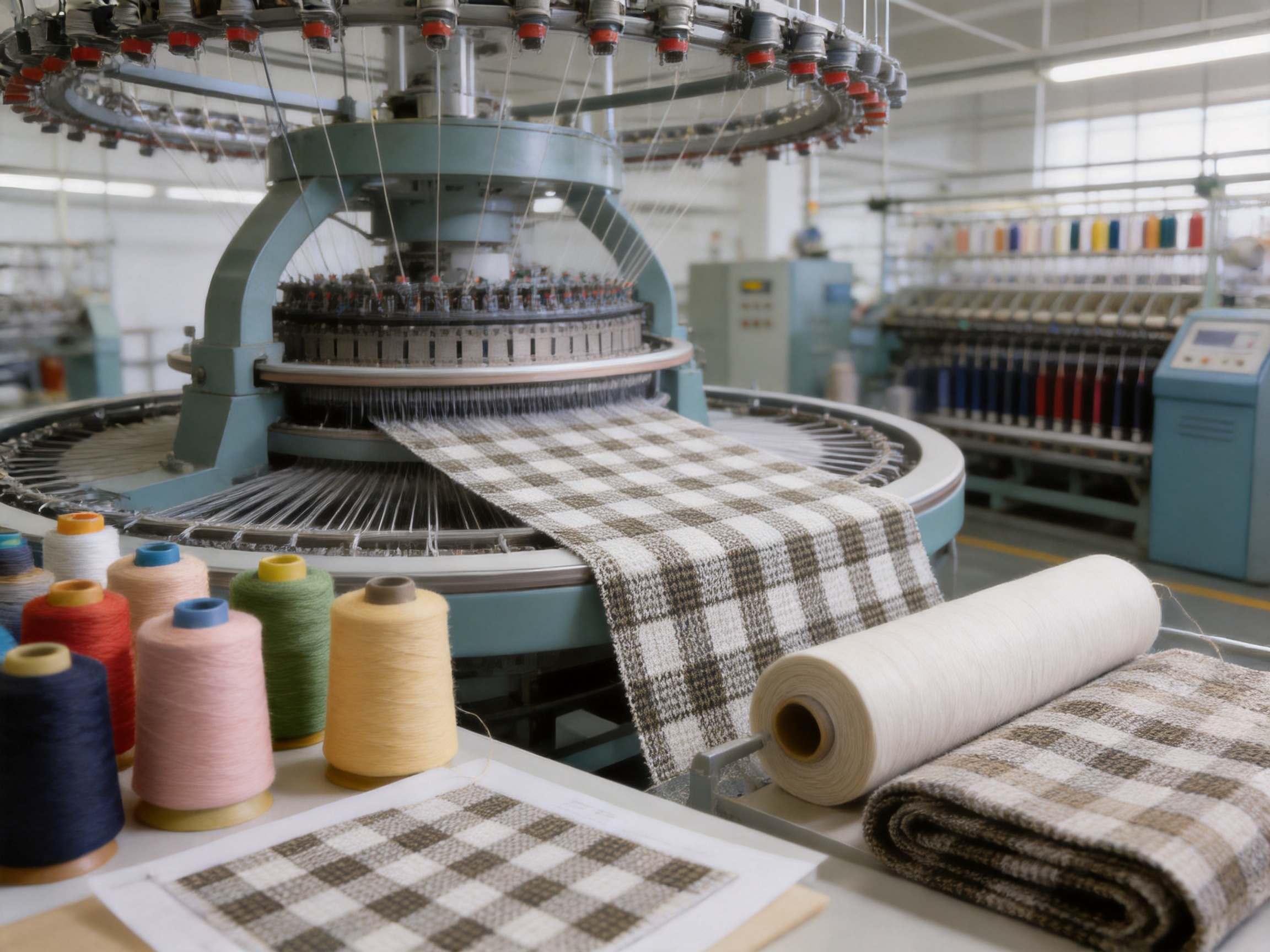
The performance and appearance of grid jacquard fabric depend on a sequence of manufacturing decisions. A reliable process begins with fiber and yarn selection and continues through knitting, inspection, dyeing or post-dyeing, finishing, packing, and shipment. Each stage influences the final appearance and suitability of the fabric.
Raw Material Selection
Production begins with the selection of yarns that meet the required composition, fineness, strength, elongation, and color specifications. Viscose, polyamide or nylon, polyester, and spandex yarns must be compatible with the planned knitting structure. Yarn uniformity is important because irregular yarn can create streaks, bars, uneven pattern definition, or inconsistent surface texture.
Spandex requires particular attention because its elasticity can be affected by storage conditions, tension, heat, and chemical exposure. Proper storage and controlled feeding help reduce variation in stretch and recovery. Incoming inspection may include checking yarn appearance, count, package condition, tensile behavior, and conformity with the purchase specification.
Jacquard Knitting
The jacquard knitting stage determines the grid pattern and much of the fabric’s physical character. Machine programming controls needle selection, yarn placement, loop formation, and the relationship between the face and reverse sides. The production team must balance pattern clarity with fabric stability. If the structure is too loose, the pattern may appear distorted and floats may become excessive. If it is too tight, the fabric may lose comfort and drape.
Knitting tension must remain consistent throughout the roll. Variations in yarn feed, machine speed, needle condition, or take-down tension may result in width changes and pattern irregularities. Periodic inspection during knitting can identify defects before a large quantity is produced.
Relaxation and Dimensional Control
Knitted fabrics often relax after leaving the machine. Loops may settle, width may change, and the final appearance may develop only after the fabric has rested. Controlled relaxation helps the manufacturer establish more accurate measurements before dyeing, finishing, and cutting.
Dimensional stability is particularly important for jacquard fabrics because the geometric pattern makes distortion easy to see. A small change in width or course alignment can affect the visual balance of the grid. Careful control of relaxation, heat setting, washing, and finishing helps reduce this risk.
Dyeing and Color Development
When the fabric is supplied in dyed colors, dyeing must be managed according to the fiber composition. Blended fibers may require compatible dye systems or staged processing. The objective is to achieve even color penetration while preserving the grid definition and the fabric’s hand feel.
Over-processing can flatten the surface or reduce elasticity, while insufficient processing may lead to uneven shades or poor fastness. Laboratory dips and sample approvals are recommended before bulk dyeing. Buyers should review color under appropriate lighting and evaluate the shade after the planned washing process.
Finishing
Finishing can influence softness, width, weight, drape, stretch recovery, and surface appearance. Depending on the intended application, finishing may include washing, softening, heat setting, compacting, brushing, or other controlled treatments. The selected finish must support the fabric’s design rather than obscure it.
A soft finish may improve comfort for next-to-skin garments. A stabilizing treatment may improve dimensional control for structured knitwear. Heat setting may help manage spandex behavior and fabric width, but excessive heat can damage sensitive fibers or reduce elasticity. For this reason, finishing temperatures and dwell times should be selected according to the actual blend and construction.
Inspection and Shipment Preparation
Final inspection should evaluate appearance, width, weight, pattern consistency, color, holes, needle lines, stains, barre, missing yarns, excessive floats, and other visible defects. Fabric should be measured under controlled conditions because relaxed knitted fabric can produce different results depending on how it is spread and handled.
Roll packing must protect the textile from moisture, dust, compression, and accidental damage. Clear labeling should identify the style, color, lot, quantity, width, composition, and inspection status. Proper documentation supports traceability and makes it easier for garment factories to plan cutting and production.
Manufacturing Strengths of an Integrated Textile Supplier
Hangzhou Jinfeng Textile Co., Ltd. operates as a textile manufacturer and export-oriented supplier involved in research and development, production, processing, post-dyeing, finishing, and sales. Its product activities include blended fabrics such as polyester and spandex fabrics, as well as drawn textured yarn, commonly referred to as DTY polyester yarn.
The company is located in Jingjiang Street Industrial Park in Xiaoshan District, Hangzhou, Zhejiang Province. Its stated facilities cover approximately 32.6 acres, with a plant area of about 18,000 square meters. This industrial base provides room for coordinated manufacturing and processing activities rather than relying exclusively on isolated trading operations.
An integrated structure can offer practical benefits to fabric buyers. When yarn, fabric production, dyeing, finishing, and sales are managed through a connected supplier organization, communication may be more direct. Product adjustments can be discussed with teams familiar with both the raw material and the finished fabric. This is useful when a buyer requires changes to softness, weight, color, stretch, width, or finishing.
Experience with DTY polyester yarn can also support understanding of yarn behavior during knitting and downstream processing. Drawn textured yarn has a crimped and bulked structure that can contribute to fullness, resilience, and a comfortable hand when properly selected. Although the grid jacquard fabric described here is a separate finished product, knowledge of polyester yarn production and processing can strengthen overall material control.
Research and Development Support
Patterned fabrics benefit from development work because small changes in yarn, stitch arrangement, or finishing can significantly change the final appearance. A supplier with research and development capability can assist with pattern refinement, sample construction, color development, and application-specific adjustments.
For example, a buyer may request a smaller grid for fine-gauge garments, a larger grid for heavy sweaters, stronger color contrast for seasonal fashion, or a softer surface for close-to-skin apparel. These requests require more than simply changing the color. They may affect the knitting program, yarn selection, machine settings, and finishing recipe.
Production and Post-Dyeing Coordination
Post-dyeing and finishing experience is important for a fabric whose pattern depends on surface relief. Dyeing should not compromise the geometric structure, and finishing should preserve the balance between softness and stability. Coordinated production helps the supplier identify how one stage will affect the next.
For overseas buyers, this coordination can reduce the number of separate production contacts and simplify technical communication. It may also support more consistent repeat orders when the supplier records the approved yarn, machine program, color recipe, finishing method, and inspection standard.
Export-Oriented Service
As a self-employed export company integrating research and development, production, and sales, the supplier is positioned to serve customers in domestic and international markets. Export-oriented service typically requires clear product specifications, sample confirmation, packaging coordination, order tracking, and communication across different time zones and commercial requirements.
Buyers should still establish their own quality agreement before ordering. Important points include tolerance for width and weight, color difference limits, minimum order quantity, testing methods, roll length, packing format, delivery schedule, claims procedure, and required compliance documentation.
Applications in Apparel and Fashion Products
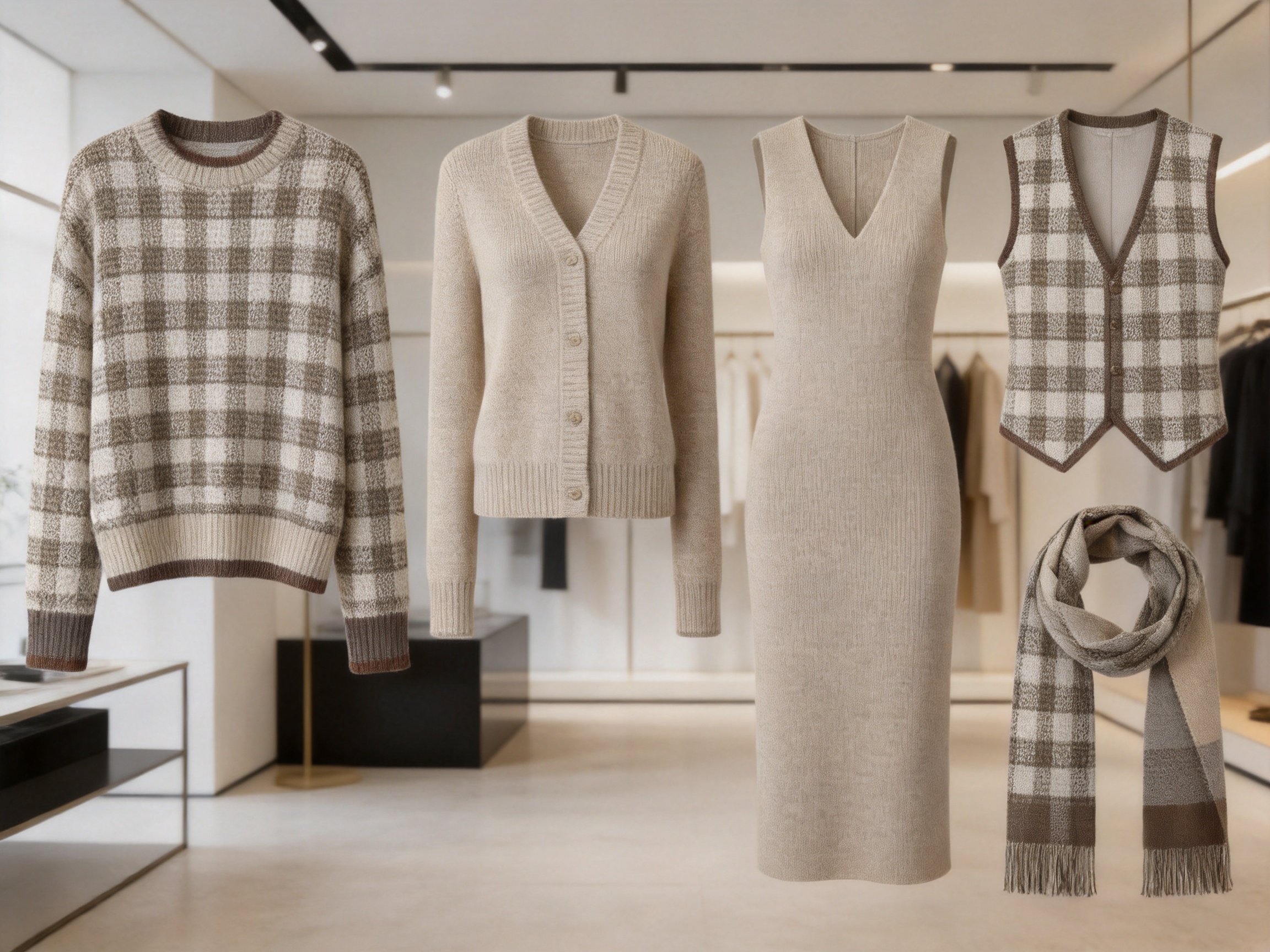
Grid jacquard pattern fabric is commonly associated with sweaters, but its uses extend well beyond one garment category. Its appearance, stretch potential, and reversible structure allow designers to adapt it to a wide variety of products.
Sweaters and Pullovers
Sweaters are the most direct application. The raised grid can provide visual structure across the front body, back, or sleeves. A tonal grid can create a refined alternative to cable knitting, while a contrasting grid can deliver a stronger fashion statement.
The fabric can be used for relaxed pullovers, fitted knit tops, crew-neck sweaters, mock-neck designs, and seasonal cardigans. Spandex may improve recovery at the cuffs and body, while polyamide or polyester can support durability during repeated wear.
Cardigans and Knit Jackets
Cardigans and lightweight knit jackets can benefit from the fabric’s dimensional surface. The fabric may be used throughout the garment or combined with plain knit panels for contrast. The reverse side can be exposed on lapels, turned-back cuffs, or decorative hems.
For more structured jackets, the manufacturer may recommend a denser construction or a stabilizing finish. For softer cardigans, a lighter construction and softer finish may be more appropriate. Garment makers should test seam behavior because textured knits can require suitable sewing needles, thread, and seam allowance.
Dresses and Skirts
Grid jacquard can add interest to knit dresses and skirts without requiring printed graphics. A small-scale pattern may suit fitted dresses, while a larger grid may work well in relaxed silhouettes. The fabric’s stretch potential can support ease of movement, but pattern placement and garment grading should account for the direction of stretch.
Designers should consider opacity, lining, weight, and drape. Depending on the structure and color, the recessed areas may create subtle transparency or shadow. A lining may be appropriate for certain dress styles, especially when a lightweight construction is selected.
Tops, Vests, and Layering Pieces
The fabric can be used for long-sleeve tops, sleeveless vests, camisole-style layering pieces, and fashion knit shirts. Its texture allows simple silhouettes to remain distinctive. In a layered outfit, a grid jacquard top can provide a controlled pattern beneath a plain jacket or coat.
For next-to-skin products, softness and finishing are especially important. The reverse side should be examined for comfort, particularly where floats or raised structures may contact the wearer.
Scarves and Accessories
The reversible design is useful for scarves, wraps, shawls, headbands, and other textile accessories. Both sides can be intentionally displayed, creating a more complete design than a single-face fabric. Color combinations can be selected to produce a subtle difference between the two surfaces.
Accessories may also allow designers to use smaller quantities, making the 500-gram minimum order suitable for product development or limited seasonal collections.
Technical Selection Guide
Before placing an order, buyers should define the fabric requirements in measurable terms. The phrase “grid jacquard fabric” describes the design family, but a production-ready specification should include additional information.
| Specification Area | Information to Confirm | Why It Matters |
|---|---|---|
| Fiber composition | Viscose, polyamide or nylon, polyester, spandex, and exact percentages | Determines hand feel, care requirements, dyeing method, stretch, and durability |
| Fabric construction | Jacquard structure, gauge, stitch density, and pattern scale | Influences surface relief, weight, stability, and visual definition |
| Width | Finished usable width and tolerance | Supports accurate marker planning and fabric consumption calculations |
| Weight | Grams per square meter or agreed weight range | Helps determine season, warmth, drape, and garment cost |
| Stretch performance | Stretch percentage and recovery in both relevant directions | Guides garment fit, grading, and comfort expectations |
| Color | Standard reference, lab dip approval, and lot tolerance | Reduces shade variation between sampling and bulk production |
| Fastness | Washing, rubbing, perspiration, and light fastness requirements | Confirms suitability for the target market and care instructions |
| Surface quality | Pattern clarity, float control, holes, needle lines, and stains | Protects the appearance and reduces cutting-room rejection |
| Order quantity | Minimum order quantity and quantity tolerance | Allows buyers to plan sampling, production, and inventory |
| Packaging | Roll format, labeling, protective material, and shipment marks | Supports safe transportation and warehouse identification |
The stated minimum order quantity is 500 grams. Although this is a relatively accessible starting quantity, buyers should clarify whether the minimum applies per color, per pattern, per composition, or per order. They should also ask whether sample yardage is available before committing to a production quantity.
Pattern Scale
Pattern scale affects both appearance and garment consumption. A fine grid may produce a subtle texture appropriate for sophisticated basics, while a large grid can become the main visual feature. The scale should be evaluated on a full garment panel rather than only a small swatch because pattern proportion changes with garment size.
Fabric Weight
Weight influences warmth, fall, opacity, and sewing behavior. A heavier fabric may be suitable for winter sweaters and jackets. A lighter fabric can be used for transitional-season tops, dresses, or layering pieces. The ideal weight also depends on the yarn combination and the density of the knitted structure.
Stretch and Recovery
Stretch testing should be performed in the direction in which the garment will be worn and constructed. A fabric may stretch differently across the width and length. Recovery should be measured after a defined extension and rest period. These results help pattern makers determine ease and reduce the risk of garments becoming loose after wear.
Color and Lot Consistency
Because the grid creates shadows and highlights, uneven dyeing can be more visible than it would be on a plain fabric. Buyers should approve a laboratory sample or strike-off and compare bulk production against the approved reference under consistent lighting.
Repeat orders should be linked to the original lot standard whenever possible. If yarn, dye recipe, machine settings, or finishing conditions change, the resulting grid definition or shade may also change.
Garment Design and Sewing Considerations
Jacquard knitted fabric should be handled differently from a plain jersey. The textured surface may influence cutting, seam appearance, and pattern matching. Garment manufacturers should make a sample using the actual production fabric before beginning bulk cutting.
Pattern Placement
Geometric grids should be aligned carefully on front and back panels. Misalignment at the side seam, shoulder, center front, or pocket can make the garment appear poorly constructed. If the pattern is directional, all panels should be laid in the same direction unless a deliberate reversible effect is intended.
Designers may choose to center the grid at the front or align it with a neckline, pocket, or hem. Such decisions should be made during pattern development rather than after cutting.
Cutting
Knitted fabric should be allowed to relax before cutting. Cutting immediately after unrolling may produce inaccurate dimensions because the fabric can recover or spread. The cutting room should use a stable surface and avoid excessive tension while laying the fabric.
Pattern pieces should be checked for grain direction, stretch direction, and surface orientation. If the fabric has a more prominent face and a quieter reverse, all pieces should be placed consistently unless the design calls for intentional contrast.
Sewing
Needle selection, thread type, stitch length, and differential feed should be tested on a sample. A stretch-compatible seam may be necessary for fitted garments. Overlock or coverstitch techniques can help maintain elasticity at seams and hems.
Excessive pressure from presser feet may flatten the raised pattern or cause feeding variation. Operators should monitor seam puckering and ensure that the fabric is not stretched unevenly during sewing. A small production trial can identify these issues before a full order is assembled.
Hems, Cuffs, and Edges
Spandex can help cuffs and hems recover, but edge treatment still needs to match the fabric weight and garment design. Narrow hems may suit lightweight structures, while ribbed or folded finishes may be preferable for heavier sweaters. The reverse side can be deliberately displayed at a cuff or hem to emphasize the reversible nature of the textile.
Care, Durability, and Consumer Use
Care instructions should be based on the verified fiber composition and finished construction. Viscose may require gentle washing and careful drying to limit shrinkage or distortion. Polyamide and polyester generally contribute durability, but heat and harsh chemicals can still affect the fabric. Spandex is sensitive to excessive heat, strong bleach, and unsuitable processing conditions.
For many garments, a gentle wash, moderate water temperature, low mechanical agitation, and flat or low-tension drying may help preserve shape. The final care label must be determined through testing rather than assumed from the general fiber names. Buyers should conduct shrinkage, appearance retention, pilling, colorfastness, and stretch recovery tests using the actual finished garment.
Durability is influenced by both fiber and structure. Polyamide and polyester can improve resistance to abrasion, while the jacquard structure may create areas that respond differently to rubbing or snagging. Consumers should avoid contact with sharp objects, rough surfaces, and accessories that may catch floating yarns.
Comparison with Alternative Textile Options
Compared with Plain Knitted Fabric
Plain knitted fabric is often economical and easy to cut and sew, but it may offer less visual depth. Grid jacquard provides a built-in pattern and tactile identity. It can make a simple silhouette appear more designed, potentially reducing the need for additional decoration.
Plain fabric may be preferable when a completely smooth surface, very low cost, or simple printing process is the primary objective. Grid jacquard is more suitable when texture, reversibility, and premium appearance are important.
Compared with Printed Knitted Fabric
Printed fabric applies a design to the surface, while jacquard knitting creates the design within the structure. Printing can offer highly detailed images and flexible graphics, but it may not provide the same raised tactile effect. A jacquard pattern can remain attractive through changes in light and viewing angle because its appearance is partly structural.
Printed textiles may be more appropriate for photographic, illustrated, or highly detailed motifs. Grid jacquard is particularly effective for geometric patterns, tonal designs, and fabrics where touch and dimensionality are central to the product concept.
Compared with Woven Jacquard
Woven jacquard can provide strong structure and detailed patterns, but it may have limited stretch unless elastic yarns or special constructions are used. Knitted jacquard generally offers greater flexibility and may be more comfortable for pull-on garments and fitted silhouettes.
Woven fabric can be advantageous for tailored jackets, upholstery, bags, and products requiring firm stability. Knitted jacquard is generally better suited to garments that depend on movement, softness, and body accommodation.
Compared with Cable or Raised Stitch Knits
Cable and raised stitch designs create strong vertical or sculptural effects. Grid jacquard offers a more regular geometric appearance that can be easier to coordinate with contemporary fashion graphics. It provides texture without necessarily creating the same bulky ridges associated with heavy cable knitting.
The best selection depends on the target style. Grid jacquard can bridge the gap between a smooth basic knit and a highly ornamental sweater structure.
Sustainability and Responsible Production Considerations
Responsible textile sourcing requires attention to materials, production efficiency, durability, and product lifespan. A blended fabric can offer useful performance, but blends may be more difficult to recycle than single-fiber textiles. Buyers should evaluate the complete product lifecycle and request relevant environmental and compliance information where required by their market.
Durability is an important part of sustainability. A garment that retains its shape, appearance, and comfort for a longer period may reduce replacement frequency. The combination of a structured jacquard surface, resilient synthetic fibers, and stretch performance can support long-term use when the fabric is properly engineered and cared for.
Production efficiency can also reduce waste. Accurate knitting, controlled dyeing, and effective inspection help limit rejected fabric. Sample approval before bulk production reduces the risk of producing an unsuitable color or construction. Buyers can contribute by providing complete specifications early and consolidating color and quality requirements.
Questions about recycled polyester, certified viscose, chemical management, wastewater treatment, energy use, and labor standards should be addressed directly with the supplier. Such information must be verified through current documentation and should not be inferred solely from the fiber composition.
Ordering Process for Wholesale Buyers
A professional purchasing process begins with a clear product brief. The brief should state the intended garment, season, target market, preferred color, approximate weight, desired stretch, width, quantity, and delivery schedule. It should also explain whether the fabric will be used on the face side, reverse side, or both.
The next step is sample evaluation. A buyer should inspect the hand feel, pattern clarity, color, thickness, stretch, recovery, edge behavior, and reverse side. The sample should be washed or tested according to the intended care process. If the fabric will be used for a fitted garment, a prototype should be made before bulk approval.
After sample approval, the buyer and supplier should confirm the technical data sheet. This document should identify composition, width, weight, pattern reference, color standard, tolerances, packing, quantity, and testing requirements. The buyer should also clarify the 500-gram minimum order condition and any additional minimums for custom colors or modified constructions.
During bulk production, communication should remain linked to the approved sample. Any change in yarn, pattern program, dyeing method, or finishing should be disclosed and evaluated. A pre-shipment inspection can verify the finished rolls against the agreed standard.
Why the Product Is Suitable for Diverse Markets
Grid jacquard pattern fabric is adaptable across price points and style categories because its visual value comes from structure rather than from a single dramatic color or embellishment. It can appear minimalist in a tonal gray, sophisticated in a dark navy, soft and approachable in a pale neutral, or expressive in contrasting colors.
Its application range extends from everyday knitwear to boutique fashion. A manufacturer can use the same basic design concept for several collections by adjusting color, weight, pattern scale, and finishing. This flexibility is valuable for wholesalers who serve customers with different aesthetic preferences.
The fabric also supports product differentiation. In a crowded apparel market, a subtle raised grid can make a sweater or top more recognizable without making it difficult to wear. The pattern is contemporary but not limited to a single season, particularly when produced in classic colors and balanced proportions.
The combination of a reversible structure and multiple fiber contributions adds another level of versatility. Designers can emphasize the convex face, use the concave reverse, or combine both in one garment. This creates opportunities for product development that are not available from a standard one-sided print.
Quality Risks and How to Manage Them
Every textured knitted fabric has potential production risks. The grid pattern may show distortion if the fabric relaxes unevenly. Color variation may become visible because the raised and recessed areas reflect light differently. Long floats may create snagging concerns if they are not controlled. Stretch may vary if spandex feeding or heat setting is inconsistent.
These risks can be managed through process control and testing. A supplier should maintain stable machine settings, inspect yarn quality, monitor fabric width, and compare production against an approved standard. Buyers should request a representative sample from bulk production rather than relying only on an initial development swatch.
Garment factories can reduce risk by relaxing fabric before cutting, aligning the pattern, testing seams, and following suitable care instructions. Quality is therefore a shared responsibility between textile supplier, garment manufacturer, and buyer.
Recommended Testing Program
The exact testing program depends on the target market and garment type, but the following evaluations are commonly useful:
Fiber composition testing confirms that the delivered material matches the declared specification. This is particularly important when several fiber families are included in the blend.
Dimensional stability testing measures changes in length and width after washing or other care treatments. It helps determine whether garment patterns need additional allowances.
Stretch and recovery testing evaluates comfort and shape retention. The test should reflect the direction and level of extension expected during use.
Colorfastness testing examines resistance to washing, rubbing, perspiration, and light. The relevant standard depends on the destination market and product category.
Pilling and abrasion testing helps estimate how the surface may perform under repeated wear. Textured areas and floating yarns deserve particular attention.
Appearance after laundering evaluates whether the grid remains clear, whether the fabric twists or curls, and whether the hand feel changes significantly.
Weight and width testing supports purchasing accuracy and cutting-room planning. Measurements should be taken after appropriate relaxation under agreed conditions.
Q&A About Grid Jacquard Pattern Fabric
What is grid jacquard pattern fabric?
It is a knitted fabric with a geometric grid design formed during the knitting process. The pattern is integrated into the fabric structure rather than being applied only through surface printing. The patterned face is slightly convex, and the reverse side is concave.
Is the fabric reversible?
Yes. The two sides have different visual and tactile characteristics, but both may be used in garment design. The raised face usually provides the stronger pattern effect, while the reverse offers a more recessed and understated appearance.
What fibers are used in this fabric?
The supplied specification lists viscose, polyamide or nylon, polyester, and spandex. The exact percentage of each component should be confirmed for the selected production version because blend ratios can vary according to the required performance and construction.
Is it suitable for sweaters?
Yes. Sweaters are one of its main applications. The fabric can also be considered for cardigans, dresses, skirts, tops, vests, knit jackets, scarves, and other fashion garments.
What is the minimum order quantity?
The stated minimum order quantity is 500 grams. Buyers should confirm whether this minimum applies to each color, style, construction, or total order, especially when requesting custom development.
Does the fabric stretch?
It may provide stretch because it is knitted and includes spandex. The amount of stretch and recovery depends on the exact spandex content, knitting density, yarn specifications, and finishing. A sample should be tested before garment pattern approval.
How does it compare with printed fabric?
Jacquard fabric develops its pattern through knitted structure, giving it surface depth and tactile relief. Printed fabric may provide more detailed graphics, but it generally does not offer the same three-dimensional construction. The appropriate choice depends on the design objective.
Can both sides be used in one garment?
Yes. Designers can use the convex face as the main surface and the concave side for collars, cuffs, hems, panels, or reversible styling. A sample garment is recommended to confirm that the contrast between the two sides meets the design intention.
What should buyers check before bulk production?
They should confirm composition, width, weight, pattern scale, color, stretch, recovery, dimensional stability, colorfastness, pilling performance, float control, packaging, and delivery conditions. A signed or otherwise formally approved sample should serve as the production reference.
Can the fabric be made in different colors?
Yes. The product is available in various colors. Buyers should submit a color reference or request a laboratory dip and approve the shade under suitable lighting before bulk dyeing.
Is the fabric suitable for international wholesale sourcing?
It can be suitable for international wholesale sourcing when the supplier provides clear specifications, stable quality control, appropriate packing, and export communication. The buyer should establish testing and compliance requirements for the destination market before ordering.
What role does the manufacturer’s DTY experience play?
Experience in drawn textured polyester yarn production and processing can support knowledge of yarn behavior, texture, resilience, and downstream knitting requirements. This experience is relevant to the broader textile manufacturing capability, although the finished grid jacquard fabric must still be evaluated according to its own specifications.
Conclusion
Grid jacquard pattern fabric is a versatile knitted textile that combines geometric design with tactile structure, stretch potential, and broad apparel functionality. Its slightly convex patterned side and concave reverse side create a reversible design opportunity, while floating yarns help continue the jacquard motif across the fabric. The result is a textile that can bring depth and distinction to sweaters, cardigans, dresses, tops, scarves, and other garments.
The blend of viscose, polyamide or nylon, polyester, and spandex can provide a useful balance of softness, strength, dimensional support, and movement. The exact performance depends on composition, yarn quality, knitting density, dyeing, finishing, and garment construction. For this reason, buyers should evaluate samples and request complete technical information before placing a bulk order.
Compared with plain knits, the fabric offers greater visual and tactile interest. Compared with printed fabrics, it provides a pattern integrated into the knitted structure. Compared with many woven jacquards, it can deliver improved flexibility for apparel. These advantages make it appropriate for brands and wholesalers seeking a distinctive surface without sacrificing comfort and practical wearability.
Hangzhou Jinfeng Textile Co., Ltd. supports this product category through blended fabric production, DTY polyester yarn manufacturing, post-dyeing, finishing, research and development, and export-oriented sales. Its industrial facilities and integrated business model provide a foundation for coordinated textile development and wholesale supply. With careful specification, testing, and production communication, grid jacquard pattern fabric can become a reliable material for commercially attractive and technically sound fashion products.
References
International Organization for Standardization. Textile Fiber Composition and Related Testing Practices.
International Organization for Standardization. Textiles—Tests for Colour Fastness and Dimensional Stability.
American Society for Testing and Materials. Standard Methods for Textile Stretch, Recovery, Abrasion, and Pilling Evaluation.
Textile Institute. Textile Terminology and Principles of Knitted Fabric Construction.
Technical product information supplied for grid jacquard pattern fabric, including composition, minimum order quantity, reversible structure, and application guidance.
Manufacturer information supplied for Hangzhou Jinfeng Textile Co., Ltd., including facilities, product scope, manufacturing activities, and export-oriented operations.