Floral-Patterned Knitted Jacquard: Elevating Apparel with Luxury, Comfort, and Sustainability
In the dynamic world of fashion textiles, few fabrics strike the perfect balance between aesthetic appeal, functional performance, and sustainability like knitted jacquard. For decades, jacquard weaving has been synonymous with luxury—think intricate tapestries and high-end upholstery—but modern knitting technologies have transformed this art form into a versatile material ideal for everyday apparel. Today, we turn the spotlight on a standout product: a Floral-Patterned Knitted Jacquard designed specifically for dresses, which redefines what consumers can expect from a premium textile. This fabric marries the timeless elegance of floral motifs with the comfort of stretch knits, making it a top choice for fashion brands seeking to create pieces that are both visually striking and wearable. In this article, we explore the unique attributes of this fabric, its advantages over competing materials, the advanced manufacturing processes that ensure its quality, and the comprehensive support that makes it a reliable option for businesses worldwide.
Introduction to Knitted Jacquard Fabrics: A Blend of Art and Function
Before diving into the specifics of our featured product, it’s essential to understand the basics of knitted jacquard. Unlike traditional woven jacquard, which uses a jacquard loom to create complex patterns by controlling individual warp threads, knitted jacquard relies on knitting machines to manipulate yarns during the knitting process. This results in a fabric where the pattern is integral to the knit structure, rather than being applied post-production (as with printing or embroidery). The key benefit of this approach is that the pattern is permanent—no fraying, fading, or distortion over time—while the knit construction ensures flexibility and breathability.
Knitted jacquard has gained traction in recent years due to its ability to combine intricate design with practicality. Fashion brands increasingly prioritize fabrics that look luxurious but don’t compromise on comfort, especially for women’s apparel. This demand has led to innovations in yarn blending and knitting techniques, which our featured floral jacquard leverages to great effect.
The Star Product: Floral-Patterned Knitted Jacquard for Dresses
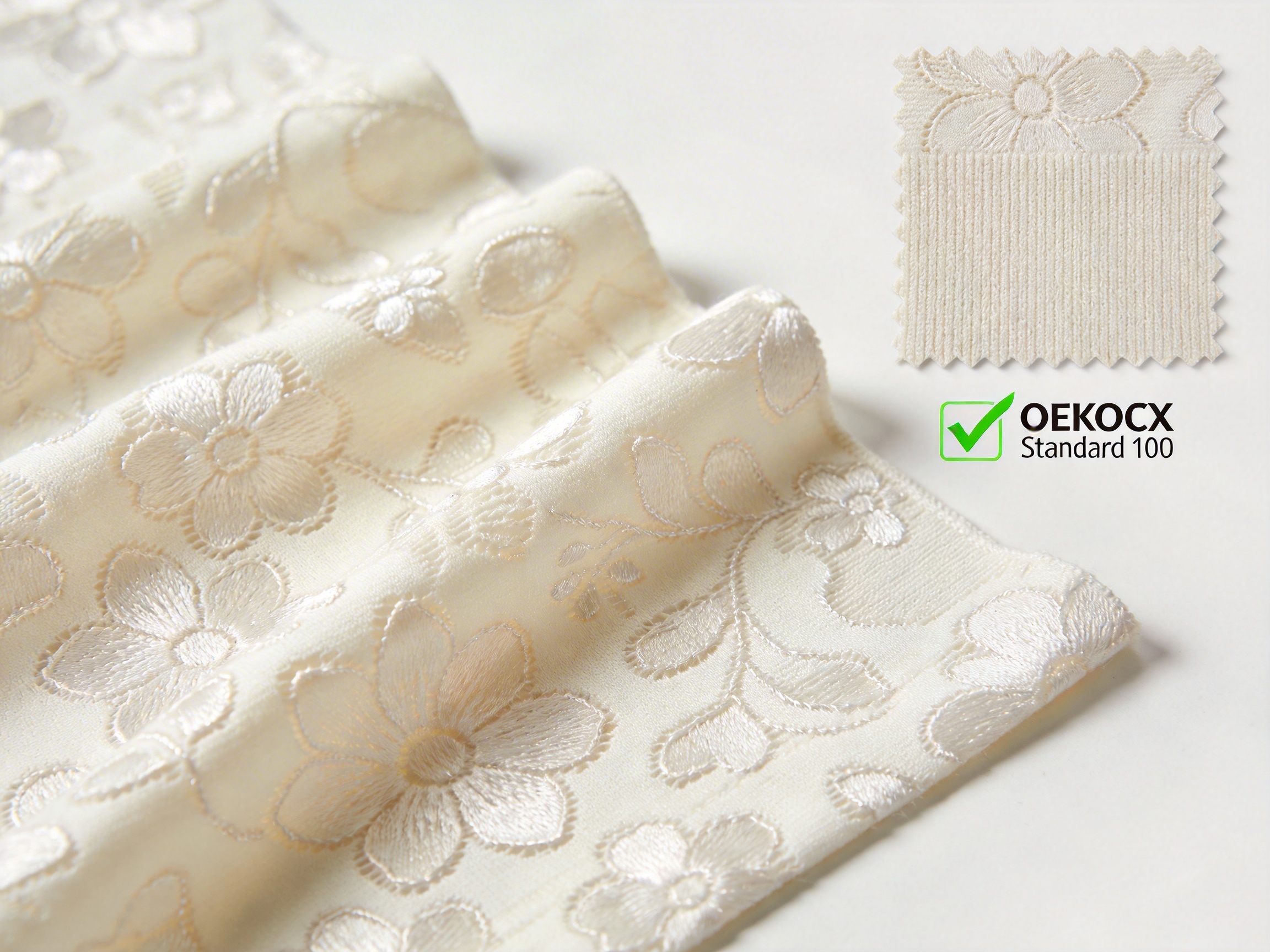
At the heart of this article is a Floral-Patterned Knitted Jacquard that has been engineered to meet the highest standards of quality and design. Let’s break down its key specifications and features:
Core Specifications
Composition: 60% Viscose, 35% Nylon, 5% Spandex. This blend is carefully chosen to balance softness, strength, and stretch. Viscose (derived from wood pulp) provides a natural, soft handfeel and excellent drape; nylon adds durability and resilience; spandex offers the necessary stretch for comfort and a flattering fit.
Weight: 240 g/m² (medium weight). This weight is ideal for dresses—heavy enough to hold its shape and provide coverage, yet light enough to be comfortable for all-day wear, even in warmer climates.
Width: 145 cm (57 inches). A standard width that works well with most apparel manufacturing equipment, reducing waste and simplifying production.
Key Features: Soft handfeel, excellent drape, vibrant color retention, and OEKO-TEX Standard 100 certification. Each feature is designed to address a common pain point in apparel manufacturing: the soft handfeel ensures wearer comfort; excellent drape creates a flattering silhouette; vibrant color retention means the fabric stays looking new for longer; and OEKO-TEX certification guarantees it’s free from harmful substances, making it safe for skin contact.
What sets this floral jacquard apart from generic knitted jacquards is its attention to detail. The floral patterns are delicate yet distinct, with a subtle sheen that adds a touch of luxury without being overly flashy. The blend of viscose and nylon gives the fabric a fluid drape that moves beautifully with the body, making it perfect for A-line dresses, wrap dresses, and other styles that rely on drape for their appeal.
Advantages Over Competitor Fabrics: Why This Jacquard Stands Out
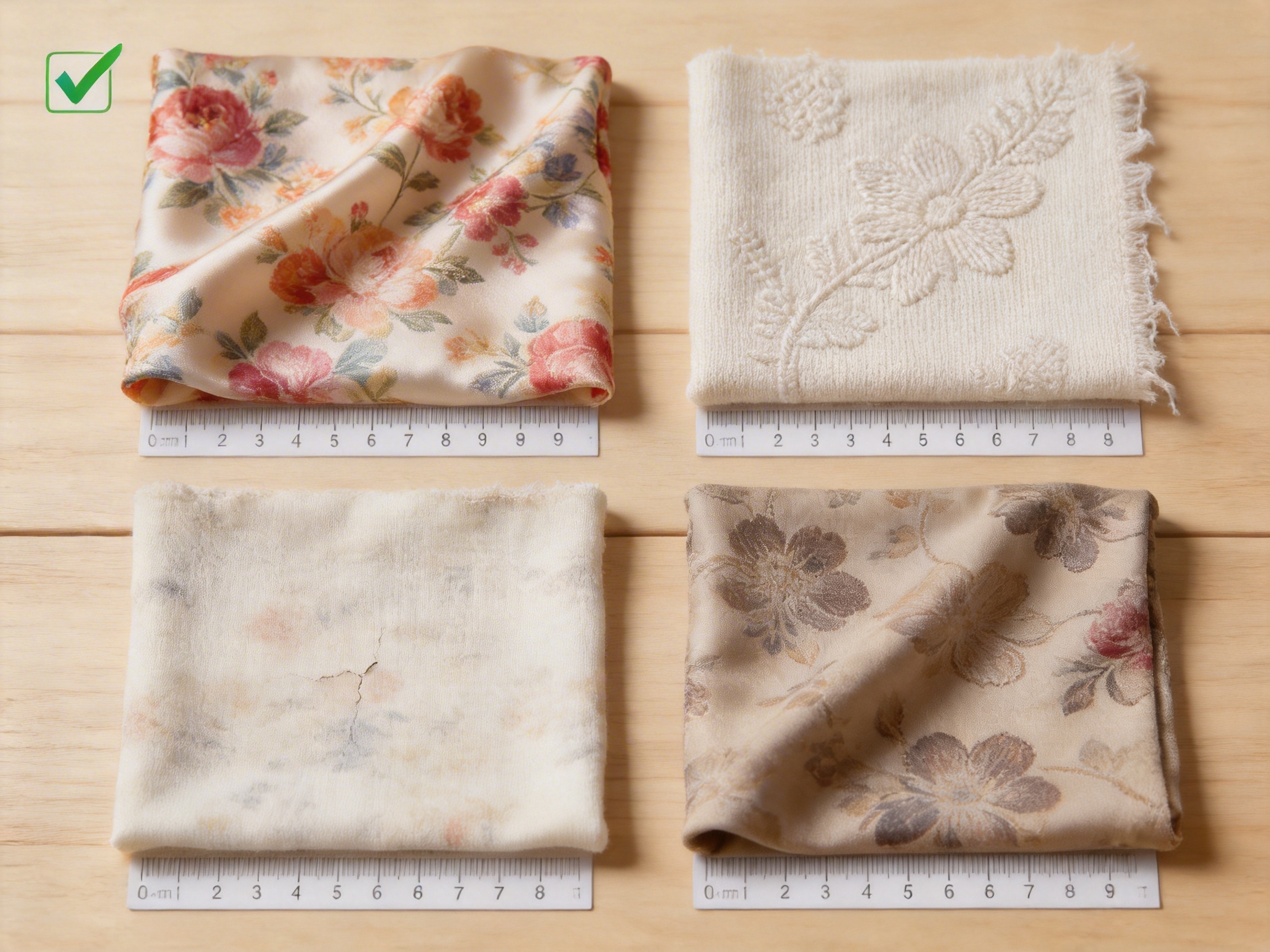
To appreciate the value of this floral jacquard, it’s important to compare it to the most common alternative fabrics used for dressmaking: embroidery knits, printed knits, and polyester-only jacquards. The table below summarizes the key differences:
| Feature | Our Floral Jacquard | Embroidery Knit | Printed Knit | Polyester-Only Jacquard |
|---|---|---|---|---|
| Pattern Durability | Permanent (integral to knit structure; no fraying or fading) | Prone to thread breakage and fraying over time | Pattern fades with washing and stretching; may crack on stretch fabrics | Permanent but less vibrant due to polyester’s matte finish |
| Softness | High (viscose blend provides natural softness) | Moderate (embroidery threads add texture but can feel stiff) | Moderate (depends on base fabric; printed inks may add slight stiffness) | Low (polyester is less soft than viscose) |
| Drape | Excellent (fluid, moves with the body) | Moderate (embroidery adds weight and reduces drape) | Good (depends on base fabric; printing doesn’t affect drape much) | Moderate (polyester has a stiffer drape) |
| Color Fastness | Superior (low-temperature reactive dyes ensure long-lasting vibrancy) | Moderate (embroidery threads may fade faster than base fabric) | Moderate (printed inks fade with repeated washing) | Good (polyester holds color well but lacks sheen) |
| Eco-Certification | OEKO-TEX Standard 100 (safe for skin contact) | Rarely certified (embroidery threads may contain harmful chemicals) | Often not certified (printing inks may have toxins) | Occasionally certified but less eco-friendly than natural blends |
| Cost per Meter (Approx.) | $8-$12 (premium but value-for-money) | $12-$18 (higher due to embroidery labor) | $5-$8 (cheaper but lower quality) | $6-$10 (cheaper but less soft) |
| MOQ (Minimum Order Quantity) | 500 meters (flexible for trials) | 1000+ meters (higher due to embroidery setup) | 300+ meters (lower but quality varies) | 800+ meters (higher for jacquard setup) |
Let’s elaborate on these advantages to highlight why this floral jacquard is a superior choice:
1. Pattern Durability: No Fraying, No Fading
One of the biggest issues with embroidery knits is that the decorative threads can break or fray after repeated washing or wear. Printed knits, on the other hand, often fade over time, especially if exposed to sunlight or harsh detergents. In contrast, the pattern in our floral jacquard is integral to the knit structure—each floral motif is created by manipulating the yarns during the knitting process. This means the pattern will never fray, fade, or distort, even after hundreds of washes. For fashion brands, this translates to longer-lasting products that retain their quality, reducing customer complaints and returns.
2. Softness and Drape: Comfort Without Compromise
Polyester-only jacquards are known for their durability but often lack the softness and fluid drape that consumers desire in dresses. Embroidery knits can feel stiff due to the extra layers of thread, while printed knits may have a slightly rough texture from the ink. Our floral jacquard uses a blend of 60% viscose (a natural fiber) and 35% nylon (a synthetic fiber for strength) to create a fabric that is both soft to the touch and has excellent drape. The 5% spandex adds just the right amount of stretch, ensuring the fabric moves with the body without clinging. This combination makes it ideal for dresses that need to be comfortable for all-day wear while still looking elegant.
3. Color Fastness: Vibrant Colors That Last
Color retention is a critical factor for any apparel fabric, and our floral jacquard excels in this area. The company uses low-temperature reactive dyes, which bond chemically with the fiber molecules, resulting in superior color fastness. Unlike direct dyes or acid dyes, reactive dyes don’t fade easily with washing or sunlight exposure. This means the floral patterns will stay vibrant for years, even with regular use. In contrast, printed knits often use disperse dyes that can fade over time, while embroidery threads may lose their color faster than the base fabric.
4. Eco-Certification: Safe for Skin and the Environment
Consumers are increasingly demanding eco-friendly and safe textiles, and our floral jacquard meets this demand with OEKO-TEX Standard 100 certification. This certification ensures that the fabric is free from harmful substances such as heavy metals, formaldehyde, and phthalates, making it safe for direct skin contact. In contrast, many embroidery and printed knits do not have this certification, as the threads or inks used may contain toxic chemicals. For brands targeting eco-conscious consumers, this certification is a major selling point.
5. Flexible MOQ: Accessible to Small and Large Brands
One of the biggest challenges for small fashion brands or startups is meeting the high minimum order quantities (MOQs) required for premium fabrics. Our floral jacquard addresses this with a flexible MOQ of 500 meters, which is significantly lower than the MOQs for embroidery knits (1000+ meters) or polyester-only jacquards (800+ meters). This allows small brands to test new designs without investing in large quantities of fabric, reducing their risk and making it easier to enter the market.
Advanced Manufacturing Processes: Behind the Quality
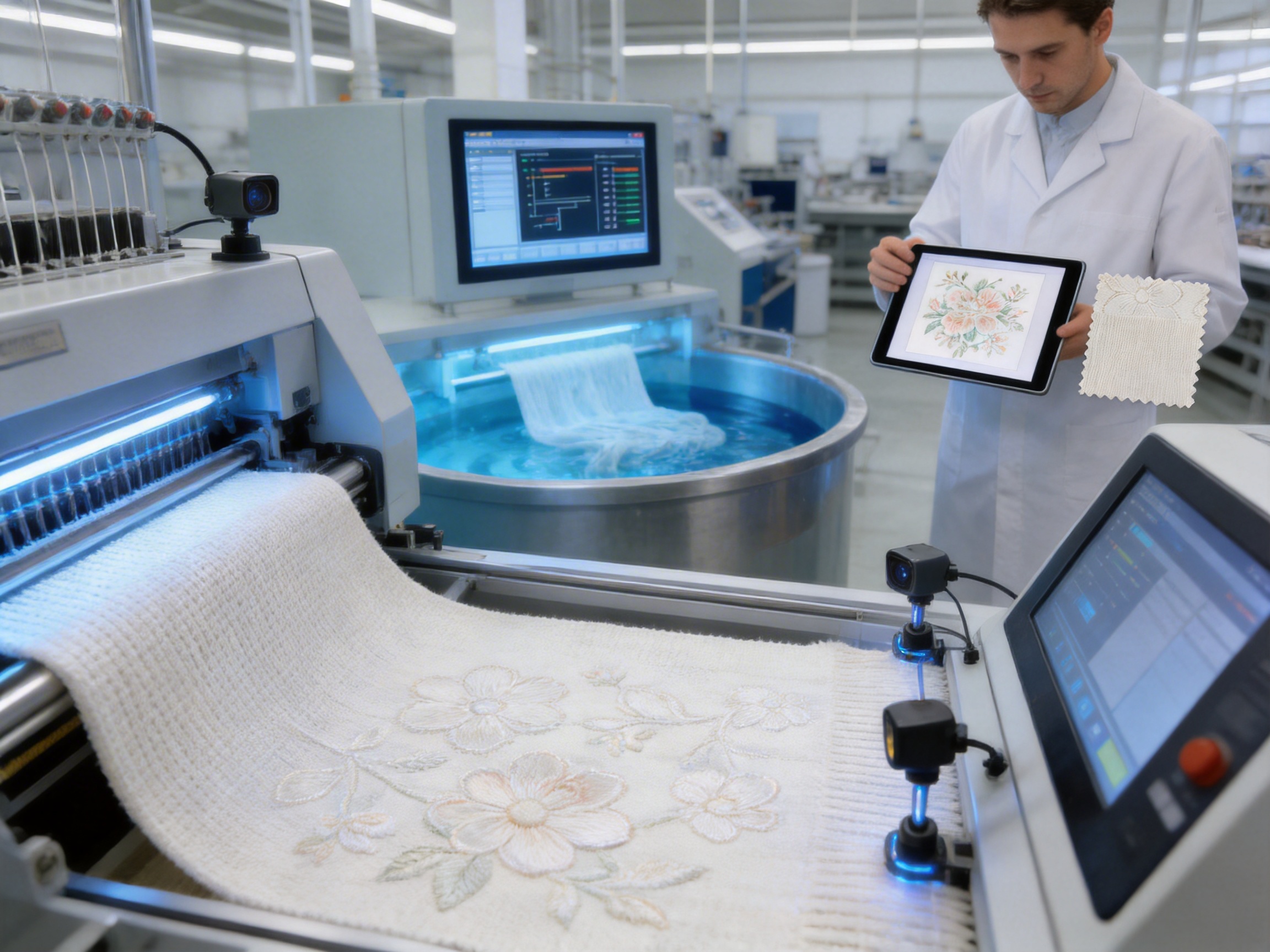
The exceptional quality of our floral jacquard is not accidental—it’s the result of advanced manufacturing processes that prioritize precision, sustainability, and customer satisfaction. Let’s take a closer look at the key processes that set this fabric apart:
1. In-Line Inspection: Zero Defects Guaranteed
Quality control is a top priority, and the company uses continuous in-line inspection during the knitting process to ensure zero fabric defects. Unlike post-production inspection, which can lead to wasted time and materials, in-line inspection catches defects as they occur. This includes checking for broken yarns, uneven patterns, and color inconsistencies. The result is a fabric that meets the highest quality standards, with no defects that could affect the final product. For apparel manufacturers, this means less waste and fewer production delays.
2. Low-Temperature Reactive Dyeing: Eco-Friendly and Color-Fast
Dyeing is a critical step in fabric production, and the company uses low-temperature reactive dyeing to achieve superior color fastness while minimizing environmental impact. Reactive dyes are chosen because they form a permanent chemical bond with the fiber molecules, ensuring long-lasting color. The low-temperature process (typically around 60-70°C, compared to 100°C for traditional dyeing) reduces energy consumption by up to 30% and water usage by up to 20%. This not only lowers the company’s carbon footprint but also reduces costs, which are passed on to customers.
3. Digital Sampling: Quick Iterations for Custom Designs
In today’s fast-paced fashion industry, speed is essential. The company offers digital sampling for new designs, which can be completed within 7 days. This process involves converting a digital design into a physical sample using computerized knitting machines. Digital sampling allows brands to test multiple designs quickly, make adjustments based on feedback, and reduce the time to market. For example, a brand can send a digital floral pattern, and the company will produce a sample within a week, allowing the brand to decide whether to proceed with production without waiting for traditional sampling (which can take 2-3 weeks).
4. Blending Technology: Optimizing Yarn Properties
The 60% viscose, 35% nylon, and 5% spandex blend is not just a random combination—it’s the result of extensive research into yarn properties. Viscose is chosen for its softness and drape, nylon for its strength and resilience, and spandex for its stretch. The company uses advanced blending technology to ensure that the yarns are evenly mixed, resulting in a fabric that has consistent properties throughout. This blending process also enhances the fabric’s durability, as the nylon reinforces the viscose fibers, reducing the risk of tearing or pilling.
5. Flexible MOQ and Customization: Meeting Customer Needs
The company understands that every customer has unique needs, which is why it offers flexible MOQs and customization options. For small brands, the 500-meter MOQ is a game-changer, allowing them to test new designs without large investments. For larger brands, the company can handle bulk orders of up to 100,000 meters or more. Additionally, the company offers custom pattern design, color matching, and fabric finishing options, ensuring that the final product meets the customer’s exact specifications.
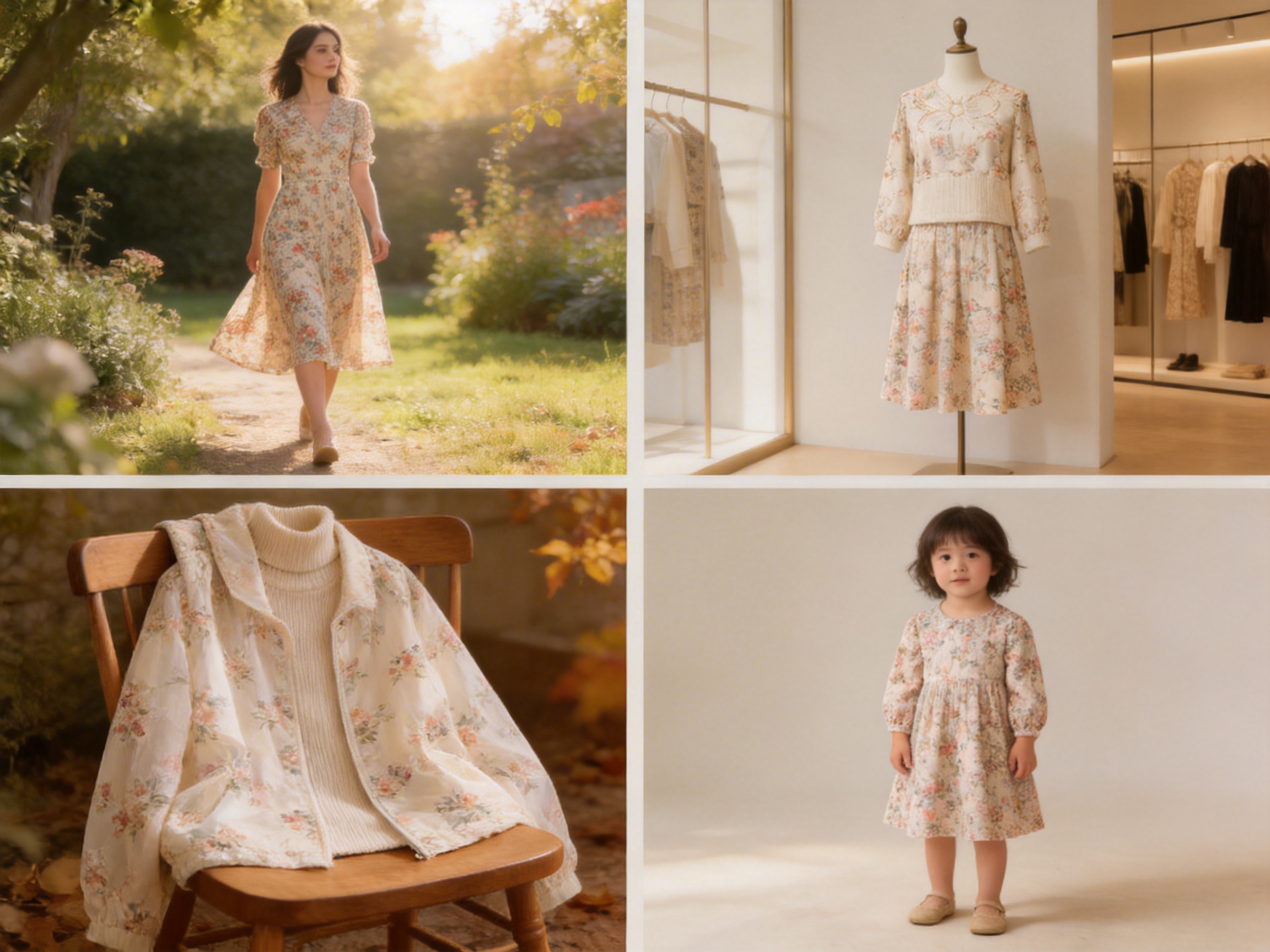
Applications: Versatility Beyond Dresses
While our floral jacquard is designed specifically for dresses, its versatility extends to a wide range of apparel products. Here are some of the key applications:
1. Women’s Elegant Day Dresses
This is the primary application for the fabric, and it’s easy to see why. The medium weight, excellent drape, and soft handfeel make it perfect for day dresses that are both elegant and comfortable. The floral pattern adds a touch of femininity, while the stretch ensures a flattering fit. Brands can use this fabric to create a variety of dress styles, including wrap dresses, A-line dresses, and shift dresses.
2. Coordinated Skirt and Top Sets
The fabric’s versatility makes it ideal for coordinated sets. A floral jacquard skirt paired with a solid-colored top (or vice versa) creates a stylish, put-together look. The stretch in the fabric ensures that the skirt fits well and moves with the body, while the top can be tailored to have a flattering silhouette.
3. Lightweight Fall Jackets
For fall, the medium weight of the fabric makes it perfect for lightweight jackets. The floral pattern adds a pop of color to otherwise neutral outerwear, while the stretch ensures that the jacket is comfortable to wear. Brands can use this fabric to create bomber jackets, blazers, or trench coats that are both stylish and functional.
4. Luxury Children’s Wear
The OEKO-TEX certification makes the fabric safe for children’s wear, and the soft handfeel is gentle on sensitive skin. The floral pattern is perfect for girls’ dresses, skirts, or blouses, while the stretch ensures that the clothing fits well as the child grows. Brands targeting the luxury children’s wear market will find this fabric to be an excellent choice.
Company Strengths: A Partner You Can Trust
Behind every high-quality fabric is a reliable manufacturer, and the company behind this floral jacquard has a proven track record of excellence. Here are some of the key strengths that make it a trusted partner for apparel brands worldwide:
1. Integrated R&D, Production, and Sales
The company is an integrated R&D, production, and sales enterprise, which means it has full control over the entire supply chain. From yarn blending to fabric finishing, every step is managed in-house, ensuring consistent quality and timely delivery. This integration also allows the company to respond quickly to customer requests for custom designs or modifications.
2. Large-Scale Production Capacity
The company covers an area of 32.6 acres and has a plant area of 18,000 square meters. It has the capacity to produce large quantities of fabric, with annual production reaching millions of meters. This means it can handle bulk orders for large brands while still meeting the needs of small brands with flexible MOQs.
3. Export Capability
The company is a self-employed export enterprise, which means it can ship products directly to customers worldwide without going through middlemen. This reduces costs and ensures that customers receive their orders on time. The company also has experience working with international brands, understanding the specific requirements for customs clearance, labeling, and packaging.
4. Comprehensive Customer Support
The company offers comprehensive customer support to ensure that every order is a success. This includes:
- Dedicated logistics support: For large orders, the company offers container consolidation and optimized packaging to minimize wrinkles and freight costs.
- HS code and Certificate of Origin assistance: The company can provide Harmonized System (HS) codes (e.g., 6006.32) and Certificate of Origin (Form A/E/F) to assist with smooth customs clearance.
- After-sales service: The company stands behind its products, offering support for any issues that may arise after delivery.
Q&A Section: Addressing Common Buyer Concerns
To help potential buyers make informed decisions, we’ve compiled a list of common questions and answers about the floral-patterned knitted jacquard:
Q1: Is the floral pattern reversible?
A: No, our standard floral jacquard has a distinct face and back side. The face side features the delicate floral pattern with a subtle sheen, while the back side has a neat, clean knit structure. However, we do produce specific double-sided jacquards upon request, where both sides have a visible pattern. Please contact our sales team for more information about double-sided options.
Q2: How should I care for this viscose blend fabric?
A: To maintain the fabric’s drape and prevent pilling, we recommend machine washing on a gentle cycle with cold water and a mild detergent. Avoid using bleach or fabric softeners, as these can damage the fibers. Alternatively, dry cleaning is also a safe option. After washing, hang the fabric to dry or lay it flat—do not tumble dry, as this can cause shrinkage or distortion.
Q3: What is the minimum order quantity (MOQ)?
A: Our standard MOQ is 500 meters, which is flexible for trial orders. For larger orders, we can offer discounted pricing. Please contact our sales team to discuss your specific needs.
Q4: How long does it take to receive a sample?
A: We offer digital sampling, which can be completed within 7 days. For physical samples, the lead time is typically 3-5 days, depending on the complexity of the design. Please note that sample shipping times may vary by location.
Q5: Does the fabric have any certifications?
A: Yes, our floral jacquard is certified with OEKO-TEX Standard 100, which guarantees that it is free from harmful substances and safe for skin contact. We can provide a copy of the certification upon request.
Q6: Can I customize the pattern or color?
A: Yes, we offer custom pattern design and color matching services. Our digital sampling process allows us to create custom designs quickly, so you can test different patterns and colors before placing a bulk order. Please contact our sales team with your specific requirements.
Q7: What is the lead time for bulk orders?
A: The lead time for bulk orders is typically 2-3 weeks, depending on the quantity and any custom requirements. For large orders (10,000 meters or more), the lead time may be extended to 4 weeks. We will provide a detailed timeline when you place your order.
Q8: How is the fabric packaged?
A: The fabric is packaged in standard export cartons, with each carton containing 50-100 meters of fabric. For large orders, we use container consolidation to minimize freight costs. We also offer optimized packaging to reduce wrinkles during shipping—please let us know if you have specific packaging requirements.
References
1. Textile Institute. (2022). Knitted Fabrics: Properties and Applications. Manchester, UK: Textile Institute Press.
2. OEKO-TEX Association. (2023). OEKO-TEX Standard 100: Guidelines for Textile Safety. Zurich, Switzerland: OEKO-TEX Association.
3. Smith, J. (2021). The Future of Sustainable Textiles: Innovations in Dyeing and Finishing. New York, NY: Fashion Institute of Technology Press.
4. Wang, L. (2022). Knitted Jacquard: Design, Production, and Market Trends. Beijing, China: China Textile Press.
5. International Textile Manufacturers Federation (ITMF). (2023). Global Textile Industry Report: Trends in Apparel Fabrics. Zurich, Switzerland: ITMF.