Double-Sided Mesh for Pants Fabric: Reversible Comfort, Structure, and Performance
Double-sided mesh for pants fabric is a knitted jacquard textile engineered for garments that need flexibility, visual depth, breathable comfort, and dependable shape retention. As a member of the NR knitted fabric category, it combines the design freedom of jacquard knitting with the practical advantages of a reversible double-face structure. Unlike ordinary single-sided mesh fabrics that offer only one presentable surface, double-sided knitted jacquard fabric provides two usable face sides, giving apparel designers, garment manufacturers, and fabric buyers more creative and functional possibilities from the same material.
This fabric is especially suitable for pants, fitted casualwear, athleisure pieces, sport-inspired bottoms, performance garments, and body-hugging silhouettes. Its double-sided construction allows either surface to be used as the visible outer side, while the opposite surface can serve as a comfortable inner face. In some applications, both sides can be intentionally displayed through cuffing, paneling, contrast stitching, reversible garment construction, or decorative seams. This versatility helps brands reduce material complexity while expanding design value.
Hangzhou Jinfeng Textile Co., Ltd. manufactures and supplies textile products including DTY polyester yarn, polyester rayon fabric, knitted jacquard fabric, NTR knitted fabric, NR knitted fabric, and slight intermingled draw textured yarn. With integrated capabilities in production, processing, post-dyeing, finishing, and sales of blended fabrics such as polyester and spandex, the company supports the complete textile chain from yarn-related processing to finished fabric. Its manufacturing base in Xiaoshan District, Hangzhou, Zhejiang Province, covers a substantial industrial site with a plant area of about 18,000 square meters, supporting stable production and quality management for domestic and international customers.
The double-sided mesh for pants fabric reflects the company’s focus on practical textile innovation. It is not merely a decorative jacquard fabric; it is a functional knitted structure developed for comfort, garment stability, efficient cutting, and strong market adaptability. For buyers looking for a fabric that can support contemporary pants design, reversible styling, refined texture, and reliable wearability, this material offers a compelling balance of performance and aesthetics.
Double-sided Mesh For Pants Fabric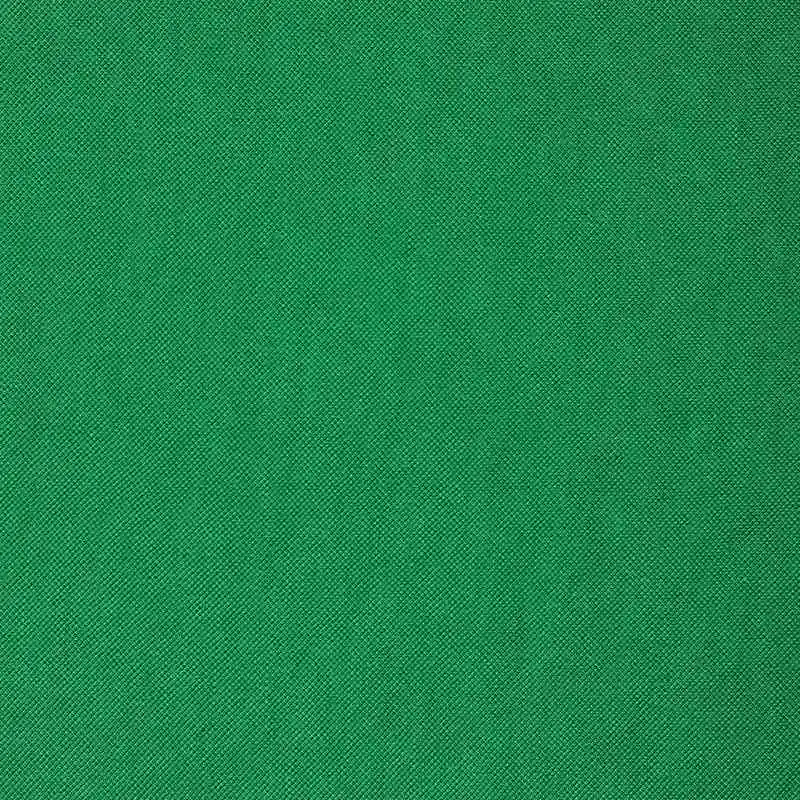
Understanding Double-Sided Mesh for Pants Fabric
Double-sided mesh fabric is a knitted textile in which both sides are constructed to be functional and visually presentable. In a jacquard version, the fabric surface can include structured patterns, texture effects, contrast effects, or subtle geometric detail made directly during knitting rather than printed only on the surface. This knitted jacquard process gives the fabric greater depth and durability than many surface-applied decoration methods because the design is built into the textile structure.
For pants fabric, the double-sided mesh concept is particularly useful. Pants must withstand repeated motion, stretching, sitting, walking, bending, washing, and friction. They also need to look attractive from multiple angles and maintain comfort over long wear periods. A fabric that has two finished faces can help solve common garment design challenges, such as rough inner surfaces, limited color or pattern options, and visible reverse-side defects at cuffs or seams.
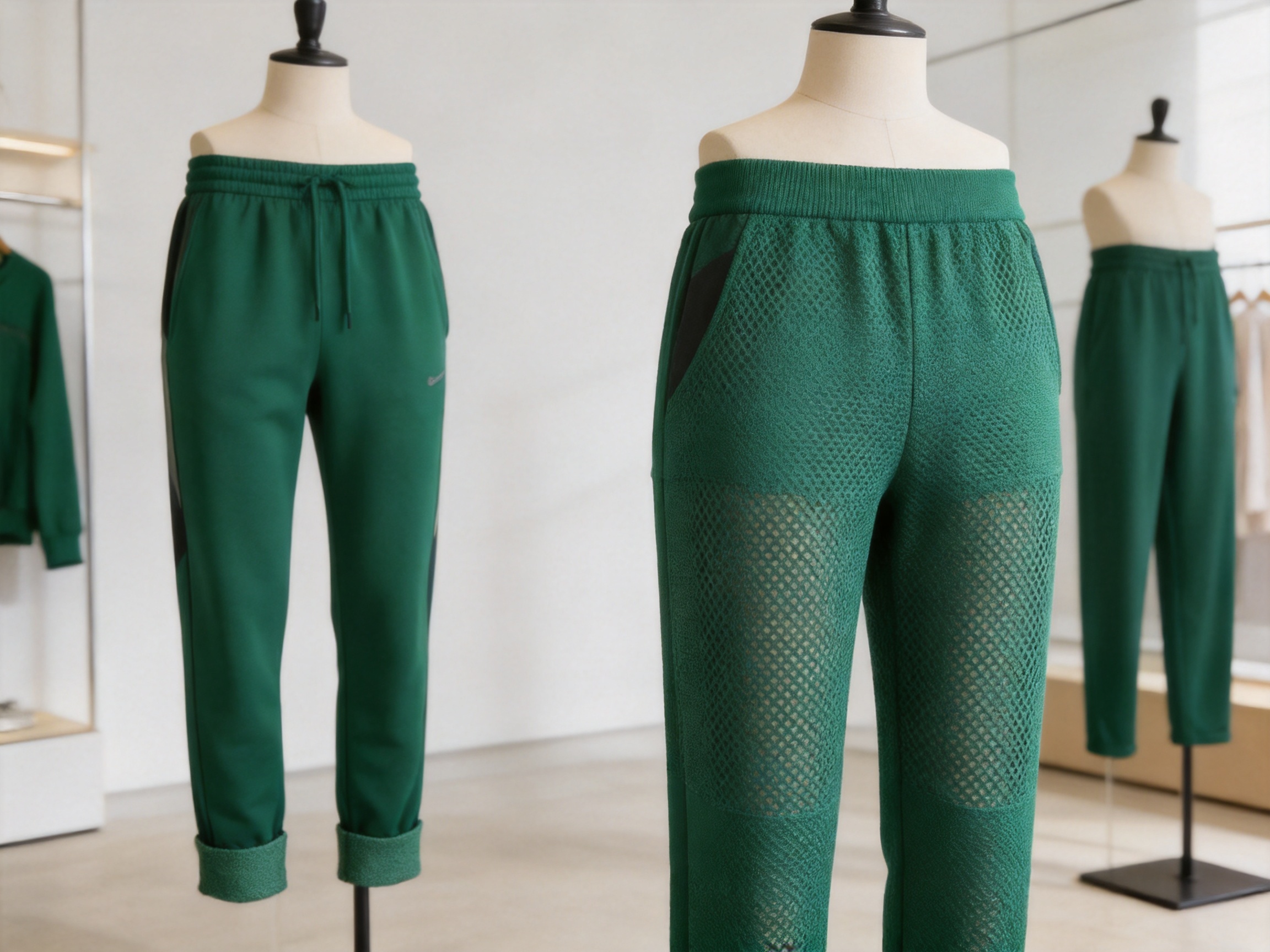
The fabric’s mesh quality improves breathability and comfort. Mesh does not necessarily mean transparent or weak; in modern knitted fabric engineering, mesh structures can be developed with controlled openness, stability, and texture. A well-produced double-sided mesh for pants fabric can provide airflow while remaining suitable for apparel requiring coverage, durability, and structured appearance. The result is a textile that feels more comfortable than dense, non-breathable fabrics while still supporting garment form.
The product is categorized as NR knitted fabric. In practical sourcing terms, this indicates a knitted fabric with characteristics suitable for modern blended textile applications. When paired with jacquard technology and double-sided construction, the category supports fabric development for garments that require both elasticity and style. Pants made from this type of fabric can serve fashion, leisure, sportswear, and everyday wear markets.
Why Double-Sided Construction Matters
One of the greatest advantages of double-sided knitted jacquard fabric is reversibility. A reversible fabric gives designers two usable surfaces instead of one. This feature can simplify garment development and expand design possibilities. For example, the outer face may present a textured jacquard effect, while the inner face may offer a smoother or contrasting appearance. Alternatively, both sides may show complementary designs, allowing the garment to reveal contrast at hems, waistbands, side panels, or pocket details.
Compared with single-sided fabrics, double-sided fabrics are often more forgiving during garment construction. If a cuff, rolled edge, or seam allowance is visible, the fabric still looks intentional and finished. This is valuable for pants designs where the inside may be seen during movement or styling. In activewear, joggers, leggings-inspired pants, lounge pants, or tapered trousers, a visible inner face can become part of the design rather than a limitation.
Double-sided construction also contributes to fabric hand feel. Because both surfaces are engineered, the inside can be designed for comfort against the skin, while the outside can be designed for style and durability. This dual purpose is important for pants, where comfort at the inner surface is as important as the visual effect outside. The fabric can help reduce the discomfort associated with harsh back sides, loose floats, or unstable reverse yarns sometimes found in lower-grade jacquard fabrics.
Another important benefit is structural balance. Double-sided knitting can distribute tension more evenly across the fabric, improving dimensional stability when properly manufactured and finished. Pants fabric must resist distortion, twisting, and excessive growth during wear. A balanced double-sided knitted jacquard can help maintain a consistent garment silhouette, especially when produced with suitable yarn selection, knitting control, dyeing, and finishing.
Key Advantages Over Ordinary Competing Fabrics
In a competitive textile market, buyers often compare fabrics by cost, appearance, comfort, durability, and production reliability. Double-sided mesh for pants fabric offers several advantages over ordinary single-face mesh, simple jersey, low-density knitted fabrics, and basic printed fabrics. Its strengths become especially clear when evaluated across the full garment lifecycle: design, cutting, sewing, wearing, washing, retail presentation, and consumer satisfaction.
| Comparison Area | Double-Sided Mesh for Pants Fabric | Common Competing Fabric | Practical Buyer Benefit |
|---|---|---|---|
| Usable Surfaces | Two presentable face sides | Usually one finished face | More design flexibility and fewer reverse-side limitations |
| Design Effect | Jacquard texture built into the fabric | Often plain, printed, or surface-treated | More durable visual depth and premium appearance |
| Comfort | Breathable mesh structure with engineered inner surface | May be dense, rough, or less ventilated | Improved wear comfort for pants and body-hugging styles |
| Garment Versatility | Suitable for reversible details, contrast panels, cuffs, and body-fit designs | Limited styling options | Supports broader product development from one fabric |
| Structural Stability | Balanced double-sided knitted construction | May distort or show reverse defects | Better garment appearance after sewing and wearing |
| Production Value | Compatible with integrated knitting, dyeing, and finishing control | Quality depends heavily on separate processes | More consistent quality when sourced from an integrated supplier |
First, the fabric offers improved design efficiency. Since both sides can be used, manufacturers can create multiple garment styles from the same fabric. A pants collection may use one side as the main outer face for one style and the opposite side for another style. This can reduce the need to source many separate materials, simplify warehouse management, and improve design coordination across a product line.
Second, jacquard construction gives a more sophisticated surface than basic plain knit. Printed fabrics can be attractive, but prints may fade, crack, or lose definition depending on printing method, washing conditions, and fabric stretch. A knitted jacquard pattern is formed through yarn and stitch structure, giving the design a more integrated and dimensional appearance. This is useful for pants fabric because the textile must stretch and move without making the design look artificially applied.
Third, mesh breathability improves practical comfort. Pants are worn for long hours and often in situations involving movement. A fabric that allows better air exchange can help the wearer feel less restricted. For casual pants, leisurewear, sports-inspired garments, and body-hugging pants, breathability is not a luxury; it is a core comfort requirement. The double-sided mesh structure supports this need while maintaining a refined knitted surface.
Fourth, the double-sided fabric can enhance garment finishing. When the reverse side of ordinary fabric is unattractive, designers must hide it with linings, binding, facing, or additional construction steps. With a double-sided fabric, the inner surface can become part of the garment’s aesthetic. This can help reduce extra sewing operations in some designs and create a cleaner finished product.
Fifth, the fabric supports contemporary fashion trends. Consumers increasingly prefer garments that combine comfort and versatility. Pants are no longer expected to be only formal or only athletic; many modern garments combine soft touch, stretch, texture, and stylish surface effects. Double-sided mesh for pants fabric is well suited to this hybrid market because it can be used for casualwear, active-inspired fashion, travel wear, lounge pants, and fitted silhouettes.
Comfort and Wearability for Pants Applications
Comfort is central to pants fabric selection. A visually appealing textile will not succeed if it feels stiff, sticky, scratchy, overly hot, or unstable during motion. Double-sided mesh for pants fabric is designed to address comfort from several angles: breathability, flexibility, surface touch, body adaptability, and garment balance.
The mesh component encourages ventilation. While the exact openness can vary according to the selected jacquard pattern and knitting density, the fabric structure can be engineered to permit airflow better than many compact knitted fabrics. This is particularly valuable for pants worn during warm seasons, indoor activity, travel, or long periods of sitting. Breathable comfort supports better consumer satisfaction and repeat purchases.
Knitted fabric naturally offers more flexibility than many woven structures. This is important for pants because the wearer needs comfort at the knees, hips, waist, and seat. A knitted jacquard fabric can conform to body movement while maintaining surface interest. When blended with appropriate fiber components, such as polyester and spandex in related fabric systems, it can provide stretch and recovery suitable for active and fitted garments.
The double-sided design also improves touch quality. In some jacquard textiles, the reverse side may contain long floats or uneven texture that can irritate the skin or snag during wear. A well-developed double-sided knitted jacquard fabric reduces this issue by making both faces intentional and usable. For pants, where the inner surface is in close contact with the body, a comfortable reverse side is a major advantage.
Another wearability factor is drape. Pants fabric must have enough structure to avoid looking limp, but enough softness to move naturally. Double-sided knitted mesh can provide a balanced hand feel, depending on yarn count, knitting gauge, finishing, and fabric weight. This makes it suitable for body-hugging styles as well as relaxed silhouettes. Designers can adapt the fabric to various patterns, including tapered pants, joggers, leggings-style bottoms, slim-fit casual pants, and fashion-forward panel designs.
In addition, the fabric’s reversible nature can improve psychological value for consumers. Garments that show thoughtful inner and outer surfaces often feel more premium. Even when the garment is not fully reversible, a finished inner face conveys quality. Consumers notice details such as cuff appearance, pocket edge finishing, waistband interior, and seam behavior. Double-sided fabric helps garments look more carefully designed.
Jacquard Knitting and Pattern Possibilities
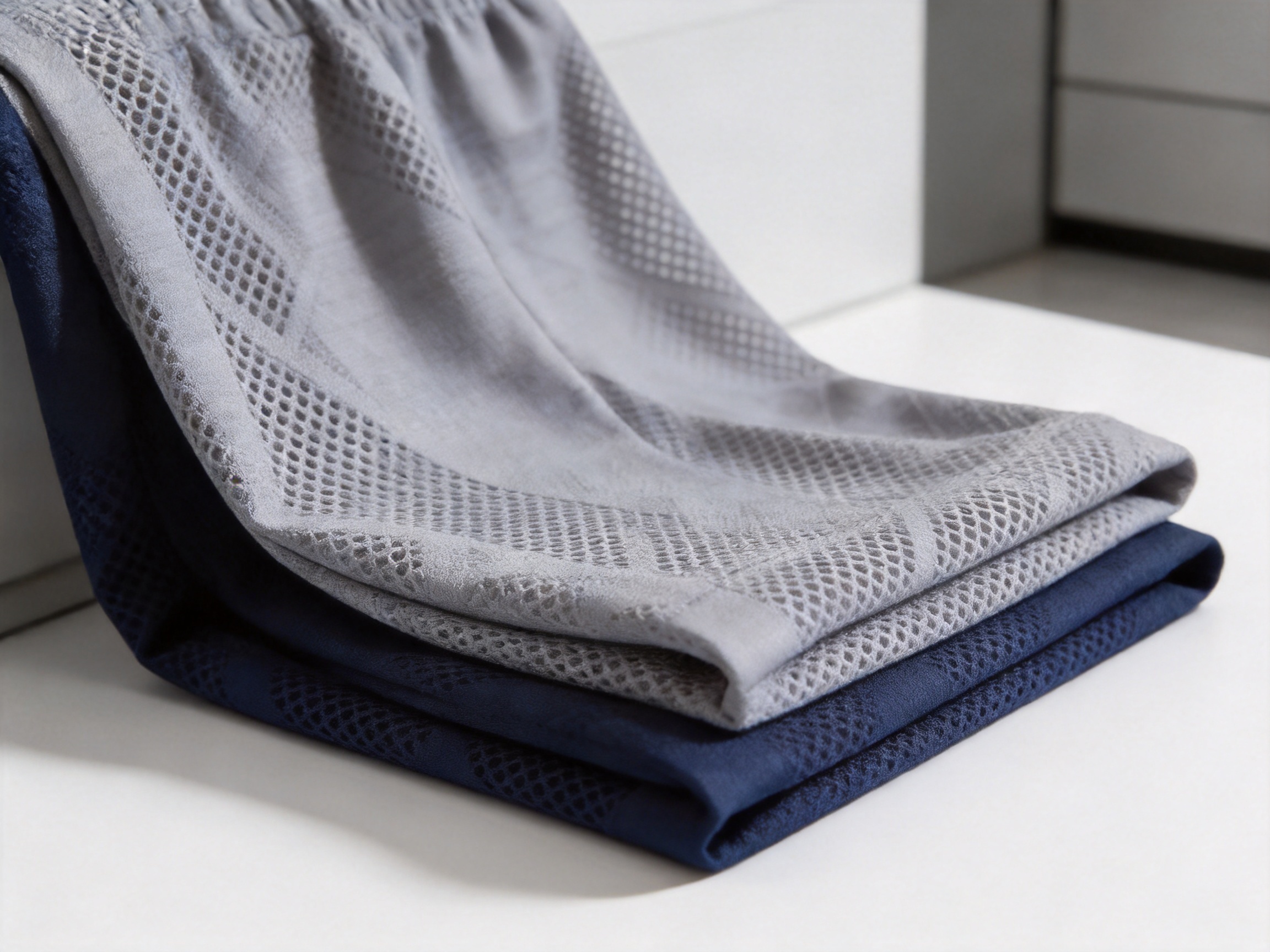
Jacquard knitting is one of the major reasons this fabric stands out. Instead of relying only on dyeing or printing after the fabric is made, jacquard technology allows patterns and texture effects to be created during knitting. This can produce geometric patterns, subtle tonal structures, mesh effects, reversible motifs, and contrast surface designs. For pants fabric, jacquard knitting can add visual interest without sacrificing garment functionality.
The ability to develop reversible patterns is especially valuable. Designers can use one side for a bold surface and the other for a calmer effect, or they can develop complementary textures for coordinated garment details. A pants design may use the darker or more textured side outward and the lighter or smoother side inward. Another design may deliberately expose the inner side at rolled hems or side-seam inserts. This gives apparel brands more storytelling options in product development.
Jacquard knitting also supports differentiation in a crowded market. Many pants fabrics look similar at retail: plain black, plain gray, basic jersey, or simple rib. A double-sided jacquard mesh can create a distinctive tactile and visual identity. This helps clothing brands offer garments that feel special without depending on heavy embellishment, complicated trims, or costly post-processing.
From a production perspective, jacquard patterns can be adjusted to meet different market requirements. Some buyers may prefer subtle textures suitable for minimalist fashion. Others may want stronger contrast for sportswear or youth-oriented garments. Because the design is knitted into the fabric, pattern development can be closely connected with fabric performance. The manufacturer can consider breathability, stretch, density, and surface effect together rather than treating decoration and performance as separate concerns.
The double-sided mesh structure also allows functional pattern design. Mesh zones can be placed or distributed to improve ventilation. Dense zones can support coverage and durability. Textured zones can improve visual dimension. While final performance depends on fabric specifications and garment design, the jacquard platform provides a flexible foundation for product development.
Material Platform and Yarn Support
A fabric’s quality begins with yarn. Hangzhou Jinfeng Textile Co., Ltd. is involved in DTY polyester yarn production, processing, and sales, along with blended fabric manufacturing. This capability is significant because drawn textured yarn, commonly known as DTY, is widely used in knitted fabrics requiring softness, bulk, elasticity, and dimensional performance. DTY polyester yarn can contribute to fabric resilience, smoothness, and practical durability.
Polyester is valued in pants fabric because it is strong, relatively quick-drying, resistant to many forms of daily wear, and suitable for stable dyeing and finishing. When used in textured yarn form, polyester can provide a softer, fuller hand compared with flat filament yarn. For knitted mesh and jacquard structures, yarn texture plays an important role in surface appearance, stretch behavior, and wearer comfort.
Blended fabric manufacturing expands performance possibilities. The company’s experience with polyester, spandex, and related blended fabrics supports the development of textiles that combine stability, elasticity, and comfort. Spandex, when used in suitable proportions, can improve stretch and recovery, helping pants retain their fit after repeated movement. Polyester can provide strength and easy-care performance. Rayon or other fiber blends may be used in different product categories to adjust softness, drape, or moisture feel.
Slight intermingled draw textured yarn is also part of the company’s product category. Intermingling helps filament yarns maintain cohesion during downstream processing, reducing problems such as filament separation. In knitting, yarn consistency is essential for stable fabric formation. Better yarn preparation can reduce defects, improve surface uniformity, and support higher production efficiency.
When a company understands both yarn and fabric, it can better control the relationship between raw material and finished textile performance. For double-sided mesh for pants fabric, this is important because yarn properties affect stitch clarity, jacquard definition, mesh openness, elasticity, dye uptake, and finishing response. Integrated knowledge helps reduce the risk of mismatch between design expectation and final fabric behavior.
Advanced Manufacturing Processes Behind the Fabric
The strength of a premium knitted jacquard fabric does not come from one process alone. It depends on a coordinated manufacturing chain including yarn selection, knitting preparation, machine control, gray fabric inspection, dyeing, finishing, quality testing, packaging, and shipment management. Hangzhou Jinfeng Textile Co., Ltd. operates as a manufacturer integrating research and development, production, and sales, allowing closer control over these steps.
At the yarn preparation stage, the goal is to ensure consistency. Yarn quality affects fabric uniformity directly. Parameters such as yarn linear density, texture, intermingling, tension stability, and package condition influence knitting performance. Inconsistent yarn can cause barré, streaks, holes, uneven pattern formation, and unstable elasticity. By working with DTY polyester yarn and related yarn products, the company can better understand how to prepare yarns for knitted jacquard production.
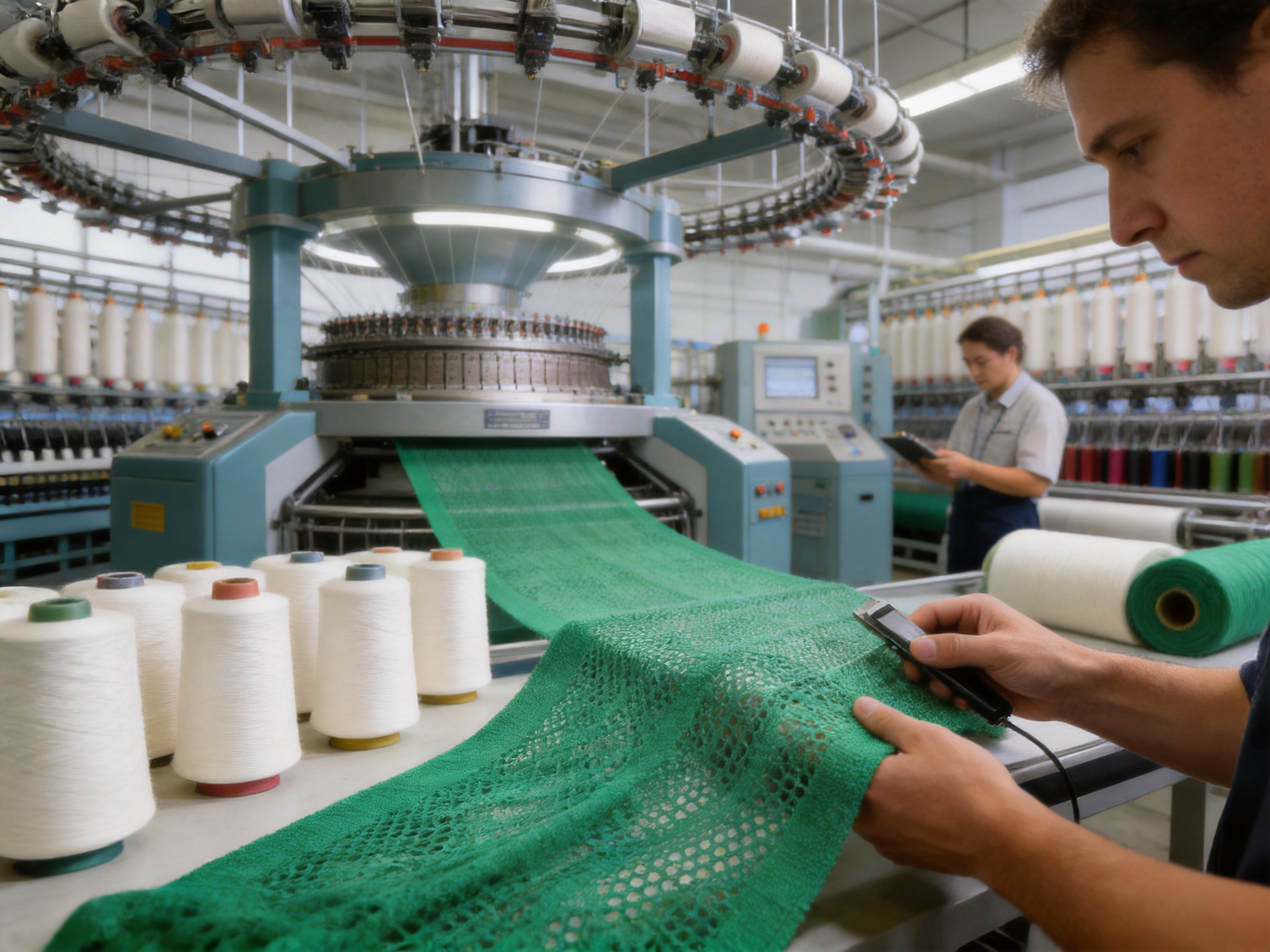
During knitting, machine settings must be carefully managed. Double-sided jacquard fabrics require accurate stitch formation on both faces. Pattern control, needle selection, yarn feeding, loop length, machine speed, and tension must work together. If one side is too tight or too loose, the fabric may curl, distort, or show uneven patterning. High-quality double-sided mesh depends on stable knitting technology and experienced production management.
Jacquard design development is another advanced step. A pattern that looks attractive on a screen must be translated into a workable knitted structure. The design must consider yarn behavior, fabric density, stretch direction, mesh distribution, and final garment use. For pants fabric, the pattern cannot simply be decorative; it must support wearability. A successful design balances aesthetics with function.
After knitting, gray fabric inspection helps identify defects before dyeing and finishing. Early inspection is important because some knitting problems become more visible after dyeing, leading to waste and delivery delays. Quality-conscious manufacturers monitor fabric width, weight, surface condition, holes, dropped stitches, pattern accuracy, and overall fabric uniformity.
Post-dyeing and finishing are essential for final fabric performance. Dyeing gives color depth and consistency, while finishing can influence hand feel, dimensional stability, surface smoothness, shrinkage behavior, and appearance. For double-sided fabric, finishing must preserve the quality of both surfaces. Excessive heat, tension, or chemical treatment can harm stretch, distort mesh, or flatten jacquard texture. Controlled finishing helps maintain the intended balance of softness, structure, and appearance.
The company’s plant scale and integrated manufacturing model support production stability. With an industrial park location, significant site area, and an 18,000-square-meter plant area, it has the physical foundation for coordinated textile production. Scale matters in fabric supply because buyers need not only sample quality but also repeatable bulk production. A factory that can manage production, processing, dyeing support, finishing, and sales is better positioned to deliver consistent results.
Quality Control Priorities for Pants Fabric
Pants fabric must pass practical quality expectations. Even a beautiful fabric can fail commercially if it shrinks excessively, pills quickly, loses shape, feels uncomfortable, or shows inconsistent color. For double-sided mesh for pants fabric, quality control should address both visible and hidden performance indicators.
Dimensional stability is a primary concern. Pants are washed repeatedly, and consumers expect them to maintain fit. Knitted fabrics can shrink or grow if not properly stabilized. Finishing control, heat setting where applicable, and proper relaxation all help improve dimensional performance. Stable fabric allows garment factories to cut more accurately and reduces consumer complaints after washing.
Fabric weight and width consistency are also important. Garment costing, cutting efficiency, and fit depend on stable fabric specifications. Variations in weight can change drape and opacity. Variations in width can affect cutting markers and production yield. A reliable supplier monitors these parameters to support predictable garment manufacturing.
Color consistency matters for pants because panels are often cut from different fabric rolls and sewn together. Shade variation can create visible defects in finished garments. Dyeing and lot management help reduce this risk. For double-sided fabrics, both sides must be evaluated because the reverse side may be visible in the final garment.
Surface performance should include resistance to snagging, pilling, and abrasion according to the intended application. Pants experience friction at the thighs, seat, knees, and inner seams. While specific test results depend on the exact fabric specification, a quality-focused manufacturer considers these usage conditions during development. Yarn choice, fabric density, finishing, and pattern structure all influence durability.
Stretch and recovery are equally important for body-hugging or movement-oriented pants. Fabric that stretches but does not recover may bag at the knees or seat. Fabric that is too rigid may restrict movement. The balance depends on fiber composition, knitting structure, and finishing control. A double-sided knitted jacquard fabric can be developed to provide comfort stretch while maintaining shape.
Inspection of both faces is a special requirement. Ordinary fabrics are often judged mainly by the front side. Double-sided mesh for pants fabric must meet appearance standards on both surfaces. This raises the quality expectation but also increases product value. When both sides are attractive and usable, the fabric gives garment brands more confidence in design and production.
Applications in Modern Pants Design
Double-sided mesh for pants fabric can be used in many garment categories. Its most direct application is pants that require comfort, stretch, and a textured appearance. However, the fabric’s reversible character makes it suitable for more advanced styling than basic knitted bottoms.
For athleisure pants, the mesh structure supports breathable comfort, while the jacquard surface adds a fashion element. Athleisure consumers often look for garments that can move from home to gym to casual social settings. A double-sided jacquard fabric supports this transition by combining softness, flexibility, and visual interest.
For joggers, the fabric can be used with contrast cuffs, waistbands, or side panels. Because both sides are usable, designers can expose the reverse side at selected areas. This creates a coordinated contrast without introducing a second fabric. It can simplify sourcing and improve material compatibility because the same base fabric provides both main and accent effects.
For slim-fit casual pants, the fabric’s knitted flexibility supports body movement. A jacquard mesh texture can reduce the flatness often associated with plain knit pants. The result is a garment that looks more refined while remaining comfortable. If the fabric includes appropriate stretch and recovery properties, it can support close-fitting silhouettes without excessive restriction.
For lounge pants, comfort is the priority. The double-sided structure can offer a soft inner touch and attractive outer surface. Consumers increasingly expect loungewear to look presentable enough for casual public wear. This fabric supports that expectation by combining home comfort with retail-ready texture.
For travel pants, breathability, shape retention, and easy-care properties are important. Polyester-based knitted fabrics can support quick drying and wrinkle resistance, depending on final composition and finishing. A double-sided mesh jacquard can provide comfort during long sitting periods while maintaining a more designed appearance than basic sweatpant fabric.
For fashion pants, reversible details and jacquard texture create creative value. Designers can use the two sides for visual contrast in asymmetrical panels, pocket flaps, waist facing, seam inserts, or turn-up hems. Since the pattern is built into the fabric structure, the garment can achieve a premium textile effect without relying on heavy decoration.
Benefits for Garment Manufacturers
Garment manufacturers benefit from fabrics that sew well, cut efficiently, and reduce design complications. Double-sided mesh for pants fabric can support efficient production when properly specified and handled. Its two-sided appearance can reduce the need for lining or contrast materials in certain designs, simplifying garment assembly.
Cutting flexibility is improved because designers have more options for face selection. In some cases, one fabric can support multiple styles simply by reversing the visible side. This can improve material utilization and reduce leftover stock. For manufacturers producing seasonal collections, this flexibility is valuable because it allows faster design variation without completely changing the material base.
Sewing quality can also improve when both faces are stable and intentional. Fabrics with rough or unstable reverse sides may cause seam problems, snagging, or inconsistent appearance at openings. A double-sided fabric gives a cleaner look at seams and edges, especially in unlined or partially exposed designs.
Material compatibility is another advantage. When contrast details are made from the reverse side of the same fabric, shrinkage, stretch, color relationship, and hand feel are more consistent than when using two unrelated fabrics. This can reduce production risk. For example, a waistband or cuff made from the reverse side of the same material is more likely to behave similarly during washing and wearing.
Inventory management may become simpler. Instead of purchasing separate outer fabric, lining fabric, and contrast fabric for some designs, buyers can use one double-sided material. This does not apply to every garment, but where suitable, it can reduce purchasing complexity and improve production coordination.
The fabric also supports sample development. Designers can quickly test different visual effects by turning the fabric over, combining both sides, or adjusting panel placement. Faster sample iteration can help brands respond to market trends and buyer feedback.
Advantages for Fabric Buyers and Apparel Brands
Fabric buyers and apparel brands evaluate suppliers not only by fabric appearance but also by reliability, development capability, communication, and long-term value. Double-sided mesh for pants fabric offers a strong story for brands: reversible design, breathable comfort, jacquard texture, and practical performance. These features can be translated into consumer-facing product benefits.
From a merchandising perspective, the fabric helps create pants that stand out without being overly complicated. A retailer can describe the garment as textured, breathable, flexible, and thoughtfully finished on both sides. Consumers can see and feel the difference compared with plain knit pants. The tactile jacquard surface can increase perceived value.
For private label brands, the fabric supports differentiation. Many brands compete in the same categories of joggers, leisure pants, and active-inspired bottoms. A double-sided mesh jacquard fabric gives a product developer more tools to create unique styles. Even subtle reversible details can make a garment more memorable.
For wholesale buyers, production consistency is crucial. Hangzhou Jinfeng Textile Co., Ltd. provides a manufacturing background that includes R&D, production, sales, DTY polyester yarn processing, and blended fabric capabilities. This integrated experience helps support stable supply and problem-solving. Buyers can work with a supplier that understands both yarn and fabric behavior.
For export customers, communication and supply chain reliability are important. The company is described as a self-operated export company integrating research and development, production, and sales. This structure can support direct coordination with overseas buyers, from product inquiry to sample development, bulk production, and shipment planning.
For sustainability-minded product planning, a versatile fabric can reduce unnecessary material variety. While sustainability depends on many factors beyond fabric structure, using one material for multiple design effects can help reduce complexity and potential waste in development. A fabric that performs well and remains attractive after use also supports longer garment life.
Company Strengths Supporting Product Reliability
Hangzhou Jinfeng Textile Co., Ltd. is located in Jingjiang Street Industrial Park, Xiaoshan District, Hangzhou City, Zhejiang Province. The company occupies 32.6 acres and has a plant area of about 18,000 square meters. This manufacturing environment provides the physical capacity needed for textile production, processing, and quality management.
The company’s product range includes polyester rayon fabric, knitted jacquard fabric, NTR knitted fabric, NR knitted fabric, and slight intermingled draw textured yarn. This range demonstrates experience across yarn and fabric categories relevant to modern apparel materials. The double-sided mesh for pants fabric fits naturally within this product system because it draws on jacquard knitting knowledge, knitted fabric production, and yarn-performance understanding.
Production and processing capabilities are supported by post-dyeing and finishing experience. These later-stage processes are vital because they determine final fabric hand feel, appearance, stability, and usability. A supplier with finishing knowledge can help buyers adjust fabric performance for specific applications, such as softer touch, improved dimensional stability, or more refined surface effect.
The company’s work with blended fabrics such as polyester and spandex is especially relevant for pants applications. Pants often need stretch, comfort, and recovery. Experience with blended fabric production helps the manufacturer support different fabric specifications according to customer needs. Whether a buyer requires a firmer structured fabric or a softer body-hugging fabric, blending and finishing knowledge can support development.
Another strength is the company’s business philosophy of cooperation and win-win service. In textile supply, collaboration is essential. Buyers may need customized colors, adjusted fabric weight, different jacquard patterns, special finishing, or coordinated bulk timelines. A cooperative manufacturer can work with customers to refine specifications and solve practical issues during development.
The company’s integration of research and development, production, and sales helps shorten the distance between market demand and factory execution. Sales teams can communicate customer needs to production and development teams, while manufacturing feedback can be shared with buyers. This cycle is important for products such as double-sided jacquard mesh, where design, structure, and performance must be balanced.
How the Fabric Supports Body-Hugging Styles
The product description notes that double-sided knitted jacquard fabrics are especially suitable for body-hugging styles. This is an important point because fitted garments require more from fabric than loose garments do. A body-hugging pants fabric must stretch comfortably, recover effectively, avoid excessive transparency, maintain surface appearance under tension, and feel pleasant against the skin.
Knitted construction supports body movement by allowing loops to flex. Jacquard knitting adds pattern and structure, while double-sided design improves inner and outer usability. If the fabric is developed with suitable elastic components, it can follow body lines without feeling restrictive. This makes it suitable for slim pants, leggings-inspired pants, fitted joggers, and hybrid fashion-active bottoms.
Surface stability under stretch is another benefit. Some printed fabrics distort visually when stretched, causing the print to crack, fade, or appear uneven. A jacquard design formed through knitting can maintain a more integrated look during movement because the pattern is part of the fabric structure. For body-hugging styles, this can create a more premium appearance.
The fabric’s mesh element can also improve comfort in fitted garments. Close-fitting pants can feel hot if the fabric is dense and non-breathable. A mesh jacquard structure helps increase air movement while preserving the desired look. This is useful for active-inspired clothing and all-day casual wear.
Double-sided comfort is especially important in fitted pants because the inner fabric surface remains in continuous contact with the wearer. A rough reverse side can be unacceptable. By engineering both faces, double-sided mesh fabric offers a more comfortable and finished experience.
Design Development Possibilities
Designers can use double-sided mesh for pants fabric in simple or complex ways. The simplest approach is to choose one side as the outer face and use the fabric like a premium textured knit. This already provides a strong product advantage over plain fabric. A more advanced approach is to use both sides in the same garment.
Contrast side panels can be created by reversing the fabric. This is ideal for sportswear-inspired pants where side lines visually lengthen the leg. Pocket details can also use the opposite face, adding subtle contrast without introducing another material. Waistbands can reveal the reverse side internally or externally. Turn-up hems can show the second face when cuffs are folded.
Panel blocking is another possibility. A designer may use one side on the front leg panels and the other side on the back yoke or knee panels. This can create a tonal, textured effect. Because both panels are made from the same base fabric, the garment maintains coordinated stretch and shrinkage characteristics.
Reversible pants are a more ambitious application. While full reversible garment construction requires special seam finishing and design planning, the fabric provides a suitable foundation because both faces are presentable. This can appeal to travel, outdoor casual, or minimalist wardrobe markets where consumers value multi-use garments.
Decorative seam exposure can also be explored. When the reverse side is attractive, designers can allow seam allowances, bindings, or folded details to become part of the style. This opens creative opportunities in contemporary fashion and streetwear.
Production Considerations for Buyers
When sourcing double-sided mesh for pants fabric, buyers should define the intended garment application clearly. Fabric weight, stretch, pattern scale, mesh openness, color, and finishing should be selected according to the final use. A fabric for fitted athletic pants may require different performance than a fabric for relaxed lounge pants.
Buyers should evaluate both sides of the fabric during sampling. Since the product is double-sided, quality approval should include face A and face B. The buyer should assess color, texture, hand feel, pattern clarity, and comfort on both surfaces. If both sides will be visible in the garment, both should meet appearance standards.
Stretch and recovery testing is recommended for pants applications. Even if the fabric feels comfortable by hand, measurable recovery is important for preventing knee or seat bagging. Shrinkage testing after washing is also important because knitted pants must maintain fit.
Garment factories should test cutting direction and pattern placement. Jacquard fabrics may have directional visual effects, depending on the design. Marker planning should consider pattern alignment, stretch direction, and fabric relaxation. Proper spreading and relaxation before cutting can improve garment consistency.
Sewing trials are valuable. Needle size, thread type, stitch type, seam stretch, and pressing conditions should be tested before bulk production. Mesh structures may require careful handling to prevent snagging or distortion. With suitable sewing parameters, the fabric can be transformed into clean, comfortable pants.
Color development should account for both sides. In some double-sided structures, the two faces may show different color intensity or texture effect. This can be an advantage, but it must be approved intentionally. Lab dips, strike-offs, or sample yardage help confirm the final look before bulk production.
Why Integrated Supply Matters
Textile products are the result of many connected decisions. If yarn, knitting, dyeing, finishing, and sales are disconnected, problems can become difficult to solve. An integrated supplier can respond more effectively because it understands multiple stages of production. Hangzhou Jinfeng Textile Co., Ltd. offers value through its involvement in yarn-related products, knitted fabrics, blended fabrics, post-dyeing, finishing, and sales.
For double-sided mesh for pants fabric, integrated supply supports better consistency. If a buyer needs to adjust the fabric hand feel, the solution may involve finishing. If the jacquard pattern lacks clarity, the solution may involve knitting settings or yarn selection. If stretch recovery is insufficient, the solution may involve fiber composition, structure, or heat setting. A manufacturer with broad textile knowledge can identify practical adjustments.
Integrated supply also improves communication. Instead of dealing with separate yarn suppliers, knitting mills, dyeing factories, and finishing partners, buyers can coordinate with one manufacturing organization. This can reduce misunderstanding and speed up problem resolution. For export orders, this coordination is especially valuable because distance and time zones can complicate communication.
Another advantage is repeatability. Bulk production must match approved samples as closely as possible. A supplier with control over production parameters is better positioned to maintain consistency across lots. This matters for apparel brands that reorder successful fabrics or need continuity across seasons.
Finally, integrated supply supports development. Buyers increasingly need customized materials, not only standard fabrics. A company combining R&D, production, and sales can collaborate on new jacquard effects, blended compositions, or finishing targets. Double-sided mesh for pants fabric can therefore become a platform for continued product innovation.
Market Value and Consumer Appeal
Consumers today expect pants to be comfortable, attractive, versatile, and durable. Work lifestyles, travel habits, casual fashion, and activewear influence have changed the way people choose bottoms. A fabric that feels good and looks distinctive has a better chance of standing out in retail and online sales. Double-sided mesh for pants fabric responds to these expectations.
The reversible nature creates a perception of thoughtful design. Even if the consumer does not use the pants as a fully reversible garment, visible details such as cuffs, waist interiors, and pocket edges communicate quality. The fabric tells the consumer that the garment has been considered from inside to outside.
Texture also improves visual appeal. Online shoppers cannot always touch fabric before purchase, but jacquard texture can photograph better than plain flat surfaces. Subtle patterns and mesh dimension create shadows and surface interest, helping garments look more premium in product images. In physical retail, the tactile difference encourages customers to touch and compare.
Comfort remains the decisive factor. Breathable mesh structure, knitted flexibility, and a comfortable inner face support long wear. Pants made from this fabric can appeal to consumers who want garments for commuting, relaxing, walking, travel, or light activity. The fabric bridges the gap between fashion and function.
Durability and easy care also influence consumer satisfaction. Polyester-based knitted fabrics can support practical maintenance, while jacquard construction avoids some weaknesses of surface-only decoration. When properly developed and finished, the fabric can help garments maintain appearance through regular use.
Customization Potential
Double-sided mesh for pants fabric can be customized in many ways depending on buyer requirements. Pattern design is one of the most important customization areas. Jacquard structures can be developed in subtle, bold, geometric, organic, sporty, or minimalist styles. Buyers can select a pattern that matches their brand identity and target market.
Color customization is also important. The two sides can be coordinated to create tonal contrast, strong contrast, or balanced reversibility. Neutral colors such as black, gray, navy, and beige may suit everyday pants, while brighter colors can support sportswear or youth fashion. Dyeing expertise helps achieve the desired shade and consistency.
Fabric weight can be adjusted according to season and use. Lightweight versions may suit summer casual pants or breathable activewear. Medium-weight versions may suit all-season joggers and slim pants. Heavier versions may provide more structure for fashion bottoms. The ideal weight depends on garment design, opacity requirements, and target hand feel.
Stretch performance can be developed according to customer needs. Pants requiring close fit may need higher elasticity and recovery. Relaxed pants may need moderate stretch for comfort. The fabric structure and blend can be adjusted to reach the desired performance range.
Finishing customization can influence softness, smoothness, stability, and surface effect. A buyer may request a softer hand for lounge pants or a firmer finish for structured fashion pants. Finishing must be carefully balanced so that the double-sided jacquard texture and mesh performance remain intact.
Practical Care and Handling Considerations
Care recommendations should be confirmed according to the final fabric composition and finishing. However, knitted polyester-based jacquard fabrics are generally developed for practical garment use. Buyers should verify washing shrinkage, colorfastness, pilling resistance, and dimensional stability before finalizing care labels.
During garment production, fabric relaxation is important. Knitted fabrics can change dimensions after being unwound from rolls. Allowing the fabric to relax before cutting helps improve measurement accuracy. This is especially important for pants, where small dimensional changes can affect fit.
Cutting tools should be sharp and appropriate for knitted mesh structures. Dull blades can distort edges or cause uneven cutting. Operators should also avoid excessive tension during spreading. Mesh and jacquard structures should be handled carefully to preserve pattern alignment and surface quality.
Sewing should use suitable needles and stitch types for knit fabrics. Stretch seams may be needed in areas such as the inseam, waist, and seat. Testing before bulk production helps prevent skipped stitches, seam cracking, or puckering. Since both sides may be visible, seam finishing should be selected carefully.
Pressing and heat exposure should follow fabric requirements. Excessive heat can affect synthetic fibers or elastic components. Controlled pressing helps maintain garment appearance without damaging texture or stretch.
Frequently Asked Questions
What is double-sided mesh for pants fabric?
It is a knitted jacquard fabric with two usable face sides and a mesh-based structure. It is designed for pants and related garments requiring comfort, breathability, reversible styling potential, and visual texture.
Why is it suitable for pants?
Pants require flexibility, comfort, durability, and stable appearance. This fabric offers knitted stretch, breathable mesh characteristics, jacquard texture, and two presentable surfaces, making it suitable for joggers, slim casual pants, lounge pants, athleisure bottoms, and body-hugging styles.
Can both sides of the fabric be used?
Yes. The fabric is designed with two face sides, so either side can be used as the visible surface. Designers can also use both sides in one garment for cuffs, panels, waistbands, pockets, or reversible details.
How does jacquard knitting improve the fabric?
Jacquard knitting creates patterns and textures directly in the fabric structure. This gives the fabric more depth and durability than many surface-only decoration methods and allows creative reversible pattern effects.
Is the fabric breathable?
The mesh structure supports improved airflow compared with many dense fabrics. Breathability depends on the exact fabric specification, but the mesh design is intended to enhance comfort for pants and active-inspired garments.
What advantages does it have over ordinary single-sided fabric?
It provides two usable surfaces, more design flexibility, better inner-face appearance, jacquard texture, and greater styling possibilities. Ordinary single-sided fabrics usually have only one attractive face and may require lining or additional contrast materials.
Can the fabric be customized?
Yes. Pattern, color, weight, hand feel, stretch performance, and finishing can be adjusted according to buyer requirements, depending on production feasibility and order specifications.
What role does DTY polyester yarn play?
DTY polyester yarn can contribute softness, bulk, resilience, and practical durability to knitted fabrics. A manufacturer experienced in DTY yarn can better control the relationship between yarn performance and fabric quality.
Why choose an integrated textile manufacturer for this fabric?
An integrated manufacturer with experience in yarn, knitting, dyeing, finishing, and sales can better manage quality, improve consistency, support customization, and solve technical problems during development and bulk production.
Who manufactures this product?
Hangzhou Jinfeng Textile Co., Ltd. manufactures textile products including NR knitted fabric, knitted jacquard fabric, blended fabrics, and DTY polyester yarn. The company is located in Xiaoshan District, Hangzhou, Zhejiang Province.
Conclusion
Double-sided mesh for pants fabric offers a strong combination of comfort, creativity, and practical garment performance. Its double-face structure allows both sides to be used, giving designers more freedom and helping garment manufacturers create refined details without unnecessary material complexity. Its knitted jacquard construction provides visual depth and texture, while the mesh structure supports breathable comfort for modern pants applications.
Compared with ordinary competing fabrics, this material stands out through reversibility, better inner and outer appearance, pattern durability, and styling versatility. It is especially suitable for body-hugging garments, joggers, athleisure pants, lounge pants, fashion bottoms, and travel-friendly casualwear. It supports the modern consumer demand for clothing that is comfortable, attractive, and adaptable.
Hangzhou Jinfeng Textile Co., Ltd. strengthens the value of this product through integrated textile capabilities. With experience in DTY polyester yarn, knitted jacquard fabric, NR knitted fabric, blended fabric production, post-dyeing, finishing, and export-oriented service, the company can support both standard fabric supply and customized development. Its manufacturing base, production scale, and commitment to cooperation provide a reliable foundation for buyers seeking quality textile solutions.
For apparel brands and fabric buyers looking to develop pants with better comfort, richer surface design, reversible potential, and stable supply support, double-sided mesh for pants fabric is a highly practical and competitive choice. It turns the fabric itself into a design advantage, helping garments achieve both performance and market appeal.
References
Spencer, D. J. Knitting Technology: A Comprehensive Handbook and Practical Guide. Woodhead Publishing.
Gong, R. H., and Wright, R. M. Fancy Yarns: Their Manufacture and Application. Woodhead Publishing.
Hu, J. Fabric Testing. Woodhead Publishing.
Sinclair, R. Textiles and Fashion: Materials, Design and Technology. Woodhead Publishing.
Horrocks, A. R., and Anand, S. C. Handbook of Technical Textiles. Woodhead Publishing.