
Cotton Polyester Rayon Printing Fabric: Performance, Comfort, and Reliable Textile Manufacturing

Cotton Polyester Rayon Printing Fabric is a versatile blended textile developed for customers who need the balanced performance of synthetic fibers, the comfort of cellulosic fibers, and the visual appeal of printed fabric. By combining cotton, polyester, and rayon in a coordinated textile structure, this fabric can provide a practical solution for suiting, uniforms, dresses, jackets, home furnishings, decorative products, and selected outdoor applications. Its value comes from the way the individual fibers complement one another rather than from relying on the characteristics of only one material.
Polyester contributes strength, dimensional stability, durability, and resistance to repeated use. Rayon adds a smooth hand, attractive drape, moisture absorption, and a more natural appearance. Cotton supports comfort, breathability, and familiar skin-friendly wearability. When these fibers are carefully selected, blended, woven or knitted as required, dyed, printed, and finished under controlled conditions, the result is a textile that can satisfy both aesthetic and functional demands.
This article explains the construction, benefits, production process, quality considerations, applications, and purchasing advantages of Cotton Polyester Rayon Printing Fabric. It also examines why an experienced blended-fabric manufacturer with integrated development, production, finishing, and sales capabilities can offer greater consistency than a supplier focused on only one stage of textile production.
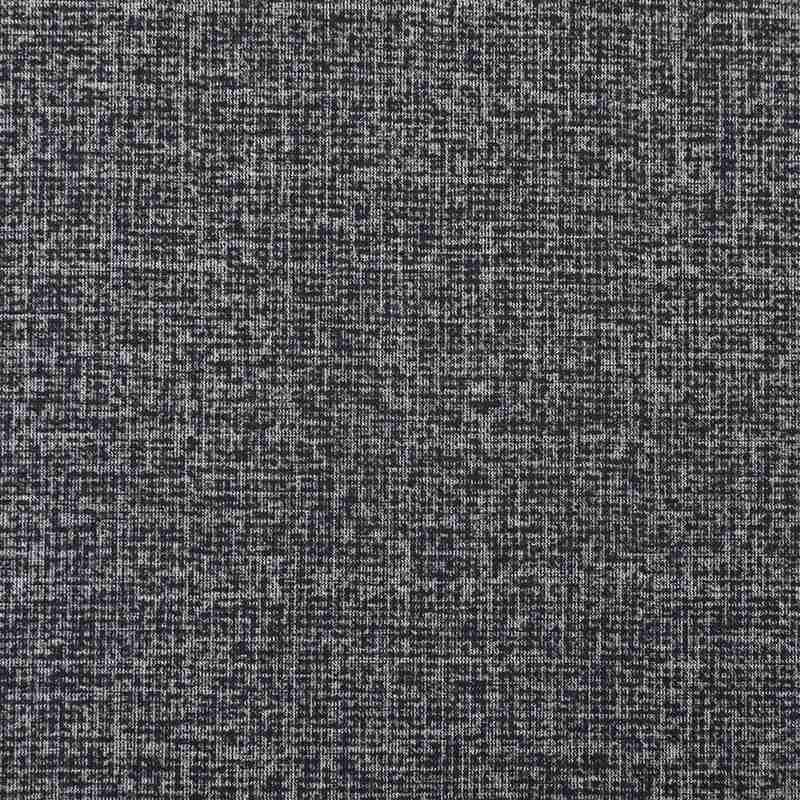
Cotton Polyester Rayon Printing Fabric
Understanding Cotton Polyester Rayon Printing Fabric
Cotton Polyester Rayon Printing Fabric is a textile made from a combination of cotton, polyester, and rayon fibers or yarns, with a printed surface created through an appropriate textile printing process. The exact ratio of the fibers may vary according to the intended end use. A fabric intended for business suiting may emphasize strength, recovery, and a wool-like appearance, while a fabric designed for dresses or home decoration may place greater emphasis on softness, drape, color richness, and surface design.
The term “printing fabric” describes the decorative treatment applied to the textile. Unlike a solid-dyed fabric, printed fabric can display stripes, florals, geometric forms, abstract patterns, traditional motifs, engineered placement designs, or customized graphics. Printing enables manufacturers and brands to develop a broad product range from one base construction. It also allows fashion and home-furnishing customers to respond quickly to seasonal trends.
The polyester and rayon components are especially important in blended suiting materials. Polyester offers a stable foundation that helps the fabric maintain its shape and withstand abrasion. Rayon introduces a bright, smooth, and lustrous appearance that can resemble the visual character of wool or other premium fibers. Cotton contributes a more natural touch and helps improve wearing comfort. The final hand feel depends on fiber proportion, yarn count, fabric construction, density, dyeing, printing, and finishing.
A well-developed blend is not simply a random mixture of fibers. It requires technical decisions at each stage. Fiber selection affects spinning performance. Yarn construction affects fabric uniformity. Fabric density affects weight, drape, and coverage. Pretreatment affects print clarity and color absorption. Printing parameters affect pattern definition and shade consistency. Finishing affects softness, dimensional stability, appearance, and handling performance.
Why Blending Three Fiber Types Creates Value
Single-fiber textiles can perform very well in specific situations, but they may also present limitations. Pure cotton is comfortable and breathable, yet it can crease more readily and may require greater care to retain shape. Pure polyester is strong and stable, but some users may prefer a more natural hand and improved moisture management. Pure rayon offers excellent drape and a soft, elegant surface, although it may require additional support from stronger fibers to improve durability and dimensional control.
A cotton polyester rayon blend is designed to balance these characteristics. Cotton can improve comfort and natural touch. Rayon can enhance softness, drape, brightness, and moisture absorption. Polyester can improve tensile strength, abrasion resistance, recovery, and resistance to shrinkage. The blend therefore supports a broader range of applications than many single-fiber alternatives.
For manufacturers and buyers, the principal advantage is flexibility. The fiber ratio and construction can be adjusted for different markets. A heavier construction may be appropriate for jackets, trousers, uniforms, and commercial upholstery. A lighter construction may be suitable for shirts, blouses, dresses, linings, and decorative products. Different printing methods and finishing treatments can further expand the product range.
The blend can also support a more attractive cost-to-performance relationship. Premium natural fibers may increase the cost of a textile, while fully synthetic constructions may not provide the desired hand feel. By combining fibers with different functions, manufacturers can create a fabric that offers an appealing appearance and useful performance without relying on a single expensive raw material.
Principal Product Advantages
Balanced Durability
The polyester content helps the fabric withstand repeated wear, handling, and laundering. This characteristic is valuable in garments that are worn frequently, such as business trousers, office jackets, uniforms, hospitality apparel, and school clothing. Cotton and rayon contribute comfort and appearance, while polyester helps the fabric remain serviceable over an extended period when it is properly constructed and maintained.
Durability is influenced by more than fiber type. Yarn strength, fabric density, weave or knit structure, finishing, and print quality also affect service life. A professionally manufactured blend should be evaluated as a complete textile rather than judged only by its fiber composition.
Comfortable Hand and Wearability
Cotton and rayon can produce a softer and more comfortable hand than many conventional synthetic fabrics. Rayon is known for its smooth surface and fluid drape, while cotton can provide a familiar natural touch. The resulting fabric is suitable for applications in which the wearer expects both presentable appearance and reasonable comfort throughout the day.
For business apparel, this balance is especially important. A fabric must retain a neat appearance while remaining comfortable during commuting, office work, meetings, and extended periods of sitting or movement. The blend can support this requirement when its weight, finishing, and construction are selected correctly.
Moisture Absorption
Cotton and rayon are absorbent fibers, and their presence can improve the moisture-management feel of the fabric compared with a fully polyester textile. This can make the material more comfortable in everyday apparel and warm indoor environments. Absorption does not mean that the fabric dries as quickly as a specialized performance textile, but it can provide a less clammy hand under ordinary wearing conditions.
Moisture behavior also depends on fabric thickness, surface area, air permeability, finishing, and garment design. For this reason, buyers should request product-specific performance data when the fabric is intended for demanding climates or technical uses.
Attractive Appearance
The smooth, bright, and lustrous appearance associated with rayon can give the fabric a refined visual quality. With suitable finishing, the textile may retain a subtle wool-like character, making it appropriate for business suiting and other formal clothing. Printing adds another level of visual interest by introducing color variation, pattern, and design depth.
High-quality printing should produce clear outlines, even color fields, good registration, and a stable appearance after finishing. The surface should not appear excessively harsh, streaked, or uneven. Proper pretreatment and controlled printing conditions are essential to achieving these results.
Elasticity and Shape Retention
The product description identifies excellent elasticity as one of the fabric’s useful characteristics. In practical terms, the degree of elasticity will depend on the fabric structure and whether elastic yarns or stretch components are included. Even when the fabric is not highly elastic in the technical sense, a well-designed construction can provide comfortable movement and recovery.
Polyester supports shape retention, while the blend structure can be engineered to provide suitable flexibility. For garments, this can help reduce the appearance of permanent deformation caused by normal movement. For furnishings, dimensional stability can help the material maintain a neat appearance over time.
Printing Versatility
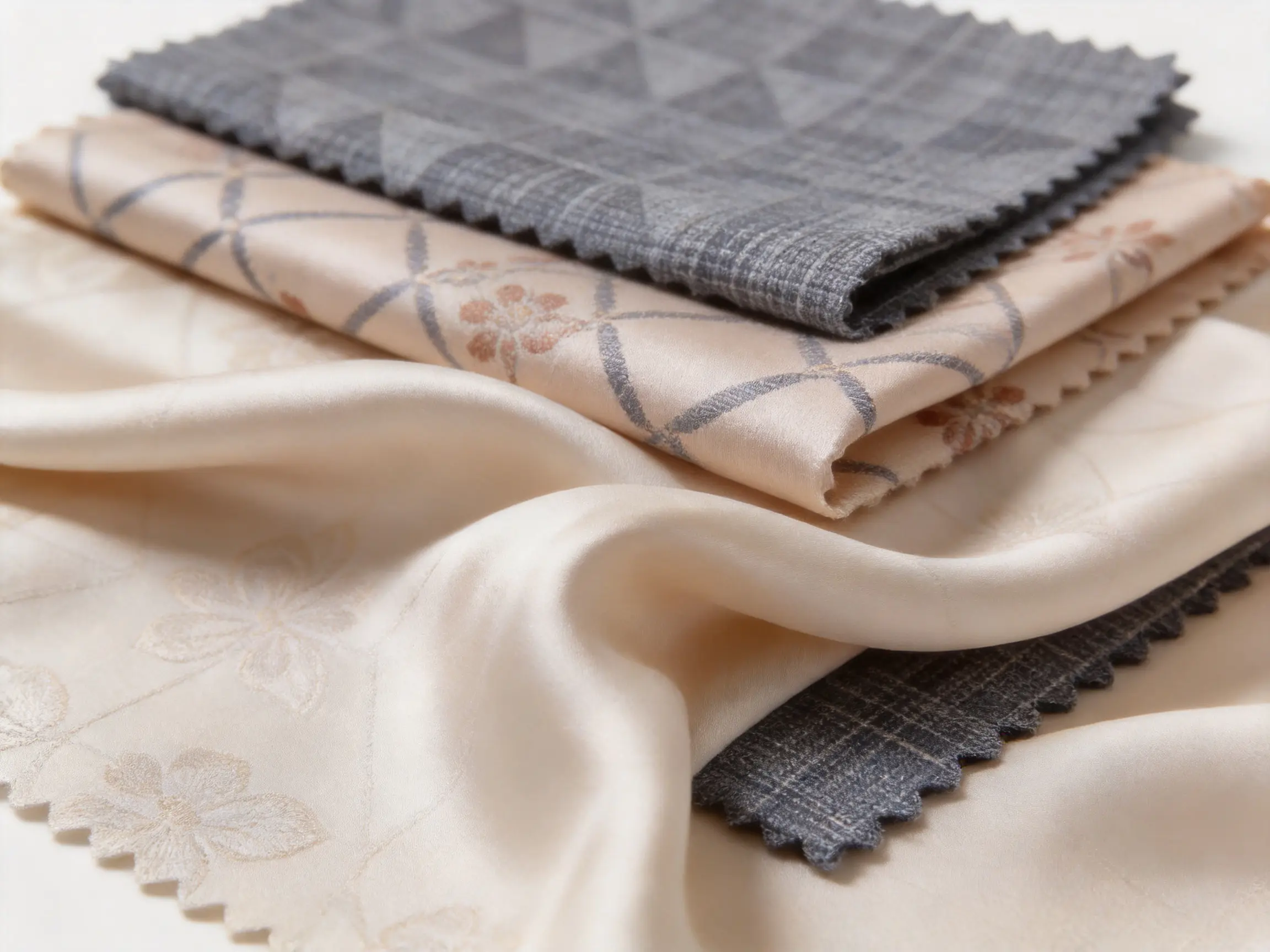
Printing enables the same general fabric category to serve many design directions. Customers can select understated tones for corporate clothing, complex motifs for fashion collections, coordinated patterns for hospitality interiors, or custom designs for promotional and decorative products.
Pattern scale, color contrast, repeat size, and print placement can all influence the perceived value of the material. A capable supplier should be able to discuss the relationship between the fabric construction and the selected design so that the final result is visually balanced and technically practical.
Advantages Compared with Competing Fabrics
The main competitive advantage of Cotton Polyester Rayon Printing Fabric is its balanced performance. A pure polyester fabric may offer excellent durability and low maintenance, but it may not provide the same natural touch or moisture absorption. A pure rayon fabric may offer attractive drape and softness, but it may require more careful handling and may not provide the same level of strength and shape retention. A pure cotton fabric may be comfortable and breathable, yet it can be more susceptible to creasing and dimensional change.
Compared with a basic polyester-rayon blend, adding cotton can improve the tactile quality and provide a more natural wearing experience. Compared with a simple cotton-polyester blend, adding rayon can increase smoothness, drape, luster, and visual sophistication. This makes the three-fiber combination particularly useful for customers seeking a textile that looks refined without becoming excessively delicate.
Printed blended fabric can also offer greater product differentiation than plain fabric. A business or fashion brand can use color and pattern to develop a recognizable collection while retaining the practical advantages of the base textile. Interior-product manufacturers can coordinate printed fabric with furniture, curtains, cushions, wall panels, or other decorative elements.
The following table summarizes the general positioning of the product. Actual performance will vary according to fiber percentages, yarn specifications, fabric construction, finishing, and care conditions.
| Comparison Factor | Cotton Polyester Rayon Printing Fabric | Pure Polyester Fabric | Pure Rayon Fabric | Pure Cotton Fabric |
|---|---|---|---|---|
| Durability | Balanced and suitable for regular use | Generally high | Moderate and construction-dependent | Moderate to high depending on quality |
| Hand Feel | Soft, smooth, and adaptable through finishing | Can range from crisp to soft | Very soft and fluid | Natural and comfortable |
| Moisture Absorption | Improved by cotton and rayon content | Generally limited | Generally high | Generally high |
| Shape Retention | Supported by polyester and fabric structure | Generally strong | May require careful finishing | Can wrinkle or shrink if untreated |
| Appearance | Bright, smooth, printable, and potentially wool-like | Consistent and versatile | Lustrous and fluid | Matte to moderately bright |
| Design Flexibility | High, with many printing possibilities | High | High | High |
| Typical Positioning | Apparel, suiting, furnishings, and decorative textiles | Apparel, outdoor goods, and furnishings | Fashion apparel and soft furnishings | Casual apparel, home textiles, and uniforms |
Raw Material Selection and Product Development
Consistent textile production begins with appropriate raw materials. Polyester yarn should provide reliable strength, evenness, and processing stability. Rayon must be selected according to the desired softness, luster, absorbency, and spinning behavior. Cotton quality affects comfort, fiber cohesion, surface appearance, and yarn performance. The supplier must also consider the interaction between the fibers during spinning, weaving or knitting, dyeing, printing, and finishing.
Product development usually starts with a customer requirement or a target application. A buyer may specify fabric weight, width, composition, color range, print design, end use, hand feel, or delivery quantity. The manufacturer then determines a suitable yarn and fabric construction. Samples are prepared for evaluation before bulk production is approved.
Sampling is important because a fabric’s appearance on a specification sheet cannot fully describe its hand, drape, surface reflection, or print effect. Physical samples enable customers to assess color, softness, thickness, stretch, opacity, pattern scale, and compatibility with garment or furnishing production.
Experienced textile producers can also recommend adjustments. For example, a customer seeking a sharper suiting appearance may need a different construction or finishing treatment than a customer seeking a soft fashion drape. A print designed for a smooth, stable surface may require different preparation from a design intended to appear textured or softly blended.
Manufacturing Process
Fiber Preparation and Blending
The first stage is the preparation of cotton, polyester, and rayon fibers or yarns. Raw materials are inspected for cleanliness, uniformity, moisture condition, strength, and suitability for the selected process. Proper blending ensures that the finished fabric has a consistent distribution of the component fibers.
Inconsistent blending can lead to shade variation, irregular surface appearance, uneven moisture behavior, and differences in strength from one section of fabric to another. Careful preparation helps reduce these risks and supports stable downstream processing.
Yarn Formation and Texturing
Yarn quality has a direct effect on fabric quality. Even yarns support a more uniform surface, cleaner pattern definition, and fewer visible defects. Polyester yarn may be processed as a drawn textured yarn when the target product requires improved bulk, flexibility, surface character, or comfort.
Drawn Textured Yarn, commonly known as DTY, is produced by drawing and texturing filament yarn. Drawing helps orient the polymer chains and establish suitable yarn properties, while texturing introduces crimp or bulk. The final yarn can provide a more textile-like hand and improved coverage than a completely flat filament yarn.
Although DTY polyester yarn is a related product rather than the entire composition of the printed fabric, in-house knowledge of DTY production and processing can strengthen the manufacturer’s understanding of yarn behavior. This knowledge is useful when developing blended materials, coordinating yarn specifications, or selecting a construction that provides the desired surface effect.
Fabric Formation
The selected yarns are formed into fabric through an appropriate weaving or knitting process. The product category includes polyester rayon fabric and related knitted fabric capabilities, including knitted jacquard fabric, NTR knitted fabric, and NR knitted fabric. These capabilities demonstrate the importance of matching fabric formation to the intended product.
For suiting and structured apparel, a woven construction may be preferred because it can provide a stable, tailored appearance. For fashion garments, soft furnishings, or products requiring greater flexibility, a knitted construction may be more appropriate. Jacquard structures can create dimensional patterns within the fabric itself, while printed designs are applied to the surface through a separate decorative process.
During fabric formation, production teams monitor width, weight, density, tension, surface defects, and roll consistency. Stable machine settings help reduce barre, streaks, uneven edges, dropped stitches, broken ends, and other defects that can reduce the usable area of the finished fabric.
Pretreatment
Pretreatment prepares the fabric for dyeing and printing. It may include desizing, scouring, washing, heat setting, or other procedures depending on the fiber composition and construction. The purpose is to remove processing residues, control shrinkage, improve absorbency where necessary, and establish a suitable surface for the print system.
Because cotton, polyester, and rayon respond differently to heat, moisture, chemicals, and colorants, pretreatment requires careful control. Excessive treatment can damage the surface or alter the hand. Insufficient treatment can cause poor color penetration, weak print definition, or inconsistent shade.
Printing
Printing is the stage that gives the material its distinctive design. The method should be selected according to the fiber blend, fabric construction, color requirements, order quantity, pattern complexity, and required fastness. Screen printing can be suitable for certain repeat patterns and strong color effects. Digital printing can support detailed designs, short runs, sampling, and rapid design changes. Other printing systems may be chosen when specific production or performance requirements apply.
Important printing controls include paste or ink preparation, screen or file accuracy, registration, printing pressure, drying, curing, and color management. The fabric must be fed through the process at a controlled tension so that the design does not become distorted. The print should be checked for sharpness, uniformity, pinholes, smearing, color migration, and pattern alignment.
Color matching is especially important for commercial orders. A customer may provide a physical standard, a color reference, or a digital design. The supplier should establish an approved lab dip or strike-off before bulk production. This process reduces the risk of costly shade disputes and confirms that the chosen color system is compatible with the fabric.
Post-Dyeing and Finishing
After printing and color fixation, the fabric may undergo washing, drying, heat setting, softening, calendering, brushing, coating, or other finishing operations. The appropriate sequence depends on the textile structure and required final properties.
Finishing can improve softness, smoothness, luster, drape, dimensional stability, and surface cleanliness. It can also influence the way the printed design is perceived. A soft finish may create a more comfortable apparel hand, while a controlled calendering treatment may produce a smoother and brighter surface suitable for formal clothing.
Heat setting and dimensional control are important for fabrics that must maintain stable width and length. However, excessive heat can affect rayon, cotton, polyester, color, or surface character. A technically capable manufacturer therefore balances appearance and stability rather than applying the same treatment to every product.
Inspection and Packing
Finished fabric is inspected before shipment. Inspection may cover appearance, width, weight, color, print registration, surface defects, staining, holes, crease marks, shade variation, and roll length. The precise inspection standard should be agreed with the customer before production whenever possible.
Fabric is then rolled, labeled, protected, and packed for transportation. Proper packing helps prevent moisture exposure, contamination, crushing, and accidental damage. Clear identification of composition, color, lot, roll number, and quantity supports efficient receiving and cutting at the customer’s facility.
Advanced Manufacturing Strengths
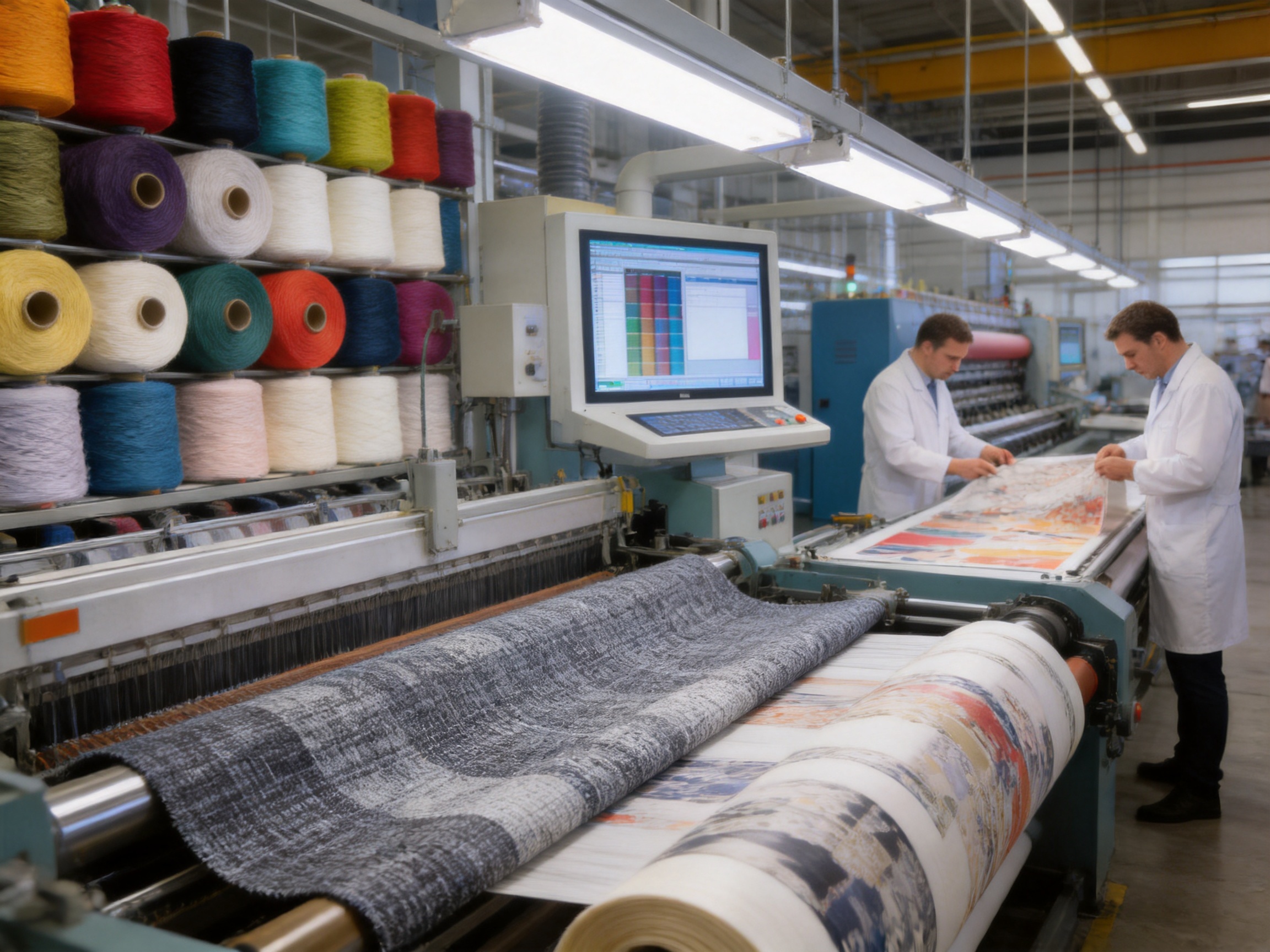
A major advantage of Hangzhou Jinfeng Textile Co., Ltd. is its integrated position across research and development, production, processing, post-dyeing, finishing, and sales. An integrated structure can improve communication between departments and reduce the risk that technical information will be lost when a product moves from one supplier to another.
The company is located in Jingjiang Street Industrial Park, Xiaoshan District, Hangzhou City, Zhejiang Province. Its stated facilities cover approximately 32.6 acres, with a plant area of about 18,000 square meters. This scale provides a substantial base for production organization, raw-material management, equipment allocation, sample development, and bulk-order coordination.
The company’s activities include the production, processing, and sales of blended fabrics such as polyester and spandex-related materials, as well as DTY polyester yarn. Its experience with both yarn and fabric is valuable because yarn characteristics strongly influence the final textile. Knowledge of yarn formation, texturing, tension, and uniformity can support better decisions during fabric development.
Post-dyeing and finishing capabilities are also important. A supplier that can coordinate these stages has greater control over the final hand feel, luster, width, dimensional stability, and appearance. This is particularly relevant for Cotton Polyester Rayon Printing Fabric, where the different fibers require balanced treatment.
The company operates as a self-managed export enterprise integrating research and development, production, and sales. For international buyers, this can simplify communication, documentation, product confirmation, sampling, and order follow-up. Direct communication with a manufacturer can also make it easier to discuss construction changes, printing requirements, packing standards, and quality expectations.
Quality Control Priorities
Quality control should begin before production and continue through shipment. For this product, several areas deserve special attention:
Composition and Raw Material Consistency
The agreed fiber composition should be maintained from sample to bulk order. Variations in cotton, polyester, or rayon content can affect weight, moisture behavior, appearance, shrinkage, dye response, and hand feel. Raw-material records and production documentation help support traceability.
Color and Print Reproduction
Printed fabric must be checked against an approved color standard. The inspection should consider both the overall shade and the detailed pattern. Small differences in color may be more visible in large solid areas, while registration errors may be more obvious in geometric or multicolor designs.
Dimensional Stability
Width and length changes can create problems during garment cutting and sewing. Dimensional testing after washing or conditioning can help determine whether the fabric is suitable for the intended use. Heat setting and finishing should be adjusted to achieve a practical balance between stability and hand feel.
Surface Appearance
The surface should be inspected for slubs, streaks, holes, stains, yarn faults, excessive fuzz, uneven luster, and finishing marks. A clean surface improves the appearance of printed motifs and reduces cutting losses.
Fastness Performance
Depending on the application, buyers may request washing, rubbing, perspiration, light, or water fastness testing. Requirements vary by market and end use. Apparel intended for frequent washing generally requires more demanding evaluation than a decorative product used indoors.
Applications
Business Suiting
The fabric is particularly suitable for business TR-style suiting and related formal clothing. Its smooth appearance, luster, wool-like visual character, durability, and shape-supporting properties make it appropriate for jackets, trousers, skirts, vests, and coordinated suit pieces.
Printed suiting can be used for subtle checks, fine stripes, tonal patterns, and fashion-oriented designs. The right construction can provide a professional appearance while introducing enough visual variation for seasonal collections and differentiated uniforms.
Fashion Apparel
Designers can use printed cotton polyester rayon fabric for dresses, blouses, shirts, lightweight jackets, skirts, coordinated separates, and fashion accessories. Rayon contributes drape, cotton improves comfort, and polyester supports everyday durability. The fabric can therefore bridge the gap between formal and casual product categories.
Uniforms and Corporate Clothing
Uniform programs often require a combination of recognizable design, repeated-use durability, comfort, and manageable maintenance. A printed blend can help distinguish departments, seasons, or service categories while retaining a consistent material platform.
Before selecting the product for uniforms, buyers should confirm care requirements, colorfastness, abrasion expectations, and the anticipated frequency of laundering. The correct fabric weight and finishing treatment should be chosen for the working environment.
Home Furnishings
The material can be used for cushions, curtains, decorative covers, light upholstery, table accents, and other indoor furnishings when its construction and performance meet the project requirements. Printed designs offer an efficient way to coordinate colors across an interior collection.
For upholstery or heavily used furniture, buyers should request suitable abrasion and lightfastness data. Not every apparel-weight printed fabric is appropriate for high-wear furnishing applications, so end-use evaluation remains essential.
Outdoor Furniture and Decorative Products
The product description identifies outdoor furniture as one possible application. In this category, the fabric must be selected carefully because sunlight, moisture, temperature changes, abrasion, and contamination can place greater demands on the textile. A suitable finishing system and verified performance data are important for outdoor use.
Where prolonged exposure is expected, customers should confirm lightfastness, water behavior, mildew resistance, dimensional stability, and cleaning requirements. The fabric may be appropriate for selected sheltered or decorative outdoor applications, but project-specific testing is recommended.
Purchasing and Customization Considerations
Buyers should provide as much technical information as possible when requesting a quotation or sample. Useful details include target fiber composition, fabric width, weight, construction, color, pattern, order quantity, intended application, finishing preference, packing method, and required testing.
If a customer has a reference sample, it should be sent for evaluation. A physical sample allows the manufacturer to assess hand feel, construction, weight, surface, stretch, and print compatibility. If a design is supplied digitally, the customer should also provide color standards or physical references because different screens and printing systems may display color differently.
Minimum order quantities and production lead times can vary according to the base fabric, print method, number of colors, setup requirements, and finishing route. Customized designs normally require sampling and approval before bulk production. Early approval helps protect the delivery schedule.
Customers should also request a clear explanation of care instructions. A cotton polyester rayon fabric may respond differently from a pure polyester textile during washing, drying, ironing, and dry cleaning. Proper care can help preserve color, surface appearance, and dimensional stability.
Sustainability and Responsible Production
Blended textiles can provide long service life, which may reduce the need for frequent replacement. Durability is one aspect of responsible textile use because a product that remains functional and attractive for longer can reduce material consumption over its service period.
Responsible production also includes efficient use of water, energy, dyes, chemicals, and raw materials. Process control can help reduce rejected fabric, reprocessing, and unnecessary waste. Accurate sampling and color approval are especially useful because they reduce the chance of producing large quantities that do not meet the customer’s expectations.
Customers seeking specific environmental certifications or restricted-substance compliance should communicate these requirements before production. Documentation, testing, and approved chemical systems may be necessary depending on the destination market and product application.
Why Choose an Integrated Textile Supplier
An integrated supplier can offer several practical benefits. First, product development is more coordinated because the same organization understands the relationship between yarn, fabric construction, dyeing, printing, and finishing. Second, communication is more direct, which can reduce delays during sampling and order confirmation. Third, production responsibility is more clearly defined, making it easier to identify and resolve technical issues.
For Cotton Polyester Rayon Printing Fabric, these advantages are especially meaningful. The fabric depends on the interaction of several fibers, and each processing stage can affect the final result. A supplier with experience in blended fabrics and DTY polyester yarn can make more informed decisions about yarn selection, surface appearance, fabric stability, and finishing.
Hangzhou Jinfeng Textile Co., Ltd. presents itself as a manufacturer and supplier with capabilities covering blended fabric production, post-dyeing, finishing, DTY polyester yarn, processing, export, research and development, and sales. Its plant scale and location in the Xiaoshan textile region provide a foundation for serving domestic and international customers.
The company’s stated business principle emphasizes cooperation and mutual benefit. For buyers, a cooperative manufacturing relationship can be more valuable than a single transaction. It encourages transparent specification management, realistic production planning, prompt technical feedback, and continuous improvement based on customer requirements.
Practical Selection Guide
When selecting Cotton Polyester Rayon Printing Fabric, begin with the end use. Formal garments may require a smooth, stable, wool-like surface. Fashion garments may require softness, drape, and vivid printing. Decorative products may require a heavier weight or stronger surface. Outdoor applications may require special performance testing.
Next, assess the physical sample. Check the hand, luster, thickness, drape, coverage, print clarity, and surface evenness. Fold and unfold the fabric to observe creasing and recovery. If the fabric will be made into garments, conduct a preliminary cutting and sewing trial. If it will be used for furnishings, evaluate seam behavior, abrasion, and cleaning response.
Finally, confirm the technical documentation. Composition, width, weight, test results, care instructions, packing details, tolerance levels, and delivery conditions should be agreed before bulk production. Clear documentation protects both the buyer and the manufacturer.
Frequently Asked Questions
What is Cotton Polyester Rayon Printing Fabric?
It is a printed blended textile made from cotton, polyester, and rayon fibers or yarns. Cotton contributes comfort, polyester supports durability and shape retention, and rayon adds softness, drape, moisture absorption, and luster.
Is this fabric suitable for suits?
Yes. It is commonly positioned for business TR-style suiting and can be suitable for jackets, trousers, skirts, and related formal garments when the weight, construction, and finishing match the application.
How does it compare with pure polyester?
The cotton and rayon components can provide a softer, more natural hand and improved moisture absorption compared with pure polyester. Polyester still contributes strength, stability, and durability to the blended construction.
Does the fabric have stretch?
The amount of stretch depends on the fabric structure and whether stretch yarns or fibers are included. Some constructions may provide comfortable flexibility without being highly elastic. The buyer should confirm stretch percentage and recovery for a specific product.
Can the print design be customized?
Customization is generally possible, subject to the selected printing method, fabric construction, color requirements, order quantity, and production capabilities. A strike-off or sample approval is recommended before bulk production.
What printing methods can be used?
The appropriate method depends on the design, order size, fiber blend, required color depth, detail, and fastness. Screen printing and digital printing are two possible approaches, but the manufacturer should recommend the method after reviewing the fabric and artwork.
Is it suitable for home furnishings?
It can be used for selected home-furnishing products such as cushions, curtains, decorative covers, and light upholstery. Heavy-use or outdoor applications require additional testing for abrasion, lightfastness, moisture, and cleaning performance.
How should the fabric be cared for?
Care instructions depend on the exact composition, construction, print system, and finishing treatment. Buyers should follow the supplier’s approved instructions and conduct a garment or product trial before establishing final care labels.
What should be confirmed before placing a bulk order?
Important points include composition, width, weight, construction, print design, color standard, fastness requirements, dimensional stability, order quantity, packaging, inspection standard, delivery schedule, and care instructions.
What are the advantages of working with a manufacturer that also produces DTY polyester yarn?
Experience with DTY polyester yarn can improve understanding of yarn uniformity, texturing, bulk, flexibility, and surface behavior. This knowledge may support better coordination between yarn selection and blended-fabric development.
Can the fabric be used outdoors?
It may be suitable for selected sheltered or decorative outdoor applications, but outdoor use should not be assumed without testing. Buyers should confirm lightfastness, water resistance, mildew resistance, abrasion performance, and dimensional stability for the specific project.
Why is finishing important?
Finishing influences softness, smoothness, luster, drape, width, shrinkage, dimensional stability, and the final appearance of the printed design. A suitable finishing route helps the fabric perform more consistently in its intended application.
Conclusion
Cotton Polyester Rayon Printing Fabric offers a practical combination of comfort, durability, appearance, moisture absorption, design flexibility, and application versatility. Cotton provides a familiar natural touch, rayon contributes softness and elegant drape, and polyester strengthens the material’s resistance to wear and dimensional change. Together, these fibers can create a balanced textile for business suiting, fashion apparel, uniforms, home furnishings, and selected decorative outdoor products.
Its performance depends on more than the fiber blend alone. Yarn quality, fabric formation, pretreatment, printing, color fixation, finishing, inspection, and packing all influence the final result. For this reason, choosing a supplier with integrated manufacturing and technical capabilities is an important part of achieving stable quality.
With facilities covering blended-fabric production, post-dyeing, finishing, DTY polyester yarn, research and development, processing, sales, and export support, Hangzhou Jinfeng Textile Co., Ltd. is positioned to provide coordinated textile solutions. Its plant scale, manufacturing experience, and integrated operating model can support customers seeking customized printed fabrics with reliable production management.
For buyers, the best result comes from defining the end use clearly, approving physical samples, confirming technical standards, and maintaining direct communication throughout development and production. When these steps are followed, Cotton Polyester Rayon Printing Fabric can provide an attractive and dependable foundation for modern apparel and furnishing products.
References
1. Hangzhou Jinfeng Textile Co., Ltd., product information for Cotton Polyester Rayon Printing Fabric.
2. Hangzhou Jinfeng Textile Co., Ltd., company information concerning blended-fabric production, DTY polyester yarn, finishing, research and development, and export operations.
3. Textile Institute, textile terminology and general principles of fiber, yarn, fabric, dyeing, printing, and finishing technology.
4. AATCC, general methods for evaluating textile colorfastness, dimensional change, appearance, and performance.
5. ISO, international standards related to textile fiber composition, fabric testing, color fastness, and quality evaluation.
6. General textile engineering references concerning cotton, polyester, rayon, blended yarns, woven fabrics, knitted fabrics, printing, and finishing processes.