
Black Slight Intermingled DTY Jacquard Fabric: Softness, Subtle Texture, and Reliable Manufacturing
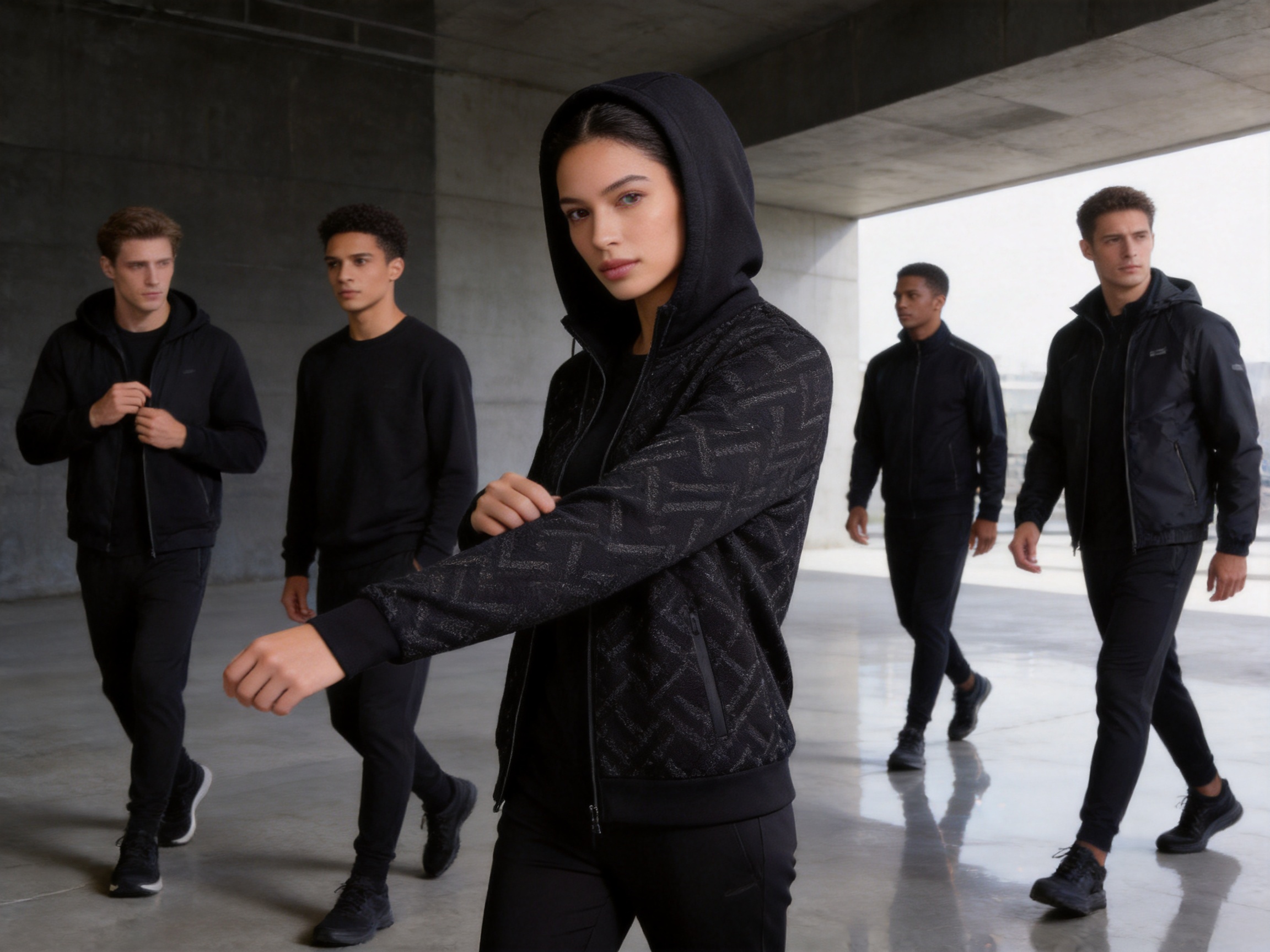
In the premium apparel market, black fabric is no longer defined only by color depth. Designers and garment manufacturers increasingly look for materials that combine refined appearance, tactile comfort, dependable stretch, dimensional stability, and efficient production performance. The Black Slight Intermingled DTY Jacquard Fabric described in this article responds to those requirements through a carefully developed knitted construction that combines Draw Textured Yarn, jacquard patterning, subtle luster variation, and a controlled elastane content.
This fabric is designed for brands that want a sophisticated black-on-black appearance rather than a flat, ordinary surface. Its visual effect is intentionally restrained. Instead of relying on a strong contrast or an obvious decorative motif, the fabric uses differences in yarn luster and knitted structure to create a discreet pattern that becomes more visible as the material moves under changing light. The result is a modern “stealth luxury” surface suitable for premium leisurewear, structured sportswear, track jackets, hoodies, sweatshirts, and urban commuter garments.
The product is manufactured from 95% Draw Textured Yarn polyester and 5% spandex. At approximately 280 grams per square meter, it offers a mid-heavy weight that provides body and coverage while maintaining the flexibility required for active and casual clothing. Its nominal width of 165 centimeters, or approximately 65 inches, can also help garment factories improve marker efficiency and reduce cutting waste compared with narrower materials.
Behind the fabric is an integrated textile manufacturing operation capable of producing, processing, dyeing, finishing, and selling blended fabrics as well as producing and processing DTY polyester yarn. This level of integration gives Hangzhou Jinfeng Textile Co., Ltd. greater control over raw-material consistency, yarn texture, fabric development, and customer service. For buyers evaluating suppliers, the combination of product specialization, in-house DTY expertise, production capacity, and export experience is an important part of the overall value proposition.
1. Product Overview and Design Purpose
Black Slight Intermingled DTY Jacquard Fabric is a knitted jacquard material developed for applications where appearance and comfort must work together. The fabric is not intended to imitate a traditional woven jacquard with a heavy, formal character. Instead, it presents a softer, more flexible interpretation of jacquard design. Its knitted construction gives the fabric a comfortable hand feel and useful stretch, while the jacquard structure introduces visual depth and a more distinctive surface.
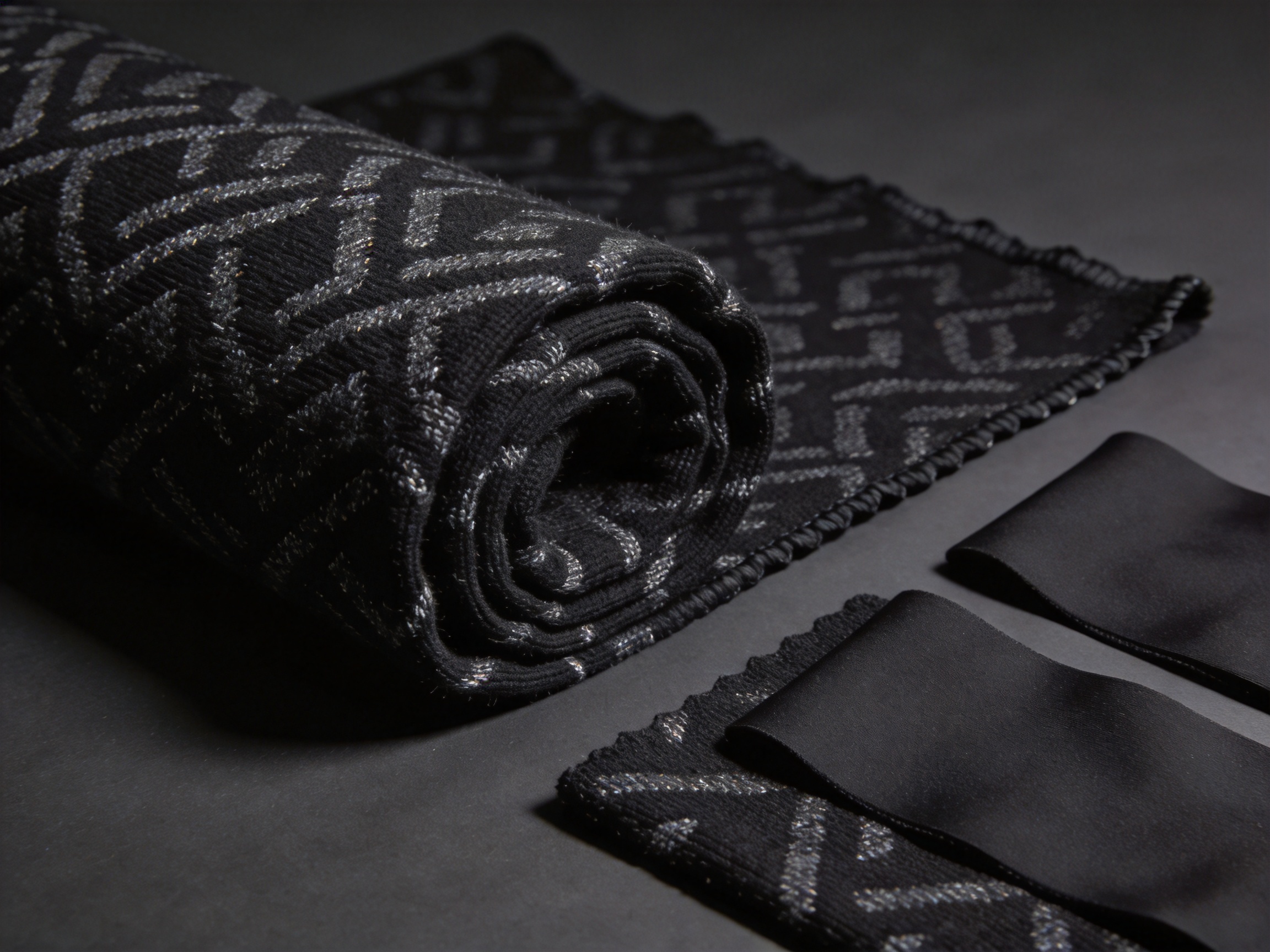
The product’s central design concept is subtle contrast within a single color family. Different levels of black luster are used to create a low-contrast pattern. In direct light, the pattern can appear understated and elegant. When the garment moves, folds, or is viewed from a different angle, the jacquard effect becomes more apparent. This makes the fabric appropriate for fashion labels that want visual interest without using bright colors, printed graphics, or highly pronounced patterns.
The use of DTY polyester is especially important to this effect. Draw Textured Yarn is processed to introduce bulk, softness, and a more flexible textile character than a completely flat filament yarn. In a knitted structure, DTY can help produce a cotton-like touch while retaining the performance advantages associated with polyester. This balance makes the fabric suitable for garments that require comfort during extended wear but also need resistance to everyday handling and repeated use.
The addition of 5% spandex contributes durable stretch and recovery. This is valuable in garments such as hoodies, track jackets, sportswear, commuter clothing, and fitted leisurewear, where the fabric must follow body movement without becoming restrictive. The combination of knitted construction, textured polyester yarn, and elastane creates a material that can be used for relaxed silhouettes as well as more structured apparel designs.
Core Product Specifications
| Item | Specification | Practical Significance |
|---|---|---|
| Product type | Knitted jacquard fabric | Provides a patterned surface with the flexibility and comfort of knit construction |
| Primary yarn | Draw Textured Yarn polyester | Supports softness, bulk, texture, and a cotton-like hand feel |
| Composition | 95% DTY polyester, 5% spandex | Combines polyester durability with stretch and recovery |
| Weight | Approximately 280 g/m² | Offers a mid-heavy handle, coverage, and garment structure |
| Width | Approximately 165 cm or 65 inches | Supports efficient cutting and may reduce material waste |
| Color concept | Black-on-black with slight intermingled luster | Creates discreet texture and a premium visual effect |
| Optional treatment | Customized anti-pilling finish | Can improve surface appearance during repeated wear and washing |
These specifications make the product particularly relevant to manufacturers seeking a single fabric that can deliver a premium appearance without sacrificing practical garment performance. The mid-heavy weight gives the material enough substance for outer layers and structured garments, while its knitted nature keeps it more comfortable and adaptable than many rigid woven alternatives.
2. Understanding the DTY Advantage
Draw Textured Yarn is a central feature of this fabric. DTY is produced by texturing polyester filament yarn so that the yarn gains additional bulk, resilience, and surface character. The exact yarn behavior depends on the production settings, including texturing conditions, elongation, intermingling, and heat treatment. Consistency in these variables is essential because yarn quality directly affects the final fabric’s softness, appearance, stretch behavior, and surface uniformity.
For Black Slight Intermingled DTY Jacquard Fabric, DTY is used to create a softer and more comfortable textile hand than buyers may expect from standard polyester. The material is intended to feel closer to cotton in everyday use while maintaining the advantages of a synthetic fiber. Polyester offers useful durability, color stability, and resistance to many forms of routine wear. DTY processing helps soften the tactile character and gives the knitted surface additional volume.
Another advantage is the ability to control yarn texture at the production level. Hangzhou Jinfeng Textile Co., Ltd. manufactures and processes DTY polyester yarn in addition to producing fabric. This integrated capability allows the company to connect yarn development with fabric requirements. Rather than treating the yarn as an entirely separate purchased input, the manufacturer can pay close attention to how yarn characteristics influence jacquard definition, handle, luster, and knitted performance.
This direct relationship between yarn and fabric can be valuable when customers request adjustments. A buyer may need a softer touch, a particular visual depth, a more uniform black, or a different balance between body and flexibility. Although every customization must be assessed through sampling and production testing, a supplier with DTY expertise is better positioned to understand which changes should be made at the yarn, knitting, dyeing, or finishing stage.
DTY also supports the fabric’s visual identity. The combination of textured yarn and different black luster levels creates a surface that is more nuanced than a simple solid-dyed fabric. The pattern does not depend solely on printed pigment or a sharply contrasting color. Instead, it is developed through the interaction of yarn properties, knitted structure, and finishing. This helps produce a black fabric with depth while preserving an understated overall appearance.
DTY Compared with a Flat Polyester Surface
A basic flat polyester fabric can provide color and durability, but it may appear visually plain and feel less substantial. By contrast, DTY can contribute bulk and a softer touch. In a knitted jacquard construction, this additional texture supports a more expressive surface and can make the garment feel more premium. The difference is particularly noticeable in apparel categories where consumers touch the product frequently, including hoodies, sweatshirts, jackets, and elevated loungewear.
The use of DTY does not mean that the fabric is limited to casual products. Its 280 g/m² weight, subtle pattern, and black color palette also support structured sportswear and contemporary outer layers. Designers can use the material in garments that need a clean silhouette while still benefiting from knit comfort and stretch.
3. The Slight Intermingled Jacquard Effect
The phrase “slight intermingled” describes the restrained visual and textural interaction created within the material. The effect is not intended to look irregular or unfinished. Instead, it gives the black surface a controlled variation that prevents it from appearing flat. Different luster levels and knitted pattern areas interact to produce a refined black-on-black appearance.
Black fabrics can be challenging to develop because small differences in dye uptake, yarn reflection, and surface structure can become visible under certain lighting conditions. A successful black jacquard must therefore balance richness of color with pattern clarity and overall uniformity. The product is designed to maintain high color uniformity while retaining enough surface variation to reveal the jacquard effect.
This balance gives the fabric broad design flexibility. For minimalist brands, the black-on-black effect can support a clean and understated collection. For sportswear labels, it can add technical sophistication without making the garment appear overly decorative. For urban commuter apparel, the subtle pattern can provide a distinctive identity that remains easy to coordinate with other colors and materials.
The pattern’s low-contrast character is also useful for garments intended to transition between different settings. A jacket made from this fabric may appear sporty in an active environment and more refined in an urban or professional-casual setting. This versatility reflects the growing demand for garments that combine performance, comfort, and a polished appearance.
4. Hand Feel, Stretch, and Wear Comfort
Comfort is one of the product’s principal advantages. The knitted construction allows the fabric to flex with the wearer rather than behaving like a rigid panel. DTY polyester contributes a soft, fuller hand, while 5% spandex adds stretch and recovery. Together, these characteristics make the material appropriate for garments that are worn for long periods or used during movement.
The cotton-like softness is designed to improve the first-touch experience. This is important for premium apparel because consumers often assess quality through touch before considering technical specifications. A fabric that feels soft, balanced, and substantial can support a stronger perception of value. The surface should also remain visually coherent with the garment’s design concept, allowing comfort and appearance to reinforce one another.
The 280 g/m² weight provides useful coverage. Lightweight knitted fabrics may be comfortable but lack structure, while very heavy fabrics can feel restrictive or excessive for many applications. This mid-heavy construction occupies a practical middle ground. It can support hoodies and sweatshirts that need body, track jackets that require a stable appearance, and sportswear that benefits from a more substantial handle.
Spandex content is also relevant to pattern development. Designers can create garments with shaped panels, articulated sleeves, fitted side sections, or flexible waist areas without relying entirely on loose silhouettes. The stretch can improve ease of movement and help a garment maintain a more comfortable fit during walking, commuting, travel, or light physical activity.
As with all stretch fabrics, garment manufacturers should consider pattern engineering, seam construction, needle selection, and finishing conditions. The final behavior depends not only on fiber content but also on knitting parameters, fabric relaxation, cutting, sewing, and laundering. Sampling and wash testing remain important before bulk production, especially for close-fitting designs or garments with demanding recovery requirements.
Air Permeability and Seasonal Use
One common question about polyester fabric is whether it feels excessively warm. In this product, the knitted structure allows air to pass through the textile, helping the fabric remain suitable for a range of leisurewear and sportswear applications. The actual comfort level will depend on garment design, lining, environmental conditions, and activity level, but the material is not intended to function as an impermeable barrier.
For applications requiring additional moisture management, a moisture-wicking finish can be considered. Such a finish may improve the movement of perspiration away from the skin and support a drier wearing experience during active use. Any finish should be confirmed through sampling because the treatment can influence hand feel, appearance, performance, and care instructions.
5. Manufacturing Process and Quality Control
The value of a knitted jacquard fabric is determined by more than its fiber composition. Quality depends on the coordination of yarn preparation, knitting, dyeing, finishing, inspection, and packing. An integrated production structure allows these stages to be managed as connected parts of one manufacturing process rather than as isolated operations.
DTY Yarn Production and Preparation
The production process begins with the selection and preparation of polyester filament yarn suitable for texturing. DTY production introduces controlled crimp and bulk into the filament. Parameters must be managed carefully to achieve a stable yarn that can run consistently during knitting. Yarn uniformity is important because irregularities can become visible as streaks, uneven pattern definition, or inconsistent surface reflection in a black fabric.
Intermingling may also be used to improve filament cohesion. The degree of intermingling must be appropriate for the intended application. Excessive or insufficient intermingling can influence yarn behavior, knitting efficiency, surface appearance, and fabric handle. For a subtle jacquard product, controlled yarn behavior is essential because the design depends on refined changes in texture and luster rather than dramatic surface irregularity.
Knitted Jacquard Formation
After yarn preparation, the fabric is knitted into a jacquard structure. The knitting process determines the arrangement of loops, pattern areas, stretch behavior, thickness, and surface character. The jacquard construction allows selected areas of the fabric to reflect light differently, creating the black-on-black visual effect.
Production control at this stage includes attention to yarn tension, machine settings, pattern repeat, loop formation, and fabric take-down. Stable tension helps support even pattern definition and reduces the risk of visible distortion. Correct machine settings contribute to a consistent width and weight, while appropriate take-down control helps the fabric relax into a stable form.
Knitting is also where the fabric’s practical performance begins to take shape. The structure affects air permeability, recovery, drape, thickness, and resistance to distortion. Since the final product is intended for both comfort-oriented and structured garments, the knitting process must achieve a balance between softness, body, and flexibility.
Dyeing and Color Development
Black dyeing requires careful control because the final appearance is influenced by dye concentration, temperature, time, bath conditions, fiber behavior, and finishing. The product is designed around black shades and can be developed to match a customer’s target tone based on a physical color swatch or spectrophotometer data.
Color matching is especially important when a brand uses several black materials in the same collection. A black jacquard may need to coordinate with black rib, lining, woven panels, trims, or accessories. A supplier capable of evaluating density and tone can help reduce visible differences between components. Laboratory dips and approval samples should be used to confirm the required shade before bulk production.
The jacquard effect must remain visible without compromising color uniformity. If the color difference is too weak, the pattern may disappear. If it is too strong, the fabric may lose the understated character that defines the product. Careful development is therefore needed to preserve a sophisticated and wearable appearance.
Finishing and Optional Treatments
Finishing can influence softness, width, surface appearance, dimensional stability, and performance. The product can be supplied with a customized anti-pilling finish when requested. This option is relevant for garments that will experience frequent abrasion, such as hoodies, sweatshirts, sportswear, and commuter clothing.
Anti-pilling performance should be evaluated according to the buyer’s intended standard and end use. No textile finish can eliminate every form of wear under all conditions, and results depend on fiber, construction, washing, abrasion, and garment design. However, an appropriate anti-pilling treatment can help reduce the formation of visible surface pills and preserve the fabric’s appearance over time.
Moisture-wicking finishing is another possible option for products intended for more active use. The treatment should be assessed alongside softness, color, stretch, and care performance. A finish is successful when it improves a specific property without creating an unacceptable change in the original character of the fabric.
Inspection and Production Consistency
Quality inspection should cover appearance, color, width, weight, pattern integrity, surface defects, stretch, recovery, and finishing consistency. For a black jacquard, visual inspection under different lighting conditions can be valuable because the pattern and luster may appear differently under daylight, indoor lighting, and directional light.
Roll inspection can identify problems before the material reaches the cutting room. Checking width and weight at multiple points helps confirm production consistency. Evaluating fabric relaxation before cutting can also reduce the risk of unexpected dimensional change during garment production. Buyers should establish their required test methods and acceptance standards during the sampling stage.
6. Advantages Over Conventional Competitor Materials
The product’s competitive position comes from the way several features are combined rather than from one isolated specification. A simple polyester knit may offer affordability but lack surface depth. A conventional jacquard may offer pattern interest but feel too formal or inflexible. A basic stretch fabric may provide movement but lack a distinctive visual identity. Black Slight Intermingled DTY Jacquard Fabric is designed to bring these requirements together in one material.
Advantage 1: Premium Appearance Without Excessive Contrast
The black-on-black jacquard effect provides visual depth while remaining easy to wear. It is more distinctive than a plain black fabric but less aggressive than a high-contrast pattern. This makes it suitable for brands that want an elevated appearance that can be used across multiple product categories.
Advantage 2: Softer Hand Than Ordinary Polyester
DTY processing gives the fabric a fuller, softer touch and a cotton-like feel. This can improve comfort and support a more premium consumer experience. The fabric retains the practical advantages of polyester while reducing the flat or overly synthetic sensation that some buyers associate with basic filament materials.
Advantage 3: Stretch for Movement and Fit
The 5% spandex composition adds durable stretch and recovery. Compared with a non-stretch jacquard, the material can be more comfortable for active garments, fitted designs, and everyday clothing that must accommodate body movement. Stretch also gives designers additional flexibility when developing modern silhouettes.
Advantage 4: Mid-Heavy Weight for Garment Structure
At approximately 280 g/m², the fabric offers more substance than many lightweight jersey materials. This supports garments with a clean drape, stable body, and better coverage. It can be used for premium hoodies, sweatshirts, track jackets, structured sportswear, and urban layers without requiring a separate heavy outer fabric in every design.
Advantage 5: Extra-Wide Cutting Potential
The 165-centimeter width can improve cutting efficiency. When garment markers are planned effectively, extra width may reduce off-cut waste and increase the number of usable garment panels obtained from each roll. Actual savings depend on pattern dimensions, marker layout, shrinkage allowance, and order configuration, but the width gives manufacturers a useful production advantage over narrower fabrics.
Advantage 6: Better Control from an Integrated Supplier
Because the supplier produces and processes DTY polyester yarn as well as fabric, customers can work with a manufacturer that understands the relationship between fiber-level inputs and final fabric performance. Direct control over raw-material processing can support more consistent development and faster communication when modifications are needed.
Advantage 7: Custom Finishing and Color Support
Buyers can request customized anti-pilling finishing and may develop a specific black shade using a physical swatch or spectrophotometer information. These services are useful for private-label brands, uniform programs, fashion collections, and customers that require a consistent visual identity across seasons.
7. Application Opportunities
Premium Hoodies and Sweatshirts
The fabric’s softness, stretch, and mid-heavy weight make it suitable for premium hoodies and sweatshirts. The jacquard pattern can add detail to otherwise simple silhouettes, while the black color supports a modern and versatile wardrobe. Designers may use the material for full garments, contrast panels, sleeves, hoods, or coordinated sets.
For these applications, anti-pilling finishing can be considered because sweatshirts often experience repeated friction at the underarm, side seam, sleeve, and waistband areas. Care labeling and wash testing should be finalized according to the intended retail market.
High-End Track Jackets
Track jackets require a combination of mobility, surface appearance, and stability. The fabric’s stretch supports movement, while its weight helps the garment maintain a more substantial silhouette than a very lightweight training material. The subtle jacquard pattern can differentiate a premium track jacket from a plain athletic basic.
Designers can combine the fabric with smooth woven panels, rib trims, reflective details, or technical zippers. The black-on-black surface provides a restrained foundation for branded elements without competing with logos or functional trims.
Urban Commuter Apparel
Urban commuter garments must transition between transportation, work, leisure, and social settings. A subtle black pattern is well suited to this category because it looks refined without appearing formal. The stretch and comfort of the knit construction can support cycling, walking, travel, and daily movement, while the mid-heavy weight gives the garment a more finished appearance.
Potential products include commuter overshirts, structured hooded jackets, hybrid blousons, travel sweatshirts, and coordinated separates. Moisture-wicking finishing may be considered when the garment is intended for active commuting or variable weather conditions.
Structured Sportswear
Traditional sportswear often emphasizes function, but premium sportswear increasingly requires a strong fashion identity. The fabric’s jacquard surface can create a sophisticated appearance for training tops, warm-up jackets, performance-inspired trousers, and coordinated sets. Its stretch supports body movement, while its soft handle helps improve comfort during extended wear.
Contemporary Casualwear
The product can also be used in elevated casualwear, including relaxed jackets, textured pullovers, modern sweatpants, and matching loungewear. The understated design allows brands to build capsule collections around a consistent black palette while using texture to distinguish individual garments.
8. Manufacturing Strengths of the Supplier
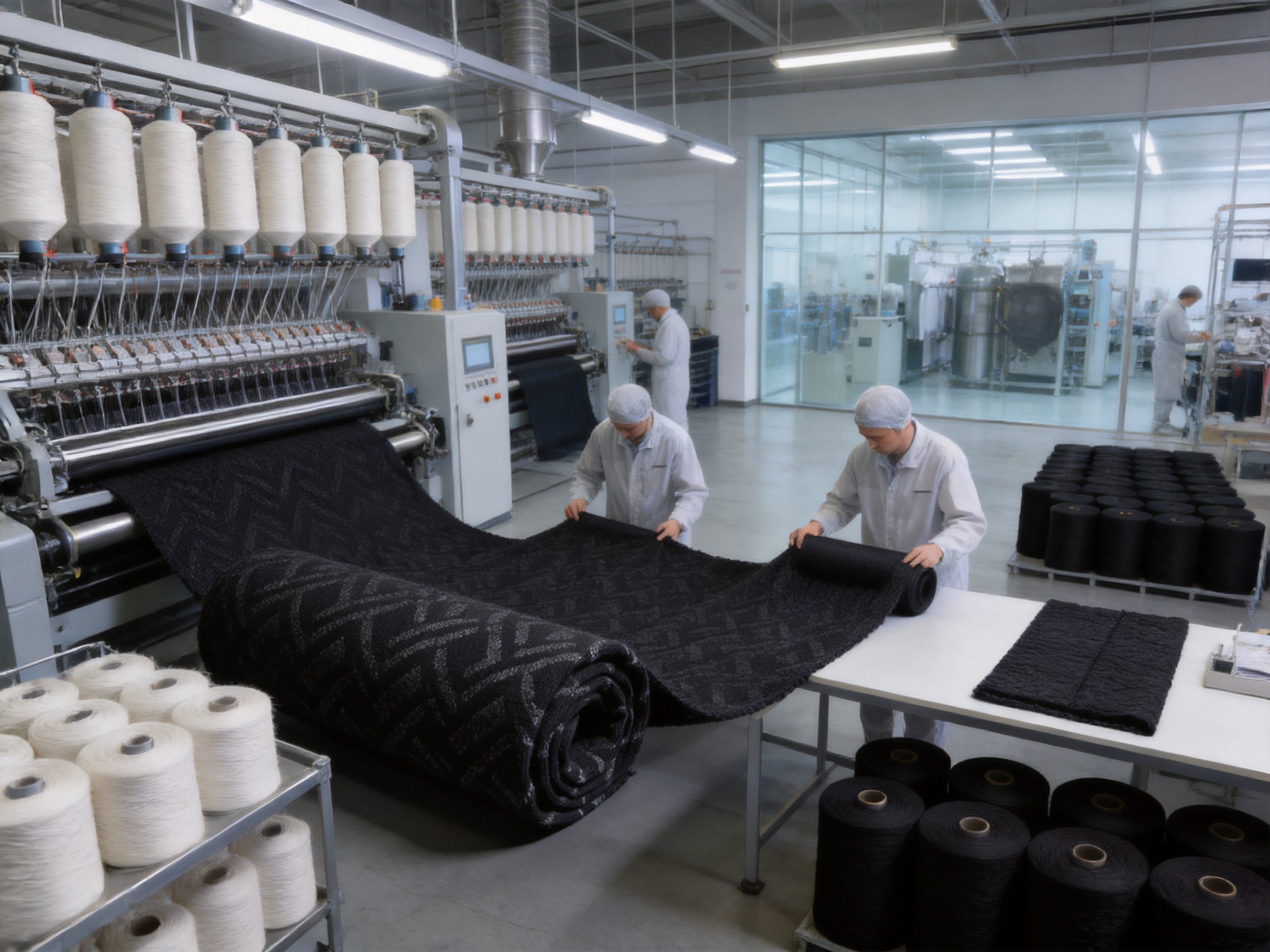
Hangzhou Jinfeng Textile Co., Ltd. is located in Jingjiang Street Industrial Park in Xiaoshan District, Hangzhou City, Zhejiang Province. The company occupies approximately 32.6 acres and has a plant area of approximately 18,000 square meters. Its operations include the production and processing of DTY polyester yarn, the production and processing of blended fabrics such as polyester and spandex, post-dyeing, finishing, research and development, and sales.
This integrated structure is important for customers that require more than a standard catalog product. A supplier involved in yarn production can have a clearer understanding of how raw-material choices affect final fabric quality. A supplier with dyeing and finishing capability can also coordinate color development and performance treatments more effectively than an organization focused only on fabric trading.
The company operates as a self-managed export enterprise integrating research and development, production, and sales. This model supports communication with overseas buyers and allows product discussions to connect technical development with commercial requirements. Export-oriented customers often need clear sampling procedures, accurate specifications, stable bulk production, and organized documentation. An integrated manufacturer is positioned to coordinate these needs through one supply relationship.
Research and Development Orientation
Textile development requires continuous attention to yarn behavior, fabric construction, color, finishing, and end-use performance. The Black Slight Intermingled DTY Jacquard Fabric reflects a product development approach focused on combining a specific appearance with practical garment requirements. Its design is not simply a plain dyed fabric with a decorative label; it is based on a coordinated relationship between DTY yarn, knitted jacquard structure, luster variation, stretch, and finishing options.
Research and development can also support customer-specific modifications. Buyers may request changes to black tone, pattern density, fabric weight, softness, width, anti-pilling performance, or moisture management. Each request should be evaluated through sampling, technical review, and testing, but a manufacturer with relevant production resources can respond more effectively to such development work.
Raw-Material and Cost Control
Direct access to DTY polyester yarn production can offer a cost advantage compared with a supply chain that purchases all yarn from external sources. Reduced dependence on multiple intermediaries may improve purchasing efficiency and communication. It can also make it easier to coordinate production schedules and address yarn-related issues.
Cost advantage should be understood as part of total value rather than as the lowest possible unit price. A fabric that has consistent width, stable color, reliable stretch, and a suitable surface may reduce cutting losses, production interruptions, and quality claims. The product’s extra-wide construction and integrated manufacturing capabilities can therefore contribute to the buyer’s overall cost calculation.
Production and Export Service
The company’s export experience supports communication with customers from different markets. International buyers typically require detailed product specifications, sample approvals, delivery planning, payment security, and after-sales communication. The stated payment option through Alibaba Trade Assurance provides a structured transaction method designed to protect both buyer and seller during the order process.
Initial sampling is stated to be available within approximately five days, while bulk production for existing colors is stated at approximately 25 days. Actual timing can vary according to sample complexity, yarn availability, order quantity, finishing requirements, color approval, and production scheduling. Buyers should confirm the final lead time at the quotation and sample approval stages.
9. Buyer Guidance: Sampling, Testing, and Bulk Approval
Before placing a bulk order, buyers should evaluate the fabric in relation to the final garment rather than judging only a loose swatch. The fabric should be tested for hand feel, color, pattern visibility, stretch, recovery, dimensional stability, pilling, sewing behavior, and laundering. This is especially important for black materials because surface reflection and color perception can change under different lighting conditions.
Recommended Sample Review Points
First, confirm the black shade against the approved standard. If the fabric must coordinate with other black components, compare all materials together under suitable lighting. A visual match under one light source may appear different under another, so buyers should consider the end market and garment environment.
Second, examine the jacquard pattern at different distances and angles. The product is designed to create a subtle intermingled appearance, so the pattern should be visible enough to support the intended design but not so pronounced that it becomes inconsistent with the collection concept.
Third, assess the hand feel after relaxation and, where relevant, after washing. Knitted fabrics can change slightly during relaxation, and finishing can influence softness and surface character. The approved standard should be based on a sample that has been handled under realistic conditions.
Fourth, test stretch and recovery in both the length and width directions. Garment patterns should be developed using the actual fabric behavior. If the material is used in fitted sportswear or close-fitting jackets, recovery testing is particularly important.
Fifth, review cutting and sewing performance. The 165-centimeter width may improve marker efficiency, but the marker should be created using the actual production width and any required shrinkage allowance. Sewing tests can identify issues related to needle selection, seam puckering, thread tension, skipped stitches, and edge handling.
Performance Tests to Consider
| Test Area | Purpose | Why It Matters for This Fabric |
|---|---|---|
| Color fastness | Evaluates resistance to color change and transfer | Important for a deep black shade and coordinated garment components |
| Dimensional stability | Measures change after washing or conditioning | Supports accurate pattern development and consistent garment sizing |
| Stretch and recovery | Measures extension and return behavior | Confirms suitability for fitted and movement-oriented garments |
| Pilling resistance | Evaluates surface fiber-ball formation after abrasion | Relevant for hoodies, sweatshirts, jackets, and frequent-wear products |
| Fabric weight and width | Checks production consistency | Helps manage costing, marker planning, and garment construction |
| Air permeability | Assesses airflow through the knitted structure | Supports comfort evaluation for leisurewear and sportswear |
| Moisture management | Evaluates movement or absorption of perspiration | Useful when a moisture-wicking finish is requested |
Testing requirements should be agreed upon before bulk production. Different countries, retailers, and end-use categories may use different standards. The supplier can provide technical information for the product, while the buyer remains responsible for confirming that the fabric meets the requirements of the intended market and garment program.
10. Sustainability and Production Efficiency Considerations
Although the supplied product information does not claim a specific recycled content or certified environmental standard, several production characteristics can be considered from an efficiency perspective. The 165-centimeter width may help reduce cutting waste when marker layouts are optimized. Longer garment life supported by durable polyester, stretch recovery, and optional anti-pilling treatment may also help extend the useful period of a finished product.
Production efficiency is influenced by the entire supply chain. Consistent yarn, stable fabric width, reliable color, and accurate sampling can reduce rejected material and prevent unnecessary rework. Integrated manufacturing may help simplify communication and reduce avoidable movement between separate suppliers. These factors do not replace formal sustainability certifications, but they are relevant to responsible production planning.
Brands seeking environmental claims should request appropriate documentation for any such claim. If recycled polyester, restricted-substance compliance, energy information, wastewater management, or other certifications are required, those requirements should be confirmed directly with the supplier before marketing statements are made.
11. Why the Fabric Fits Current Apparel Development
Contemporary apparel increasingly combines casual comfort, performance details, and refined design. Consumers want garments that can be worn across different parts of the day, while brands want materials that can support collections with a clear identity. Black Slight Intermingled DTY Jacquard Fabric fits this direction because it provides a quiet but recognizable surface, comfortable stretch, and sufficient weight for versatile garments.
The fabric also supports a restrained approach to branding. Instead of relying on large graphics or strong color blocking, a brand can create distinction through texture, silhouette, and finishing. The black-on-black pattern works well with tonal logos, matte trims, glossy zippers, reflective details, and minimalist labels. This makes the material suitable for premium urban, athleisure, commuter, and lifestyle collections.
From a product planning perspective, the fabric can serve as a foundation for multiple styles. A single approved quality may be developed into a hoodie, track jacket, sweatshirt, or structured top, helping a brand create visual continuity across a collection. Different garment constructions can reveal different aspects of the jacquard effect, from subtle panels to full-surface designs.
12. Frequently Asked Questions
Q1: What is the composition of the fabric?
The composition is 95% Draw Textured Yarn polyester and 5% spandex. The DTY polyester contributes softness, texture, body, and durability, while the spandex provides stretch and recovery.
Q2: What does “slight intermingled” mean?
It refers to the subtle interaction of yarn texture, knitted structure, and different black luster levels. The effect creates a low-contrast black-on-black pattern rather than a strong, highly visible contrast design.
Yes. Its cotton-like softness, approximately 280 g/m² weight, stretch, and jacquard surface make it suitable for premium hoodies and sweatshirts. An anti-pilling finish can be requested for applications involving frequent wear and washing.
Q4: Can the material be used for sportswear?
Yes. The knitted construction and 5% spandex support movement, while the mid-heavy weight and structured appearance are suitable for high-end track jackets and structured sportswear. A moisture-wicking finish may be considered for more active applications.
Q5: Does DTY polyester trap heat?
The knitted structure allows air permeability, so the fabric is not designed as an impermeable heat-trapping material. Actual comfort depends on the garment design, environment, activity level, and whether a lining is used. A moisture-wicking finish can be considered when additional breathability and moisture management are required.
Q6: Can a specific black shade be matched?
Yes. Black shades can be developed according to a physical color swatch or spectrophotometer data. Buyers should approve a laboratory sample or fabric sample before bulk production, especially when the fabric must match other black components.
Q7: Is the fabric available with anti-pilling treatment?
Yes. A customized anti-pilling finish is available upon request. The required performance level, test method, and end-use expectations should be confirmed during development.
Q8: What is the standard fabric width?
The stated width is approximately 165 centimeters, or 65 inches. Buyers should confirm the usable width, relaxation condition, and production tolerance before preparing final cutting markers.
Q9: What is the typical lead time?
Initial sampling is stated at approximately five days, and bulk production for existing colors is stated at approximately 25 days. The final schedule depends on order quantity, color approval, yarn availability, finishing requirements, and production planning.
Q10: Can the pattern or fabric properties be customized?
Customization should be discussed with the manufacturer. Possible development areas may include black shade, pattern density, softness, finishing, anti-pilling performance, moisture management, and other technical details. All requested changes should be confirmed through samples and testing.
Q11: Why is the supplier’s DTY production capability important?
DTY production capability gives the supplier direct experience with the yarn that forms the foundation of the fabric. This can support better understanding and control of softness, texture, luster, knitting behavior, and consistency.
Q12: How can buyers reduce cutting waste?
The approximately 165-centimeter width may provide more space for efficient marker planning. Buyers should prepare markers using the actual approved width, account for relaxation and shrinkage, and compare layouts with the requirements of each garment style.
13. Ordering and Commercial Considerations
When requesting a quotation, buyers should provide as much information as possible about the intended application. Useful details include estimated order quantity, target black shade, garment type, required width, desired weight, finish requirements, testing standards, packing requirements, and delivery destination.
For development orders, buyers should identify whether the fabric will be used for a full garment or selected panels. This information can affect the required pattern scale, stretch direction, weight, and finishing. A full-garment application may require broader testing than a small trim or panel application.
Payment security is another consideration in international sourcing. The supplier accepts secure payments through Alibaba Trade Assurance, which provides a structured transaction framework for both parties. Buyers should still review the commercial terms carefully, including product specifications, sample approval, production tolerance, delivery time, inspection arrangements, and dispute procedures.
Bulk production should begin only after the buyer has approved the relevant standards. The approval package may include a color standard, hand-feel standard, pattern reference, weight and width requirements, finishing details, packaging instructions, and test expectations. Clear approval documents help reduce misunderstandings between development and production teams.
14. Conclusion
Black Slight Intermingled DTY Jacquard Fabric offers a carefully balanced combination of appearance, comfort, stretch, structure, and manufacturing practicality. Its 95% DTY polyester and 5% spandex composition supports a soft, cotton-like hand with durable flexibility. The approximately 280 g/m² weight gives the material sufficient body for premium apparel, while the knitted jacquard construction creates a subtle black-on-black surface that is more distinctive than a plain dyed fabric.
The fabric’s main competitive advantage is the way its properties work together. The DTY yarn contributes softness and texture. The jacquard construction adds visual depth. The slight intermingled luster produces a refined pattern. The spandex content supports movement. The extra-wide 165-centimeter width can improve cutting efficiency. Optional anti-pilling and moisture-wicking finishes provide additional development flexibility.
These advantages are supported by Hangzhou Jinfeng Textile Co., Ltd.’s integrated capabilities in DTY polyester yarn production, blended fabric manufacturing, knitting, dyeing, finishing, research and development, and export sales. Direct involvement in yarn and fabric production can help the company control product development from the raw-material level through the finished textile. Its manufacturing site, export structure, color-matching capability, sampling service, and customization options make it a practical supplier for buyers seeking a premium black knitted jacquard.
For brands and garment factories, the material is suitable for premium hoodies, sweatshirts, high-end track jackets, urban commuter apparel, structured sportswear, and contemporary casualwear. With appropriate sampling, testing, and production approval, it can provide a reliable foundation for garments that need to look understated, feel comfortable, and perform consistently in everyday use.
References
1. Textile terminology and fiber-processing principles related to Draw Textured Yarn polyester and textured filament construction.
2. General technical guidance for knitted fabric construction, jacquard pattern formation, fabric relaxation, stretch recovery, and dimensional stability.
3. General apparel testing practices for color fastness, pilling resistance, fabric weight, usable width, air permeability, and moisture management.
4. Product specifications and manufacturing information supplied for Black Slight Intermingled DTY Jacquard Fabric.
5. Company information supplied for Hangzhou Jinfeng Textile Co., Ltd., including its DTY yarn production, blended fabric manufacturing, dyeing, finishing, research and development, and export operations.