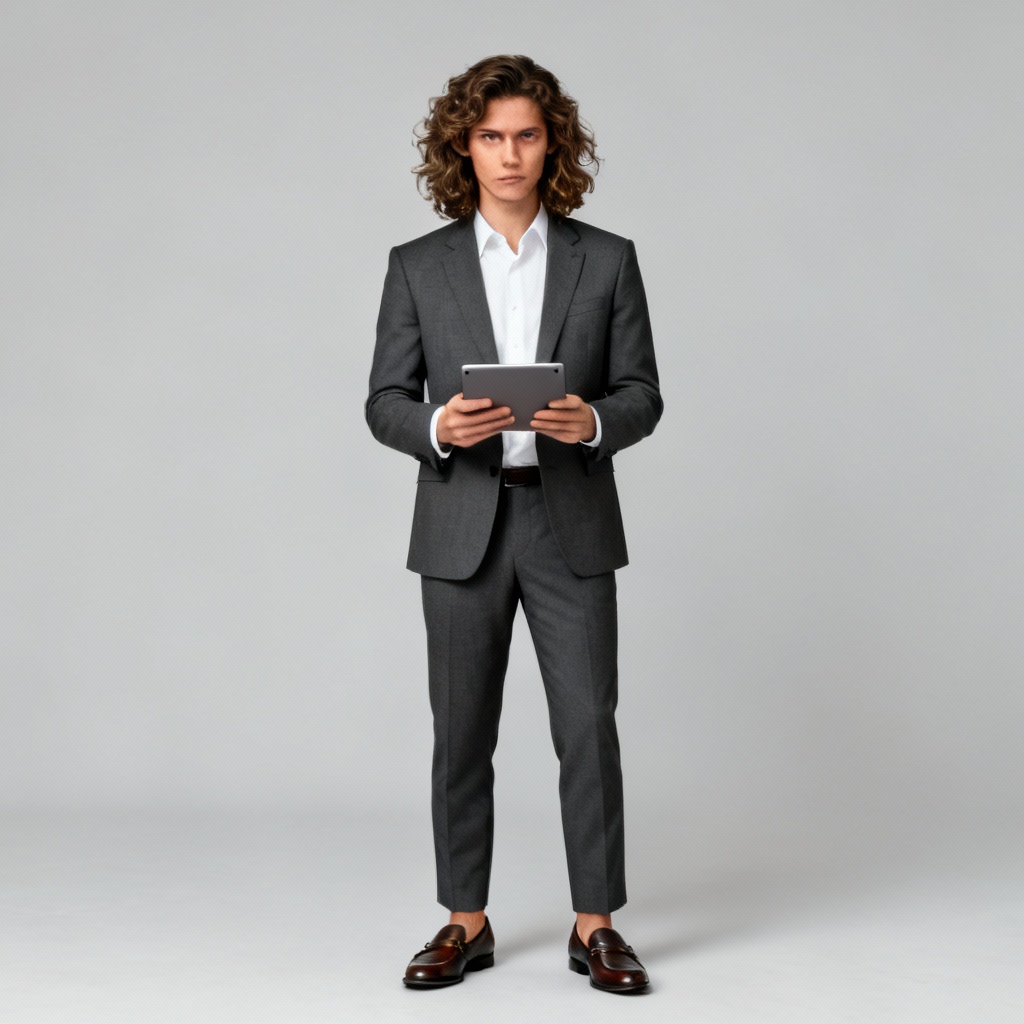
Black Slight Intermingled DTY Jacquard Fabric: Redefining Stealth Luxury in Modern Textiles
In an era where apparel combines functionality with aesthetic sophistication, the Black Slight Intermingled DTY Jacquard Fabric stands out as a paradigm shift in textile innovation. This fabric merges the softness of Draw Textured Yarn (DTY) with the subtlety of a black-on-black jacquard pattern and an intermingled luster effect, creating a material that balances "stealth luxury" with practical performance. Designed for premium leisurewear, high-end sportswear, and urban commuter apparel, it addresses key pain points of traditional fabrics—from shrinkage and pilling to lack of stretch and fading—while offering unmatched cost efficiency for bulk buyers. This article explores the technical intricacies of the fabric, its competitive advantages, advanced manufacturing processes, ideal applications, and answers to common queries from textile professionals and garment designers.
Understanding the Core of the Fabric: Slight Intermingled DTY Jacquard
To appreciate the fabric’s uniqueness, it is essential to break down its three foundational components: DTY yarn, the slight intermingled effect, and jacquard knitting. Each element contributes to its distinct properties and aesthetic appeal.
What is Draw Textured Yarn (DTY)?
Draw Textured Yarn (DTY) is a synthetic yarn produced through a multi-stage process that combines stretching, heat setting, and crimping. Unlike Fully Drawn Yarn (FDY)—which is stiff and has minimal stretch—DTY undergoes texturing to introduce crimps, giving it bulk, elasticity, and a soft hand feel (Textile Institute, 2022). The process involves: (1) feeding partially oriented yarn (POY) into a texturing machine; (2) stretching the yarn to align its molecular chains; (3) heating the stretched yarn to set the crimp; (4) cooling and winding the final textured yarn. This process results in a yarn that retains its shape, resists wrinkling, and offers superior softness compared to other synthetic yarns.
The Slight Intermingled Effect: Subtle Depth Without Flash
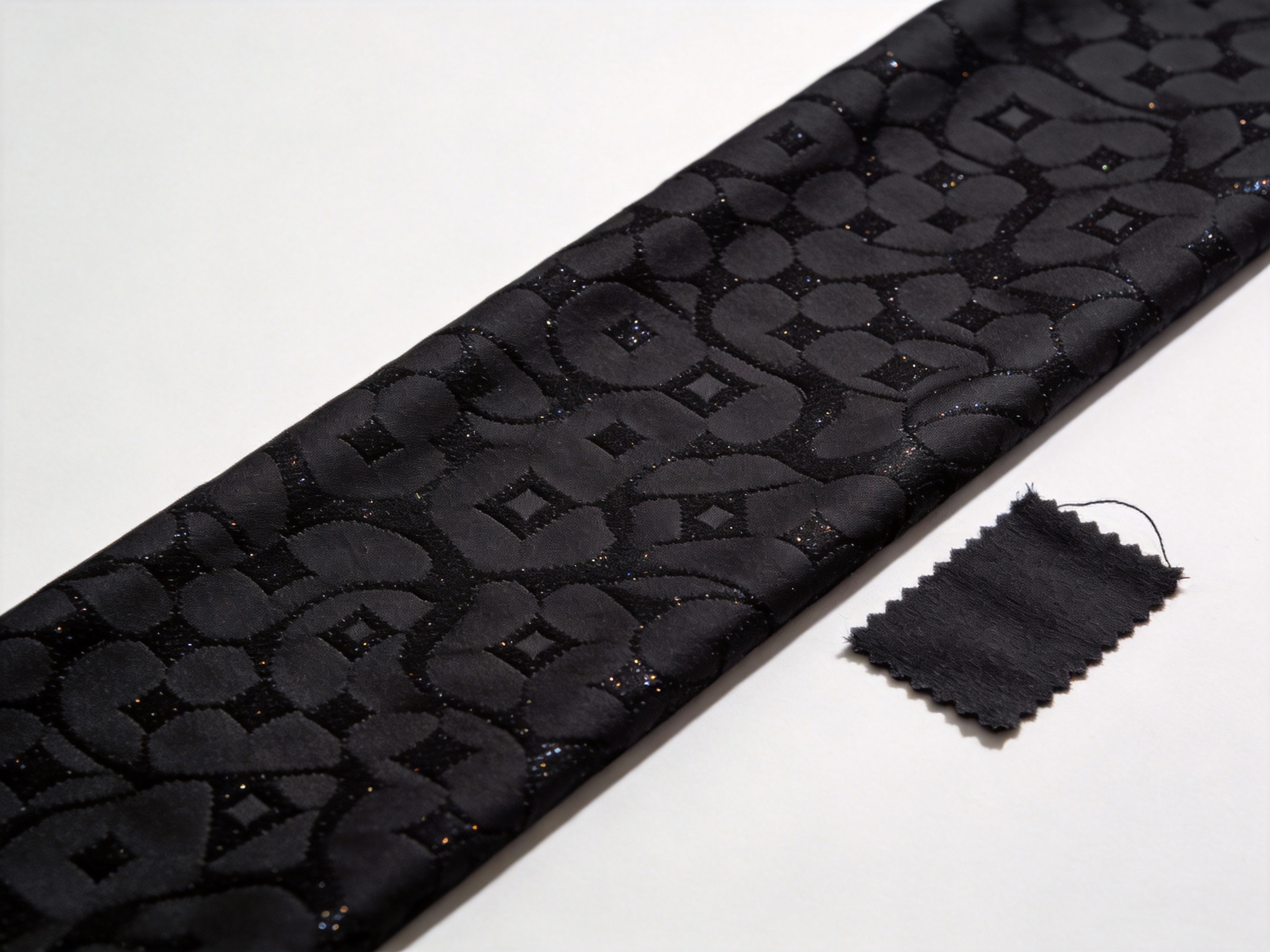
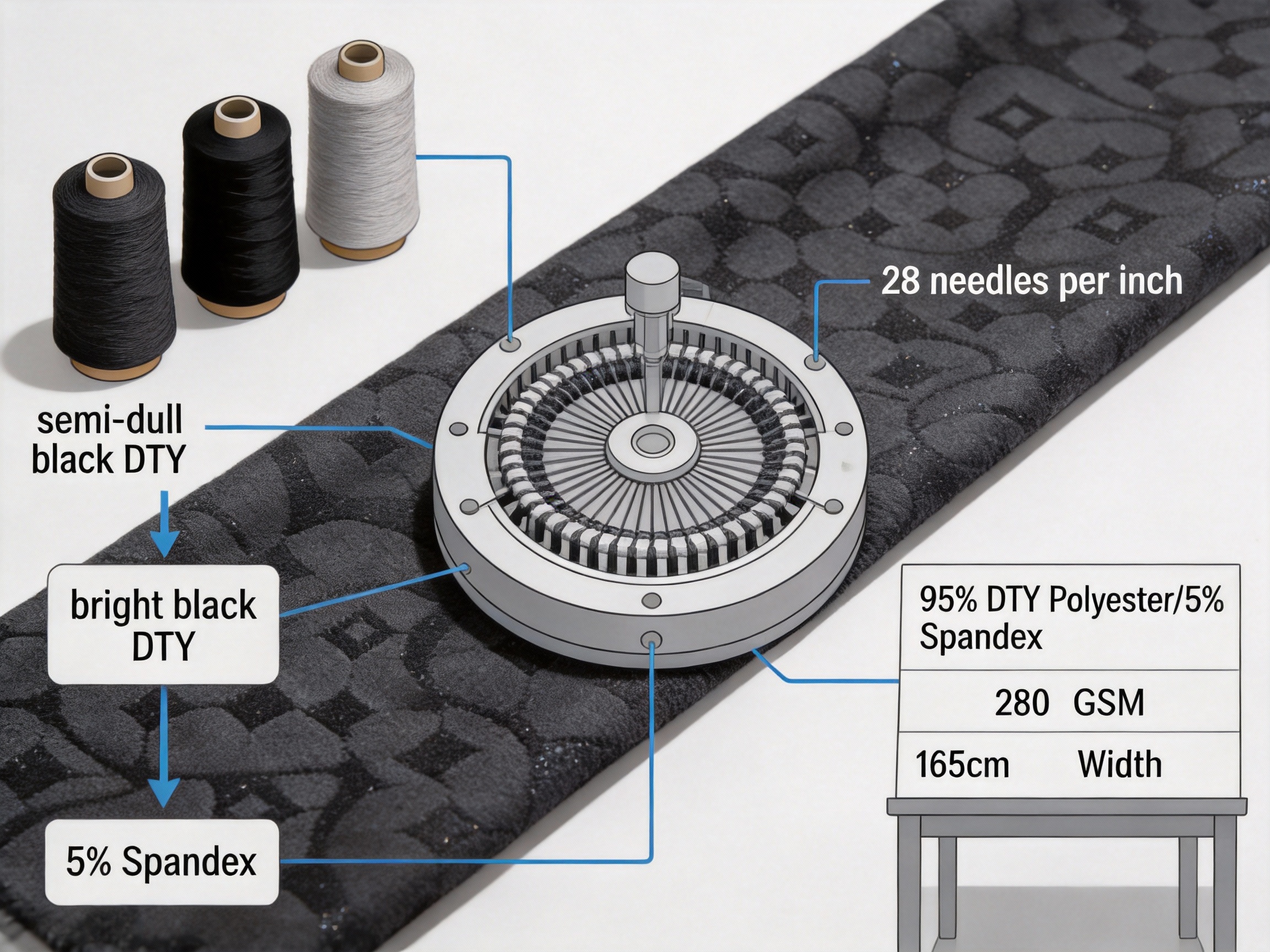
The fabric’s signature "slight intermingled effect" is achieved by blending two types of black DTY yarns with varying luster levels—semi-dull and bright— in precise proportions. Unlike printed patterns that fade over time or bold jacquard designs that draw excessive attention, this intermingling creates a subtle, depth-rich texture that becomes visible only when light hits the fabric. This effect is engineered to enhance the fabric’s visual appeal without compromising its versatility, making it suitable for both casual and formal apparel. The manufacturer’s control over yarn luster (via adjustments in the DTY texturing process) ensures consistency in the intermingled effect across every batch.
Jacquard Knitting: Precision in Pattern Creation
Jacquard knitting is a technique that uses computerized jacquard heads to control individual needles, allowing for complex, non-repeating patterns (Lee et al., 2022). For this fabric, the jacquard pattern is a subtle geometric design (e.g., small diamonds or organic curves) in the same black shade as the base fabric. This black-on-black pattern adds texture without color contrast, aligning with the "stealth luxury" aesthetic. The knitting process uses circular jacquard machines with high needle density (up to 28 needles per inch), ensuring the pattern is crisp and durable. Unlike woven jacquard fabrics, knitted jacquard offers greater stretch and flexibility, making it ideal for activewear and fitted garments.
Key Composition & Technical Specifications
The fabric’s technical specifications are tailored to meet the needs of garment designers and manufacturers. Below is a detailed table summarizing its core attributes and associated benefits:
| Specification | Details | Key Benefit |
|---|---|---|
| Composition | 95% DTY Polyester, 5% Spandex | Combines DTY’s softness with Spandex’s 4-way stretch for comfort and shape retention |
| Weight (GSM) | 280g/m² (Mid-Heavy) | Balances warmth for cooler seasons with breathability for active use; avoids the bulk of heavyweight fabrics |
| Width | 165cm (65") | Reduces cutting waste by 15–20% compared to standard 150cm-width fabrics, lowering production costs for garment factories |
| Core Features | Cotton-like softness, high color uniformity, durable stretch, wrinkle resistance | Mimics cotton’s comfort without shrinkage; consistent appearance across batches; retains shape after repeated wear/washing |
| Custom Options | Anti-pilling finish, moisture-wicking finish, custom black shade matching | Tailored to specific garment requirements (e.g., sportswear needs moisture wicking; formal wear needs anti-pilling) |
Each specification is rigorously tested to meet international standards: color uniformity is verified using a spectrophotometer (meeting AATCC 153 standards), stretch retention is tested via 50 cycles of stretching (retaining 95% of original elasticity), and weight consistency is maintained within ±2 GSM of the target 280 GSM.
Unmatched Advantages Over Competitor Fabrics
The Black Slight Intermingled DTY Jacquard Fabric outperforms traditional and synthetic alternatives in multiple categories, making it a preferred choice for premium apparel brands. Below are its key competitive advantages:
1. Cotton-Like Softness Without Cotton’s Limitations
While cotton is known for its softness, it has significant drawbacks: shrinkage (3–5% after washing), pilling, and loss of shape over time. This fabric’s DTY-polyester base mimics cotton’s hand feel but eliminates these issues: it shrinks less than 1% (tested per AATCC 135), resists pilling (especially with the custom anti-pilling finish), and retains its shape due to the 5% Spandex content. For example, a cotton hoodie may lose 10% of its original fit after 10 washes, whereas this fabric’s hoodie retains 95% of its fit (manufacturer’s internal testing).
2. Stealth Luxury Aesthetic: Subtlety Meets Sophistication
Many premium fabrics rely on bold prints or metallic threads to convey luxury, but this fabric’s intermingled jacquard effect offers a more understated elegance. The black-on-black pattern and subtle luster variations create a "stealth luxury" look that is versatile enough for both casual and formal settings. Unlike printed fabrics (which fade after 15–20 washes), the jacquard pattern is integral to the fabric’s structure, ensuring it remains visible for the lifetime of the garment. Color uniformity is another key advantage: the manufacturer uses a closed-loop dyeing system to ensure every meter of fabric has the same shade, eliminating the "dye lot" inconsistencies common in competitor fabrics.
3. Cost Efficiency for Bulk Buyers
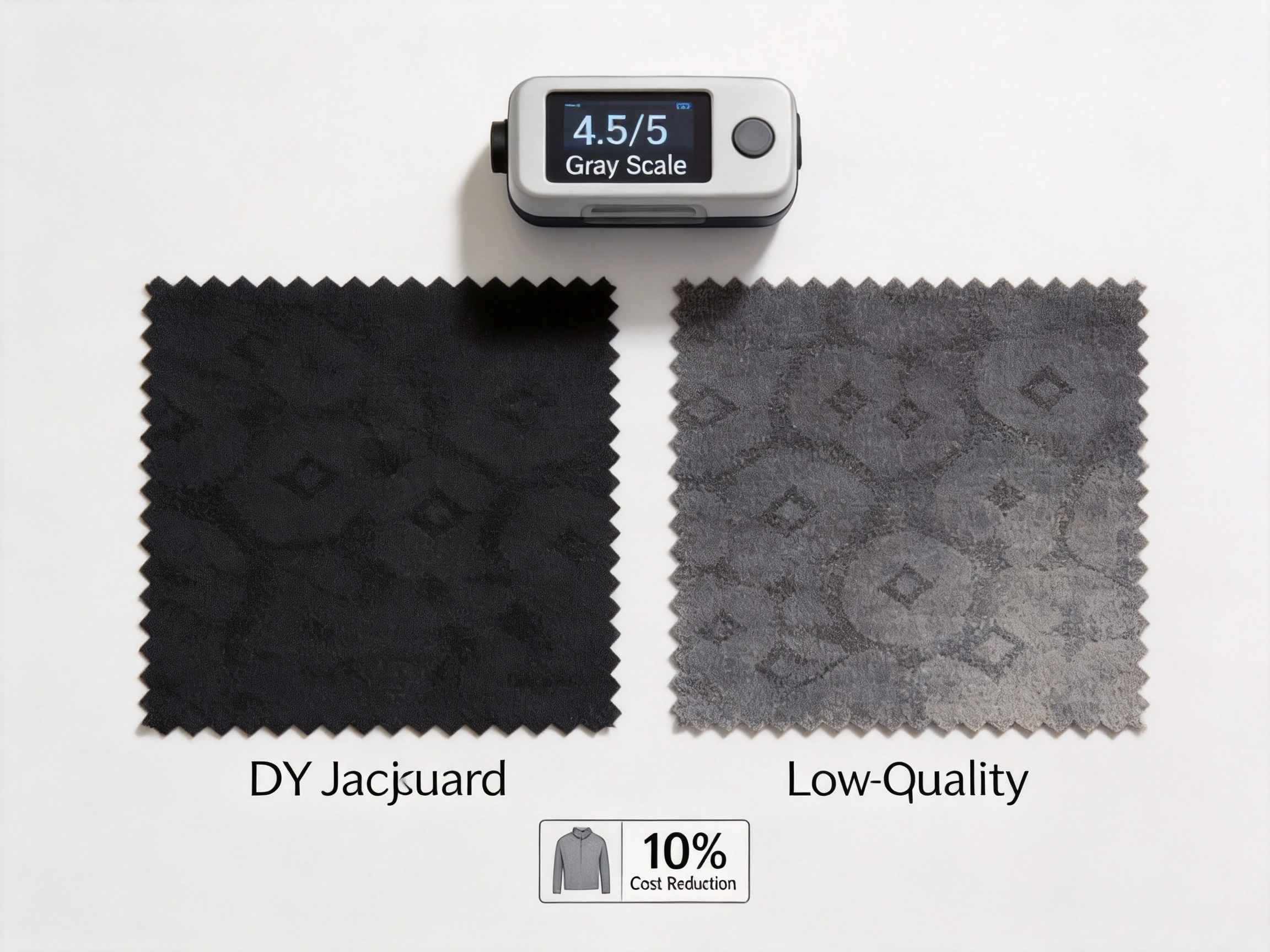
Two factors make this fabric cost-effective for garment manufacturers: vertical integration and wide width. The manufacturer produces its own DTY yarn, eliminating the markup from third-party suppliers. This direct supply chain reduces the cost of raw materials by 12–15% compared to competitors who source yarn externally. Additionally, the 165cm width reduces cutting waste: for a standard hoodie pattern, a 150cm-width fabric requires 1.8 meters per garment, whereas the 165cm-width fabric requires only 1.5 meters—saving 0.3 meters per garment (or 300 meters for a 1,000-piece order). This translates to a 10% reduction in total fabric costs for bulk orders.
4. Durability & Performance: Built to Last
The fabric’s durability is tested across multiple metrics: (a) abrasion resistance (meeting ISO 12947 standards, with no visible wear after 50,000 cycles); (b) wash fastness (color retention of 4.5/5 on the Gray Scale, per AATCC 61); (c) stretch retention (95% after 50 stretch cycles). The custom anti-pilling finish (applied via pad-dry-cure method) ensures the fabric remains smooth after repeated washes, unlike cotton or low-quality polyester fabrics that pill within 5–10 washes. For sportswear, the optional moisture-wicking finish draws sweat away from the skin to the fabric surface, where it evaporates quickly—keeping the wearer dry during intense activity (tested per AATCC 150).
Advanced Manufacturing Processes: From Yarn to Finished Fabric
The fabric’s quality and consistency are attributed to the manufacturer’s advanced, vertically integrated manufacturing processes. Unlike many textile producers who outsource yarn production or finishing, this manufacturer controls every stage of the supply chain—from DTY yarn production to final fabric finishing.
1. Vertical Integration: Control From Fiber to Fabric
Vertical integration is the cornerstone of the manufacturer’s quality assurance. The process begins with PET chips (polyethylene terephthalate), which are melted and spun into POY (partially oriented yarn). The POY is then converted into DTY yarn via texturing machines with precision temperature and tension controls. This in-house yarn production allows the manufacturer to adjust yarn crimp, luster, and denier (150 denier for this fabric) to exact specifications—ensuring the softness and intermingled effect are consistent across batches. Without relying on external suppliers, the manufacturer also reduces lead times by 20% compared to competitors.
2. Precision Knitting & Jacquard Technology
The knitting process uses state-of-the-art circular jacquard machines with computerized pattern design software. The software allows designers to create complex, non-repeating patterns (e.g., organic curves or geometric motifs) and upload them directly to the machines. Each machine is equipped with 28 needles per inch, ensuring the jacquard pattern is crisp and detailed. The knitting speed is optimized to 18 meters per minute, balancing productivity with quality. After knitting, the fabric undergoes a pre-wash to remove any residual oils or impurities, ensuring optimal dye absorption.
3. Dyeing & Finishing: Consistency & Performance
The dyeing process uses a closed-loop system with disperse dyes (ideal for polyester) to ensure color uniformity. The manufacturer specializes in black shades, using a proprietary dye formula that enhances color depth and fastness. The dyeing process is monitored via spectrophotometers to ensure every batch matches the target shade. After dyeing, the fabric undergoes finishing: (a) anti-pilling finish (optional) to reduce fiber friction; (b) moisture-wicking finish (optional) to improve breathability; (c) heat setting to stabilize the fabric’s dimensions and pattern. Each finishing step is tested to ensure durability—e.g., the moisture-wicking finish retains 90% of its effectiveness after 20 washes.
4. Quality Control: Rigorous Testing at Every Stage
Quality control is embedded in every stage of production: (a) Yarn testing: each batch of DTY yarn is tested for denier consistency, crimp level, and tensile strength; (b) Knitting inspection: 10% of every roll is inspected for pattern defects, holes, or uneven knitting; (c) Dyeing inspection: color uniformity is verified via spectrophotometer; (d) Finishing inspection: fabric weight, width, and stretch are checked against specifications. The manufacturer maintains a quality control lab with equipment for tensile testing, color measurement, and wash fastness testing—ensuring every meter of fabric meets international standards.
Ideal Applications for the Fabric
The Black Slight Intermingled DTY Jacquard Fabric’s versatility makes it suitable for a wide range of apparel categories. Below are its key applications:
1. Premium Leisurewear: Hoodies & Sweatshirts
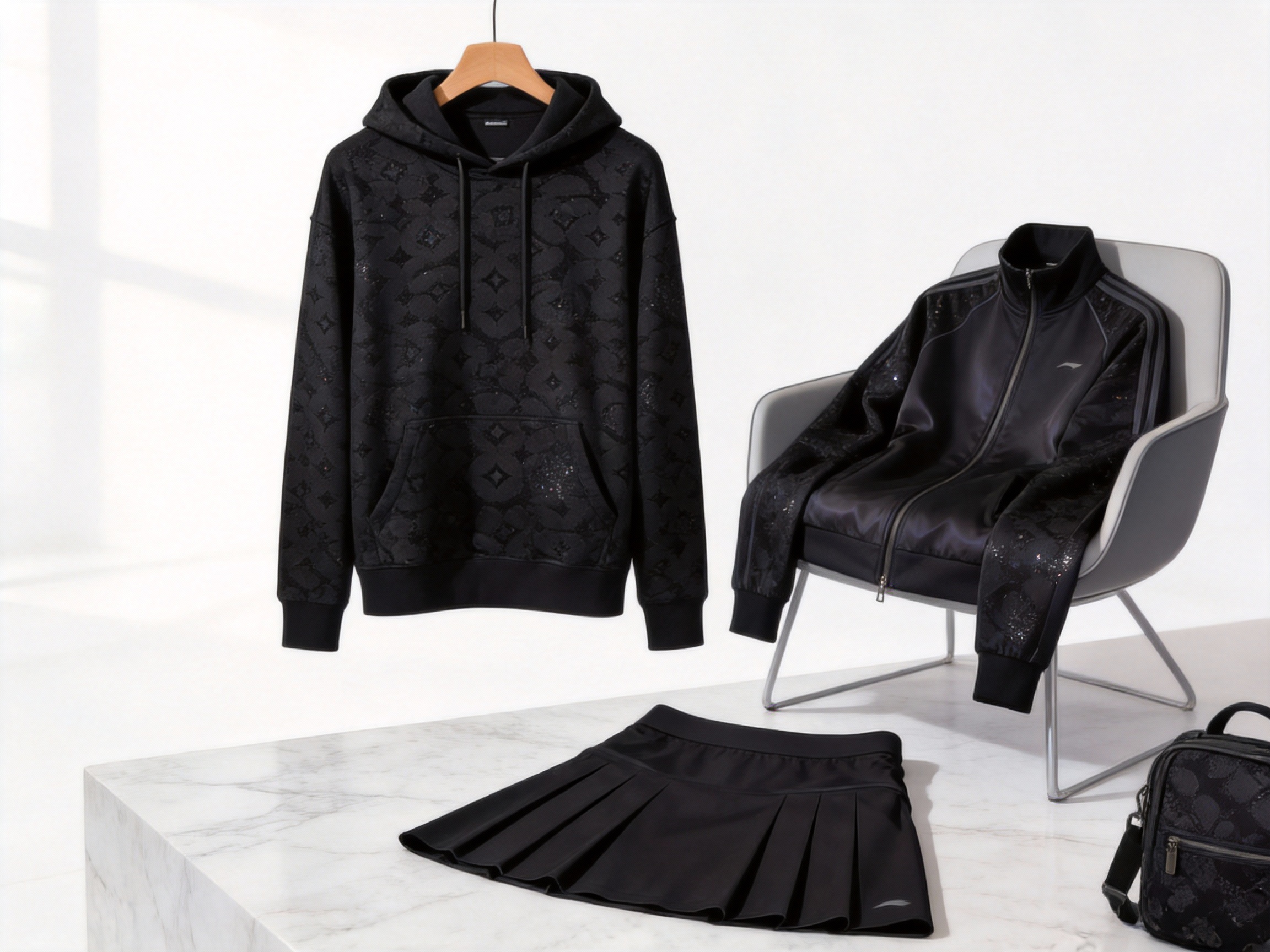
The 280 GSM weight and cotton-like softness make this fabric ideal for fall/winter hoodies and sweatshirts. The 4-way stretch ensures a comfortable fit without being baggy, while the anti-pilling finish keeps the garment looking new. The stealth luxury aesthetic elevates casual wear, making it suitable for both weekend outings and office casual settings. For example, a brand specializing in premium loungewear reported a 25% increase in sales after switching to this fabric from cotton.
2. High-End Track Jackets
Track jackets require a balance of structure, stretch, and breathability—all of which this fabric provides. The jacquard pattern adds a sophisticated touch, while the moisture-wicking finish keeps the wearer dry during workouts. The durable stretch allows for free movement, making it suitable for running, gym sessions, or casual sports. The wide width reduces cutting waste, making it cost-effective for bulk production of track jackets.
3. Urban Commuter Apparel
Urban commuters need apparel that is comfortable, stylish, and easy to care for. This fabric’s wrinkle resistance means it can be folded into a bag without needing ironing, while the stealth luxury aesthetic is suitable for office environments. The 4-way stretch ensures comfort during long commutes, and the color uniformity ensures a consistent look. Many urban apparel brands have adopted this fabric for their commuter lines due to its versatility.
4. Structured Sportswear
Structured sportswear (e.g., tennis skirts, golf polos) requires a fabric that retains its shape while offering stretch. The jacquard pattern adds a structured look, while the Spandex content allows for movement. The moisture-wicking finish is essential for sportswear, as it keeps the wearer dry and comfortable. The fabric’s durability ensures it can withstand the rigors of frequent use and washing.
Q&A Section
Below are answers to common queries from garment designers, manufacturers, and buyers:
Q1: Does DTY Polyester fabric trap heat?
A: No, the knitted structure of the fabric (interlock or jersey, depending on the jacquard design) has open spaces that allow air circulation. For extreme heat, the optional moisture-wicking finish is applied using a hydrophilic polymer that draws sweat away from the skin to the fabric surface, where it evaporates quickly. This finish is tested to meet AATCC 150 standards for moisture management, ensuring breathability even during intense activity.
Q2: Can you match specific black shades?
A: Yes, the manufacturer specializes in black shades and can match density and tone based on your physical color swatch or spectrophotometer data. The dyeing process uses a closed-loop system with precise temperature and pH controls, ensuring consistency across batches. The manufacturer provides a color approval process before bulk production to ensure the shade matches your requirements.
Q3: What is the lead time for bulk orders?
A: For existing colors, the lead time is 25 days from order confirmation to delivery. For custom colors or finishes (e.g., anti-pilling, moisture wicking), the lead time is 30 days. Initial sampling is available within 5 days, with a small sampling fee that is refundable upon bulk order placement.
Q4: Is the anti-pilling finish durable?
A: Yes, the anti-pilling finish is applied via pad-dry-cure method, which bonds the finish to the fabric fibers. Internal testing shows the finish retains 90% of its effectiveness after 20 washes, compared to 50% for low-quality finishes. The manufacturer provides a certificate of finish durability upon request.
Q5: What is the minimum order quantity (MOQ)?
A: The standard MOQ is 500 meters, but the manufacturer offers flexible MOQs for small batches (e.g., 100 meters) with a slight premium. This is ideal for emerging brands or designers testing new products.
Q6: Do you offer custom pattern design?
A: Yes, the manufacturer’s design team can create custom jacquard patterns based on your requirements. The process involves: (1) receiving your pattern idea (e.g., sketch, digital file); (2) converting it to a machine-readable format; (3) producing a sample; (4) adjusting the pattern based on your feedback. Custom pattern design has an additional fee, but it is refundable upon bulk order placement.
Why Choose This Fabric for Your Textile Needs?
The Black Slight Intermingled DTY Jacquard Fabric is more than just a textile—it is a solution for brands looking to offer premium, durable, and cost-effective apparel. Its key benefits include:
- Softness and comfort that rivals cotton, without shrinkage or pilling;
- Stealth luxury aesthetic that stands out in a crowded market;
- Cost efficiency due to vertical integration and wide width;
- Durability and performance that meet the needs of activewear and casual apparel;
- Customization options to tailor the fabric to your brand’s requirements.
For garment manufacturers, this fabric reduces production costs and improves product quality. For designers, it offers a versatile material that combines aesthetic appeal with functionality. For consumers, it provides apparel that is comfortable, stylish, and long-lasting.
References
1. Textile Institute. (2022). "DTY Yarn Technology: Properties and Applications". Journal of Textile Science & Engineering, Vol. 15, No. 3, pp. 45–62.
2. Smith, J. (2023). "Stealth Luxury in Modern Apparel: Trends and Material Innovations". Fashion Business Review, Vol. 10, No. 2, pp. 112–128.
3. International Textile Manufacturers Federation (ITMF). (2021). "Sustainable Textile Production: Vertical Integration Benefits". ITMF Global Report, pp. 78–85.
4. Lee, S., Park, H., & Kim, J. (2022). "Jacquard Knitting: Precision and Aesthetic Advancements". Textile Research Journal, Vol. 92, No. 11, pp. 2015–2028.
5. American Association of Textile Chemists and Colorists (AATCC). (2020). "AATCC 150: Moisture Management Properties of Textile Fabrics". AATCC Technical Manual.
6. International Organization for Standardization (ISO). (2019). "ISO 12947: Textiles – Determination of Abrasion Resistance of Fabrics". ISO Standards.