
Black Slight Intermingled DTY for High-Performance Textile Manufacturing
Black Slight Intermingled DTY is a specialized polyester draw textured yarn designed for textile producers that require stable processing performance, uniform fabric appearance, reliable dyeing depth, and efficient downstream knitting or weaving. As a member of the Slight Intermingled Draw Textured Yarn category, this product combines the elastic bulk of textured polyester with carefully controlled intermingling points, creating a yarn that is easy to process while maintaining a smooth, clean, and consistent surface effect in finished fabrics.
In modern textile manufacturing, yarn quality directly influences fabric quality, production efficiency, defect rates, hand feel, color consistency, and final garment performance. For manufacturers working with knitted jacquard fabrics, polyester rayon fabrics, NTR knitted fabrics, NR knitted fabrics, and other blended textile products, a stable DTY polyester yarn is not merely a raw material. It is the foundation of production reliability and market competitiveness.
Black Slight Intermingled DTY is particularly valuable where the textile producer requires a dark, deep, and uniform black tone together with dependable running behavior on circular knitting machines, warp knitting equipment, weaving systems, and fabric finishing lines. The slight intermingling structure helps reduce filament separation during handling and processing while avoiding the excessive network spots that may appear on fabrics when heavier intermingling is used. This balance makes the yarn well suited for applications that demand both processing stability and refined fabric appearance.
Hangzhou Jinfeng Textile Co., Ltd. manufactures and supplies DTY polyester yarn and blended fabrics through an integrated system covering research, production, processing, post-dyeing, finishing, and sales. Located in Xiaoshan District, Hangzhou, Zhejiang Province, the company operates with substantial plant capacity, textile production experience, and a customer-oriented business philosophy. Its manufacturing strengths support consistent yarn quality, practical application performance, and reliable supply for domestic and international customers.
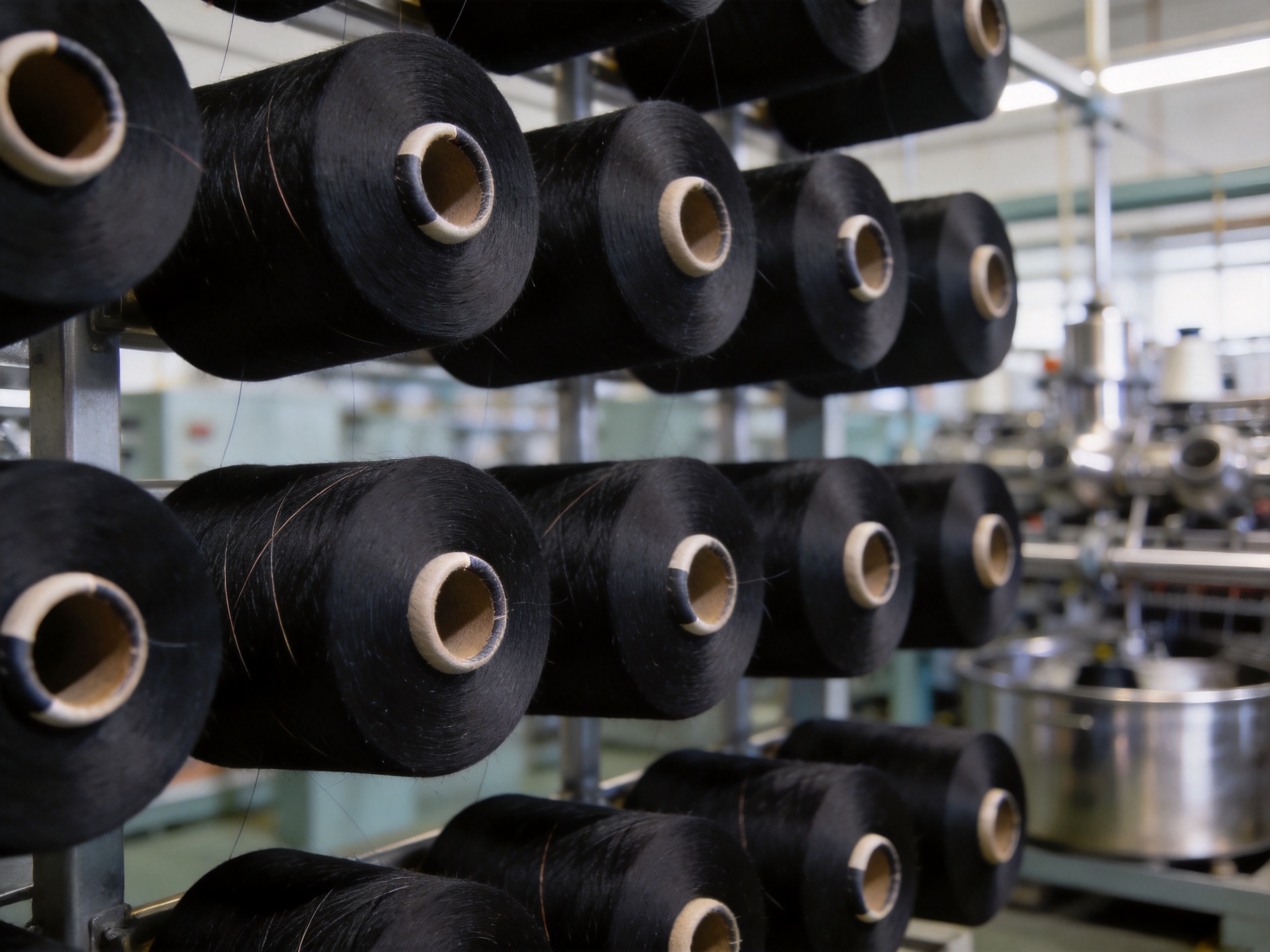
Understanding Black Slight Intermingled DTY
DTY, or Draw Textured Yarn, is a polyester filament yarn produced through a texturing process that gives the yarn stretch, bulk, softness, and improved covering power. Compared with flat filament yarn, DTY has a more fabric-friendly structure, making it suitable for apparel, home textiles, sportswear, upholstery fabrics, lining materials, jacquard fabrics, and many types of blended textile constructions.
The term “Slight Intermingled” refers to the controlled formation of light network points along the yarn. These network points are created by compressed air during the texturing process. The air causes filaments in the yarn bundle to entangle at intervals, allowing the yarn to hold together better without requiring excessive twist. The number of network points per meter depends mainly on air pressure, machine speed, yarn specification, and process settings.
In the case of Black Slight Intermingled DTY, the intermingling level is intentionally moderate and light. This is important because heavy intermingling can create visible network spots on the fabric surface, especially in fine, smooth, or dark-colored textile structures. A yarn with too little cohesion, however, may split or fuzz during knitting, weaving, warping, or winding. Slight intermingling provides a practical middle ground: enough cohesion for efficient processing, yet not so much that the final fabric loses its clean and elegant appearance.
The black coloration of this DTY product also adds functional value. Black yarn is widely used in apparel, uniforms, fashion fabrics, elastic fabrics, blended materials, industrial textiles, and decorative fabrics. A uniform black DTY helps reduce shade variation, improves visual depth, and supports consistent fabric quality across production batches.
Core Product Characteristics
Black Slight Intermingled DTY is defined by several performance characteristics that make it suitable for competitive textile production. These characteristics include controlled network formation, stable yarn tension, smooth unwinding, good elasticity, consistent black shade, and compatibility with a wide range of fabric structures.
First, the yarn offers moderate cohesion. The slight intermingling points help keep filaments bundled during downstream processing. This reduces filament breakage, improves running efficiency, and helps prevent defects caused by loose filaments. In knitting, this can reduce machine stoppages and fabric flaws. In weaving, it can improve warp and weft stability. In fabric finishing, it helps maintain even surface appearance.
Second, the yarn provides the bulk and elasticity expected from quality draw textured polyester yarn. The texturing process creates crimp in the filaments, contributing to softness, volume, and resilience. Fabrics made from DTY often feel fuller than fabrics made from flat filament yarn, and they can offer better comfort and dimensional recovery.
Third, the yarn is designed to minimize visible network defects. Because the intermingling is light rather than heavy, the yarn avoids excessive entanglement marks that may show up as spots, streaks, or uneven surface effects in finished fabrics. This is especially beneficial for black fabrics, where subtle differences in texture can be visually noticeable under light reflection.
Fourth, the yarn offers high practical compatibility. It can be used in pure polyester fabrics as well as in blends with rayon, spandex, and other fibers. This allows textile mills to develop products ranging from stretch apparel fabrics to jacquard materials, casualwear, sportswear, decorative textiles, and blended fabric lines.
Why Slight Intermingling Matters
Intermingling is one of the most important technical factors in DTY production. It affects yarn handling, fabric formation, defect control, and the final surface quality of textiles. In the production of draw textured yarn with medium and light networks, the number of networks per meter is carefully controlled. This network number is influenced by air pressure and machine speed. When air pressure is higher, stronger and more frequent intermingling may occur. When texturing speed changes, the spacing and stability of network points can also change.
A heavy network may improve yarn cohesion, but it may also create fabric surface problems. Heavy mesh or heavy intermingled yarn can produce network spots on the fabric surface. These spots may be acceptable in some technical fabrics, but they are undesirable in refined apparel fabrics, smooth knitted fabrics, jacquard structures, and many black fabrics where appearance uniformity is critical.
Slight intermingling solves this problem by delivering enough filament holding power without creating an overly aggressive network structure. For textile producers, this means better balance. The yarn can run efficiently through production equipment while preserving the visual quality of the finished fabric. This balance is particularly valuable when manufacturers are trying to reduce waste, improve first-grade fabric output, and meet demanding customer standards.
In competitive textile markets, small differences in yarn structure can produce large differences in fabric quality. A yarn that runs smoothly but creates spots is not ideal. A yarn that looks smooth but creates processing breaks is also not ideal. Black Slight Intermingled DTY is designed to meet both needs: stable processing and clean appearance.
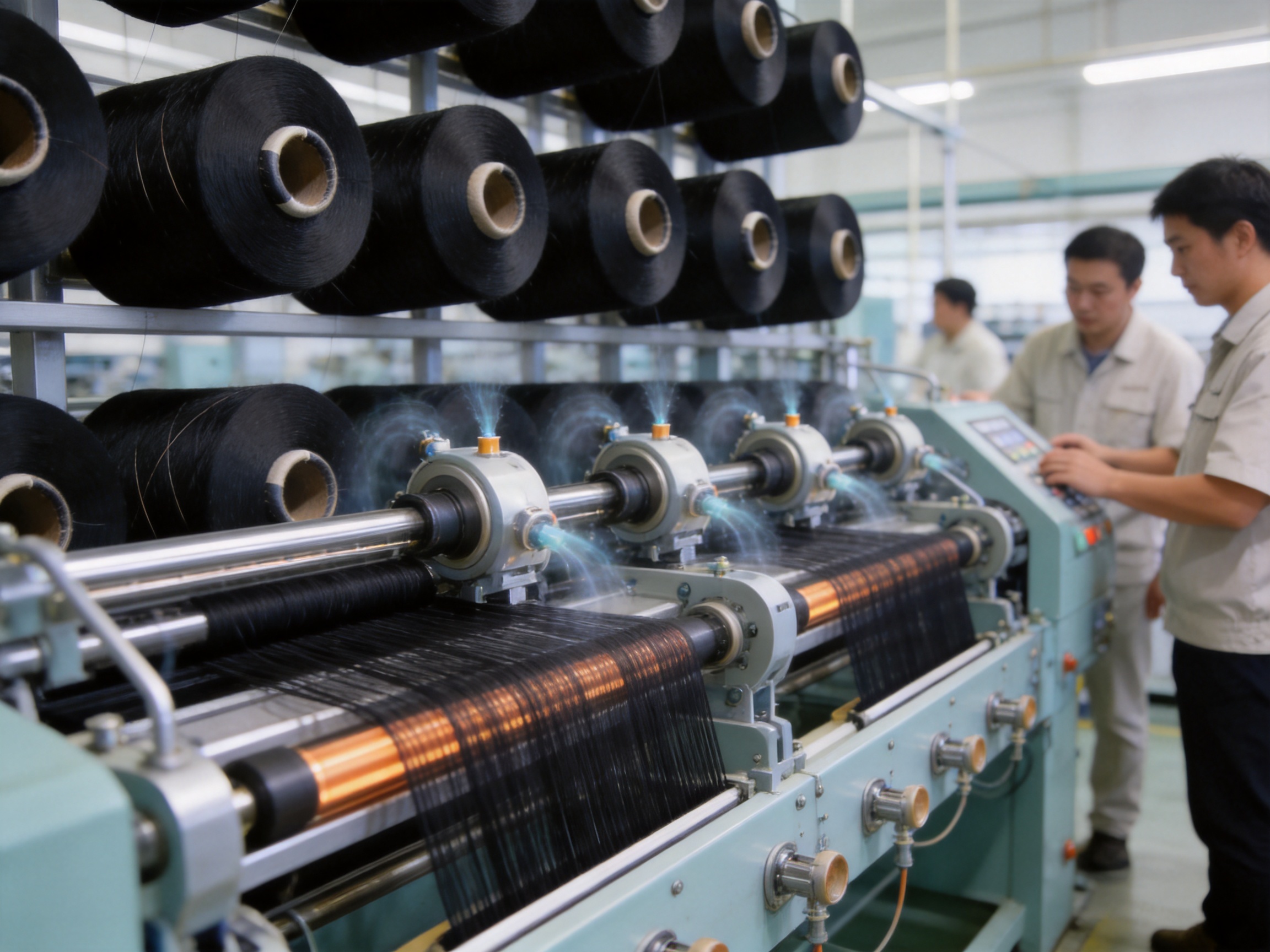
Advantages Over Conventional Competitor Yarns
Compared with ordinary DTY products, Black Slight Intermingled DTY offers several advantages that can improve both production and finished fabric performance. These advantages are especially relevant for fabric manufacturers seeking dependable black polyester yarn for high-volume textile production.
One major advantage is better surface uniformity. Competitor yarns with heavy intermingling may cause visible network marks, especially after knitting, dyeing, finishing, or heat setting. By using controlled slight intermingling, this yarn helps reduce the risk of spot-like defects and improves the smoothness of the fabric surface.
Another advantage is improved processing stability compared with non-intermingled or poorly intermingled yarns. Non-intermingled yarn may be more prone to filament spreading, snagging, and uneven feeding. Slight intermingling improves filament cohesion, helping the yarn pass through guides, needles, feeders, and winding devices more reliably.
A third advantage is better balance between softness and strength. Excessive twisting or excessive network formation can make yarn feel harsher or produce a more rigid fabric. Black Slight Intermingled DTY maintains a flexible, textile-friendly character, supporting fabrics with a comfortable hand feel and good drape.
A fourth advantage is practical batch consistency. High-quality DTY production requires controlled process parameters. When air pressure, texturing temperature, draw ratio, winding tension, and machine speed are managed properly, the resulting yarn performs more consistently across packages and batches. This reduces the risk of shade bands, streaks, tension differences, and unexpected fabric defects.
A fifth advantage is broader application adaptability. This yarn can be used in different fabric systems, including knitted jacquard fabric, polyester rayon fabric, NTR knitted fabric, NR knitted fabric, and other blended fabrics. Its combination of cohesion, elasticity, and visual uniformity makes it suitable for both basic production and value-added fabric development.
| Performance Factor | Black Slight Intermingled DTY | Common Heavy Intermingled DTY | Non-Intermingled or Poorly Controlled DTY |
|---|---|---|---|
| Fabric Surface Appearance | Smooth, clean, reduced network spotting | May show visible network spots | May show filament irregularity or streaks |
| Processing Stability | Stable filament cohesion with efficient running | Stable but may be overly compact | Higher risk of filament separation |
| Hand Feel | Soft, flexible, suitable for apparel fabrics | May feel slightly harder depending on structure | Variable depending on filament control |
| Fabric Application Range | Knitting, jacquard, blended fabrics, apparel textiles | Useful where appearance requirements are less strict | Limited by processing reliability |
| Defect Control | Balanced control of spots, breaks, and fuzz | Potential network mark issue | Potential broken filament and fuzz issue |
Manufacturing Process and Technical Control
The quality of Black Slight Intermingled DTY depends on precise manufacturing control. DTY production is not simply a mechanical conversion process. It requires careful management of polymer filament behavior, thermal setting, drawing, twisting, untwisting, air intermingling, winding, and quality inspection.
The process typically begins with polyester partially oriented yarn or related feed yarn. The feed yarn is drawn and textured under controlled conditions. During texturing, filaments are heated, mechanically deformed, and set into a crimped structure. This gives the yarn bulk, elasticity, and improved textile performance.
Temperature control is essential. If the heating temperature is too low, the yarn may not develop stable crimp. If it is too high, filament damage, uneven shrinkage, or performance loss may occur. A reliable manufacturer must maintain suitable heater settings and monitor process stability during production.
Draw ratio control is also important. Drawing aligns polymer chains and influences yarn strength, elongation, and dimensional stability. If the draw ratio is inconsistent, yarn packages may show differences in tension, elongation, or dyeing behavior. These differences can later appear as fabric streaks or uneven texture.
Air intermingling is a key stage for this product. Compressed air is applied to create slight network points in the yarn. The air pressure must be selected carefully to achieve the required number of networks per meter. Too much pressure may form a heavy network and produce fabric spots. Too little pressure may leave the filaments insufficiently bonded. Machine speed also affects the final intermingling structure, so air pressure and speed must be adjusted together rather than treated as independent settings.
Winding quality completes the process. Even if yarn formation is technically correct, poor winding can cause package defects, unstable unwinding, tension variation, or breakage during downstream use. High-quality DTY packages require consistent density, clean edges, stable tension, and proper package shape.
Hangzhou Jinfeng Textile Co., Ltd. supports DTY production through integrated manufacturing experience and practical textile application knowledge. Because the company also engages in production, post-dyeing, finishing, and sales of blended fabrics, it understands how yarn behavior affects fabric quality after multiple processing stages. This full-chain perspective is a significant strength. It allows yarn manufacturing decisions to be guided not only by yarn laboratory data but also by real fabric performance.
Advanced Manufacturing Strengths
A strong DTY supplier must do more than produce yarn. It must manage consistency, scale, technical support, quality control, and customer communication. Hangzhou Jinfeng Textile Co., Ltd. is located in Jingjiang Street Industrial Park, Xiaoshan District, Hangzhou City, Zhejiang Province. The company covers an area of 32.6 acres and operates a plant area of approximately 18,000 square meters. This industrial foundation supports production capacity, process organization, and long-term supply reliability.
The company integrates research and development, production, and sales. This integrated model is valuable because textile products often require adjustment according to customer requirements. Different customers may need different yarn specifications, package formats, fabric compatibility, dyeing behavior, elasticity levels, or finishing performance. A company with manufacturing and development capabilities can respond more effectively to such needs.
The company’s production scope includes DTY polyester yarn production, processing, and sales, as well as blended fabric production involving polyester, spandex, and related materials. This breadth gives the company insight into both raw yarn and finished fabric markets. It can evaluate whether a yarn is merely acceptable at the package stage or truly effective after knitting, dyeing, finishing, and garment use.
Another strength is the company’s practical experience with blended fabrics. Polyester rayon fabric, knitted jacquard fabric, NTR knitted fabric, and NR knitted fabric all require careful raw material selection. In blended structures, yarn compatibility affects shrinkage, elasticity, dye absorption, fabric hand feel, and dimensional stability. A supplier familiar with these fabric categories can better understand how Black Slight Intermingled DTY should be manufactured and applied.
The company also emphasizes cooperation and win-win relationships. In the textile industry, long-term supplier partnerships are important because fabric quality depends on repeated batch consistency. Customers need not only attractive sample quality but also reliable bulk production. A cooperative supplier helps customers reduce risks, solve processing problems, and develop new products more confidently.
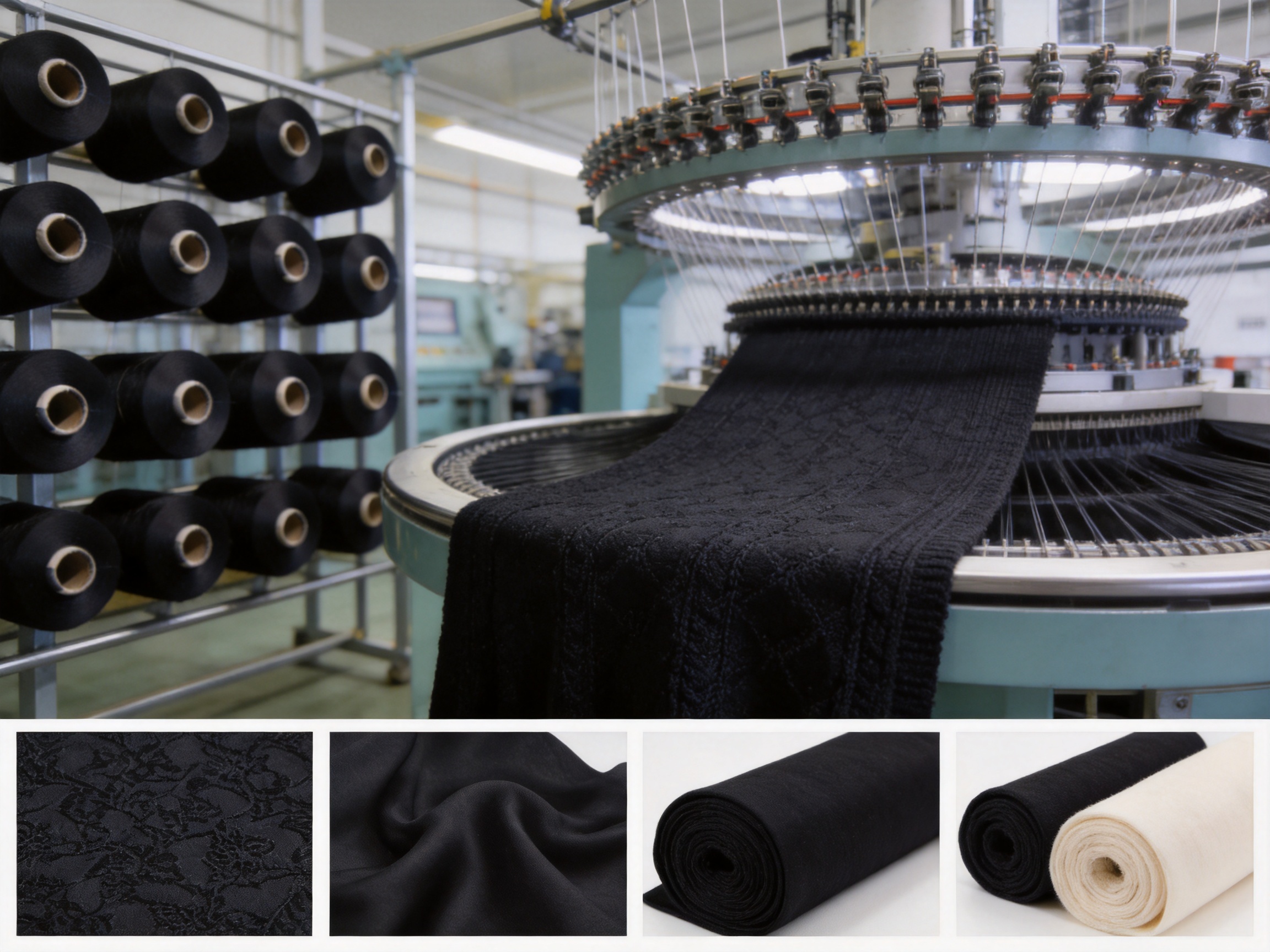
Application in Knitted Jacquard Fabric
Knitted jacquard fabric places high demands on yarn consistency. Jacquard patterns often involve complex loops, varying stitch structures, and visual contrast. If yarn tension, color, or texture is inconsistent, the pattern may look uneven or distorted. Black Slight Intermingled DTY is well suited for such applications because it offers stable yarn cohesion and a clean surface effect.
In jacquard knitting, yarns must move smoothly through feeders and needles. Filament separation can cause needle damage, yarn breaks, missing loops, or surface fuzz. Slight intermingling helps hold filaments together, improving knitting efficiency. At the same time, the light network structure helps prevent excessive network marks that could interfere with the clarity of jacquard patterns.
Black DTY is particularly useful in jacquard designs where black is used as a ground color, contrast color, or pattern element. A uniform black yarn enhances pattern sharpness and gives the finished fabric a refined visual depth. For fashion textiles, sportswear panels, decorative knitted fabrics, and functional apparel, this combination of appearance and performance is highly valuable.
Application in Polyester Rayon Fabric
Polyester rayon fabric combines the strength and resilience of polyester with the softness and absorbent character of rayon. The selection of polyester yarn has a major influence on the final fabric’s durability, drape, and appearance. Black Slight Intermingled DTY can contribute to polyester rayon blends by providing bulk, elasticity, color depth, and structural stability.
Rayon fibers often create a soft and comfortable fabric hand, while polyester improves strength and shape retention. When DTY polyester yarn is used in the blend, the fabric can gain additional fullness and improved recovery. The slight intermingling structure assists processing and helps maintain a uniform fabric surface.
In black or dark polyester rayon fabrics, shade consistency is especially important. Uneven yarn structure may reflect light differently and create visible streaks. A controlled slight intermingled DTY helps reduce such problems by supporting consistent texture and more even fabric formation.
Application in NTR and NR Knitted Fabrics
NTR knitted fabric and NR knitted fabric can involve blended fiber systems and specialized knitting constructions. These fabrics may be used in apparel, casualwear, stretch garments, and other textile products requiring comfort and performance. Yarn stability is essential because knitting machines operate at high speeds, and even small yarn irregularities can create recurring defects.
Black Slight Intermingled DTY helps improve production reliability in such fabrics. Its controlled cohesion reduces the tendency of filaments to spread or snag. Its textured structure contributes to fabric volume and elasticity. Its black shade supports dark fabric applications where visual consistency is required.
For producers of NTR and NR knitted fabrics, the yarn’s balanced intermingling level may help reduce machine stoppages and improve production efficiency. Fewer yarn breaks and fewer surface defects can translate into higher fabric yield, reduced waste, and improved delivery performance.
Value in Blended Fabric Manufacturing
Blended fabric manufacturing is technically demanding because different fibers have different mechanical, thermal, dyeing, and shrinkage properties. When polyester DTY is blended with rayon, spandex, or other fibers, it must be compatible with the fabric’s production and finishing requirements. Black Slight Intermingled DTY provides a stable polyester component that can support consistent fabric construction.
In fabrics containing spandex, yarn smoothness and feeding consistency are particularly important. Spandex creates stretch, but the companion yarns must support the fabric structure without causing needle problems or uneven tension. Slight intermingled DTY can work effectively in such systems because it offers both cohesion and flexibility.
In polyester-rich blends, the yarn contributes durability, resilience, and shape retention. In rayon-rich blends, it can improve strength and reduce excessive deformation. In fashion and casualwear fabrics, it supports soft hand feel and visual smoothness. These benefits make the yarn a practical choice for manufacturers seeking versatile raw materials.
Fabric Appearance and Surface Quality
Surface quality is one of the most visible indicators of textile value. Customers often judge fabric by appearance before they test strength, elongation, or durability. Black fabrics are especially sensitive because uneven reflection, streaks, spots, or filament defects may become obvious under retail lighting or daylight.
Black Slight Intermingled DTY supports a cleaner surface by avoiding the extremes of yarn structure. It is not excessively intermingled, so it reduces the chance of visible network spots. It is not uncontrolled or loose, so it reduces the chance of filament spreading and fuzz. This balanced structure helps fabric producers achieve a more refined appearance.
In finished textiles, the yarn can contribute to smoothness, consistent blackness, and improved perceived quality. Whether used in knitted jacquard fabric, blended apparel fabric, or dark stretch textile, the yarn’s controlled structure supports the manufacturer’s goal of producing first-grade goods.
Production Efficiency and Cost Control
High-quality yarn can reduce overall production cost even when its unit price is not the lowest. Textile manufacturers understand that yarn price is only one part of cost. Breakage, machine stoppage, fabric defects, reprocessing, waste, shade rejection, and customer complaints can be far more expensive than the initial raw material difference.
Black Slight Intermingled DTY supports cost control by improving process reliability. Stable yarn running can reduce downtime. Better surface quality can reduce defect rates. Consistent package quality can improve unwinding and feeding. Uniform yarn behavior can reduce fabric rejection and help production planning.
Compared with lower-grade competitor yarns, the advantage of controlled DTY becomes clear in bulk production. A sample may appear acceptable, but large-scale textile manufacturing reveals the true stability of yarn quality. Consistent intermingling, tension, black shade, and package formation are essential for repeatable production performance.
Quality Control Considerations
Quality control for Black Slight Intermingled DTY should include physical testing, visual inspection, package inspection, and application feedback. Important yarn parameters may include denier or linear density, tenacity, elongation, crimp contraction, oil content, network points per meter, package weight, package density, and color consistency.
The number of network points per meter is especially important for slight intermingled yarn. The target should be controlled according to the product specification and application. If the network is too light, the yarn may not process well. If it is too heavy, fabric spots may appear. Proper testing and process monitoring help maintain the desired balance.
Visual inspection is also important. Black yarn should be checked for shade uniformity, contamination, broken filaments, oil stains, package defects, and winding irregularities. Because black yarn may hide some defects but highlight others under reflection, both direct inspection and fabric trial evaluation can be useful.
Application feedback closes the quality loop. A yarn supplier with fabric production knowledge can use knitting, dyeing, and finishing results to improve yarn process settings. This practical approach supports continuous improvement and customer satisfaction.
Sustainability and Responsible Production Perspective
Polyester yarn production is increasingly evaluated through the lens of efficiency, waste reduction, and responsible manufacturing. While polyester is a synthetic material, responsible production practices can reduce waste and improve resource utilization. High-quality DTY contributes to sustainability by reducing defective fabric, lowering reprocessing needs, and improving product durability.
When yarn quality is unstable, downstream manufacturers may generate more waste through rejected fabric rolls, shade variation, machine stoppages, and damaged materials. A consistent yarn like Black Slight Intermingled DTY helps reduce these inefficiencies. Better first-pass quality means fewer resources are consumed per acceptable meter of fabric.
Durable fabrics also support longer product life. Polyester DTY contributes strength, resilience, and shape retention, which may help garments and textiles maintain usability over time. In a market increasingly concerned with resource efficiency, long-lasting textile performance is an important value.
Why Choose an Integrated Textile Manufacturer
Choosing a DTY supplier with integrated textile capabilities offers advantages beyond yarn production. Hangzhou Jinfeng Textile Co., Ltd. is involved in DTY polyester yarn production, blended fabric manufacturing, post-dyeing, finishing, and sales. This means the company understands how yarn decisions affect every subsequent stage.
An integrated manufacturer can evaluate yarn not only by laboratory numbers but also by real production performance. For example, a yarn may pass basic strength testing but still produce fabric streaks because of tension variation. Another yarn may have acceptable appearance on the package but cause problems during dyeing or finishing. A company experienced in multiple processing stages is better positioned to detect and prevent such problems.
This integrated strength also supports customer development projects. If a customer needs yarn for knitted jacquard fabric, polyester rayon fabric, NTR knitted fabric, or NR knitted fabric, the supplier can consider the final fabric use rather than simply selling a standard product. Such cooperation can shorten development time and improve production success.
Recommended Purchasing Considerations
When purchasing Black Slight Intermingled DTY, textile manufacturers should evaluate both technical specifications and supplier capability. Important questions include: What is the intended fabric structure? What machine type will be used? What level of fabric smoothness is required? Is the yarn used alone or in a blend? Will the fabric undergo dyeing, heat setting, brushing, printing, or other finishing processes?
Buyers should also clarify package size, winding format, yarn count, intermingling level, color requirements, oil content, and delivery schedule. For black yarn, shade consistency and contamination control are important. For slight intermingled yarn, network point consistency should be discussed.
Trial production is recommended before large-scale purchase, especially for specialized fabrics. A knitting or weaving trial can confirm yarn running behavior, fabric surface effect, elasticity, and finishing response. Once approved, consistent bulk supply becomes the key requirement.
Reliable suppliers should provide communication, technical understanding, and production consistency. The best supplier is not only a seller of yarn but a partner in fabric quality improvement.
Q&A Section
What is Black Slight Intermingled DTY?
Black Slight Intermingled DTY is a black polyester draw textured yarn with lightly controlled network points created through air intermingling. It combines the bulk and elasticity of DTY with moderate filament cohesion, making it suitable for knitting, weaving, jacquard fabrics, and blended textile production.
Why is slight intermingling better than heavy intermingling for many fabrics?
Slight intermingling provides enough cohesion for stable processing while reducing the risk of visible network spots on the fabric surface. Heavy intermingling may improve yarn compactness, but it can create spot-like marks that are undesirable in smooth, dark, or high-quality fabrics.
How are network points controlled during production?
Network points are mainly controlled by air pressure and affected by texturing machine speed. Proper adjustment of these process parameters is necessary to achieve a stable number of networks per meter without making the yarn too loose or too heavily entangled.
What fabrics can use this yarn?
The yarn can be used in knitted jacquard fabric, polyester rayon fabric, NTR knitted fabric, NR knitted fabric, stretch fabrics, apparel textiles, decorative fabrics, and other polyester or blended fabric structures requiring stable processing and uniform black appearance.
What advantages does it offer over ordinary DTY?
It offers a better balance of filament cohesion, fabric smoothness, processing stability, and reduced surface defects. Compared with poorly controlled DTY, it can reduce filament separation and breakage. Compared with heavy intermingled DTY, it can reduce visible network spotting.
Why is black shade consistency important?
Black fabrics often reveal surface irregularities through light reflection. If yarn texture, tension, or shade varies, the finished fabric may show streaks, uneven depth, or visible defects. Consistent black DTY helps create a more uniform and premium fabric appearance.
How does an integrated manufacturer improve product reliability?
An integrated manufacturer with experience in yarn production, fabric manufacturing, dyeing, finishing, and sales can evaluate yarn from the perspective of final fabric performance. This helps improve practical quality, reduce downstream problems, and support customer-specific fabric development.
Can this yarn help reduce production costs?
Yes. Stable yarn can reduce machine stoppages, yarn breakage, fabric defects, reprocessing, and rejected fabric. Although purchasing decisions often focus on yarn price, consistent quality can lower the total production cost of finished textiles.
Conclusion
Black Slight Intermingled DTY is a practical and high-performance yarn solution for textile manufacturers seeking reliable processing, refined fabric appearance, and broad application flexibility. Its key value lies in balance. It provides enough intermingling to support stable handling and efficient production, yet avoids the excessive network formation that may create visible spots on finished fabrics.
For knitted jacquard fabrics, polyester rayon fabrics, NTR knitted fabrics, NR knitted fabrics, and other blended textile constructions, yarn consistency is essential. Black Slight Intermingled DTY supports smooth production, uniform black appearance, improved surface quality, and reduced defect risk. Its textured polyester structure contributes bulk, elasticity, resilience, and fabric comfort, while its controlled slight network structure improves downstream usability.
Hangzhou Jinfeng Textile Co., Ltd. strengthens the value of this product through integrated manufacturing capabilities, experience in DTY polyester yarn and blended fabrics, post-dyeing and finishing knowledge, and a commitment to cooperative customer relationships. With a substantial production base in Hangzhou and a business model combining research, production, and sales, the company is positioned to support customers requiring both quality yarn and practical textile solutions.
In a competitive textile market, the best yarn is not simply the cheapest yarn or the most heavily engineered yarn. It is the yarn that performs consistently from package to machine to finished fabric. Black Slight Intermingled DTY meets this requirement by delivering stable quality, smooth appearance, and application versatility. For manufacturers looking to improve fabric grade, reduce production risk, and build dependable supply chains, it offers a strong and commercially valuable choice.
References
1. Hearle, J. W. S., Hollick, L., and Wilson, D. K. Yarn Texturing Technology. Woodhead Publishing.
2. Wilson, J. Handbook of Textile Design: Principles, Processes and Practice. Woodhead Publishing.
3. Morton, W. E., and Hearle, J. W. S. Physical Properties of Textile Fibres. Textile Institute.
4. Gupta, V. B., and Kothari, V. K. Manufactured Fibre Technology. Springer.
5. Saville, B. P. Physical Testing of Textiles. Woodhead Publishing.
6. Textile Institute. Textile Terms and Definitions. Textile Institute Publications.