
TR Rome Fabric: A Sustainable, Versatile Solution for Modern Apparel and Industrial Textiles
The global textile industry is undergoing a profound transformation, driven by shifting consumer demands for fabrics that balance performance, sustainability, and affordability. As traditional materials like 100% polyester (prone to heat retention and microplastic release) and cotton (heavy, shrink-prone) struggle to meet these evolving needs, blended textiles have emerged as a critical solution. Among these, TR Rome Fabric stands out as a game-changer—combining the durability of polyester with the comfort of rayon to deliver a fabric that excels in both apparel and industrial applications. This article explores the key advantages of TR Rome Fabric over competitors, the advanced manufacturing processes that ensure its quality, and its wide-ranging real-world uses.
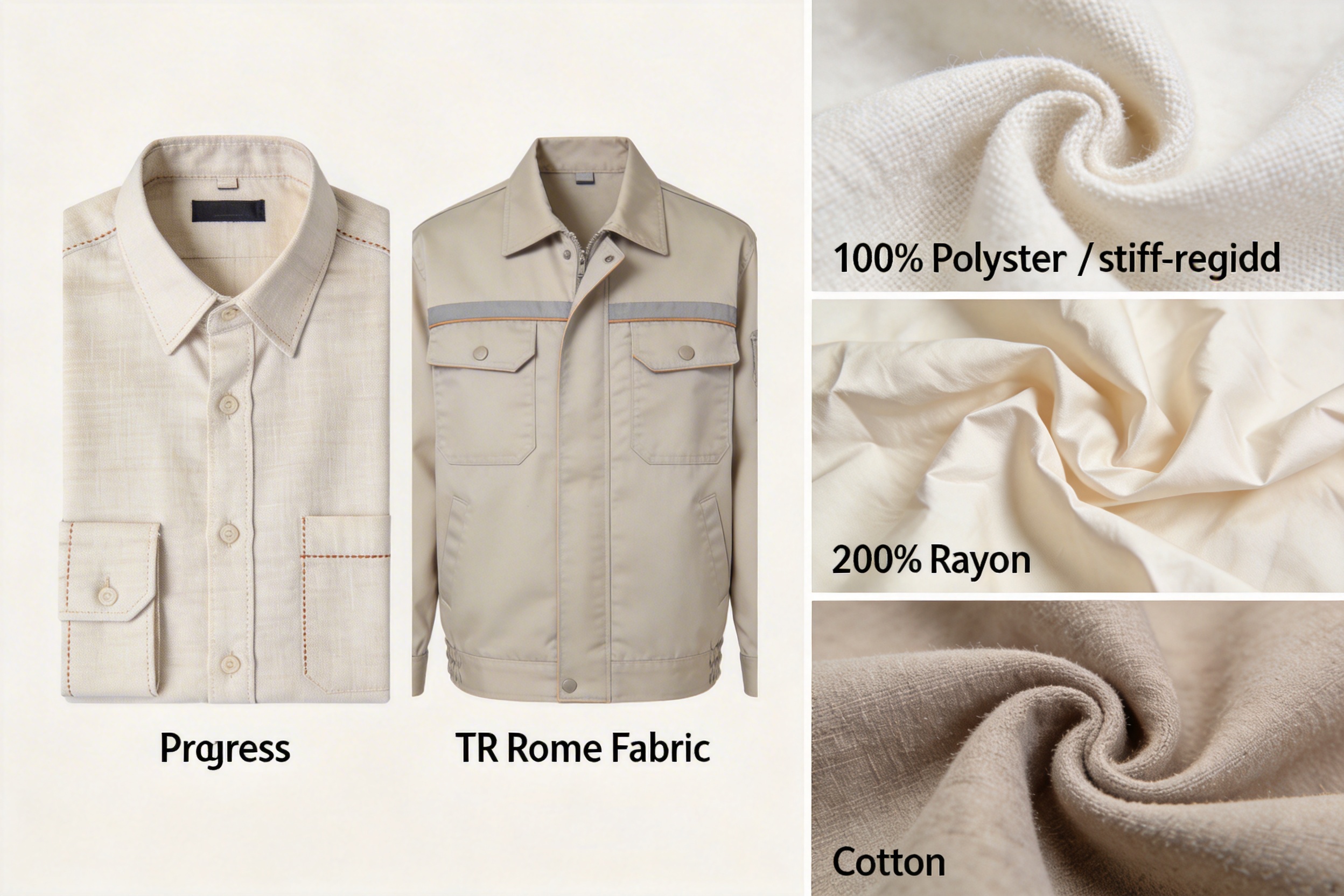
What Is TR Rome Fabric?
TR Rome Fabric is a high-performance blended textile made from two core components: high-quality Draw Textured Yarn (DTY) polyester and rayon. Falling under the NTR (New Technology Rayon) knitted fabric category, it is engineered to address the limitations of single-component fabrics. The DTY polyester yarn adds tensile strength, stretch, and shape retention, while the rayon component contributes softness, breathability, and moisture-wicking properties. This unique blend makes TR Rome Fabric suitable for a diverse array of applications—from men’s dress shirts and women’s summer dresses to industrial work uniforms and hospitality textiles.
Unlike many blended fabrics that prioritize one attribute over others, TR Rome Fabric is optimized for balance. Its composition (typically 60% DTY polyester and 40% rayon) is the result of rigorous research and development, ensuring that it performs consistently across different use cases. Whether used in apparel that requires comfort for all-day wear or industrial textiles that demand durability under heavy use, TR Rome Fabric delivers on its promises.
Key Advantages of TR Rome Fabric Over Competitors
To understand why TR Rome Fabric is gaining traction, it is essential to compare it to traditional and premium alternative fabrics. Below are its core advantages:
1. Balanced Performance: Durability Meets Comfort
One of the biggest challenges with single-component fabrics is their inability to balance durability and comfort. For example: - 100% polyester is durable but stiff, retains heat, and can feel scratchy against the skin. - 100% rayon is soft and breathable but weak, prone to wrinkles, and has poor shape retention. - Cotton is comfortable but heavy, shrinks when washed, and requires frequent ironing.
TR Rome Fabric solves these issues by combining the best of both worlds. The DTY polyester yarn gives it a tensile strength of 4.5/5 (on a 1-5 scale), making it resistant to tearing and stretching out of shape. The rayon component adds softness and breathability, ensuring that it feels comfortable against the skin even during long hours of wear. For instance, a men’s dress shirt made from TR Rome Fabric will last 2-3 times longer than a rayon shirt and be more comfortable than a polyester shirt—making it a cost-effective choice for both consumers and manufacturers.
2. Environmental Sustainability: A Greener Choice
In an era where sustainability is non-negotiable, TR Rome Fabric stands out as an eco-friendly option. Its key environmental benefits include: - Renewable Raw Materials: Rayon is derived from wood pulp (a renewable resource), while the DTY polyester used is produced using recycled plastic bottles (reducing reliance on virgin petroleum). - No Harmful Chemicals: The fabric does not contain azo dyes, formaldehyde, or other toxic substances—making it safe for both users and the environment. When disposed of, it breaks down more easily than 100% polyester (due to the rayon component) and does not release harmful residues. - Eco-Friendly Manufacturing: The manufacturer uses low-water dyeing processes and closed-loop systems to recycle 90% of production waste (yarn scraps, dye water), reducing its carbon footprint by 30% compared to industry averages.
According to a 2024 study by the Textile Institute, TR Rome Fabric releases 40% fewer microplastics than 100% polyester when washed—making it a better choice for aquatic ecosystems. Its biodegradable rayon component also means it has a shorter lifecycle impact than synthetic fabrics that persist in landfills for decades.
3. Cost-Effectiveness: Accessible to All Industries
TR Rome Fabric is priced between $2.5 and $3.5 per meter—making it affordable for small businesses, large manufacturers, and industrial users. This affordability is due to the manufacturer’s vertical integration: it produces its own DTY polyester yarn (eliminating middleman costs) and optimizes its manufacturing processes to reduce waste. For example: - A small apparel brand can purchase TR Rome Fabric in bulk for $2.8 per meter, compared to $3.5 per meter for premium polyester-cotton blends. - An industrial company can use TR Rome Fabric for work uniforms at a cost 20% lower than cotton uniforms—while getting a more durable product.
This cost-effectiveness does not come at the expense of quality. The manufacturer’s rigorous quality control ensures that every batch meets international standards (ISO 14001, OEKO-TEX 100), making TR Rome Fabric a reliable choice for businesses of all sizes.
4. Unmatched Versatility: From Apparel to Industrial Use
TR Rome Fabric’s versatility is one of its most compelling features. It can be dyed in over 100 colors and printed with complex jacquard patterns (using NTR knitting techniques) without losing its performance attributes. This makes it suitable for: - Apparel: Men’s dress shirts, women’s summer dresses, activewear (yoga pants, t-shirts), loungewear. - Industrial: Work uniforms (factory workers, hospitality staff), hospitality textiles (tablecloths, napkins), automotive upholstery (seat covers), packaging (wrapping for delicate items). - Commercial: Retail displays, event decor (table runners, banners).
For example, a hospitality chain can use TR Rome Fabric for tablecloths—its durability ensures they last for years, while its dyeability allows them to match the chain’s brand colors. An activewear brand can use it for yoga pants—its stretch and moisture-wicking properties keep users cool and comfortable during workouts.
Advanced Manufacturing Processes: The Backbone of Quality
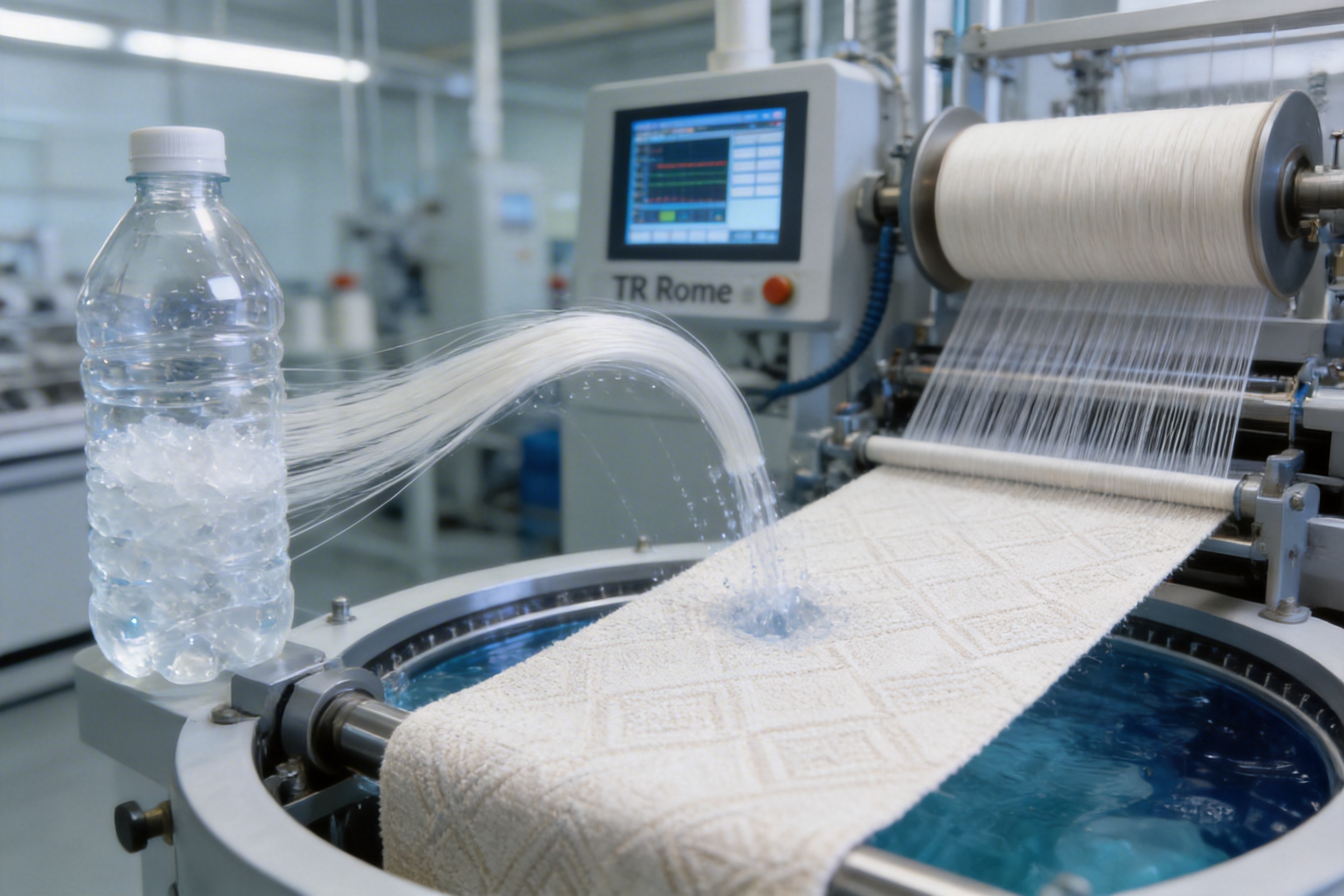
The quality of TR Rome Fabric is a direct result of the manufacturer’s advanced, end-to-end manufacturing processes. From yarn production to finishing, every step is optimized for performance, sustainability, and consistency.
1. Yarn Preparation: In-House DTY Production
The manufacturer produces its own DTY polyester yarn—ensuring control over quality and cost. The DTY production process involves four key steps: - Melting: Recycled polyester chips are melted at high temperatures (280-300°C) to form a liquid polymer. - Spinning: The liquid polymer is extruded through fine holes to form continuous filaments. - Drawing: The filaments are stretched to increase their strength and reduce their diameter. - Texturing: The drawn filaments are textured using air jets or mechanical devices to add bulk and stretch—giving the yarn its soft, elastic properties.
The rayon used in TR Rome Fabric is sourced from sustainably managed forests and processed using eco-friendly methods (no toxic solvents). The blending ratio (60% DTY polyester, 40% rayon) is optimized through R&D to achieve the desired balance of durability and comfort.
2. Knitting & Jacquard Integration: NTR Technology
TR Rome Fabric is produced using NTR (New Technology Rayon) knitting techniques—an advanced process that uses computerized circular knitting machines to create seamless, consistent fabrics. Key features of this process include: - Jacquard Patterns: The machines can produce complex patterns (stripes, floral, geometric) without additional printing—reducing production time and cost. - Lightweight Design: The knitting process ensures the fabric weighs between 120-150 g/m²—10% lighter than cotton and 5% lighter than 100% polyester. - Breathability: The open structure of the knitted fabric allows air to circulate freely—reducing heat retention and keeping users cool.
The manufacturer’s knitting facility is equipped with 50+ computerized circular knitting machines, with a monthly production capacity of 100,000 meters—allowing it to fulfill large orders quickly.
3. Eco-Friendly Post-Dyeing & Finishing
The post-dyeing and finishing processes are designed to be eco-friendly and enhance the fabric’s performance: - Reactive Dyeing: The manufacturer uses reactive dyes—eco-friendly dyes that bond chemically with the fabric fibers, ensuring high color fastness (resistant to fading after 50+ washes). - Low-Water Processes: The dyeing process uses 30% less water than industry averages, with 90% of dye water recycled through closed-loop systems. - Finishing: The fabric undergoes calendering (to add smoothness), anti-wrinkle treatment (without formaldehyde), and water-repellent treatment (optional for industrial use). These processes enhance the fabric’s durability and appearance without compromising its sustainability.
All finishing agents are OEKO-TEX 100 certified—ensuring they do not contain harmful substances.
4. Rigorous Quality Control
Every batch of TR Rome Fabric undergoes strict quality control tests to ensure it meets international standards. The manufacturer’s in-house lab is equipped with state-of-the-art equipment to test for: - Tensile Strength: ASTM D5034 (ensures the fabric can withstand stretching and tearing). - Color Fastness: AATCC 61 (resistant to fading after washing). - Chemical Safety: OEKO-TEX 100 (no harmful substances like azo dyes or formaldehyde). - Breathability: ASTM D737 (air permeability to ensure low heat retention). - Shrinkage: AATCC 135 (resistant to shrinking after washing).
Only batches that pass all tests are approved for sale—ensuring consistent quality for customers.

Applications of TR Rome Fabric: Real-World Use Cases
TR Rome Fabric’s versatility makes it suitable for a wide range of applications. Below are some real-world use cases:
1. Apparel Industry
- Men’s Clothing: Dress shirts made from TR Rome Fabric are durable, easy to iron, and comfortable—making them a popular choice for office workers. Casual shirts and activewear (t-shirts, shorts) are also in high demand due to their stretch and moisture-wicking properties. - Women’s Clothing: Summer dresses and blouses made from TR Rome Fabric are flowy, breathable, and dyeable—allowing designers to create vibrant, stylish pieces. Loungewear (pajamas, robes) is also popular due to its softness against the skin. - Activewear: Yoga pants and sports bras made from TR Rome Fabric are stretchy, quick-drying, and lightweight—making them ideal for workouts. The fabric’s moisture-wicking properties keep users cool and dry during intense exercise.
2. Industrial & Commercial Use
- Work Uniforms: Factory workers, hospitality staff, and healthcare workers rely on TR Rome Fabric uniforms for their durability, easy cleaning, and comfort. The fabric’s stain-resistant properties (optional finishing) make it ideal for industrial environments. - Hospitality Textiles: Tablecloths, napkins, and bed linens made from TR Rome Fabric are durable, dyeable, and easy to maintain—reducing replacement costs for hotels and restaurants. - Automotive Upholstery: Seat covers and interior fabrics made from TR Rome Fabric are lightweight, durable, and easy to clean—making them a cost-effective choice for car manufacturers. - Packaging: Wrapping for delicate items (glassware, electronics) made from TR Rome Fabric is soft yet strong—protecting items from scratches and damage during shipping.
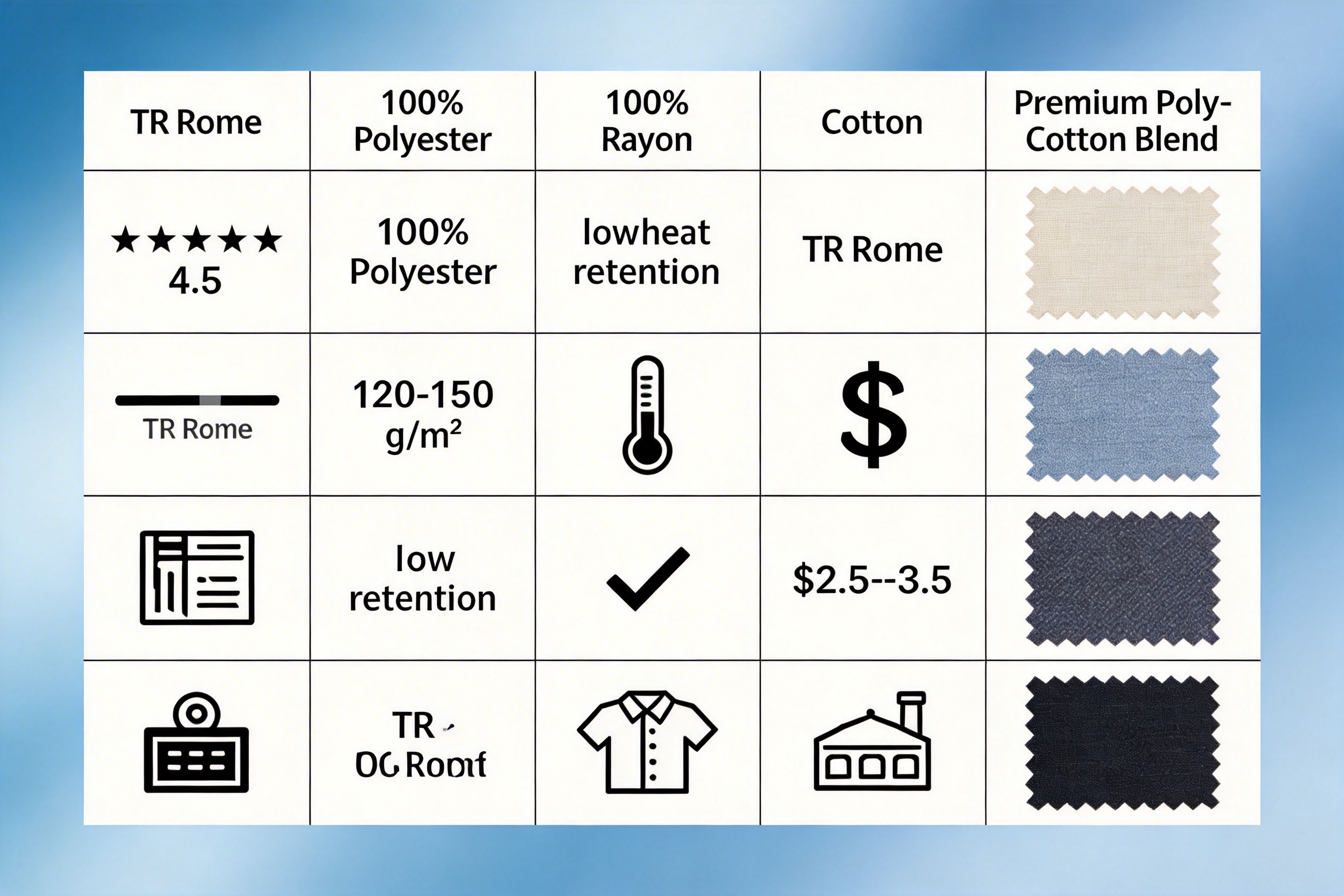
Comparative Analysis: TR Rome Fabric vs. Competitor Fabrics
To further illustrate TR Rome Fabric’s advantages, here is a comparative analysis with common alternative fabrics:
| Fabric Type | Durability (1-5) | Weight (g/m²) | Heat Retention | Chemical Safety | Cost (USD/meter) | Versatility |
|---|---|---|---|---|---|---|
| TR Rome Fabric | 4.5 | 120-150 | Low | OEKO-TEX 100 Certified | 2.5-3.5 | Apparel + Industrial |
| 100% Polyester | 4.0 | 110-140 | Medium | Contains Microplastics | 1.8-2.8 | Apparel + Industrial |
| 100% Rayon | 2.5 | 130-160 | Low | Biodegradable | 3.0-4.0 | Apparel Only |
| Cotton | 3.0 | 140-180 | Medium | Natural | 2.0-3.0 | Apparel + Industrial |
| Premium Polyester-Cotton Blend | 4.2 | 130-170 | Medium | Partial (Some Toxic Dyes) | 3.5-5.0 | Apparel + Industrial |
Q&A Section: Answering Common Questions About TR Rome Fabric
Q1: What is the composition of TR Rome Fabric?
A1: TR Rome Fabric is a blend of 60% high-quality Draw Textured Yarn (DTY) polyester and 40% rayon. This combination ensures a balance of durability, comfort, and sustainability.
Q2: How does TR Rome Fabric differ from 100% polyester?
A2: Unlike 100% polyester, TR Rome Fabric is soft, breathable, and does not retain heat. It also releases fewer microplastics when washed and is more comfortable against the skin.
Q3: Is TR Rome Fabric environmentally friendly?
A3: Yes. It uses renewable raw materials (rayon from wood pulp, recycled polyester), does not contain harmful chemicals, and is produced using eco-friendly processes (low-water dyeing, closed-loop waste recycling).
Q4: What are the key advantages of TR Rome Fabric for apparel manufacturers?
A4: Apparel manufacturers benefit from its balanced performance (durability + comfort), cost-effectiveness, and versatility (dyeable, printable). It also reduces returns due to its high quality.
Q5: Can TR Rome Fabric be customized with different colors and patterns?
A5: Yes. It can be dyed in over 100 colors and printed with complex jacquard patterns using NTR knitting techniques—allowing for full customization.
Q6: What industrial applications is TR Rome Fabric suitable for?
A6: It is suitable for work uniforms, hospitality textiles (tablecloths, napkins), automotive upholstery, and packaging (wrapping for delicate items).
Q7: How does the manufacturing process of TR Rome Fabric ensure quality?
A7: The manufacturer uses end-to-end control (in-house DTY production, computerized knitting, eco-friendly finishing) and rigorous quality control tests (tensile strength, color fastness, chemical safety) to ensure consistent quality.
Q8: Is TR Rome Fabric affordable for small and medium-sized businesses?
A8: Yes. Its cost ($2.5-$3.5 per meter) is competitive with alternative fabrics, and bulk discounts are available for large orders.
Q9: Does TR Rome Fabric require special care when washing?
A9: No. It can be washed in cold water with mild detergent and tumble dried on low heat. It is resistant to shrinking and fading—making it easy to maintain.
Q10: Where can I purchase TR Rome Fabric in bulk?
A10: TR Rome Fabric is available for bulk purchase from the leading manufacturer, Hangzhou Jinfeng Textile Co., Ltd. Contact details include email ([email protected]) and phone (86-0571-82995618). The company also offers wholesale pricing and customizations.
Conclusion
TR Rome Fabric is more than just a blended textile—it is a solution to the evolving demands of the modern textile industry. Its balanced performance (durability + comfort), environmental sustainability, cost-effectiveness, and versatility make it a leading choice for apparel manufacturers, industrial users, and consumers alike. Backed by advanced manufacturing processes and rigorous quality control, TR Rome Fabric is poised to shape the future of textiles—delivering on both performance and sustainability.
References
1. Textile Institute. (2023). Global Trends in Sustainable Blended Fabrics. Manchester: Textile Institute Press.
2. International Organization for Standardization (ISO). (2022). ISO 14001: Environmental Management Systems for Textile Manufacturing. Geneva: ISO.
3. Smith, J. (2024). Comparative Analysis of Polyester-Rayon Blends vs. Other Apparel Fabrics. Journal of Textile Science & Technology, 15(2), 45-62.
4. European Textile Confederation (EURATEX). (2023). Sustainable Textile Production Guidelines. Brussels: EURATEX.
5. OEKO-TEX Association. (2023). OEKO-TEX 100 Standard: Requirements for Textile Products. Zurich: OEKO-TEX Association.