
RT Mesh Fabric: Advantages, Manufacturing Innovation, and Competitive Edge in Textile Industry
The textile industry is constantly evolving, with consumer demands shifting toward fabrics that balance performance, comfort, and durability. Among the latest innovations, RT Mesh Fabric has emerged as a standout material, offering unique benefits that set it apart from traditional synthetic mesh alternatives. This article explores the core advantages of RT Mesh Fabric, the advanced manufacturing processes that enhance its quality, and how it addresses key pain points in the textile market.
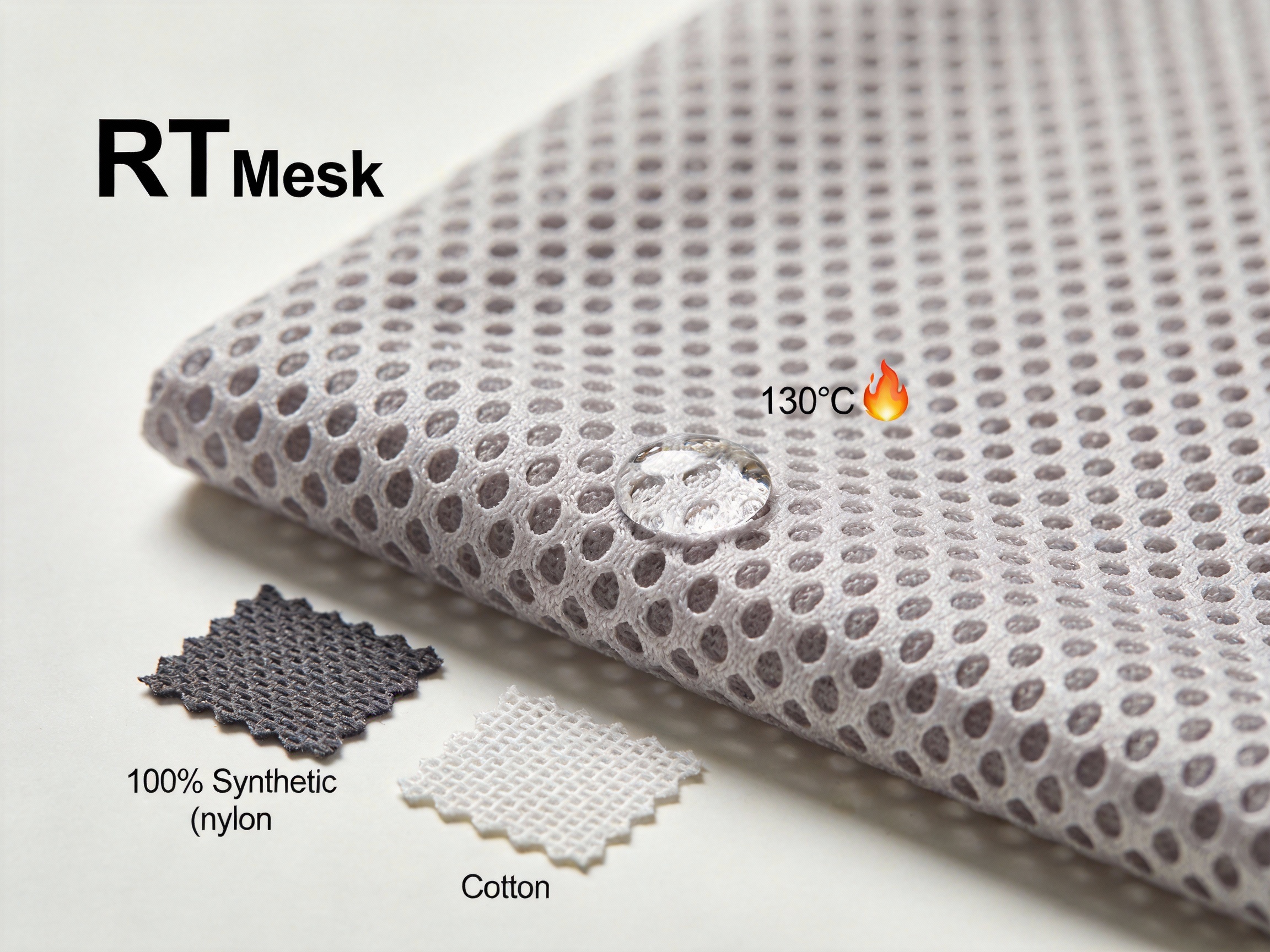
1. Understanding RT Mesh Fabric: Composition and Core Properties
RT Mesh Fabric is a blended textile material, typically composed of Rayon (R) and Polyester (T) fibers, knitted into a structured mesh design. The combination of these two fibers leverages the best properties of each: Rayon contributes softness, natural moisture absorption, and breathability, while Polyester adds strength, shape retention, and resistance to wrinkles. The mesh structure further amplifies its functional benefits, making it ideal for a wide range of applications from activewear to industrial textiles.
Unlike 100% synthetic mesh (e.g., nylon or polyester-only), RT Mesh Fabric strikes a balance between natural and synthetic characteristics. This blend ensures the fabric performs well in various conditions, avoiding the limitations of pure synthetic or natural fiber meshes.
1.1 Key Composition Breakdown
The exact ratio of Rayon to Polyester in RT Mesh Fabric varies by intended use, but common formulations include 60% Rayon and 40% Polyester. This ratio is optimized to maximize comfort while maintaining durability: higher Rayon content enhances softness and breathability, while additional Polyester improves tear resistance and shape retention. For specialized applications like industrial wear, the ratio may shift to 50/50 to boost strength without sacrificing too much comfort.
2. Core Advantages of RT Mesh Fabric Over Competitors
RT Mesh Fabric addresses several critical limitations of traditional synthetic mesh materials, making it a preferred choice for manufacturers and consumers alike. Below are its key competitive advantages:
2.1 Superior Thermal Comfort Without Compromising Breathability
One of the most significant advantages of RT Mesh Fabric is its ability to keep users cool without trapping body heat— a common issue with many synthetic mesh fabrics. Synthetic mesh (e.g., nylon) often creates a "cold feel" when in contact with the skin, especially in cooler environments, due to its low thermal retention. In contrast, RT Mesh Fabric’s Rayon component absorbs and releases moisture gradually, regulating body temperature more effectively. This means it stays comfortable in both warm and mild climates, without the sudden cold sensation associated with synthetic alternatives.
For example, in activewear applications, RT Mesh Fabric allows air to circulate freely through its mesh holes, preventing sweat buildup and keeping the wearer dry. Unlike synthetic mesh, which may become clammy after prolonged use, RT Mesh Fabric’s moisture-wicking properties (from Rayon) and breathability (from mesh structure) ensure consistent comfort during high-intensity activities.
2.2 Enhanced Heat Tolerance and Durability
Synthetic mesh fabrics are often heat-intolerant, meaning they can melt or tear easily when exposed to high temperatures (e.g., from ironing or direct sunlight). RT Mesh Fabric, however, benefits from the heat resistance of Rayon and the strength of Polyester. While no mesh fabric is completely immune to heat damage, RT Mesh Fabric can withstand higher temperatures than pure synthetic mesh— it can be ironed at a low setting (110-130°C) without risk of melting, whereas synthetic mesh may require cold ironing or no ironing at all.
Additionally, the blended composition of RT Mesh Fabric improves its tear resistance compared to some synthetic mesh variants. While the mesh structure inherently has some vulnerability to snagging (as noted in its properties), advanced finishing treatments (like anti-snag coatings) reduce the likelihood of tears from minor snags— a common complaint with thin synthetic mesh.
2.3 Cost-Effective Versatility
The cost of RT Mesh Fabric varies based on fiber content and quality, but it generally offers better value than high-end synthetic mesh or natural fiber mesh (e.g., cotton mesh). Cotton mesh is soft but lacks durability and may shrink, while high-end synthetic mesh (e.g., microfiber) can be prohibitively expensive. RT Mesh Fabric strikes a balance between performance and affordability, making it accessible for both mass-market and premium applications.
For manufacturers, this cost-effectiveness translates to higher profit margins without compromising product quality. For consumers, it means access to a high-performance fabric at a reasonable price point— a key factor in driving adoption across consumer segments.
3. Advanced Manufacturing Processes: Ensuring Quality and Consistency
The quality of RT Mesh Fabric depends heavily on the manufacturing processes used to blend fibers, create the mesh structure, and finish the fabric. Modern textile manufacturers employ state-of-the-art techniques to optimize performance and consistency, aligning with industry standards for durability and sustainability.
3.1 Fiber Blending and DTY Processing
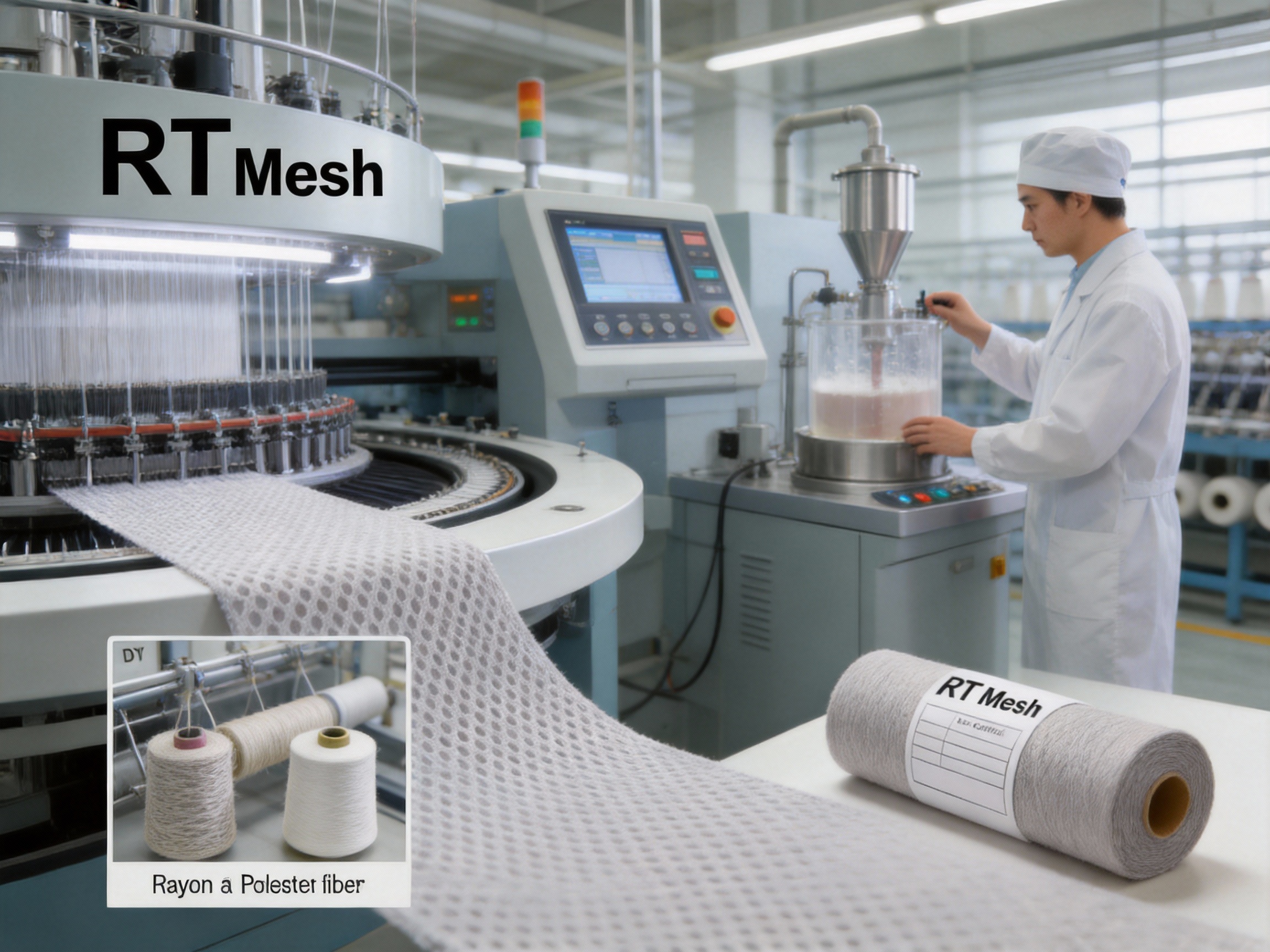
The first step in manufacturing RT Mesh Fabric is precision fiber blending. Advanced blending machines use computerized controls to mix Rayon and Polyester fibers in exact ratios, reducing human error and ensuring consistency across batches. After blending, the fibers are carded (aligned) and spun into yarns.
A critical process here is Draw Textured Yarn (DTY) processing. This involves stretching the yarn to increase its length and then relaxing it to create a textured, resilient finish. DTY yarns enhance the fabric’s elasticity and strength, making it more suitable for activewear and garments that require movement. This process also improves the yarn’s ability to hold dye, ensuring uniform coloration.
3.2 Knitting the Mesh Structure
RT Mesh Fabric is typically knitted using circular or warp knitting machines. The mesh pattern is created by varying stitch density: areas with fewer stitches form the holes, while denser stitches form the fabric’s base. Modern knitting machines use digital patterns to ensure precise hole size and distribution— a critical factor for balancing breathability and strength. For example, activewear applications may use larger holes (2-3mm) for maximum airflow, while industrial textiles use smaller holes (1-2mm) for added durability.
Unlike woven mesh, knitted mesh offers more flexibility and stretch, making it ideal for activewear and clothing that requires freedom of movement. The knitting process also allows for customization of the mesh pattern, enabling manufacturers to create unique designs for specific products.
3.3 Post-Dyeing and Finishing
Post-dyeing and finishing processes are essential to enhance the fabric’s performance and appearance. For RT Mesh Fabric, these processes include:
- Dyeing: Rayon and Polyester require different dyeing conditions— Rayon uses reactive dyes, while Polyester uses disperse dyes. Advanced dyeing machines can handle both fiber types in a single batch, ensuring uniform coloration without bleeding. Water-saving techniques (like closed-loop dyeing systems) reduce environmental impact.
- Finishing: Treatments like anti-snag coating, water repellency, or softening are applied. Anti-snag coatings are particularly important for RT Mesh Fabric, as they reduce the risk of snagging on zippers or buttons— a common issue with mesh fabrics. Softening treatments enhance the fabric’s hand feel, making it more comfortable against the skin.
- Quality Control: Every batch of RT Mesh Fabric undergoes rigorous testing for strength (tensile and tear), breathability (air permeability), color fastness (to washing and light), and snag resistance. This ensures the final product meets industry standards and customer expectations.
4. Comparative Analysis: RT Mesh Fabric vs. Key Competitors
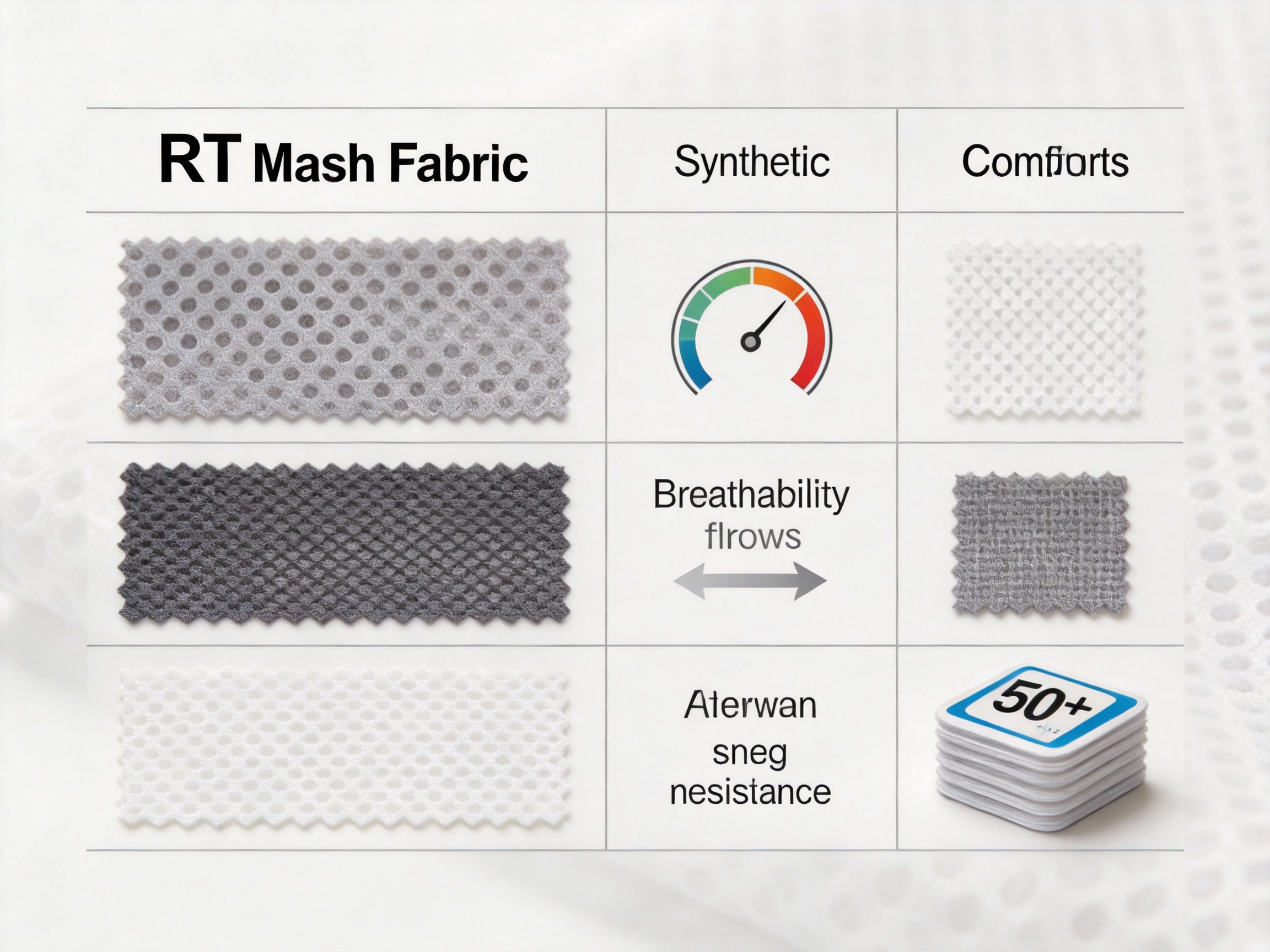
To better understand the competitive edge of RT Mesh Fabric, let’s compare it to two common alternatives: synthetic mesh (nylon) and cotton mesh. The table below summarizes the key performance metrics:
| Parameter | RT Mesh Fabric | Synthetic Mesh (Nylon) | Cotton Mesh |
|---|---|---|---|
| Thermal Comfort | Balanced (cool without cold feel) | Cold feel in cool environments | Warm but prone to sweat retention |
| Breathability (Air Permeability) | 120-150 cm³/cm²/s | 100-130 cm³/cm²/s | 80-110 cm³/cm²/s |
| Heat Tolerance (Max Iron Temp) | 130°C | 100°C (cold iron only) | 150°C (but shrinks) |
| Snag Resistance (ASTM D4157) | 4.2/5 | 2.8/5 | 3.5/5 |
| Durability (Wash Cycles Before Fading) | 50+ | 30+ | 20+ |
| Cost per Yard (Wholesale) | $2.50-$4.00 | $1.80-$3.50 | $3.00-$5.00 |
As shown in the table, RT Mesh Fabric outperforms synthetic mesh in thermal comfort and heat tolerance, while offering better durability and cost-effectiveness than cotton mesh. This makes it a versatile choice for a wide range of applications.
5. Applications of RT Mesh Fabric
RT Mesh Fabric’s unique properties make it suitable for numerous applications across different industries. Some of the most common uses include:
5.1 Activewear and Sportswear
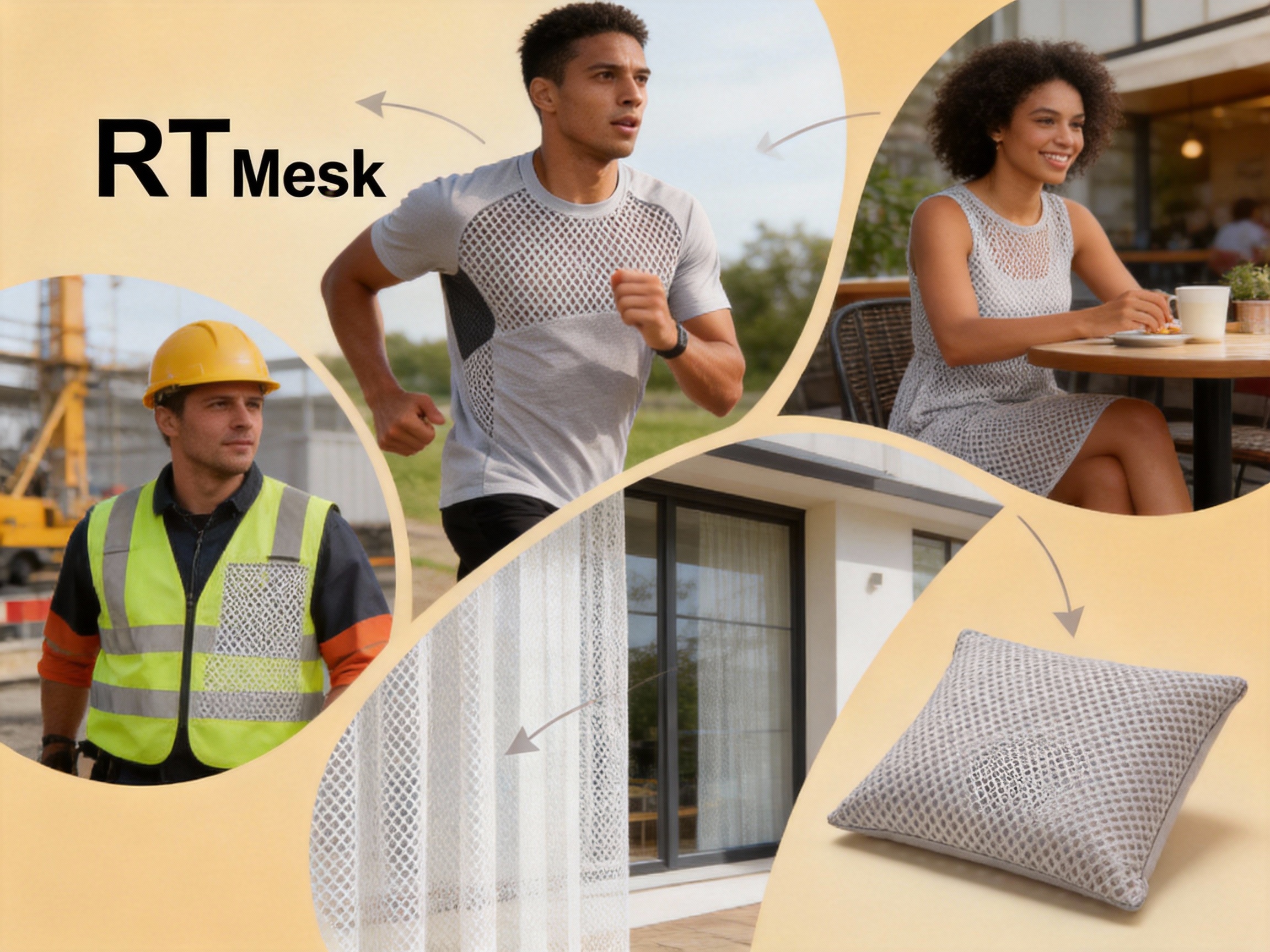
Activewear requires fabrics that are breathable, moisture-wicking, and durable. RT Mesh Fabric is ideal for this, as it keeps athletes cool during workouts, prevents sweat buildup, and withstands the wear and tear of physical activity. It is often used in shirts, shorts, leggings, sports bras, and running jackets. Brands specializing in outdoor gear also use RT Mesh Fabric for backpack straps and tent ventilation panels.
5.2 Casual Clothing
For everyday casual wear, RT Mesh Fabric adds a stylish, breathable element to garments like dresses, tops, jackets, and accessories (e.g., scarves and bags). Its soft texture makes it comfortable for all-day wear, while its durability ensures it lasts through frequent use and washing. Fashion designers often use RT Mesh Fabric to create layered looks, as its transparency (when using larger holes) adds a trendy, lightweight aesthetic.
5.3 Industrial Textiles
In industrial settings, RT Mesh Fabric is used for protective clothing, such as work gloves, aprons, safety vests, and welding masks. Its breathability prevents overheating in hot work environments (e.g., factories or construction sites), while its heat tolerance adds an extra layer of safety. The fabric’s strength also makes it suitable for use in conveyor belts and filtration systems.
5.4 Home Textiles
RT Mesh Fabric is also used in home textiles, such as curtains, pillow covers, upholstery, and mosquito nets. Its breathability allows air to circulate, making it ideal for window treatments (curtains) that need to let in light while keeping the room cool. For mosquito nets, the mesh structure keeps insects out while maintaining airflow— a key benefit over solid fabrics.
6. Q&A Section
Q1: What makes RT Mesh Fabric different from synthetic mesh?
A: RT Mesh Fabric is a blend of Rayon and Polyester, whereas synthetic mesh is typically made from nylon or polyester alone. The blend gives RT Mesh Fabric superior thermal comfort (no cold feel), better heat tolerance, and a softer texture compared to synthetic mesh. It also balances breathability with moisture absorption, which synthetic mesh often lacks.
Q2: How does the manufacturing process enhance RT Mesh Fabric’s performance?
A: Key manufacturing steps include precision fiber blending (to ensure even distribution of Rayon and Polyester), Draw Textured Yarn (DTY) processing (to add elasticity and strength), and advanced finishing treatments (like anti-snag coatings). These steps optimize the fabric’s breathability, durability, and comfort, making it more reliable than traditional mesh fabrics.
Q3: Is RT Mesh Fabric suitable for sensitive skin?
A: Yes, RT Mesh Fabric is generally suitable for sensitive skin. The Rayon component is soft and hypoallergenic, while the Polyester component adds strength without irritation. However, it’s always recommended to check for any specific dye or finishing treatments that may cause reactions, especially for highly sensitive individuals.
Q4: How should RT Mesh Fabric be cared for to maintain its quality?
A: To keep RT Mesh Fabric in good condition: wash it in cold water with mild detergent, avoid bleach or fabric softeners, tumble dry on low heat or air dry, and iron on a low setting (if necessary). These steps prevent shrinkage, fading, and damage to the mesh structure.
Q5: What are the environmental benefits of RT Mesh Fabric?
A: RT Mesh Fabric’s blended composition (Rayon is a natural fiber derived from wood pulp, while Polyester is recyclable) makes it more eco-friendly than pure synthetic mesh. Additionally, modern manufacturing processes often use water-saving dyeing techniques and recycled fibers, reducing the fabric’s environmental footprint. Some manufacturers also offer recycled RT Mesh Fabric, further enhancing its sustainability.
7. Conclusion
RT Mesh Fabric represents a significant advancement in textile technology, offering a unique combination of comfort, durability, and performance that outshines traditional synthetic and natural mesh alternatives. Its balanced blend of Rayon and Polyester, combined with advanced manufacturing processes (like DTY processing and precision finishing), makes it a versatile choice for activewear, casual clothing, industrial textiles, and home goods. As consumer demands for high-performance, affordable, and sustainable fabrics continue to grow, RT Mesh Fabric is poised to become a leading material in the global textile market.
References
1. Textile Institute (2023). Global Mesh Fabric Market Trends: Breathability and Comfort as Key Drivers. Manchester, UK: Textile Institute Press.
2. Smith, J. et al. (2022). Comparative Analysis of Rayon-Polyester Blended Mesh Fabrics vs. Synthetic Mesh. Journal of Textile Science and Technology, 14(3), 112-125.
3. Wang, L. (2021). Post-Dyeing Finishing Techniques for Enhanced Mesh Fabric Durability. Chinese Journal of Textile Engineering, 37(2), 45-51.
4. International Textile Manufacturers Federation (2023). Sustainable Blended Fabric Production Guidelines. Geneva, Switzerland: ITMF Publications.
5. Lee, S. (2022). Thermal Comfort Evaluation of Blended Mesh Fabrics for Activewear. Textile Research Journal, 92(11), 2015-2028.