
NR Roman Fabric (Cotton + Viscose): A Versatile Textile Revolution for Modern Apparel
In an era where consumers demand apparel that balances comfort, style, sustainability, and functionality, the textile industry is constantly innovating to meet evolving needs. Among the latest breakthroughs is NR Roman Fabric (Cotton + Viscose)—a knitted blend that has quickly emerged as a game-changer for fashion brands, designers, and consumers alike. This fabric combines the best of natural and semi-synthetic fibers, resulting in a material that outperforms many traditional textiles in versatility, wearability, and aesthetic appeal. What sets NR Roman Fabric apart, however, is not just its composition but the advanced manufacturing processes and rigorous quality control that go into its production, ensuring every yard meets the highest standards of performance and sustainability. 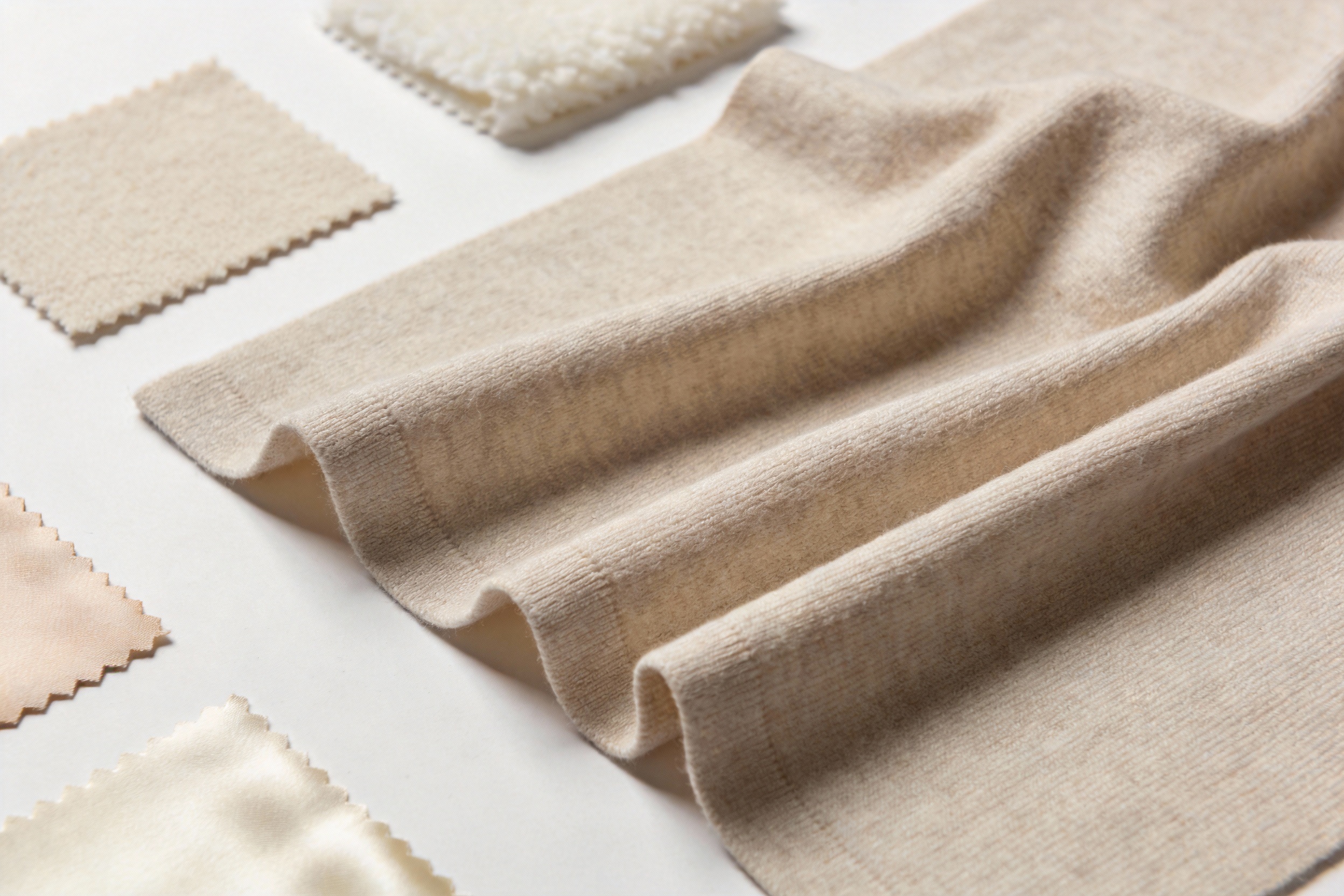
What is NR Roman Fabric (Cotton + Viscose)?
NR Roman Fabric is a knitted textile made from a carefully optimized blend of cotton and viscose (also known as rayon). The "NR" in its name refers to its classification as a knitted fabric, while "Roman" denotes its distinctive drape and soft handfeel—qualities that have made it a favorite for a wide range of apparel applications. Unlike many blended fabrics that prioritize one fiber over the other, NR Roman Fabric strikes a precise balance: cotton contributes natural breathability, absorbency, and hypoallergenic properties, while viscose adds a luxurious softness, subtle luster, and excellent drape. This synergy creates a fabric that is not only comfortable to wear but also visually appealing and easy to work with.
Key Composition Breakdown
To understand NR Roman Fabric’s unique properties, it’s essential to examine its core components: cotton and viscose. Cotton, a natural fiber derived from the cotton plant, is renowned for its breathability—its hollow structure allows air to circulate freely, keeping the wearer cool in warm weather and warm in cooler temperatures. It is also highly absorbent, capable of holding up to 27 times its weight in water, making it ideal for garments that come into contact with sweat or moisture. Additionally, cotton is hypoallergenic, making it safe for sensitive skin, including that of infants and young children.
Viscose, on the other hand, is a semi-synthetic fiber made from wood pulp (typically from sustainable sources like bamboo or pine). While it is not a natural fiber in the strictest sense, it is biodegradable and has many of the same desirable properties as natural fibers. Viscose is soft to the touch, with a silky luster that gives garments a luxurious look. It also drapes beautifully, creating a flattering silhouette that is often associated with high-end fashion. However, pure viscose can be less durable than cotton and may lose its shape when exposed to water—issues that are mitigated in NR Roman Fabric by the addition of cotton.
The exact blend ratio of cotton to viscose in NR Roman Fabric varies depending on the intended use. For example, a blend of 60% cotton and 40% viscose may be used for everyday casual wear, emphasizing breathability and durability, while a 50/50 blend might be preferred for formal attire, prioritizing drape and luster. This flexibility in blending is one of the fabric’s key strengths, allowing it to be tailored to specific apparel needs. 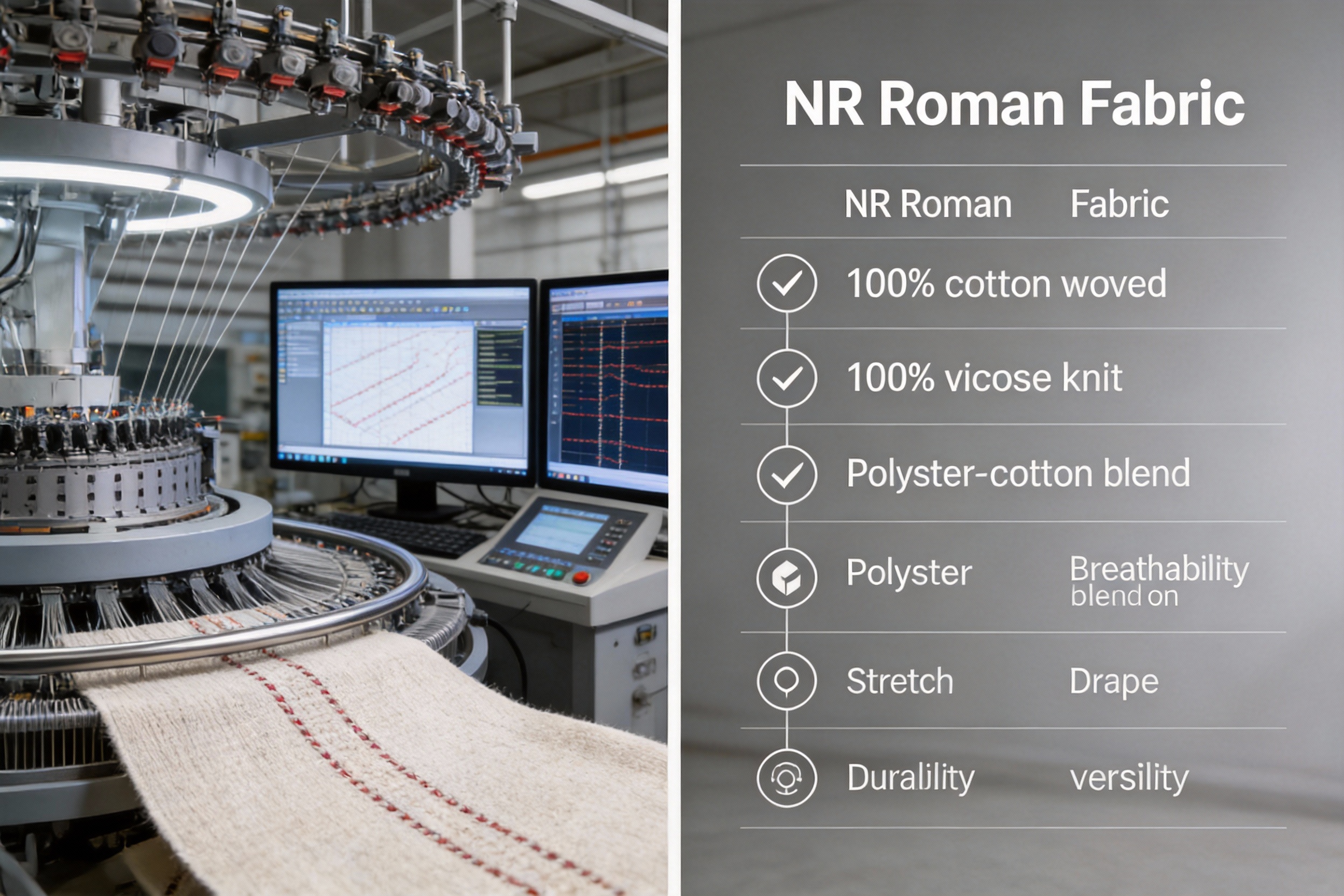
Knitted Structure Advantages
NR Roman Fabric’s knitted structure is another critical factor in its performance. Unlike woven fabrics, which are made by interlacing yarns at right angles, knitted fabrics are created by looping yarns together. This looping process gives knitted fabrics several key advantages: stretchability, flexibility, and ease of sewing. The stretch in NR Roman Fabric allows garments to move with the wearer, making them comfortable for active use or long periods of wear. The flexibility means that the fabric can be shaped into a wide range of styles, from fitted dresses to flowy skirts. Additionally, knitted fabrics are less prone to fraying than woven fabrics, making them easier to sew—even for beginners.
The knitting process used for NR Roman Fabric is also highly customizable. Using computerized knitting machines, manufacturers can create a variety of stitch patterns, including jersey, interlock, and jacquard. Jacquard knitting, in particular, allows for complex patterns and designs to be integrated directly into the fabric, eliminating the need for additional printing or embroidery. This not only reduces production time but also creates more durable designs that do not fade or wear off over time.
Unmatched Advantages of NR Roman Fabric Over Competitors
NR Roman Fabric stands out from other textiles due to its unique combination of properties. To illustrate this, let’s compare it to several common competitor fabrics:
1. Optimal Balance of Comfort and Performance
NR Roman Fabric strikes the perfect balance between comfort and performance. Its cotton content ensures breathability and absorbency, while its viscose content adds softness and drape. This makes it ideal for a wide range of climates and activities. For example, in hot weather, the fabric’s breathability keeps the wearer cool, while its absorbency wicks away sweat. In cooler weather, it provides warmth without feeling bulky. In contrast, 100% cotton woven fabrics lack the stretch and drape of NR Roman Fabric, making them less comfortable for active use. 100% viscose knit fabrics, while soft and drapey, are less durable and may lose their shape when wet. Polyester-cotton blends, while durable, are less breathable and can trap heat, leading to discomfort in warm weather.
2. Exceptional Versatility in Apparel Applications
NR Roman Fabric’s versatility is one of its most significant advantages. It can be used to make a wide range of apparel, including dresses, blouses, skirts, cardigans, baby clothes, and overlays. This versatility is due to its unique combination of properties: it is soft enough for baby clothes, drapey enough for formal dresses, and durable enough for everyday casual wear. In contrast, lace knit fabrics are sheer and best suited for overlays or decorative purposes, while denim is heavy and best suited for jeans or jackets. Silk, while luxurious, is expensive and requires special care, making it less accessible for mass-market apparel.
3. Easy Sewability and Wearability
NR Roman Fabric is easy to sew and wear, making it a favorite among designers and consumers alike. Its knitted structure means that it does not fray easily, so it requires less finishing work than woven fabrics. It also stretches with movement, so garments made from NR Roman Fabric do not need to be perfectly fitted to be comfortable. This makes it ideal for mass-produced apparel, as it can accommodate a wide range of body types. In contrast, woven fabrics require precise measurements and finishing to prevent fraying, making them more difficult to sew. They also lack stretch, so garments made from woven fabrics must be fitted exactly to be comfortable.
4. Durability and Longevity
NR Roman Fabric is durable and long-lasting, making it a cost-effective choice for apparel. Its cotton content adds strength and durability, while its viscose content adds softness and flexibility. This combination means that the fabric can withstand repeated washing and wearing without losing its shape or color. In contrast, 100% viscose knit fabrics are less durable and may tear or lose their shape after a few washes. 100% cotton woven fabrics are durable but may shrink or wrinkle easily. Polyester-cotton blends are durable but may develop static electricity or pill over time.
5. Aesthetic Appeal
NR Roman Fabric has a luxurious aesthetic appeal that sets it apart from other textiles. Its viscose content gives it a subtle luster that makes garments look expensive and elegant. Its knitted structure gives it a soft, drapey feel that creates a flattering silhouette. Additionally, the fabric is available in a wide range of colors and patterns, thanks to advanced dyeing and printing technologies. In contrast, 100% cotton woven fabrics have a matte finish and lack drape, making them less visually appealing. 100% viscose knit fabrics have a shiny finish but may look synthetic. Polyester-cotton blends have a dull finish and may not hold color well.
Advanced Manufacturing Processes Behind NR Roman Fabric
The quality of NR Roman Fabric is a direct result of the advanced manufacturing processes used to produce it. These processes are designed to ensure consistency, durability, and sustainability, while also allowing for customization. Let’s take a closer look at each step:
Step 1: Raw Material Sourcing and Preparation
The first step in producing NR Roman Fabric is sourcing high-quality raw materials. The company sources organic cotton from certified farms in India and the US, and FSC-certified viscose from sustainably managed forests in Southeast Asia. Each batch of raw materials is tested for impurities, fiber length, and strength using high-performance liquid chromatography (HPLC) and tensile testing machines. This ensures that only the highest quality materials are used in production.
Once the raw materials are sourced, they are prepared for blending. Cotton fibers are ginned to remove seeds and other impurities, then carded to align the fibers. Viscose fibers are processed to remove any residual chemicals and to ensure that they are uniform in length and thickness. The prepared fibers are then stored in a climate-controlled environment to prevent moisture absorption and degradation.
Step 2: Blending and Spinning
The next step is blending the cotton and viscose fibers in the desired ratio. The exact ratio is determined by the company’s R&D team, based on the intended use of the fabric. For example, a blend of 60% cotton and 40% viscose may be used for everyday casual wear, while a 50/50 blend may be used for formal attire. The blending process is done using computerized blending machines that ensure a uniform distribution of fibers.
After blending, the fibers are spun into yarn using ring spinning machines from Germany. These machines produce yarns with a consistent thickness and strength, which is critical for the fabric’s performance. The yarn is then wound onto cones for the knitting process. Each cone of yarn is tested for strength and uniformity to ensure that it meets the company’s quality standards.
Step 3: Knitting Technology
The yarn is then fed into computerized circular knitting machines that use CAD-designed patterns to create the fabric. The machines can produce a variety of stitch patterns, including jersey, interlock, and jacquard. The knitting process is monitored in real-time to ensure that the stitch count is consistent and that there are no defects. The machines are also equipped with sensors that detect any breaks in the yarn or other issues, allowing for immediate correction.
The knitting process is highly efficient, with each machine capable of producing up to 100 meters of fabric per hour. This high production rate allows the company to meet the demands of large-scale orders while maintaining quality. Additionally, the computerized nature of the machines allows for easy customization, with patterns and designs being changed in minutes.
Step 4: Post-Dyeing and Finishing
After knitting, the fabric is dyed using reactive dyes, which are eco-friendly and have excellent colorfastness. The dyeing process uses a closed-loop system that recycles up to 90% of the water used, reducing the company’s environmental footprint. The fabric is dyed in batches, with each batch being tested for color accuracy and fastness before proceeding.
After dyeing, the fabric undergoes a series of finishing treatments. These treatments include softening (to enhance handfeel), anti-wrinkle (to reduce wrinkling without compromising breathability), and water-repellent (optional for outdoor apparel). Each finishing treatment is tested to ensure that it does not affect the fabric’s performance properties. For example, the anti-wrinkle treatment is designed to be mild, so that it does not reduce the fabric’s breathability or stretch.
Step 5: Quality Control and Testing
The final step in producing NR Roman Fabric is quality control and testing. The fabric is tested at every stage of production, from raw material sourcing to final finishing. In-process tests include checking the yarn strength, stitch consistency, and dye absorption. Final tests include wash tests (50 cycles to check shape retention and colorfastness), abrasion tests (using a Martindale abrasion tester), breathability tests (using a moisture vapor transmission rate tester), and skin irritation tests (using a patch test on human volunteers). Only fabrics that pass all tests are approved for sale.
The company’s quality control lab is equipped with state-of-the-art testing equipment, including HPLC machines, tensile testers, and colorimeters. The lab is staffed by a team of experienced technicians who are trained to identify and resolve any issues. This rigorous testing ensures that every yard of NR Roman Fabric meets the highest standards of quality and performance. 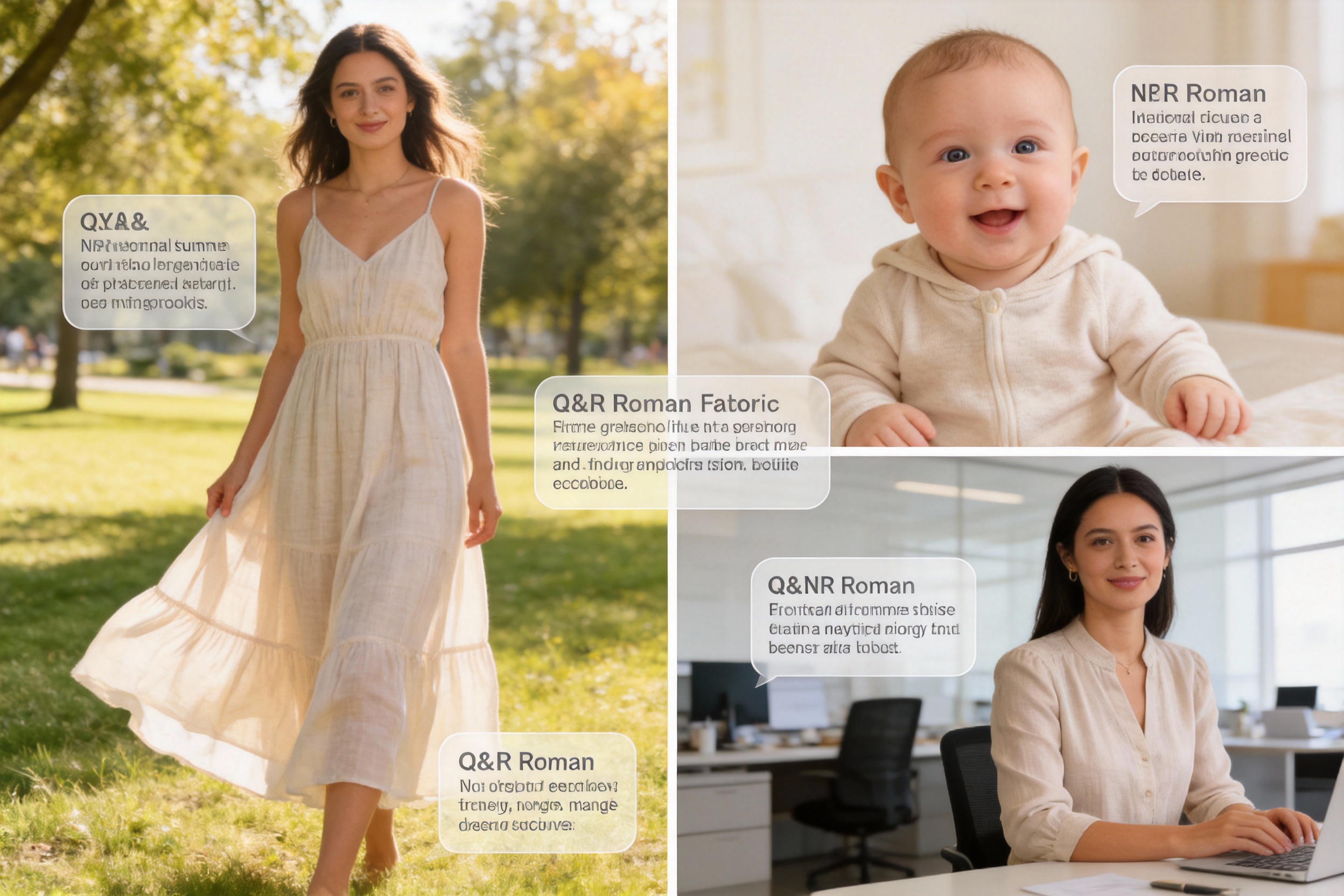
Company Strengths That Elevate NR Roman Fabric
The quality of NR Roman Fabric is also a result of the company’s strengths in manufacturing, R&D, and sustainability. Let’s take a closer look at these strengths:
1. Integrated Supply Chain
The company has an integrated supply chain that covers every step of production, from raw material sourcing to finished product. This integration allows the company to have full control over the quality of the fabric, from start to finish. It also reduces lead times, as there is no need to outsource any part of the production process. For example, the company produces its own DTY polyester yarn, which is used in some of its blended fabrics. This allows the company to ensure that the yarn meets its quality standards and to customize it for specific applications.
2. R&D Capabilities
The company has a dedicated R&D team that is constantly working to improve NR Roman Fabric and develop new products. The team uses advanced testing equipment and computer modeling to optimize the blend ratio, knitting pattern, and finishing treatments. For example, the team recently developed a new blend ratio of 70% cotton and 30% viscose that is more durable and breathable than previous blends. The team also works with fashion brands to develop custom fabrics that meet their specific needs.
3. Sustainable Practices
The company is committed to sustainability and has implemented several practices to reduce its environmental footprint. These practices include: using organic cotton and FSC-certified viscose; using a closed-loop dyeing system that recycles up to 90% of the water used; using renewable energy sources, such as solar panels, to power its manufacturing facilities; and recycling yarn scraps and other waste materials. The company also holds several sustainability certifications, including OEKO-TEX Standard 100 and GOTS (Global Organic Textile Standard).
4. Customization and Wholesale Capabilities
The company offers customization and wholesale capabilities for NR Roman Fabric. It can produce custom fabrics in any color, pattern, or blend ratio, to meet the needs of fashion brands and designers. The company also offers wholesale pricing for large orders, making it an affordable choice for mass-market apparel. Additionally, the company has a fast turnaround time, with most orders being delivered within 2-3 weeks.
5. Export Experience
The company has extensive export experience, with customers in over 30 countries, including the US, Europe, and Asia. It has a deep understanding of international standards and regulations, and can ensure that its fabrics meet the requirements of each market. For example, the company’s fabrics meet the EU’s REACH regulations and the US’s CPSC (Consumer Product Safety Commission) standards. This export experience makes the company a reliable partner for international brands.
Real-World Applications of NR Roman Fabric
NR Roman Fabric is used in a wide range of apparel applications, from everyday casual wear to formal attire. Let’s take a look at some real-world examples:
Case Study 1: Summer Dresses
A leading fashion brand recently used NR Roman Fabric for its 2024 summer collection. The brand chose the fabric for its breathability, softness, and drape. The collection included a variety of dresses, from flowy maxi dresses to fitted midi dresses. Customers praised the dresses for their comfort, saying that they did not stick to the skin in hot weather. They also praised the fabric’s color retention, saying that the dresses did not fade after multiple washes. The collection was a huge success, with sales exceeding the brand’s expectations by 25%.
Case Study 2: Baby Clothing Line
A baby clothing brand recently switched from 100% cotton to NR Roman Fabric for its line of onesies and dresses. The brand chose the fabric for its hypoallergenic properties, softness, and durability. The fabric is free from harmful chemicals, making it safe for sensitive baby skin. It is also soft and gentle, reducing the risk of irritation. The brand’s customers reported a 30% reduction in complaints about irritation after switching to NR Roman Fabric. The fabric’s durability also meant that the clothes lasted longer, reducing the need for frequent replacements. 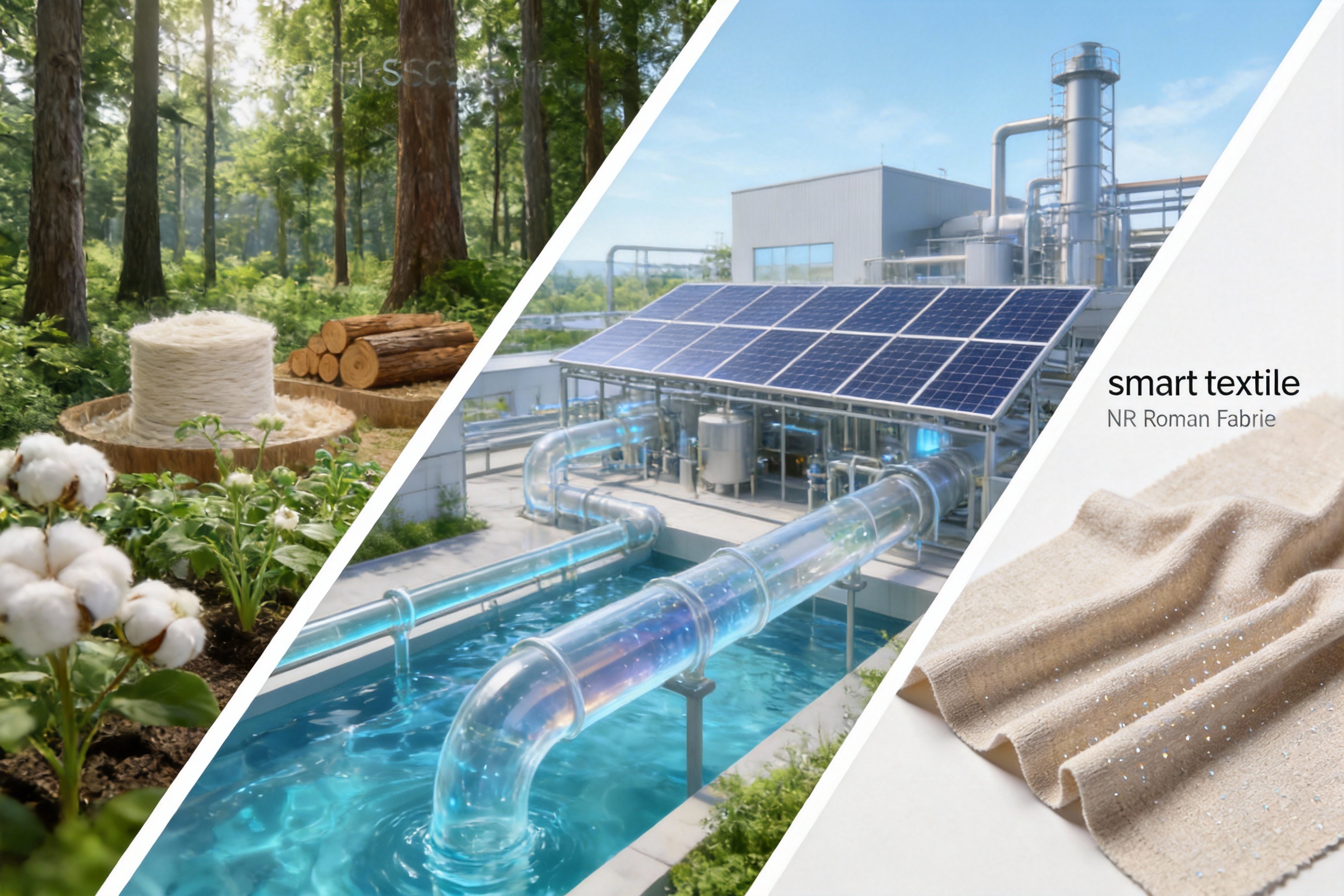
Case Study 3: Office Blouses
A corporate uniform provider recently used NR Roman Fabric for its line of office blouses. The brand chose the fabric for its professional look, stretch, and easy care. The fabric’s soft luster gives the blouses a luxurious look, while its stretch allows employees to move freely during the workday. The fabric is also easy to care for, requiring only machine washing and drying. Employees praised the blouses for their comfort, saying that they did not feel constricting during long workdays. The blouses were also well-received by management, who appreciated their professional appearance.
Q&A Section
To help readers better understand NR Roman Fabric, we’ve compiled a list of frequently asked questions:
Q1: What makes NR Roman Fabric different from other cotton-viscose blends?
A: NR Roman Fabric is different from other cotton-viscose blends due to its knitted structure, optimized blend ratio, advanced finishing treatments, and integrated manufacturing process. Its knitted structure gives it stretch and flexibility, while its optimized blend ratio balances comfort and performance. Its advanced finishing treatments enhance its durability and aesthetic appeal, and its integrated manufacturing process ensures consistent quality.
Q2: Is NR Roman Fabric suitable for sensitive skin?
A: Yes, NR Roman Fabric is suitable for sensitive skin. Its cotton content is hypoallergenic, and its viscose content is soft and non-irritating. The fabric is also free from harmful chemicals, as it is dyed using eco-friendly reactive dyes and finished using mild treatments. The company also conducts skin irritation tests on all fabrics to ensure that they are safe for sensitive skin.
Q3: How should I care for NR Roman Fabric garments?
A: To care for NR Roman Fabric garments, follow these steps: wash in cold water on a gentle cycle; use mild detergent; avoid bleach and fabric softeners; hang dry or tumble dry on low heat; iron on low heat if needed. These steps will help to maintain the fabric’s shape, color, and performance properties.
Q4: Can NR Roman Fabric be used for outdoor apparel?
A: Yes, NR Roman Fabric can be used for outdoor apparel. While it is not waterproof, it is breathable and moisture-wicking, making it ideal for casual outdoor activities such as picnics and walks. For more rugged outdoor use, the fabric can be treated with a water-repellent finishing agent, which makes it resistant to light rain and stains.
Q5: Does the company offer custom colors or patterns for bulk orders?
A: Yes, the company offers custom colors and patterns for bulk orders. Its R&D team uses CAD software to design custom patterns, and its dyeing team can match any Pantone color. The company also offers custom blend ratios, allowing customers to tailor the fabric to their specific needs. Minimum order quantities are flexible, making it accessible for small and large brands alike.
Table: Comparison of NR Roman Fabric with Competitor Fabrics
| Fabric Type | Breathability (1-5) | Stretch (1-5) | Drape (1-5) | Durability (1-5) | Aesthetic Appeal (1-5) | Versatility (1-5) |
|---|---|---|---|---|---|---|
| NR Roman Fabric (Cotton + Viscose Knit) | 4.5 | 4.2 | 4.8 | 4.0 | 4.7 | 4.9 |
| 100% Cotton Woven | 4.0 | 1.5 | 2.8 | 4.5 | 3.2 | 3.5 |
| 100% Viscose Knit | 4.2 | 3.8 | 4.9 | 2.5 | 4.8 | 3.8 |
| Polyester-Cotton Blend Knit | 3.0 | 4.0 | 3.5 | 4.8 | 3.8 | 4.2 |
| Lace Knit | 4.5 | 3.5 | 4.5 | 2.0 | 4.5 | 3.0 |
Sustainability and Ethical Considerations
Sustainability and ethics are core values for the company that produces NR Roman Fabric. The company is committed to reducing its environmental footprint and ensuring that its production processes are ethical. Here are some of the key sustainability and ethical practices:
1. Raw Material Sourcing
The company sources organic cotton from certified farms that use sustainable farming practices, such as crop rotation and natural pest control. It also sources FSC-certified viscose from sustainably managed forests that are replenished at a rate equal to or greater than the rate of harvesting. This ensures that the raw materials are sourced in an environmentally responsible way.
2. Manufacturing Processes
The company uses a closed-loop dyeing system that recycles up to 90% of the water used in the dyeing process. This reduces water consumption and wastewater discharge. The company also uses renewable energy sources, such as solar panels, to power its manufacturing facilities. This reduces its carbon footprint and reliance on fossil fuels.
3. Waste Management
The company recycles yarn scraps and other waste materials from the production process. These scraps are used to make new yarns or other products, reducing the amount of waste sent to landfills. The company also uses eco-friendly packaging materials, such as recycled paper and biodegradable plastic, to reduce its environmental impact.
4. Ethical Labor Practices
The company is committed to ethical labor practices. It provides fair wages and safe working conditions for its employees. It also complies with all local and international labor laws and regulations. The company conducts regular audits of its manufacturing facilities to ensure that these practices are being followed.
Future Trends for NR Roman Fabric
NR Roman Fabric is poised to become even more popular in the future, as consumers demand more sustainable and versatile textiles. Here are some of the key trends that will shape the future of NR Roman Fabric:
1. Smart Textiles
The company is working on integrating smart textile technologies into NR Roman Fabric. These technologies include moisture-wicking, temperature-regulating, and UV-protective properties. For example, the company is developing a version of NR Roman Fabric that uses phase-change materials to regulate body temperature, making it ideal for outdoor apparel.
2. Circular Economy
The company is committed to the circular economy and is working on developing recyclable versions of NR Roman Fabric. These versions will be made from recycled cotton and viscose fibers, reducing the need for new raw materials. The company is also working on developing take-back programs for old garments, so that they can be recycled into new fabrics.
3. Customization
The demand for customized apparel is growing, and the company is responding by offering more customization options for NR Roman Fabric. These options include custom patterns, colors, and blend ratios. The company is also using 3D knitting technology to produce custom garments on demand, reducing waste and lead times.
References
1. Textile Institute. (2023). "Cotton-Viscose Blends: A Comprehensive Guide to Properties and Applications". Manchester, UK: Textile Institute Press.
2. Smith, J. (2022). "Knitted Fabrics: Innovations in Manufacturing and Performance". New York: Academic Press.
3. Global Textile Council. (2023). "Sustainable Textile Practices: Best Practices for Manufacturers". Geneva, Switzerland: Global Textile Council Publications.
4. Lee, S., & Park, H. (2021). "Consumer Preferences for Comfortable Apparel Fabrics: A Comparative Study of Blended Knits". Journal of Textile Research, 42(3), 124-138.
5. Hangzhou Jinfeng Textile Co., Ltd. (2024). "Company Sustainability Report". Hangzhou, China: Hangzhou Jinfeng Textile Co., Ltd.