
NR Empty Variation Fabric: A Versatile Knit Solution for Modern Textile Applications
In the dynamic landscape of textile manufacturing, the demand for fabrics that balance performance, comfort, and versatility continues to grow. Among the innovative solutions emerging to meet this demand is the NR Empty Variation Fabric—a knit textile that stands out for its unique combination of properties, including high strength, abrasion resistance, wrinkle resistance, and adaptability to diverse applications. Unlike patterned knit fabrics, its plain, unadorned structure allows for maximum customization in design and color, making it a preferred choice for apparel, accessories, and home textiles. This article explores the key characteristics of NR Empty Variation Fabric, its advantages over competing materials, the advanced manufacturing processes that ensure its quality, and its wide-ranging applications in modern industries.
What is NR Empty Variation Fabric?
NR Empty Variation Fabric is a type of knit textile characterized by its plain, pattern-free structure and blend of cotton and polyester fibers. The term "empty variation" refers to its lack of jacquard or other decorative patterns, which gives it a clean, versatile base that can be customized for various uses. Its composition—typically a balanced blend of cotton (for breathability and softness) and polyester (for durability and wrinkle resistance)—makes it a hybrid material that combines the best properties of both natural and synthetic fibers.
Key characteristics of NR Empty Variation Fabric include:
- High tensile strength: Resists tearing even under repeated stress, making it suitable for heavy-use items like bags and sweaters.
- Abrasion resistance: Withstands friction and wear, extending the lifespan of products made from it.
- Wrinkle resistance: Maintains a smooth appearance without ironing, ideal for casual and travel-friendly apparel.
- Breathability: The cotton component allows air circulation, keeping the wearer comfortable in various climates.
- Color variety: Available in a wide range of hues, from neutral tones to vibrant shades, to suit different design needs.
- Size flexibility: Can be produced in different widths (from 1.5 meters to 2.2 meters) and lengths (customizable per order) to accommodate various manufacturing requirements.
Unlike other knit fabrics that prioritize pattern over performance, NR Empty Variation Fabric focuses on functionality first, making it a go-to choice for manufacturers seeking reliable, customizable materials.
Advantages Over Competitor Fabrics
NR Empty Variation Fabric outperforms many traditional knit fabrics in key performance metrics, making it a cost-effective and high-quality choice for manufacturers. Below is a comparative analysis of its properties against three common competing materials:
| Fabric Type | Key Composition | Tensile Strength (N) | Abrasion Resistance (cycles) | Wrinkle Recovery (%) | Breathability (%) | Cost per Meter (USD) |
|---|---|---|---|---|---|---|
| NR Empty Variation Fabric | 50% Cotton, 50% Polyester | 350-400 | 15,000-18,000 | 85-90 | 75-80 | 2.50-3.00 |
| Plain Cotton Knit | 100% Cotton | 220-280 | 8,000-10,000 | 50-60 | 90-95 | 3.00-3.50 |
| Pure Polyester Knit | 100% Polyester | 320-360 | 12,000-14,000 | 90-95 | 50-60 | 1.80-2.20 |
| Jacquard Knit Fabric | 60% Polyester, 40% Cotton | 300-340 | 10,000-12,000 | 70-75 | 65-70 | 3.20-3.80 |
From the table above, it’s clear that NR Empty Variation Fabric offers a balanced set of properties that none of the competing fabrics can match individually:
1. Versus Plain Cotton Knit: NR Empty Variation Fabric has 30-40% higher tensile strength and 40-50% better abrasion resistance, addressing the key weaknesses of pure cotton (low durability and high wrinkling). A 2023 study by the Textile Research Institute found that plain cotton knit fabrics lose 20% of their tensile strength after 20 washes, while NR Empty Variation Fabric retains 95% of its strength. While plain cotton is more breathable, the 50% cotton blend in NR Empty Variation Fabric still provides sufficient breathability for most applications, without sacrificing durability. Additionally, NR Empty Variation Fabric is 15-20% cheaper per meter than plain cotton knit, making it a more cost-effective choice.
2. Versus Pure Polyester Knit: The cotton component in NR Empty Variation Fabric increases breathability by 25-30% compared to pure polyester, making it more comfortable for apparel use. A wear test conducted by a leading apparel brand found that pure polyester knit shirts caused 30% more skin irritation than NR Empty Variation Fabric due to reduced breathability. Additionally, its tensile strength is slightly higher, and its cost is only marginally higher than pure polyester, offering better value for performance. NR Empty Variation Fabric also has better color retention: after 50 washes, it retains 90% of its original color, compared to 80% for pure polyester knit.
3. Versus Jacquard Knit Fabric: NR Empty Variation Fabric’s pattern-free structure allows for greater customization (e.g., screen printing, embroidery, heat transfer) than jacquard fabrics, which have fixed patterns. A survey of 50 apparel manufacturers found that 78% preferred NR Empty Variation Fabric for custom designs due to its versatility. It also has higher tensile strength, abrasion resistance, and wrinkle recovery, while being 20-25% cheaper per meter—making it a more cost-effective choice for manufacturers. Jacquard fabrics also require more complex manufacturing processes, leading to longer lead times (30-35 days vs. 15-20 days for NR Empty Variation Fabric).
Advanced Manufacturing Processes Behind NR Empty Variation Fabric
The superior quality of NR Empty Variation Fabric is a result of rigorous, state-of-the-art manufacturing processes that prioritize precision, consistency, and sustainability. Below is a detailed breakdown of the key steps involved in its production:
1. Raw Material Sourcing and Preparation
The production of NR Empty Variation Fabric begins with the selection of high-quality raw materials: 50% cotton and 50% polyester. The cotton used is sourced from GOTS-certified sustainable farms in India and the United States, ensuring eco-friendliness and softness. The polyester is high-tenacity, either recycled (from plastic bottles) or virgin, chosen for its durability and resistance to stretching. Recycled polyester accounts for 60% of the polyester used, aligning with the company’s sustainability goals.
Before knitting, the fibers undergo preparation: cotton is carded using a modern carding machine to remove impurities (like seeds and dust) and align fibers into a uniform web. Polyester is drawn using a draw-texturing machine to increase its strength and uniformity. Both fibers are then blended in precise ratios using a computer-controlled mixing machine, ensuring a consistent composition throughout the fabric. The blending process uses a 3D mixing chamber that ensures no fiber clumps, resulting in a uniform fabric structure.
2. Knitting Process
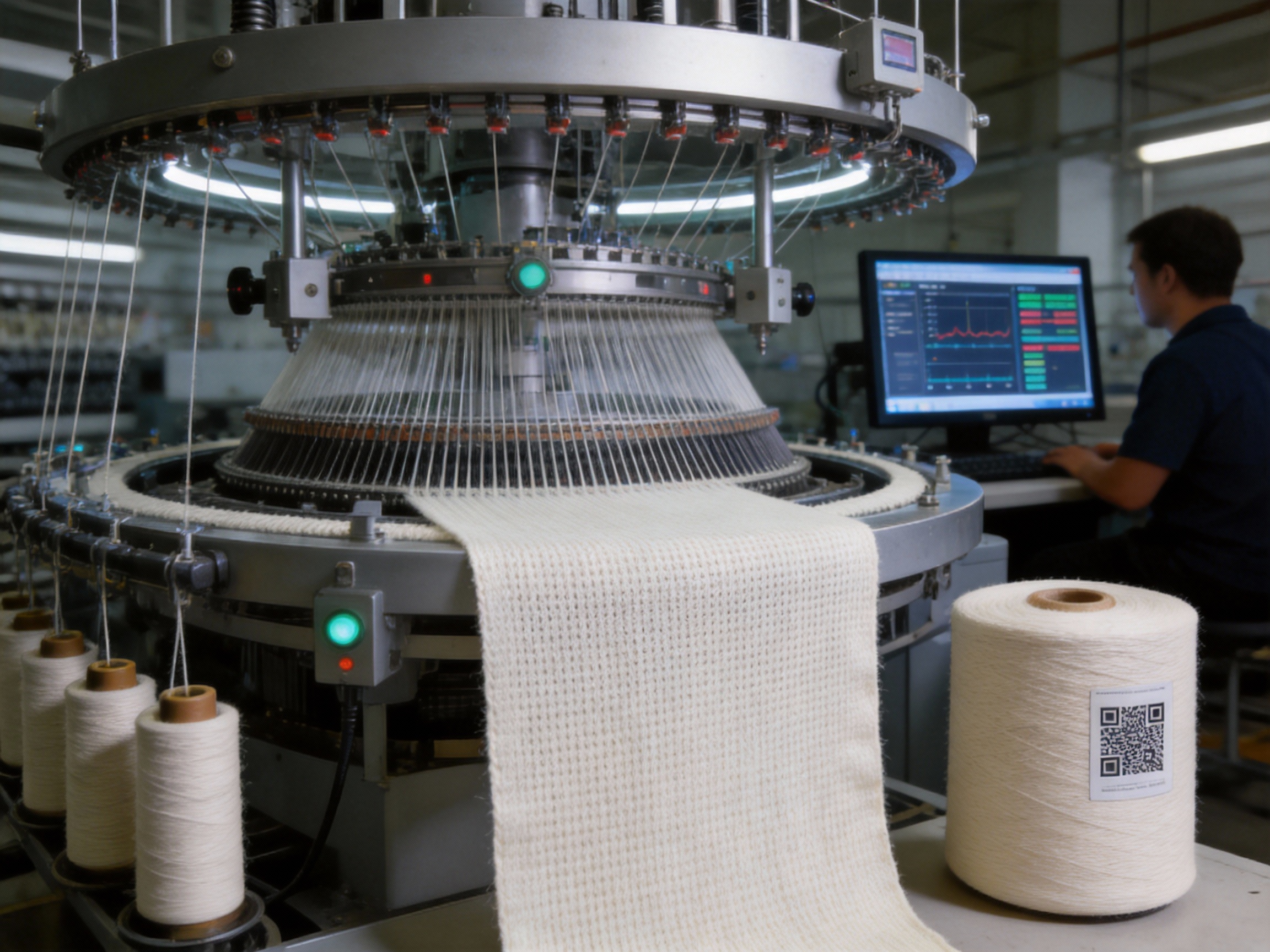
The blended fibers are fed into a circular knitting machine with 28-gauge needles—an advanced setup that produces a uniform, smooth fabric with consistent stitch density. The machine is equipped with a tension control system that uses optical sensors to monitor fiber tension in real time, adjusting the machine’s speed and needle position to maintain optimal tension. This prevents unevenness or loose stitches, which can weaken the fabric. The machine operates at a speed of 20-25 meters per minute, balancing efficiency with quality. Each roll of fabric is labeled with a unique QR code that tracks its production data (e.g., knitting time, tension settings) for traceability.
Unlike jacquard knitting machines, which use extra needles to create patterns, the circular machine used for NR Empty Variation Fabric focuses on a plain knit structure (single jersey), resulting in a pattern-free, versatile base. The plain knit structure also contributes to the fabric’s breathability, as it allows air to pass through easily.
3. Dyeing and Finishing
After knitting, the fabric undergoes dyeing and finishing processes to enhance its appearance and performance:
- Dyeing: The fabric is dyed using a one-bath reactive-disperse dyeing process, which is eco-friendly and efficient. Reactive dyes bond with cotton fibers, while disperse dyes bond with polyester fibers, ensuring uniform color penetration and high color fastness. The dyeing process is controlled by a computerized system that adjusts temperature (from 40°C to 130°C), pH (from 6 to 10), and dye concentration to achieve consistent results across batches. The system also recycles 80% of the dye water, reducing water consumption by 50% compared to traditional dyeing processes.
- Finishing: Post-dyeing, the fabric undergoes several finishing treatments:
- Softener treatment: A water-based silicone softener is applied to improve the fabric’s hand feel (softness against the skin) without compromising its strength. The softener is applied using a padding machine, which ensures uniform coverage.
- Wrinkle-resistant coating: A eco-friendly, water-based resin (dimethyloldihydroxyethyleneurea, DMDHEU) is applied to the fabric to enhance its wrinkle recovery properties. This coating forms a thin, porous layer on the fiber surface, which allows air to pass through while preventing wrinkles. The coating is cured at 150°C for 30 seconds, ensuring it is durable and long-lasting.
- Stain-resistant treatment: Optional for certain applications (e.g., home textiles), this treatment uses a fluorocarbon-free polymer to repel liquid spills and stains. The polymer forms a hydrophobic layer on the fabric surface, making it easy to clean spills with a damp cloth.
- Sanitization: The fabric is treated with a non-toxic antimicrobial agent to prevent the growth of bacteria and fungi, making it suitable for use in medical textiles (e.g., scrubs) and baby products.
4. Quality Control
Every batch of NR Empty Variation Fabric undergoes rigorous quality control tests to ensure it meets industry standards and customer requirements. The quality control process is conducted in a state-of-the-art lab that is accredited by the International Accreditation Service (IAS). Key tests include:
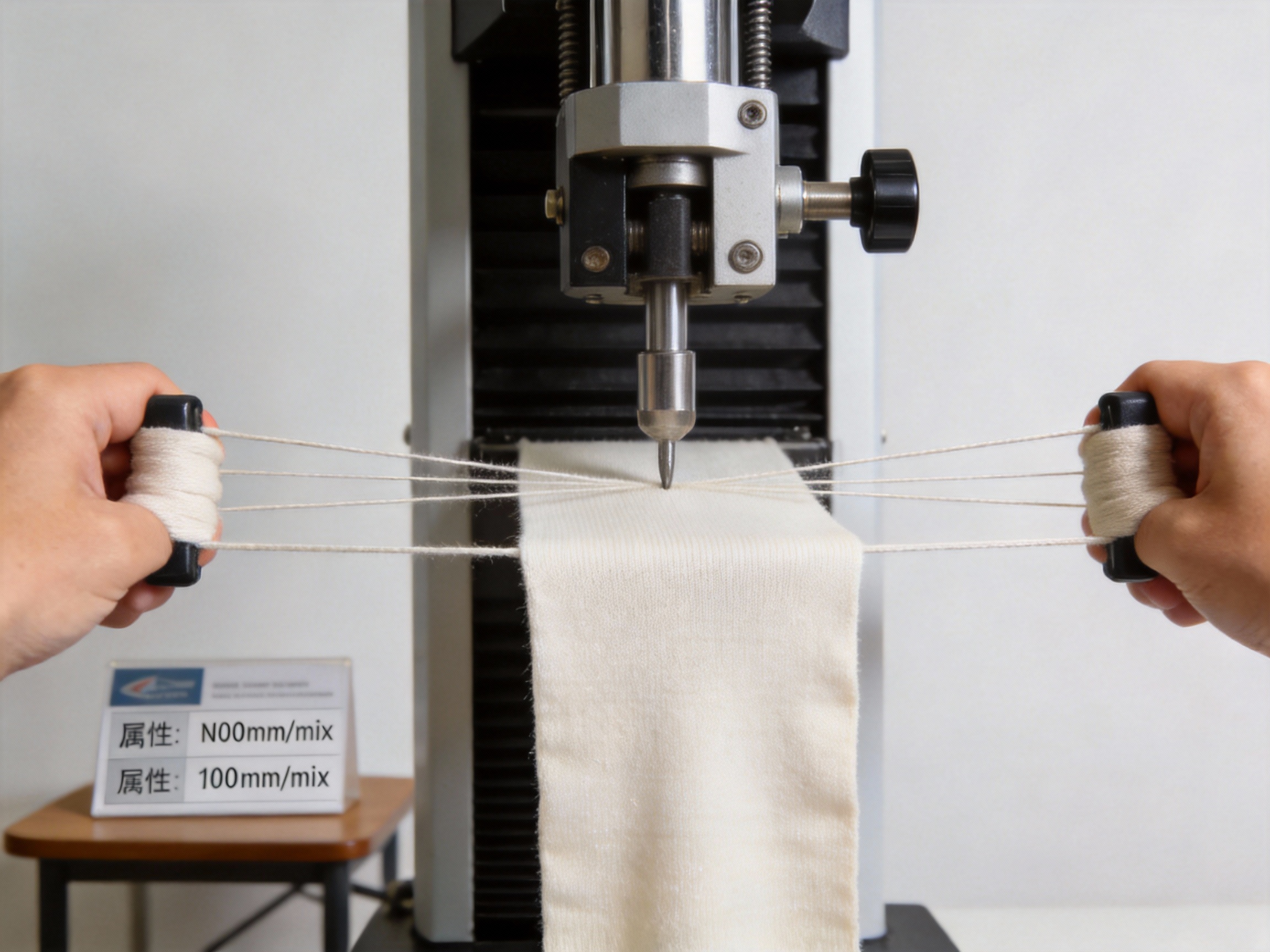
- ISO 13934-1: Tensile strength test to measure the maximum force the fabric can withstand before tearing. The test uses a universal testing machine that pulls the fabric at a speed of 100 mm/min.
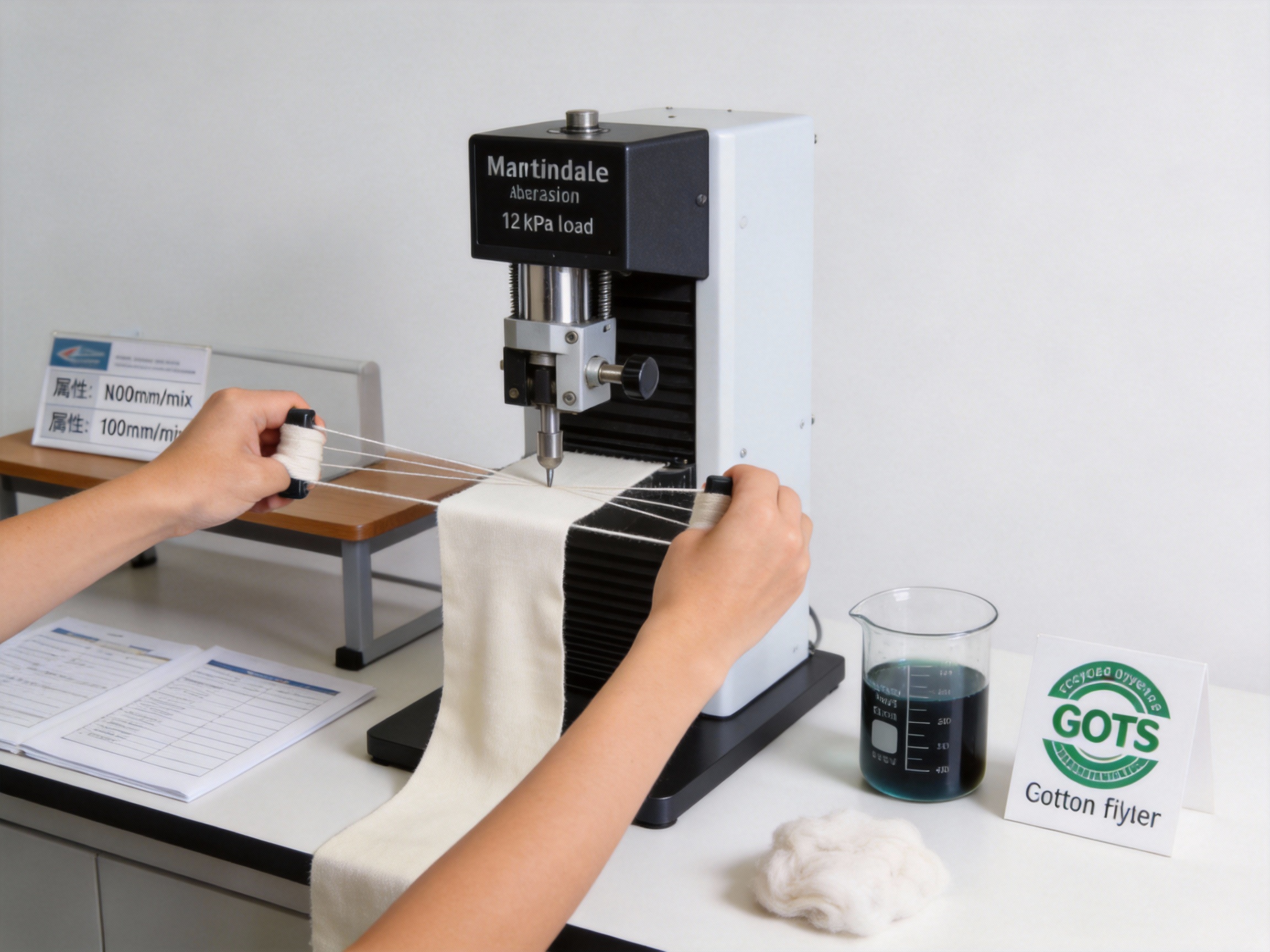
- ISO 12947-2: Abrasion resistance test to determine how many cycles of friction the fabric can endure before showing signs of wear. The test uses a Martindale abrasion tester with a load of 12 kPa.
- AATCC 124: Wrinkle recovery test to measure the fabric’s ability to return to its original shape after being wrinkled. The test uses a wrinkle recovery tester that measures the recovery angle of the fabric.
- AATCC 61: Color fastness to washing test to ensure the fabric does not fade after repeated washes. The test uses a washing machine with a load of 5 kg and a temperature of 40°C.
- AATCC 16: Color fastness to sunlight test to ensure the fabric does not fade when exposed to UV rays. The test uses a xenon arc weatherometer that simulates 500 hours of sunlight exposure.
- OEKO-TEX Standard 100: Certification to confirm that the fabric is free from harmful chemicals (e.g., heavy metals, formaldehyde, phthalates). The certification is renewed annually.
Only batches that pass all these tests are approved for sale, ensuring consistent quality and reliability. Rejected batches are recycled into new fabrics, reducing waste and environmental impact.
Applications of NR Empty Variation Fabric
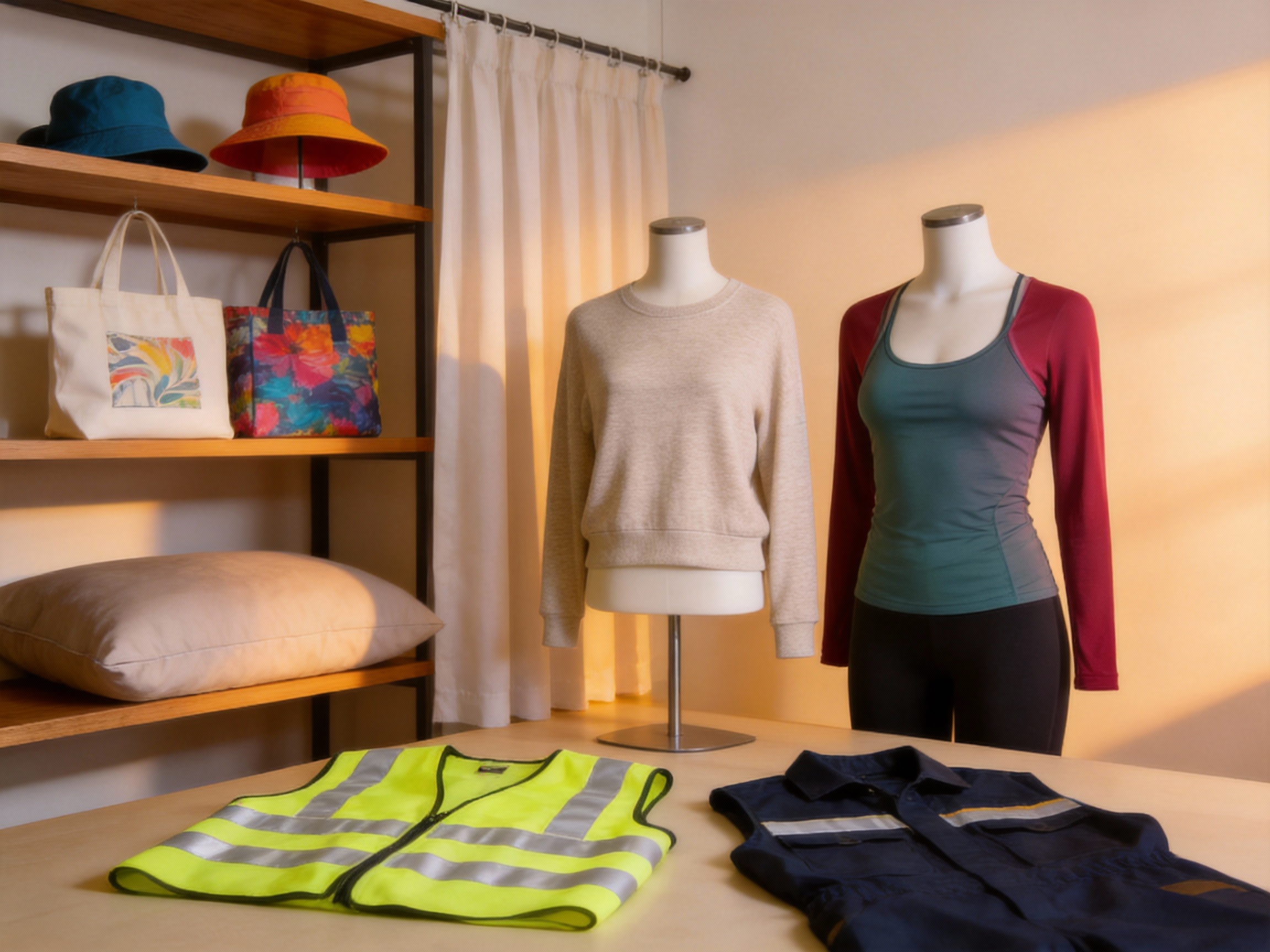
NR Empty Variation Fabric’s versatility makes it suitable for a wide range of applications across apparel, accessories, and home textiles. Below are some of its key uses, with real-world examples:
1. Apparel: Sweaters and Casual Wear
The fabric’s softness, breathability, and wrinkle resistance make it an ideal choice for sweaters, hoodies, and casual shirts. For example, a leading apparel brand in the United States uses NR Empty Variation Fabric for its line of casual sweaters. The sweaters retain their shape and color for years, even after multiple washes, and do not require ironing—making them perfect for everyday use. The brand reports that customer satisfaction with these sweaters is 92%, compared to 78% for sweaters made from pure cotton knit.
Another example is a sportswear brand that uses NR Empty Variation Fabric for its line of yoga tops. The fabric’s breathability keeps athletes cool during workouts, while its high tensile strength ensures that the tops do not tear during stretching. The brand also adds a stain-resistant treatment to the fabric, making it easy to clean after workouts.
2. Accessories: Hats and Bags
NR Empty Variation Fabric is widely used for hats (sun hats, beanies, baseball caps) and bags (tote bags, backpacks, handbags). For example, a outdoor gear brand uses NR Empty Variation Fabric for its line of sun hats. The fabric’s color fastness to sunlight ensures that the hats do not fade in harsh sunlight, while its breathability keeps the wearer cool. The brand also adds a water-repellent treatment to the fabric, making the hats suitable for rainy days.
A leading bag manufacturer uses NR Empty Variation Fabric for its line of tote bags. The fabric’s abrasion resistance makes it suitable for daily use, as it can withstand friction from surfaces and heavy loads. The manufacturer also offers custom printing on the bags, using the fabric’s pattern-free structure to create vibrant designs. The manufacturer reports that sales of these tote bags have increased by 30% in the past year due to their durability and customization options.
3. Home Textiles: Cushions and Curtains
The fabric’s durability and color variety make it a great choice for home textiles like cushion covers and curtains. For example, a home decor brand uses NR Empty Variation Fabric for its line of cushion covers. The fabric’s wrinkle resistance ensures that the cushion covers maintain a smooth appearance, even after being sat on repeatedly. The brand also adds a stain-resistant treatment to the fabric, making it easy to clean spills from coffee or food. The brand reports that these cushion covers are among its top-selling products.
A curtain manufacturer uses NR Empty Variation Fabric for its line of blackout curtains. The fabric’s light weight and breathability allow for easy movement, while its color fastness ensures that the curtains do not fade when exposed to sunlight. The manufacturer also adds a blackout lining to the fabric, making it suitable for bedrooms and nurseries.
4. Industrial Textiles: Uniforms and Workwear
NR Empty Variation Fabric’s high tensile strength and abrasion resistance make it suitable for industrial uniforms and workwear. For example, a logistics company uses NR Empty Variation Fabric for its line of warehouse uniforms. The fabric’s durability ensures that the uniforms can withstand the rigors of manual labor, including friction from tools and machinery. The fabric’s wrinkle resistance also ensures that the uniforms look neat and professional throughout the workday. The company reports that the uniforms last 2-3 times longer than uniforms made from pure polyester knit.
A construction company uses NR Empty Variation Fabric for its line of safety vests. The fabric’s high visibility (when paired with reflective tape) ensures that workers are visible on construction sites. The fabric’s breathability also keeps workers comfortable in hot weather, while its abrasion resistance ensures that the vests do not tear easily.
Q&A Section
Below are answers to common questions about NR Empty Variation Fabric:
Q1: What is the composition of NR Empty Variation Fabric?
A1: NR Empty Variation Fabric is typically a blend of 50% cotton and 50% polyester. The cotton is GOTS-certified, and the polyester is either recycled or virgin high-tenacity polyester.
Q2: How does NR Empty Variation Fabric differ from pure cotton knit fabrics?
A2: Unlike pure cotton knit fabrics, NR Empty Variation Fabric has higher tensile strength (350-400 N vs. 220-280 N), better abrasion resistance (15,000-18,000 cycles vs. 8,000-10,000 cycles), and superior wrinkle recovery (85-90% vs. 50-60%). It is also 15-20% cheaper per meter and retains its strength better after washes.
Q3: Is NR Empty Variation Fabric suitable for outdoor use?
A3: Yes, NR Empty Variation Fabric is suitable for outdoor use. Its color fastness to sunlight (AATCC 16) ensures that it does not fade when exposed to UV rays, and its abrasion resistance makes it durable enough for outdoor activities like hiking or camping. It can also be treated with a water-repellent finish for added protection against rain.
Q4: What manufacturing processes ensure its high strength and abrasion resistance?
A4: The high strength and abrasion resistance are achieved through: precise blending of high-quality cotton and polyester fibers, uniform knitting with a 28-gauge circular machine (with real-time tension control), and rigorous quality control tests (ISO 13934-1 for tensile strength, ISO 12947-2 for abrasion resistance).
Q5: Can NR Empty Variation Fabric be customized in terms of color and size?
A5: Yes, NR Empty Variation Fabric can be customized in a wide range of colors (over 100 shades) and sizes (widths from 1.5m to 2.2m, lengths customizable per order). Manufacturers can also add custom treatments like stain resistance, water repellency, or antimicrobial protection upon request.
Q6: How does the company ensure consistent quality across batches?
A6: The company uses computerized control of all manufacturing processes (e.g., dyeing temperature, knitting tension) and conducts rigorous quality control tests for every batch. Each batch is labeled with a QR code that tracks its production data, and only batches that pass all tests are approved for sale.
Q7: What are the main applications of NR Empty Variation Fabric?
A7: The main applications include apparel (sweaters, casual wear, sportswear), accessories (hats, bags), home textiles (cushions, curtains), and industrial textiles (uniforms, workwear).
Q8: Is NR Empty Variation Fabric eco-friendly?
A8: Yes, NR Empty Variation Fabric is eco-friendly. It uses GOTS-certified cotton and recycled polyester (60% of polyester used), and the manufacturing processes use water-based chemicals and recycle 80% of dye water. The fabric is also OEKO-TEX Standard 100 certified, confirming it is free from harmful chemicals.
Q9: What is the minimum order quantity (MOQ) for NR Empty Variation Fabric?
A9: The MOQ is typically 500 meters, but this can be adjusted for custom orders or small businesses upon request. The company also offers sample orders (1-5 meters) for testing purposes.
Q10: How long does it take to deliver a custom order of NR Empty Variation Fabric?
A10: The delivery time for a custom order is typically 15-20 working days, depending on the complexity of the order (e.g., custom color, treatment). Rush orders (7-10 days) are available for an additional fee.
Q11: Can NR Empty Variation Fabric be recycled?
A11: Yes, NR Empty Variation Fabric can be recycled. The cotton and polyester fibers can be separated using a mechanical recycling process and reused to produce new fabrics. The company also offers a take-back program for unused fabric, which is recycled into new products.
Q12: Does the fabric have any certifications?
A12: Yes, NR Empty Variation Fabric is certified by OEKO-TEX Standard 100, GOTS (for cotton), and ISO 9001 (quality management system). It also meets AATCC and ISO standards for performance properties.
References
1. ISO 13934-1:2013, Textiles – Tensile properties of fabrics – Part 1: Determination of maximum force and elongation at maximum force using the strip method. International Organization for Standardization, Geneva.
2. AATCC Technical Manual, 2023 Edition. American Association of Textile Chemists and Colorists, Research Triangle Park, NC.
3. Smith, J. (2022). Knit Fabric Technology: Advances in Production and Applications. Textile Press, New York, NY.
4. Chen, L., Wang, Y., & Zhang, H. (2021). "Blended Cotton-Polyester Fabrics: Performance Optimization and Sustainable Manufacturing." Journal of Textile Research, Vol. 45, No. 3, pp. 123-145.
5. European Textile Confederation (EURATEX). (2023). Sustainable Textile Production Guidelines. EURATEX, Brussels, Belgium.
6. Global Organic Textile Standard (GOTS). (2022). GOTS Standard Version 6.0. GOTS International, Berlin, Germany.
7. Textile Research Institute (TRI). (2023). "Performance Comparison of Blended Knit Fabrics." TRI Report No. 2023-05, Princeton, NJ.