
NR Empty Variation Fabric: A Practical Guide to Structure, Performance, Manufacturing, and Applications
NR empty variation fabric is a versatile knitted textile designed for products that require a clean, pattern-free surface, comfortable handling, dependable strength, and flexible styling options. It is especially suitable for hats, bags, sweaters, and other apparel or soft goods in which the fabric must provide both visual simplicity and reliable everyday performance.
The term “empty variation” generally refers to a knitted fabric without a decorative jacquard pattern or conspicuous surface motif. Instead of relying on a complex graphic design, the fabric creates its value through its construction, fiber blend, color availability, surface feel, dimensional behavior, and ease of conversion into finished products. This makes it an effective material for manufacturers that want a consistent base fabric that can be dyed, cut, sewn, shaped, or combined with other textile components.
The fabric described in the supplied product information is made from cotton and polyester. These fibers can be combined in different proportions to meet specific requirements for comfort, strength, appearance, durability, and cost. Depending on the final specification, the material may be produced in different colors, widths, weights, and sizes. Buyers should confirm the exact fiber ratio and technical parameters before placing an order, because the performance of a blended knitted fabric depends significantly on its composition and finishing process.
NR knitted fabric is also associated with nylon-rayon-style textile categories in some market descriptions. Because textile terminology can vary between suppliers and regions, purchasers should request a detailed specification sheet identifying the exact fiber content, yarn type, knitting structure, finishing treatment, and test standards. Clear technical communication ensures that the selected fabric matches the intended application.
What Is NR Empty Variation Fabric?
NR empty variation fabric is a plain or minimally patterned knitted textile with a smooth visual presentation. Unlike jacquard fabric, which uses specialized knitting techniques to create visible motifs, an empty variation fabric emphasizes a clean surface and uncomplicated appearance. This simple structure gives designers greater freedom when developing products with logos, labels, embroidery, appliqués, printed graphics, trims, or other decorative features.
Knitted fabrics are formed by interlocking loops of yarn. This looped construction generally provides more flexibility and stretch than a basic woven structure. The degree of stretch, recovery, drape, and thickness depends on the knitting method, yarn characteristics, density, finishing, and blend ratio. For this reason, an NR fabric can be developed for soft apparel, structured accessories, lightweight winter goods, or moderately firm products requiring a stable knitted base.
The supplied product information identifies the material as a cotton and polyester blend. Cotton contributes a familiar natural hand feel, breathability, and comfort against the skin. Polyester contributes strength, resistance to abrasion, dimensional stability, and ease of care. When properly engineered, the combination can balance the comfort of cotton with the practical durability of synthetic fiber.
The fabric is available in various colors and sizes. This supports different purchasing models, from standard color programs for repeat production to customized color development for private-label collections. The correct choice of color, width, weight, and finish depends on whether the material will be used for hats, bags, sweaters, or another product category.
Core Characteristics of the Fabric
Pattern-Free Visual Appearance
The most obvious characteristic of NR empty variation fabric is its lack of a complex pattern. A plain surface is valuable in commercial production because it can be used across multiple product lines without competing with the design language of the finished item. A neutral base can support minimalist fashion, outdoor accessories, schoolwear, workwear, promotional products, and seasonal collections.
A pattern-free fabric can also simplify production planning. Manufacturers do not need to align a large repeat pattern across every cut panel, which may reduce cutting waste and make quality inspection more straightforward. For products such as hats and bags, a plain surface also makes it easier to place embroidered marks, woven labels, heat-transfer graphics, or printed branding in a controlled position.
Balanced Cotton and Polyester Performance
Cotton and polyester have different but complementary characteristics. Cotton is widely valued for its soft touch, natural appearance, moisture absorption, and comfortable wearing experience. Polyester is known for its tensile strength, resilience, abrasion resistance, lower moisture retention, and comparatively strong dimensional stability.
A blended fabric does not automatically provide the maximum benefit of both fibers. The final performance depends on the blend ratio, yarn preparation, knitting density, dyeing conditions, heat setting, and finishing. However, a carefully produced blend can offer a useful compromise for buyers who need a textile that feels comfortable while withstanding repeated handling, use, and laundering.
High Strength
Strength is an important advantage when fabric is used for bags, hats, cuffs, collars, garment panels, and other products exposed to pulling or repeated movement. The polyester component can help the knitted structure withstand everyday stress. The loop construction also allows the fabric to flex rather than immediately resisting movement as a rigid material would.
Strength should be evaluated through appropriate tests rather than assumed solely from fiber content. Depending on the application, buyers may request tensile strength, tear strength, bursting strength, seam slippage, and stretch-recovery data. These tests help determine whether a particular weight and construction are appropriate for a lightweight fashion item or a more demanding accessory.
Abrasion Resistance
Hats and bags often experience friction against clothing, furniture, skin, packaging, or other surfaces. Abrasion resistance helps the fabric maintain its appearance and structural integrity during use. Polyester fibers can contribute to resistance against surface wear, while the knitting structure and finishing process influence pilling, fuzzing, and long-term appearance.
Different products require different levels of abrasion resistance. A soft sweater may prioritize comfort and drape, while a bag may require a denser construction and stronger finishing treatment. A responsible supplier should therefore recommend a suitable specification instead of treating one fabric construction as ideal for every application.
Wrinkle Resistance and Ease of Handling
The product information identifies the fabric as wrinkle-resistant. This characteristic can be useful for finished items that are folded during transport, stored in warehouses, or packed for retail sale. Reduced wrinkling can improve presentation and decrease the need for pressing before shipment or display.
Wrinkle behavior depends on the fiber blend and finishing process. Polyester generally helps a fabric recover its shape after handling, while knitted construction can provide flexibility. Nevertheless, storage conditions, heat, moisture, folding pressure, and garment construction may all affect the final appearance. Product-specific care instructions remain important.
Color and Size Flexibility
Availability in different colors and sizes allows the fabric to serve diverse customer requirements. Standard colors can support efficient repeat orders, while custom color development can help brands maintain a consistent visual identity. Color matching should be performed using approved laboratory dips or sample standards, especially when the fabric will be combined with trims, yarns, printed components, or other materials.
The phrase “various sizes” may refer to fabric width, roll length, fabric weight, or finished product dimensions. Buyers should clarify the measurement system used by the supplier. Important details may include usable width, roll length, grams per square meter, thickness, stretch percentage, and tolerance range.

NR Empty Variation Fabric
Why a Plain Knitted Fabric Can Outperform More Decorative Alternatives
Decorative fabrics such as jacquard knits, engineered patterns, and heavily textured materials have an important place in fashion and accessories. However, they are not always the most efficient choice. NR empty variation fabric can provide several practical advantages in applications where simplicity, flexibility, and production consistency are more important than surface complexity.
Greater Design Versatility
A plain surface can be adapted to a wider range of finished products. A single base fabric may be used for several colorways, logo placements, seasonal collections, and product categories. Designers can add visual interest through embroidery, printing, patches, labels, contrast stitching, woven trims, or garment construction rather than depending on the fabric pattern itself.
This versatility is particularly helpful for companies managing a broad product range. A plain knitted material can be purchased in multiple colors and allocated to different product programs, reducing the need to source a separate patterned fabric for every design concept.
Simpler Cutting and Lower Pattern-Matching Requirements
Patterned textiles may require careful alignment during spreading and cutting. If the repeat is not matched correctly, the finished product can appear unbalanced or inconsistent. A pattern-free surface minimizes this concern. Cutting rooms can focus on grain direction, stretch direction, panel placement, and efficient marker planning without managing a visible motif.
This does not mean that plain fabric has no cutting requirements. Knitted material may still have a course direction, wale direction, edge curl, or stretch variation. Proper relaxation, spreading, and cutting procedures remain necessary. However, the absence of a decorative repeat can simplify the visual control of production.
Consistent Appearance Across Production Runs
A simple surface can make it easier to identify and manage color variation, knitting defects, contamination, holes, and uneven finishing. Quality teams can inspect the fabric using standardized lighting and inspection tables. Consistency remains important because even a plain fabric can show shade differences, barré, streaks, pilling, or variations in density.
Compared with a complex pattern, a clean surface also provides a more predictable foundation for repeat orders. When the knitting structure, fiber ratio, dye recipe, and finishing parameters are kept consistent, buyers can more easily maintain continuity between production batches.
Efficient Decoration and Branding
Many hats, bags, and sweaters require additional branding. Embroidery, screen printing, heat transfer, patches, and labels generally need a stable and visually quiet background. An empty variation surface allows the decoration to stand out clearly.
For embroidery, the fabric weight and stability should be evaluated to prevent puckering. For printing, the surface, dye migration risk, and color fastness should be considered. For heat transfers, the supplier and converter should confirm the fabric’s tolerance to temperature and pressure. The plain appearance is an advantage, but the decoration process must still be matched to the fabric specification.
Applications of NR Empty Variation Fabric
Hats and Headwear
NR knitted fabric can be used for beanies, casual caps, winter hats, ear-covering accessories, and other headwear products. Its flexibility allows the material to conform to the shape of the head, while the cotton-polyester blend can provide a balance of comfort and durability.
For hats, buyers should examine stretch recovery, seam behavior, pilling resistance, thickness, and color fastness. A fabric that stretches comfortably but does not recover sufficiently may become loose after repeated use. A fabric that is too rigid may feel uncomfortable or fail to fit different head sizes.
The pattern-free surface is suitable for embroidered logos, woven labels, badges, and simple tonal branding. It can also support coordinated product families in which the same fabric is used for hats, gloves, scarves, or sweater details.
Bags and Soft Accessories
The fabric can be used for casual bags, pouches, tote-style products, cosmetic bags, small storage items, and other soft accessories. In these applications, abrasion resistance and dimensional stability are especially important. A bag must handle friction, weight, folding, stitching, and frequent contact with other objects.
For a bag application, the knitted fabric may be combined with a lining, interlining, foam, webbing, zipper tape, or reinforcement panel. The final structure can be adjusted according to the desired level of softness and support. A denser or heavier version may be suitable for the outer surface, while a lighter version may be used for lining or decorative sections.
Seam construction should be tested because knitted fabrics can stretch during sewing. Appropriate needles, thread, stitch density, differential feed, and stabilizing techniques can help reduce distortion. If the product will carry substantial weight, the fabric should be evaluated together with the seam and reinforcement system rather than tested in isolation.
Sweaters and Knit Apparel
In sweaters and related garments, the material can provide a comfortable hand feel and flexible movement. Cotton may contribute to a familiar natural touch, while polyester can assist with durability and shape retention. The correct weight and surface finish will determine whether the result feels lightweight, transitional, warm, smooth, or textured.
Garment manufacturers should examine dimensional stability after washing, spirality, color fastness, pilling, stretch recovery, and seam appearance. A fabric that looks attractive on the roll may behave differently after cutting, sewing, washing, drying, or steaming. Pre-production testing can prevent costly adjustments later in the manufacturing process.
Other Potential Uses
Although the supplied information specifically identifies hats, bags, and sweaters, the material may also be considered for scarves, cuffs, collars, casual garments, children’s accessories, decorative panels, promotional items, and lightweight soft furnishings. Suitability depends on the exact construction and the technical requirements of the finished product.
Applications involving direct and prolonged skin contact should receive particular attention to softness, color fastness, chemical compliance, seam comfort, and care performance. Applications involving friction or load should emphasize abrasion, bursting strength, pilling, and dimensional stability.
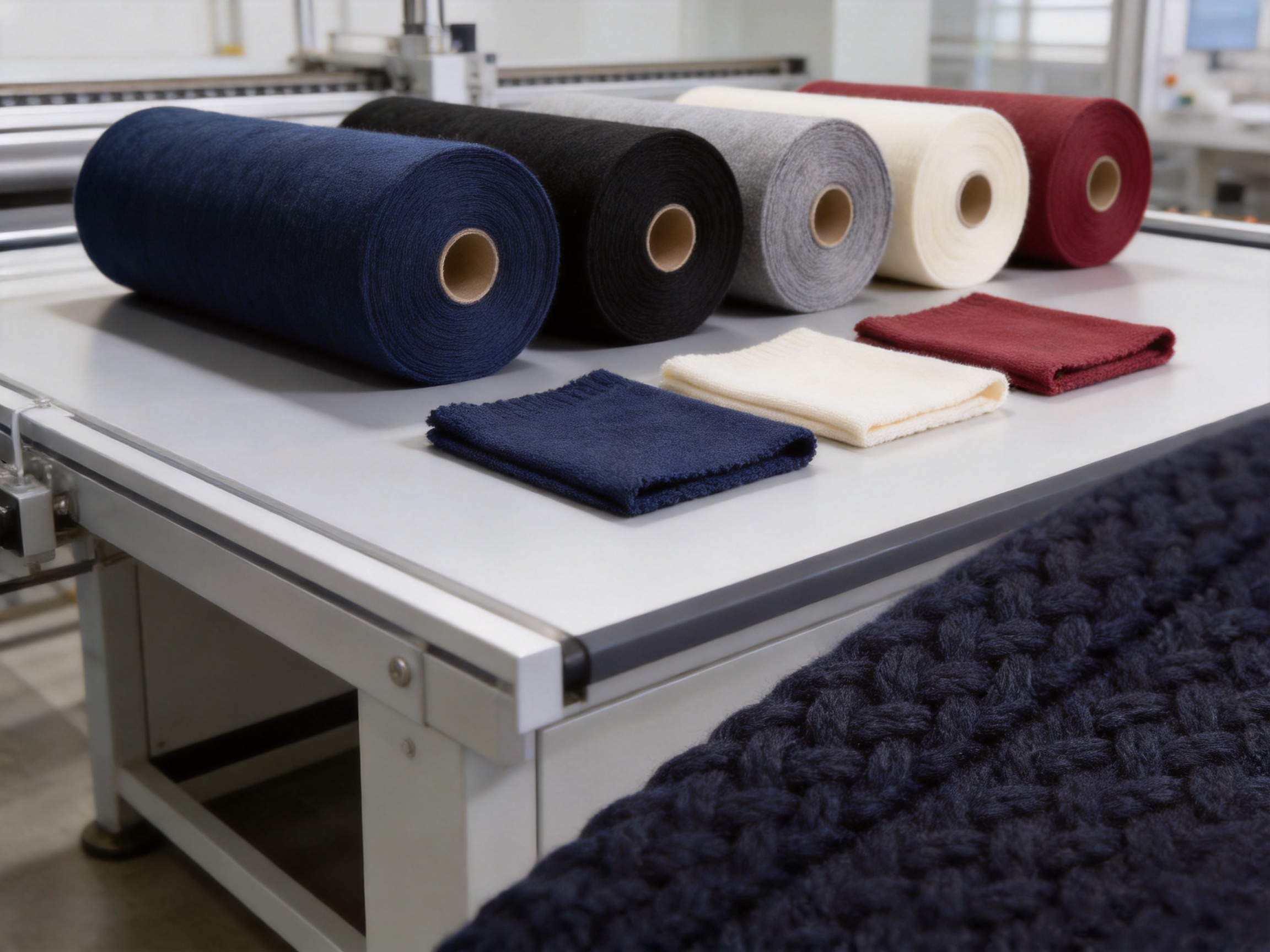
Manufacturing Process and Quality Control
The performance of an NR empty variation fabric begins before knitting. Fiber selection, yarn preparation, machine settings, dyeing, finishing, inspection, and packaging all influence the result. An integrated textile manufacturer can coordinate these stages more effectively than a supply chain in which every operation is handled independently.
1. Fiber and Yarn Selection
The first stage is the selection of cotton, polyester, or other approved fibers specified for the product. Fiber quality affects yarn strength, evenness, softness, moisture behavior, color appearance, and resistance to wear. Polyester may be supplied in different forms and specifications, while cotton may differ in staple length, fineness, cleanliness, and grade.
Yarn selection should reflect the intended end use. A sweater may require a softer yarn and a comfortable surface. A bag may require greater strength and abrasion resistance. A hat may need controlled stretch and recovery. The best specification is therefore application-based rather than based only on a general fabric name.
The company’s production scope includes DTY polyester yarn production, processing, and sales. Drawn textured yarn can provide useful bulk, resilience, and a distinctive textile hand depending on its denier, filament arrangement, twist, and processing conditions. However, the yarn used in a specific NR fabric should always be confirmed through the technical specification for that product.
2. Yarn Preparation and Blending
Yarn preparation may include winding, inspection, joining, conditioning, and other steps required to make the yarn suitable for knitting. Consistent yarn tension is important because uneven feeding can create streaks, loops, holes, or variations in fabric density.
When cotton and polyester are combined, the method of blending must be defined. Fibers may be blended before spinning, yarns may be combined during knitting, or different yarn types may be used in separate parts of the structure. Each method affects the appearance, touch, strength, dye behavior, and processing requirements of the final fabric.
Careful preparation helps reduce avoidable defects. Yarn packages should be identified by lot, stored under suitable environmental conditions, and checked before use. Traceability is valuable because it allows production teams to connect a fabric roll with its raw material batch, machine, shift, dye lot, and finishing record.
3. Knitting
During knitting, yarn is formed into interlocking loops. Machine gauge, stitch length, yarn tension, take-down speed, needle condition, and fabric density all influence the final construction. A plain or empty variation surface requires stable machine settings so that the fabric remains visually even and free from unwanted patterns or streaks.
Experienced operators monitor the machine during production rather than waiting for final inspection. Early detection of needle damage, yarn breakage, tension fluctuations, or oil contamination can reduce the amount of off-quality material. Machine maintenance also contributes to consistent output and supports longer equipment life.
Knitted fabric may naturally relax after it leaves the machine. The production team should account for relaxation before measuring width, weight, stretch, and dimensional stability. If fabric is measured too soon, the reported values may not represent the condition of the material during cutting or garment production.
4. Dyeing and Color Development
Color is a major commercial requirement. A fabric supplier may provide standard shades, seasonal colors, or custom colors developed according to a buyer’s approved sample. The dyeing process must be matched to the fiber composition because cotton and polyester do not necessarily respond to the same dyes or processing conditions.
For blended fabrics, controlled dyeing is especially important. The process must achieve an attractive and sufficiently uniform appearance across the different fiber components. Temperature, time, chemical concentration, liquor ratio, rinsing, drying, and finishing all require control.
Quality evaluation may include shade matching, color fastness to washing, rubbing, perspiration, light, and water, depending on the intended use. The required test level should be agreed with the buyer before production. A color that performs acceptably for a decorative accessory may require additional testing for clothing exposed to repeated washing.
5. Finishing and Dimensional Control
Finishing can modify the hand feel, width, surface appearance, shrinkage, softness, smoothness, and stability of the fabric. Processes may include washing, drying, heat setting, compacting, brushing, softening, or other treatments selected according to the product requirement.
For a wrinkle-resistant knitted fabric, finishing should support recovery without creating an undesirable harsh or overly synthetic touch. For apparel, comfort and drape may be more important than maximum firmness. For bags, dimensional stability and abrasion resistance may receive greater priority. The finishing recipe should therefore be connected to the final application.
Width and weight should be monitored throughout finishing. Excessive heat or tension can alter the fabric’s dimensions and stretch behavior. Inadequate control may lead to panel mismatch, sewing difficulty, or unexpected shrinkage after the customer’s own washing process.
6. Inspection and Testing
Inspection is essential for confirming that the fabric conforms to the agreed standard. Common checkpoints include fabric appearance, width, weight, color, holes, stains, needle lines, dropped stitches, uneven density, pilling, stretch, recovery, and dimensional stability.
Testing can be performed on samples taken from production rolls. The exact methods should be selected according to the customer’s requirements and applicable industry standards. A strong quality system does not rely on visual inspection alone. Laboratory or internal testing provides measurable information that can be compared across batches.
| Quality Item | Why It Matters | Typical Buyer Consideration |
|---|---|---|
| Fiber composition | Influences comfort, strength, dye behavior, and care performance. | Confirm the exact cotton and polyester ratio or other approved composition. |
| Fabric weight | Affects warmth, coverage, drape, structure, and material consumption. | Specify target weight and acceptable tolerance. |
| Usable width | Influences cutting efficiency and finished product dimensions. | Confirm whether the measurement is open width, tubular width, or usable width. |
| Color fastness | Helps prevent fading or color transfer during use and care. | Define tests for washing, rubbing, perspiration, light, or water. |
| Pilling resistance | Important for maintaining surface appearance after friction. | Set a performance level appropriate for apparel or accessories. |
| Stretch and recovery | Determines fit, comfort, shape retention, and sewing behavior. | State stretch direction, extension percentage, and recovery expectations. |
| Dimensional stability | Controls shrinkage and shape change during processing or washing. | Test after the intended care cycle where possible. |
| Abrasion resistance | Supports durability in bags, hats, and frequently handled products. | Use an application-specific abrasion method and acceptance level. |
| Appearance inspection | Identifies holes, streaks, contamination, uneven knitting, and other defects. | Agree on inspection lighting, grading method, and defect tolerance. |
7. Roll Formation, Packing, and Shipment
After inspection, the fabric should be rolled, labeled, protected, and packed in a way that minimizes crushing, moisture exposure, contamination, and color confusion. Each roll should carry enough information for traceability, including product code, color, lot, length, weight, and inspection status where applicable.
Packaging is particularly important for knitted textiles because the material can be compressed or distorted if stored incorrectly. Buyers should also consider the recommended storage environment. Excessive humidity, direct sunlight, extreme temperature, and contact with contaminants can affect the fabric before it reaches the cutting room.
Manufacturing Strengths of an Integrated Textile Supplier
Hangzhou Jinfeng Textile Co., Ltd. is located in Jingjiang Street Industrial Park, Xiaoshan District, Hangzhou City, Zhejiang Province. The company reports a site covering approximately 32.6 acres and a plant area of approximately 18,000 square meters. Its activities include production and processing, post-dyeing, finishing, and sales of blended fabrics such as polyester and spandex, as well as DTY polyester yarn production, processing, and sales.
This combination of capabilities is relevant to buyers of NR empty variation fabric because the final textile depends on coordination between yarn, knitting, dyeing, finishing, and commercial service. When a supplier understands multiple stages of production, it may be better positioned to identify the source of a problem and adjust the process accordingly.
Production and Processing Capability
In-house or closely coordinated production and processing can support more consistent communication between development and manufacturing teams. A buyer can discuss the desired touch, weight, color, stretch, stability, and end use with a supplier that understands how these requirements affect production.
Integrated production also supports faster technical feedback. If a sample is too soft, too firm, too open, too dense, or insufficiently stable, the supplier can evaluate whether the adjustment should be made in yarn selection, knitting density, finishing, or another stage.
Post-Dyeing and Finishing Experience
Post-dyeing and finishing are important for blended fabrics. They affect the final appearance, touch, color depth, shrinkage, and surface condition. Experience in these areas can help a supplier develop fabric that is more suitable for the customer’s actual manufacturing process rather than merely attractive in a small sample.
Finishing expertise is also valuable when the same base material must be adapted for multiple uses. A sweater may need a soft and comfortable finish, while a bag may benefit from a firmer and more stable treatment. Application-specific finishing can improve the practical value of the fabric.
DTY Polyester Yarn Capability
Drawn textured yarn is an important part of the company’s stated product and manufacturing scope. DTY is produced by processing polyester filament yarn to create texture, bulk, elasticity, and a different hand feel from a flat filament yarn. The exact result depends on the yarn specification and processing parameters.
Knowledge of DTY polyester yarn can support fabric development when the buyer wants a particular surface effect, resilience, fullness, or comfort level. It can also help the supplier explain how yarn characteristics influence knitting performance and final fabric quality.
Buyers should distinguish between the company’s overall yarn capability and the composition of the specific NR fabric being purchased. A product inquiry should identify whether DTY yarn is included in the fabric, used in a particular component, or simply available as a separate product.
Research, Development, and Sales Coordination
The company describes itself as an export-oriented enterprise integrating research and development, production, and sales. This structure can be beneficial for international customers because technical requirements, sample approvals, production planning, and shipping communication are handled through a more coordinated business process.
Development support may include color selection, sample preparation, construction adjustment, finishing discussion, and application recommendations. The strength of such support depends on the specific project, so buyers should provide a clear technical brief and request written confirmation of all agreed parameters.
Long-Term Cooperation Orientation
The company’s stated business principle emphasizes cooperation and mutual benefit. For textile buyers, long-term cooperation is often built on stable quality, transparent communication, reliable lead times, reasonable minimum order quantities, and responsive handling of problems.
A cooperative supplier should be willing to discuss realistic tolerances rather than promise impossible uniformity. It should also communicate potential risks before bulk production, such as color variation, shrinkage, pilling, stretch changes, or differences between laboratory samples and production lots.
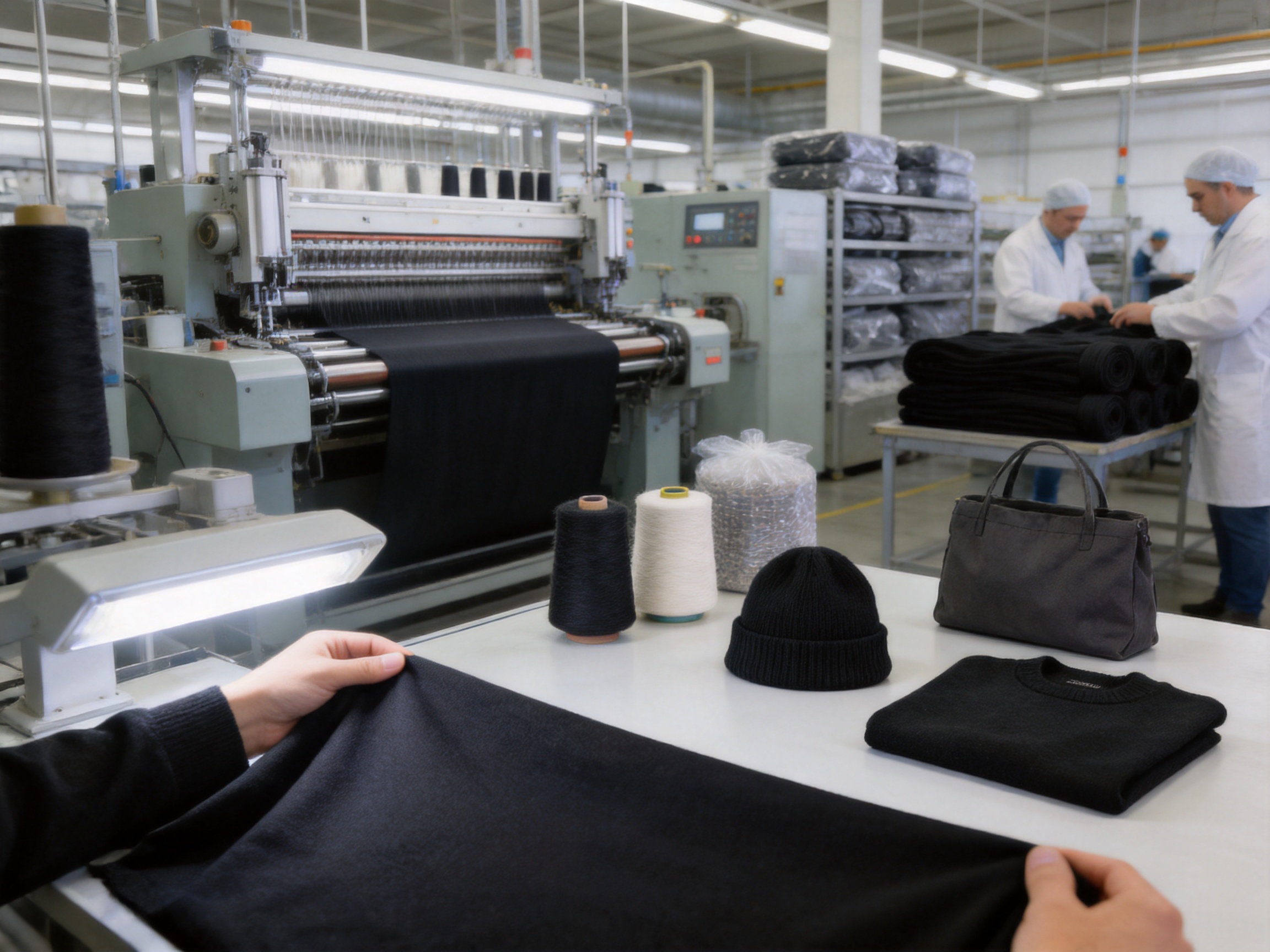
How NR Empty Variation Fabric Compares with Other Fabric Options
Compared with Jacquard Knitted Fabric
Jacquard knitted fabric is designed to create visible patterns, motifs, logos, or color effects through specialized knitting construction. It can provide strong visual appeal and is useful for products where the fabric itself is the main decorative element. However, jacquard production may require more complex design preparation, pattern alignment, and production control.
NR empty variation fabric offers a simpler visual base. It may be more suitable when the buyer wants flexible decoration, a lower visual burden, simpler cutting, or a fabric that can serve multiple product designs. The better option depends on whether the product requires a built-in pattern or a versatile plain surface.
Compared with Woven Fabric
Woven fabric is formed by interlacing warp and weft yarns. It often provides excellent dimensional stability and a structured appearance. Knitted fabric, by contrast, is formed from loops and generally offers greater flexibility and comfort in movement.
For hats, sweaters, and soft accessories, knitted construction can provide a more adaptable hand and shape. For rigid bags, tailored garments, or products requiring a highly stable panel, woven fabric may be preferable. NR fabric can also be combined with woven reinforcements when the finished product requires both flexibility and support.
Compared with Pure Cotton Knitted Fabric
Pure cotton knit can provide a natural hand feel and good moisture absorption. However, cotton may be more susceptible to dimensional change, wrinkling, and wear depending on the construction and finishing. A cotton-polyester blend may provide improved resilience and easier handling.
The trade-off is that a blended fabric may feel less purely natural than 100 percent cotton. Buyers should evaluate softness, breathability, moisture behavior, care performance, and appearance according to the target market. There is no universal best composition; the correct choice is the one that meets the product’s performance and consumer expectations.
Compared with Pure Polyester Knitted Fabric
Pure polyester may offer strong durability, fast drying, shape retention, and color performance. However, some customers prefer the touch and appearance associated with cotton. A cotton-polyester blend can create a more balanced material for everyday garments and accessories.
NR empty variation fabric therefore occupies a practical middle ground. It can provide the comfort-oriented character of cotton together with the strength and wrinkle resistance associated with polyester, while retaining the flexibility of a knitted structure.
Purchasing Specifications Buyers Should Confirm
A product name alone is not sufficient for accurate sourcing. “NR empty variation fabric” may be understood differently by different suppliers. Before ordering samples or bulk material, buyers should request a complete specification.
Exact fiber composition and blend ratio.
Yarn type, including whether DTY polyester yarn is used.
Knitting structure and machine gauge.
Fabric weight in grams per square meter.
Usable width and roll length.
Color standard, dyeing method, and color tolerance.
Stretch percentage and recovery performance.
Expected shrinkage after the intended washing or care process.
Surface finish, hand feel, softness, and appearance.
Pilling, abrasion, bursting, tensile, and tear requirements.
Color-fastness requirements for the finished application.
Inspection method, defect tolerance, and packaging details.
Minimum order quantity, sample policy, lead time, and delivery terms.
It is also useful to explain the intended product. A supplier can make a more accurate recommendation when it knows whether the fabric will be used for a close-fitting sweater, a relaxed hat, a lightweight bag, a structured accessory, or a product requiring repeated washing.
Recommended Sampling and Approval Procedure
A disciplined approval process reduces the risk of mismatch between the buyer’s expectations and the delivered material. The first step is to provide a written brief covering composition, color, weight, width, stretch, finish, quantity, and application.
The supplier can then prepare a development sample or laboratory sample. At this stage, the buyer should evaluate appearance, hand feel, stretch, recovery, opacity, sewing behavior, and compatibility with trims or decoration. A small sample may not fully represent a production roll, so critical properties should be confirmed through testing.
After the basic sample is approved, a larger production sample or pilot lot can be reviewed. This stage is valuable for checking cutting, sewing, embroidery, printing, washing, pressing, packaging, and final product appearance. If the fabric is intended for bags, the buyer should test the complete bag with the planned lining, reinforcement, hardware, and load.
For sweaters and apparel, the buyer should make a sample garment and conduct the intended care test. Measurements should be taken before and after washing or drying. The buyer should also inspect pilling, seam appearance, color change, hand feel, and shape recovery.
Once the specification is approved, the final standard should be documented. This may include an approved fabric cutting, color swatch, test report, technical data sheet, and written tolerance range. The same reference should be used for future repeat orders.
Sustainability and Responsible Textile Management
A cotton-polyester blend can be practical and durable, and longer-lasting products may reduce the frequency of replacement. Durability, however, is only one part of responsible textile production. Buyers should also consider resource use, chemical management, wastewater treatment, energy consumption, packaging, worker safety, and end-of-life options.
Blended fabrics can be more difficult to recycle than single-fiber fabrics because separating the components may require specialized processes. This does not make blended fabric unsuitable, but it does mean that product designers should consider expected service life and end-of-life management. A durable product that remains in use for a long time may provide value, while unnecessary complexity and short product cycles can increase waste.
Responsible sourcing also requires accurate claims. Suppliers and brands should not describe a material as recycled, organic, certified, biodegradable, or environmentally preferred unless the relevant evidence and certification are available. The supplied product information establishes the fabric’s cotton and polyester composition and manufacturing scope, but additional sustainability claims should be confirmed separately.
Good production management can support more responsible outcomes by reducing defects, minimizing reprocessing, improving cutting efficiency, controlling water and chemical use, and avoiding unnecessary overproduction. Quality control is therefore connected not only with customer satisfaction but also with material efficiency.
Care and Product Development Considerations
The correct care method depends on the actual fiber blend, dyes, finishing treatments, and finished product construction. Buyers should obtain care recommendations from the supplier and validate them on the final product. A fabric may behave differently when it is sewn into a hat, bag, or sweater because lining, interfacing, seams, and trims affect shrinkage and shape.
For apparel, care instructions may involve controlled washing, moderate drying temperatures, and avoidance of excessive heat. For bags, spot cleaning or gentle washing may be more appropriate depending on the reinforcement and hardware. The care label should be based on testing rather than general assumptions about cotton or polyester.
Product developers should also consider color contrast. A dark fabric may show lint or surface abrasion differently from a light fabric. Highly saturated shades may require closer attention to rubbing and washing fastness. A plain surface can make small defects visible, so color approval and roll inspection remain important.
Frequently Asked Questions
What does “empty variation” mean in this fabric name?
It generally indicates a plain or pattern-free knitted surface without a prominent jacquard motif or decorative repeat. The fabric is designed to provide a clean foundation for apparel and accessories.
Is NR empty variation fabric made from cotton or polyester?
The supplied product information describes it as a cotton and polyester fabric. The exact blend ratio should be confirmed with the supplier because different ratios can change softness, strength, moisture behavior, shrinkage, and care performance.
Can the fabric be produced in different colors?
Yes. The product information states that it is available in various colors. Buyers should approve a color standard and define acceptable shade tolerances before bulk production.
What products can be made from this material?
The stated applications include hats, bags, and sweaters. Depending on its weight, stretch, finish, and strength, it may also be suitable for scarves, cuffs, collars, casual garments, promotional products, and other soft accessories.
Is the fabric suitable for embroidery or printing?
Its plain surface can be suitable for embroidery, printing, patches, labels, and other decoration. The final method should be tested according to the fabric weight, stability, surface finish, color, and heat tolerance.
What are the main advantages over a more decorative knitted fabric?
The principal advantages are design flexibility, easier pattern placement, simpler cutting, reduced pattern-matching requirements, and compatibility with additional branding. A decorative jacquard fabric may still be better when the built-in pattern is central to the product design.
Is the fabric wrinkle-resistant?
The product description identifies it as wrinkle-resistant. Actual wrinkle behavior depends on the cotton-polyester ratio, knitting structure, finishing process, storage conditions, and care method. Buyers should request test information for the specific fabric.
Does the fabric resist abrasion?
The product description identifies high abrasion resistance as a characteristic. The actual performance should be confirmed through application-specific testing, particularly for bags and products exposed to frequent friction.
What should be confirmed before placing a bulk order?
Buyers should confirm composition, weight, width, color, stretch, recovery, shrinkage, pilling, abrasion, color fastness, finishing, inspection standards, packaging, minimum order quantity, and delivery schedule. A final approved sample and written specification are strongly recommended.
What is the relationship between this fabric and DTY polyester yarn?
The company’s stated manufacturing scope includes DTY polyester yarn production, processing, and sales. Whether DTY is used in a particular NR empty variation fabric must be confirmed in the product specification. The two products may be related through the company’s production capabilities without being identical products.
Can the fabric be customized?
Color, size, weight, blend ratio, surface finish, and other parameters may be adjustable depending on production feasibility and order quantity. Custom requirements should be discussed before sampling so that the supplier can confirm technical and commercial conditions.
How can a buyer compare this material with a competitor’s fabric?
The best approach is to compare equivalent specifications rather than names alone. Request samples and test the same properties, including composition, weight, width, color fastness, pilling, abrasion, stretch recovery, shrinkage, and sewing performance. A fair comparison should use the same test methods and acceptance criteria.

Conclusion
NR empty variation fabric is a practical knitted textile for buyers seeking a clean surface, flexible design potential, and a balanced combination of comfort and durability. Its cotton-polyester composition can support a useful compromise between natural hand feel and synthetic-fiber performance. Strength, abrasion resistance, wrinkle resistance, color availability, and adaptable sizing make it relevant to hats, bags, sweaters, and many other soft products.
Its strongest competitive advantage is not decorative complexity but functional versatility. A pattern-free surface is easy to coordinate with logos, embroidery, printing, labels, trims, and multiple product designs. It can simplify cutting and reduce pattern-matching challenges while providing a stable platform for repeat production.
The quality of the final material depends on more than the fiber blend. Yarn selection, DTY capability where applicable, knitting control, dyeing, finishing, dimensional management, inspection, and packaging all contribute to the finished result. A supplier with experience in blended fabrics, post-dyeing, finishing, and polyester yarn processing can provide valuable technical support throughout the development process.
Hangzhou Jinfeng Textile Co., Ltd. reports an integrated business covering research and development, production, processing, finishing, sales, and export activity. Its stated facilities and product capabilities provide a foundation for serving buyers who require blended fabric and DTY polyester yarn solutions. As with any textile purchase, customers should confirm the exact specification, approve samples, and test the fabric in the intended finished product before committing to large-scale production.
When selected and manufactured according to a clear technical brief, NR empty variation fabric can offer a dependable foundation for comfortable apparel, durable accessories, and commercially flexible textile collections.
References
1. Product information supplied for NR Empty Variation Fabric, including stated composition, applications, colors, sizes, strength, abrasion resistance, and wrinkle-resistance characteristics.
2. Company information supplied for Hangzhou Jinfeng Textile Co., Ltd., including production facilities, blended fabric processing, post-dyeing, finishing, DTY polyester yarn activities, and export-oriented operations.
3. Textile Institute. Textile terminology and basic principles of yarn, knitted fabric, fiber blends, and textile performance evaluation.
4. International Organization for Standardization. General methods for testing textile fiber composition, color fastness, dimensional stability, abrasion, and pilling.
5. American Society for Testing and Materials. Standard methods relevant to textile tensile strength, bursting strength, abrasion resistance, color fastness, and dimensional change.
6. Standard textile engineering references covering cotton fibers, polyester fibers, drawn textured yarn, knitted-loop construction, dyeing, finishing, and quality control.