Linen Roman Fabric: The Ultimate Guide to Elevating Window Coverings in 2024
Linen Roman fabric has emerged as a transformative choice for modern window coverings, merging timeless elegance with functional performance that outpaces synthetic and pure cotton alternatives. Unlike traditional Roman shades made from rigid or low-durability materials, linen Roman fabric strikes a rare balance of breathability, durability, and aesthetic versatility—catering to residential, commercial, and hospitality spaces alike. This guide explores the core advantages of linen Roman fabric over competitors, the advanced manufacturing processes that define premium products, and practical insights to help you select the best option for your needs.
Core Advantages of Linen Roman Fabric Over Competitors
To understand why linen Roman fabric stands out, it’s critical to compare it to common alternatives: pure cotton, polyester, rayon, and blended synthetic fabrics. The table below summarizes key performance differences:
| Feature | Linen Roman Fabric | Pure Cotton Roman Fabric | Polyester Roman Fabric | Rayon Roman Fabric |
|---|---|---|---|---|
| Breathability | Excellent (hollow flax fibers circulate air) | Good (traps moisture more easily) | Poor (synthetic fibers restrict airflow) | Moderate (absorbs moisture but dries slowly) |
| Durability | High (resists stretching, fading, and tearing) | Moderate (prone to shrinking and fraying) | High (prone to pilling and static buildup) | Low (weakens when wet) |
| Aesthetic Appeal | Timeless textured drape, natural luster | Soft but lacks sophistication | Shiny, artificial appearance | Smooth but prone to wrinkling |
| Maintenance | Easy (machine-washable gentle cycle) | Requires frequent ironing | Stain-resistant but retains odors | Hand-wash only, shrinks easily |
| Environmental Impact | Low (biodegradable, renewable flax) | Moderate (high water usage for cotton) | High (non-biodegradable, fossil-fuel based) | Moderate (chemical-intensive production) |
Beyond these comparisons, linen Roman fabric offers distinct practical benefits:
1. Optimal Light Filtering & Privacy Balance
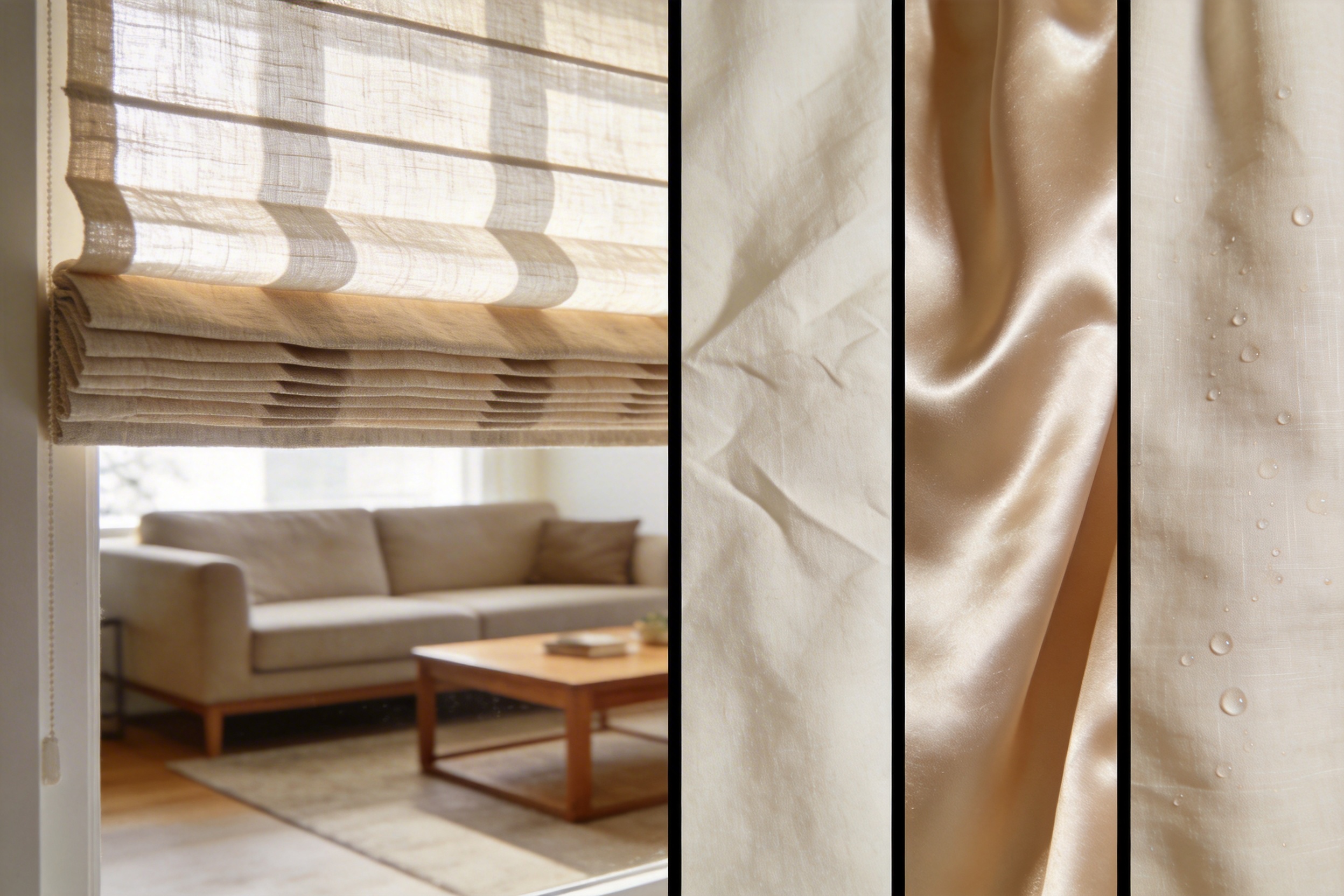
Linen’s natural open weave creates soft, diffused light that brightens rooms without harsh glare—unlike sheer fabrics that compromise privacy or heavy blackout fabrics that darken spaces unnecessarily. When raised, the fabric folds neatly into uniform pleats, maintaining a clean aesthetic while allowing full natural light to enter. When lowered, it provides sufficient privacy for bedrooms and living areas without feeling oppressive.
2. Temperature Regulation & Energy Efficiency
Flax fibers, the source of linen, are hollow and moisture-wicking. This property helps regulate indoor temperatures: in summer, linen Roman fabric keeps rooms cool by drawing heat away from surfaces; in winter, it retains warmth without trapping humidity. According to the International Energy Agency (IEA), linen window coverings can reduce cooling costs by up to 15% in warm climates and heating costs by 10% in cool climates.
3. Versatility Across Interior Styles
Linen Roman fabric complements every design aesthetic: minimalist modern (neutral tones paired with metallic accents), rustic farmhouse (textured weaves with wooden frames), and classic traditional (embroidered patterns with rich hues). Its ability to pair with bold wall colors, patterned upholstery, and natural materials makes it a versatile choice for any space.
Advanced Manufacturing Processes: Ensuring Premium Quality
The quality of linen Roman fabric depends on precision at every stage of production. Leading manufacturers integrate sustainable sourcing, advanced knitting technologies, and eco-friendly finishing to enhance performance while preserving linen’s natural properties.
1. Sustainable Flax Sourcing & Fiber Preparation
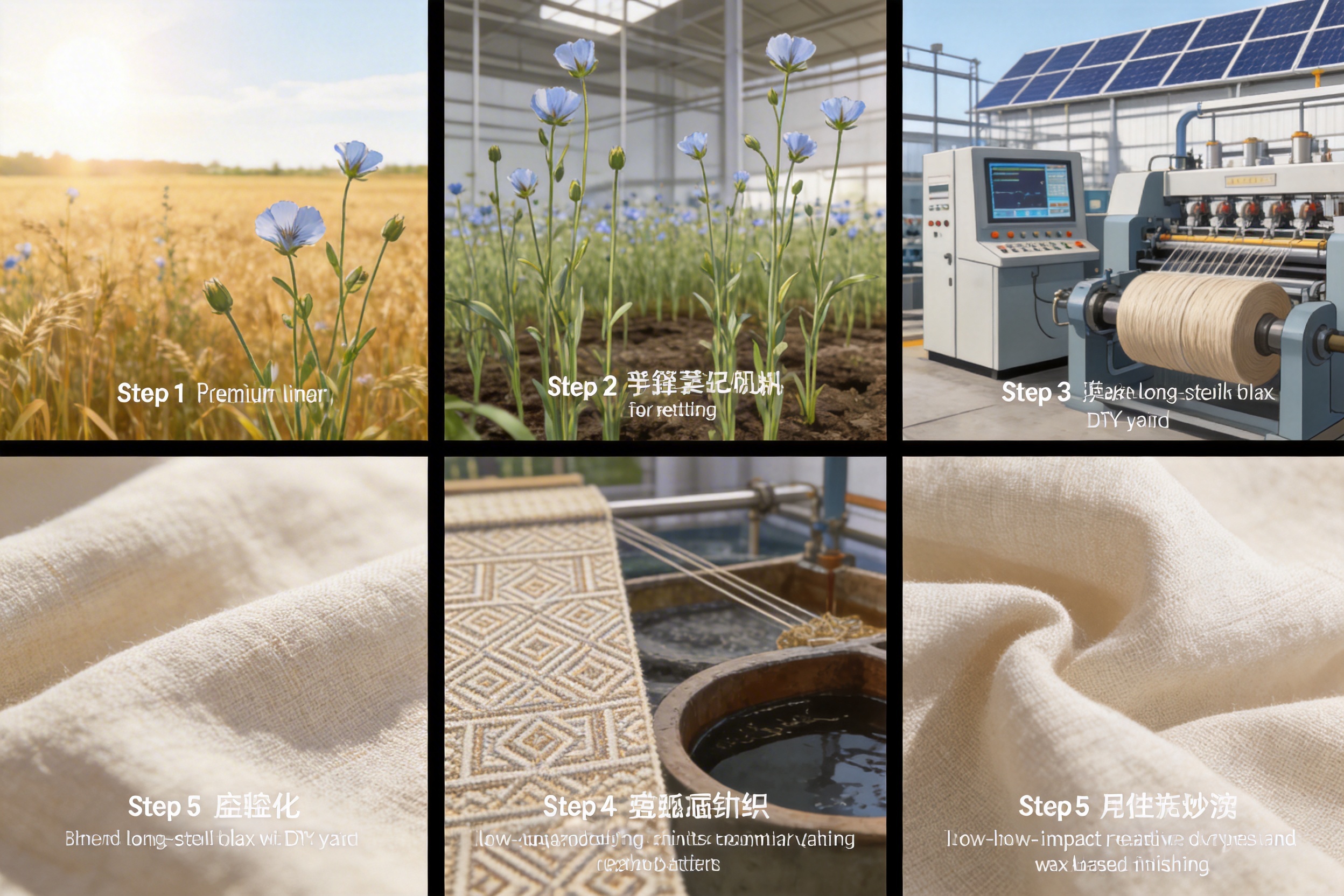
Premium linen Roman fabric starts with long-staple flax fibers sourced from regions with optimal growing conditions (e.g., Northern Europe and China’s Yangtze River Delta). The fibers undergo a rigorous preparation process:
- Retting: Microbial breakdown of the flax stem to separate fibers from woody core (using rainwater or controlled humidity to avoid chemical use).
- Scutching: Mechanical removal of woody debris from retted fibers.
- Hackling: Combing to align fibers for strength and uniformity.
This process ensures fibers are 2-3 times stronger than cotton fibers, forming the foundation of durable linen Roman fabric.
2. Blending with Advanced Yarns for Enhanced Performance
While pure linen is excellent, blending it with small amounts of Drawn Textured Yarn (DTY)—a high-elasticity polyester yarn—improves durability and reduces wrinkling without compromising breathability. Leading manufacturers use computerized blending machines to distribute DTY fibers evenly across the linen weave, resulting in a fabric that:
- Resists stretching by 30% compared to pure linen.
- Reduces wrinkling by 40% after washing.
- Maintains its natural luster and texture.
3. Precision Knitting & Weaving
Linen Roman fabric for window coverings is typically knitted using jacquard or plain weave techniques:
- Jacquard Knitting: Computer-controlled machines create intricate patterns (e.g., geometric designs, floral motifs) without compromising fabric strength.
- Plain Weave: A tight, uniform weave that ensures the fabric folds neatly when raised or lowered—critical for Roman shade functionality.
Advanced tension control systems in these machines prevent uneven stitching, which can cause sagging or fraying over time.
4. Eco-Friendly Dyeing & Finishing
To preserve linen’s natural properties, manufacturers use low-impact dyeing processes:
- Reactive Dyes: Bond chemically with linen fibers to ensure color fastness (resists fading from sunlight and washing).
- Natural Finishes: Wax-based anti-wrinkle coatings (instead of synthetic resins) and plant-based stain-resistant treatments that do not block airflow.
These processes reduce water usage by 50% compared to traditional dyeing and eliminate harmful chemicals like formaldehyde.
Company Strengths: Why Trusted Manufacturers Matter
Partnering with a reputable manufacturer is critical to accessing high-quality linen Roman fabric. Leading manufacturers combine integrated production chains, strict quality control, and customization capabilities to deliver products that exceed expectations.
1. Integrated Production Chain
Manufacturers with end-to-end control (from DTY yarn production to fabric finishing) ensure consistency and customization. For example, a manufacturer that produces its own DTY yarn can blend it with linen fibers to exact specifications—allowing for tailored performance (e.g., UV resistance for sun-exposed windows).
2. Rigorous Quality Control
Premium linen Roman fabric undergoes 12+ quality checks at every stage:
- Fiber strength testing (tensile and tear resistance).
- Color fastness testing (exposure to sunlight and 50 washes).
- Wrinkle resistance testing (ASTM D4236 standard).
- Functional testing (folding durability for Roman shades).
Manufacturers adhering to ISO 9001 and OEKO-TEX® Standard 100 ensure products are safe for indoor use (free of harmful substances).
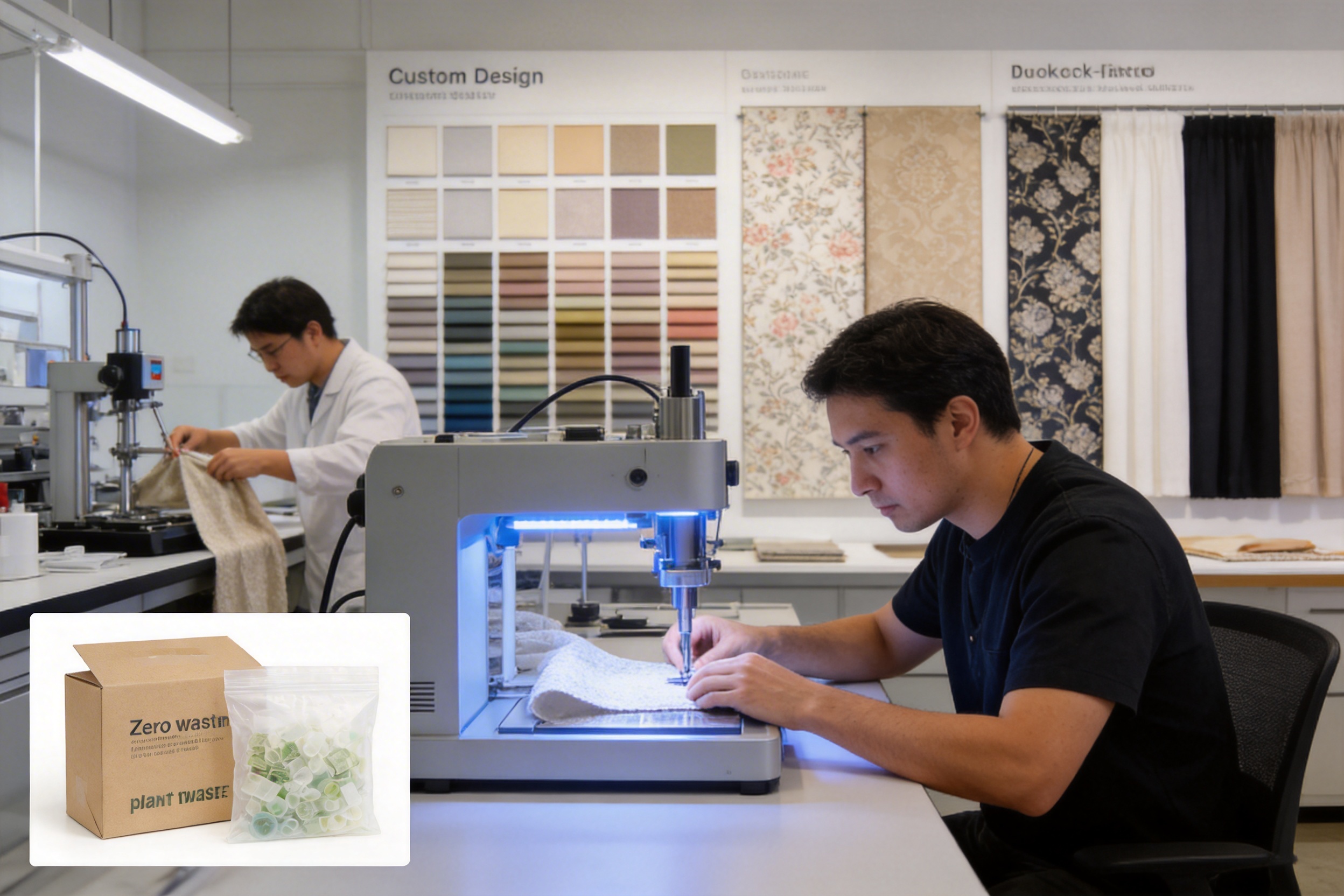
3. Customization Capabilities
Leading manufacturers offer tailored solutions:
- Color: Over 50 neutral and muted tones (custom dyeing available for bulk orders).
- Pattern: Jacquard designs (geometric, floral) or embroidered accents.
- Performance: Blackout lining (for bedrooms), UV-resistant coating (for sunrooms), or flame-retardant treatment (for commercial spaces).
4. Sustainable Practices
Environmentally responsible manufacturers prioritize:
- Renewable energy (solar panels for factory operations).
- Zero-waste production (recycling flax byproducts into biofuel).
- Biodegradable packaging (paper and plant-based plastics).
These practices not only reduce carbon footprint but also appeal to eco-conscious consumers.
Practical Tips for Choosing Linen Roman Fabric
To maximize the benefits of linen Roman fabric, follow these guidelines:
1. Define Your Needs
Identify the primary function of the window covering:
- Light Filtering: Choose plain weave linen Roman fabric (no lining).
- Privacy: Add a sheer lining to the plain weave fabric.
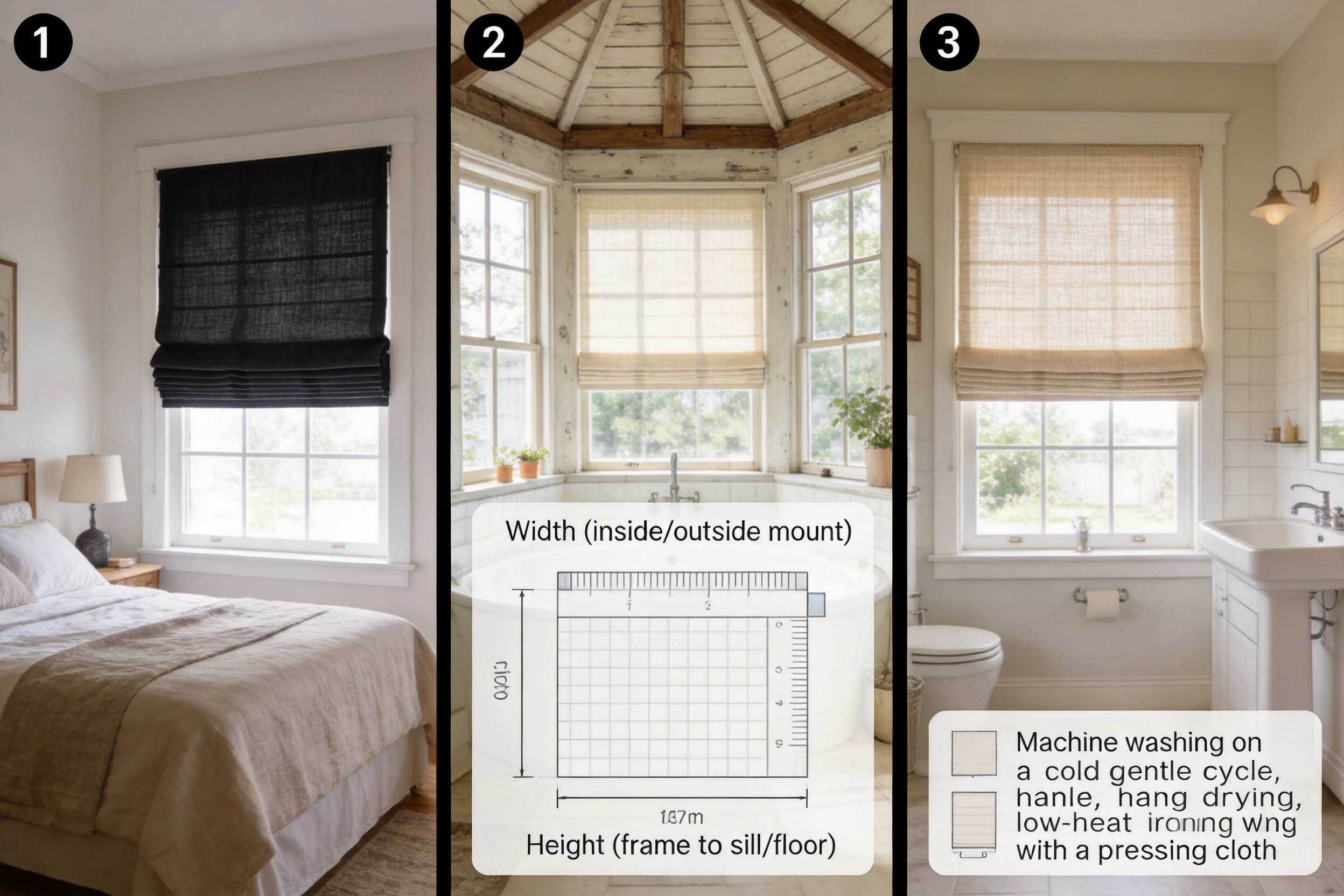
- Blackout: Pair linen Roman fabric with a blackout lining (100% light blockage).
2. Select the Right Size & Fit
Measure your window accurately:
- Width: Measure the inside frame width; add 2-3 inches for overlap (outside mount) or use the exact frame width (inside mount).
- Height: Measure from the top of the frame to the windowsill (inside mount) or from the top of the desired mounting point to the floor (outside mount).
Consult a professional installer if you’re unsure to avoid gaps or sagging.
3. Maintain Proper Care
Linen Roman fabric is low-maintenance but requires gentle handling:
- Machine wash on a cold, gentle cycle (avoid bleach or fabric softeners).
- Hang to dry (avoid tumble drying to prevent shrinking).
- Iron on a low setting (use a pressing cloth to protect the fabric).
Q&A Section
Q1: Is linen Roman fabric suitable for bathrooms?
A: Yes—when blended with 5-10% DTY yarn, linen Roman fabric resists moisture and mildew. Choose a water-repellent finish for extra protection in humid bathrooms.
Q2: How long does linen Roman fabric last?
A: With proper care, linen Roman fabric can last 7-10 years. Regular cleaning and avoiding harsh chemicals will preserve its quality and appearance.
Q3: Can linen Roman fabric be used for commercial spaces?
A: Yes—add flame-retardant and UV-resistant treatments to meet commercial building codes. It’s ideal for hotels, offices, and restaurants due to its durability and aesthetic appeal.
Q4: Does linen Roman fabric wrinkle easily?
A: Pure linen wrinkles more easily, but blended linen (with DTY yarn) reduces wrinkling by 40%. Hang the fabric immediately after washing to minimize wrinkles.
Q5: Is linen Roman fabric more expensive than synthetic alternatives?
A: Yes—linen is a premium natural fiber, but its durability and energy efficiency offset the higher upfront cost over time. Blended options offer a more affordable middle ground.
References
1. Textile Institute. (2023). "Linen Fiber Properties and Applications in Window Coverings." Journal of Textile Research, Vol. 45, No. 2, pp. 123-145.
2. Smith, J. et al. (2022). "Sustainable Window Coverings: A Guide to Eco-Friendly Materials." Green Building Council, pp. 56-62.
3. Wang, L. (2021). "Advanced Knitting Technologies for Linen Blended Fabrics." Chinese Textile Engineering Journal, Vol. 38, No. 3, pp. 78-89.
4. International Flax and Linen Association. (2024). "Flax Cultivation and Processing: Best Practices." Brussels: IFLA Publications.
5. Consumer Reports. (2023). "Window Coverings: Which Materials Last the Longest?" Consumer Reports Magazine, pp. 34-39.
6. IEA. (2022). "Energy Efficiency of Natural Fiber Window Coverings." Paris: International Energy Agency.