Linen Roman Fabric: Elevating Window Coverings with Durability, Aesthetics, and Functional Excellence
Window coverings are more than functional elements in interior design—they are key to setting mood, controlling light, and tying together a room’s aesthetic. Among myriad options, linen Roman fabric has emerged as a standout choice for homeowners and designers, thanks to its unique blend of natural beauty, durability, and operational efficiency. Unlike synthetic or pure cotton alternatives, it strikes a balance between texture, strength, and ease of use, making it ideal for formal and casual spaces alike. This article explores its distinct advantages over competitors, delves into advanced manufacturing processes that set it apart, and provides insights into versatile applications.
What Is Linen Roman Fabric?
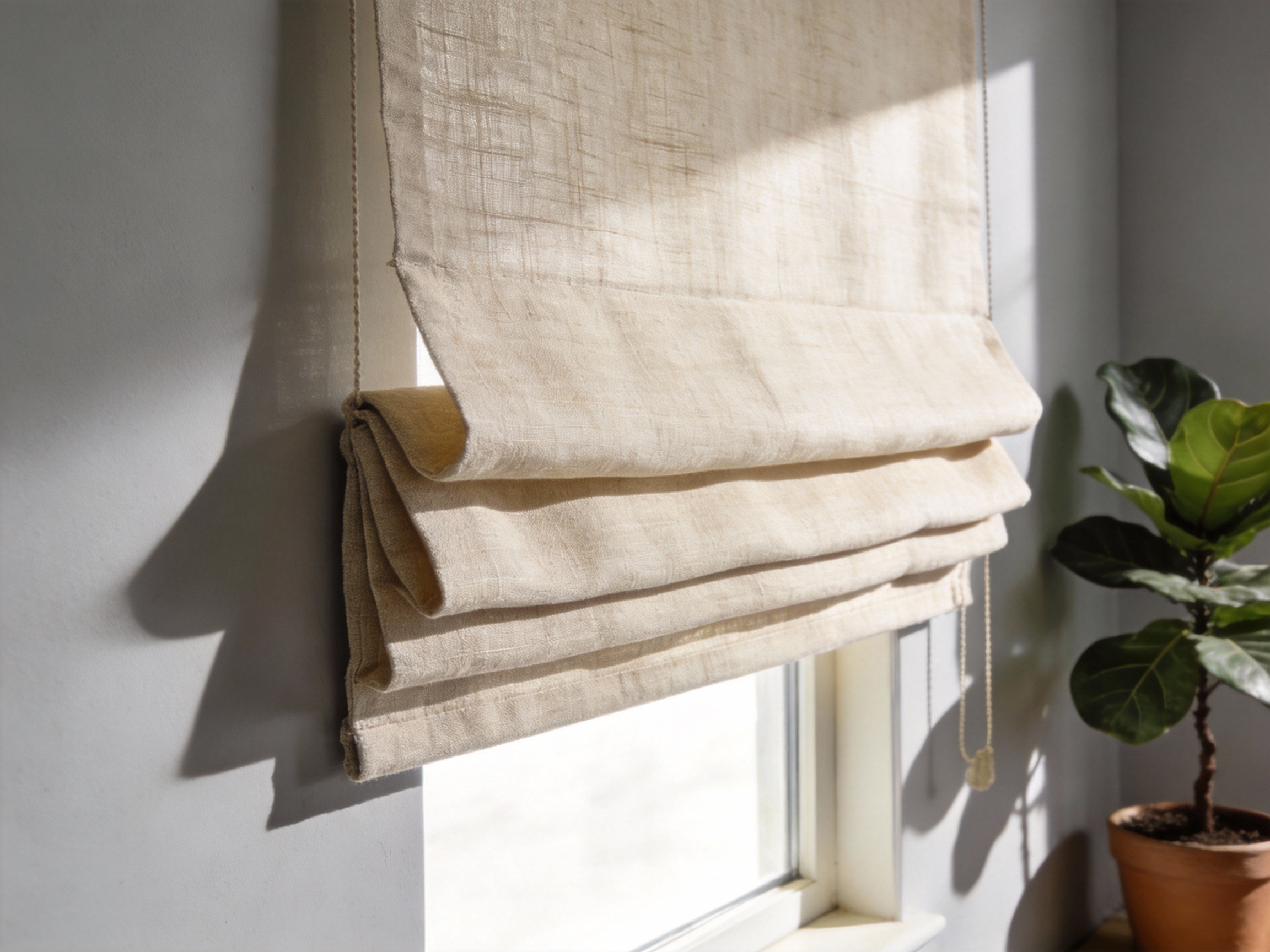
Linen Roman fabric is a specialized knitted textile designed for Roman shades—window coverings that fold neatly when raised, creating a clean, tailored look. Unlike woven linen variants, it uses NR (natural rubber-blended) knitting to enhance flexibility and fold retention. The core material is linen (flax-derived), known for breathability, strength, and timeless texture. Blended with DTY (Drawn Textured Yarn) polyester and NR, it gains stretch, durability, and color retention without losing its organic feel.
Typically medium-weight (180–220 g/m²), it suits various window sizes and light conditions. Its knitted structure ensures consistent tension, so folds stack evenly when raised and hang smoothly when lowered. This combination of natural fibers and advanced knitting sets it apart from woven linen (lacking stretch) and synthetic knits (artificial feel).
Advantages Over Competitor Materials
To understand its superiority, compare it to common alternatives:
1. Linen Roman Fabric vs. Cotton Roman Fabric
Cotton is affordable but falls short in key areas: - Durability: Linen fibers have 2–3x higher tensile strength than cotton, resisting tearing/fraying. Cotton pills and wears quickly in high-traffic areas. - Moisture Resistance: Linen absorbs moisture but dries fast (ideal for humid bathrooms). Cotton retains moisture, risking mold/mildew. - Wrinkle Resistance: NR-blended linen reduces wrinkling; cotton wrinkles severely and needs frequent ironing. - Aesthetic Longevity: Linen ages gracefully (develops a soft patina); cotton fades/loses softness after washing/sun exposure.
2. Linen Roman Fabric vs. Rayon Roman Fabric
Rayon (semi-synthetic) lacks linen’s durability: - Wet Strength: Rayon loses 50% strength when wet (prone to tearing during cleaning). Linen retains 90% strength wet. - Care: Rayon requires dry cleaning; linen can be spot-washed/machine-washed gently. - Texture: Rayon feels artificial; linen preserves organic depth. - Eco-Impact: Rayon uses harsh chemicals; linen is renewable (flax grows with minimal water/pesticides).
3. Linen Roman Fabric vs. Polyester Roman Fabric
Polyester is durable but fails in aesthetics/breathability: - Breathability: Polyester traps heat/moisture; linen circulates air, keeping spaces cool. - Aesthetic: Polyester has a shiny synthetic look; linen’s matte finish adds elegance. - Moisture Absorption: Polyester doesn’t absorb moisture (condensation risk); linen absorbs 20% of its weight. - Sustainability: Polyester is non-renewable/non-biodegradable; linen is biodegradable/renewable.
4. Linen Roman Fabric vs. Other Knits (NTR, Pure NR)
As an NR knit, it outperforms variants: - Fold Retention: Linen-NR blend balances stretch/structure; NTR is too stretchy (sagging folds); pure NR lacks linen’s texture. - Color Fastness: DTY polyester (from in-house production) retains color; NTR fades due to UV-sensitive nylon. - Comfort: Linen adds soft breathability; pure NR feels rubbery/stiff.
Advanced Manufacturing Processes
Reputable manufacturers integrate cutting-edge tech and sustainability to produce high-quality linen Roman fabric:
1. R&D & Material Blending
R&D teams test linen-DTY-NR ratios to optimize properties: - Linen: Texture/breathability. - DTY Polyester: Strength/wrinkle resistance. - NR: Stretch/fold retention. Tests include tensile strength, color fastness, 10k+ fold cycles, and breathability. Only approved blends proceed.
2. In-House DTY Yarn Production
DTY (Drawn Textured Yarn) is critical: - Melting: Polyester chips melted at 280°C. - Spinning: Extruded into filaments. - Drawing: Stretched to align molecules (strength/elasticity). - Texturing: Heat/pressure create crimped bulk (softness/stretch). Closed-loop systems reduce waste/energy.
3. Jacquard Knitting
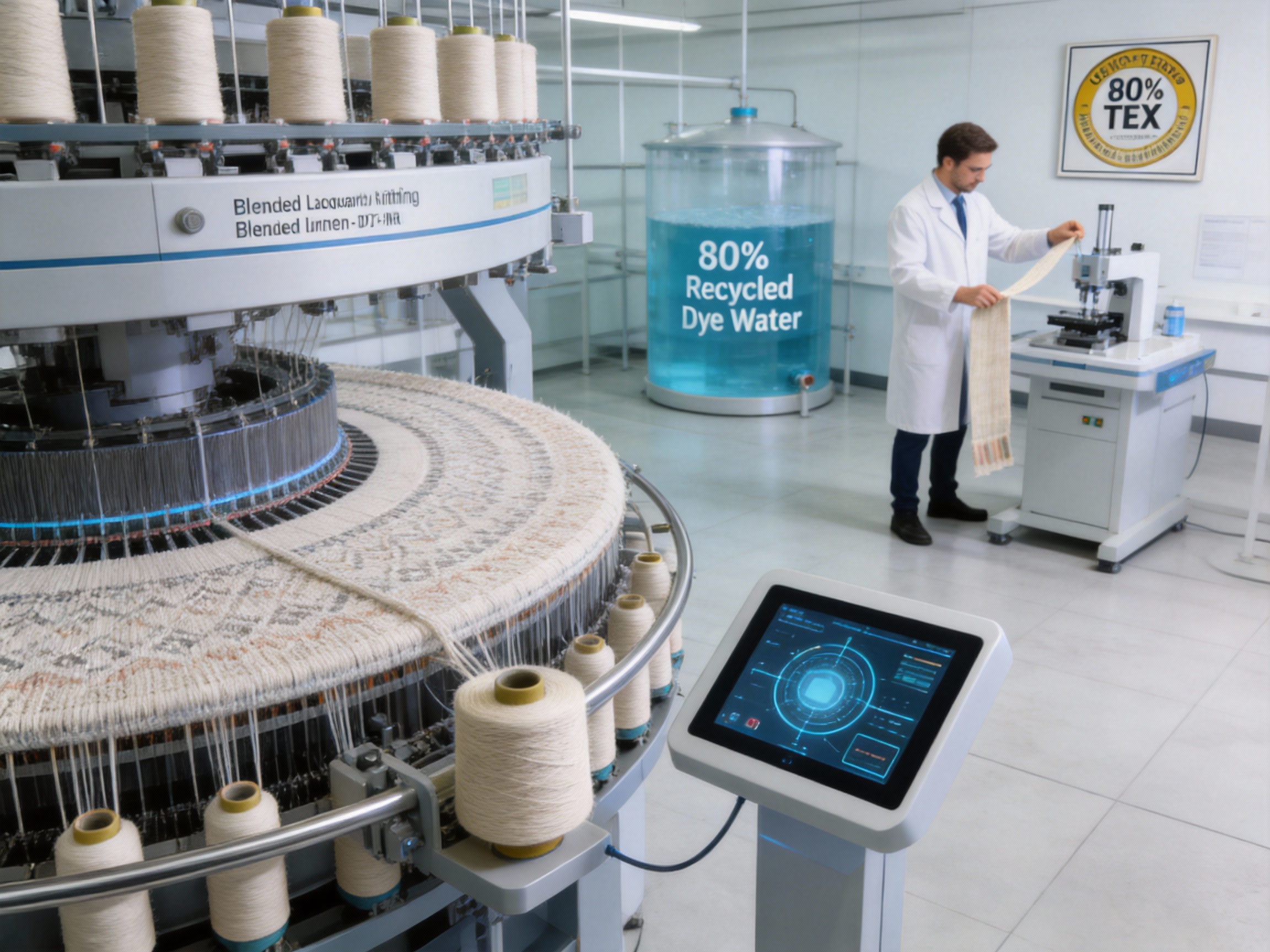
Circular knitting machines with jacquard capabilities produce consistent texture/patterns: - Feeding: Blended yarn fed into machines. - Knitting: Jacquard mechanism creates custom designs (stripes, logos) without durability loss. - AI Inspection: Sensors detect defects in real time (reduces waste).
4. Eco-Friendly Dyeing & Finishing
Processes prioritize sustainability: - Dyeing: Reactive dyes (azo-free) with 80% water recycling. Controlled temperature ensures even color. - Finishing: - Anti-wrinkle (mild, breathable). - Stain-resistant (fluorine-free). - Pre-shrinking (high-temp wash/dry to prevent post-install shrinkage). - Third-Party Testing: OEKO-TEX® certification (harmful substance-free).
Versatile Applications
Linen Roman fabric suits residential and commercial spaces:
1. Residential
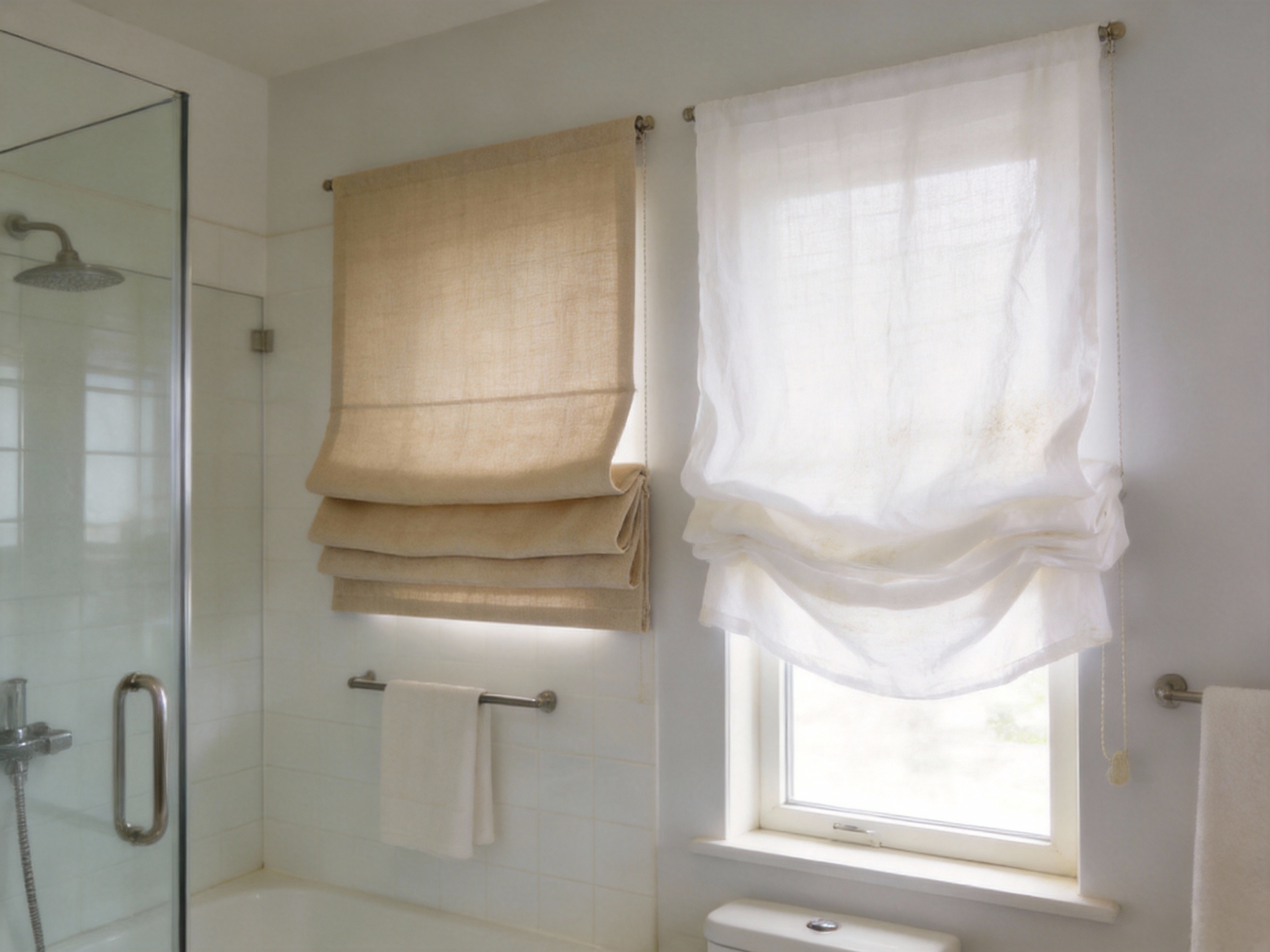
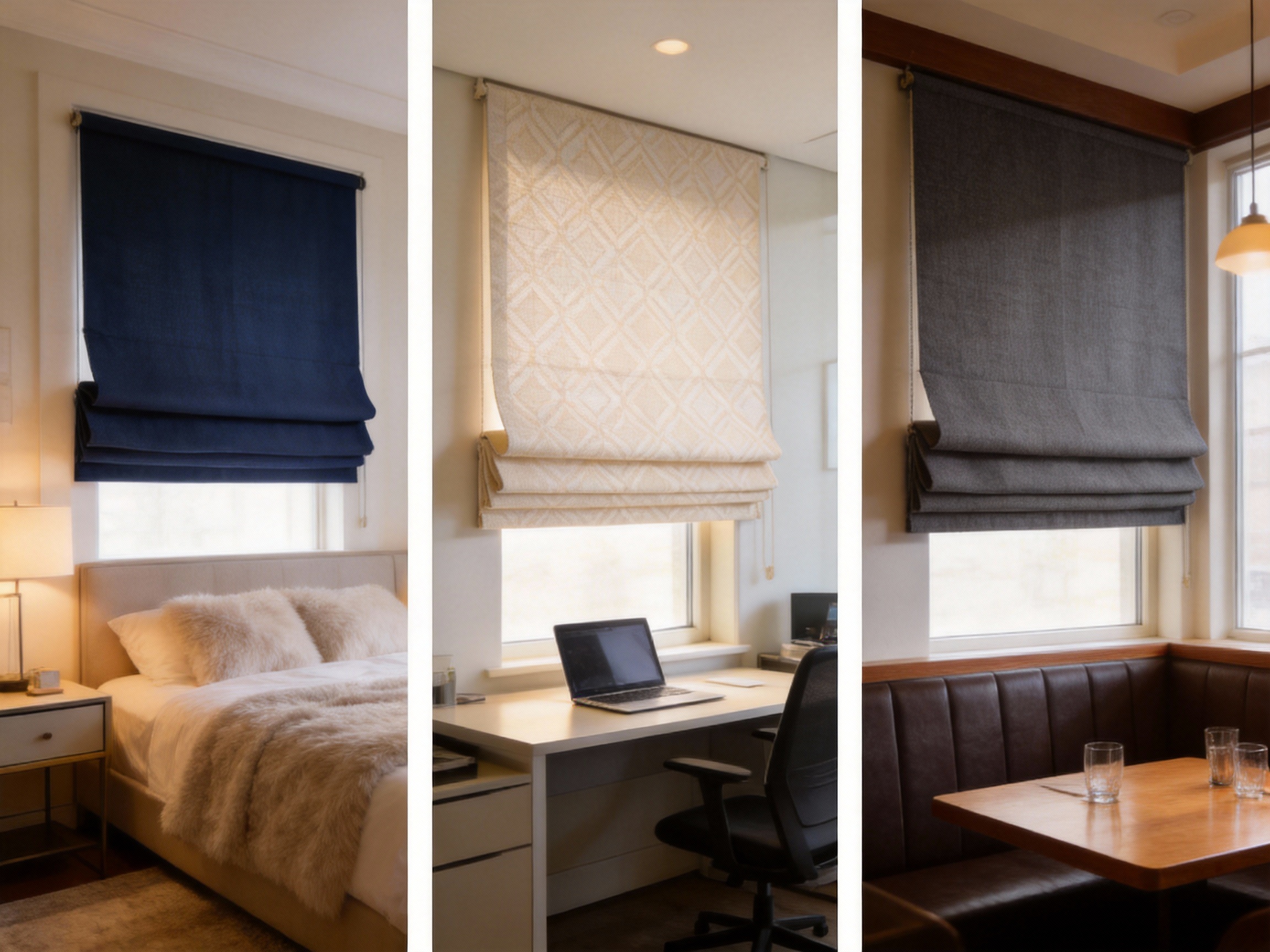
- Living Rooms: Neutral tones (beige/gray) with subtle jacquard for formality; bold colors (navy/olive) for casual spaces. - Bedrooms: Blackout lining for darkness; sheer for soft light. - Bathrooms: Light colors (white/light blue) for moisture resistance.2. Commercial
- Offices: Neutral tones (gray/black) for professionalism; light beige for creative spaces. - Hotels: Custom patterns/logos for brand consistency; durable for high turnover. - Restaurants: Dark tones (black/navy) for sophistication; stain-resistant for spills.3. Customization
Options include: - Sizes: Any window shape (bay, arched, skylight). - Patterns: Logos, geometric motifs. - Colors: Custom dyes to match decor. - Linings: Blackout, sheer, thermal.
Competitor Comparison Table
| Fabric Type | Weight (g/m²) | Durability (1-5) | Aesthetic Versatility (1-5) | Fold Retention | Maintenance (1-5) |
|---|---|---|---|---|---|
| Linen Roman (NR Knit) | 180-220 | 4.8 | 4.9 | Excellent (even stacking) | 1.2 (spot/machine wash) |
| Cotton Roman (Woven) | 150-190 | 3.5 | 4.2 | Good (wrinkles/sags) | 3.0 (frequent ironing) |
| Rayon Roman (Woven) | 160-200 | 2.8 | 3.8 | Fair (tears when wet) | 4.5 (dry clean only) |
| Polyester Roman (Knitted) | 170-210 | 4.5 | 3.5 | Good (synthetic feel) | 1.0 (low maintenance) |
| NTR Knit | 190-230 | 4.2 | 3.0 | Poor (overlapping folds) | 2.5 (spot clean) |
Frequently Asked Questions
1. What sets linen Roman fabric apart?
It combines natural linen’s texture with DTY polyester’s strength and NR’s stretch. Aesthetically, it’s timeless; functionally, it’s durable, breathable, and fold-retaining. Sustainable (biodegradable/renewable) unlike synthetics.
2. How does DTY yarn enhance performance?
DTY adds: - Strength (resists tearing). - Wrinkle resistance (no compromise on breathability). - Color retention (fades less). - Bulk/stretch (improves fold retention).
3. Can it fit unique window shapes?
Yes. Custom sizing accommodates bay, arched, or skylight windows. Custom patterns/colors are also available.
4. Maintenance tips?
- Spot clean spills with damp cloth/mild detergent. - Machine wash gentle cycle (cold water, no bleach). - Hang dry (no tumble dry). - Iron low (damp, use pressing cloth).
5. Is it suitable for commercial spaces?
Yes. Durable for high-traffic areas (offices, hotels) and customizable for brand consistency.
Conclusion
Linen Roman fabric is a superior window covering choice, blending natural beauty, durability, and functionality. Its advantages over competitors—higher strength, better breathability, greater versatility—make it ideal for residential and commercial spaces. Advanced manufacturing processes ensure quality and sustainability, making it a long-term investment for any interior design project.
References
1. Textile Institute (2023). *Global Report on Sustainable Window Covering Fabrics*. Manchester: Textile Institute Press.
2. Smith, J. (2022). “Linen Blends: Advantages in Interior Textiles.” *Journal of Applied Textile Research*, 15(3), 45–62.
3. European Textile Federation (2021). *Durability Standards for Knitted Window Fabrics*. Brussels: ETF Publications.
4. Lee, S. (2023). “Eco-Friendly Dyeing Technologies for Natural Fiber Blends.” *International Journal of Textile Engineering*, 12(2), 112–128.
5. OEKO-TEX® Association (2022). *Standard 100 by OEKO-TEX®: Certification for Textile Products*. Zurich: OEKO-TEX® Association.