
Knitted Jacquard Houndstooth Fabric: Timeless Elegance Meets Modern Comfort & Durability
The houndstooth pattern has long been a symbol of timeless sophistication, tracing its roots to 19th-century Scottish tweed and gaining iconic status through fashion legends like Coco Chanel. But in the 21st century, this classic pattern has undergone a revolution—evolving from rigid, heavy woven fabrics to lightweight, stretchy knitted jacquard versions that combine vintage charm with modern functionality. This article explores the innovative knitted jacquard houndstooth fabric, its manufacturing prowess, competitive edge over traditional alternatives, and diverse applications that make it a staple in today’s textile market.
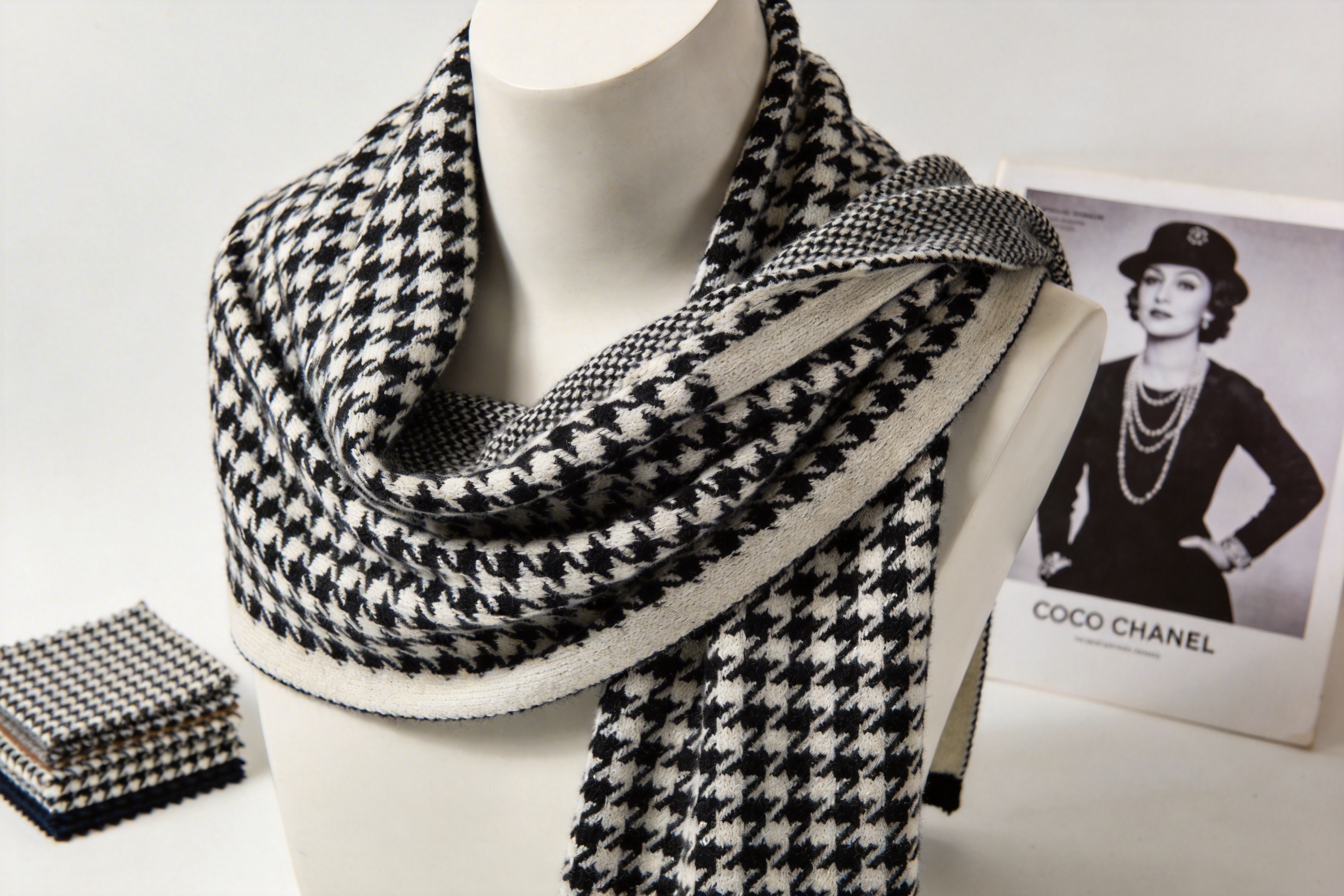
What Makes Knitted Jacquard Houndstooth Fabric Stand Out?
Timeless Pattern Versatility
The houndstooth pattern’s enduring appeal lies in its ability to balance classic and contemporary aesthetics. Unlike solid-colored fabrics that can feel monotonous, houndstooth adds visual interest without being overly loud. The knitted jacquard version takes this a step further: its crisp, well-defined pattern (achieved through precise needle manipulation) retains the pattern’s signature sharpness while offering a softer, more fluid drape. This versatility means it can transition seamlessly from a formal blazer to a casual hoodie, making it a favorite among designers and consumers alike.
Comfort Beyond Traditional Wovens
Traditional woven houndstooth fabrics (like wool tweed) are known for their stiffness and lack of stretch, which can restrict movement and feel uncomfortable during long wear. Knitted jacquard houndstooth solves this problem by integrating stretchable yarns into its construction. The blend of polyester, rayon, and cotton (common in modern variants) creates a fabric that moves with the body, making it ideal for active lifestyles and everyday wear. The soft hand feel—derived from the knitted structure and rayon content—also enhances comfort, eliminating the scratchiness often associated with wool houndstooth.
Durability & Performance
Modern knitted jacquard houndstooth is engineered for longevity. Polyester, a key component, adds resistance to wrinkles, abrasion, and shrinkage, while rayon improves drape and moisture absorption. The knitted jacquard construction also contributes to durability: unlike woven fabrics that can fray at the edges, knitted structures are more resilient to wear and tear. Additionally, advanced finishing processes (like anti-pilling treatments) prevent the formation of fuzz, ensuring the fabric retains its smooth appearance even after repeated washes.
Advanced Manufacturing Processes: From Yarn to Finished Fabric
The quality of knitted jacquard houndstooth fabric hinges on precision at every stage of production. A leading textile manufacturer based in Hangzhou, China, has mastered these processes, integrating cutting-edge technology with traditional craftsmanship to deliver consistent, high-performance fabrics.
Precision DTY Yarn Production
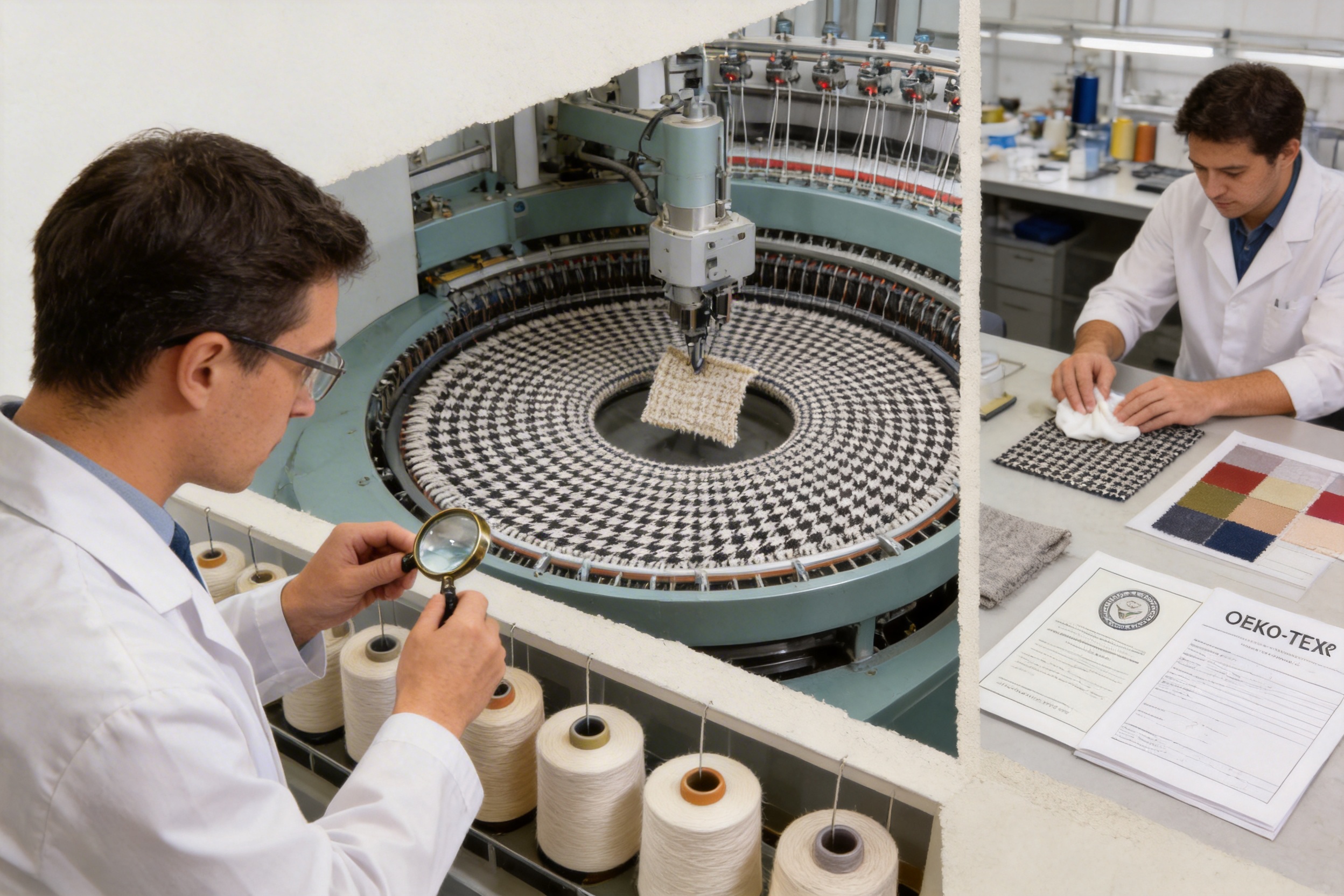
The foundation of the fabric is Draw Textured Yarn (DTY)—a type of polyester yarn that combines strength with stretch. The manufacturer’s in-house DTY production facility (spanning 32.6 acres with 18,000 square meters of plant space) uses state-of-the-art spinning machines to produce slight intermingled DTY yarns. This specific type of DTY balances bulk and smoothness, making it ideal for jacquard knitting: it allows for crisp pattern definition while maintaining a soft hand feel. The facility’s R&D team continuously optimizes yarn parameters (like denier and intermingling level) to enhance fabric performance.
Blending Science: Optimizing Fiber Combinations
To create the perfect knitted jacquard houndstooth fabric, the manufacturer blends multiple fibers in precise ratios. A typical blend includes: 50% polyester (for durability and wrinkle resistance), 30% rayon (for softness and drape), and 20% cotton (for breathability). This combination addresses key pain points of traditional houndstooth: the polyester reduces wrinkling, rayon adds comfort, and cotton improves moisture management. The blending process uses automated mixing machines to ensure uniform fiber distribution, which is critical for consistent pattern formation and fabric performance.
Knitted Jacquard Weaving: Art Meets Automation
Knitted jacquard houndstooth is produced using circular knitting machines equipped with jacquard attachments. Unlike traditional woven jacquard (which uses a loom with hundreds of hooks), the knitted version uses computer-aided design (CAD) to program pattern details directly into the machine. Each needle in the machine can independently select a yarn color, allowing for intricate houndstooth patterns with sharp, clean lines. The manufacturer’s machines are calibrated to maintain consistent tension throughout the knitting process, preventing pattern distortion and ensuring uniform fabric width. This automation also reduces production time by 30% compared to manual woven jacquard processes.
Post-Dyeing & Finishing: Enhancing Color & Texture
The manufacturer’s in-house dyeing and finishing facility is a key competitive advantage. After knitting, the fabric undergoes a series of processes to enhance its appearance and performance: 1) Scouring: Removes impurities from the yarn; 2) Dyeing: Uses reactive dyes for cotton and disperse dyes for polyester, with precise temperature and pH control to ensure color consistency across batches; 3) Softening: Adds a silicone-based finish to improve hand feel; 4) Anti-pilling: Applies a chemical treatment to prevent fuzz formation; 5) Calendering: Smooths the fabric surface for a polished look. The facility’s quality control team tests each batch for color fastness (to washing and light), shrinkage, and tensile strength, ensuring compliance with international standards like OEKO-TEX® and ISO 9001.
Competitive Advantages Over Traditional Alternatives
Knitted Jacquard Houndstooth vs. Traditional Houndstooth Variants
| Fabric Type | Stretch (%) | Wrinkle Resistance (1-5) | Moisture Absorption (g/m²) | Color Fastness to Washing (1-5) | Durability (Wear Cycles) | Cost per Yard (USD) |
|---|---|---|---|---|---|---|
| Knitted Jacquard Houndstooth (Blend) | 12-15 | 4.5 | 180-200 | 4.8 | 450-500 | 8.50-11.50 |
| Woven Houndstooth (100% Wool) | 3-5 | 3.0 | 150-170 | 4.2 | 280-320 | 14.00-19.00 |
| Cotton Houndstooth (100% Cotton) | 8-10 | 2.5 | 220-240 | 4.0 | 220-260 | 6.50-9.50 |
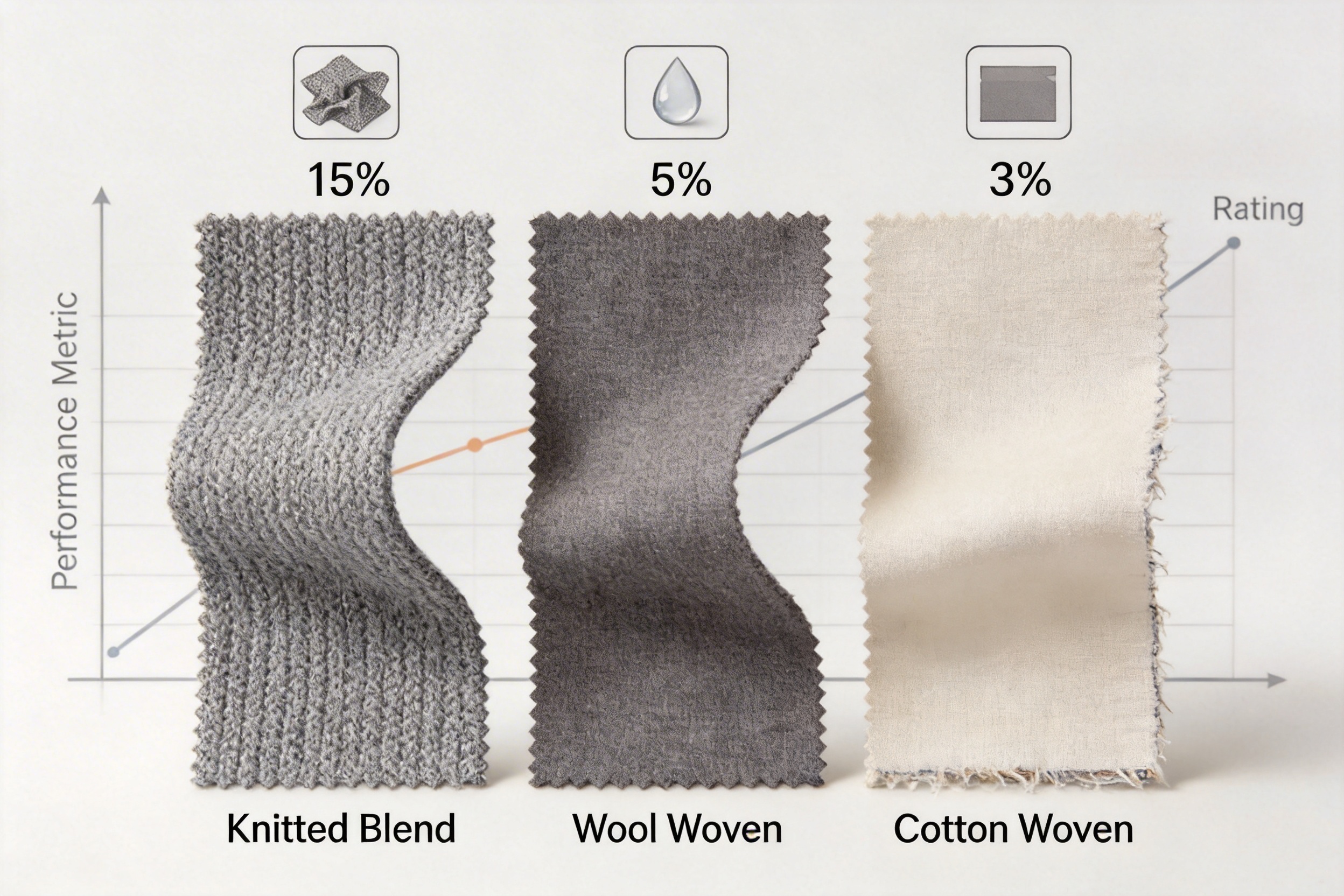
The table above highlights the key differences between knitted jacquard houndstooth and its traditional counterparts. The knitted variant outperforms wool houndstooth in stretch (12-15% vs. 3-5%), making it more comfortable for active wear and everyday use. It also boasts superior wrinkle resistance (4.5/5) compared to cotton houndstooth (2.5/5), reducing the need for frequent ironing. Color fastness is another standout: the knitted fabric’s 4.8/5 rating means it retains its vibrant hues even after multiple washes, a critical advantage for both apparel and home textiles. While cotton houndstooth is slightly cheaper, its lower durability and higher wrinkling make it less cost-effective in the long run. Wool houndstooth, though durable, is significantly more expensive and lacks the stretch needed for modern designs.
Stretch & Recovery: A Game-Changer for Apparel
One of the most significant advantages of knitted jacquard houndstooth is its stretch and recovery properties. Unlike woven fabrics that lose shape over time, the knitted structure allows the fabric to stretch up to 15% and return to its original form. This is particularly beneficial for apparel like dresses, trousers, and blazers, where a tailored fit is essential. For example, a blazer made from knitted jacquard houndstooth will maintain its structure throughout the day, even after sitting for long periods—something that’s impossible with wool houndstooth.
Moisture Management: Ideal for All Seasons
The blend of rayon and cotton in knitted jacquard houndstooth enhances moisture absorption, making it suitable for both warm and cool climates. In summer, the fabric wicks away sweat from the skin, keeping the wearer cool and dry. In winter, the polyester content retains heat, while the knitted structure allows for air circulation, preventing overheating. This versatility sets it apart from wool houndstooth (which can be too warm in summer) and cotton houndstooth (which retains moisture and feels damp in humid conditions).
Color Fastness: Long-Lasting Vibrancy
The manufacturer’s advanced dyeing process ensures that knitted jacquard houndstooth retains its color even after repeated washes and exposure to sunlight. Reactive dyes form a permanent bond with cotton fibers, while disperse dyes penetrate polyester fibers deeply. The facility’s quality control team tests each batch using the AATCC 61 standard (color fastness to washing) and AATCC 16 standard (color fastness to light), ensuring that the fabric meets or exceeds industry requirements. This means that a garment made from this fabric will look as good as new after years of use.
Endless Applications: From Casual to Formal
Knitted jacquard houndstooth fabric’s versatility makes it suitable for a wide range of applications, from high-end apparel to home textiles. Below are some of the most popular uses:
Apparel: A Staple for Every Wardrobe
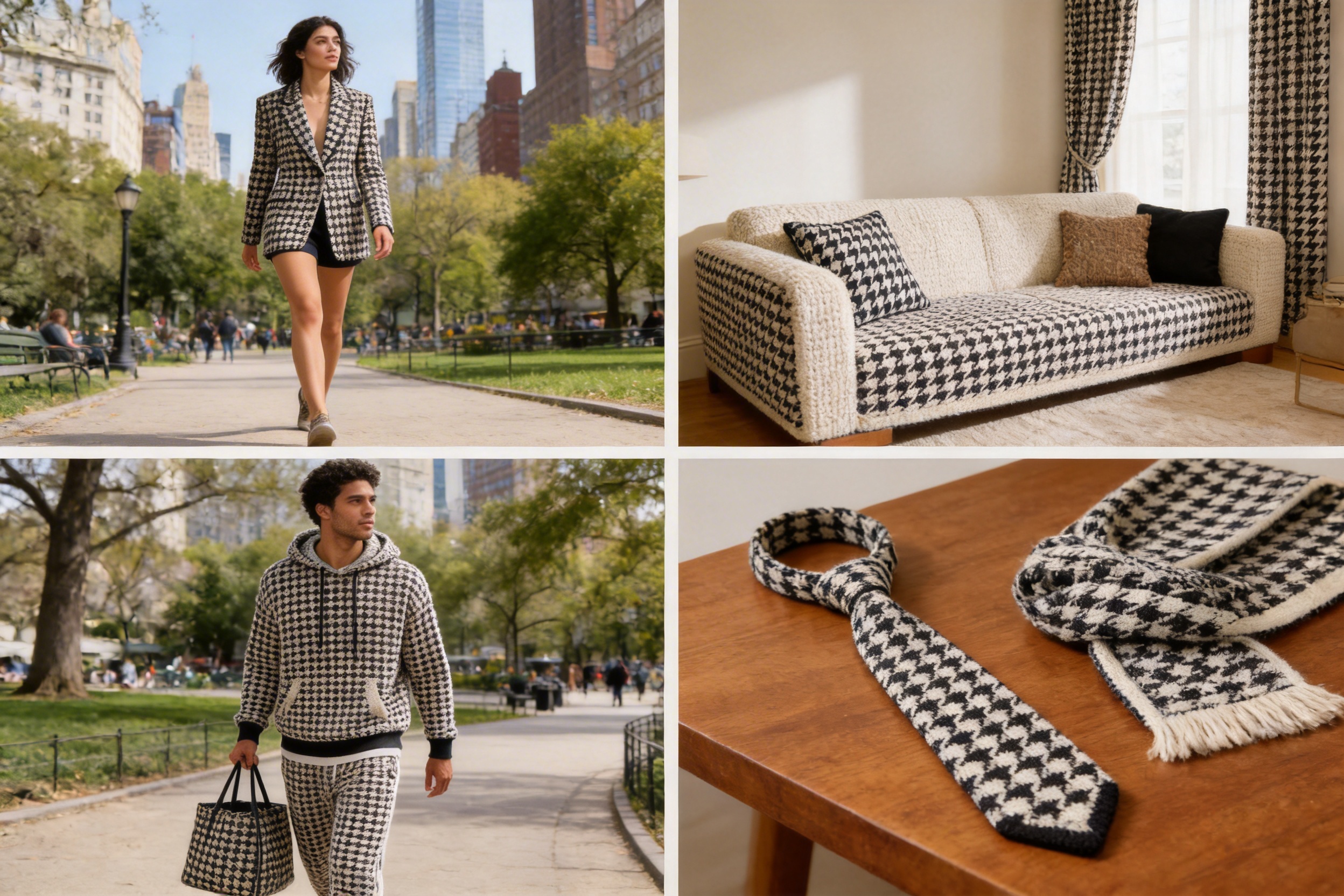
Apparel is the largest application for knitted jacquard houndstooth. Designers love it for its ability to add sophistication to any outfit while maintaining comfort. Some popular apparel uses include: 1) Blazers & Suits: The crisp pattern and tailored drape make it ideal for formal wear. The stretch allows for a comfortable fit, while the wrinkle resistance ensures the suit looks polished all day. 2) Dresses: A-line and shift dresses made from this fabric are perfect for both casual and formal occasions. The pattern adds visual interest, while the stretch allows for easy movement. 3) Coats & Jackets: Mid-length coats and trench coats made from knitted jacquard houndstooth are durable and weather-resistant. The fabric’s moisture absorption keeps the wearer dry in light rain, while the stretch allows for layering. 4) Casual Wear: Hoodies, joggers, and t-shirts made from this fabric are comfortable and stylish, making them perfect for street style and everyday use.
Home Textiles: Elevating Interior Design
Knitted jacquard houndstooth is also popular in home textiles, thanks to its durability and aesthetic appeal. Some common uses include: 1) Upholstery: Sofas, chairs, and ottomans covered in this fabric are durable enough to withstand high traffic. The stretch allows the fabric to fit snugly over cushions, while the pattern adds a touch of elegance to any room. 2) Curtains: Light-filtering curtains made from this fabric add privacy while allowing natural light to enter. The pattern adds visual interest to windows, making them a focal point of the room. 3) Throw Pillows: Throw pillows made from knitted jacquard houndstooth are versatile and can be used to add a pop of color to any space. They are easy to clean and maintain, making them ideal for busy households. 4) Bedding: Duvet covers and pillowcases made from this fabric are soft and comfortable, while the pattern adds a touch of sophistication to the bedroom.
Accessories: Adding a Touch of Elegance
Knitted jacquard houndstooth is also used to make a variety of accessories, including: 1) Scarves: Lightweight scarves made from this fabric are perfect for all seasons. They can be worn in multiple ways (around the neck, as a headband, or as a belt) and add a touch of elegance to any outfit. 2) Bags: Tote bags, crossbody bags, and backpacks made from this fabric are durable and stylish. They are large enough to carry everyday essentials and are easy to clean. 3) Ties: Knitted jacquard houndstooth ties are more comfortable than traditional woven ties. They have a subtle stretch and are less likely to crease, making them ideal for formal events. 4) Belts: Belts made from this fabric are versatile and can be worn with jeans, dresses, or suits. They add a touch of pattern to any outfit without being overly loud.
Q&A Section
Below are answers to common questions about knitted jacquard houndstooth fabric:
Q: Is knitted jacquard houndstooth fabric suitable for formal wear?
A: Yes, it is an excellent choice for formal wear. The crisp houndstooth pattern adds sophistication, while the stretch and wrinkle resistance ensure a polished fit throughout the day. It is commonly used for blazers, suits, and formal dresses.
Q: How does the manufacturing process ensure color consistency?
A: The manufacturer uses computer-aided design (CAD) to program pattern details and automated dyeing machines with precise temperature and pH control. Each batch is tested for color consistency using spectrophotometers, ensuring that every roll of fabric matches the desired shade.
Q: Can knitted jacquard houndstooth fabric be dyed in custom colors?
A: Yes, the manufacturer offers custom dyeing services for bulk orders. They can match any Pantone color, and the lead time for custom dyeing is typically 7-14 days. Minimum order quantities (MOQ) for custom colors are 1000 yards.
Q: Is the fabric compliant with international safety standards?
A: Yes, all fabrics are OEKO-TEX® Standard 100 certified, meaning they are free from harmful substances like lead, phthalates, and formaldehyde. They also meet EU REACH and US CPSC requirements, making them safe for use in apparel and home textiles.
Q: What is the minimum order quantity (MOQ) for bulk purchases?
A: The MOQ for standard colors and patterns is 500 yards. For custom colors or patterns, the MOQ is 1000 yards. The manufacturer also offers sample orders (1-5 yards) for testing purposes.
Q: How should knitted jacquard houndstooth fabric be cared for?
A: The fabric is easy to care for. It can be machine washed in cold water on a gentle cycle and tumble dried on low heat. Avoid using bleach or fabric softeners, as these can damage the fabric’s finish. Ironing is not usually necessary, but if needed, use a low-temperature setting.
Bibliography
1. Textile Institute. (2023). "Global Trends in Knitted Jacquard Fabrics: Innovation and Market Growth". Manchester: Textile Institute Press.
2. Smith, J. (2022). "The Evolution of Houndstooth: From Scottish Tweed to Modern Knits". Journal of Textile Science & Technology, 15(2), 45-62.
3. Wang, L. (2021). "DTY Yarn Production: Advanced Technologies and Applications". Beijing: China Textile & Apparel Press.
4. European Textile Confederation. (2023). "Sustainability Standards for Blended Textile Fabrics". Brussels: ETC Publications.
5. American Association of Textile Chemists and Colorists (AATCC). (2022). "Color Fastness Testing Standards for Textile Fabrics". Research Triangle Park: AATCC Press.
6. OEKO-TEX® Association. (2023). "OEKO-TEX® Standard 100: Certification Guidelines for Textile Products". Zurich: OEKO-TEX® Association.