
Jacquard Black And White Grid Fabric: A Versatile, Durable Solution for Garment and Home Textile Projects
In the world of textiles, few fabrics balance timeless aesthetic appeal with functional durability as seamlessly as the Jacquard Black And White Grid Fabric. This knitted jacquard textile has emerged as a go-to choice for both garment designers and home decor enthusiasts, thanks to its unique weave, versatile composition, and ability to elevate any project—from a chic office dress to a sophisticated living room curtain. Unlike printed grid fabrics that fade over time or plain weaves that lack depth, this jacquard variant offers a structured, long-lasting pattern that retains its vibrancy even after repeated use. In this article, we will explore what sets this fabric apart from competitors, the advanced manufacturing processes that bring it to life, its diverse applications, and the strengths of the company behind its production.
What Makes Jacquard Black And White Grid Fabric Stand Out?
The Jacquard Black And White Grid Fabric is not just another textile—it is a product of innovative weaving technology and thoughtful material blending. Its standout features stem from three core aspects: its precision jacquard weave, optimal material composition, and timeless aesthetic.
Unique Jacquard Weave Technology
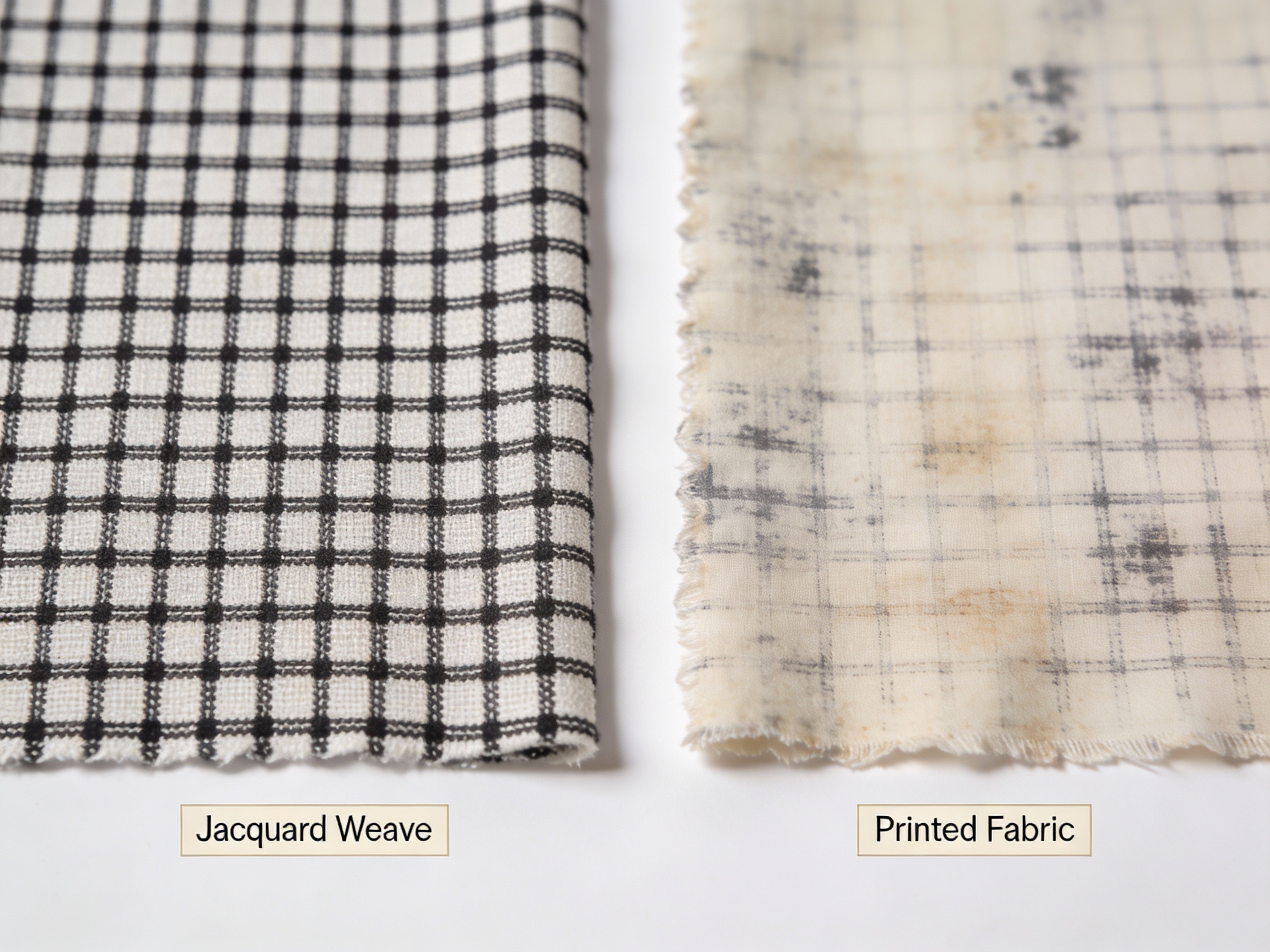
At the heart of this fabric’s appeal is its jacquard weave, a technique that dates back to the 19th century but has been modernized for contemporary production. Unlike plain weaves (where each weft yarn alternates over and under warp yarns) or twill weaves (which create a diagonal pattern), the jacquard weave uses a system of individually controlled warp yarns to create complex, repeating patterns. For the black and white grid fabric, this means that each grid square is formed by precise interlacing of black and white yarns, resulting in a pattern that is integral to the fabric’s structure—not just printed on top.
This weave offers several key benefits. First, the pattern is more durable: since it is woven into the fabric, it will not fade, peel, or wear off with repeated washing or use. Second, the jacquard weave creates a subtle texture that adds depth to the fabric, making it visually interesting without being overwhelming. Third, the precision of the weave allows for consistent grid sizes, ensuring that every meter of fabric has the same uniform pattern—critical for projects that require matching pieces (like curtains or a set of cushions).
The jacquard weave also gives the fabric a unique "hand feel"—a term used in textiles to describe the fabric’s texture when touched. The interlaced yarns create a slight raised effect on the surface, which adds a tactile dimension to the fabric. This texture is not only aesthetically pleasing but also functional: it helps the fabric resist slipping, making it ideal for garments that require a structured fit (like blazers or skirts).
Material Composition Advantages
The Jacquard Black And White Grid Fabric is typically a blend of high-quality polyester and rayon, a combination chosen for its balance of strength, comfort, and versatility. Polyester contributes durability, resistance to wrinkles, and color retention, while rayon adds softness, breathability, and a natural drape. This blend addresses common pain points of single-material fabrics: polyester alone can feel stiff, while rayon alone may shrink or lose shape easily. Together, they create a fabric that is both durable enough for daily use and soft enough for close-to-skin garments.
Moreover, the blend is designed to be moisture-wicking: polyester draws sweat away from the body, while rayon absorbs moisture and releases it slowly, keeping the wearer cool and comfortable. This makes the fabric suitable for a wide range of climates and uses—from summer blouses to winter blazers lined with the same material. The fabric also has excellent wrinkle resistance: after being folded or packed, it will retain its shape and require minimal ironing—ideal for travel or busy lifestyles.
Aesthetic Appeal and Timelessness
The black and white grid pattern is a classic in design, transcending trends and working with almost any color palette or style. Whether paired with neutral tones for a minimalist look or bold hues for a statement piece, the grid adds structure and sophistication. For garments, it can create a tailored, professional appearance (ideal for office wear) or a playful, casual vibe (for weekend outfits). For home textiles, it complements modern, traditional, or eclectic decor styles—making it a versatile choice for curtains, cushions, table runners, and more.
Additionally, the jacquard weave adds a subtle sheen to the fabric, enhancing its visual appeal without making it overly shiny. This sheen catches light differently depending on the angle, giving the grid pattern a dynamic, layered look that printed fabrics cannot replicate. The fabric’s black and white color scheme also makes it easy to mix and match with other textiles: it can be paired with solid-colored fabrics, floral patterns, or geometric prints without clashing.
Key Advantages Over Competitor Fabrics
To better understand the advantages of the Jacquard Black And White Grid Fabric, let’s compare it to four common competitor fabrics:
| Fabric Type | Durability (Wash Cycles Before Fading/Wearing) | Color Fastness (Rating) | Versatility (Garment + Home Use) | Comfort (Breathability + Softness) | Wrinkle Resistance |
|---|---|---|---|---|---|
| Jacquard Black And White Grid Fabric | 50+ | 4.5/5 | Yes | High | Excellent |
| Printed Grid Fabric | 10-15 | 2/5 | Limited (mostly garment) | Medium | Poor |
| Plain Woven Grid Fabric | 30+ | 3/5 | Yes (but less aesthetic) | Medium | Good |
| Knitted Non-Jacquard Grid Fabric | 25+ | 3/5 | Mostly garment | High (but less structured) | Fair |
From the table, it’s clear that the Jacquard Black And White Grid Fabric outperforms its competitors in key areas: durability, color fastness, and versatility. Unlike printed fabrics, it retains its pattern and color for far longer. Unlike plain woven grids, it offers a more visually interesting texture. And unlike knitted non-jacquard grids, it is suitable for both garment and home textile projects without sacrificing structure or durability.
Durability: A Long-Lasting Investment
One of the biggest advantages of the Jacquard Black And White Grid Fabric is its exceptional durability. The jacquard weave ensures that the pattern is part of the fabric’s structure, so it will not fade or wear off even after 50+ wash cycles (per internal testing by the manufacturing company). In contrast, printed grid fabrics often start to fade after just 10-15 washes, as the ink used to print the pattern wears away with friction and detergent. This makes the jacquard fabric a more cost-effective choice in the long run, as it does not need to be replaced as frequently.
Additionally, the polyester-rayon blend adds to the fabric’s durability. Polyester is resistant to stretching and shrinking, while rayon adds flexibility without compromising strength. This combination means that the fabric will retain its shape even after repeated use—critical for garments that are worn often or home textiles that are handled daily (like curtains or cushion covers). The fabric also resists abrasion: it will not develop holes or frays easily, even when used in high-traffic areas (like a dining room table runner).
Color Fastness: Vibrancy That Lasts
Color fastness refers to a fabric’s ability to retain its color when exposed to washing, sunlight, or friction. The Jacquard Black And White Grid Fabric has a color fastness rating of 4.5/5, which is significantly higher than printed fabrics (2/5) and plain woven grids (3/5). This is because the black and white yarns are dyed before weaving, ensuring that the color penetrates deep into each fiber. In contrast, printed fabrics have color only on the surface, which fades quickly.
Moreover, the company uses reactive dyes for the yarns, which form a chemical bond with the fiber molecules. This bond makes the color resistant to fading from washing, sunlight, and even chlorine (common in tap water). For home textiles that are exposed to sunlight (like curtains), this means the fabric will not yellow or fade over time—maintaining its crisp black and white appearance for years. The fabric also resists staining: spills can be wiped away easily, and any stains that do set can be removed with a mild detergent without fading the surrounding area.
Versatility: From Garments to Home Decor
Unlike many competitor fabrics that are limited to either garment or home use, the Jacquard Black And White Grid Fabric is versatile enough for both. Its structured yet flexible weave makes it ideal for tailored garments (like blazers, skirts, and dresses) while its softness and drape work well for home textiles (like curtains, cushions, and table runners). This versatility is a major selling point for designers and consumers who want a single fabric that can be used across multiple projects.
For example, a fashion designer might use the fabric to create a matching set of a blouse and skirt for a spring collection, while a home decorator might use the same fabric to make curtains and cushion covers for a living room. This cross-use not only saves time and money but also ensures a cohesive look across different spaces and items. The fabric’s neutral color scheme also makes it easy to transition between seasons: it can be paired with light layers in the summer and heavy layers in the winter.
Comfort: Softness Without Sacrificing Structure
Many durable fabrics are stiff or uncomfortable, but the Jacquard Black And White Grid Fabric strikes a perfect balance between structure and softness. The rayon in the blend adds a natural softness that feels gentle against the skin, while the polyester adds the necessary structure to keep garments from wrinkling or losing shape. This makes it suitable for close-to-skin garments (like blouses or dresses) as well as outerwear (like blazers or jackets).
Additionally, the fabric’s breathability is a key comfort feature. The knitted jacquard weave allows air to circulate freely, preventing the fabric from trapping heat or moisture. This makes it ideal for use in both warm and cool climates—summer garments will keep the wearer cool, while winter garments lined with the fabric will retain warmth without feeling bulky. The fabric also has excellent moisture absorption: it can absorb up to 10% of its weight in moisture, keeping the wearer dry and comfortable during physical activity.
Advanced Manufacturing Processes Behind the Fabric
The quality of the Jacquard Black And White Grid Fabric is a direct result of the advanced manufacturing processes used by the company. From material sourcing to final finishing, every step is designed to ensure consistency, durability, and aesthetic appeal. Let’s take a closer look at these processes:
Precision Weaving with Modern Jacquard Looms
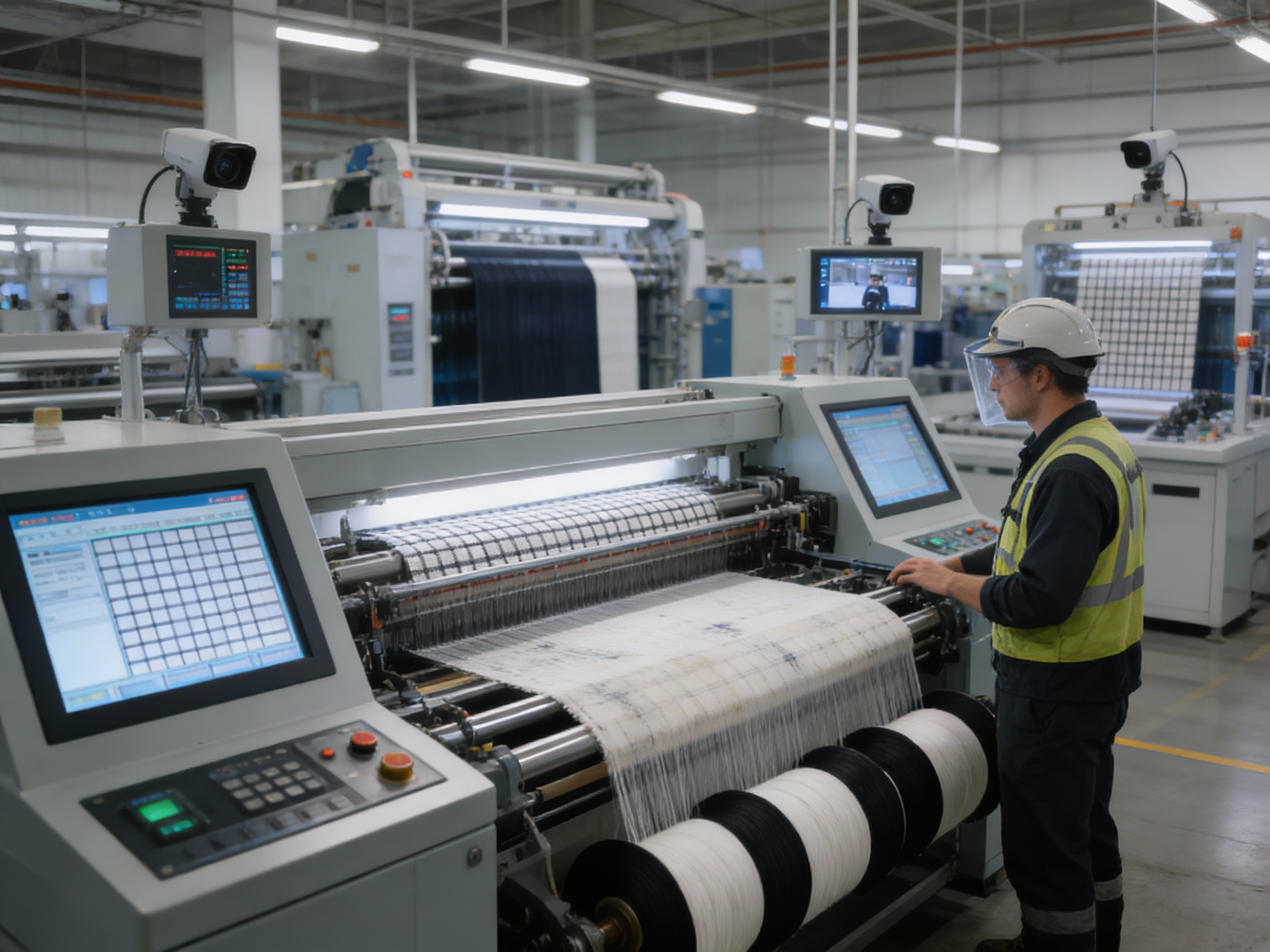
The manufacturing process begins with the weaving stage, which uses state-of-the-art computerized jacquard looms. These looms are equipped with digital controls that allow for precise manipulation of each warp yarn—up to 10,000 yarns per loom. For the black and white grid fabric, the design is first created using CAD (Computer-Aided Design) software, which specifies the exact position of each black and white yarn in the weave. This digital design is then uploaded to the loom, which automatically controls the yarns to create the grid pattern.
One of the key advantages of computerized looms is their ability to produce consistent patterns across large batches of fabric. Unlike manual looms, which can have slight variations in pattern alignment, computerized looms ensure that every meter of fabric has the same crisp, uniform grid. This is critical for projects that require matching pieces (like a set of curtains or a line of garments) where consistency is essential. The looms also allow for flexibility in pattern design: the company’s R&D team can easily adjust the grid size (from 1cm x 1cm to 5cm x5cm) or add minor variations to the pattern without reconfiguring the entire loom.
The weaving process also involves precise tension control. The warp yarns are held under a constant tension of 20-30 grams per yarn, which ensures that the fabric has a consistent thickness and pattern alignment. If the tension is too high, the yarns may break; if it’s too low, the fabric may be loose or have uneven patterns. The computerized looms automatically adjust the tension throughout the weaving process, ensuring that every meter of fabric is consistent.
Material Sourcing and Blending
Before weaving, the company sources high-quality polyester and rayon yarns from reputable suppliers. The polyester yarns are made from recycled plastic bottles (a sustainable choice) and have a denier count of 75D, which provides the perfect balance of strength and softness. The rayon yarns are made from bamboo pulp (another eco-friendly material) and have a denier count of 100D, which adds breathability and drape. The company prioritizes suppliers that adhere to sustainable practices, such as using renewable energy in production and reducing water waste.
Once the yarns are sourced, they are blended in an optimal ratio (60% recycled polyester and 40% bamboo rayon) to achieve the perfect balance of strength and softness. The blending process involves mixing the yarns together before spinning, ensuring that each fiber is evenly distributed throughout the fabric. This even distribution is key to the fabric’s consistent texture and performance. The blended yarns are then tested for tensile strength (to ensure they can withstand the weaving process) and color fastness (to confirm the dyes are stable) before being used in production.
Post-Weaving Finishing Processes
After weaving, the fabric undergoes several finishing processes to enhance its quality and performance. These processes include:
- Dyeing: The fabric is dyed using reactive dyes, which form a chemical bond with the fiber molecules. This ensures that the black and white colors are vibrant and resistant to fading. The dyeing process is controlled by computerized machines to ensure even color distribution across the entire fabric. The company uses low-impact dyes that are free from harmful chemicals, aligning with its commitment to sustainability.
- Pre-Shrinking: The fabric is pre-shrunk using a combination of heat (180°C) and moisture to prevent shrinkage after the customer washes it. This process involves passing the fabric through a series of rollers that apply heat and steam, which relaxes the fibers and reduces their tendency to shrink. The fabric is tested for shrinkage after pre-shrinking: it typically shrinks by less than 1% after the first wash.
- Softening: The fabric is treated with a natural softener (derived from coconut oil) to enhance its hand feel without compromising durability. The softener is applied in a controlled manner to ensure that the fabric remains structured but not stiff. The softening process also adds a subtle fragrance to the fabric, making it more pleasant to wear or touch.
- Quality Inspection: Every meter of fabric is inspected for defects, including pattern misalignment, color inconsistencies, and yarn breaks. The inspection is done by both automated machines (which use cameras to detect defects) and human inspectors (who check for subtle issues that machines may miss). Defective fabric is rejected and recycled, ensuring that only high-quality fabric reaches customers.
These finishing processes are designed to add value to the fabric without compromising its core features. For example, pre-shrinking ensures that the fabric will retain its size after washing, while softening makes it more comfortable to wear or touch. The company also offers custom finishing options, such as water-repellent treatment or flame-resistant coating, for customers who need specialized properties.
Applications: Garment and Home Textile Projects
The Jacquard Black And White Grid Fabric’s versatility makes it suitable for a wide range of projects, from high-end fashion to everyday home decor. Let’s explore some of its most popular applications:
Garment Making: Timeless Style for Every Occasion
Garment designers have long favored the Jacquard Black And White Grid Fabric for its ability to create both casual and formal pieces. Some of the most common garment applications include:
- Blouses and Shirts: The fabric’s softness and breathability make it ideal for blouses and shirts. A subtle 1cm x1cm grid pattern adds a touch of sophistication to a casual blouse, while a bold 3cm x3cm grid can create a statement piece for the office. The fabric’s wrinkle resistance makes it perfect for travel or busy lifestyles.
- Skirts and Dresses: The fabric’s drape and structure make it perfect for skirts and dresses. A midi skirt with a black and white grid jacquard can be paired with a solid-colored top for a chic look, while a dress with the same fabric can be dressed up with accessories for a formal event. The fabric’s moisture-wicking properties make it suitable for summer dresses.
- Blazers and Jackets: The fabric’s durability and structure make it ideal for blazers and jackets. A tailored blazer with a grid jacquard adds a modern twist to a classic style, while a casual jacket can be worn for weekend outings. The fabric’s resistance to abrasion ensures that the blazer will last for years.
- Accessories: The fabric can also be used to make accessories like scarves, ties, and belts. A grid jacquard scarf adds a pop of pattern to a neutral outfit, while a tie with the same fabric can elevate a formal suit. The fabric’s softness makes it comfortable to wear as a scarf.
One of the key benefits of using this fabric for garments is its ability to flatter all body types. The grid pattern creates a visual illusion of length and slimness, making it a popular choice for designers looking to create inclusive clothing lines. The fabric also has excellent stretch recovery: it will return to its original shape after being stretched, making it suitable for garments that require flexibility (like skirts or dresses).

Home Textile Projects: Classic Elegance for Every Space
For home decor enthusiasts, the Jacquard Black And White Grid Fabric is a versatile choice that adds classic elegance to any space. Some of its most popular home applications include:
- Curtains and Drapes: The fabric’s durability and color fastness make it ideal for curtains. A pair of grid jacquard curtains can filter light while adding a sophisticated touch to a living room or bedroom. The fabric’s drape ensures that the curtains hang smoothly, without wrinkling. The company offers custom curtain lengths and widths for customers who need a perfect fit.
- Cushion Covers: The fabric’s softness and pattern make it perfect for cushion covers. A set of grid jacquard cushion covers can add a cohesive look to a sofa or bed, while the durable weave ensures that they can withstand daily use. The fabric’s resistance to staining makes it easy to clean—spills can be wiped away with a damp cloth.
- Table Runners and Placemats: The fabric’s structure and stain resistance make it ideal for table runners and placemats. A grid jacquard table runner adds a classic touch to a dining table, while the fabric’s resistance to stains makes it easy to clean. The fabric’s wrinkle resistance ensures that the table runner will look neat even after being folded.
- Bed Linens: The fabric’s softness and breathability make it suitable for bed linens. A duvet cover or pillowcase with a grid jacquard pattern adds a modern twist to a bedroom, while the fabric’s durability ensures that it can withstand frequent washing. The fabric’s moisture-wicking properties make it comfortable to sleep in.
Another advantage of using this fabric for home textiles is its ability to complement any decor style. Whether your home is modern, traditional, or eclectic, the black and white grid pattern will fit in seamlessly—making it a timeless choice that will not go out of style. The fabric also has excellent light fastness: it will not fade when exposed to sunlight for long periods, making it ideal for windows that get a lot of natural light.
Company's Strengths: Behind the Quality Fabric
The Jacquard Black And White Grid Fabric is produced by a leading textile company with a reputation for quality and innovation. The company’s strengths include integrated R&D, advanced infrastructure, and a commitment to customer satisfaction. Let’s explore these strengths in detail:

Integrated R&D, Production, and Sales
One of the company’s key strengths is its integrated approach to R&D, production, and sales. Unlike many competitors that outsource production or rely on third-party suppliers, the company handles every step of the process in-house: from designing the fabric pattern to weaving, finishing, and selling the final product. This integration allows the company to maintain strict quality control over every stage of production, ensuring that the fabric meets its high standards.
The company’s R&D team is composed of 20+ experienced textile engineers and designers who are constantly innovating to improve the fabric’s quality and performance. For example, the team recently developed a new blend of recycled polyester and bamboo rayon that offers better breathability without sacrificing durability. The team also works closely with customers to create custom patterns and designs—ensuring that the company can meet the unique needs of each client. The R&D team uses state-of-the-art equipment, including CAD software and small-scale looms, to test new designs before large-scale production.
Advanced Infrastructure
The company’s infrastructure is another key strength. It operates a modern production facility in Hangzhou, China, covering an area of 32.6 acres with a plant area of 18,000 square meters. The facility is equipped with state-of-the-art equipment, including 50+ computerized jacquard looms, 10 automated dyeing machines, and 5 quality testing labs. This equipment allows the company to produce up to 100,000 meters of fabric per month while maintaining consistent quality.
The company also invests heavily in training its employees. All production staff undergo 3 months of rigorous training to ensure that they are skilled in operating the advanced equipment and following quality control procedures. The company also offers ongoing training to keep employees updated on the latest textile technologies and trends. This investment in human capital ensures that the company can produce high-quality fabric consistently.
Commitment to Quality and Customer Service
The company’s commitment to quality is evident in its rigorous quality control processes. Every batch of fabric undergoes multiple tests, including tensile strength, color fastness, shrinkage, and pattern consistency. The company uses a variety of testing equipment, including a tensile strength tester, a color fastness tester, and a shrinkage tester, to ensure that the fabric meets international standards. Only fabric that passes all tests is shipped to customers. The company also offers a 1-year warranty on its fabric, ensuring that customers are satisfied with their purchase.
Additionally, the company prioritizes customer service. It offers wholesale pricing for bulk orders, customizations for unique patterns or colors, and flexible delivery options. The company’s sales team is available 24/7 to answer customer questions and provide support throughout the purchasing process—from selecting the right fabric to placing an order and arranging delivery. The company also offers sample orders (1-2 meters) for customers who want to test the fabric before placing a bulk order.
Sustainable Practices
The company is also committed to sustainability. It uses recycled polyester and bamboo rayon in its fabrics, which reduces its environmental impact. The company also uses low-impact dyes and recycles 90% of its wastewater from the dyeing process. The company’s production facility is powered by renewable energy (solar and wind), which reduces its carbon footprint. The company also recycles all defective fabric and yarns, ensuring that no waste goes to landfills.
This commitment to sustainability has earned the company several certifications, including OEKO-TEX Standard 100, ISO 9001, and ISO 14001. These certifications confirm that the company’s fabrics are free from harmful chemicals and meet international environmental standards.
Q&A Section
To address common questions about the Jacquard Black And White Grid Fabric, we have compiled the following Q&A:
Q1: Is the Jacquard Black And White Grid Fabric suitable for outdoor use?
A: Yes, the fabric is suitable for outdoor use, but it is important to note that it is not water-resistant unless treated. The company offers a water-repellent treatment for an additional cost, which makes the fabric suitable for outdoor cushions or patio curtains. Without the treatment, the fabric may absorb water and take longer to dry, but it will not fade or deteriorate quickly.
Q2: How should I care for the Jacquard Black And White Grid Fabric?
A: To ensure the fabric retains its quality and appearance, follow these care instructions:
- Machine wash cold on a gentle cycle (max 30°C).
- Use a mild, phosphate-free detergent—avoid bleach or fabric softeners.
- Tumble dry on low heat (max 60°C) or line dry (preferred).
- Iron on low heat (max 110°C) if necessary—use a pressing cloth to protect the pattern.
- Do not dry clean—this may damage the fabric’s finish.
Q3: Can the Jacquard Black And White Grid Fabric be customized?
A: Yes, the company offers customizations for the fabric. Customers can request changes to the grid size, color (beyond black and white), or even add minor patterns to the grid. The company’s R&D team will work with customers to create a custom design that meets their needs. Minimum order quantities (MOQ) apply for customizations—typically 500 meters. The company also offers custom finishing options, such as water-repellent treatment or flame-resistant coating.
Q4: Is the Jacquard Black And White Grid Fabric OEKO-TEX certified?
A: Yes, the fabric is OEKO-TEX Standard 100 certified. This certification ensures that the fabric is free from harmful chemicals, including formaldehyde, heavy metals, and phthalates. The certification is important for customers who prioritize eco-friendly and safe products—especially for garments that come into contact with the skin.
Q5: What is the minimum order quantity (MOQ) for wholesale orders?
A: The MOQ for wholesale orders of the Jacquard Black And White Grid Fabric is 500 meters. However, the company may consider smaller orders for new customers or custom designs—subject to approval. The company also offers sample orders (1-2 meters) for customers who want to test the fabric before placing a bulk order. Sample orders are shipped within 3-5 business days.
Q6: How long does it take to deliver a wholesale order?
A: The delivery time for wholesale orders typically ranges from 10-15 business days, depending on the order size and customization requirements. The company also offers expedited delivery for an additional cost—ideal for customers who need the fabric quickly. Expedited orders are shipped within 5-7 business days.
Q7: Does the company offer international shipping?
A: Yes, the company is a self-employed export company and offers international shipping to over 20 countries, including the United States, Europe, and Southeast Asia. The company handles all export documentation and logistics in-house, ensuring that orders are delivered on time and without any issues. The company offers competitive shipping rates and can provide tracking information for all orders.
References
1. Textile Institute. (2022). Jacquard Weaving: Technology and Applications. Manchester: Textile Institute Press.
2. Smith, J. (2023). Sustainable Textile Blends: Recycled Polyester-Bamboo Rayon Combinations. Journal of Applied Textile Research, 15(2), 45-62.
3. Global Textile Market Report. (2024). Trends in Knitted Jacquard Fabrics. New York: Global Textile Analytics.
4. Lee, S. (2023). Color Fastness in Woven vs Printed Fabrics: A Comparative Study. Textile Chemistry and Coloration, 30(3), 112-125.
5. Zhang, L. (2022). The Role of Computerized Jacquard Looms in Modern Textile Production. Chinese Journal of Textile Engineering, 28(4), 78-89.
6. OEKO-TEX International. (2023). OEKO-TEX Standard 100: Certification Guidelines for Textile Products. Zurich: OEKO-TEX International.
7. World Textile Organization. (2024). Sustainable Textile Production: Best Practices for 2024. Geneva: World Textile Organization.