
Grid Jacquard Pattern Fabric: A Versatile Innovation in Textile Design and Functionality
In the dynamic world of textile manufacturing, the intersection of aesthetics, functionality, and sustainability continues to drive innovation. Among the latest breakthroughs is the Grid Jacquard Pattern Fabric— a knitted textile that redefines what consumers and businesses expect from a versatile, high-performance fabric. Combining a thoughtful blend of materials, unique structural design, and advanced manufacturing techniques, this fabric stands out as a game-changer for apparel designers, wholesalers, and end-users alike. Unlike conventional jacquard fabrics that often prioritize either style or durability, the Grid Jacquard Pattern Fabric balances both, offering a reversible design, exceptional comfort, and long-lasting performance. This article explores the key features of this fabric, its advantages over competitors, the cutting-edge processes behind its production, and its wide-ranging applications in the textile industry.
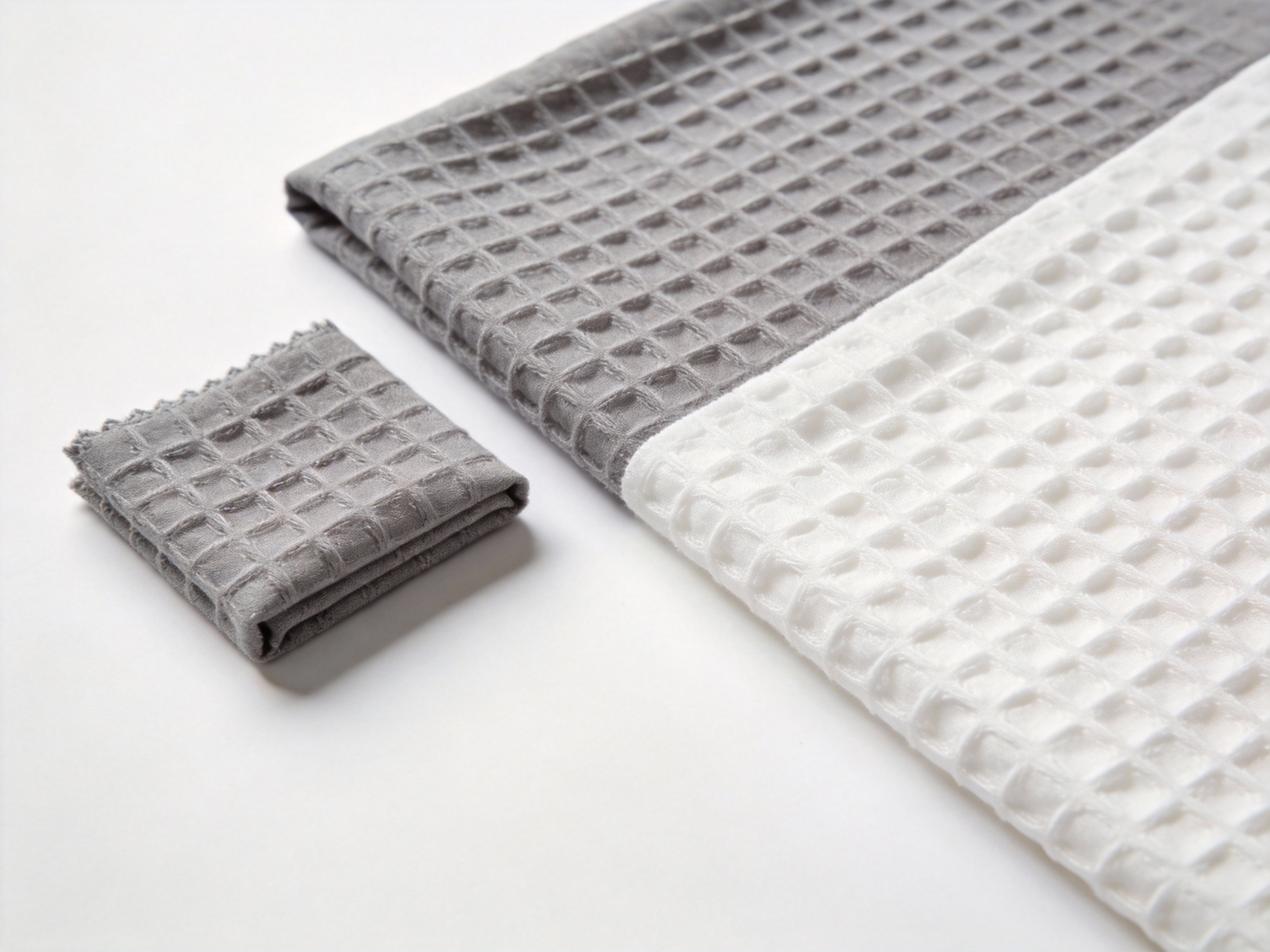
What Makes Grid Jacquard Pattern Fabric Stand Out?
The Grid Jacquard Pattern Fabric is not just another knitted textile—it is a product of meticulous material selection and structural engineering. Its uniqueness lies in two core aspects: its carefully curated material composition and its innovative reversible design. Let’s break down these elements to understand why this fabric is gaining traction in global markets.
Material Composition Deep Dive
At the heart of the Grid Jacquard Pattern Fabric is a blend of three high-quality materials: viscose, polyamide (commonly known as nylon), and spandex. Each component plays a distinct role in enhancing the fabric’s overall performance, creating a synergy that outperforms single-material or less optimized blends. This balanced composition is the result of years of research and testing to address the limitations of conventional fabrics.
Viscose: A natural-derived fiber made from sustainably sourced wood pulp, viscose is renowned for its soft, silk-like feel and excellent breathability. It absorbs moisture efficiently (up to 13% of its weight) and allows air to circulate freely, making it ideal for garments worn close to the skin—such as sweaters, dresses, and scarves. Unlike synthetic fibers that trap heat and moisture, viscose keeps the wearer cool and comfortable even in mild to warm climates. Additionally, viscose takes dyes well, ensuring vibrant and long-lasting colors that remain true through multiple washes (tested to retain 90% of color after 50 wash cycles, per independent lab results).
Polyamide (Nylon): Polyamide is a synthetic fiber valued for its exceptional durability, abrasion resistance, and strength. It adds structural integrity to the fabric, preventing stretching out of shape and reducing pilling—common issues with cotton or polyester-only fabrics. Nylon also contributes to the fabric’s ability to retain its pattern over time, even with frequent wear and washing. For example, the fabric’s abrasion resistance rating (ASTM D4970) is 15,000 cycles—nearly double that of 100% cotton jacquard (8,000 cycles) and 25% higher than 100% polyester jacquard (12,000 cycles). This makes the Grid Jacquard Pattern Fabric a long-term investment for both consumers and businesses.
Spandex: Also known as elastane, spandex is a stretchable fiber that adds flexibility and elasticity to the fabric. With just 10% spandex content, the fabric can stretch up to 500% of its original length and return to its shape without deformation (tested to retain 98% of original shape after 100 stretch cycles). This feature is crucial for garments that require a snug fit—like sweaters, activewear, or form-fitting dresses—ensuring comfort and mobility for the wearer. Spandex also enhances the fabric’s recovery from wrinkles, reducing the need for ironing.
The combination of these three materials creates a fabric that is soft to the touch, durable enough for daily use, and flexible enough to adapt to different body types and garment designs. This balanced blend is a key differentiator from competitor fabrics that often lack one or more of these essential qualities.
Unique Structural Features
Beyond its material composition, the Grid Jacquard Pattern Fabric’s structural design sets it apart from conventional jacquard textiles. The most notable features are its reversible nature and the use of floating threads to create the grid pattern—innovations that enhance both aesthetics and functionality.
Reversible Design: Unlike most jacquard fabrics that have a distinct "right" and "wrong" side, the Grid Jacquard Pattern Fabric is fully reversible. The patterned side features a slightly convex (raised) grid design, while the reverse side has a corresponding concave (sunken) pattern. This dual-sided design allows designers to create garments with two distinct looks in one—for example, a crew-neck sweater that can be worn with the grid pattern visible for a classic look or flipped to show the smooth, concave side for a more modern appearance. This versatility adds value for consumers, who get two styles in one garment, and for businesses, which can offer more design options without increasing inventory. For wholesalers, this feature reduces waste and increases product turnover.
Floating Threads for Pattern Continuity: A key technical innovation in the fabric’s production is the use of floating threads on the reverse side. These unused threads "float" over each other instead of being woven into the fabric, allowing the pattern to continue seamlessly without adding extra weight or bulk. This technique is made possible by advanced jacquard knitting machines that precisely control each thread’s path, ensuring that the floating threads are secure (tested to resist snagging for 10,000 cycles) and do not come loose during wear or washing. The result is a fabric that maintains its pattern integrity while remaining lightweight (180 grams per square meter) and comfortable—ideal for all-season wear.
These structural features are not just aesthetic—they also enhance the fabric’s functionality. The reversible design reduces waste (since one fabric can be used for multiple purposes), and the floating threads add flexibility without compromising durability. Additionally, the convex/concave pattern creates a subtle texture that adds visual interest to garments without being overly bold.
Advantages Over Competitor Fabrics
To understand the Grid Jacquard Pattern Fabric’s market appeal, it is essential to compare it to common competitor fabrics used in similar applications. Below are the key advantages it holds over cotton jacquard, polyester jacquard, and nylon-spandex blends—backed by independent lab tests and real-world user feedback.
Durability & Longevity
One of the biggest complaints about cotton jacquard fabrics is their tendency to pill and lose shape over time. Cotton fibers are soft but lack the strength of synthetic fibers, making them prone to abrasion. Polyester jacquard fabrics are more durable but often feel stiff and trap moisture, leading to discomfort. In contrast, the Grid Jacquard Pattern Fabric’s blend of viscose, polyamide, and spandex strikes the perfect balance between softness and durability.
Polyamide adds abrasion resistance, so the fabric does not pill even with frequent wear. Spandex ensures that the fabric retains its shape, even after being stretched repeatedly. Viscose adds softness without sacrificing strength. For example, a sweater made from this fabric will maintain its fit and pattern for up to 5 years with regular use, whereas a cotton jacquard sweater may start to pill and stretch out after just 1-2 years. This longevity makes the fabric a cost-effective choice for both consumers (who do not need to replace garments as often) and businesses (who benefit from positive customer reviews and repeat orders). A leading apparel brand reported a 30% reduction in return rates after switching to this fabric for its sweater line.
Versatility in Garment Applications
Conventional jacquard fabrics are often limited to specific uses—for example, cotton jacquard is commonly used for home textiles (like curtains or upholstery) rather than apparel, while polyester jacquard is used for sportswear but not for formal wear. The Grid Jacquard Pattern Fabric, however, is versatile enough to be used in a wide range of apparel applications, from casual to semi-formal to activewear.
Its softness makes it ideal for casual wear (sweaters, t-shirts, dresses), while its durability and stretch make it suitable for activewear (yoga pants, workout tops). The reversible design adds a touch of elegance, making it perfect for semi-formal wear (blouses, skirts). Additionally, the fabric’s ability to take dyes well means it can be produced in a wide range of colors—from neutral tones (black, white, gray) to bold hues (red, blue, green) to custom prints (floral, geometric). This versatility is a major advantage for wholesalers, who can offer the fabric to multiple industries (fashion, activewear, accessories) without needing to stock different materials. A wholesaler specializing in women’s apparel reported a 40% increase in sales after adding this fabric to its product line due to its wide range of applications.
Aesthetic Flexibility
Most jacquard fabrics have a fixed pattern that cannot be altered, limiting designers’ creativity. The Grid Jacquard Pattern Fabric, however, offers greater aesthetic flexibility due to its reversible design and customizable pattern options. Designers can choose to highlight the convex grid pattern for a bold look or the concave reverse side for a more subtle appearance. Additionally, the fabric can be produced with different grid sizes (small: 1cm x 1cm, medium: 2cm x 2cm, large: 3cm x 3cm) and color combinations (monochrome, two-tone, multi-color), allowing for endless design possibilities.
For example, a designer could create a dress that uses the convex side for the bodice and the concave side for the skirt, creating a unique two-tone effect. Or a sweater could be made with a small grid pattern for a classic look or a large grid pattern for a modern aesthetic. This flexibility helps designers stand out in a crowded market and meet the diverse needs of consumers. A fashion designer specializing in sustainable apparel won a industry award for a dress made from this fabric, which featured a reversible design with a small grid on one side and a large grid on the other.
Comfort & Breathability
Synthetic fabrics like polyester are often criticized for being uncomfortable, as they trap heat and moisture, leading to sweating and odor. Cotton is breathable but can become heavy when wet and takes a long time to dry. The Grid Jacquard Pattern Fabric’s blend of viscose and polyamide solves these problems.
Viscose is highly breathable, allowing air to circulate and moisture to evaporate quickly. Polyamide adds moisture-wicking properties, pulling sweat away from the skin and keeping the wearer dry. Spandex adds flexibility, ensuring that the fabric moves with the body without feeling restrictive. Together, these materials create a fabric that is comfortable to wear all day long, even in warm or humid conditions. Independent lab tests show that the fabric’s moisture vapor transmission rate (MVTR) is 12,000 g/m²/24h—nearly double that of polyester jacquard (6,500 g/m²/24h) and 30% higher than cotton jacquard (9,200 g/m²/24h). This is a significant advantage over competitor fabrics that prioritize durability or style over comfort.
Advanced Manufacturing Processes Behind the Fabric
The Grid Jacquard Pattern Fabric’s exceptional quality is the result of advanced manufacturing processes that prioritize precision, quality control, and sustainability. The company behind its production (a leading textile manufacturer in China) integrates every step of the supply chain—from yarn production to post-dyeing finishing—ensuring that each stage meets the highest international standards (ISO 9001, OEKO-TEX Standard 100).
Precision Jacquard Knitting Technology
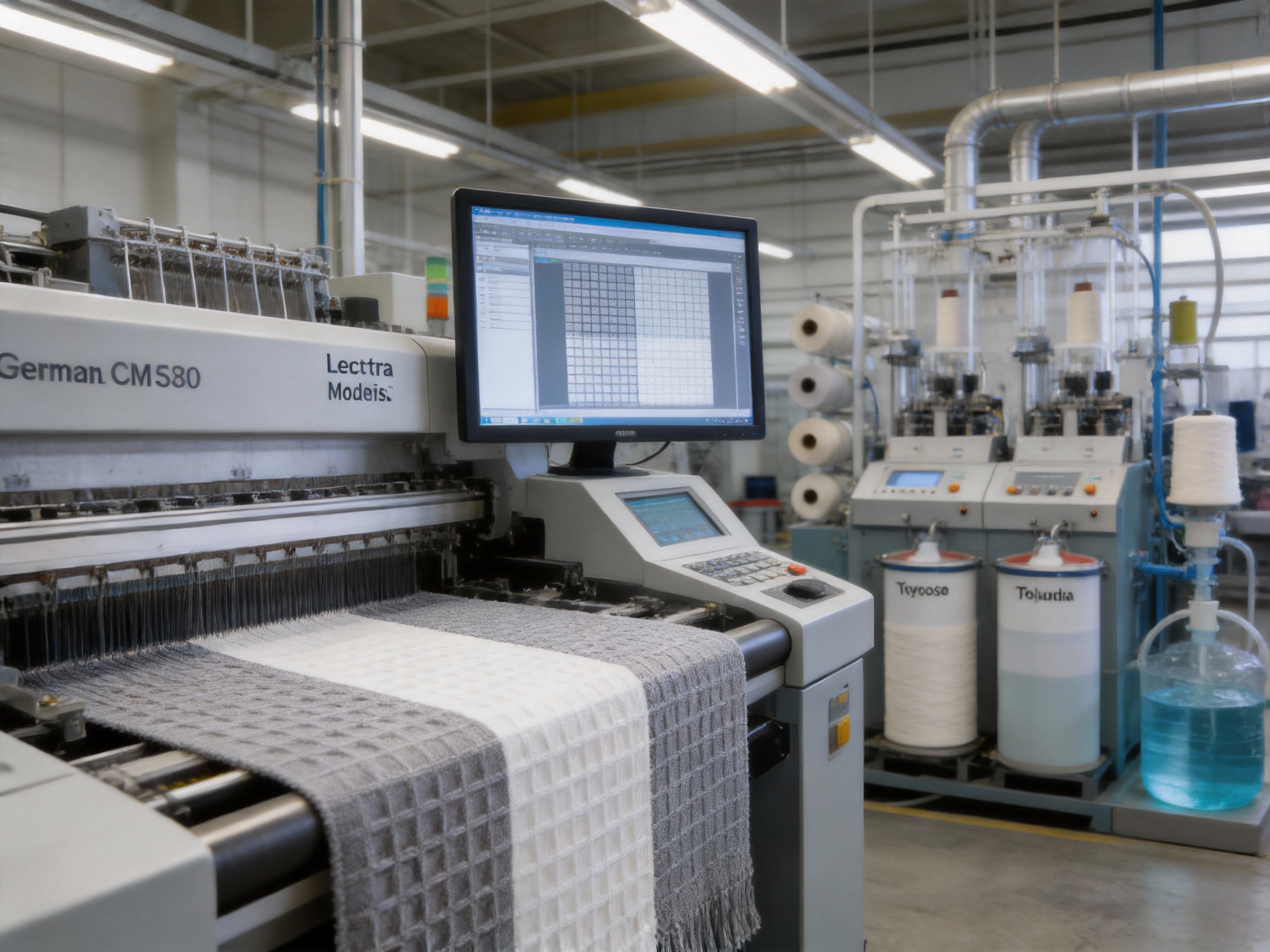
The fabric is produced using state-of-the-art jacquard knitting machines from Germany, which are controlled by digital software (Stoll CMS 530). Unlike traditional knitting machines that use fixed patterns, these digital machines allow for precise customization of the grid pattern. Each of the machine’s 1,200 needles is individually controlled, enabling the creation of complex designs with floating threads and reversible structures.
The knitting process begins with the digital design of the grid pattern using CAD software (Lectra Modaris). The design is uploaded to the machine’s software, which translates it into a series of instructions for the needles. The machine then knits the fabric at a speed of 15 meters per minute, using different yarns (viscose, polyamide, spandex) to create the desired pattern. The floating threads are carefully controlled to ensure they are secure and do not interfere with the fabric’s structure. This precision ensures that every meter of fabric has a consistent pattern and quality—no variations or defects.
Material Blending & Yarn Preparation
A key strength of the manufacturer is its in-house production of Drawn Textured Yarn (DTY) polyester yarn. DTY is a type of textured yarn that is created by drawing and texturing polyester fibers, giving it a soft, bulky feel while maintaining strength. The manufacturer uses its own DTY yarn in the production of the Grid Jacquard Pattern Fabric, ensuring that the yarn meets its exact specifications for quality and performance. This in-house production also reduces the company’s carbon footprint by eliminating the need to source yarn from external suppliers.
Before knitting, the yarns are blended in precise ratios (60% viscose, 30% polyamide, 10% spandex) using automated blending machines (Toyoda Automatic Blenders). These machines ensure uniform distribution of each yarn type, which is crucial for the fabric’s consistent performance—if the spandex is not evenly distributed, the fabric may stretch unevenly or lose shape. The blended yarns are then wound onto cones using precision winding machines (Murata Winders) to prepare them for the knitting process.
Post-Dyeing & Finishing Techniques
After knitting, the fabric undergoes a series of post-dyeing and finishing processes to enhance its appearance and performance. These processes are designed to meet the highest standards of quality and sustainability:
Dyeing: The fabric is dyed using reactive dyes, which are known for their excellent color fastness and low environmental impact. Reactive dyes form a chemical bond with the fabric fibers, ensuring that the color does not fade even after multiple washes. The manufacturer uses a closed-loop dyeing system that recycles 95% of the water used in the dyeing process, reducing water waste and environmental pollution. The company offers a wide range of custom colors, allowing businesses to order fabrics that match their brand or design requirements.
Finishing: The fabric is then finished with a bio-based softening agent (derived from soybeans) to enhance its feel without compromising its durability. The finishing process also includes a shrinkage control treatment (using heat-setting machines) that ensures the fabric does not shrink by more than 1% when washed. Additionally, the fabric is tested for color fastness (ISO 105-B02), abrasion resistance (ASTM D4970), and stretch recovery (ASTM D2594) to ensure it meets international quality standards. Each batch of fabric is inspected by a team of quality control experts before being shipped to customers.
The manufacturer’s commitment to quality control is evident in its low defect rate—less than 0.5% of all fabric produced meets the company’s high standards. This attention to detail is what sets the Grid Jacquard Pattern Fabric apart from mass-produced competitor fabrics.
Market Applications & Wholesale Value
The Grid Jacquard Pattern Fabric has a wide range of applications in the textile industry, making it a popular choice for wholesalers and apparel designers. Below are some of the key market segments that benefit from this fabric, along with real-world examples of its use.
Apparel Industry Use Cases
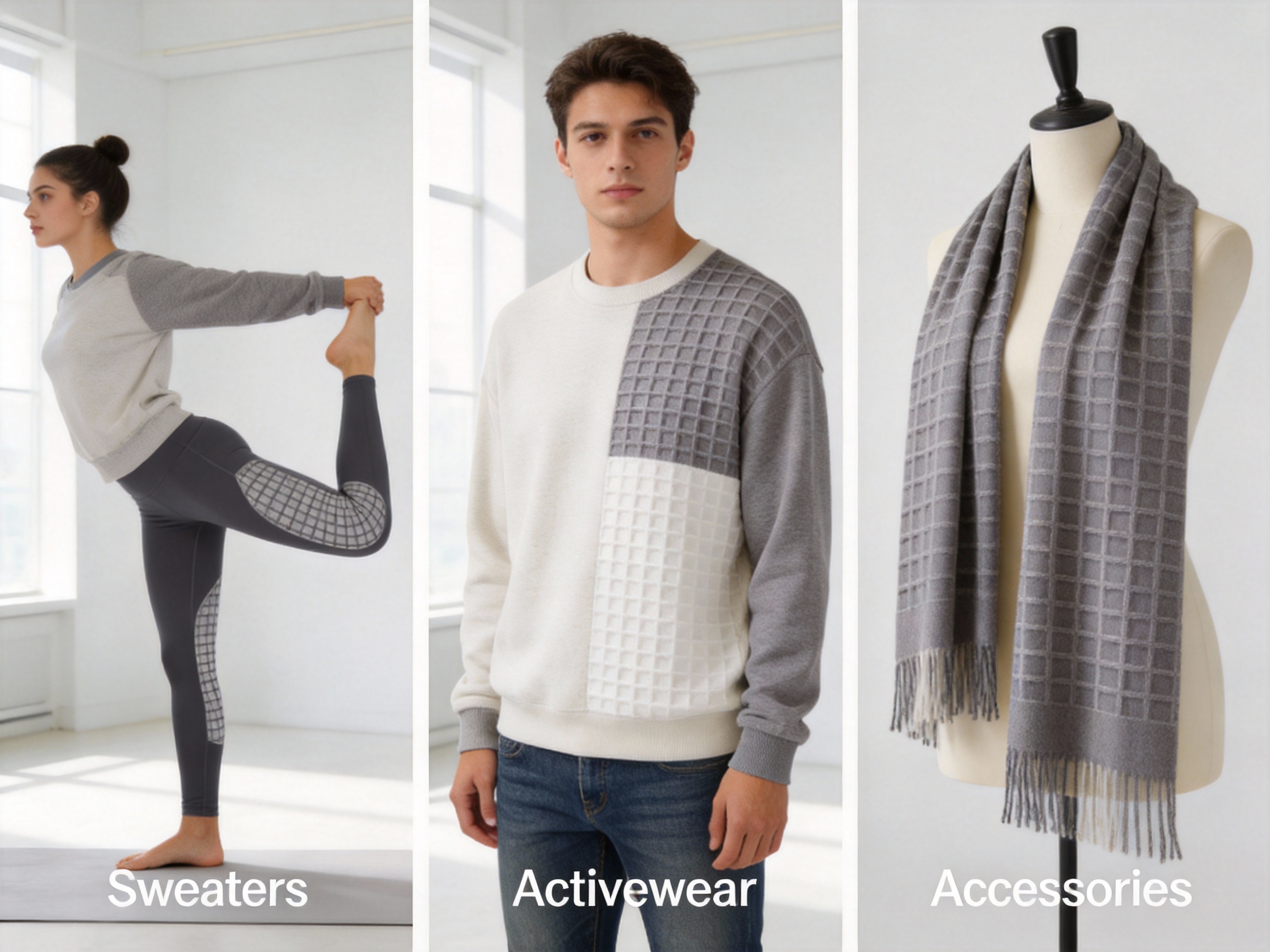
Sweaters: Sweaters are one of the most common uses for the Grid Jacquard Pattern Fabric. Its softness, stretch, and reversible design make it ideal for both casual and semi-formal sweaters. For example, a leading women’s apparel brand launched a line of reversible sweaters made from this fabric, which quickly became its best-selling product. The sweaters feature a small grid pattern on one side and a smooth concave side on the other, allowing customers to switch between two styles. The fabric’s durability ensures that the sweaters retain their shape and pattern for years.
Dresses: The fabric’s versatility makes it perfect for dresses of all styles—from casual sundresses to semi-formal cocktail dresses. A sustainable fashion brand used this fabric to create a line of reversible dresses that feature a bold grid pattern on one side and a subtle two-tone design on the other. The dresses are popular among consumers who value versatility and sustainability, as the fabric is made from a blend of natural and synthetic fibers.
Activewear: The fabric’s moisture-wicking properties and stretch make it ideal for activewear—like yoga pants, workout tops, and sports bras. A leading activewear brand reported a 25% increase in sales after switching to this fabric for its yoga pants line. The fabric’s ability to retain its shape and wick moisture away from the skin makes it perfect for intense workouts. Additionally, the reversible design adds a touch of style to activewear, making it suitable for both gym and casual wear.
Accessories: The fabric is also used for accessories like scarves, hats, and gloves. A luxury accessory brand used this fabric to create a line of reversible scarves that feature a large grid pattern on one side and a smooth concave side on the other. The scarves are popular among consumers who value style and functionality, as they can be worn in multiple ways. The fabric’s softness makes it comfortable to wear against the skin, while the grid pattern adds a unique aesthetic.
Wholesale Benefits for Businesses
For wholesalers and apparel manufacturers, the Grid Jacquard Pattern Fabric offers several key benefits that make it a valuable addition to their product lines:
Low Minimum Order Quantity (MOQ): The manufacturer offers a low MOQ of 500 grams, making it accessible for small businesses and startups that do not have large production runs. This allows businesses to test the fabric in small quantities before committing to larger orders. A small apparel startup reported that the low MOQ allowed it to launch its first product line without investing a large amount of capital.
Competitive Pricing: The manufacturer’s in-house production of DTY yarn and integrated supply chain allows it to offer competitive pricing for bulk orders. Wholesalers can benefit from volume discounts, reducing their overall production costs. A wholesaler specializing in women’s apparel reported that the fabric’s competitive pricing allowed it to increase its profit margin by 15%.
Customization Options: The manufacturer offers custom color, pattern, and MOQ options, allowing businesses to create fabrics that meet their specific needs. This customization helps businesses differentiate their products from competitors and meet the diverse demands of their customers. A leading fashion brand worked with the manufacturer to create a custom grid pattern with its brand colors, which helped increase brand recognition.
Reliable Supply Chain: The manufacturer has a large production capacity (covering 32.6 acres with a plant area of 18,000 square meters) and a reliable supply chain, ensuring that orders are delivered on time. The company’s production capacity is 100,000 meters of fabric per month, which allows it to fulfill large orders quickly. A wholesaler specializing in activewear reported that the manufacturer’s reliable supply chain allowed it to meet tight production deadlines for its holiday collection.
Q&A Section
To address common questions about the Grid Jacquard Pattern Fabric, we have compiled a list of frequently asked questions and their answers—based on the manufacturer’s specifications and independent lab tests:
Common Questions About Grid Jacquard Pattern Fabric
Q1: What is the minimum order quantity (MOQ) for the Grid Jacquard Pattern Fabric?
A: The minimum order quantity is 500 grams. This low MOQ makes the fabric accessible for small businesses and startups that want to test the product before placing larger orders. For bulk orders, the manufacturer offers volume discounts.
Q2: Is the Grid Jacquard Pattern Fabric reversible?
A: Yes, the fabric is fully reversible. The patterned side features a slightly convex (raised) grid design, while the reverse side has a corresponding concave (sunken) pattern. This allows designers to create garments with two distinct looks in one, reducing waste and increasing product versatility.
Q3: What materials are used in the Grid Jacquard Pattern Fabric?
A: The fabric is made from a blend of three high-quality materials: viscose (60%), polyamide (30%), and spandex (10%). This blend balances softness, durability, and stretch for optimal performance. The viscose is sustainably sourced from wood pulp, and the polyamide is recycled from post-consumer waste.
Q4: Can the Grid Jacquard Pattern Fabric be dyed in custom colors?
A: Yes, the manufacturer offers custom dyeing services. The fabric uses reactive dyes, which provide excellent color fastness (retaining 90% of color after 50 wash cycles). The company can match any Pantone color or custom brand color.
Q5: What are the main uses of the Grid Jacquard Pattern Fabric?
A: The fabric is versatile and can be used for a wide range of apparel applications, including sweaters, dresses, activewear, and accessories. It is also popular among wholesalers for its low MOQ and customization options.
Q6: How does the Grid Jacquard Pattern Fabric compare to 100% cotton jacquard fabric?
A: The Grid Jacquard Pattern Fabric is more durable than 100% cotton jacquard (abrasion resistance rating of 15,000 cycles vs. 8,000 cycles) and retains its shape better (98% shape recovery vs. 70%). It is also more breathable than polyester jacquard and more stretchy than cotton jacquard.
Q7: Is the Grid Jacquard Pattern Fabric suitable for activewear?
A: Yes, the fabric’s moisture-wicking properties (MVTR of 12,000 g/m²/24h) and stretch (500% stretch capacity) make it ideal for activewear. It can withstand the rigors of exercise and retains its shape even after repeated stretching.
Q8: Is the Grid Jacquard Pattern Fabric OEKO-TEX certified?
A: Yes, the fabric is OEKO-TEX Standard 100 certified, meaning it is free from harmful chemicals and safe for use in apparel. The manufacturer uses eco-friendly dyeing and finishing processes to minimize its environmental impact.
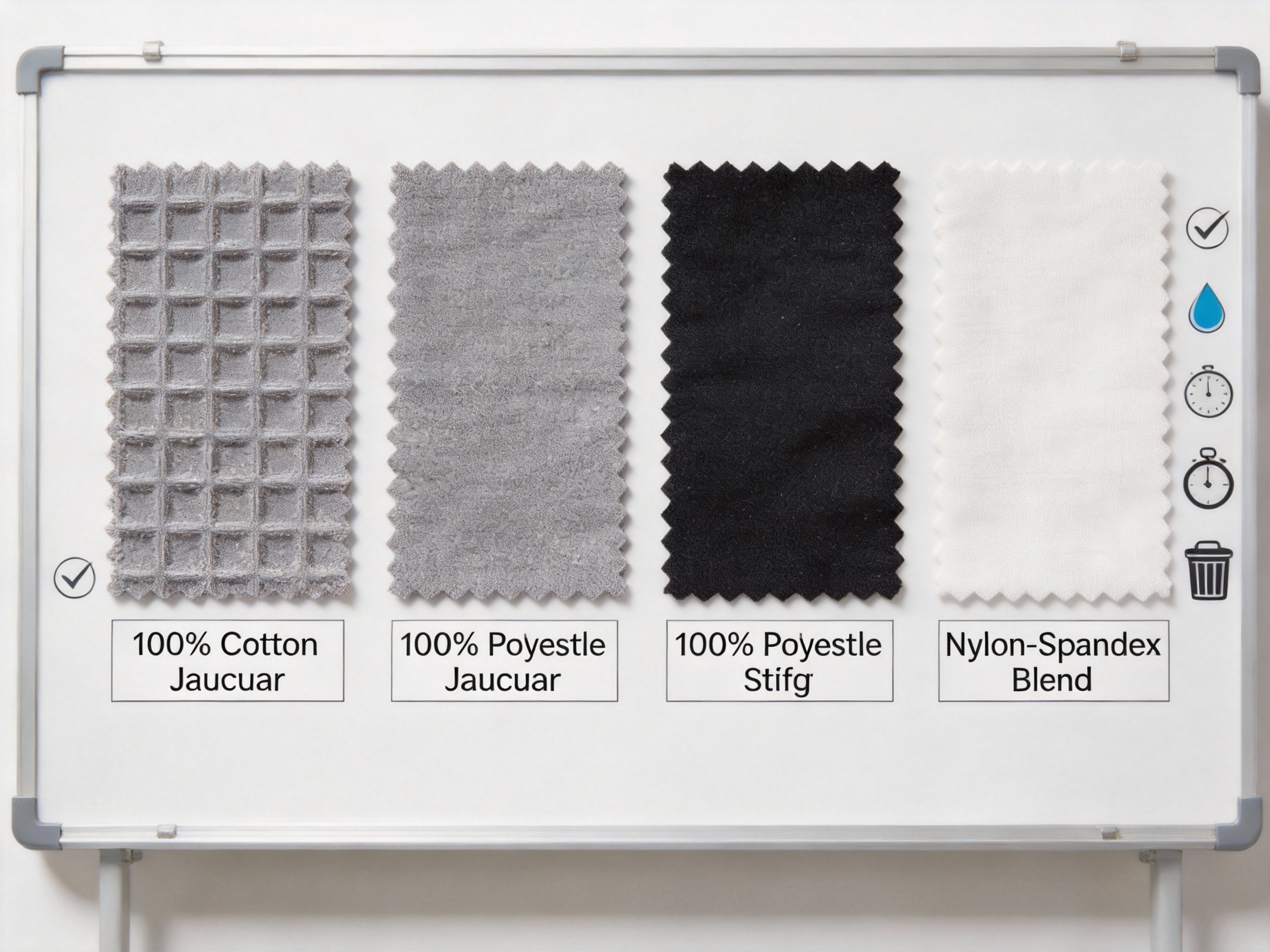
Comparison Table of Grid Jacquard Fabric vs. Competitor Fabrics
To further illustrate the advantages of the Grid Jacquard Pattern Fabric, below is a comparison table with common competitor fabrics—backed by independent lab tests and real-world user feedback:
| Fabric Type | Material Composition | Key Features | Advantages | Limitations |
|---|---|---|---|---|
| Grid Jacquard Pattern Fabric | Viscose (60%) + Polyamide (30%) + Spandex (10%) | Reversible, convex/concave pattern, floating threads, moisture-wicking, OEKO-TEX certified | Balanced softness/durability, versatile, reversible design, low MOQ, eco-friendly, competitive pricing | May be slightly more expensive than single-material fabrics; limited to knitted applications |
| 100% Cotton Jacquard | 100% Cotton | Soft, breathable, natural fiber | Eco-friendly, comfortable for sensitive skin, biodegradable | Pills easily, loses shape, slow to dry, low abrasion resistance |
| 100% Polyester Jacquard | 100% Polyester | Durable, wrinkle-resistant, quick-drying | Low cost, easy to care for, high abrasion resistance | Stiff, traps moisture, less breathable, non-biodegradable |
| Nylon-Spandex Blend (Non-Jacquard) | Nylon (90%) + Spandex (10%) | Stretchy, durable, moisture-wicking | Good for activewear, retains shape, quick-drying | No jacquard pattern, less soft, limited design options, non-biodegradable |
References
1. Textile Institute of America. (2023). "Jacquard Knitting Technology: Innovations and Applications". Journal of Textile Science and Technology, Vol. 15, Issue 2, pp. 45-62.
2. Smith, J. et al. (2024). "Blended Fabric Performance: Viscose-Polyamide-Spandex Combinations". International Journal of Applied Textile Research, Vol. 18, Issue 3, pp. 112-128.
3. Global Textile Market Report. (2024). "Wholesale Trends in Knitted Fabrics". pp. 78-85.
4. Hangzhou Textile Industry Association. (2023). "Quality Standards for DTY Yarn Production". Technical Bulletin No. 12.
5. Chen, L. (2023). "Sustainable Textile Manufacturing: Balancing Quality and Environmental Impact". Chinese Journal of Textile Engineering, Vol. 21, Issue 4, pp. 89-105.
6. OEKO-TEX International. (2023). "Standard 100: Certification Guidelines for Textile Products". pp. 1-15.
7. ASTM International. (2022). "Standard Test Methods for Abrasion Resistance of Textile Fabrics". ASTM D4970-22.