
Grey Cotton Polyester Rayon Fabric for Durable Printing, Tailoring, and Everyday Comfort
Grey Cotton Polyester Rayon Fabric is a versatile blended textile designed for brands, garment makers, wholesalers, and fabric converters that need a balanced combination of softness, print clarity, dimensional stability, and practical durability. As a polyester rayon fabric with cotton content, it brings together three different fiber personalities: polyester contributes strength and shape retention, rayon contributes softness and drape, and cotton adds a familiar natural hand feel with breathable comfort. The result is a fabric suitable for printed garments, business-style TR suiting, casual apparel, uniforms, women’s wear, and other textile products that require both appearance and performance.
In competitive fabric sourcing, buyers often compare blended fabrics according to printing performance, wash resistance, handle, shrinkage control, supply consistency, and cost efficiency. Grey Cotton Polyester Rayon Fabric stands out because it is engineered as a practical canvas for vivid patterns while remaining comfortable for long periods of wear. Unlike fabrics that are too stiff for apparel or too delicate for repeated use, this blended construction offers an adaptable middle ground. It can support polished designs, frequent washing, and various finishing treatments while retaining a smooth surface and dependable garment performance.
Hangzhou Jinfeng Textile Co., Ltd focuses on the production, processing, post-dyeing, finishing, and sales of blended fabrics and DTY polyester yarn. Located in Jingjiang Street Industrial Park, Xiaoshan District, Hangzhou, the company operates with a plant area of about 18,000 square meters on a site covering 32.6 acres. Its integrated capabilities, including fabric production, dyeing-related processing, finishing, yarn manufacturing, research and development, and export service, allow it to support customers who need dependable supply and professional textile solutions. This structure helps the company offer Grey Cotton Polyester Rayon Fabric not only as a product, but as part of a complete manufacturing and service system.
Grey Cotton Polyester Rayon Fabric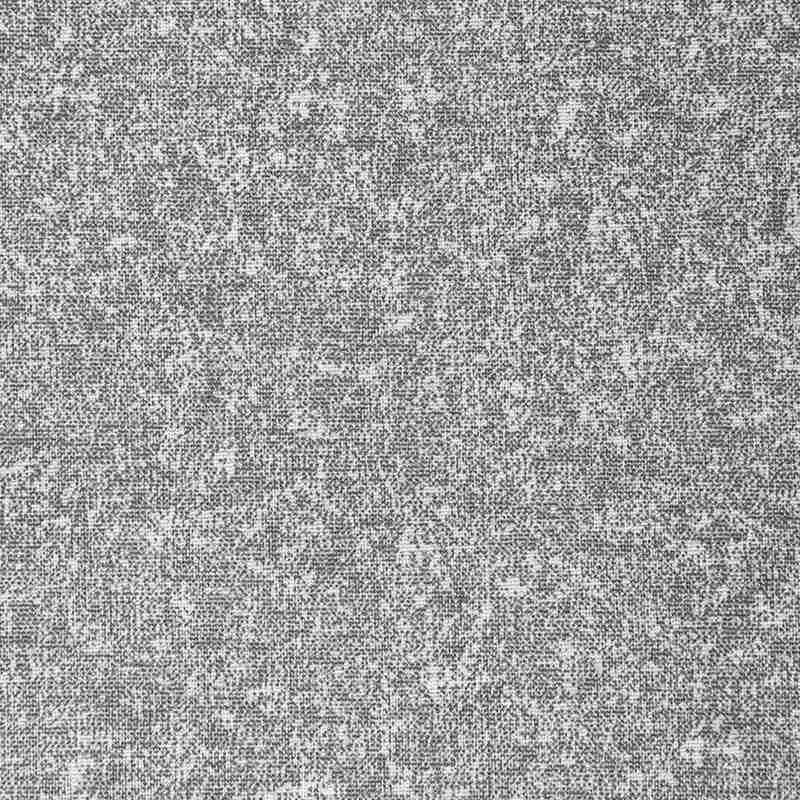
Understanding the Value of Grey Cotton Polyester Rayon Fabric
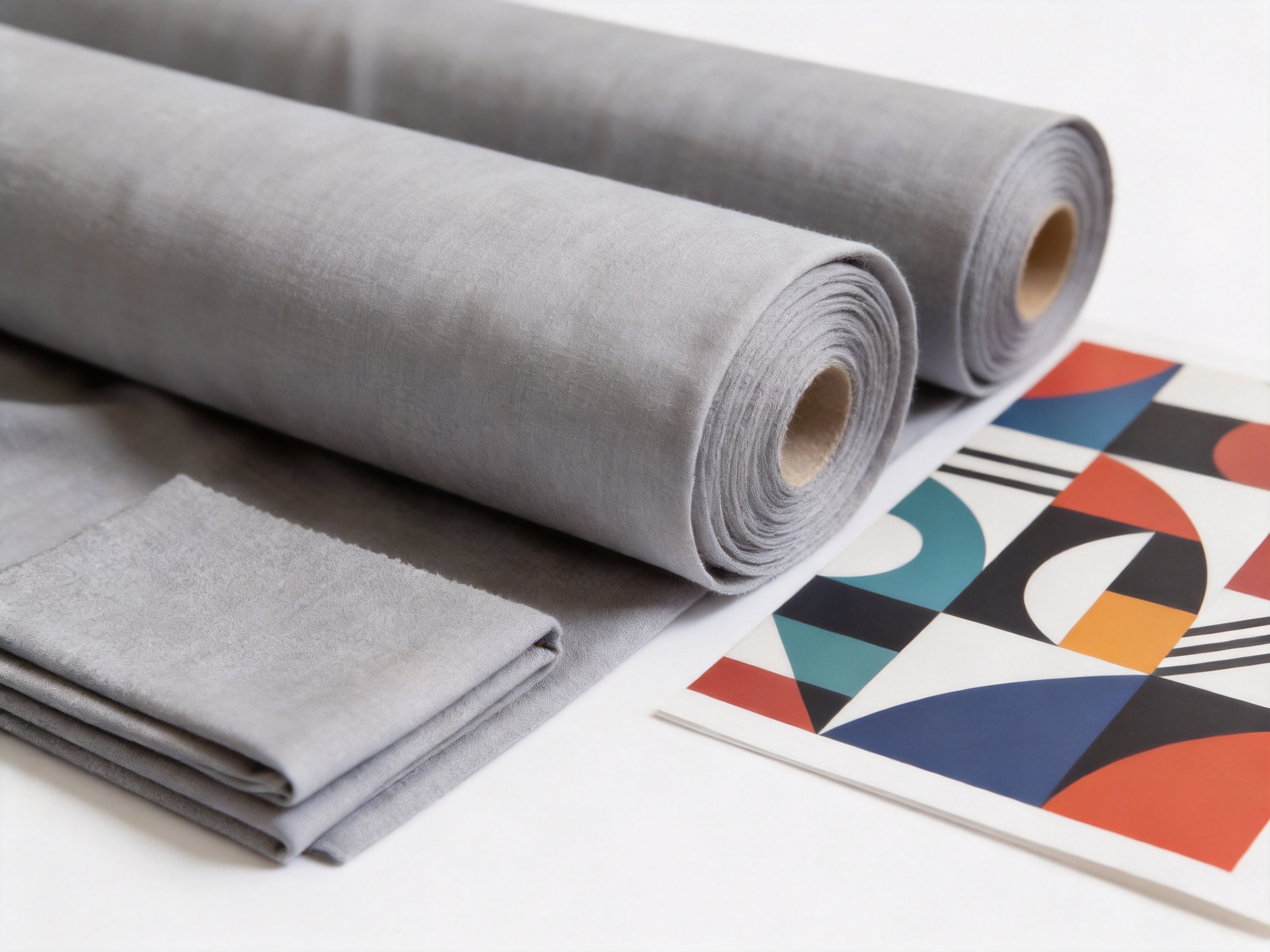
The word “grey” in textile production usually refers to fabric in an unfinished or pre-dyed state. Grey Cotton Polyester Rayon Fabric can serve as a base material for subsequent printing, dyeing, and finishing. This gives fabric converters and apparel producers flexibility. Instead of being limited to one fixed color or surface effect, buyers can use the grey fabric as a foundation for multiple design directions, including digital printing, reactive-style effects where applicable, pigment printing, disperse-related treatments for polyester components, and blended-fiber finishing methods.
The polyester rayon cotton blend is especially valued because each fiber solves a different requirement. Polyester is known for resistance to shrinking and deformation. It helps a fabric keep its structure after washing and wearing. Rayon is semi-synthetic and valued for its soft touch, smooth drape, and comfortable feel. Cotton provides a natural, familiar surface character and adds to wearer comfort. When balanced correctly, these fibers create a fabric that is softer than many pure polyester options, more stable than many pure rayon fabrics, and more practical than delicate natural-fiber fabrics that may require careful maintenance.
For printed textiles, surface quality is essential. A fabric that receives color evenly can help prints look cleaner, brighter, and more commercially attractive. Polyester rayon blends often provide a better surface for printing than many rougher or more unstable fabrics. The smoother and more controlled the fabric base, the more predictable the final appearance. This is important for garment brands that repeat styles across seasons and expect bulk production to match sample quality as closely as possible.
Grey Cotton Polyester Rayon Fabric also answers one of the common problems in apparel sourcing: balancing comfort with durability. Pure synthetic fabrics may last well but can feel less breathable. Pure natural or regenerated fibers may feel soft but may shrink, wrinkle, or lose shape more easily depending on construction. This blended option reduces the weaknesses of each individual fiber type while keeping their strengths. It is especially useful for clothing that must look presentable after repeated wear, such as business casual garments, uniforms, retail fashion pieces, and office-ready separates.
Core Product Advantages Over Common Alternatives
Compared with many single-fiber fabrics, Grey Cotton Polyester Rayon Fabric offers a wider performance profile. A pure polyester fabric may provide durability, but it can lack the soft drape and comfort expected in modern apparel. A pure rayon fabric may provide an elegant hand feel, but it can be more sensitive to shrinkage or deformation. A pure cotton fabric is comfortable and familiar, but it may wrinkle more easily and may not always deliver the same surface smoothness for certain printing requirements. The cotton polyester rayon blend combines these characteristics into a more balanced textile.
One of the most important advantages is wash resistance. The provided product information highlights that polyester rayon printing fabric is resistant to rinses. This matters for garments that are washed frequently, including daily shirts, casual trousers, workwear components, uniforms, and printed fashion items. A fabric that tolerates washing better can help maintain customer satisfaction because garments retain a better appearance over time. For wholesalers and apparel brands, this can reduce complaints related to excessive shrinkage, fading appearance caused by fabric instability, or distortion after laundering.
Another key advantage is print suitability. A blend of polyester and rayon provides a better surface for printing, and the presence of cotton can further enhance a natural-feeling textile surface. For fashion brands, print quality is not merely decorative; it influences perceived value. If the print appears muddy, uneven, or poorly absorbed, the final garment looks inexpensive. A stable blended fabric gives designers a reliable ground for vibrant designs, geometric patterns, floral prints, business-style checks, casual graphics, and seasonal color stories.
The fabric also offers dimensional stability. Polyester does not shrink or change its shape as readily as many other fibers, which helps the final blended material maintain form. This advantage is especially useful in business TR suiting and tailored garments, where seam alignment, panel shape, trouser lines, and jacket appearance are important. A fabric that stretches out, twists, or shrinks unpredictably can create production waste and after-sales issues. By using a polyester rayon cotton blend, manufacturers gain a more predictable material for cutting, sewing, finishing, and long-term wear.
Comfort is equally important. Rayon is soft and stretchy in feel, while cotton adds breathable comfort. The fabric is designed to be pleasant against the skin and suitable for garments that must be worn throughout the day. This makes it an appealing alternative to rougher synthetic materials or overly heavy suiting fabrics. In competitive markets where consumers expect clothing to be both stylish and comfortable, this blended fabric supports garments that can move from office to commute to casual settings.
Cost-performance is another practical advantage. Blended fabrics often allow buyers to achieve the desired look and feel while controlling production costs. Instead of relying solely on expensive natural fibers or accepting the limitations of low-cost synthetics, a cotton polyester rayon composition gives buyers a textile that can meet multiple commercial requirements. It offers durability, softness, print performance, and stable handling, all of which contribute to value throughout the supply chain.
Why This Fabric Is Suitable for Printing
Printing fabric must meet several requirements before it can deliver a satisfying result. The surface should be even, the construction should be consistent, the fibers should interact well with the chosen print method, and the fabric should remain stable during processing. Grey Cotton Polyester Rayon Fabric is especially suitable for printed designs because it offers a controlled surface and a blend structure that can support attractive visual effects.
Rayon contributes a smooth, receptive character that helps create a soft and elegant printed appearance. Polyester contributes stability during processing and use. Cotton adds a natural touch that many consumers recognize and appreciate. Together, these fibers can support prints that feel wearable rather than plastic-like or overly rigid. This is important in apparel, where the tactile quality of a printed fabric can be just as important as the visual design.
Many buyers choose blended printing fabrics because they need both design flexibility and garment performance. Fashion cycles change quickly. A grey fabric base can be printed into many different looks, allowing producers to react to new market trends without changing the underlying fabric platform. One season may require subtle neutral prints for office wear, while another may require bold colors for casual collections. Using a stable grey cotton polyester rayon base helps simplify sourcing and production planning.
Printing also benefits from fabric resistance to deformation. If a textile shrinks or distorts after printing, patterns may become misaligned and garments may fail to meet size specifications. Polyester’s shape-retention properties reduce this risk. Meanwhile, rayon and cotton help maintain a comfortable, apparel-friendly hand feel. This balance is one of the reasons polyester rayon cotton printing fabric is widely considered practical for commercial garment production.
In comparison with lower-quality blended fabrics, a well-manufactured Grey Cotton Polyester Rayon Fabric can show better uniformity in yarn distribution, fewer surface defects, and more predictable finishing behavior. These details affect the print result directly. Even minor irregularities can appear more visible after printing, especially in light colors or precise patterns. Manufacturing discipline therefore becomes a major competitive advantage.
Applications in Apparel and Textile Products
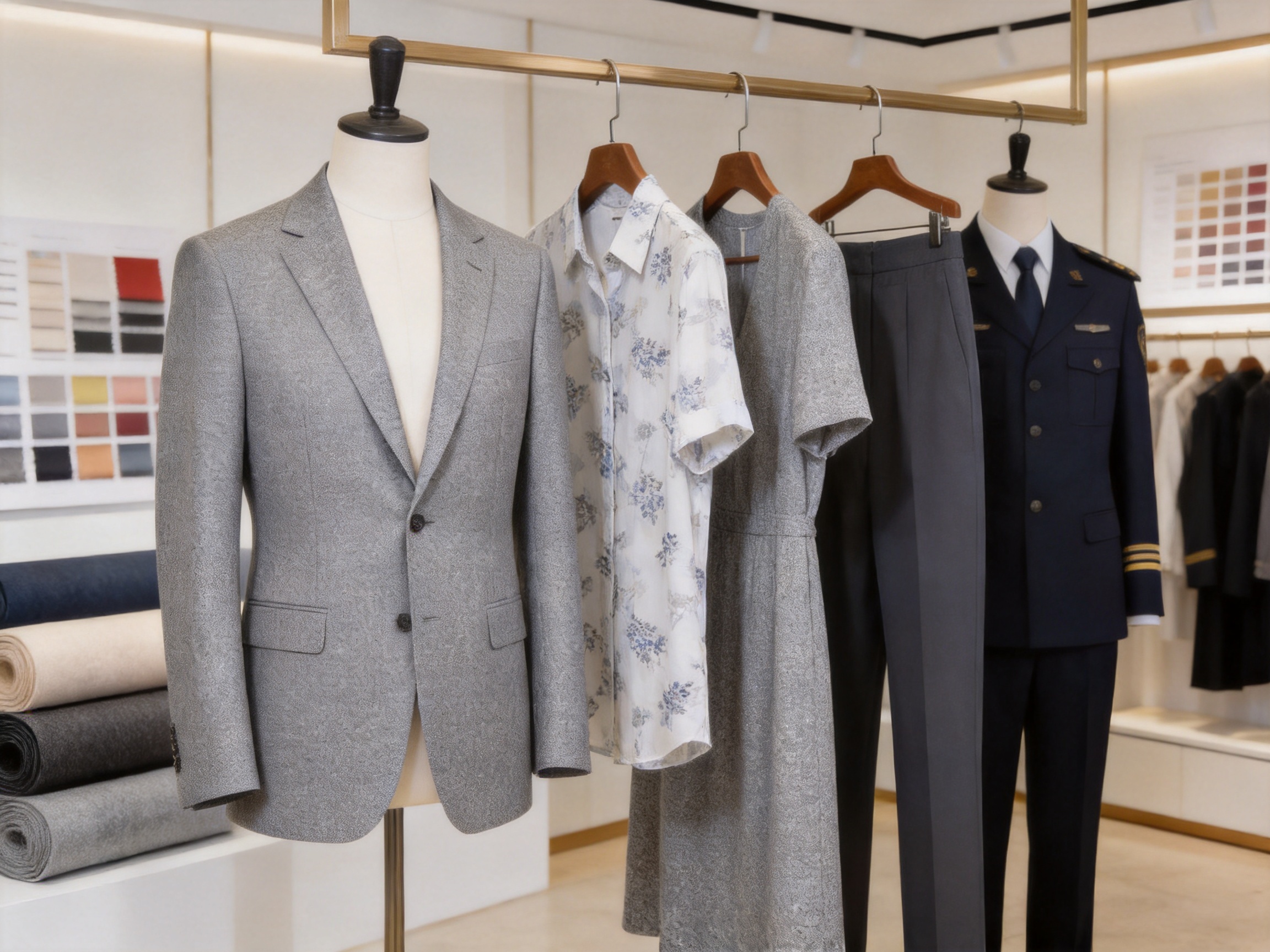
Grey Cotton Polyester Rayon Fabric is suitable for a wide range of garment and textile applications. Its combination of comfort, durability, printability, and dimensional stability gives it flexibility across both fashion and functional categories. The fabric can be used for business TR suiting, casual printed garments, skirts, trousers, shirts, dresses, uniforms, light jackets, and other apparel items that need reliable wearability.
In business TR suiting, polyester rayon blends are valued for their smooth appearance and practical performance. The addition of cotton can improve the natural feel, making the fabric more comfortable for long workdays. For office trousers, blazers, vests, and corporate uniforms, the fabric can support a professional appearance while remaining easier to care for than more delicate materials. It can also provide a better balance between structure and softness, allowing garments to look neat without feeling overly stiff.
For printed fashion apparel, the fabric works as a versatile design platform. Designers can develop floral prints, abstract patterns, stripes, checks, subtle textures, and seasonal motifs. The grey base can be transformed through printing and finishing into products for different markets. This is useful for wholesalers and garment manufacturers who serve multiple customer groups and need one dependable fabric base for various product lines.
Casual apparel also benefits from the fabric’s wash resistance and comfortable touch. Everyday garments are often washed more frequently than formalwear, so the fabric must tolerate repeated home laundering. Polyester supports durability, rayon gives softness, and cotton improves comfort. This combination is appropriate for garments that need to remain attractive after regular use, including casual pants, tops, shirt dresses, and relaxed office wear.
Uniform producers may also find this fabric valuable. Uniforms require consistency, wash resistance, wearer comfort, and a neat appearance. A blended fabric that resists shape change can help maintain size and fit across repeated washing cycles. If printed logos, checks, or design details are needed, the fabric’s print suitability becomes an additional advantage. For service industries, schools, retail teams, hospitality, and administrative uniforms, this balance can be highly practical.
Manufacturing Strength Behind the Fabric
The performance of a blended fabric depends not only on fiber selection but also on manufacturing control. Hangzhou Jinfeng Textile Co., Ltd has built its strength around integrated textile production, including the production and processing of blended fabrics, post-dyeing, finishing, and sales. The company is also involved in DTY polyester yarn production, processing, and sales. This gives it valuable control over important stages of the textile supply chain.
The company operates in Jingjiang Street Industrial Park, Xiaoshan District, Hangzhou City, Zhejiang Province. Its site covers 32.6 acres, with a plant area of 18,000 square meters. A production base of this scale supports systematic manufacturing, equipment arrangement, storage, quality inspection, finishing operations, and order coordination. For international customers, scale matters because it helps ensure stable supply and better production scheduling.
Advanced manufacturing begins with material preparation. For a cotton polyester rayon fabric, the correct selection and handling of yarns is essential. Polyester yarn, rayon yarn, and cotton-related yarn structures must be matched according to the desired fabric weight, hand feel, surface appearance, and processing route. Inconsistent yarn quality can lead to streaks, uneven dyeing, poor print results, or unstable fabric performance. A manufacturer with yarn production and processing experience has a stronger foundation for controlling these factors.
DTY polyester yarn capability is particularly relevant. Drawn Textured Yarn, commonly known as DTY, is produced by texturing partially oriented yarn to create bulk, elasticity, and improved fabric characteristics. In blended textile production, knowledge of DTY behavior helps manufacturers design fabrics with better stretch recovery, surface fullness, and stability. Even when a specific cotton polyester rayon fabric uses different yarn combinations, the company’s broader expertise in polyester yarn processing supports technical understanding of fabric performance.
Processing control continues through fabric formation. Whether the fabric is intended for suiting, printing, or other garment use, uniform tension, stable structure, and controlled density are essential. A fabric that is too loose may deform, while a fabric that is too dense may become stiff or uncomfortable. The manufacturer must adjust construction according to customer requirements, end-use expectations, and finishing targets. This technical flexibility is one of the important strengths of an experienced blended fabric supplier.
Post-dyeing and finishing also influence the final value of Grey Cotton Polyester Rayon Fabric. Finishing can improve softness, smoothness, dimensional stability, drape, and surface appearance. For printing fabric, finishing preparation must be carefully managed so that the surface remains suitable for design application. The wrong finish can interfere with printing, while the right finish can improve fabric handle and customer acceptance. Integrated finishing knowledge helps reduce these risks.
Production Process From Yarn to Finished Fabric
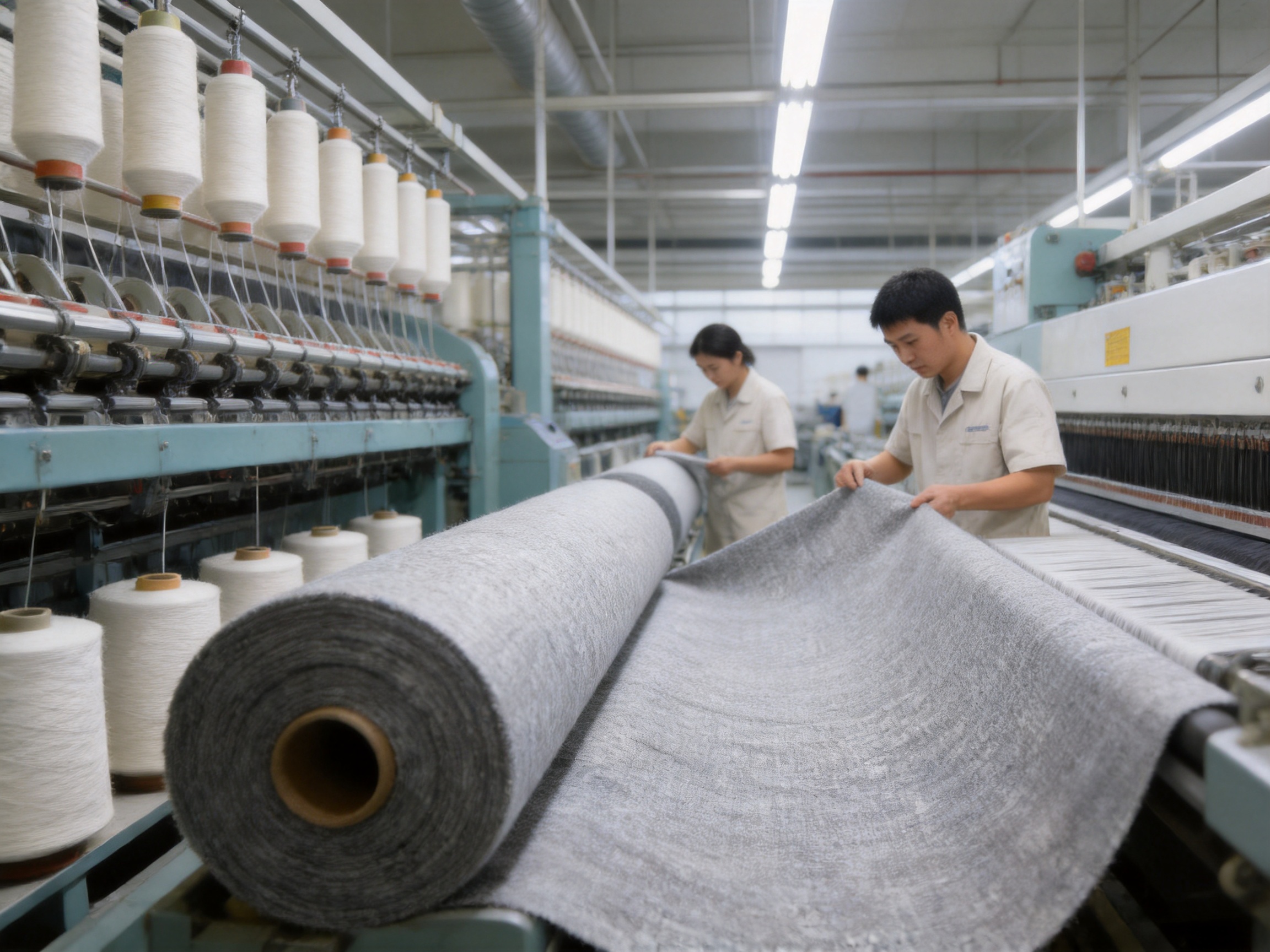
A high-quality Grey Cotton Polyester Rayon Fabric typically follows a carefully managed process. Although exact production settings vary according to order requirements, the general process includes fiber and yarn selection, yarn preparation, fabric formation, inspection, pre-treatment, dyeing or printing preparation, finishing, quality testing, packaging, and delivery. Each stage affects the final performance of the fabric.
1. Fiber and Yarn Selection
The process begins with choosing suitable polyester, rayon, and cotton yarn components. Polyester is selected for strength and shape retention. Rayon is selected for softness, drape, and a smooth hand feel. Cotton is selected for natural comfort and familiar touch. The proportion and yarn specifications influence the fabric’s weight, texture, stability, print behavior, and final use.
2. Yarn Preparation
Yarns must be prepared to reduce tension variation and improve uniform feeding during fabric production. For polyester-related yarns, texturing and drawing knowledge can help create more stable and functional yarn properties. Proper yarn preparation reduces defects such as uneven surfaces, streaks, broken yarns, and irregular fabric density.
3. Fabric Formation
The yarns are then converted into fabric according to the required construction. The company’s experience in blended fabrics, knitted jacquard fabrics, NTR knitted fabric, NR knitted fabric, and DTY-related textile products supports technical flexibility. Fabric formation must be controlled carefully to achieve consistent width, density, surface smoothness, and structural stability.
4. Grey Fabric Inspection
Before further processing, grey fabric is inspected for visible defects such as holes, stains, yarn irregularities, uneven tension marks, or surface lines. Early inspection prevents defective material from moving into expensive dyeing, printing, or finishing stages. This saves time and cost while improving order reliability.
5. Pre-Treatment and Preparation
Pre-treatment may include cleaning, relaxation, heat setting where appropriate, or other preparation steps. The purpose is to stabilize the fabric and prepare it for printing or dyeing. For blended fibers, pre-treatment must consider the different behavior of polyester, rayon, and cotton. Proper preparation improves color consistency and fabric feel.
6. Dyeing, Printing, or Customer-Specific Processing
Depending on the buyer’s needs, the fabric may be dyed, printed, or supplied in grey form for further processing by the customer. For printing applications, the fabric surface must be clean, even, and compatible with the chosen print method. The polyester rayon cotton blend gives customers creative flexibility and practical performance.
7. Finishing
Finishing improves the final hand feel, drape, width stability, and surface effect. It can help the fabric become softer, smoother, more stable, or more suitable for garment cutting. Finishing is one of the key stages that separates ordinary fabric from commercially reliable fabric.
8. Final Quality Testing and Packing
After finishing, the fabric is inspected again. Common quality concerns include width, weight, color consistency if dyed or printed, shrinkage behavior, surface defects, hand feel, and roll presentation. Proper packing protects the fabric during storage and transportation. For export customers, stable packaging and documentation are important parts of the supply experience.
Technical and Commercial Comparison
Buyers often compare Grey Cotton Polyester Rayon Fabric with pure polyester, pure cotton, pure rayon, and lower-grade blended fabrics. The following table summarizes major comparison points for sourcing decisions.
| Comparison Factor | Grey Cotton Polyester Rayon Fabric | Pure Polyester Fabric | Pure Cotton Fabric | Pure Rayon Fabric |
|---|---|---|---|---|
| Comfort | Soft, breathable, and balanced with natural and smooth hand feel | Durable but may feel less breathable | Comfortable and natural but may wrinkle more | Very soft and drapey but may need careful handling |
| Dimensional Stability | Improved by polyester content and controlled finishing | Generally strong stability | Can shrink if not well treated | Can be more sensitive to shrinkage and deformation |
| Print Suitability | Good surface for vibrant designs and commercial printing | Suitable for certain print methods but may lack natural touch | Good for many prints but may have higher shrinkage risk | Smooth and receptive but may be less stable |
| Durability | Balanced durability for frequent washing and apparel use | High durability | Moderate durability depending on construction | Moderate, depending on yarn and finishing |
| Drape and Appearance | Smooth, apparel-friendly, and suitable for business or casual wear | Can be crisp but sometimes less fluid | Natural but may crease easily | Excellent drape but can require more care |
| Commercial Flexibility | Suitable for suiting, printing, uniforms, and casual garments | Strong for functional use but less versatile in comfort markets | Popular but may require more finishing control | Fashionable but may be less durable for repeated washing |
This comparison shows why the blended fabric is attractive for buyers who do not want to compromise too heavily in one direction. It offers enough polyester to support durability and stability, enough rayon to create softness and drape, and cotton character for comfort and consumer acceptance. For garment manufacturers, this balance can reduce sourcing complexity and help create products that meet practical market expectations.
Quality Control and Consistency
Quality control is essential for any fabric intended for printing and apparel manufacturing. Even small variations in fabric width, weight, shrinkage, or surface quality can cause significant problems in cutting and sewing. Hangzhou Jinfeng Textile Co., Ltd supports customers through production experience, integrated processing, and attention to blended fabric performance.
Fabric inspection begins at the grey stage. This is where surface defects and structural issues are most effectively detected. If defects are found early, they can be removed or corrected before additional processing adds cost. Inspection also helps confirm that the fabric is suitable for printing, dyeing, or finishing. For printed fabrics, a clean and even grey base is particularly important because surface defects may become more visible after design application.
Dimensional control is another important quality point. Garment makers need fabric that behaves predictably during spreading, cutting, sewing, pressing, washing, and wearing. Polyester content helps reduce shrinkage and shape change, but process control remains necessary. Heat treatment, relaxation, finishing, and testing all help improve stability. A reliable supplier understands how these steps interact.
Hand feel is also monitored. A fabric may meet technical specifications but still fail in the market if it feels rough, limp, overly stiff, or unpleasant against the skin. Because Grey Cotton Polyester Rayon Fabric is positioned for comfortable apparel and printed products, the final hand feel must match customer expectations. Finishing techniques can help create a smooth, soft, and commercially appealing touch.
Color and print preparation quality are especially important for customers who plan further processing. If the grey fabric contains uneven absorbency, contamination, or inconsistent surface treatment, printing results may vary. Stable preparation helps improve customer efficiency and reduces the risk of rejected goods. This is one of the reasons buyers prefer suppliers with integrated production and finishing knowledge.
Company Strengths Supporting Global Buyers
Hangzhou Jinfeng Textile Co., Ltd is a self-operated export company integrating research and development, production, and sales. This structure gives overseas buyers a more direct communication channel and a more complete supply service. Rather than depending only on trading links, customers can work with a manufacturer that understands production details and can respond to technical questions.
The company’s location in Hangzhou, Zhejiang Province, is also advantageous. Zhejiang is one of China’s important textile regions, with established supply chains, skilled labor, logistics support, and manufacturing experience. Being located in Xiaoshan District gives the company access to a strong textile industrial environment, which can support material sourcing, technical collaboration, production efficiency, and export logistics.
The company’s product range includes polyester rayon fabric, knitted jacquard fabric, NTR knitted fabric, NR knitted fabric, and Slight Intermingled Draw Textured Yarn. This range reflects a broad textile capability rather than a narrow single-product approach. Customers sourcing Grey Cotton Polyester Rayon Fabric may also require related fabrics or yarns for coordinated collections. A supplier with multiple product categories can help simplify procurement.
Research and development capability is important because fabric markets change quickly. Customers may request different weights, hand feels, patterns, finishes, or performance characteristics. A manufacturer with R&D awareness can adjust fabric construction, yarn selection, and finishing methods according to market needs. This is especially important in printed fashion and business casual apparel, where trends change from season to season.
The company’s business philosophy emphasizes cooperation and win-win service. For fabric buyers, this matters because successful textile sourcing depends on long-term coordination. Samples must match bulk production as closely as possible. Delivery schedules must be realistic. Technical problems must be discussed clearly. A cooperative supplier can help customers reduce risk and improve product development efficiency.
Advantages for Apparel Manufacturers
Apparel manufacturers need fabric that performs not only in a showroom but also on the cutting table and sewing line. Grey Cotton Polyester Rayon Fabric offers practical advantages during garment production. Its blended stability can help reduce distortion during spreading and cutting. Its smooth surface can make printed designs more attractive. Its soft hand feel can improve final garment value.
During cutting, stable fabric width and controlled shrinkage are important. If fabric changes shape or tension during spreading, garment panels may become inaccurate. This leads to size inconsistency and sewing difficulties. Polyester content and controlled finishing help improve cutting reliability. Rayon and cotton contribute comfort without making the fabric too unstable when properly processed.
During sewing, a balanced fabric should feed smoothly and hold seams properly. Fabrics that are too slippery, too stretchy, or too unstable can slow production. A well-made polyester rayon cotton blend can provide manageable sewing behavior for many garment categories. This supports production efficiency, especially in medium and large orders.
After garments are made, the consumer experience becomes the final test. Wearers expect clothing to look good, feel comfortable, and survive regular washing. Grey Cotton Polyester Rayon Fabric is designed to meet these expectations. Its softness supports comfort, its polyester content supports durability, and its print suitability supports visual appeal. This makes it a commercially strong choice for brands seeking repeat purchases and customer satisfaction.
Advantages for Fabric Wholesalers and Converters
Fabric wholesalers and converters benefit from materials that are versatile, reliable, and easy to position in the market. Grey Cotton Polyester Rayon Fabric can be promoted across multiple end uses, including printing, suiting, casualwear, and uniforms. This reduces inventory risk because the fabric is not limited to a single narrow application.
As a grey fabric, it can be processed into different colors, prints, and finishes. This gives converters room to create unique product lines from a common base. A wholesaler may use the same fabric platform for several customer groups by changing print designs, color themes, or surface finishing. This flexibility improves inventory planning and market responsiveness.
The fabric’s balanced performance also supports stronger customer confidence. Buyers are often cautious about fabrics that look attractive but fail in washing or garment production. Because polyester rayon cotton blends are known for practical performance, wholesalers can present the fabric as a dependable choice for commercial apparel. This can help build long-term customer relationships.
Supply stability is another advantage. Working with a manufacturer that has integrated production, yarn experience, finishing capability, and export service can reduce sourcing uncertainty. For wholesalers, consistent supply is essential. Customers expect repeat orders, matching quality, and reliable delivery. A supplier with established manufacturing capacity can better support these needs.
Sustainability and Responsible Use Considerations
Modern textile buyers increasingly consider sustainability, durability, and responsible production. While Grey Cotton Polyester Rayon Fabric is a blended material and must be evaluated according to specific sourcing and processing choices, it can contribute to responsible product planning in several practical ways. Durability is one of the most important. A garment that lasts longer and maintains appearance through repeated washing may reduce premature disposal.
Blended fabrics can also support efficient use of fiber properties. Instead of overusing one fiber type and accepting its weaknesses, a blend can combine strengths and reduce performance failures. Polyester improves strength and stability, rayon improves softness and drape, and cotton improves comfort. This balanced approach can help create garments that consumers are more likely to keep and wear regularly.
Manufacturing efficiency also matters. Integrated production and finishing knowledge can help reduce waste caused by defects, inconsistent processing, or rejected goods. When grey fabric is inspected and controlled before further processing, fewer resources are wasted on defective material. Reliable quality control is therefore not only a commercial advantage but also a practical step toward more responsible production.
Customers can further enhance sustainability by selecting appropriate printing methods, optimizing cutting layouts, choosing durable garment construction, and providing proper care instructions. A stable blended fabric gives them a strong base for these decisions.
How to Select the Right Specification
When sourcing Grey Cotton Polyester Rayon Fabric, buyers should define the intended end use before confirming specifications. A fabric for business suiting may require a different weight, drape, and finish than a fabric for casual printed dresses. Uniform fabric may require stronger wash resistance and color consistency. Fashion printing may require a smoother surface and softer hand feel.
Key specification points include fiber composition, fabric weight, width, construction, hand feel, shrinkage target, printing method, finishing requirements, color or grey-state delivery, roll length, packing method, and testing standards. Discussing these details early helps prevent misunderstandings. It also allows the manufacturer to recommend suitable production routes.
Buyers should also request samples before bulk orders. Sample testing can include hand feel evaluation, trial printing, washing, shrinkage measurement, sewing tests, and garment prototype development. Because fabric performance depends on both material and finishing, sample approval is an important step. A professional supplier can support this process by providing technical guidance and production information.
For repeat orders, buyers should keep clear records of approved specifications. This includes sample references, order numbers, finishing requirements, and testing results. Consistency is easier to maintain when both supplier and buyer work from a shared technical standard. This is especially important for printed collections, uniforms, and long-term wholesale programs.
Frequently Asked Questions
What is Grey Cotton Polyester Rayon Fabric?
Grey Cotton Polyester Rayon Fabric is a blended fabric made with polyester, rayon, and cotton-related fiber components. It is usually supplied in a grey or unfinished state for further dyeing, printing, or finishing. The blend is designed to combine polyester’s durability and stability, rayon’s softness and drape, and cotton’s breathable natural feel.
Why is this fabric suitable for printing?
The fabric provides a smooth and stable surface that can support clear and vibrant designs. Polyester helps reduce deformation, rayon contributes a smooth hand feel, and cotton adds comfort. This makes the fabric a practical base for fashion prints, business-style patterns, and customized textile designs.
How does it compare with pure polyester fabric?
Pure polyester fabric is durable and stable, but it may feel less breathable or less natural. Grey Cotton Polyester Rayon Fabric keeps many of polyester’s practical advantages while improving softness, drape, and comfort through rayon and cotton components. This makes it more suitable for apparel that must feel comfortable as well as durable.
Is the fabric suitable for business TR suiting?
Yes. Polyester rayon cotton printing fabric can be used for business TR suiting and related apparel. Its dimensional stability, smooth appearance, and comfortable touch make it suitable for trousers, blazers, uniforms, and office-ready garments.
Does the fabric resist shrinking?
Polyester contributes strong shape retention and helps reduce shrinkage compared with more sensitive fibers. However, final shrinkage depends on fabric construction, finishing, washing conditions, and garment processing. Buyers should confirm shrinkage requirements and conduct testing based on their intended use.
Can this fabric be washed frequently?
The fabric is designed to offer good practical durability and resistance to rinses. Its polyester component supports wash performance, while rayon and cotton improve comfort. For best results, garment makers should provide appropriate care instructions based on the final finishing and print method.
What products can be made from this fabric?
It can be used for printed garments, business suiting, casual trousers, skirts, dresses, shirts, uniforms, light jackets, and other apparel products. It is also useful for wholesalers and converters who need a flexible grey fabric base for multiple design directions.
What makes the manufacturer competitive?
Hangzhou Jinfeng Textile Co., Ltd has integrated capabilities in blended fabric production, DTY polyester yarn production and processing, post-dyeing, finishing, sales, research and development, and export service. Its 18,000-square-meter plant area and established textile production base support stable manufacturing and customer service.
Can customers request customized specifications?
Customers can discuss fabric weight, width, construction, hand feel, finishing, printing suitability, and packaging requirements with the supplier. Customization depends on production feasibility, order quantity, and technical requirements.
Why should buyers choose a blended fabric rather than a single-fiber fabric?
A blended fabric can combine the strengths of different fibers while reducing their individual weaknesses. Polyester improves durability and stability, rayon improves softness and drape, and cotton improves comfort. This makes the fabric a balanced choice for commercial apparel and printing applications.
Conclusion
Grey Cotton Polyester Rayon Fabric is a strong choice for buyers seeking a practical, attractive, and versatile textile for printing, suiting, casual apparel, and uniforms. Its key advantage lies in balance. Polyester supports durability and shape retention. Rayon provides softness, drape, and a smooth touch. Cotton adds breathable comfort and a familiar natural feel. Together, these fibers create a fabric that performs well across multiple commercial applications.
Compared with many competing fabrics, this blended material offers a better compromise between comfort, stability, wash resistance, and print performance. It is more comfortable than many pure polyester fabrics, more stable than many pure rayon fabrics, and more versatile than many pure cotton fabrics when frequent washing, printing, and garment production efficiency are required. For apparel manufacturers, wholesalers, and fabric converters, this balance translates into lower risk and broader market potential.
The manufacturing strength behind the fabric is equally important. Hangzhou Jinfeng Textile Co., Ltd combines production, processing, post-dyeing, finishing, DTY polyester yarn capability, R&D, sales, and export service. With a sizeable production base in Hangzhou and experience in multiple textile categories, the company is positioned to support customers who need consistent quality, technical communication, and reliable supply. Its focus on cooperation and win-win service further strengthens its value as a long-term textile partner.
For brands and buyers developing printed apparel, business suiting, uniforms, or comfortable everyday garments, Grey Cotton Polyester Rayon Fabric offers a dependable foundation. It supports attractive design, practical wear, and efficient production. In a textile market where buyers must balance cost, quality, comfort, and durability, this fabric provides a thoughtful and commercially effective solution.
References
1. Textile Institute. Textile Terms and Definitions. The Textile Institute, latest edition.
2. Kadolph, Sara J. Textiles. Pearson Education, latest edition.
3. Saville, B. P. Physical Testing of Textiles. Woodhead Publishing.
4. Collier, Billie J., and Phyllis G. Tortora. Understanding Textiles. Pearson.
5. Horrocks, A. R., and S. C. Anand, editors. Handbook of Technical Textiles. Woodhead Publishing.
6. Cook, J. Gordon. Handbook of Textile Fibres: Man-Made Fibres. Woodhead Publishing.