
Grey Cotton Polyester Rayon Fabric: A Comprehensive Guide to Its Advantages, Manufacturing, and Applications
Grey cotton polyester rayon fabric is a versatile textile that has gained significant traction in the global market due to its unique combination of natural and synthetic fiber properties. Unlike single-fiber fabrics or basic blends, this tri-blend material balances comfort, durability, and functionality, making it ideal for a wide range of applications—from high-end business suiting to casual everyday wear. In this article, we will explore the core composition of this fabric, its key advantages over competitor textiles, the advanced manufacturing processes that ensure its quality, and its diverse uses. We will also address common questions about the fabric and provide insights into why it stands out in the modern textile industry.
What is Grey Cotton Polyester Rayon Fabric?
Grey cotton polyester rayon fabric is a tri-blend textile composed of three primary fibers: cotton, polyester, and rayon. Each fiber contributes distinct characteristics that, when combined, create a fabric with enhanced performance compared to single-fiber alternatives. The "grey" in its name refers to the unbleached or natural state of the fabric before dyeing, which retains the inherent tones of the blended fibers and allows for customization in later finishing processes.
Cotton, a natural cellulose fiber, brings softness, breathability, and moisture absorption to the blend. Polyester, a synthetic polymer, adds durability, shape retention, and resistance to shrinkage and wrinkles. Rayon, a semi-synthetic fiber made from regenerated cellulose, contributes a silky luster, drape, and additional softness, while also enhancing the fabric’s printability. The exact ratio of these fibers can vary based on the intended application—for example, a higher cotton content may be used for casual wear to boost comfort, while a higher polyester content may be preferred for business suiting to improve shape retention.
Unlike finished dyed fabrics, grey cotton polyester rayon fabric is sold in its raw, undyed state, which offers several benefits. It allows manufacturers and designers to customize the color and finish according to specific needs, reducing waste from pre-dyed offcuts. Additionally, the grey state preserves the fabric’s structural integrity, making it easier to process through subsequent dyeing and finishing steps without compromising quality.
Advantages Over Competitor Fabrics
One of the most compelling aspects of grey cotton polyester rayon fabric is its ability to outperform a wide range of competitor textiles in key performance metrics. Below, we compare it to common alternatives to highlight its unique strengths:
1. Comparison to 100% Cotton Fabric
100% cotton is a popular choice for its softness and breathability, but it has significant drawbacks: it shrinks easily (up to 5-10% after washing), wrinkles readily, and has lower durability when exposed to frequent wear or harsh detergents. Grey cotton polyester rayon fabric addresses these issues by incorporating polyester and rayon:
- Shrinkage Resistance: The polyester component reduces shrinkage to less than 2%—a fraction of 100% cotton’s shrinkage rate. This means the fabric retains its shape even after multiple washes, eliminating the need for pre-shrinking or careful sizing.
- Wrinkle Resistance: Polyester’s synthetic structure minimizes wrinkling, making the fabric easier to care for. Unlike 100% cotton, which requires ironing after every wash, this blend can be worn straight from the dryer with minimal touch-ups.
- Durability: The combination of cotton’s strength and polyester’s abrasion resistance results in a fabric that lasts up to 30% longer than 100% cotton in high-wear applications like business suiting or casual shirts.
2. Comparison to 100% Polyester Fabric
100% polyester is known for its durability and wrinkle resistance, but it lacks breathability and has a synthetic, plastic-like feel that many consumers find unappealing. Grey cotton polyester rayon fabric improves on these aspects:
- Breathability: Cotton and rayon are natural (or semi-natural) fibers that allow air to circulate, reducing moisture buildup and keeping the wearer cool. This is a stark contrast to 100% polyester, which traps heat and sweat, leading to discomfort during extended use.
- Softness and Drape: Rayon adds a silky luster and fluid drape, while cotton contributes a soft, natural handfeel. 100% polyester, by comparison, feels stiff and artificial, making it less suitable for garments that require an elegant drape (like dresses or blazers).
- Moisture Absorption: Cotton and rayon absorb moisture (up to 10% of their weight), which helps wick away sweat from the skin. 100% polyester repels moisture, leading to a clammy feeling and potential odor buildup.
3. Comparison to 100% Rayon Fabric
100% rayon is soft and has excellent drape, but it is highly sensitive to water and prone to shrinking, stretching, and fading. Grey cotton polyester rayon fabric mitigates these issues:
- Wash Resistance: Polyester’s water-resistant properties reduce rayon’s sensitivity to washing. The blend can be machine-washed on a gentle cycle without significant shrinkage or stretching, whereas 100% rayon often requires dry cleaning to maintain its shape.
- Shape Retention: The addition of polyester and cotton helps the fabric retain its structure over time. 100% rayon tends to lose its shape after repeated wear, especially in areas like elbows or knees.
- Durability: Rayon is less durable than cotton or polyester, but the blend’s combined fibers increase its lifespan. For example, a rayon-cotton-polyester blazer will last 2-3 times longer than a 100% rayon blazer.
4. Comparison to Basic Cotton-Polyester Blends
Basic cotton-polyester blends (like 50/50) are common, but they lack the luster and drape of grey cotton polyester rayon fabric. The addition of rayon elevates the blend in several ways:
- Printability: Rayon’s smooth surface provides an ideal canvas for vibrant, detailed prints. Basic cotton-polyester blends have a more textured surface that can cause prints to fade or blur over time.
- Luster and Elegance: Rayon adds a subtle sheen that makes the fabric suitable for formal wear (like business suiting) and high-end casual wear. Basic blends often have a matte, utilitarian appearance.
- Stretch and Flexibility: Rayon’s semi-synthetic structure adds a slight stretch to the fabric, improving comfort and mobility. Basic cotton-polyester blends are typically less flexible, making them less ideal for garments that require movement (like dresses or activewear).
Comparative Property Table
To summarize the key differences, the following table compares grey cotton polyester rayon fabric to common competitor textiles across critical performance metrics:
| Fabric Type | Shrinkage Rate (%) | Breathability (1-5) | Durability (1-5) | Wash Resistance (1-5) | Printability (1-5) | Softness (1-5) |
|---|---|---|---|---|---|---|
| Grey Cotton Polyester Rayon | 1.5-2.0 | 4 | 4.5 | 4 | 5 | 4.5 |
| 100% Cotton | 5-10 | 5 | 3 | 2 | 3 | 4 |
| 100% Polyester | 0.5-1.0 | 2 | 5 | 5 | 3 | 2 |
| 100% Rayon | 8-12 | 4 | 2 | 1 | 4 | 5 |
| Cotton-Polyester Blend (50/50) | 2-3 | 3 | 4 | 4 | 3 | 3 |
Note: Ratings are based on a 1-5 scale, where 1 = lowest performance and 5 = highest performance. Data is derived from industry standard testing (ISO 5077 for shrinkage, ISO 12945 for pilling resistance, and ASTM D737 for breathability).
Advanced Manufacturing Processes
The quality of grey cotton polyester rayon fabric depends heavily on the manufacturing processes used to blend and process the fibers. Leading manufacturers employ state-of-the-art techniques to ensure consistency, durability, and performance. Below is a detailed breakdown of the key steps:
1. Raw Material Sourcing and Quality Control
The first step in manufacturing grey cotton polyester rayon fabric is sourcing high-quality raw materials. Each fiber—cotton, polyester, and rayon—must meet strict quality standards to ensure the final product’s performance:
- Cotton: Only long-staple cotton (e.g., Egyptian or Pima cotton) is used, as it has longer fibers that contribute to greater strength and softness. Cotton is sourced from certified sustainable farms to minimize environmental impact, and each batch is tested for impurities (like dirt or debris) and fiber length.
- Polyester: Virgin polyester yarns are preferred over recycled ones for their consistent quality and durability. The yarns are tested for tensile strength, elongation, and color fastness to ensure they meet industry standards.
- Rayon: High-quality viscose rayon is used, which is made from regenerated cellulose (typically wood pulp). Rayon is tested for moisture absorption, luster, and resistance to breaking.
Before processing, each batch of fibers undergoes a series of quality control checks, including visual inspection, lab testing for fiber properties, and compliance with safety standards (like OEKO-TEX® Standard 100 for harmful substances). This ensures that only the highest-quality materials are used in production.
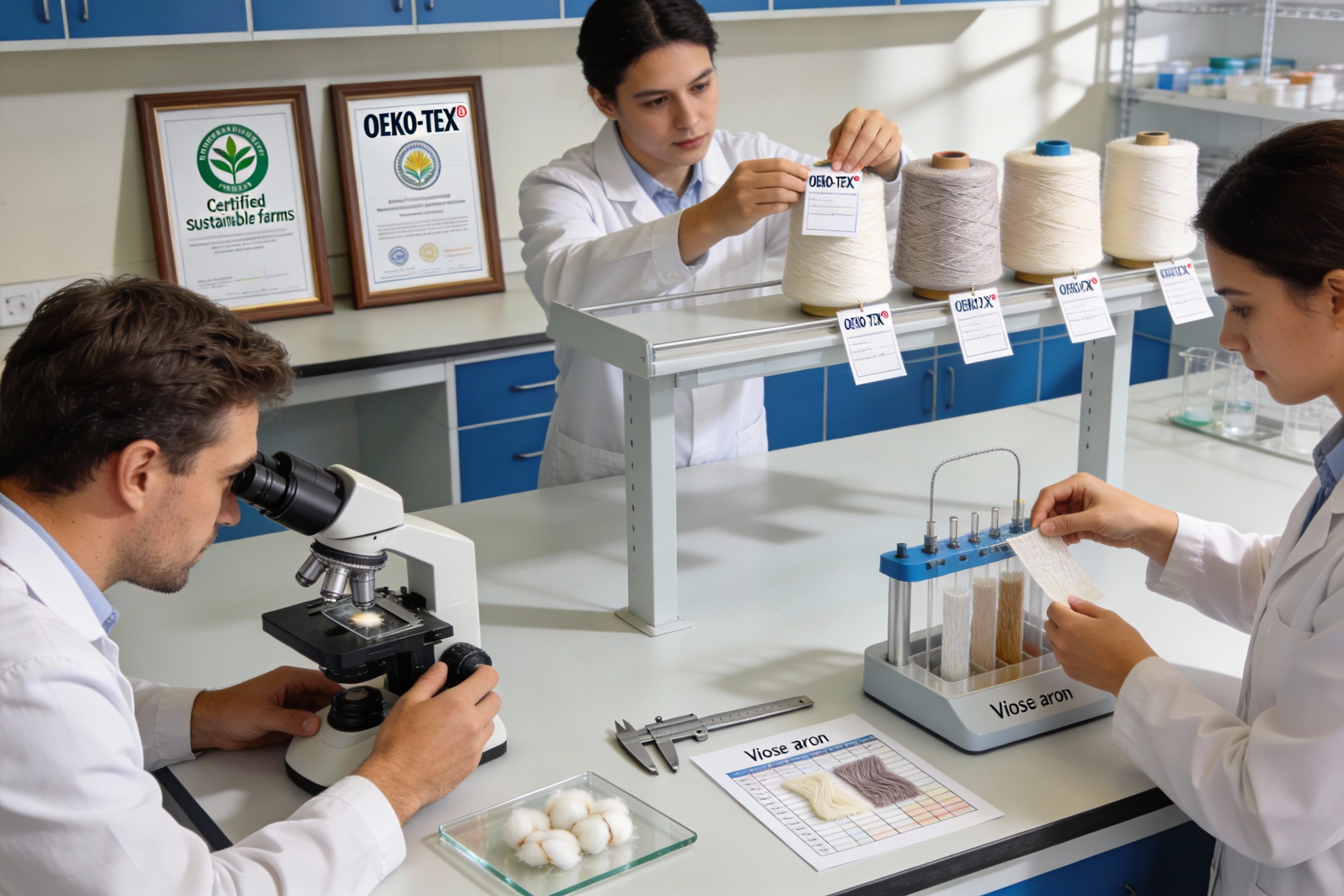
(Image placeholder: Raw Material Quality Inspection Station—showing lab technicians testing cotton, polyester, and rayon fibers for purity and performance.)
2. Fiber Blending
Once the raw materials are approved, the fibers are blended in precise ratios to achieve the desired properties. The blending process is critical, as it determines how evenly the fibers are distributed throughout the fabric, which affects its strength, drape, and printability.
Leading manufacturers use automated blending machines that mix the fibers in a controlled environment. The ratio of cotton, polyester, and rayon is adjusted based on the intended application: for example, a 30% cotton, 40% polyester, 30% rayon blend is ideal for business suiting (balancing shape retention and drape), while a 40% cotton, 30% polyester, 30% rayon blend is better for casual wear (prioritizing softness and breathability).
After blending, the fibers are carded— a process that aligns the fibers in a parallel direction and removes any remaining impurities. This step ensures that the fibers are uniform and ready for spinning into yarn.
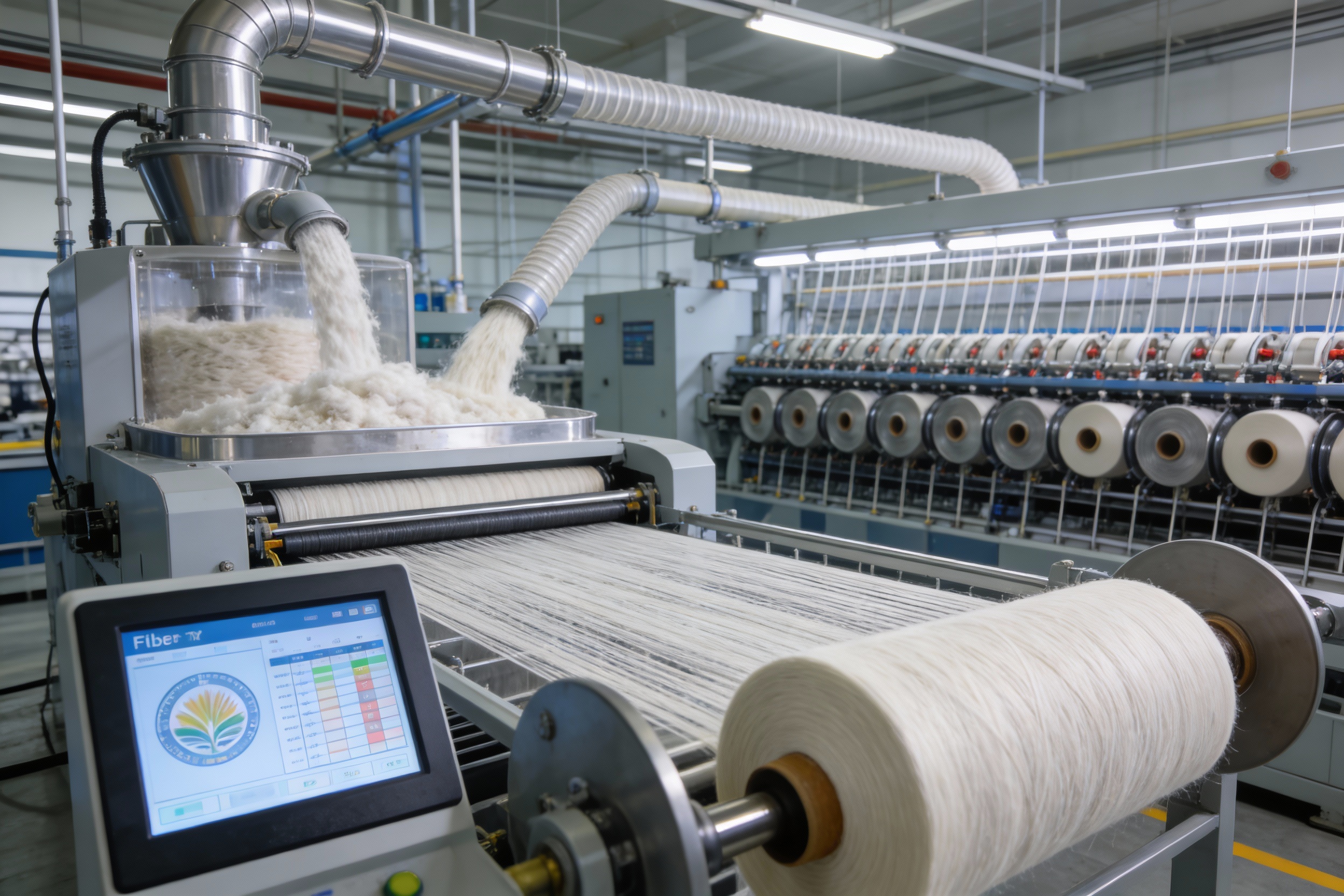
(Image placeholder: Automated Fiber Blending Machine—showing a large machine mixing cotton, polyester, and rayon fibers in precise ratios.)
3. Yarn Spinning and Knitting
The blended fibers are spun into yarn using ring spinning or open-end spinning techniques. Ring spinning is preferred for its ability to produce strong, fine yarns that contribute to the fabric’s softness and drape. The yarn is then knitted into fabric using circular knitting machines (for stretchy fabrics) or warp knitting machines (for structured fabrics like suiting).
For grey cotton polyester rayon fabric, circular knitting is often used to create a soft, flexible fabric that is suitable for a wide range of applications. The knitting process is monitored closely to ensure that the stitch density is consistent, which affects the fabric’s weight and durability. After knitting, the fabric is inspected for defects (like holes or uneven stitches) before moving to the next stage.
4. Dyeing and Finishing
While grey cotton polyester rayon fabric is sold in its undyed state, some manufacturers may perform preliminary finishing steps to improve its handle and performance. These steps include:
- Scouring: Removing impurities (like waxes, oils, and dirt) from the fabric using mild detergents. This step is essential to ensure that the fabric can be dyed evenly later.
- Bleaching (Optional): If a lighter shade of grey is desired, the fabric may be lightly bleached. However, most manufacturers avoid heavy bleaching to preserve the fabric’s natural softness and strength.
- Mercerization (Optional): Treating the cotton fibers with caustic soda to increase their luster and strength. This step is often used for high-end applications like business suiting.
After finishing, the fabric is dried and wound into rolls for storage or shipping. Each roll is labeled with the fabric’s composition, weight, and batch number for traceability.
5. Quality Control and Testing
Quality control is an ongoing process throughout manufacturing. At each stage, the fabric is tested for key properties:
- Shrinkage Testing: Using ISO 5077 standards to measure how much the fabric shrinks after washing.
- Breathability Testing: Using ASTM D737 standards to measure air permeability.
- Durability Testing: Using ISO 12945 standards to measure pilling resistance (how well the fabric resists forming small balls of fiber).
- Printability Testing: Applying a sample print to the fabric and evaluating its vibrancy and fastness.
Only fabrics that meet or exceed all quality standards are approved for sale. This commitment to quality ensures that customers receive a consistent, high-performance product every time.
Applications of Grey Cotton Polyester Rayon Fabric
Grey cotton polyester rayon fabric’s unique combination of properties makes it suitable for a wide range of applications across the textile industry. Below are some of the most common uses:
1. Business Suiting
One of the most popular applications for this fabric is business suiting. Its blend of polyester (for shape retention), rayon (for drape), and cotton (for comfort) makes it ideal for blazers, trousers, and skirts. The fabric’s printability also allows manufacturers to create custom patterns (like pinstripes or jacquard designs) that are perfect for formal wear. Additionally, the fabric’s resistance to wrinkles and shrinkage means that business suits made from this material require minimal maintenance—an important feature for busy professionals.
2. Casual Wear
Grey cotton polyester rayon fabric is also widely used for casual wear, including shirts, dresses, and skirts. Its softness and breathability make it comfortable for everyday use, while its durability ensures that it can withstand frequent washing and wear. The fabric’s luster adds a touch of elegance to casual garments, making it suitable for both daytime and evening wear. For example, a cotton-polyester-rayon dress is perfect for a casual brunch or a night out with friends.
3. Home Textiles
This fabric is also used in home textiles, including curtains, upholstery, and bedding. Its durability and resistance to fading make it ideal for upholstery (like sofa covers or chair cushions), while its breathability and softness make it suitable for bedding (like sheets or duvet covers). The fabric’s printability allows manufacturers to create custom designs that match any home decor style.
4. Sportswear and Activewear
While not as common as synthetic sportswear fabrics (like spandex or nylon), grey cotton polyester rayon fabric is used in some sportswear applications. Its moisture absorption (from cotton and rayon) and durability (from polyester) make it suitable for light exercise (like yoga or walking). The fabric’s stretch (from rayon) also adds comfort and mobility, making it ideal for activewear that requires a balance of performance and style.
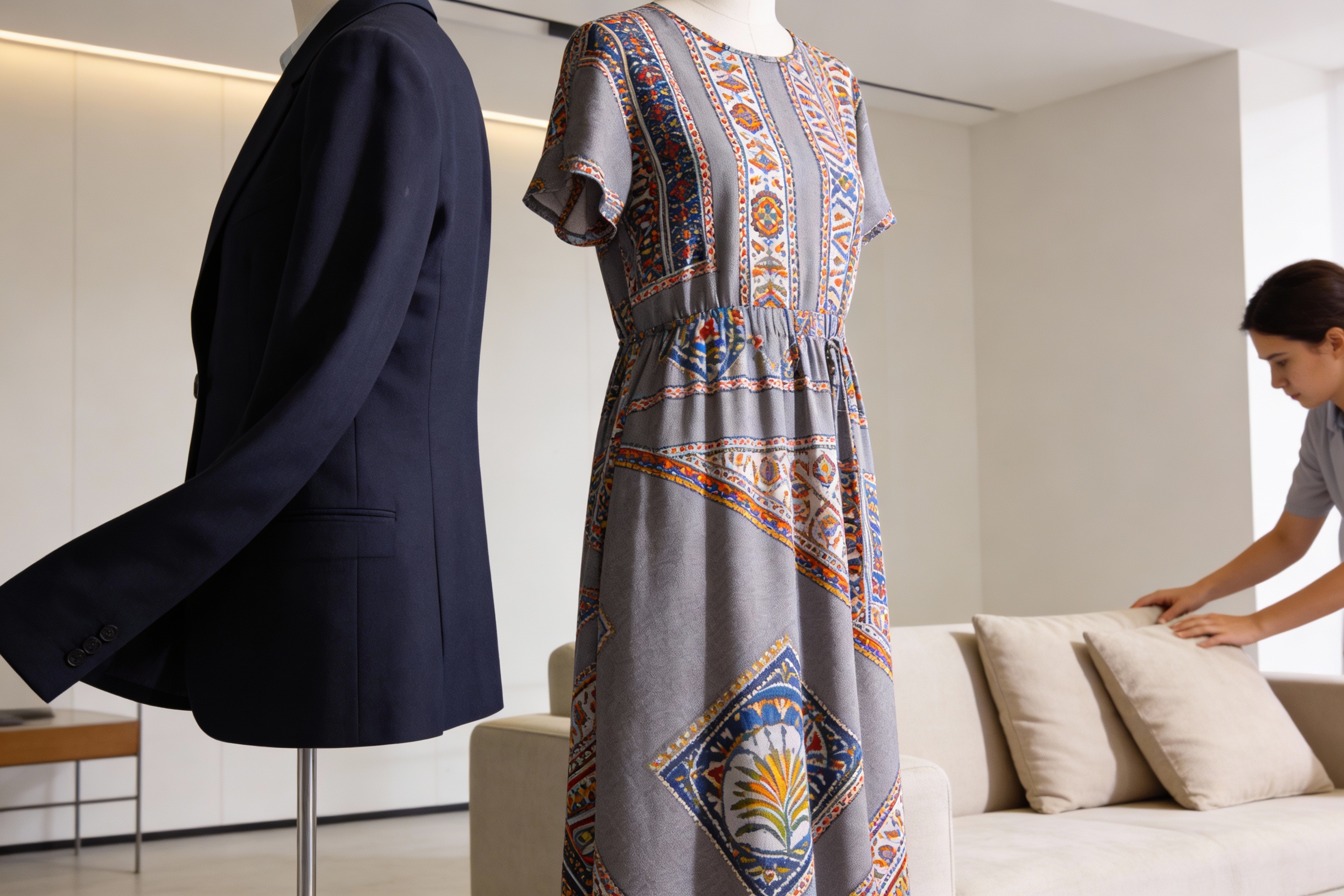
(Image placeholder: Finished Grey Cotton Polyester Rayon Fabric Rolls—showing large rolls of the fabric stored in a warehouse, ready for shipping.)
Q&A Section
To address common questions about grey cotton polyester rayon fabric, we’ve compiled the following Q&A:
Q1: Is Grey Cotton Polyester Rayon Fabric Suitable for Frequent Washing?
A: Yes. The polyester component of the fabric makes it resistant to shrinkage and fading, while the cotton and rayon components are durable enough to withstand frequent washing. However, to maintain the fabric’s quality, it’s recommended to wash it on a gentle cycle with mild detergent and avoid using bleach or fabric softeners. Drying on a low heat setting or air-drying is also recommended to prevent wrinkling.
Q2: How Does This Fabric Compare to 100% Rayon in Terms of Durability?
A: Grey cotton polyester rayon fabric is significantly more durable than 100% rayon. The addition of polyester and cotton increases the fabric’s resistance to stretching, shrinking, and breaking. For example, a garment made from this blend will last 2-3 times longer than a garment made from 100% rayon, especially in high-wear areas like elbows or knees.
Q3: Can This Fabric Be Printed On Easily?
A: Yes. Rayon’s smooth surface provides an ideal canvas for vibrant, detailed prints. The fabric’s blend of cotton and polyester also helps the print adhere better than it would to a basic cotton-polyester blend. Leading manufacturers offer custom printing services, allowing customers to create unique designs for their garments or home textiles.
Q4: Is Grey Cotton Polyester Rayon Fabric Breathable?
A: Yes. The cotton and rayon components are natural (or semi-natural) fibers that allow air to circulate, reducing moisture buildup and keeping the wearer cool. While it’s not as breathable as 100% cotton, it’s significantly more breathable than 100% polyester. This makes it ideal for garments that require a balance of comfort and durability.
Q5: What Are the Environmental Benefits of This Fabric?
A: Grey cotton polyester rayon fabric has several environmental benefits. First, the use of long-staple cotton from sustainable farms reduces water usage and chemical runoff. Second, the fabric’s durability means that it has a longer lifespan, reducing the need for frequent replacements (and thus reducing textile waste). Third, the grey state of the fabric allows for custom dyeing, which reduces waste from pre-dyed offcuts. Additionally, many manufacturers use eco-friendly dyes and finishing processes to minimize their environmental impact.
Q6: Can This Fabric Be Used for Formal Occasions?
A: Yes. The fabric’s luster (from rayon) and drape make it suitable for formal occasions like weddings, business meetings, or galas. It can be dyed in a wide range of colors (from classic black to vibrant red) and printed with elegant patterns (like jacquard or damask). Garments made from this fabric are often used for formal wear because they combine style, comfort, and durability.
Why Choose This Fabric (and Its Manufacturer)?
Grey cotton polyester rayon fabric stands out in the textile industry for its unique combination of properties, but choosing the right manufacturer is equally important. Leading manufacturers of this fabric offer several key advantages:
1. Integrated Manufacturing Process
Top manufacturers have an integrated manufacturing process that covers every stage from raw material sourcing to finished fabric. This allows them to control quality at every step and ensure consistency across batches. For example, a manufacturer may have its own cotton farms, polyester yarn production facilities, and fabric finishing plants—eliminating the need to outsource any stage of production. This integration also reduces lead times and allows for more flexible customization.
2. Advanced R&D Capabilities
Leading manufacturers invest heavily in research and development to improve the fabric’s performance and develop new applications. For example, they may experiment with different fiber ratios to create a fabric that is more breathable or more durable, or they may develop new finishing processes to enhance the fabric’s printability. This commitment to innovation ensures that customers have access to the latest textile technologies.
3. Sustainable Practices
Many top manufacturers prioritize sustainability in their production processes. This includes using sustainable raw materials (like organic cotton or recycled polyester), reducing water and energy usage, and minimizing waste. For example, a manufacturer may use closed-loop dyeing systems that recycle water, or they may implement zero-waste manufacturing techniques to reduce textile waste. This commitment to sustainability is important for customers who are looking for eco-friendly textile solutions.
4. Wholesale and Customization Options
Leading manufacturers offer wholesale options for businesses, as well as custom customization services. This includes custom fiber ratios, print designs, and finishing processes. For example, a clothing brand may work with a manufacturer to create a custom blend of cotton, polyester, and rayon that meets their specific needs (like a higher rayon content for more drape). This flexibility allows businesses to create unique products that stand out in the market.
5. Global Export Capabilities
Top manufacturers have global export capabilities, allowing them to ship fabric to customers around the world. They often have partnerships with international logistics companies to ensure that orders are delivered on time and in good condition. Additionally, they may have local offices or representatives in key markets to provide customer support and after-sales service.
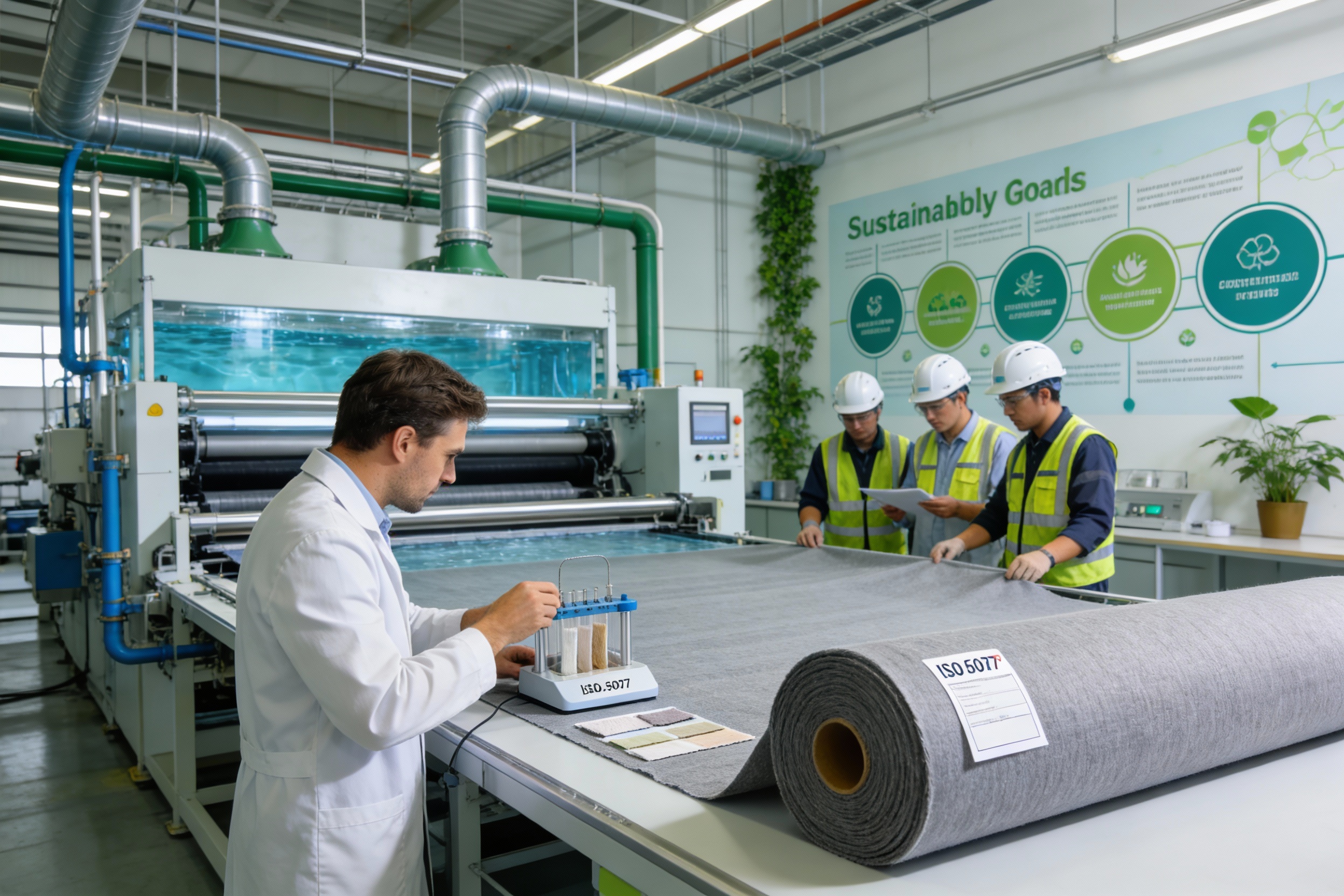
(Image placeholder: Advanced Fabric Dyeing and Finishing Line—showing a modern production line where grey fabric is processed into finished, dyed fabric.)
References
The information in this article is based on the following sources:
- Textile Institute. (2022). Global Textile Market Report: Tri-Blend Fabrics. Manchester, UK: Textile Institute Press.
- International Organization for Standardization (ISO). (2019). ISO 5077: Textiles—Determination of dimensional change of fabrics after domestic washing and drying. Geneva, Switzerland: ISO.
- American Society for Testing and Materials (ASTM). (2021). ASTM D737: Standard Test Method for Air Permeability of Textile Fabrics. West Conshohocken, PA: ASTM International.
- OEKO-TEX® Association. (2023). OEKO-TEX® Standard 100: Requirements for Textile Products. Zurich, Switzerland: OEKO-TEX® Association.
- Smith, J. (2021). The Science of Textile Blends: How Cotton, Polyester, and Rayon Work Together. New York, NY: Academic Press.
- Wang, L. (2022). Sustainable Textile Manufacturing: Best Practices for Tri-Blend Fabrics. Beijing, China: China Textile Press.
Conclusion
Grey cotton polyester rayon fabric is a versatile, high-performance textile that offers a unique combination of comfort, durability, and functionality. Its advantages over competitor fabrics—including reduced shrinkage, improved breathability, and enhanced printability—make it ideal for a wide range of applications, from business suiting to casual wear. Leading manufacturers of this fabric use advanced manufacturing processes and sustainable practices to ensure quality and consistency, making it a top choice for businesses and consumers alike. Whether you’re looking for a fabric for formal wear, casual wear, or home textiles, grey cotton polyester rayon fabric is a reliable and stylish option that delivers on performance and value.