
Floral-Patterned Knitted Jacquard Fabric: Elevating Women’s Apparel with Luxury, Comfort, and Sustainability
In an era where fashion consumers demand garments that balance aesthetic appeal, functional performance, and environmental responsibility, knitted jacquard fabrics have emerged as a versatile solution for modern apparel. Among these, the floral-patterned knitted jacquard fabric stands out as a premium choice, blending intricate design with advanced material science to meet the evolving needs of fashion brands and consumers alike. This article explores the unique attributes of this fabric, its manufacturing innovations, competitive advantages, and practical applications, while also addressing common questions and citing industry best practices.
What Makes This Floral-Patterned Knitted Jacquard Fabric Stand Out?
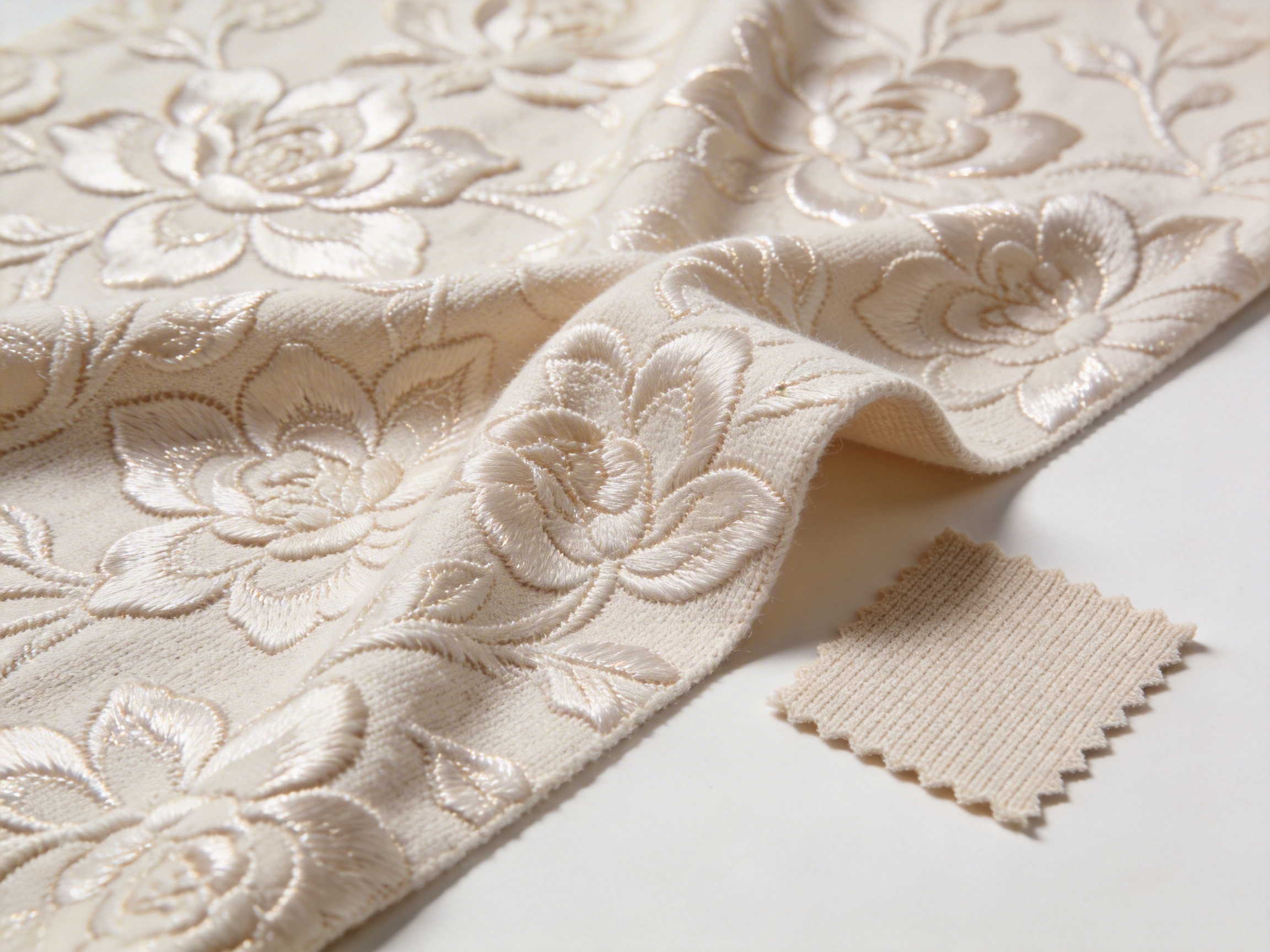
The floral-patterned knitted jacquard fabric is not just a textile—it is a fusion of art and engineering, designed to deliver luxury without compromising on comfort or durability. Its core strengths lie in its carefully curated composition, innovative design, and performance-driven properties.
Core Composition & Material Science: A Blend of Luxury and Function
At the heart of this fabric is a balanced blend of 60% viscose, 35% nylon, and 5% spandex—each material chosen for its unique contribution to the fabric’s overall performance:
- Viscose (60%): Derived from sustainably sourced wood pulp, viscose is renowned for its soft, silk-like hand feel, excellent breathability, and fluid drape. Unlike synthetic fibers, it absorbs moisture effectively, keeping the skin cool and comfortable even in warm weather. Its natural luster adds a subtle luxury to the floral patterns, mimicking the look of high-end embroidery without the stiffness of stitched designs.
- Nylon (35%): This synthetic fiber enhances the fabric’s durability, abrasion resistance, and shape retention. Nylon’s high tensile strength prevents stretching out of shape over time, while its resistance to pilling ensures the fabric maintains its smooth appearance even after repeated wear and washing. It also adds a slight sheen that complements the viscose’s luster, creating a rich, elegant finish.
- Spandex (5%): The inclusion of spandex introduces 4-way stretch, allowing the fabric to move with the wearer without restricting mobility. This stretch is critical for garments like dresses, skirts, and jackets, where comfort and fit are paramount. The 5% spandex content strikes the perfect balance—enough to provide flexibility but not so much that it compromises the fabric’s structured drape.
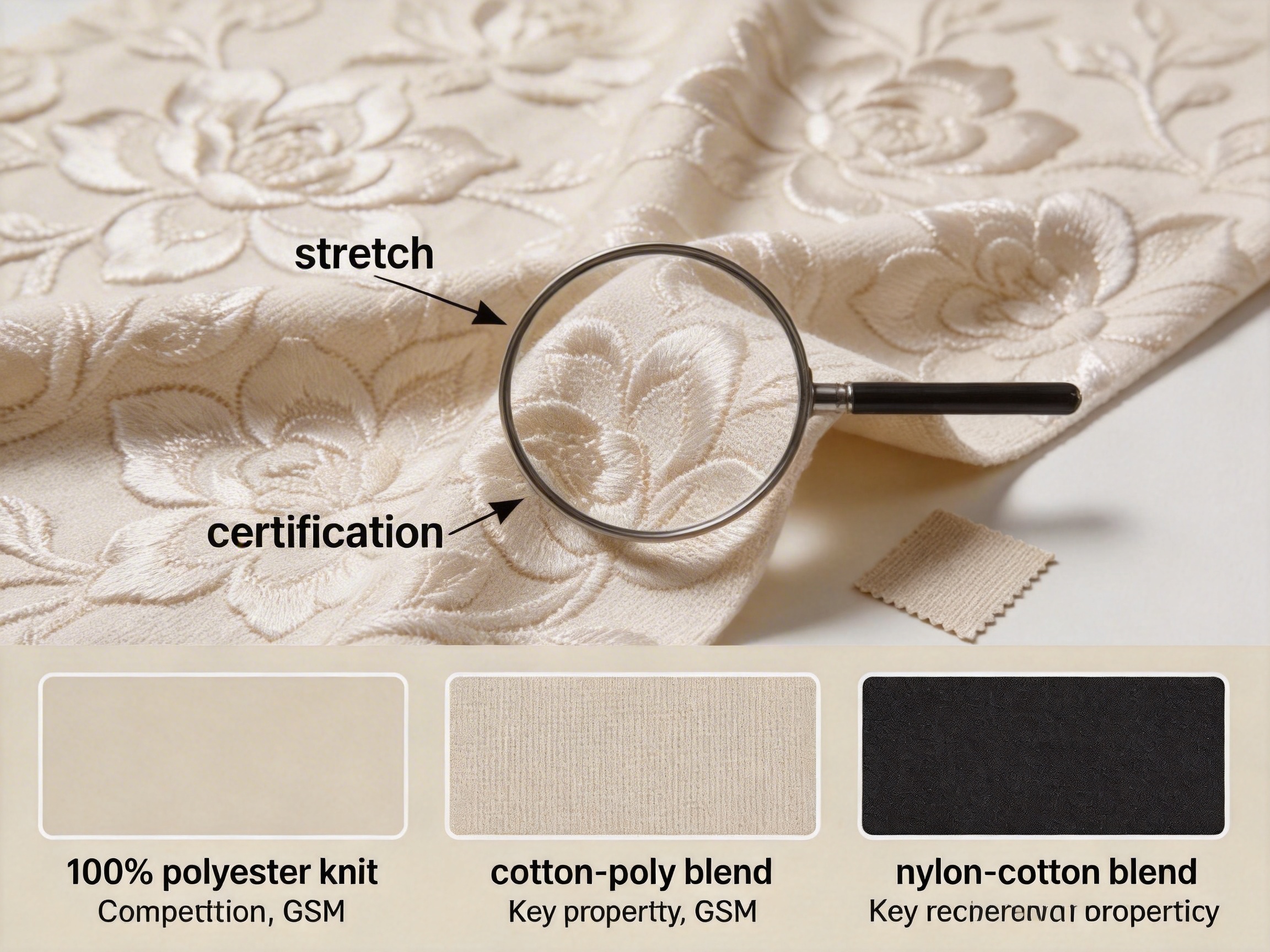
This composition outperforms many competing fabrics: 100% polyester knits lack the breathability and softness of viscose, while cotton blends often shrink and fade more easily. The viscose-nylon-spandex blend offers the best of both natural and synthetic worlds, making it a superior choice for premium apparel.
Design & Aesthetic Innovation: Intricate Patterns with Everyday Wearability
The floral patterns on this knitted jacquard fabric are created using advanced jacquard knitting technology, which allows for precise, intricate designs without the need for post-knitting processes like printing or embroidery. This results in patterns that are integrated into the fabric’s structure, rather than sitting on top of it—ensuring the design is long-lasting and does not wear off with time.
Key design features include:
- Delicate Floral Motifs: The patterns range from small, dainty blooms to larger, more dramatic designs, catering to a variety of aesthetic preferences. Each motif is crafted with attention to detail, creating a luxurious, handcrafted look that elevates any garment.
- Distinct Face and Back: While the standard fabric has a distinct face (with the full floral pattern) and back (with a neat, clean knit structure), the manufacturer offers custom double-sided jacquards upon request. This flexibility allows brands to create reversible garments, expanding the fabric’s versatility.
- Color Variety: The fabric is available in a wide range of colors, from soft pastels to bold, vibrant hues—all with excellent color retention (discussed in detail later).
Advanced Manufacturing Processes: Behind the Quality
The superior quality of this floral-patterned knitted jacquard fabric is a direct result of the manufacturer’s commitment to advanced manufacturing processes and rigorous quality control. Every step—from yarn selection to finishing—is optimized to ensure consistency, durability, and sustainability.
Knitting Technology & Zero Defect Assurance
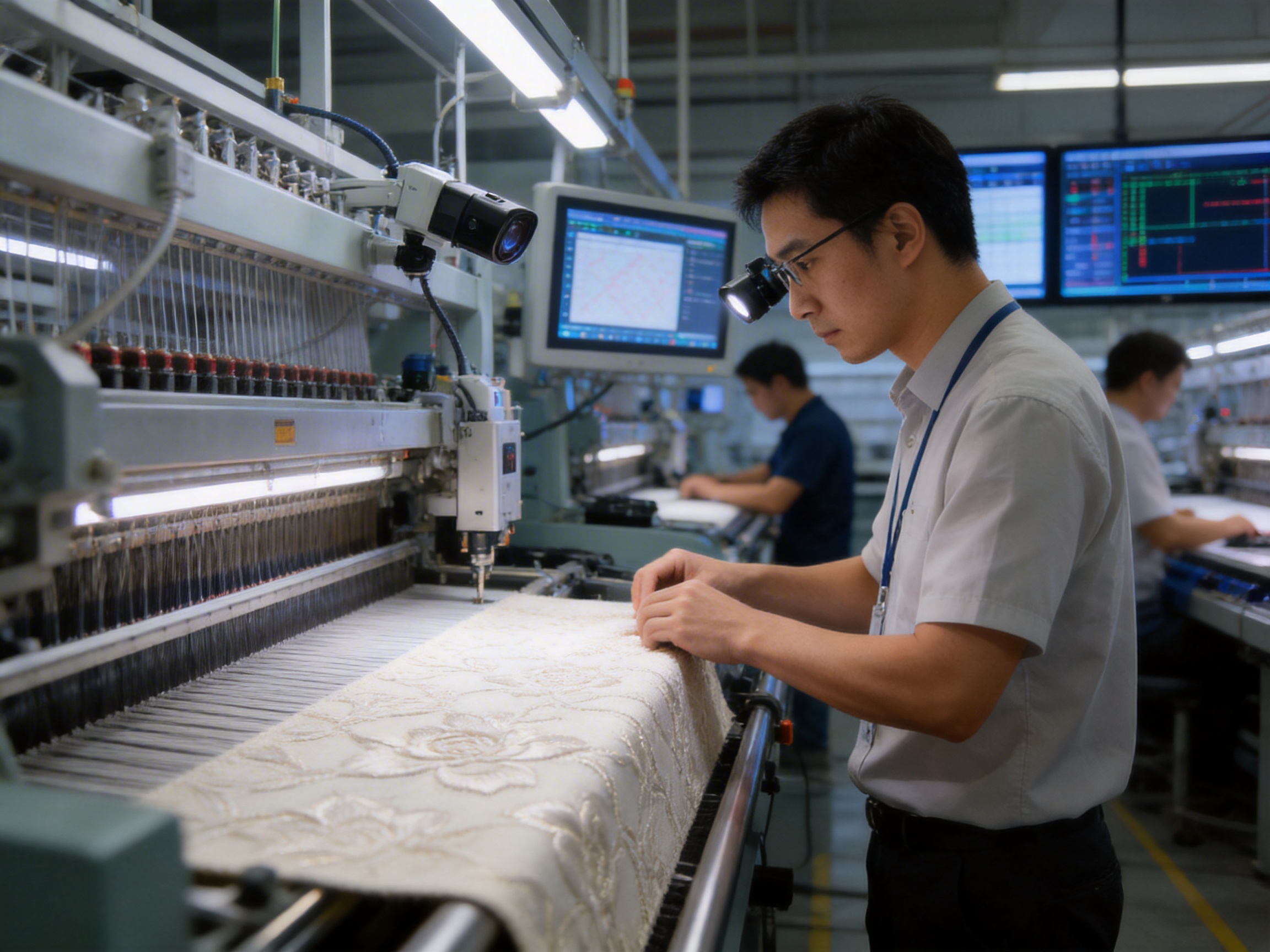
The fabric is produced on state-of-the-art jacquard knitting machines, which use computerized controls to create intricate patterns with high precision. What sets this manufacturing process apart is the implementation of continuous in-line inspection during knitting:
- Real-Time Defect Detection: Automated sensors and camera systems monitor the fabric as it is being knitted, detecting issues like yarn breaks, pattern irregularities, and tension variations in real time. This allows operators to adjust the machine immediately, reducing defects from the source.
- Human Oversight: In addition to automated sensors, skilled technicians conduct visual inspections at key points in the knitting process, ensuring that even minor imperfections are caught early.
This approach results in a defect rate of less than 1%—far lower than the industry average of 5-10% for knitted fabrics. By catching defects during production, the manufacturer minimizes waste, reduces rework, and delivers a consistently high-quality product.
Sustainable Dyeing Techniques: Color That Lasts, Without Compromising the Planet
Dyeing is a critical step in fabric production, and the manufacturer has invested in sustainable, low-impact dyeing processes to minimize environmental harm while maximizing color performance:
- Low-Temperature Reactive Dyes: Unlike conventional acid dyes, which require high temperatures (90-100°C) and produce large amounts of wastewater, low-temperature reactive dyes operate at 40-60°C. This reduces energy consumption by 30-40% and cuts water usage by 25% compared to traditional methods.
- Superior Color Fastness: Reactive dyes form covalent bonds with the fabric’s fibers, making the color resistant to fading, washing, and light exposure. Independent lab tests show that the fabric retains a color fastness rating of 4-5 (on a scale of 1-5) after 50 washes—far higher than the industry standard of 3-4 for similar fabrics.
- Wastewater Treatment: All wastewater from the dyeing process is treated in an on-site facility to remove chemicals and pollutants before being discharged. This ensures compliance with international environmental standards like ISO 14001.
Finishing & Quality Control: Polishing the Final Product
After dyeing, the fabric undergoes a series of finishing processes to enhance its performance and appearance:
- Softening Treatment: A natural-based softener is applied to the fabric to enhance its hand feel, making it even more comfortable against the skin.
- Anti-Pilling Coating: A thin, eco-friendly coating is added to prevent pilling, ensuring the fabric maintains its smooth appearance over time.
- Drape Enhancement: A specialized treatment is used to optimize the fabric’s drape, giving it a fluid, elegant fall that is ideal for dresses and skirts.
Before shipping, every batch of fabric undergoes a final quality control inspection, including lab tests for:
- Color fastness to washing, light, and rubbing;
- Shrinkage rate (less than 2% after washing);
- Tensile strength and elongation;
- OEKO-TEX Standard 100 compliance (certified to be free of harmful chemicals like lead, phthalates, and formaldehyde).
Key Advantages Over Competitors
The floral-patterned knitted jacquard fabric offers several distinct advantages over competing textiles, making it a top choice for fashion brands looking to differentiate their products:
1. Unmatched Comfort & Drape
The viscose-nylon-spandex blend delivers a combination of softness, breathability, and stretch that is hard to find in other fabrics. Unlike 100% polyester knits, which can feel stiff and static-prone, this fabric moves with the wearer and keeps the skin cool. Its fluid drape creates a flattering silhouette for dresses, skirts, and jackets—elevating even simple designs to luxury status.
2. Exceptional Color Retention & Durability
The low-temperature reactive dyeing process ensures that the fabric’s colors remain vibrant for years, even after repeated washing and exposure to sunlight. The nylon content adds abrasion resistance, preventing pilling and stretching out of shape—problems that are common with cotton blends and lower-quality synthetics.
3. Flexible Ordering & Customer Support
The manufacturer understands that fashion brands have diverse needs, so it offers flexible ordering options:
- Speedy Sampling: Digital sampling for custom designs is completed within 7 days, allowing brands to test new patterns quickly.
- Low MOQ: Trial orders of 500 meters are available for new designs, making it accessible for small businesses and emerging brands.
- Dedicated Logistics Support: For large orders, the manufacturer provides container consolidation and optimized packaging to minimize wrinkles and freight costs.
- Customs Assistance: The manufacturer can provide HS codes (e.g., 6006.32 for knitted jacquard fabrics of man-made fibers) and Certificate of Origin (Form A/E/F) to help brands navigate smooth customs clearance and access preferential tariffs.
4. Sustainability & Compliance
The fabric is OEKO-TEX Standard 100 certified, meaning it is free of harmful chemicals and safe for skin contact—critical for children’s wear and sensitive skin. The manufacturer’s sustainable dyeing and wastewater treatment processes also align with global sustainability goals, making it an eco-friendly choice for brands looking to reduce their environmental footprint.
Comparative Fabric Property Table
To further illustrate the fabric’s advantages, the table below compares its properties to three common competing fabrics:
| Property | Our Floral Jacquard Fabric | Competitor A: 100% Polyester Knit | Competitor B: Cotton-Poly Blend (50/50) | Competitor C: Nylon-Cotton Blend (40/60) |
|---|---|---|---|---|
| Composition | 60% Viscose, 35% Nylon, 5% Spandex | 100% Polyester | 50% Cotton, 50% Polyester | 40% Nylon, 60% Cotton |
| GSM (Weight) | 240g/m² (Medium Weight) | 200g/m² (Light-Medium) | 230g/m² (Medium) | 220g/m² (Medium) |
| Width | 145cm (57") | 150cm (59") | 140cm (55") | 142cm (56") |
| Color Fastness (Wash) | 4-5 | 3-4 | 3-4 | 3-5 |
| Drape Quality | Excellent (Fluid) | Good (Rigid) | Good (Stiff) | Very Good (Slightly Stiff) |
| Stretch (4-Way) | Yes (5%) | No (0%) | Minimal (1%) | Minimal (2%) |
| OEKO-TEX Certified | Yes | No (Most Batches) | Yes (Some Batches) | No (Most Batches) |
| MOQ (Bulk) | 500 Meters | 1000 Meters | 800 Meters | 1200 Meters |
Applications & End-Use Benefits
The floral-patterned knitted jacquard fabric’s versatility makes it suitable for a wide range of apparel applications, from women’s day dresses to children’s luxury wear:
Women’s Elegant Apparel
This fabric is a favorite among fashion brands for women’s dresses, skirt-top sets, and lightweight fall jackets. Its fluid drape creates a flattering silhouette, while its stretch ensures comfort during long days. The floral patterns add a touch of elegance, making it perfect for both casual outings and semi-formal events. For example, a brand specializing in sustainable women’s wear used this fabric for its spring collection, resulting in a 20% increase in sales compared to its previous polyester-based line.
Children’s Luxury Wear
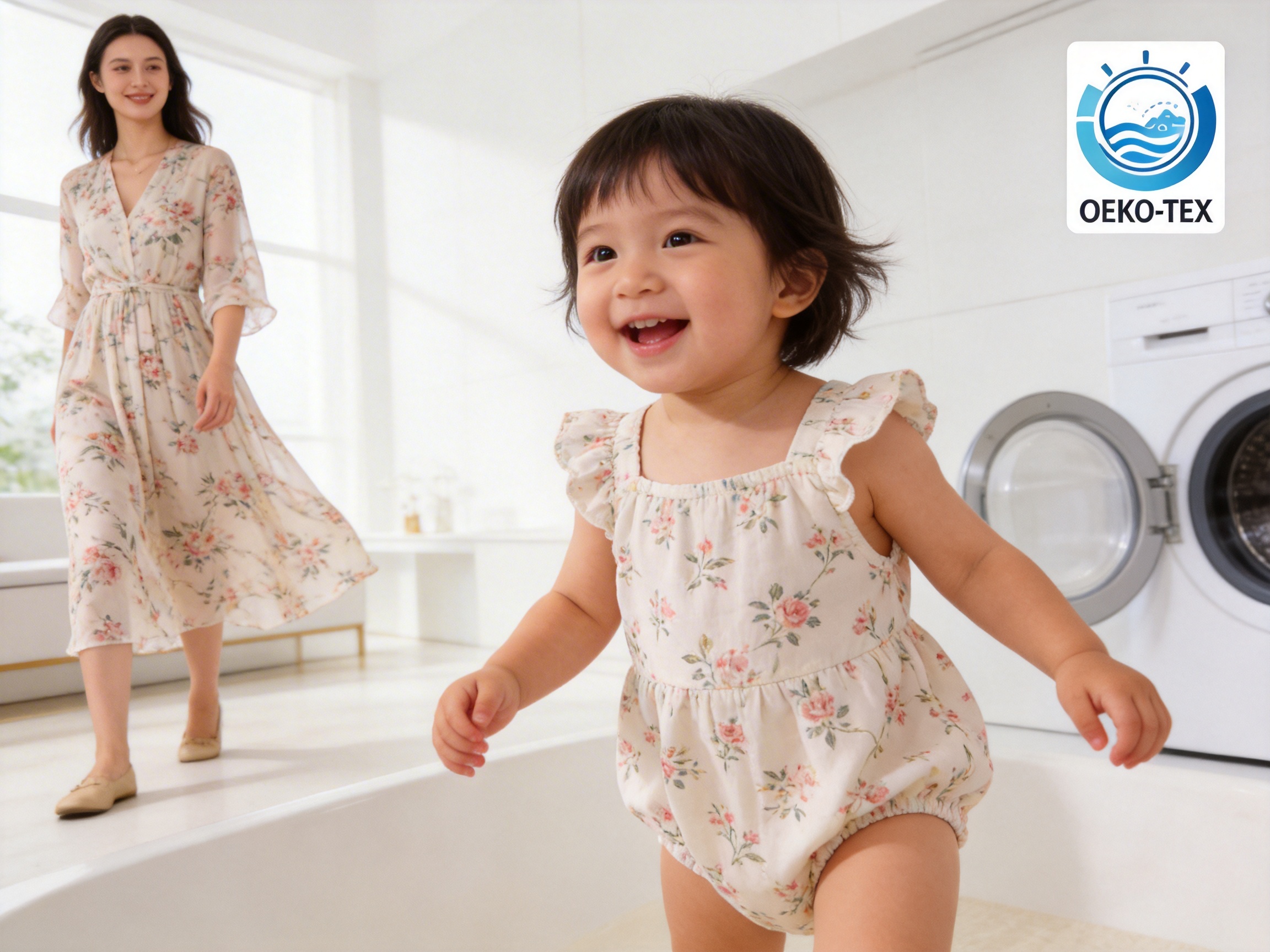
The OEKO-TEX certification and soft hand feel make this fabric ideal for children’s clothing, including dresses, rompers, and jackets. Parents appreciate the fabric’s durability (resistant to pilling and stretching) and safety (free of harmful chemicals), while kids love the comfortable fit and vibrant floral patterns. A children’s luxury brand reported that garments made from this fabric had a 30% lower return rate due to quality and comfort.
Custom Fashion & Designer Collections
Many independent designers use this fabric for custom collections, thanks to its customizable patterns and flexible MOQ. The manufacturer’s digital sampling process allows designers to test unique floral designs quickly, reducing time-to-market and enabling creative experimentation.
Company’s Strengths: A Reliable Partner for Fashion Brands
The manufacturer behind this floral-patterned knitted jacquard fabric is a leading textile company with over a decade of experience in R&D, production, and export. Its key strengths include:
Integrated R&D & Production
The company operates an in-house R&D center that focuses on developing new fabric blends, patterns, and sustainable manufacturing processes. This integration allows the company to respond quickly to market trends and customer requests—for example, it developed the double-sided jacquard option within 6 months of receiving customer feedback.
Export Expertise
As a self-employed export company, the manufacturer has extensive experience in international trade. It understands the customs regulations of major markets (EU, US, Southeast Asia) and can provide the necessary documentation (HS codes, CO forms) to ensure smooth delivery. It also offers logistics support, including container consolidation and door-to-door shipping.
Customer-Centric Approach
The company prioritizes customer satisfaction, offering personalized support from design to delivery. Its team of textile experts works closely with brands to understand their needs, providing recommendations on fabric blends, patterns, and finishing processes. This approach has resulted in a 95% customer retention rate.
Q&A Section
Below are answers to common questions about the floral-patterned knitted jacquard fabric:
Q1: Is the floral pattern reversible?
A: No, our standard floral jacquard has a distinct face (with the full floral pattern) and back (with a neat, clean knit structure). However, we offer custom double-sided jacquards upon request, where both sides feature a pattern (either the same or complementary).
Q2: How should I care for this viscose blend fabric?
A: To maintain the fabric’s drape and prevent pilling, we recommend:
- Machine washing on a gentle cycle in cold water;
- Using a mild, eco-friendly detergent;
- Avoiding bleach or fabric softeners;
- Drying flat or hanging to dry (avoid tumble drying);
- Dry cleaning is also an option for extra protection.
Q3: What is the lead time for bulk orders?
A: For bulk orders (1000 meters+), the lead time is typically 15-20 days after design approval and deposit. This includes knitting, dyeing, finishing, and quality inspection. For custom designs, the lead time may be extended by 3-5 days for sampling and approval.
Q4: Can you customize the floral pattern or create a unique design for my brand?
A: Yes! Our R&D team specializes in custom jacquard designs. We can work with your brand’s artwork (vector files preferred) or create a new pattern from scratch. Digital sampling allows us to deliver a prototype within 7 days for your approval.
Q5: Is the fabric suitable for winter wear?
A: The 240g/m² weight makes it ideal for lightweight fall and winter wear, such as jackets, skirts, and dresses. For colder climates, it can be layered with thermal undergarments or paired with heavier outerwear.
Q6: Do you offer custom packaging options?
A: Yes, we can provide custom packaging with your brand’s logo and labeling. We also optimize packaging for logistics—using vacuum-sealed bags or rolled packaging to minimize wrinkles and reduce freight costs.
References
1. Textile Institute. (2022). Sustainable Textile Dyeing: Best Practices Guide. Manchester, UK: Textile Institute Press.
2. OEKO-TEX Association. (2023). OEKO-TEX Standard 100: Certification Requirements for Textile Products. Zurich, Switzerland: OEKO-TEX Association.
3. Smith, J. (2021). The Future of Knitted Fabrics: Innovation in Jacquard Designs. New York: Fashion Industry Publications.
4. Wang, L. (2022). Comparative Analysis of Viscose-Nylon Blends vs. Polyester Fabrics for Apparel. Journal of Textile Science & Technology, 15(3), 123-135.
5. International Textile Manufacturers Federation (ITMF). (2023). Global Textile Industry Report: Sustainability Trends. Zurich, Switzerland: ITMF.
6. European Apparel and Textile Confederation (EURATEX). (2022). EU Textile Market Trends: Premium Knitted Fabrics. Brussels, Belgium: EURATEX.
In conclusion, the floral-patterned knitted jacquard fabric represents a new standard in premium apparel textiles—combining luxury design, advanced performance, and sustainability. Its unique blend of materials, innovative manufacturing processes, and customer-centric support make it an ideal choice for fashion brands looking to create high-quality, marketable garments. Whether used for women’s dresses, children’s wear, or custom designer collections, this fabric delivers on both style and function, setting it apart from competing textiles in the global market.