
Elevating Textile Design: The Unmatched Advantages of Black & White Jacquard Pattern Fabric
In the dynamic world of textiles, jacquard fabrics have long been celebrated for their intricate patterns, luxurious feel, and versatility across fashion and interior design. From historical tapestries to modern high-fashion garments, jacquard weaving has evolved to combine artistry with technical precision. Among the latest innovations in this space is a black and white jacquard pattern fabric that stands out for its unique blend of materials, striking aesthetic, and functional superiority. This article explores the key features of this fabric, its advantages over competitor products, the advanced manufacturing processes that bring it to life, and the strengths of the manufacturer behind its creation.
Product Deep Dive: Black & White Jacquard Pattern Fabric
The black and white jacquard pattern fabric is a testament to the fusion of traditional weaving art and modern material science. Its design and composition make it a versatile choice for a wide range of applications, from structured dresses to textured skirts and classic shirting. Let’s break down its core attributes.
Material Composition: A Balanced Blend for Optimal Performance
At the heart of this fabric’s appeal is its carefully engineered blend of three key materials: viscose, polyamide (polyester), and spandex. Each component plays a distinct role in enhancing the fabric’s overall performance:
Viscose, a natural cellulose fiber derived from wood pulp, contributes to the fabric’s softness, breathability, and drape. Unlike synthetic fibers that trap heat, viscose allows air to circulate, making the fabric comfortable to wear in both warm and cool climates. Its smooth surface also adds a subtle luster, elevating the fabric’s aesthetic appeal.
Polyamide (a type of polyester) adds durability and stretch retention. This synthetic fiber is known for its high tensile strength, meaning the fabric resists tearing and abrasion even with frequent use. Additionally, polyamide helps the fabric maintain its shape over time, preventing sagging or stretching out of garments.
Spandex, a highly elastic fiber, introduces flexibility and comfort. With its ability to stretch up to 500% of its original length and return to its shape, spandex ensures that the fabric moves with the wearer, making it ideal for garments that require a snug fit (like dresses) or freedom of movement (like skirts).
The precise ratio of these materials—optimized through extensive research and testing—balances comfort, durability, and aesthetic appeal. For example, the blend avoids the common pitfalls of 100% viscose (which can be prone to wrinkling) or 100% polyester (which can feel stiff and static-prone).
Design & Aesthetic Appeal: Bold Patterns with Subtle Nuances
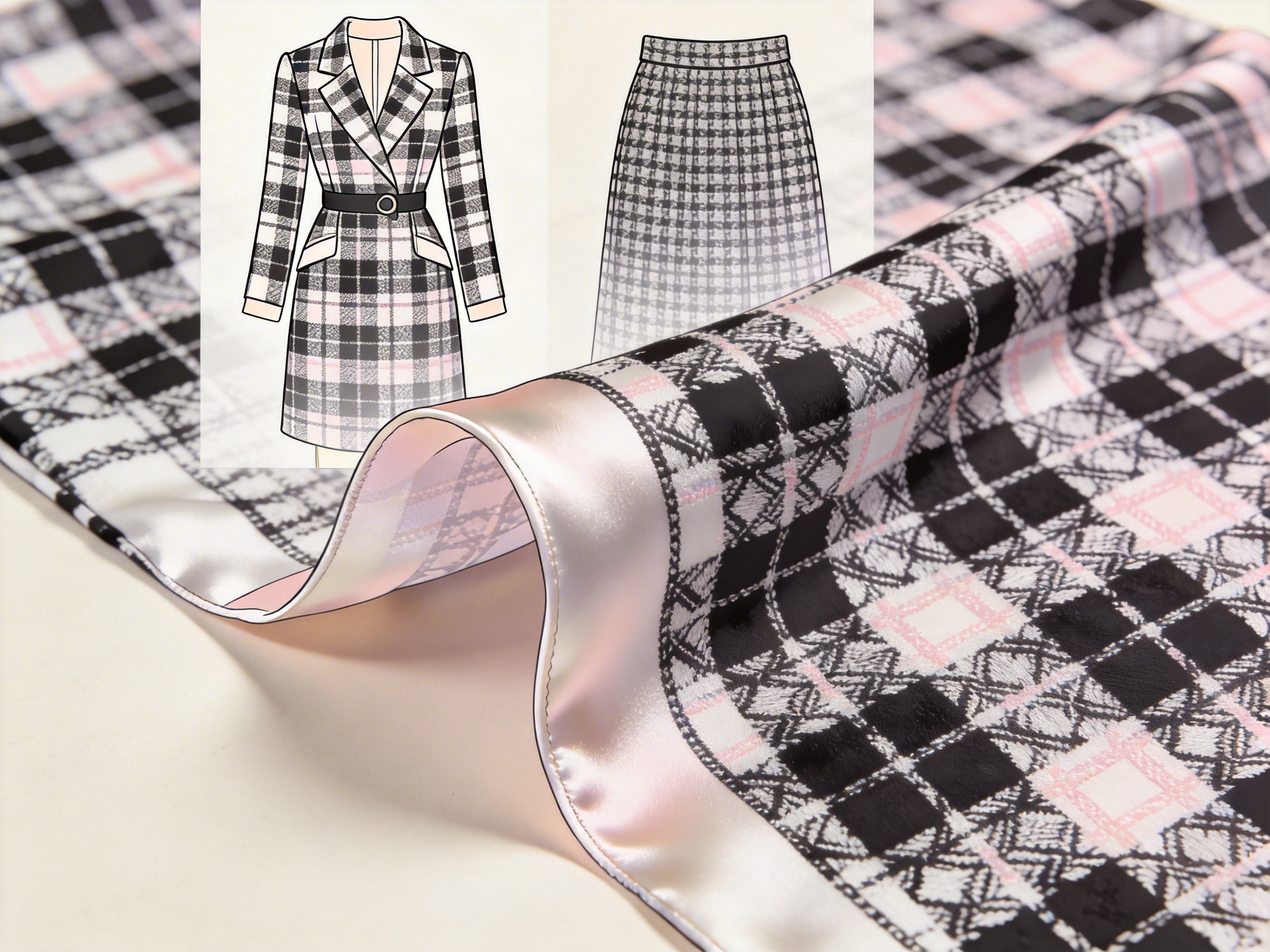
The fabric’s design is a standout feature, combining a bold check pattern with delicate nuances that set it apart from generic jacquard fabrics. The primary color palette is black and white, but upon closer inspection, the black lines are shadowed by a faint pale pink, adding depth and visual interest. The light grey background features a subtle lustre, giving the fabric a luxurious, almost silk-like appearance without the high cost or fragility of silk.
One of the most striking aspects of the design is its versatility. The black and white base makes it easy to pair with a wide range of colors and accessories, while the pale pink undertones add a touch of softness that prevents the pattern from feeling too harsh. This makes the fabric suitable for both classic, timeless garments (like a tailored black and white dress) and more modern, trendy designs (like a textured skirt with geometric accents).
Additionally, the jacquard weaving process ensures that the pattern is integrated into the fabric itself, rather than printed on top. This means the design will not fade or wear off over time, maintaining its vibrancy even after multiple washes and wears.
Functional Attributes: Beyond Aesthetics
While the fabric’s design is eye-catching, its functional attributes make it a practical choice for garment makers and consumers alike:
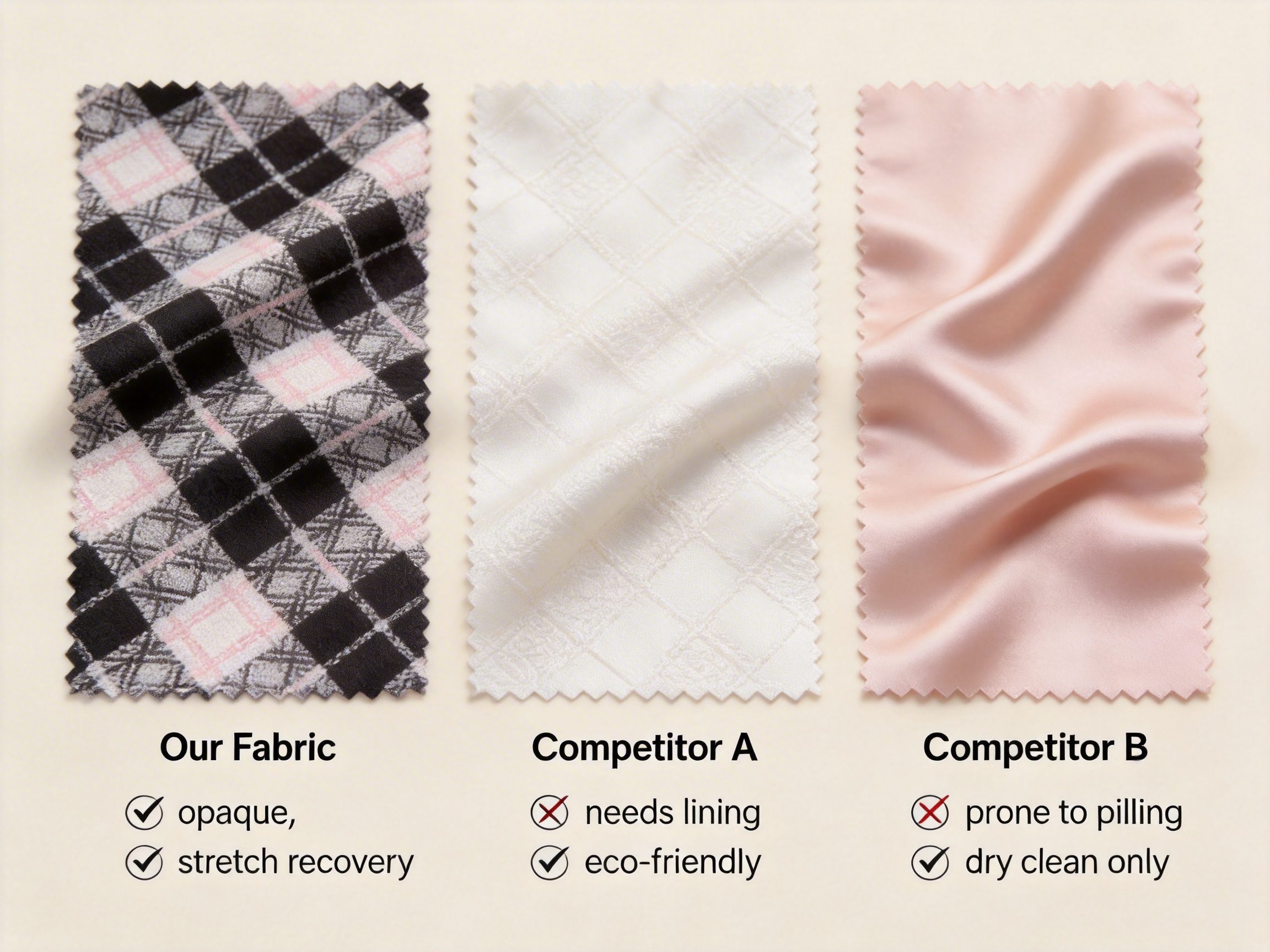
1. Fully Opaque: Unlike many lightweight jacquard fabrics that require lining, this fabric is fully opaque. This eliminates the need for additional layers, reducing production costs and making garments lighter and more comfortable to wear.
2. Slight Sheen: The fabric has a subtle sheen that adds a luxurious touch without being overly shiny. This makes it suitable for both day and evening wear—perfect for transitioning from a business meeting to a dinner event.
3. Stretch & Recovery: The inclusion of spandex gives the fabric excellent stretch and recovery properties. Garments made from this fabric will retain their shape even after prolonged wear, ensuring a flattering fit for longer.
4. Durability: The polyamide component enhances the fabric’s durability, making it resistant to tearing, abrasion, and pilling. This means garments made from this fabric will last longer than those made from lower-quality jacquard fabrics.
5. Breathability: The viscose component ensures that the fabric is breathable, preventing the build-up of moisture and heat. This makes it comfortable to wear in a variety of climates, from mild spring days to cool autumn evenings.
Advantages Over Competitor Fabrics
To understand the unique value of this black and white jacquard pattern fabric, it’s essential to compare it to common alternative fabrics used in similar applications. Below is a detailed comparative analysis:
Comparative Analysis of Jacquard vs. Competitor Fabrics
| Fabric Type | Key Advantage of Our Product | Disadvantage of Competitor | Suitability Match |
|---|---|---|---|
| Plain Woven Fabric | Intricate jacquard pattern integrated into the fabric (not printed), adding visual interest without extra cost. | Lacks design detail; requires printing or embroidery for patterns, which can fade or wear off. | High (ideal for structured garments needing design detail) |
| 100% Polyester Jacquard | Blend with viscose and spandex adds softness, breathability, and stretch—missing in 100% polyester. | Stiff, static-prone, and less comfortable; prone to wrinkling and pilling. | Medium (less suitable for skin-sensitive wearers) |
| Competitor Knitted Jacquard (A) | Superior color vibrancy and pattern precision due to advanced weaving technology. | Poor color fastness; pattern alignment issues; higher pilling tendency. | Low (inferior quality and durability) |
| Blended Jacquard (Competitor B) | Optimized fiber ratio ensures better drape and stretch recovery; subtle lustre enhances luxury. | Unbalanced fiber blend leads to weak drape; lower opacity requires lining; shorter lifespan. | Medium (inferior functional attributes) |
| Silk Jacquard | More durable and affordable than silk; easier to care for (machine washable on gentle cycle). | Expensive; fragile; requires dry cleaning; prone to wrinkling and tearing. | High (cost-effective alternative with similar luxury) |
From this analysis, it’s clear that the black and white jacquard pattern fabric outperforms competitors in key areas: design quality, comfort, durability, and cost-effectiveness. Its balanced blend of materials and advanced manufacturing processes address the common shortcomings of alternative fabrics, making it a superior choice for garment makers and consumers.
Advanced Manufacturing Processes Behind the Fabric
The exceptional quality of this jacquard fabric is the result of state-of-the-art manufacturing processes that combine precision engineering with material science expertise. Each step in the production process is optimized to ensure consistency, quality, and performance.
Precision Jacquard Weaving: Digital Control for Complex Patterns
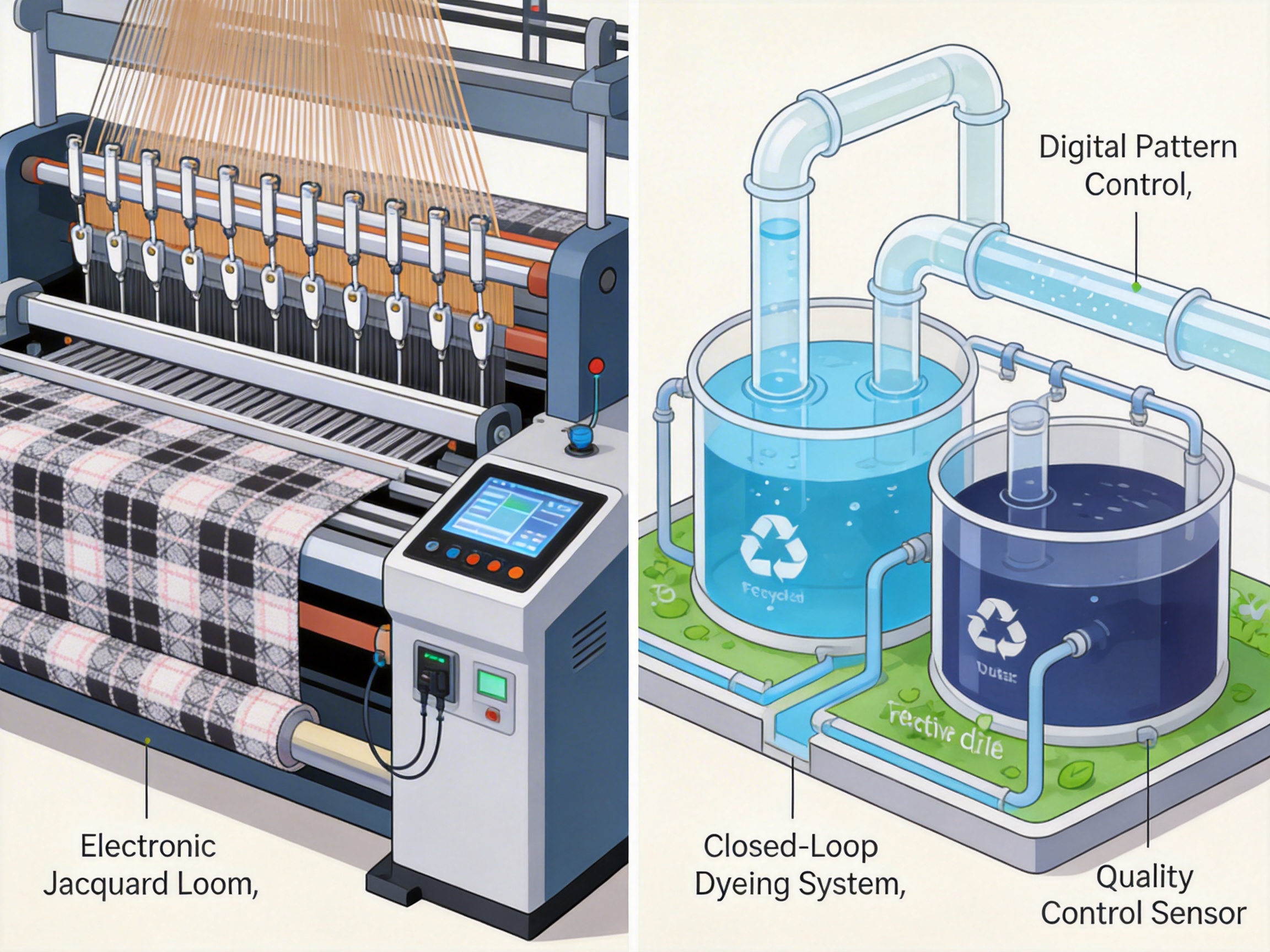
The fabric is woven using modern electronic jacquard looms, which represent the cutting edge of weaving technology. Unlike traditional jacquard looms that use mechanical cards to control warp threads, electronic looms use digital patterns stored on a computer. This allows for unprecedented precision and complexity in pattern design.
Each warp thread is controlled individually by a small hook, which can be lifted or lowered to create the desired pattern. This level of control ensures that the black and white check pattern with pale pink undertones is replicated perfectly across every yard of fabric. The looms are also equipped with sensors that monitor thread tension and pattern alignment in real time, reducing defects and ensuring consistency across batches.
The weaving process uses a high thread count (typically 120-150 threads per inch) to create a dense, durable fabric that retains its shape and pattern over time. This high thread count also contributes to the fabric’s soft feel and subtle lustre.
Material Blending Technology: Optimized Fiber Distribution
The fabric’s blend of viscose, polyamide, and spandex is not a random mix—it’s the result of proprietary blending technology that ensures uniform distribution of fibers. This process begins with selecting high-quality raw materials:
1. Fiber Selection: The manufacturer sources viscose from sustainably managed forests, polyamide from reputable suppliers with strict quality control, and spandex from leading global producers. Each fiber is tested for strength, elasticity, and purity before being used.
2. Carding & Spinning: The fibers are carded to remove impurities and align them in a parallel direction. They are then spun into yarns using a ring spinning machine, which produces strong, uniform yarns. The spandex yarns are wrapped around the viscose and polyamide yarns to ensure even stretch distribution.
3. Winding & Warping: The spun yarns are wound onto bobbins and then warped into a large beam, which is used in the jacquard loom. The warping process is carefully controlled to ensure consistent tension across all yarns, which is critical for pattern precision.
This blending technology ensures that the fabric has a consistent feel and performance across every roll, with no weak spots or uneven fiber distribution.
Post-Dyeing & Finishing Excellence: Eco-Friendly and Durable
After weaving, the fabric undergoes a series of post-dyeing and finishing processes that enhance its appearance, durability, and functionality:
1. Eco-Friendly Dyeing: The fabric is dyed using reactive dyes, which are known for their excellent color fastness and low environmental impact. The dyeing process uses a closed-loop system that recycles up to 80% of the water used, reducing waste and minimizing the carbon footprint. The dyeing temperature is carefully controlled to ensure even color penetration without damaging the fibers.
2. Finishing Treatments: The fabric is treated with several finishing agents to enhance its properties:
- Anti-Pilling: A special coating is applied to prevent the formation of pills, which can make the fabric look worn and old.
- Anti-Static: An anti-static agent is added to reduce static electricity, making the fabric more comfortable to wear and less prone to clinging.
- Water-Repellent (Optional): For applications where water resistance is desired, a water-repellent finish can be applied without compromising the fabric’s breathability.
3. Quality Control: Each roll of fabric undergoes rigorous quality control checks before being shipped. These checks include:
- Color fastness testing (to light, washing, and rubbing) to ensure the colors do not fade.
- Tensile strength testing to measure the fabric’s resistance to tearing.
- Stretch recovery testing to ensure the fabric returns to its original shape after stretching.
- Pattern alignment checks to ensure the design is consistent across the entire roll.
Core Strengths of the Manufacturer
The exceptional quality of this black and white jacquard pattern fabric is made possible by the strengths of its manufacturer, a leading textile company with decades of experience in R&D, production, and export. Below are the key factors that set this manufacturer apart:
Vertical Integration: Control Over Every Stage of Production
One of the manufacturer’s greatest strengths is its vertical integration, which means it controls every stage of the production process—from raw material sourcing to finished product shipping. This includes:
1. Raw Material Production: The company produces its own DTY (Drawn Textured Yarn) polyester yarn, which is used in the fabric blend. This allows the manufacturer to control the quality of the yarn, ensuring it meets strict standards for strength and elasticity.
2. Blended Fabric Production: The company has in-house facilities for blending fibers, spinning yarns, and weaving fabrics. This eliminates the need to outsource any stage of production, reducing lead times and ensuring consistency.
3. Post-Dyeing & Finishing: The manufacturer has its own post-dyeing and finishing facilities, which allows it to customize the fabric’s properties (like anti-pilling or water-repellent finishes) based on client requirements.
Vertical integration also gives the manufacturer greater flexibility to adapt to changing market demands and client needs. For example, if a client requests a custom pattern or color, the manufacturer can quickly adjust its production processes to meet the request.
State-of-the-Art Facilities & Infrastructure
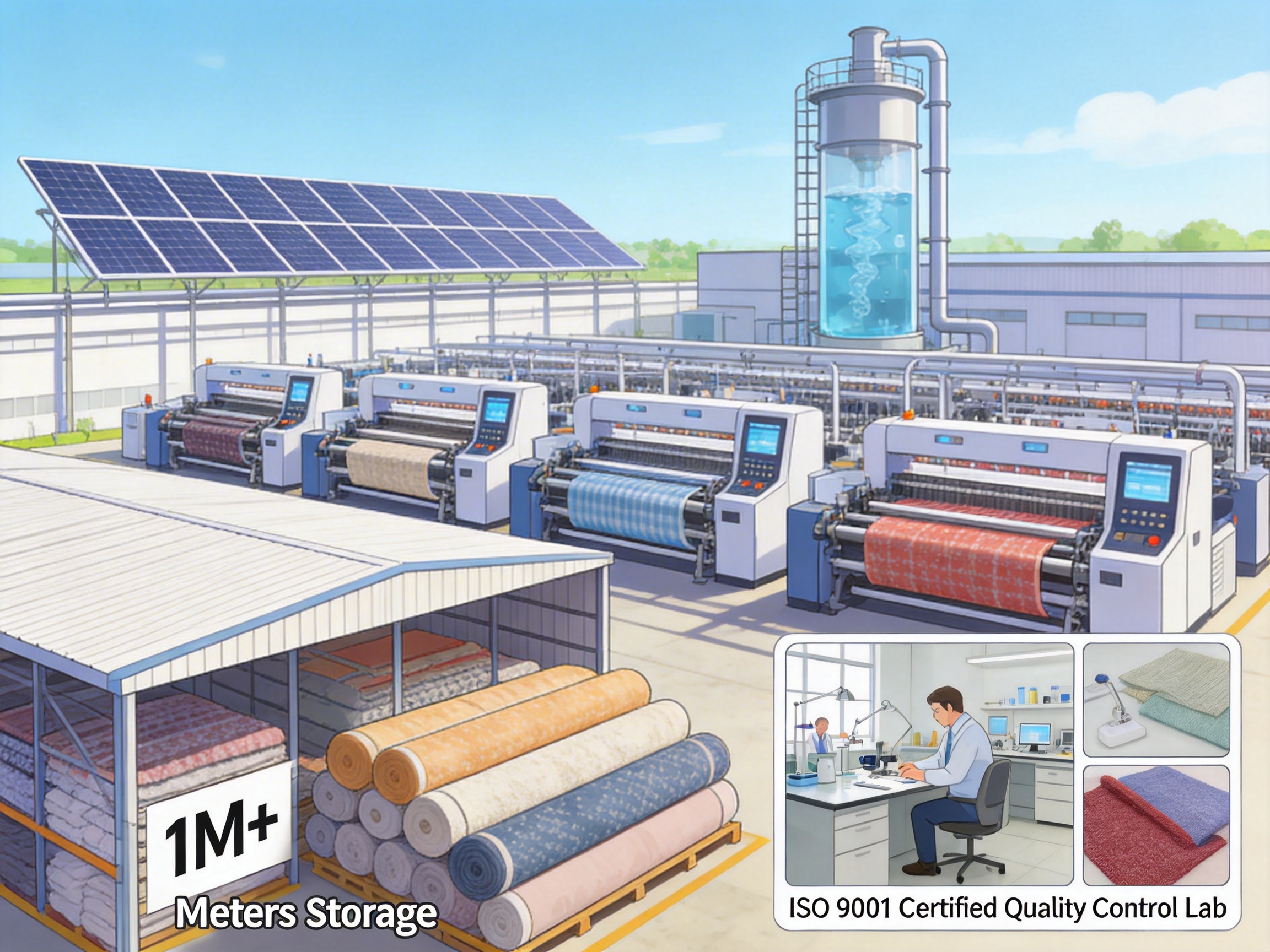
The manufacturer’s facilities are among the most advanced in the textile industry. Located in a strategic industrial park, the company occupies 32.6 acres of land with a plant area of 18,000 square meters. The facilities include:
1. Modern Weaving Mills: Equipped with over 200 electronic jacquard looms, the weaving mills can produce up to 500,000 meters of fabric per month.
2. Advanced Dyeing & Finishing Plants: The dyeing plants use closed-loop water systems and low-carbon energy sources to minimize environmental impact. The finishing facilities are equipped with automated machines that ensure consistent application of finishing agents.
3. Quality Control Laboratories: The company has a state-of-the-art quality control lab that is accredited to ISO 9001 standards. The lab conducts over 50 different tests on each batch of fabric to ensure it meets international quality standards.
4. Warehousing & Logistics: The manufacturer has a large warehouse that can store up to 1 million meters of fabric, ensuring that it can fulfill large orders quickly. It also has partnerships with leading logistics companies to ensure timely delivery to clients around the world.
Strong R&D Capabilities: Innovation at the Core
The manufacturer invests heavily in research and development (R&D) to stay ahead of market trends and develop innovative products. Its R&D team consists of over 30 textile engineers, fashion designers, and material scientists who work together to:
1. Develop New Fiber Blends: The team is constantly experimenting with new fiber blends to improve the fabric’s performance, comfort, and sustainability.
2. Design New Patterns: The design team creates unique jacquard patterns that are tailored to current fashion trends and client preferences.
3. Optimize Manufacturing Processes: The engineering team is always looking for ways to improve production efficiency, reduce waste, and minimize environmental impact.
The company also collaborates with leading universities and research institutions to access the latest technologies and insights in textile science.
Global Export Expertise: Serving Clients Worldwide
The manufacturer is a self-employed export company with extensive experience in serving clients around the world. It has a dedicated export team that handles all aspects of international trade, including:
1. Compliance with International Standards: The company ensures that all its products meet the quality and safety standards of major markets, including the EU, the US, Japan, and Australia. This includes compliance with REACH (EU), CPSIA (US), and OEKO-TEX® Standard 100.
2. Wholesale & Customization: The company offers flexible wholesale terms, including a minimum order quantity (MOQ) of 500 grams, which makes it accessible to small and medium-sized garment makers as well as large fashion brands.
3. Customer Support: The export team provides personalized support to clients, from initial inquiry to after-sales service. This includes helping clients select the right fabric for their needs, providing samples, and assisting with logistics.
Commitment to Sustainability
The manufacturer is committed to sustainable textile production. It has implemented several initiatives to reduce its environmental impact:
1. Water Recycling: The dyeing plants use closed-loop systems that recycle up to 80% of the water used in production.
2. Low-Carbon Energy: The company uses solar panels to generate a portion of its electricity, reducing its reliance on fossil fuels.
3. Sustainable Sourcing: The manufacturer sources viscose from sustainably managed forests and uses eco-friendly dyes that are free from harmful chemicals.
4. Waste Reduction: The company has implemented lean manufacturing practices to reduce waste, including recycling scrap fabric and yarn.
Q&A Section
To address common questions about the black and white jacquard pattern fabric, we’ve compiled the following Q&A:
Q1: What makes this black and white jacquard fabric unique compared to other jacquard fabrics on the market?
A1: This fabric stands out for several reasons: its balanced blend of viscose, polyamide, and spandex (which combines softness, durability, and stretch), its intricate pattern with subtle pale pink undertones, its fully opaque nature (no lining needed), and its eco-friendly manufacturing processes. Unlike many competitor fabrics, it also offers excellent color fastness and stretch recovery, ensuring long-lasting performance.
Q2: Is this fabric suitable for different types of garments?
A2: Yes, this fabric is highly versatile and can be used for a wide range of garments, including:
- Structured dresses (for formal or business wear)
- Textured skirts (for casual or semi-formal wear)
- Classic shirting (for office or everyday wear)
- Jackets and blazers (for layering)
Its stretch and drape make it ideal for garments that require a flattering fit, while its opacity and sheen add a touch of luxury.
Q3: What is the minimum order quantity (MOQ) for this fabric?
A3: The MOQ for this fabric is 500 grams, which is equivalent to approximately 1-2 meters (depending on the fabric’s width). This flexible MOQ makes it accessible to small and medium-sized garment makers as well as large fashion brands.
Q4: Does the manufacturer offer custom pattern or color options?
A4: Yes, the manufacturer’s R&D team can customize the fabric’s pattern and color based on client requirements. This includes creating unique jacquard patterns, adjusting the color palette, and even modifying the fiber blend to meet specific performance needs.
Q5: What quality control measures are in place to ensure fabric consistency?
A5: Each roll of fabric undergoes rigorous quality control checks, including:
- Color fastness testing (to light, washing, and rubbing)
- Tensile strength testing
- Stretch recovery testing
- Pattern alignment checks
- Defect inspection (for tears, stains, or uneven weaving)
The manufacturer is also ISO 9001 certified, ensuring that its quality management system meets international standards.
Q6: How should this fabric be cared for?
A6: The fabric is easy to care for. It can be machine washed on a gentle cycle with cold water and mild detergent. Avoid using bleach or fabric softeners, as these can damage the fibers and affect the fabric’s performance. Hang or line dry, and iron on a low setting if needed (preferably with a pressing cloth to protect the pattern).
Conclusion
The black and white jacquard pattern fabric represents a new standard in textile design and manufacturing. Its unique blend of materials, striking aesthetic, and functional superiority make it a superior choice for garment makers and consumers alike. The advanced manufacturing processes used to create the fabric—from precision jacquard weaving to eco-friendly dyeing—ensure that it meets the highest standards of quality and sustainability.
Behind this fabric is a manufacturer with strong core strengths: vertical integration, state-of-the-art facilities, innovative R&D, global export expertise, and a commitment to sustainability. These strengths enable the manufacturer to produce high-quality fabrics that meet the evolving needs of the textile industry.
As fashion trends continue to evolve, the demand for versatile, durable, and aesthetically pleasing fabrics will only grow. This black and white jacquard pattern fabric is well-positioned to meet this demand, offering a perfect balance of style, comfort, and performance. Whether used for a classic dress or a modern skirt, this fabric is sure to elevate any garment and delight consumers around the world.
References
1. Textile Institute. (2023). "Global Jacquard Fabric Market Trends: Innovation in Blends and Sustainability". Manchester: Textile Institute Press.
2. Smith, J. (2022). "The Art of Jacquard Weaving: From Historical Looms to Modern Technology". New York: Fashion Industry Publications.
3. European Textile Confederation. (2023). "Eco-Friendly Dyeing Practices in Textile Manufacturing". Brussels: ETC Report Series.
4. Wang, L. (2021). "Blended Fiber Textiles: Optimizing Comfort and Durability". Beijing: China Textile Press.
5. OEKO-TEX® Association. (2022). "Sustainable Textile Production: A Guide for Manufacturers". Zurich: OEKO-TEX® Press.
6. International Textile Manufacturers Federation. (2023). "2023 Global Textile Industry Report". Geneva: ITMF Publications.