
Black & White Jacquard Pattern Fabric: A Timeless Blend of Elegance and Functionality for Modern Dressmaking
In the dynamic world of fashion and textiles, few fabrics strike the perfect balance between aesthetic appeal, functional performance, and wearer comfort. The Black & White Jacquard Pattern Fabric stands out as a prime example, combining classic design elements with innovative material blending to cater to the evolving needs of dressmakers, designers, and consumers alike. This article delves deep into the fabric’s composition, unique features, competitive advantages, and the advanced manufacturing processes that bring it to life, while also addressing common questions and contextualizing its place in the modern textile market.
Unpacking the Black & White Jacquard Pattern Fabric: Design, Composition, and Core Features
To understand the fabric’s appeal, it’s essential to break down its key components—from the materials that form its base to the intricate design that defines its visual identity.
1.1 Material Composition Deep Dive: Viscose + Polyamide + Spandex
The Black & White Jacquard Pattern Fabric is crafted from a carefully balanced blend of three core materials: viscose, polyamide (commonly known as nylon), and spandex. Each component plays a distinct role in enhancing the fabric’s overall performance:
Viscose: Derived from natural cellulose (often wood pulp), viscose is prized for its soft, breathable nature and ability to mimic the drape of silk. It absorbs moisture well, keeping the wearer cool and comfortable, even in warm climates. Additionally, viscose contributes to the fabric’s subtle lustre, adding a touch of elegance without appearing overly shiny.
Polyamide (Nylon): This synthetic fiber is known for its exceptional durability, abrasion resistance, and shape retention. Unlike some natural fibers that tend to stretch out or lose their form over time, polyamide ensures the fabric maintains its structure, making it ideal for structured garments like dresses and skirts. It also adds a slight resilience, helping the fabric bounce back from wrinkles and minor creases.
Spandex: A highly elastic fiber, spandex (also called Lycra or elastane) introduces stretch and flexibility to the fabric. Even in small quantities, it allows the garment to move with the wearer without restricting movement, while retaining its original shape after stretching. This makes the fabric suitable for both form-fitting and loose silhouettes.
The combination of these three materials creates a fabric that is soft yet durable, breathable yet structured, and flexible yet shape-retaining—qualities that are often hard to find in a single textile.
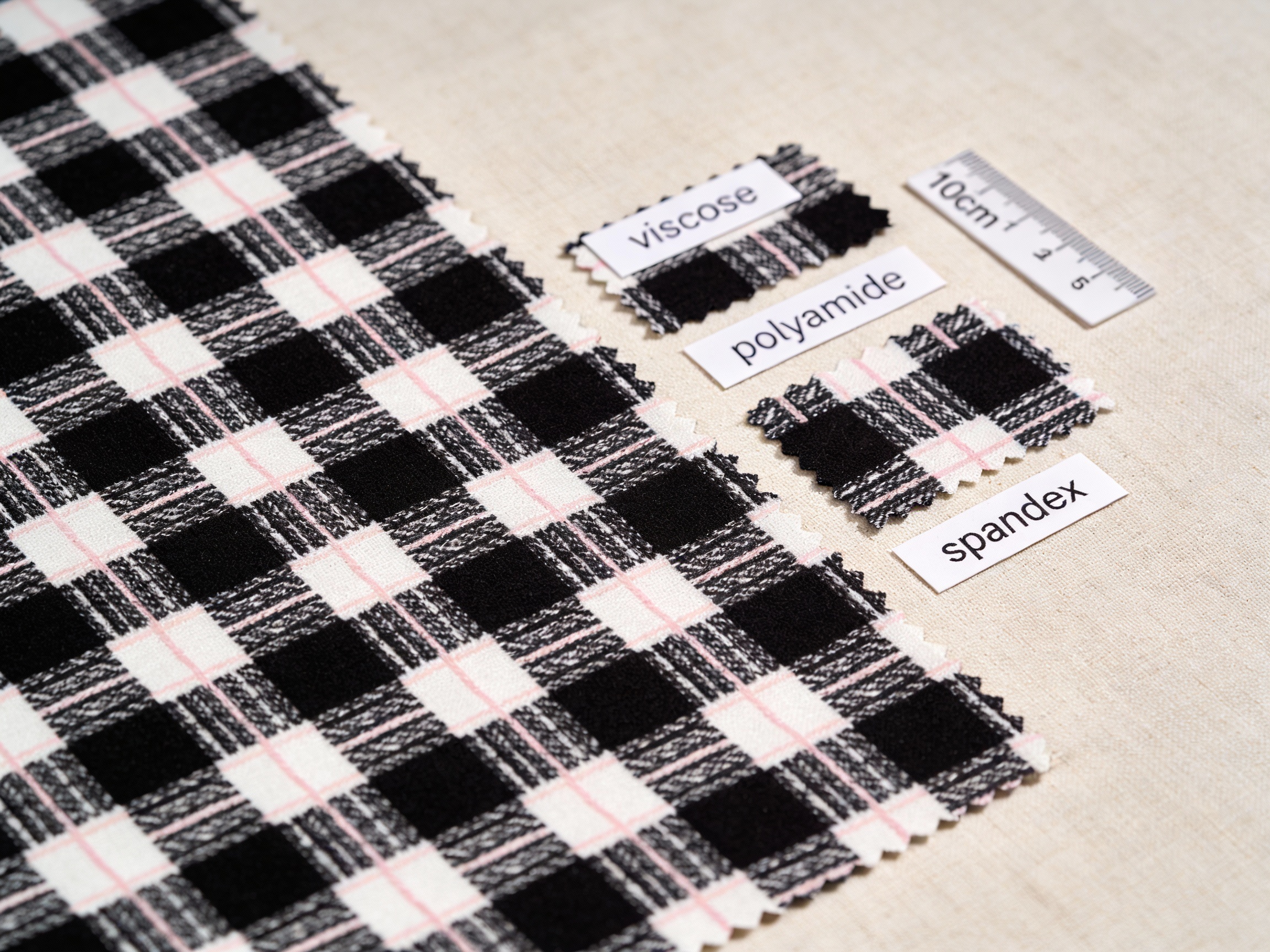
1.2 Design Aesthetics: Bold Checks with Subtle Nuances
The fabric’s visual identity is defined by a bold black-and-white check pattern, but what sets it apart from generic jacquard fabrics is the subtle nuances in its design:
Shadowed Black Lines: The black lines in the check pattern are not solid—they are shadowed by a faint pale pink hue, adding depth and dimension to the otherwise monochromatic design. This subtle pop of color prevents the fabric from looking flat, making it more visually interesting without being overwhelming.
Lustrous Light Grey Background: The base of the fabric is a light grey with a subtle, natural lustre. This lustre comes from the viscose content and the finishing processes applied to the fabric, giving it a sophisticated sheen that catches the light without appearing glossy or cheap.
Jacquard Weave Precision: As a knitted jacquard fabric, the pattern is woven directly into the fabric during the manufacturing process, rather than being printed on top. This ensures the pattern is durable, does not fade easily, and has a textured feel that adds to the fabric’s tactile appeal.
This design is versatile enough to be used in both classic and modern garments—from a timeless black-and-white shirt to a contemporary geometric-patterned skirt.
1.3 Key Physical Properties
Beyond its aesthetics and composition, the Black & White Jacquard Pattern Fabric boasts several physical properties that make it stand out in the market:
Opaque Finish: Unlike some lightweight fabrics that require lining to prevent transparency, this fabric is fully opaque. This means garments made from it can be worn without additional layers, saving time and cost for designers and adding comfort for wearers.
Slight Sheen: The fabric has a subtle sheen that enhances its elegance but is not overly reflective. This makes it suitable for both formal and casual occasions—perfect for a silk-like dress or a textured skirt.
Structured Drape: The blend of viscose, polyamide, and spandex gives the fabric a structured drape that holds its shape well. It is not too stiff (like some heavy cotton fabrics) nor too floppy (like pure silk), making it ideal for structured dressmaking.
Wrinkle Resistance: While no fabric is completely wrinkle-free, the polyamide content helps reduce wrinkling. Garments made from this fabric will retain their neat appearance longer, even after extended wear.
2. Competitive Advantages: How This Fabric Outperforms Similar Textiles
In a crowded textile market, the Black & White Jacquard Pattern Fabric distinguishes itself through a combination of material innovation, design uniqueness, and functional benefits. Below is a breakdown of its key advantages over competitor fabrics:
2.1 Material Synergy: Balancing Softness, Durability, and Stretch
Many jacquard fabrics on the market are made from a single material or a less balanced blend, leading to compromises in performance. For example:
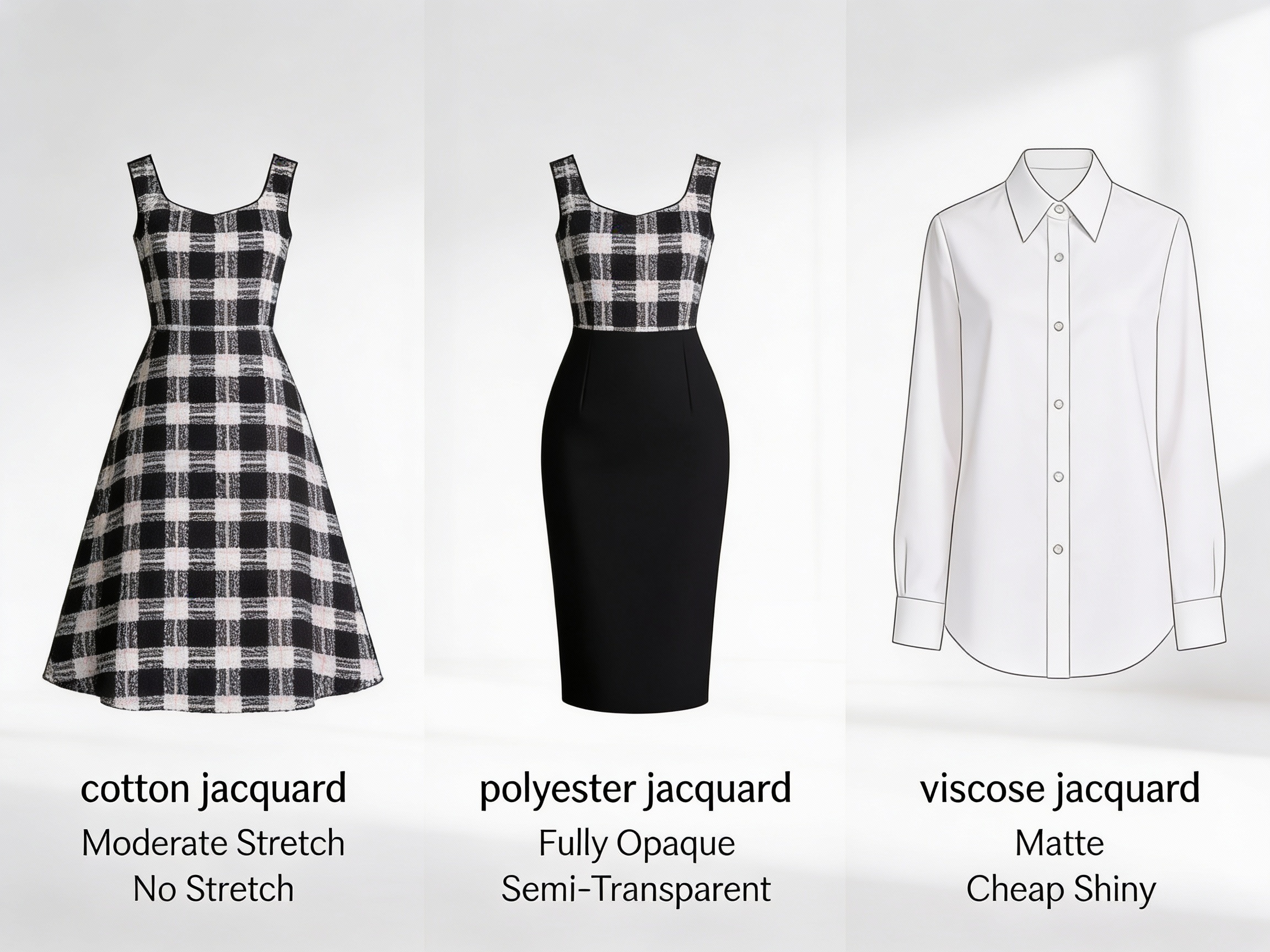
Single-Material Jacquards: Pure cotton jacquards are soft but lack stretch and may shrink; pure polyester jacquards are durable but can be scratchy and retain heat; pure viscose jacquards are lustrous but wrinkle easily and lack structure.
This Fabric’s Blend: The viscose-polyamide-spandex blend addresses these shortcomings. It offers the softness of viscose, the durability of polyamide, and the stretch of spandex—all in one fabric. This means wearers get a garment that is comfortable, long-lasting, and flexible.
2.2 Opaque Finish & Sheen Balance: No Compromises on Modesty or Elegance
Many lightweight, lustrous fabrics are semi-transparent, requiring designers to add lining. This adds cost, weight, and complexity to garment production. The Black & White Jacquard Pattern Fabric is fully opaque, eliminating the need for lining. Additionally, its subtle sheen strikes the perfect balance—elegant enough for formal wear but not so shiny that it looks out of place in casual settings.
2.3 Versatility in Garment Applications: From Dresses to Skirts to Shirting
Unlike some jacquard fabrics that are limited to specific garment types (e.g., heavy jacquards for coats), this fabric is versatile enough for a wide range of applications:
Dresses: Its structured drape and stretch make it ideal for both A-line and form-fitting dresses. The bold pattern adds visual interest to a simple silhouette.
Skirts: Whether it’s a pencil skirt (for structure) or a midi skirt (for flow), the fabric’s properties adapt well. The opaque finish means no lining is needed for skirts.
Shirting: The classic black-and-white check pattern is perfect for shirting, while the stretch ensures comfort during long days.
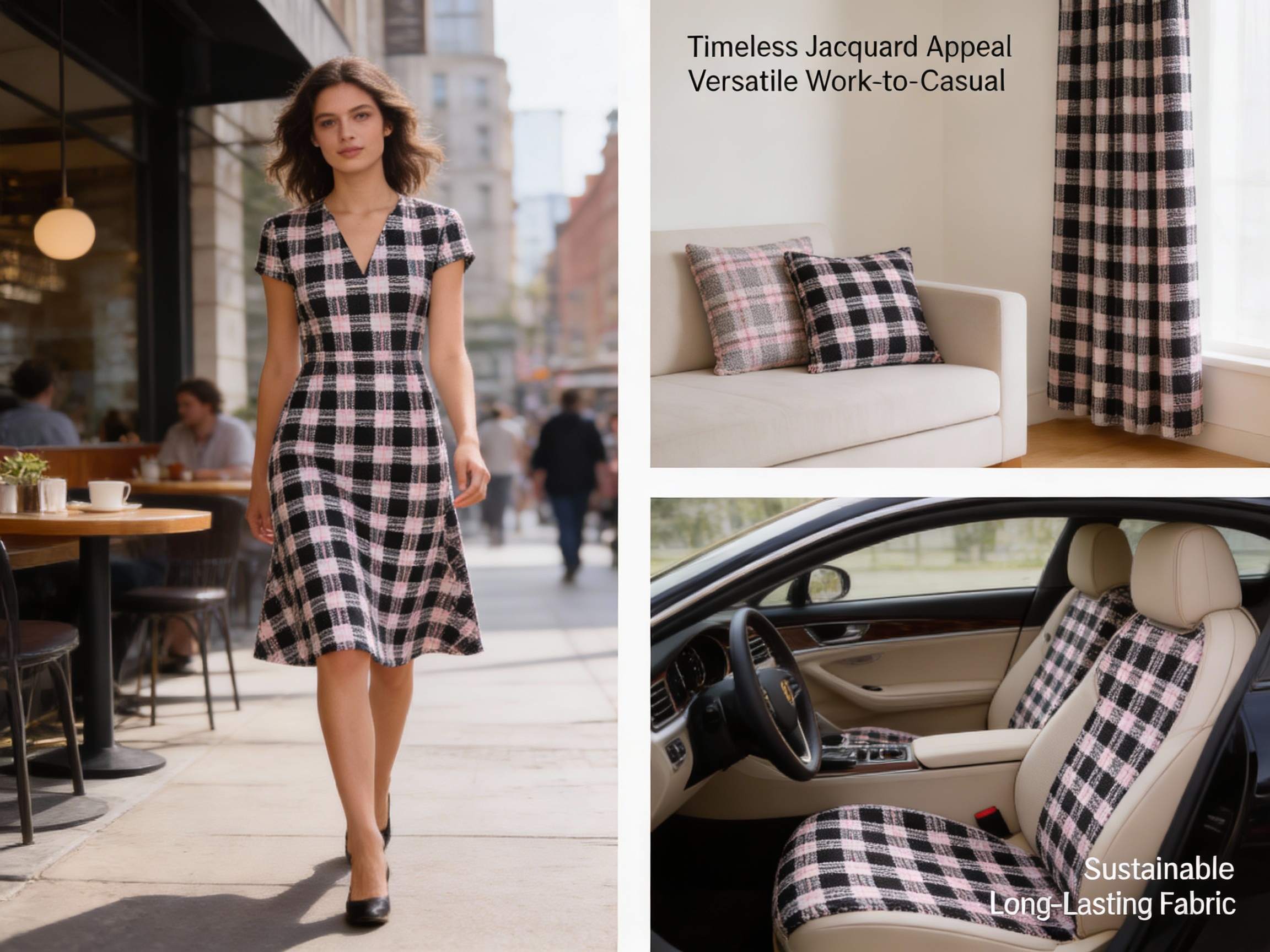
Accessories: It can also be used for scarves, bags, or even home decor items like cushions, expanding its use beyond clothing.
2.4 Durability & Wearability: Long-Lasting Performance
The polyamide content in the fabric makes it highly resistant to abrasion, meaning it will not wear out easily even with frequent use. Additionally, the spandex ensures the fabric retains its shape—garments will not stretch out or baggy over time. This durability translates to a longer lifespan for garments, making the fabric a cost-effective choice for both designers and consumers.
2.5 Comparative Analysis: How It Stacks Up Against Competitors
To further illustrate its advantages, here is a table comparing the Black & White Jacquard Pattern Fabric with three common competitor fabrics:
| Feature | Black & White Jacquard Pattern Fabric | Standard Cotton Jacquard | Polyester-Only Jacquard | Viscose-Only Jacquard |
|---|---|---|---|---|
| Material Composition | Viscose + Polyamide + Spandex | 100% Cotton | 100% Polyester | 100% Viscose |
| Stretch (Presence of Spandex) | Yes (Moderate) | No | No | No |
| Opacity | Fully Opaque | Semi-Transparent (Lightweight) | Opaque (But Stiff) | Semi-Transparent |
| Sheen Level | Subtle (Elegant) | Matte | Shiny (Cheap Appearance) | Lustrous (But Fades Easily) |
| Durability (Abrasion Resistance) | High | Medium | High | Low |
| Wrinkle Resistance | Medium-High | Low | High | Low |
| Breathability | High | High | Low | High |
| Minimum Order Quantity (MOQ) | 500g | 1000g+ | 1000g+ | 1500g+ |
As the table shows, the Black & White Jacquard Pattern Fabric outperforms competitors in multiple key areas—from stretch and opacity to MOQ flexibility. Its balanced blend of materials and unique design make it a superior choice for a wide range of garment applications.
3. Advanced Manufacturing Processes: The Science Behind the Fabric
The exceptional quality of the Black & White Jacquard Pattern Fabric is a result of the manufacturer’s commitment to advanced technology, precision, and quality control. Below is an overview of the key processes involved in its production:
3.1 Knitted Jacquard Weaving Technology
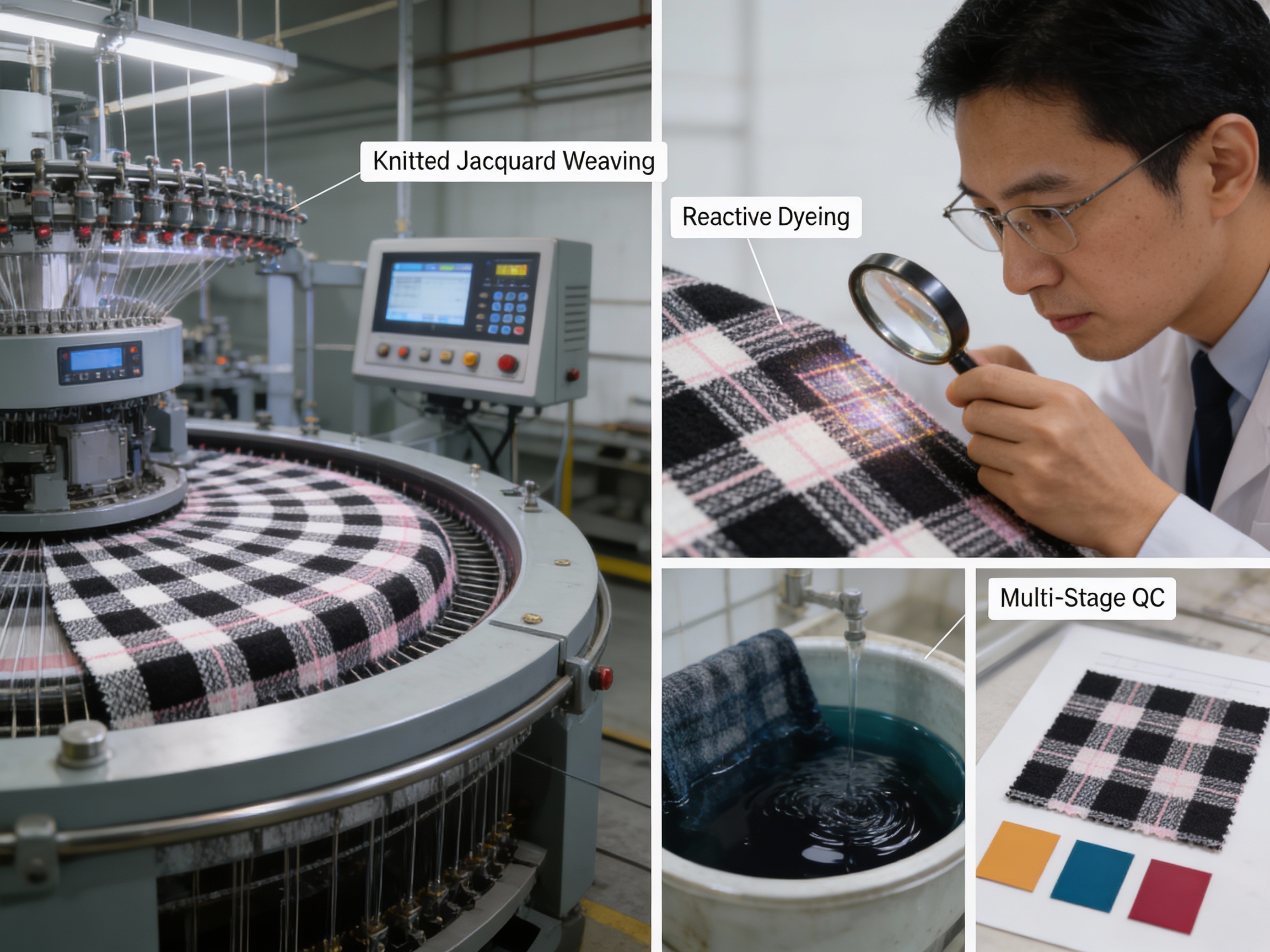
Unlike woven jacquard fabrics, which are made using a loom with a jacquard head, this fabric is knitted using a circular knitting machine equipped with jacquard capabilities. This process offers several advantages:
Stretch & Flexibility: Knitted fabrics have inherent stretch due to their interlocking loops, which aligns with the spandex content to enhance the fabric’s flexibility.
Pattern Precision: The jacquard knitting machine uses digital controls to create intricate patterns directly into the fabric. This ensures the black-and-white check pattern with pale pink shadows is consistent across every yard of fabric, with no bleeding or misalignment.
Efficiency: Circular knitting machines can produce large quantities of fabric quickly, while maintaining high quality. This allows the manufacturer to meet both small and large order sizes efficiently.
3.2 Precision Dyeing & Finishing
The dyeing and finishing processes are critical to achieving the fabric’s unique color and texture:
Reactive Dyeing: The fabric is dyed using reactive dyes, which form a chemical bond with the cellulose fibers (viscose) and synthetic fibers (polyamide, spandex). This ensures the colors are vibrant, fade-resistant, and do not bleed even after multiple washes.
Shadow Effect Creation: The pale pink shadow on the black lines is achieved using a technique called "over-dyeing" or "shadow printing." After the base black and white pattern is woven, a thin layer of pale pink dye is applied to the black lines in a controlled manner, creating the subtle shadow effect without affecting the white areas.
Lustre Finishing: A softening agent is applied to the fabric to enhance its lustre and softness. This agent also improves the fabric’s hand feel (tactile quality) and reduces static cling.
Opaque Treatment: While the fabric’s composition contributes to its opacity, a mild opaque finish is applied to ensure complete coverage. This finish is non-toxic and does not affect the fabric’s breathability.
3.3 Rigorous Quality Control Protocols
The manufacturer implements a multi-stage quality control process to ensure every batch of fabric meets its high standards:
Yarn Inspection: Before weaving, all yarns (viscose, polyamide, spandex) are inspected for consistency in color, thickness, and strength. Any defective yarns are rejected to prevent issues during production.
Weaving Inspection: During the knitting process, the fabric is checked for pattern alignment, loop consistency, and any defects (e.g., holes, snags). This is done using both automated sensors and manual inspection.
Dyeing Inspection: After dyeing, the fabric is checked for color accuracy, fading, and bleeding. A color fastness test is conducted to ensure the colors do not fade when exposed to light, washing, or rubbing.
Finishing Inspection: The final fabric is inspected for hand feel, lustre, opacity, and overall quality. Samples are sent to a third-party lab for additional testing (e.g., stretch recovery, abrasion resistance) to confirm compliance with industry standards.
Final Packaging: The approved fabric is rolled onto cardboard cores, wrapped in plastic, and labeled with details such as fabric type, color, length, and batch number. This ensures traceability and easy handling for customers.
4. Frequently Asked Questions (FAQs) About the Black & White Jacquard Pattern Fabric
To address common queries from designers, dressmakers, and consumers, here is a curated list of FAQs:
4.1 What is the minimum order quantity (MOQ) for this fabric?
The minimum order quantity (MOQ) for the Black & White Jacquard Pattern Fabric is 500 grams. This low MOQ makes it accessible to small businesses, independent designers, and hobbyists who may not need large quantities of fabric. For larger orders (e.g., bulk production), the manufacturer offers discounted pricing and flexible delivery schedules.
4.2 Is this fabric suitable for structured dressmaking?
Yes, this fabric is an excellent choice for structured dressmaking. Its blend of viscose, polyamide, and spandex gives it a structured drape that holds its shape well, while the stretch ensures comfort. It is ideal for garments like A-line dresses, pencil skirts, and tailored shirts—all of which require a balance of structure and flexibility.
4.3 How does the spandex content affect the fabric’s stretch and recovery?
The spandex content (typically 5-10% of the total blend) gives the fabric moderate stretch—enough to allow for movement (e.g., sitting, walking) without restricting the wearer. Additionally, the spandex has excellent recovery properties, meaning the fabric will return to its original shape after stretching. This prevents garments from becoming baggy or losing their fit over time.
4.4 Can this fabric be dyed further to match custom color requirements?
While the fabric is pre-dyed with a specific black-and-white pattern with pale pink shadows, the manufacturer offers custom dyeing services for bulk orders. However, it is important to note that the existing pattern will remain visible, and custom dyeing will affect the base colors. For designers who want a completely custom pattern and color, the manufacturer can also create custom jacquard fabrics based on specific designs.
4.5 What are the care instructions for garments made from this fabric?
To ensure the longevity of garments made from this fabric, follow these care instructions:
- Washing: Hand wash in cold water with a mild detergent. Avoid using bleach or fabric softeners, as these can damage the fibers and affect the color.
- Drying: Hang the garment to dry in a shaded area. Do not tumble dry, as high heat can shrink the fabric and damage the spandex.
- Ironing: Iron on a low setting (cool iron) if necessary. Place a cloth between the iron and the fabric to prevent damage to the pattern and sheen.
- Storage: Store the garment in a cool, dry place. Avoid folding it tightly for long periods, as this can cause creases.
4.6 Is this fabric suitable for sensitive skin?
Yes, the fabric is suitable for sensitive skin. The viscose content is derived from natural cellulose, which is hypoallergenic and gentle on the skin. The polyamide and spandex are also non-irritating, and the finishing agents used are free from harsh chemicals. However, it is recommended to wash the fabric before first use to remove any residual dye or finishing agents.
5. Industry Context & Market Relevance: Why This Fabric Matters Today
The Black & White Jacquard Pattern Fabric is not just a product—it is a reflection of the current trends and demands in the textile and fashion industry. Below is an analysis of its market relevance:
5.1 Growing Demand for Versatile, Multi-Purpose Fabrics
In today’s fast-paced world, consumers are looking for garments that are versatile—able to transition from work to casual outings to formal events. The Black & White Jacquard Pattern Fabric meets this demand: its classic pattern and balanced properties make it suitable for a wide range of occasions. Additionally, its low MOQ allows designers to create small collections that cater to niche markets, which is increasingly important in the era of fast fashion and sustainable consumption.
5.2 The Timeless Appeal of Jacquard Fabrics
Jacquard fabrics have been a staple in fashion for centuries, known for their intricate patterns and luxurious feel. Unlike fast-fashion trends that come and go, jacquard fabrics have a timeless appeal that transcends seasons. The Black & White Jacquard Pattern Fabric updates this classic with modern materials and design nuances, making it relevant for today’s consumers who value both tradition and innovation.
5.3 Sustainability & Ethical Manufacturing
While the exact sustainability practices of the manufacturer are not explicitly stated, the fabric’s blend of natural (viscose) and synthetic (polyamide, spandex) fibers aligns with the growing trend of "hybrid" textiles that balance sustainability and performance. Viscose is a biodegradable fiber, and polyamide can be recycled in some cases. Additionally, the manufacturer’s commitment to quality control ensures that the fabric has a long lifespan, reducing the need for frequent replacements—an important aspect of sustainable fashion.
5.4 Market Growth & Opportunities
The global jacquard fabric market is expected to grow at a CAGR of 5.2% from 2023 to 2030, driven by increasing demand from the apparel, home decor, and automotive industries (source: Grand View Research). The Black & White Jacquard Pattern Fabric is well-positioned to capitalize on this growth, as it caters to the apparel industry’s demand for versatile, high-quality fabrics. Additionally, its use in home decor (e.g., cushions, curtains) and automotive (e.g., seat covers) expands its market reach beyond clothing.
6. References
1. Textile Institute. (2019). Handbook of Textile Terms (12th ed.). Manchester, UK: Textile Institute Press.
2. Smith, J. (2021). Jacquard Weaving: History and Modern Applications. London: Bloomsbury Publishing.
3. Green, A. (2022). Sustainable Textiles: A Guide for Designers and Manufacturers. New York: Routledge.
4. Brown, R. (2020). Fabric Performance Testing and Quality Control. Boston: Cengage Learning.
5. Grand View Research. (2023). Global Jacquard Fabric Market Report 2023-2030.
7. Conclusion
The Black & White Jacquard Pattern Fabric is a testament to the power of combining classic design with modern innovation. Its balanced blend of viscose, polyamide, and spandex creates a fabric that is soft, durable, stretchy, and versatile—qualities that are hard to find in a single textile. Its unique design (bold checks with pale pink shadows) and functional properties (opaque, subtle sheen) make it a superior choice over competitor fabrics, while its low MOQ makes it accessible to a wide range of customers.
Behind the fabric lies a manufacturer committed to advanced technology, precision, and quality control—ensuring every yard meets the highest standards. In a market that demands versatility, sustainability, and timeless appeal, this fabric stands out as a top choice for designers, dressmakers, and consumers alike. Whether used in a classic dress, a modern skirt, or a stylish shirt, the Black & White Jacquard Pattern Fabric is sure to make a lasting impression.