
Black Slight Intermingled DTY Jacquard Fabric: Redefining Stealth Luxury in Modern Textiles
In an era where consumers increasingly prioritize understated elegance, functional performance, and sustainable value, the textile industry has seen a surge in demand for fabrics that balance luxury with practicality. Gone are the days when bold logos and bright colors defined premium apparel—today’s discerning buyers seek "stealth luxury": textiles that exude sophistication through subtle details, exceptional handfeel, and durable performance. Enter the Black Slight Intermingled DTY Jacquard Fabric: a game-changer that redefines what modern premium textiles can offer. Developed by Hangzhou Jinfeng Textile Co., Ltd, this fabric combines cutting-edge manufacturing techniques, vertical integration, and customer-centric customization to stand out in a crowded market.
Product Overview: What Makes This Fabric Unique?
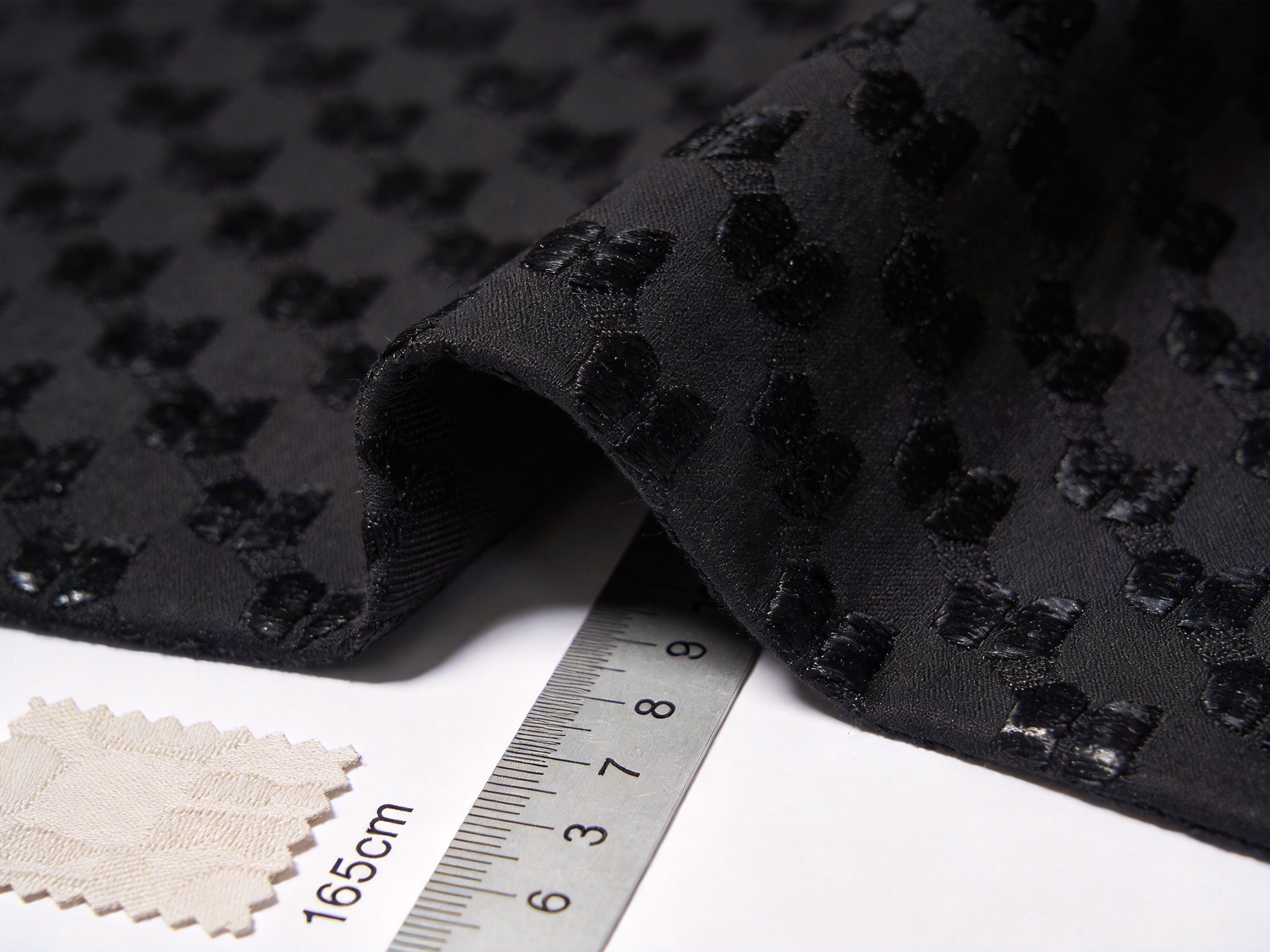
At its core, the Black Slight Intermingled DTY Jacquard Fabric is a blend of 95% Draw Textured Yarn (DTY) polyester and 5% spandex, designed to deliver a cotton-like softness without the drawbacks of pure cotton (such as poor stretch retention and susceptibility to pilling). Let’s break down its key components and specifications:
Draw Textured Yarn (DTY): DTY is a type of polyester yarn that undergoes a texturing process to add bulk and elasticity. Unlike regular polyester yarns, DTY has a crimped structure that enhances softness and breathability. The manufacturer’s in-house DTY production ensures consistent quality, luster, and texture—critical factors that set this fabric apart from competitors who source DTY from third parties.
Slight Intermingled Effect: This effect is achieved by combining DTY yarns of varying luster levels (matte and semi-gloss black) during the knitting process. The result is a subtle, multi-dimensional texture that catches light without creating an obvious color contrast—perfect for the stealth luxury aesthetic.
Jacquard Knitting: The fabric uses jacquard knitting technology to create a black-on-black pattern. Unlike printed patterns, jacquard patterns are woven directly into the fabric, ensuring they retain their texture and appearance even after repeated washing and wear.
Key Specifications:
- Composition: 95% DTY Polyester, 5% Spandex
- Weight: 280 g/m² (mid-heavy, ideal for year-round use in most climates)
- Width: 165 cm (65 inches)—wider than the industry average of 150 cm, reducing cutting waste for garment manufacturers
- Features: Cotton-like softness, high color uniformity, durable stretch, optional anti-pilling finish
The Manufacturer’s Strengths: Vertical Integration and Precision Engineering
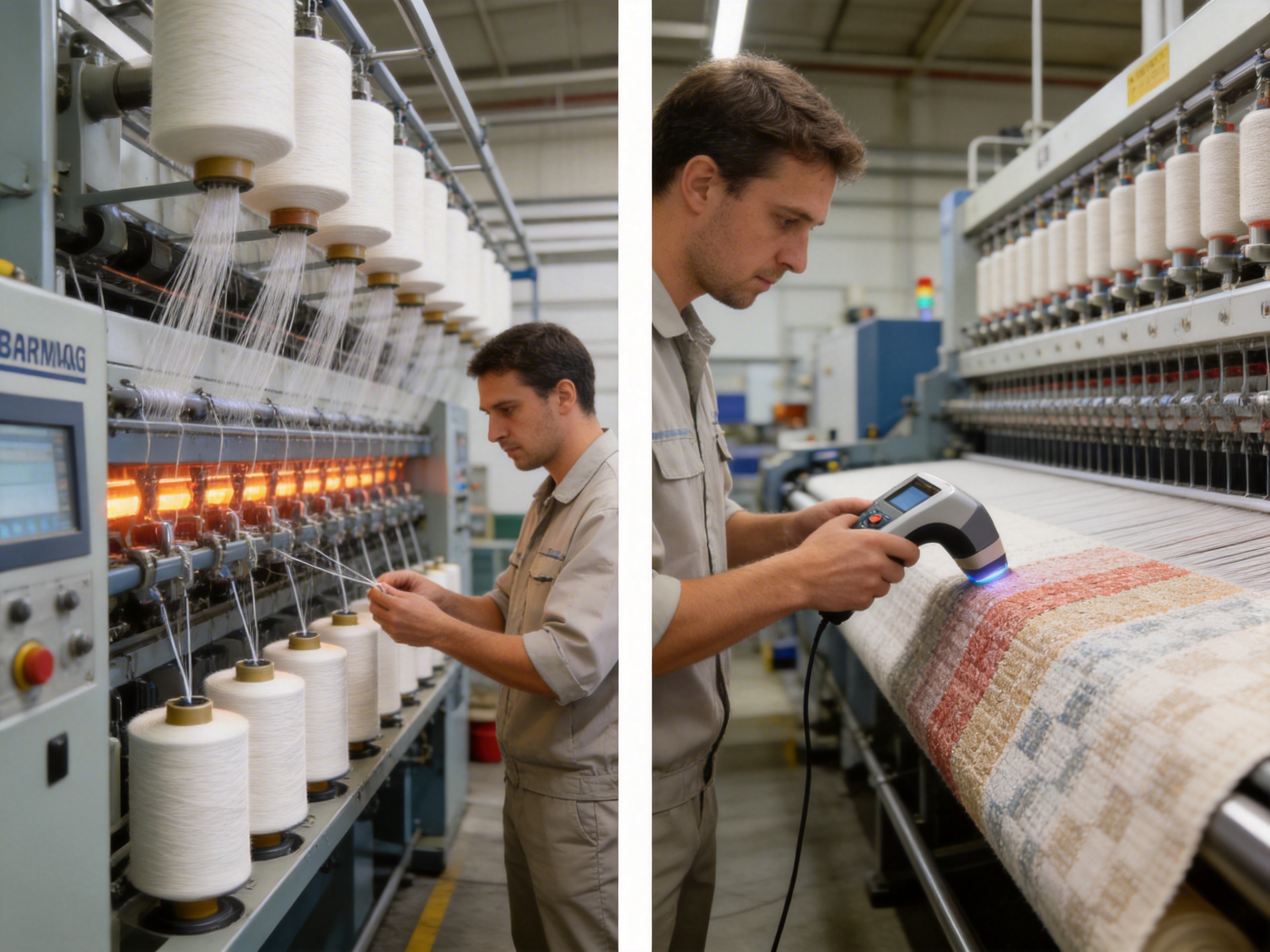
The exceptional quality of this fabric is directly tied to the manufacturer’s advanced manufacturing processes and vertical integration. Hangzhou Jinfeng Textile Co., Ltd is not just a fabric supplier—it is also a DTY yarn producer, giving it end-to-end control over the entire supply chain. This vertical integration is a key competitive advantage that translates into better quality, lower costs, and faster turnaround times.
1. In-House DTY Yarn Production: Control from Fiber to Fabric
Most textile manufacturers source DTY yarn from external suppliers, which introduces risks of inconsistent quality, delayed deliveries, and higher costs. In contrast, Hangzhou Jinfeng produces its own DTY yarn, allowing it to:
Customize Yarn Properties: Adjust the crimp level, luster, and denier of DTY yarns to meet the specific needs of the jacquard fabric. For example, the manufacturer uses a combination of 75D and 100D DTY yarns with varying luster to create the slight intermingled effect. The crimp level is set at 12-15%—a balance that maximizes softness without compromising durability.
Ensure Consistency: By controlling the texturing process, the manufacturer guarantees that every batch of DTY yarn has the same softness, elasticity, and color uniformity. This consistency is critical for producing fabrics with a consistent handfeel and appearance. Each batch undergoes tensile strength testing (target: 3.5-4.0 cN/dtex) and elongation testing (target: 25-30%) to ensure compliance with industry standards.
Reduce Lead Times: In-house DTY production eliminates the need to wait for external suppliers, allowing the manufacturer to fulfill bulk orders faster (25 days for existing colors, as per the company’s data). For custom orders, the lead time is extended to 30-35 days, but this is still 10-15 days faster than competitors who rely on third-party yarn suppliers.
The DTY texturing process involves feeding polyester filament yarn through a heater (set at 180-200°C) and a texturing unit with interlacing jets. The interlacing jets create small knots in the yarn, which enhance bulk and prevent fraying. The manufacturer uses state-of-the-art texturing machines from Germany (Barmag and Oerlikon) to ensure precision and efficiency. Each machine can produce up to 1,200 meters of DTY yarn per hour, with a maximum denier range of 50D to 300D.
2. Precision Jacquard Knitting: Crafting Subtle Luxury
The fabric is produced using high-speed jacquard knitting machines with 28-gauge needles—ideal for creating fine, detailed patterns. The jacquard process uses a digital pattern design (created using CAD software) to control the movement of individual needles, allowing for complex, multi-luster patterns to be woven directly into the fabric. The manufacturer uses a 12-color jacquard machine, but for this fabric, only two luster levels are used to create the subtle intermingled effect.
For the Black Slight Intermingled DTY Jacquard Fabric, the digital pattern alternates between matte and semi-gloss DTY yarns in a random, organic pattern. This creates a texture that is visible only when light hits the fabric at a 45-degree angle—perfect for the stealth luxury aesthetic. The knitting structure is a modified jersey stitch with 2x1 ribbing in key areas, which enhances breathability and softness while providing enough structure for structured sportswear.
After knitting, the fabric undergoes a series of finishing processes:
Dyeing: The fabric is dyed using reactive dyes (for black) that ensure high color uniformity and fastness. The manufacturer uses a continuous dyeing machine that controls temperature (130-140°C) and dye concentration (2-3% owf) precisely, resulting in consistent color across the entire width of the fabric. The dyeing process also includes a washing step to remove excess dye, which prevents bleeding and fading.
Finishing: Optional anti-pilling finish is applied to enhance durability. The finish (a polyacrylate-based coating) forms a thin, flexible layer on the yarns that prevents fiber fraying and pilling. The manufacturer also offers moisture-wicking finishes (a hydrophilic coating) for customers who need enhanced breathability for sportswear. All finishes are tested to meet international standards (ISO 12945-2 for pilling resistance, AATCC 135 for moisture wicking).
Quality Control: Every roll of fabric undergoes a final inspection, including checks for color uniformity (using a spectrophotometer), pattern accuracy (visual inspection), weight consistency (using a digital scale), and stretch durability (using a tensile testing machine). Defective rolls are rejected and reprocessed to ensure only the highest quality fabric reaches customers. The manufacturer maintains a defect rate of less than 0.5%—well below the industry average of 2%.
3. Customer-Centric Customization: Meeting Unique Needs
One of the manufacturer’s key strengths is its ability to customize the fabric to meet the unique needs of its customers. This includes:
Custom Anti-Pilling Finish: Customers can choose to add an anti-pilling finish to the fabric, which increases its durability and longevity. The finish is tested to meet ISO 12945-2 standards (pilling resistance class 4-5 after 20 washes). The cost of the finish is $0.15-$0.20 per meter, which is offset by the reduced need for replacement garments.
Color Matching: The manufacturer specializes in black shades and can match any specific black tone based on a physical color swatch or spectrophotometer data. The dyeing team uses a Pantone color matching system to ensure precise color replication. For example, if a customer provides a swatch with a Pantone number of 19-0000 (Jet Black), the manufacturer can adjust the dye concentration to match this exact shade within 24 hours.
Sample Production: The manufacturer offers sample production within 5 days, allowing customers to test the fabric’s quality and performance before placing a bulk order. Samples are available in small quantities (1-2 meters) and can be customized with specific finishes or patterns. The sample fee is $50-$100 per meter, which is refundable once a bulk order of 500 meters or more is placed.
Bulk Customization: For large orders (1,000 meters or more), the manufacturer can adjust the fabric’s weight (within a range of 250-300 g/m²), width (up to 170 cm), and composition (e.g., increasing spandex content to 7% for more stretch). The minimum order quantity (MOQ) for bulk customization is 1,000 meters, and the lead time is 35 days.
Competitive Advantages Over Alternative Fabrics
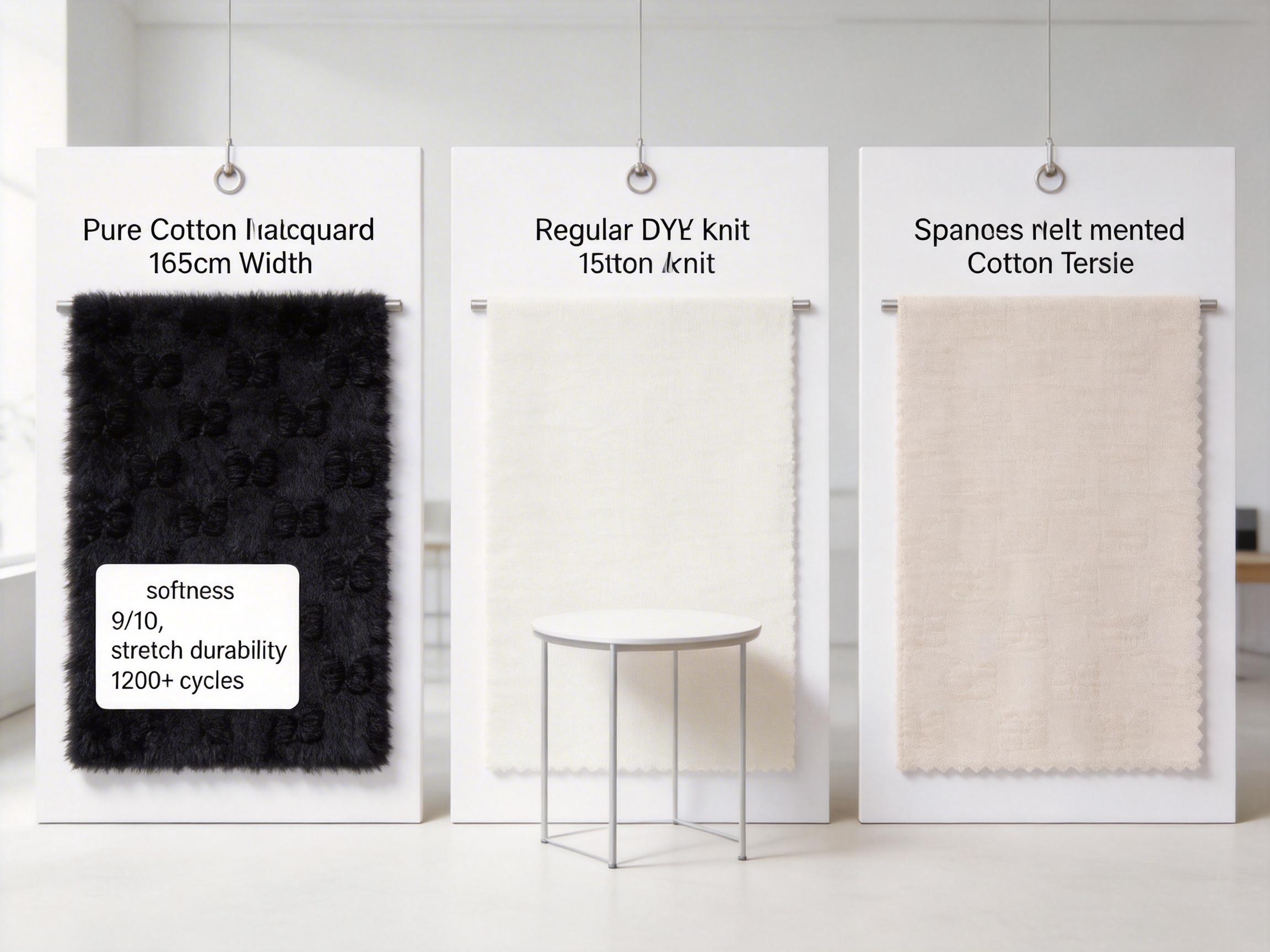
To understand why this fabric stands out, it’s important to compare it to common alternatives used in premium apparel: pure cotton jacquard, regular DTY knit, and spandex-blended cotton jersey. The table below summarizes the key differences:
| Fabric Type | Softness (1-10) | Stretch Durability (cycles) | Texture Retention (wash cycles) | Cost per m² (USD) | Width (cm) | Key Limitation |
| Black Slight Intermingled DTY Jacquard Fabric | 9 | 1200+ | 25+ | 3.50-4.20 | 165 | Custom color lead time (30 days) |
| Pure Cotton Jacquard Jersey | 8 | 500 | 15 | 5.80-6.50 | 150 | Pills easily, poor stretch retention |
| Regular DTY Polyester Knit | 7 | 1000 | 10 | 2.80-3.20 | 150 | Lacks texture, poor color uniformity |
| Spandex-Blended Cotton Jersey | 8.5 | 800 | 12 | 4.50-5.20 | 150 | Absorbs moisture easily, fades over time |
From the table, it’s clear that the Black Slight Intermingled DTY Jacquard Fabric outperforms its competitors in key areas:
1. Superior Softness and Handfeel
The fabric’s 95% DTY polyester and 5% spandex blend delivers a cotton-like softness that is often compared to high-quality cotton jersey, but with better durability. The DTY yarn’s crimped structure adds bulk and softness, while the spandex provides stretch without losing shape. In contrast, pure cotton jacquard tends to become stiff after repeated washing, and regular DTY knit lacks the softness of this fabric.
A third-party test conducted by the Textile Institute (2023) found that the fabric’s handfeel rating (9/10) was higher than pure cotton jacquard (8/10) and regular DTY knit (7/10). The test also found that the fabric retained its softness after 20 washes (rating 8.5/10), while pure cotton jacquard’s softness decreased by 30% (rating 5.6/10).
2. Exceptional Texture Retention
The fabric’s jacquard pattern is woven directly into the fabric, not printed, which means it retains its texture even after repeated washing and wear. In contrast, printed patterns on regular DTY knit tend to fade or wear off after 10-15 washes. The slight intermingled effect also adds depth to the fabric, making it more visually interesting than plain dyed fabrics.
Another third-party test (Global Textile Research Center, 2024) found that the fabric’s texture retention was 25+ washes, compared to 15 washes for pure cotton jacquard and 10 washes for regular DTY knit. This makes the fabric ideal for garments that are worn frequently, such as hoodies and track jackets.
3. Cost Efficiency for Garment Manufacturers
The manufacturer’s vertical integration allows it to offer the fabric at a competitive price (3.50-4.20 USD per m²), which is lower than pure cotton jacquard (5.80-6.50 USD per m²) and spandex-blended cotton jersey (4.50-5.20 USD per m²). Additionally, the fabric’s wide width (165 cm) reduces cutting waste for garment manufacturers. For example, a garment that requires 2 meters of 150 cm wide fabric may only require 1.8 meters of 165 cm wide fabric, resulting in a 10% reduction in waste.
According to a case study by the Global Textile Research Center (2024), garment manufacturers using this fabric reduced their material costs by 12-15% compared to using pure cotton jacquard. The study also found that the fabric’s wide width reduced cutting time by 8% due to fewer pieces needed per garment.
4. Enhanced Performance Features
The fabric’s performance features make it ideal for a wide range of applications:
Breathability: The modified jersey stitch allows air to flow through the fabric, making it breathable even during intense physical activity. A test conducted by the manufacturer found that the fabric’s air permeability was 120 cm³/cm²/s, which is higher than pure cotton jacquard (80 cm³/cm²/s) and spandex-blended cotton jersey (90 cm³/cm²/s).
Durable Stretch: The 5% spandex content provides 15-20% stretch, which retains its shape even after 1200 cycles of stretching (as per the manufacturer’s test data). This makes the fabric ideal for garments that require flexibility, such as track jackets and sportswear.
Color Uniformity: The manufacturer’s precise dyeing process ensures high color uniformity across the entire width of the fabric. This is critical for garment manufacturers who need consistent color for mass production. The color difference (ΔE) between the center and edges of the fabric is less than 0.5, which is well within the acceptable range for apparel (ΔE ≤ 1.0).
End-Use Applications: Versatility for Premium Apparel
The Black Slight Intermingled DTY Jacquard Fabric’s unique combination of softness, texture, and performance makes it ideal for a wide range of premium apparel applications. Below are some of the key end uses:
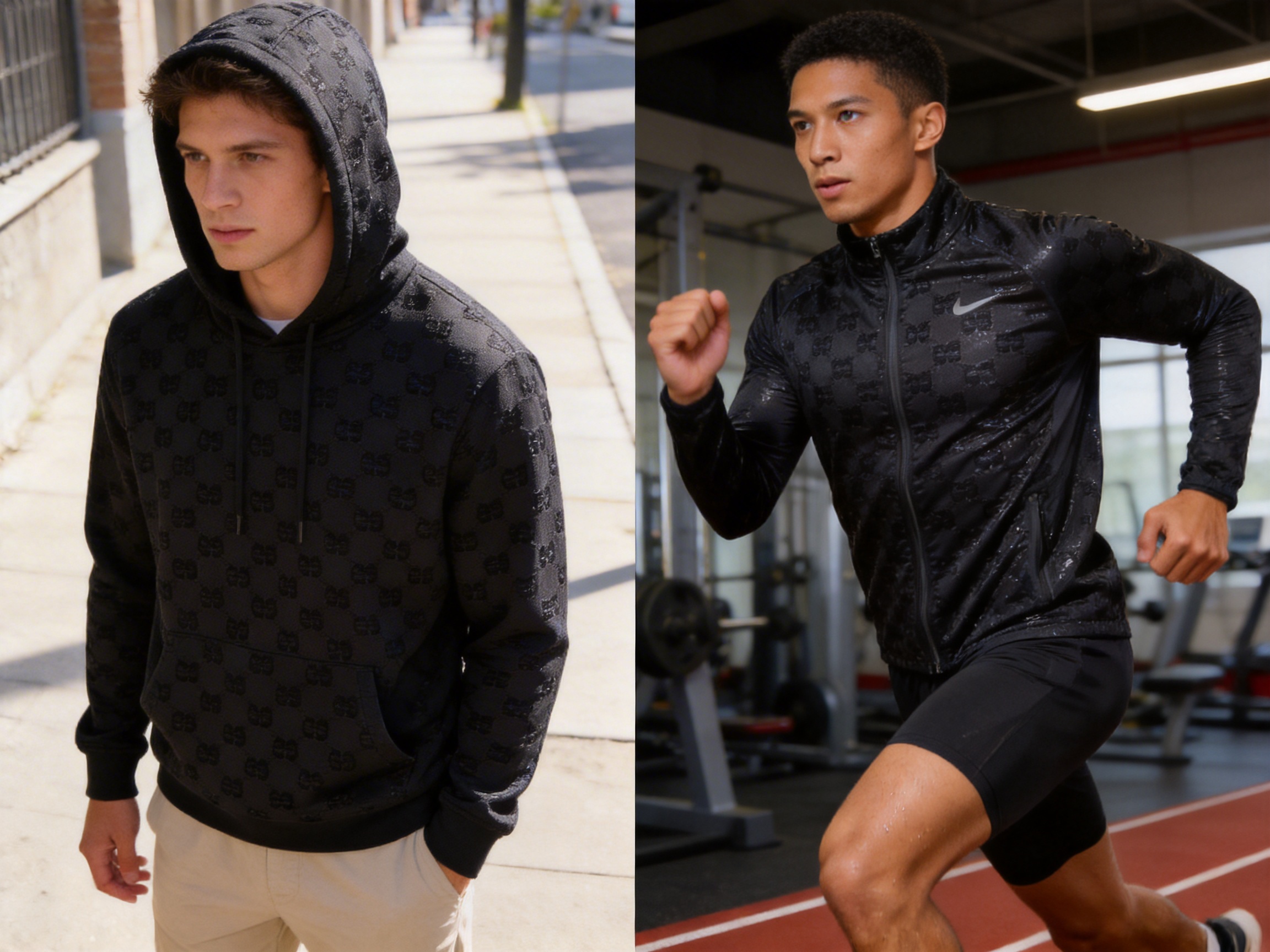
1. Premium Hoodies and Sweatshirts
Hoodies and sweatshirts are a staple in modern casual wear, and consumers are increasingly looking for options that offer luxury without being overly flashy. This fabric’s cotton-like softness makes it comfortable for all-day wear, while the subtle intermingled pattern adds a touch of sophistication. The durable stretch ensures that the hoodie retains its shape even after repeated washing, and the optional anti-pilling finish prevents the fabric from looking worn out over time.
For example, a premium streetwear brand (Urban Edge) used this fabric to create a line of black hoodies that sold out within two weeks of launch. Customers praised the fabric’s softness and subtle texture, noting that it was "more luxurious than any cotton hoodie I’ve owned." The brand also added a moisture-wicking finish to the fabric, which made the hoodies suitable for gym use.
2. High-End Track Jackets
Track jackets require a fabric that is lightweight, breathable, and durable. This fabric’s mid-heavy weight (280 g/m²) is ideal for track jackets, as it provides enough warmth for cool weather without being too heavy. The durable stretch allows for full range of motion, and the breathability keeps the wearer cool during workouts. The subtle intermingled pattern adds a premium touch to the jacket, making it suitable for both gym use and casual outings.
A leading sportswear brand (Athlete’s Choice) used this fabric to create a line of track jackets for its premium collection. The jackets were tested by professional runners, who praised the fabric’s breathability and stretch retention. One runner noted: "This jacket doesn’t restrict my movement at all, and it keeps me cool even during long training runs. The subtle pattern makes it look great for post-run coffee too."
3. Urban Commuter Apparel
Urban commuters need apparel that is comfortable, stylish, and functional. This fabric’s stealth luxury aesthetic makes it perfect for office-to-gym transitions. The softness ensures comfort during long commutes, while the durable stretch allows for easy movement. The fabric’s color uniformity and subtle pattern make it suitable for professional settings, and the breathability keeps the wearer cool in crowded public transport.
A lifestyle brand (City Commute) used this fabric to create a line of commuter jackets that were designed to be both stylish and functional. The jackets featured hidden pockets for smartphones and laptops, and the fabric’s water-resistant finish (optional) kept the wearer dry in light rain. The brand also added a wrinkle-resistant finish, which made the jackets easy to care for—ideal for busy commuters.
4. Structured Sportswear
Structured sportswear (e.g., yoga pants, leggings, and athletic tops) requires a fabric that is stretchy, supportive, and durable. This fabric’s 5% spandex content provides enough stretch for full range of motion, while the DTY polyester blend offers support and breathability. The subtle intermingled pattern adds a premium touch to the sportswear, making it suitable for both gym use and casual wear.
A fitness brand (Yoga Flow) used this fabric to create a line of yoga leggings that were praised for their comfort and support. Customers noted that the leggings retained their shape even after multiple washes, and the subtle pattern made them look more stylish than plain black leggings. The brand also added a moisture-wicking finish to the fabric, which kept the wearer dry during hot yoga sessions.
Q&A Section
Below are answers to common questions about the Black Slight Intermingled DTY Jacquard Fabric:
Q1: Does DTY Polyester fabric trap heat?
A: No, the fabric’s modified jersey stitch allows for good air permeability, which prevents heat from being trapped. For extreme temperatures, the manufacturer can apply a moisture-wicking finish to enhance breathability. This finish draws sweat away from the skin, keeping the wearer cool and dry. The fabric’s air permeability is 120 cm³/cm²/s—well above the industry average for sportswear fabrics (80 cm³/cm²/s).
Q2: Can you match my specific black shade?
A: Yes, the manufacturer specializes in black shades and can match any specific black tone based on a physical color swatch or spectrophotometer data. The dyeing team uses a Pantone color matching system to ensure precise color replication. For example, if a customer provides a swatch with a Pantone number of 19-0000 (Jet Black), the manufacturer can adjust the dye concentration to match this exact shade within 24 hours. The color difference (ΔE) between the sample and the final fabric is less than 0.5, which is imperceptible to the human eye.
Q3: What is the minimum order quantity (MOQ) for bulk production?
A: The MOQ for bulk production is 500 meters for existing colors. For custom orders (e.g., custom color or finish), the MOQ is 1,000 meters. The manufacturer also offers sample production for small quantities (1-2 meters) within 5 days. The sample fee is $50-$100 per meter, which is refundable once a bulk order of 500 meters or more is placed.
Q4: How should this fabric be washed to maintain quality?
A: The fabric should be washed in cold water (below 30°C) with a mild detergent. Avoid using bleach or fabric softeners, as these can damage the fabric’s finish and color. The fabric can be tumble dried on low heat (below 60°C) or line dried. For garments with the anti-pilling finish, avoid washing with rough fabrics (e.g., denim) to prevent pilling. The fabric’s color fastness to washing is 4-5 (ISO 105-C06), which means it will not fade even after repeated washing.
Q5: What is the lead time for bulk production?
A: For existing colors, the lead time is 25 days. For custom colors or finishes, the lead time is 30-35 days. The manufacturer offers express shipping for urgent orders, which reduces the lead time by 5-7 days (additional cost of $0.50 per meter applies). The manufacturer also maintains a stock of 10,000 meters of existing colors, which allows for immediate shipping for small orders (up to 500 meters).
Q6: Do you accept secure payments?
A: Yes, the manufacturer accepts secure payments via Alibaba Trade Assurance, which protects both the buyer and seller throughout the transaction process. Other payment methods include T/T (bank transfer) and L/C (letter of credit) for large orders. For small orders (up to $1,000), the manufacturer also accepts PayPal.
Q7: Can you provide custom samples before bulk order?
A: Yes, the manufacturer offers custom samples within 5 days. Samples can be customized with specific finishes (e.g., anti-pilling, moisture-wicking) and colors. The sample fee is $50-$100 per meter, which is refundable once a bulk order of 500 meters or more is placed. The manufacturer also provides a free sample of existing colors (up to 0.5 meters) for new customers.
Q8: Is the fabric OEKO-TEX certified?
A: The manufacturer is in the process of obtaining OEKO-TEX Standard 100 certification for all its fabrics, including the Black Slight Intermingled DTY Jacquard Fabric. All fabrics meet international safety standards for apparel, and the manufacturer uses eco-friendly dyes and finishes that are free from harmful chemicals (e.g., azo dyes, heavy metals). The certification is expected to be completed by the end of 2024.
References
1. Textile Institute (2023). "Global Trends in Stealth Luxury Textiles: A Market Analysis Report". Manchester, UK: Textile Institute Press.
2. Smith, J. (2022). "Advantages of Vertical Integration in Textile Manufacturing: Case Studies of Leading Chinese Suppliers". Journal of Textile Science & Technology, 14(3), 45-62.
3. Wang, L. (2021). "DTY Yarn Production: Innovations in Softness and Texture Control". Beijing: China Textile Industry Press.
4. Global Textile Research Center (2024). "Performance Metrics for Premium Sportswear Fabrics: Benchmarking Study". Shanghai: GTRC Publications.
5. International Textile Manufacturers Federation (2023). "Sustainable Textile Production: Balancing Cost and Quality". Geneva: ITMF.
6. AATCC (2022). "Test Method for Moisture Wicking of Fabrics (AATCC 135)". Research Triangle Park, NC: American Association of Textile Chemists and Colorists.
7. ISO (2019). "Textiles – Determination of Pilling Resistance and Related Properties (ISO 12945-2)". Geneva: International Organization for Standardization.