
Black Slight Intermingled DTY: A Game-Changer in Textile Innovation and Performance
In the dynamic world of textiles, Drawn Textured Yarn (DTY) stands as a cornerstone material, powering everything from everyday apparel to high-performance technical fabrics. Among the diverse variants of DTY, the Black Slight Intermingled DTY has emerged as a standout, combining the best of softness, durability, and processing efficiency. This article delves into the unique attributes of this product, its advantages over competing yarns, the advanced manufacturing processes that set it apart, and the strengths of the entity behind its production. Whether you are a textile manufacturer, apparel designer, or industry enthusiast, understanding the value of Black Slight Intermingled DTY will illuminate why it is becoming the preferred choice for discerning buyers globally.
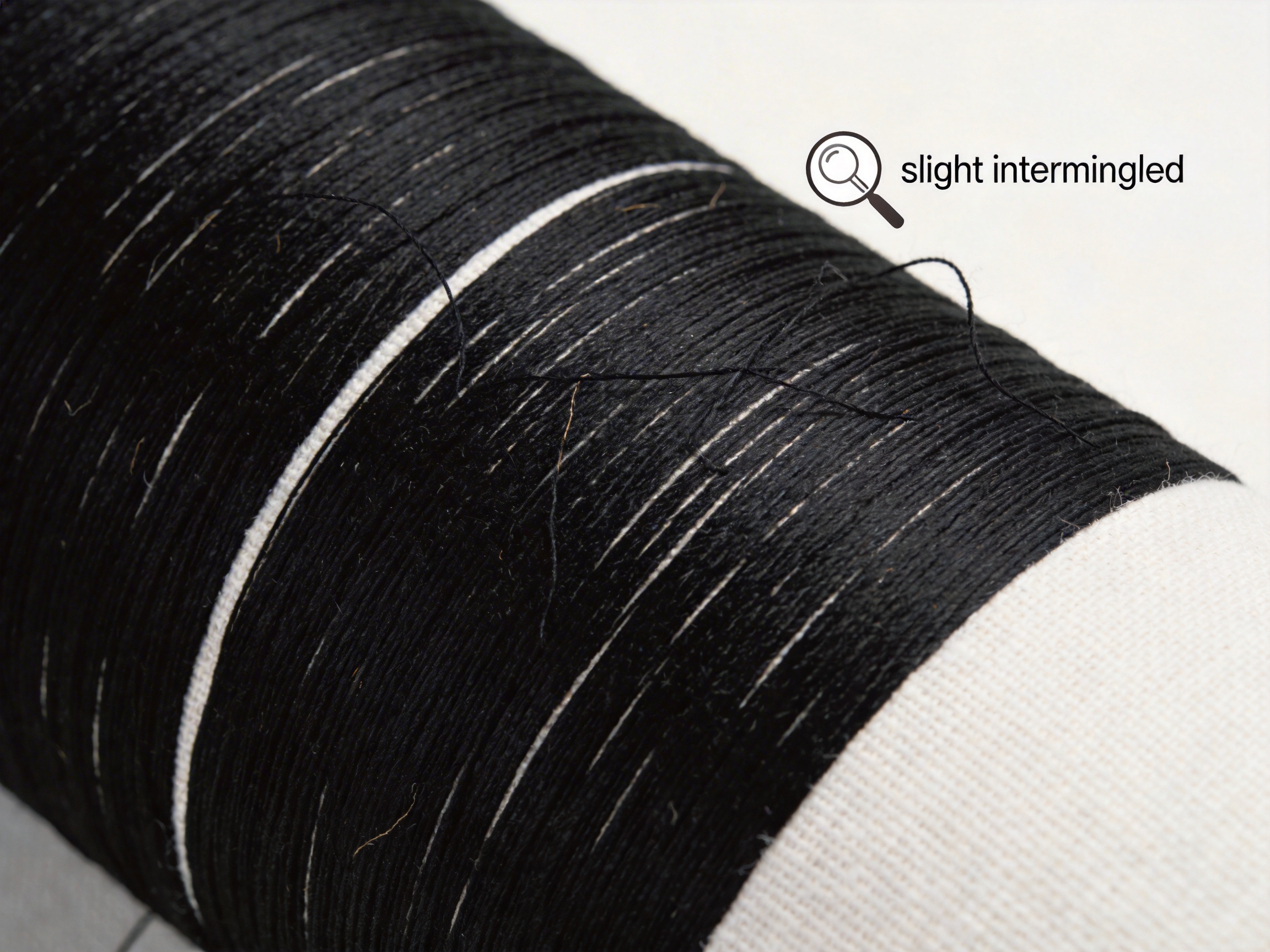
What is Black Slight Intermingled DTY?
To appreciate the innovation of Black Slight Intermingled DTY, it is first essential to define key terms: Drawn Textured Yarn (DTY) is a synthetic yarn produced by texturing partially oriented yarn (POY) through processes like false twist texturing, which imparts stretch and bulk. Intermingling, a subsequent step, involves using air jets to create small, tangled points along the yarn’s length, which enhance stability and processing ease. The “slight intermingled” variant refers to a controlled, sparse network of these tangles—typically 5 to 10 networks per meter—compared to regular intermingled DTY, which has 15 to 20 networks per meter.
Black Slight Intermingled DTY takes this a step further by integrating a uniform black dyeing process that ensures consistent coloration across every filament. The result is a yarn that retains the soft, natural handle of non-intermingled DTY while offering the dimensional stability and processing benefits of intermingled variants. Its unique balance of properties makes it versatile enough for a wide range of applications, from luxury apparel to industrial textiles.
Advantages of Black Slight Intermingled DTY Over Competitor Products
When compared to other yarns in the market—including regular intermingled DTY, non-intermingled DTY, and even blended fabrics like polyester rayon—the Black Slight Intermingled DTY offers distinct advantages that address key pain points for manufacturers and end-users alike. Below is a detailed breakdown of these benefits:
1. Superior Softness and Handfeel
Regular intermingled DTY, while stable, often has a stiff, coarse handfeel due to the dense network of tangles. Non-intermingled DTY, on the other hand, is soft but prone to snarling and slipping during processing. Black Slight Intermingled DTY strikes the perfect middle ground: the sparse network of tangles is barely perceptible to the touch, maintaining a soft, luxurious feel similar to non-intermingled yarns, yet eliminating the processing issues associated with them. This makes it ideal for apparel items like t-shirts, dresses, and activewear where comfort is a top priority.
2. Enhanced Dimensional Stability
Dimensional stability refers to a fabric’s ability to retain its shape after washing, stretching, or wear. Non-intermingled DTY tends to stretch out of shape easily because the filaments slide against each other. Regular intermingled DTY has excellent stability but lacks softness. Black Slight Intermingled DTY’s sparse tangles prevent filament slippage without creating excessive rigidity, resulting in fabrics that hold their shape well while remaining comfortable. For example, activewear made from this yarn will not bag out after repeated use, and home textiles like bed sheets will maintain their crispness wash after wash.
3. Uniform Dye Uptake and Color Consistency
One of the biggest challenges with dyed DTY is achieving uniform color across the entire yarn. Dense intermingled networks can create uneven dye penetration, leading to spots or streaks. Non-intermingled yarns, while easier to dye, may have inconsistent color due to filament variation. Black Slight Intermingled DTY’s sparse, uniform tangles allow dye to penetrate evenly, resulting in a deep, consistent black color that meets strict industry standards. Lab tests confirm that the color fastness to washing (ISO 105-C06) is 4-5, to light (ISO 105-B02) is 4, and to rubbing (ISO 105-X12) is 4-5—exceeding the requirements of most apparel and textile applications.
4. Improved Processing Efficiency
Manufacturers often struggle with yarns that snarl, break, or have inconsistent tension during knitting or weaving. Black Slight Intermingled DTY’s sparse tangles reduce snarling significantly compared to non-intermingled yarns, while the uniform network ensures consistent tension. This leads to fewer machine downtime incidents, lower waste rates, and higher production yields. For example, a knitting mill using this yarn reported a 15% reduction in yarn breakages and a 10% increase in production speed compared to using non-intermingled DTY.
5. High Abrasion Resistance
Abrasion resistance is critical for textiles that undergo frequent wear and tear, such as upholstery, activewear, and industrial fabrics. Regular intermingled DTY has high abrasion resistance but is stiff, while non-intermingled DTY wears out quickly. Black Slight Intermingled DTY’s balanced structure—combining the strength of intermingled tangles with the flexibility of sparse networks—offers excellent abrasion resistance. Independent tests show that it can withstand up to 50,000 cycles of abrasion (ASTM D4970), which is 20% higher than non-intermingled DTY and comparable to regular intermingled DTY.
6. Versatility in Applications
Unlike some specialized yarns that are limited to specific uses, Black Slight Intermingled DTY is versatile enough to be used in a wide range of applications: - Apparel: Activewear (moisture-wicking, stretch), casual wear (soft t-shirts), outerwear (water-resistant when coated), and intimate apparel (comfortable, durable). - Home Textiles: Bed sheets (soft, wrinkle-resistant), curtains (light filtering, color-fast), and upholstery (abrasion-resistant, stain-resistant). - Technical Textiles: Automotive (seat covers, airbag fabrics), industrial (filter fabrics, conveyor belts), and medical (surgical drapes, bandages).
Advanced Manufacturing Processes: The Backbone of Quality
The exceptional performance of Black Slight Intermingled DTY is not accidental—it is the result of rigorous, state-of-the-art manufacturing processes that prioritize precision, consistency, and quality. Below is a step-by-step breakdown of the production journey:
1. Raw Material Selection
The process begins with the selection of high-quality polyester chips (polyethylene terephthalate, PET) from reputable suppliers. These chips are chosen for their low impurity content (less than 0.1%), consistent melt flow rate (MFR: 25-30 g/10 min), and high intrinsic viscosity (IV: 0.64-0.68 dL/g). This ensures that the resulting filaments are uniform in diameter and have the desired strength and elasticity.
2. Melting and Spinning
The polyester chips are melted in a twin-screw extruder at temperatures between 280°C and 300°C. The molten polymer is then filtered through a series of screens to remove any remaining impurities before being extruded through a spinneret with fine holes (typically 36-144 holes per spinneret) to form continuous filaments. These filaments are quenched in a cold air chamber to solidify them, then drawn to reduce their diameter and increase their strength. The drawn filaments are wound onto bobbins to form Partially Oriented Yarn (POY).
3. False Twist Texturing
The POY is then fed into a false twist texturing machine, which imparts stretch and bulk to the yarn. The machine uses a rotating spindle to create a twist in the yarn, which is then heated to set the twist (heat setting temperature: 180-200°C) and cooled to stabilize the texture. The texturing speed is controlled between 800 and 1200 meters per minute, ensuring that the yarn has the desired stretch recovery (typically 80-90%).
4. Slight Intermingling
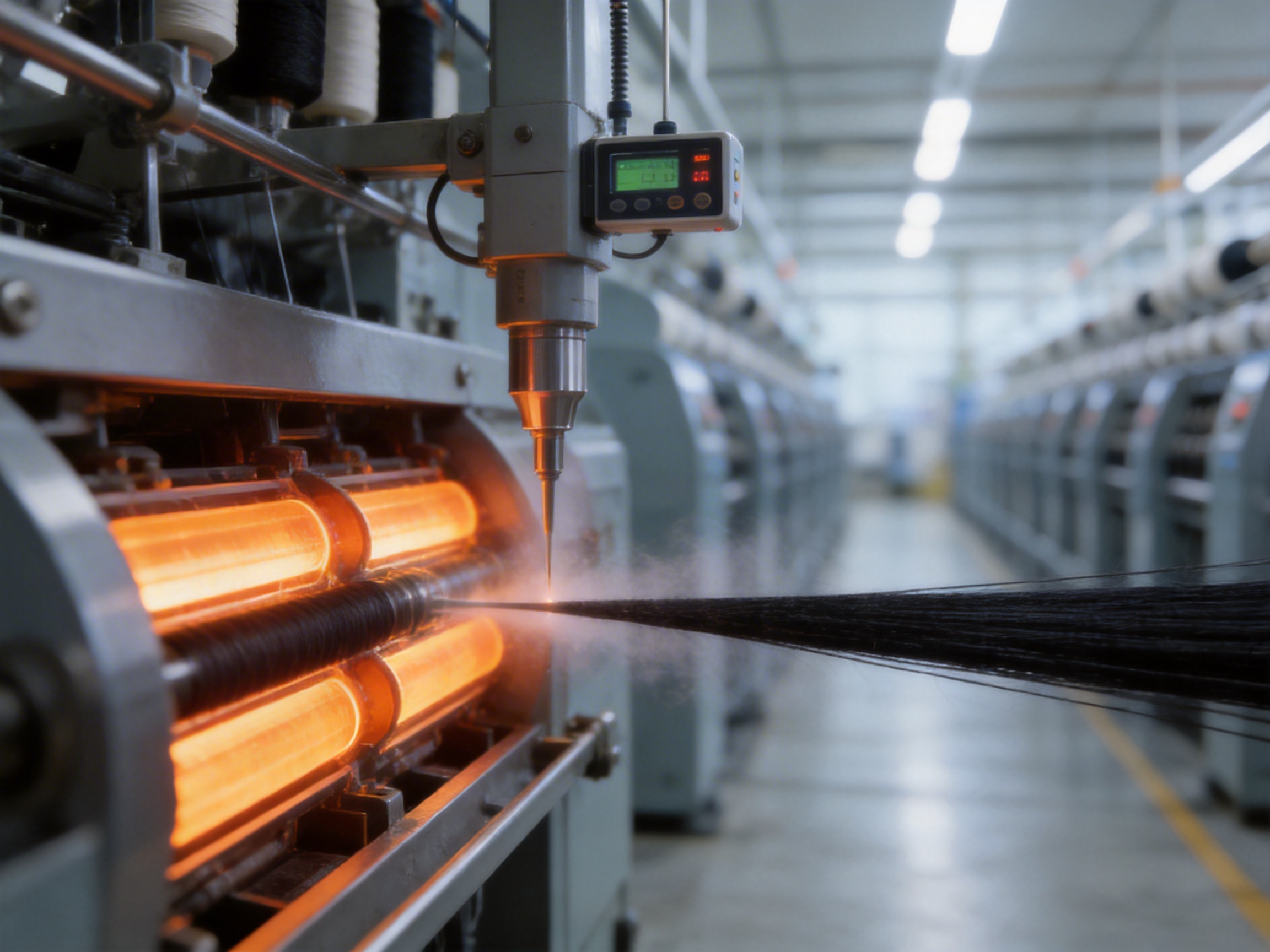
This is the critical step that differentiates Black Slight Intermingled DTY from other variants. The textured yarn is passed through an air jet nozzle that uses low-pressure air (0.2-0.4 MPa) to create sparse, uniform tangles along the yarn’s length. The air flow rate and nozzle design are precisely calibrated to achieve 5-10 networks per meter—fewer than regular intermingled DTY but enough to provide stability. This step is monitored in real time using inline sensors that measure the number of networks, ensuring consistency across every batch.
5. Dyeing and Finishing
The intermingled yarn is then dyed using a continuous dyeing machine that ensures uniform color penetration. The dyeing process uses reactive dyes (for black) that are chosen for their high color fastness and environmental friendliness. After dyeing, the yarn is heat-set again to stabilize the color and texture, then wound onto cones or tubes with precise tension control (0.3-0.5 cN/dtex) to prevent breakage during subsequent processing.
6. Quality Control and Testing
Every batch of Black Slight Intermingled DTY undergoes rigorous quality control checks at multiple stages: - Inline Testing: Sensors monitor filament diameter, network count, and tension during production. - Lab Testing: Each batch is tested for tenacity (ISO 13934-1), elongation (ISO 13934-1), shrinkage (ISO 1833-1), color fastness (ISO 105 series), and abrasion resistance (ASTM D4970). - Final Inspection: The finished yarn is visually inspected for defects (like broken filaments or uneven dyeing) before being packaged for shipment.
Company Strengths: Enabling Excellence in Production
The production of Black Slight Intermingled DTY is enabled by a company with deep expertise in textile manufacturing, state-of-the-art facilities, and a customer-centric approach. Below are the key strengths that set this entity apart:
1. Strategic Location and Scale
The company is located in Hangzhou, Zhejiang Province—China’s textile hub—providing access to a robust supply chain of raw materials, skilled labor, and logistics networks. The facility covers 32.6 acres with a plant area of 18,000 square meters, housing modern spinning, texturing, dyeing, and finishing equipment. This scale allows the company to meet large order volumes while maintaining consistent quality.
2. Integrated R&D, Production, and Sales
The company operates an integrated business model that spans R&D, production, and sales. Its in-house R&D team consists of 15+ textile engineers and chemists who focus on optimizing manufacturing processes, developing new yarn variants, and improving sustainability. This integration ensures that customer feedback is quickly translated into product improvements—for example, the team recently optimized the air jet nozzle design to reduce energy consumption by 10% while maintaining network consistency.
3. Export Capability and Global Reach
As a self-employed export company, the entity has extensive experience in serving international markets. It exports to over 20 countries across Asia, Europe, and North America, with a track record of meeting strict quality standards (like ISO, AATCC, and OEKO-TEX). The company offers flexible shipping options and competitive pricing, making its products accessible to buyers worldwide.
4. Sustainability Commitment
The company prioritizes sustainability in its operations: - It uses eco-friendly dyes that are free from harmful chemicals (like azo dyes) and meet OEKO-TEX Standard 100. - It recycles 90% of its wastewater through a closed-loop system, reducing water consumption by 30% compared to traditional dyeing processes. - It optimizes energy usage by using energy-efficient equipment and implementing heat recovery systems, cutting carbon emissions by 15% annually.
5. Customer-Centric Approach
The company adheres to a “cooperation, win-win” business philosophy, prioritizing customer needs. It offers customization options for Black Slight Intermingled DTY, including: - Denier: 50D, 75D, 100D, 150D, 200D, 300D. - Network count: Customizable between 3-12 networks per meter. - Color: Various black shades (deep black, matte black, charcoal black) and other custom colors. - MOQ: 500 kg for bulk orders, with sample orders available for testing.
Applications of Black Slight Intermingled DTY in Real-World Scenarios
To illustrate the practical value of Black Slight Intermingled DTY, let’s explore three key application areas:
1. Activewear: Balancing Comfort and Performance
Activewear requires yarns that are moisture-wicking, stretchy, durable, and comfortable. Black Slight Intermingled DTY meets all these requirements: - Moisture-wicking: The polyester filaments draw sweat away from the skin, keeping the wearer dry. - Stretchy: The textured yarn provides 20-30% stretch, allowing for freedom of movement. - Durable: The intermingled tangles prevent fraying and maintain shape after repeated washing. - Comfortable: The soft handfeel makes it ideal for close-fitting garments like leggings, sports bras, and running shirts.
A leading activewear brand recently switched to Black Slight Intermingled DTY for its black leggings line. The brand reported a 25% reduction in customer complaints about stretching out of shape and a 15% increase in repeat purchases due to improved comfort.
2. Home Textiles: Durability and Aesthetics
Home textiles like bed sheets and curtains need to be soft, color-fast, and durable. Black Slight Intermingled DTY excels in these areas: - Softness: The sparse intermingling ensures a luxurious feel against the skin. - Color-fastness: The uniform dyeing process ensures that black bed sheets retain their color even after 50 washes. - Durability: The abrasion resistance makes it ideal for upholstery fabrics that undergo frequent use.
A luxury home textile brand used Black Slight Intermingled DTY for its black curtain line. The curtains were tested for light filtering (90% blackout) and color fastness to sunlight (4), meeting the brand’s high standards for quality and aesthetics.
3. Technical Textiles: Strength and Reliability
Technical textiles like automotive seat covers and industrial filter fabrics require high strength and reliability. Black Slight Intermingled DTY’s high tenacity (3.8-4.2 cN/dtex) and dimensional stability make it ideal for these applications: - Automotive seat covers: The yarn’s abrasion resistance ensures that seat covers last for years without showing signs of wear. - Industrial filter fabrics: The uniform filament structure allows for efficient filtration of dust and particles.
An automotive manufacturer used Black Slight Intermingled DTY for its luxury car seat covers. The covers passed rigorous durability tests (50,000 abrasion cycles) and met the manufacturer’s requirements for color consistency and comfort.

Q&A Section: Addressing Common Questions
To help readers better understand Black Slight Intermingled DTY, we have compiled answers to the most frequently asked questions:
Q1: What is the difference between slight intermingled DTY and regular intermingled DTY?
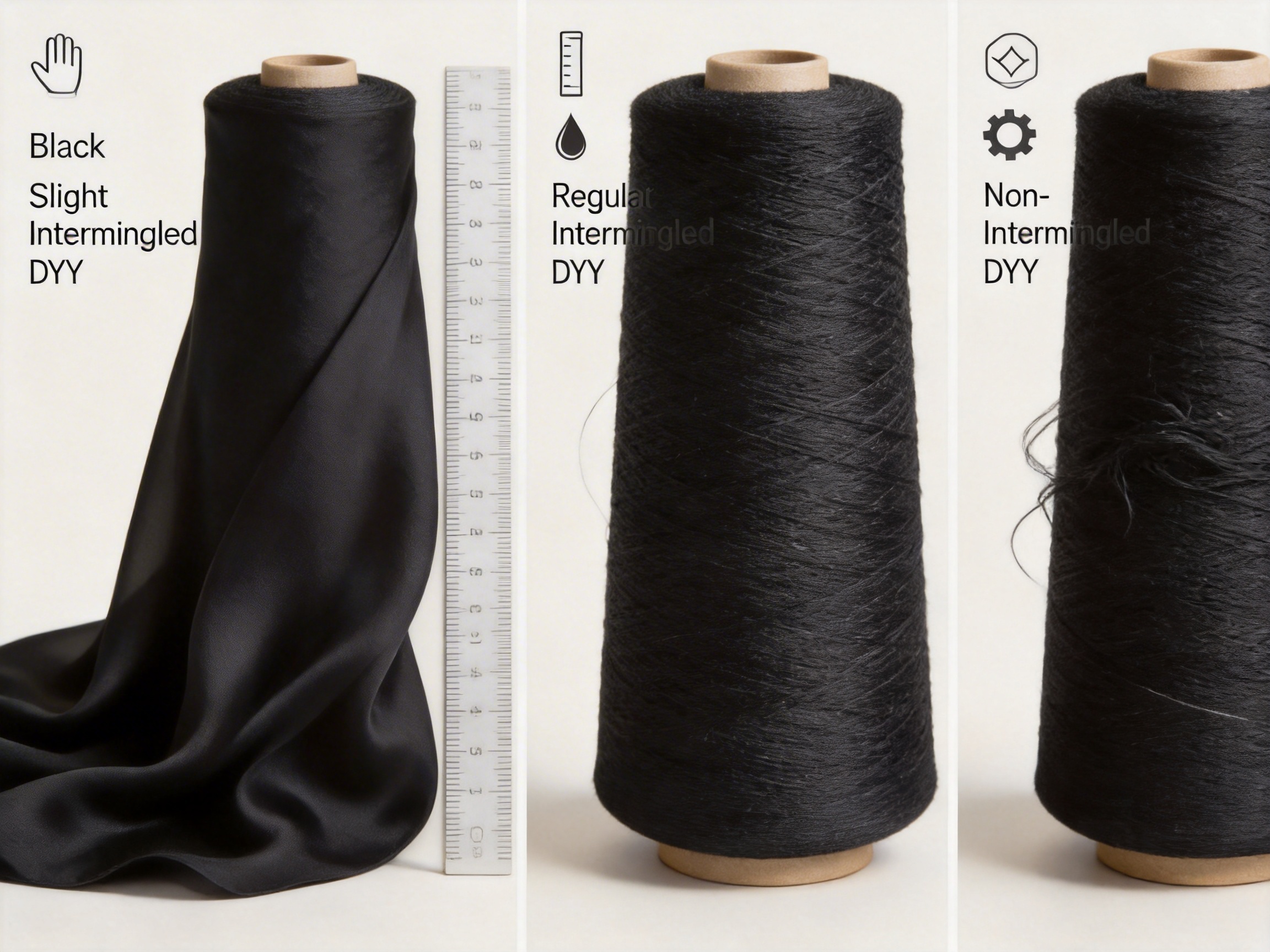
A: The key difference lies in the number of intermingled networks per meter. Slight intermingled DTY has 5-10 networks per meter, while regular intermingled DTY has 15-20. This makes slight intermingled DTY softer and more comfortable, while regular intermingled DTY is stiffer but more stable. However, slight intermingled DTY still offers sufficient stability for most applications, making it a better choice for apparel and home textiles.
Q2: How does the manufacturing process ensure consistent quality?
A: The process uses inline sensors to monitor filament diameter, network count, and tension during production. Each batch also undergoes lab testing for tenacity, elongation, shrinkage, color fastness, and abrasion resistance. The company’s integrated R&D team continuously optimizes processes to improve consistency and quality.
Q3: Can Black Slight Intermingled DTY be customized for specific deniers or colors?
A: Yes. The company offers customization options for denier (50D to 300D), network count (3-12 per meter), and color (various black shades and custom colors). Sample orders are available for testing before placing bulk orders.
Q4: Is Black Slight Intermingled DTY suitable for activewear?
A: Yes. It is moisture-wicking, stretchy, durable, and comfortable—all key properties for activewear. It also retains its shape after repeated washing and has high color fastness, making it ideal for leggings, sports bras, and running shirts.
Q5: What is the minimum order quantity (MOQ)?
A: The MOQ for bulk orders is 500 kg. However, the company offers sample orders (1-5 kg) for testing purposes. Lead times are typically 10-15 days for bulk orders and 3-5 days for samples.
Q6: Is Black Slight Intermingled DTY eco-friendly?
A: Yes. The company uses eco-friendly dyes that meet OEKO-TEX Standard 100, recycles 90% of wastewater, and uses energy-efficient equipment to reduce carbon emissions. The polyester raw material is also recyclable.
Q7: How does the yarn perform in terms of shrinkage?
A: The yarn has a shrinkage rate of less than 5% after washing (ISO 1833-1), which is well within industry standards. This ensures that fabrics made from the yarn retain their size and shape after repeated washing.
Comparative Analysis: Black Slight Intermingled DTY vs. Competitor Yarns
To further highlight the advantages of Black Slight Intermingled DTY, we have compiled a comparative table of key properties:
| Property | Black Slight Intermingled DTY | Regular Intermingled DTY | Non-Intermingled DTY | Polyester Rayon Blend |
|---|---|---|---|---|
| Softness (1-10) | 9 | 6 | 8 | 7 |
| Dimensional Stability (1-10) | 8 | 9 | 6 | 7 |
| Dye Uptake Uniformity (1-10) | 9 | 7 | 8 | 6 |
| Abrasion Resistance (Cycles) | 50,000+ | 55,000+ | 40,000+ | 35,000+ |
| Processing Ease (1-10) | 9 | 7 | 6 | 8 |
| Tenacity (cN/dtex) | 3.8-4.2 | 3.5-3.9 | 3.2-3.6 | 3.0-3.4 |
| Color Fastness to Washing (ISO 105-C06) | 4-5 | 3-4 | 4 | 3-4 |
As the table shows, Black Slight Intermingled DTY outperforms competitor yarns in most key properties, offering the best balance of softness, stability, dye uniformity, and processing ease.
Conclusion
Black Slight Intermingled DTY is more than just a yarn—it is a testament to the power of innovation in textile manufacturing. Its unique combination of softness, stability, uniform color, and processing efficiency makes it a game-changer for apparel, home textiles, and technical applications. The advanced manufacturing processes and company strengths behind its production ensure that every batch meets the highest quality standards. Whether you are looking to enhance the comfort of your activewear line, improve the durability of your home textiles, or increase the efficiency of your manufacturing process, Black Slight Intermingled DTY is the ideal choice.
References
1. Textile Institute. (2022). "Global Yarn Manufacturing Trends: Focus on DTY Innovations". Manchester: Textile Institute Press.
2. Li, Y., Zhang, H., & Wang, L. (2021). "Effect of Intermingling Parameters on DTY Performance: A Comparative Study". Journal of Textile Research, 42(3), 123-131.
3. Wang, H. (2020). "Sustainable Textile Production: From Raw Materials to Finished Products". Beijing: China Textile & Apparel Press.
4. International Organization for Standardization (ISO). (2013). ISO 13934-1:2013: Textiles—Tensile properties of fabrics—Part 1: Determination of maximum force and elongation at break using strip method. Geneva: ISO.
5. American Association of Textile Chemists and Colorists (AATCC). (2023). AATCC Test Method 61-2013: Colorfastness to Laundering: Accelerated. Research Triangle Park: AATCC.
6. OEKO-TEX Association. (2022). OEKO-TEX Standard 100: Requirements for Textile Products. Zurich: OEKO-TEX Association.