
Why Nylon Covered Yarn Is a Reliable Choice for Stretch Knits and Performance Textiles

Nylon covered yarn has become an important material for manufacturers seeking a balanced combination of stretch, recovery, softness, durability, and processing efficiency. Used in knitted fabrics, sports tights, hosiery, underwear, leggings, socks, fitted garments, and many other textile products, this yarn combines the elasticity of a spandex core with the practical performance of a nylon filament covering. The resulting structure is flexible, resilient, comfortable against the skin, and suitable for fabric constructions that require a close fit.
The 1000 type all-in-one nylon covered yarn described in this article is part of a product range serving modern knitted textile production. Its basic construction is straightforward but highly effective: a spandex yarn provides the stretchable core, while nylon filaments cover the core to improve surface performance, handle, appearance, and resistance to everyday wear. Through suitable covering, winding, quality control, dyeing, and finishing processes, the yarn can be adapted to the demands of apparel and other textile applications.
This article examines the product’s composition, manufacturing logic, performance advantages, application possibilities, quality considerations, and purchasing value. It also explains why an integrated manufacturer with in-house research and development, production, post-dyeing, finishing, and export capabilities can offer meaningful advantages over less integrated suppliers.
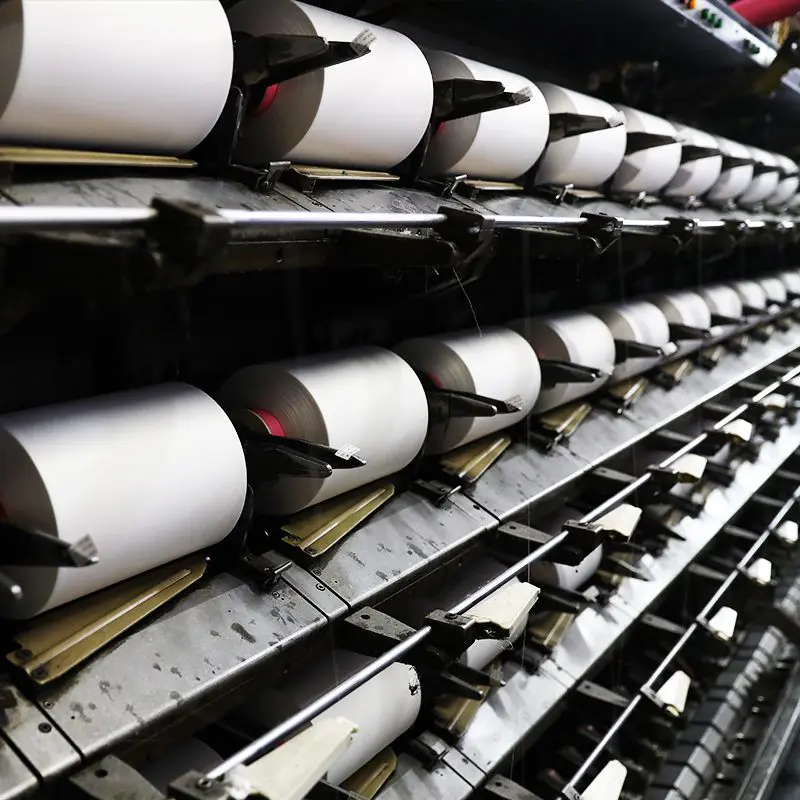
1000 type all-in-one nylon covered yarn
Understanding the Construction of Nylon Covered Yarn
Nylon covered yarn is a composite yarn made by combining a stretchable elastic core with one or more covering filaments. In the product described here, the core is spandex yarn and the external covering is nylon filament. Spandex contributes elongation and recovery, while nylon contributes strength, abrasion resistance, a smooth surface, and compatibility with many knitting and dyeing processes.
The core-and-cover structure is important because neither component has to perform every function alone. Spandex is highly elastic but may require protection during processing and use. Nylon is strong, smooth, and durable, but it does not provide the same level of stretch recovery. When the two materials are combined, the finished yarn can deliver a more useful balance of performance than a single-fiber yarn.
During covering, nylon filaments are wrapped around the spandex core. The covering must be sufficiently consistent to protect and stabilize the elastic core without preventing the core from extending and recovering. If the covering is too loose, the yarn may show uneven appearance, exposed spandex, or unstable behavior during knitting. If the covering is too tight, the yarn may lose part of its usable stretch or develop excessive tension during processing.
The term “1000 type” should be treated as a product designation unless a technical specification sheet defines the exact count, denier, covering ratio, or construction details. In commercial textile purchasing, the final selection should always be confirmed through a sample, technical data sheet, and application trial. Important parameters may include yarn size, spandex count, nylon filament specification, covering method, elongation, recovery, tensile behavior, color availability, and recommended knitting settings.
The Role of the Spandex Core
Spandex is the elastic foundation of the yarn. It can extend considerably under controlled tension and return toward its original length when the load is released. This behavior makes it suitable for garments that need body conformity, movement comfort, and dimensional recovery.
In sports tights and fitted knitted garments, the spandex core helps the fabric follow body movement without creating excessive restriction. In socks and hosiery, it supports stretch during donning and helps the product remain in position during wear. In underwear and intimate apparel, it contributes to comfort and fit. In knitted fabrics used for fashion garments, it can add shape retention and a smooth, close-fitting appearance.
However, spandex must be processed carefully. Excessive heat, uncontrolled tension, unsuitable chemicals, and poor winding conditions can affect its elastic behavior. This is one reason why yarn manufacturing requires process discipline rather than simply combining two materials mechanically.
The Role of the Nylon Covering
Nylon filaments form the visible and functional outer layer of the yarn. They help protect the elastic core during knitting, improve resistance to rubbing, and create a smoother contact surface for needles, guides, and fabric-forming elements. Nylon also supports a clean appearance and can be dyed in a broad range of shades when the appropriate dyeing system and process conditions are used.
Compared with an uncovered elastic yarn, nylon covered yarn is generally easier to handle in many textile processes because the filament covering gives the yarn a more stable surface. The covering can also reduce direct exposure of the spandex core to mechanical contact and help the yarn perform consistently in fabrics with repeated extension and recovery.
Nylon is also valued for its toughness. A knitted fabric made with nylon covered yarn can offer a useful combination of flexibility and resistance to daily wear. This does not mean that every nylon covered yarn is suitable for every end use. Performance depends on the raw materials, filament characteristics, covering quality, yarn size, fabric structure, finishing treatment, and care conditions. Nevertheless, the material combination is widely accepted because it addresses several common requirements at once.
Principal Advantages Over Less Specialized Yarn Options
The main competitive advantage of nylon covered yarn is its balanced performance. Some yarns provide strength but limited elasticity. Others provide stretch but require additional protection or have less satisfactory surface performance. Nylon covered yarn is designed to combine these properties in one yarn structure, reducing the need to blend separate yarns during fabric production.
Elasticity and Recovery
The spandex core gives the yarn substantial elasticity, allowing fabrics to stretch during movement, dressing, or use. Just as important, a well-made covered yarn can help the fabric recover after extension. Recovery is essential for leggings, sports tights, socks, underwear, fitted tops, and other products that should preserve their shape after repeated wear.
Elasticity must be understood as a system property. Yarn construction, knitting density, stitch pattern, fabric finishing, and garment design all affect final stretch. Nevertheless, a stable elastic core provides the foundation. A manufacturer that controls covering tension and winding consistency can help customers achieve more predictable fabric behavior.
Durability and Abrasion Resistance
Nylon is recognized for its strength and resistance to abrasion. In applications exposed to repeated rubbing, pulling, and laundering, the nylon covering can provide practical durability. This is particularly useful in socks, sportswear, tights, activewear, and other garments that receive frequent use.
Compared with a delicate uncovered elastic yarn, the nylon-covered structure offers a protective outer surface. This can help reduce damage to the elastic component during knitting and use. It also supports longer service life when the product is correctly designed and cared for.
Comfort and Soft Handle
The feel of a knitted fabric is influenced by fiber type, filament fineness, fabric density, finishing, and garment construction. Nylon covered yarn can contribute to a smooth, flexible, and comfortable hand. Its elasticity helps garments fit the body without excessive looseness, while the filament surface can support a clean and refined fabric appearance.
For sports and close-fitting garments, comfort is not limited to softness. A comfortable fabric must also move with the wearer, avoid excessive sagging, and maintain reasonable dimensional stability. The combination of a resilient core and a smooth cover helps address these requirements.
Ease of Dyeing and Color Development
The product information identifies ease of dyeing as one of the advantages of nylon covered yarn. Nylon fibers can be dyed using established textile dyeing systems, subject to the specific nylon type, dye class, temperature, pH, and process requirements. Consistent yarn construction is important because uneven covering can contribute to shade variation, streaks, or differences in surface appearance.
For fabric manufacturers, good dyeing behavior can improve color development and simplify color matching. It also supports a broad product range, from basic black and white yarns to fashion shades and performance colors. Dyeing should still be carried out according to tested recipes, because the presence of spandex introduces additional considerations related to heat, chemical exposure, and tension.
Processing Convenience
A covered yarn can be easier to feed and control during knitting than an unstable elastic core used without an outer filament. A consistent surface supports smoother interaction with knitting needles, feeders, guides, and tension devices. This may help reduce processing interruptions and improve fabric uniformity.
The actual result depends on the machine, gauge, stitch design, yarn package, tension settings, and operator experience. For this reason, a professional supplier should provide practical recommendations and support sample trials rather than treating the yarn as a generic commodity.
Versatility Across Product Categories
Nylon covered yarn can be used in a wide range of knitted and stretch textile products. It is appropriate for applications that need a combination of elastic response, comfort, surface smoothness, and durability. The yarn may be used alone, combined with other yarns, or incorporated into a larger fabric composition involving polyester, rayon, cotton, or other fibers.
This versatility is valuable to fabric manufacturers because it allows one yarn family to serve different product lines. A suitable yarn can support apparel development, seasonal collections, sports products, hosiery, and specialized knitted structures without requiring a completely different material strategy for every item.
Comparison with Alternative Yarn Structures
Product selection should be based on the specific requirements of the fabric rather than on a single general claim. Nylon covered yarn has particular advantages, but other yarn structures may be better for certain applications. Understanding the differences helps buyers evaluate value more accurately.
| Yarn structure | Main characteristics | Typical strengths | Potential limitations |
|---|---|---|---|
| Nylon covered spandex yarn | Spandex core with nylon filament covering | Elasticity, recovery, smooth surface, durability, broad apparel use | Requires controlled heat, tension, and dyeing conditions |
| Polyester covered spandex yarn | Spandex core with polyester filament covering | Good dimensional stability, strength, and compatibility with polyester fabrics | Handle and dyeing behavior differ from nylon; application testing is necessary |
| Uncovered spandex yarn | Elastic core without a filament cover | High stretch and direct elastic response | More exposed during processing and may require special handling or combination with other yarns |
| Textured polyester yarn | Polyester filament modified for bulk and texture | Resilience, volume, easy-care performance, and broad fabric use | Does not provide the same elastic response as a spandex-core yarn |
| Natural fiber yarn | Cotton, wool, rayon, or other natural or regenerated fiber yarn | Specific hand, moisture behavior, appearance, and comfort characteristics | May need an elastic component to improve stretch and recovery |
The comparison shows why nylon covered yarn is especially useful when stretch and durability must be delivered together. Polyester-covered alternatives may be more suitable where polyester compatibility, high temperature tolerance, or particular dyeing systems are priorities. Uncovered spandex may be useful in specialized constructions, but it generally places greater demands on processing. Natural or regenerated fibers may offer desirable comfort and appearance, but they often benefit from an elastic yarn component when body fit is required.
Manufacturing Process and Quality Control
The performance of nylon covered yarn depends heavily on manufacturing control. A reliable process begins with the selection and inspection of raw materials and continues through covering, winding, inspection, packaging, storage, and customer support. Each stage can influence the final yarn’s appearance, elasticity, processability, and dyeing performance.
Raw Material Selection
The first step is selecting suitable spandex and nylon filaments. The spandex must provide the desired elastic response and remain stable under the intended processing conditions. The nylon must offer appropriate filament quality, strength, fineness, and dyeing behavior for the target application.
Raw material inspection may include checking package appearance, labeling, count or denier, moisture condition, defects, and consistency between lots. When raw materials are stable, the covering process has a stronger foundation. When raw materials vary significantly, even advanced equipment may not produce consistent results.
Controlled Covering
Covering is the central manufacturing stage. Nylon filaments are wrapped around the spandex core under controlled speed, tension, and alignment. The objective is to create a uniform yarn with adequate coverage and an appropriate balance between protection and extensibility.
Important process variables include the tension applied to the spandex, the feed ratio, the speed of the covering equipment, the number and arrangement of covering filaments, and the stability of the winding package. Small changes can affect yarn appearance, stretch behavior, and knitting performance, so process parameters should be monitored and recorded.
Uniform covering is particularly important for fabrics that will be dyed in light or bright colors. Irregular coverage may become more visible after dyeing or finishing. It can also lead to inconsistent fabric stretch, surface lines, or differences between production lots.
Winding and Package Formation
After covering, the yarn is wound into packages suitable for storage, transportation, and downstream use. Package density and shape influence unwinding tension. A package that is too hard, too soft, uneven, or damaged may cause feeding problems in a knitting machine.
Good winding practice seeks to produce packages that unwind smoothly and maintain consistent tension. Packaging should also protect the yarn from contamination, excessive moisture, crushing, and unnecessary exposure to heat or sunlight. Correct identification is essential so that lot information and product specifications remain traceable.
Inspection and Testing
Inspection may include visual examination and laboratory or production-floor testing. Typical quality indicators include yarn appearance, covering regularity, elongation, recovery, tensile behavior, package condition, and compatibility with knitting or dyeing trials.
For a buyer, the most valuable test is often a combination of laboratory data and real application testing. A yarn can meet a basic numerical requirement yet behave differently on a particular machine or in a particular fabric structure. Sampling allows the buyer to evaluate actual knitting performance, fabric stretch, dyeing appearance, and finished garment recovery.
Post-Dyeing and Finishing Capability
An integrated textile manufacturer with post-dyeing and finishing capabilities can offer broader control over the product development process. Dyeing and finishing knowledge helps the supplier understand how yarn construction affects final fabric appearance and handle. It also improves communication when customers need assistance with shade development, fabric performance, or finishing adjustments.
Post-dyeing and finishing should be managed with care because spandex-containing materials can be sensitive to excessive heat, high tension, and unsuitable chemical conditions. Controlled processing helps maintain elasticity and avoid unnecessary damage to the yarn or fabric.
Integrated Manufacturing Strengths
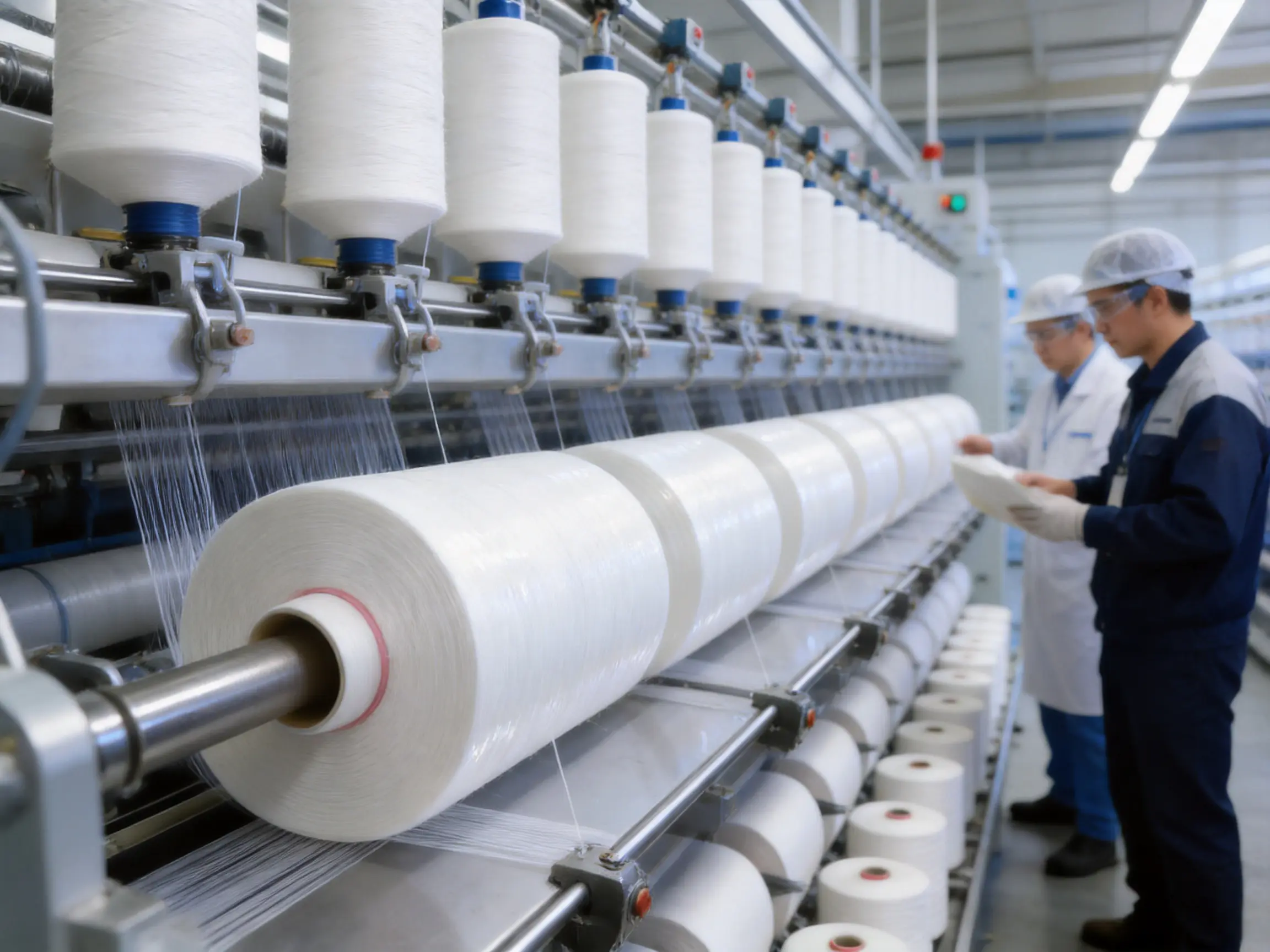
Hangzhou Jinfeng Textile Co., Ltd. operates in Jingjiang Street Industrial Park, Xiaoshan District, Hangzhou City, Zhejiang Province. The company reports a site covering approximately 32.6 acres and a plant area of about 18,000 square meters. Its activities include production and processing, post-dyeing, finishing, and sales of blended fabrics such as polyester and spandex, together with production, processing, and sales of DTY polyester yarn.
This combination is relevant to buyers of nylon covered yarn because it demonstrates experience across several connected areas of textile manufacturing. The company is not limited to one isolated production step. Its broader involvement in yarn, blended fabric, dyeing, and finishing can support more practical product development and application communication.
Research and Development Orientation
Textile products must respond to changing requirements in comfort, stretch, appearance, color, durability, and production efficiency. A supplier with a research and development orientation can evaluate materials not only by basic specifications but also by their behavior in actual fabric structures.
Research and development may involve improving covering stability, adapting yarn specifications to different knitting systems, optimizing dyeing compatibility, evaluating fabric recovery, and responding to customer requirements. Even when the basic yarn construction remains consistent, small adjustments in count, covering ratio, filament selection, or package format can make the material more suitable for a specific product.
Production and Processing Experience
Production experience is important because covered yarn performance depends on repeatability. Buyers need yarn that performs consistently from package to package and from lot to lot. A manufacturer with established production and processing operations can develop standard procedures for raw material control, machine settings, inspection, packaging, and traceability.
Experience with related polyester, spandex, blended fabric, and DTY products can also be valuable. It allows the supplier to understand the interaction between yarn and fabric, rather than viewing yarn as an isolated input. This perspective can help identify the cause of problems such as uneven stretch, poor recovery, dyeing variation, or surface defects.
Export and Customer Service Capability
The company describes itself as a self-employed export enterprise integrating research and development, production, and sales. For international buyers, an integrated export supplier can simplify communication, documentation, product sampling, order coordination, and shipment planning.
Good customer service should include clear technical specifications, sample availability, realistic lead-time information, packaging details, and responsive communication regarding quality concerns. For long-term cooperation, consistency and transparency are as important as the initial price quotation.
Applications in Knitted and Performance Textiles
Sports Tights and Activewear
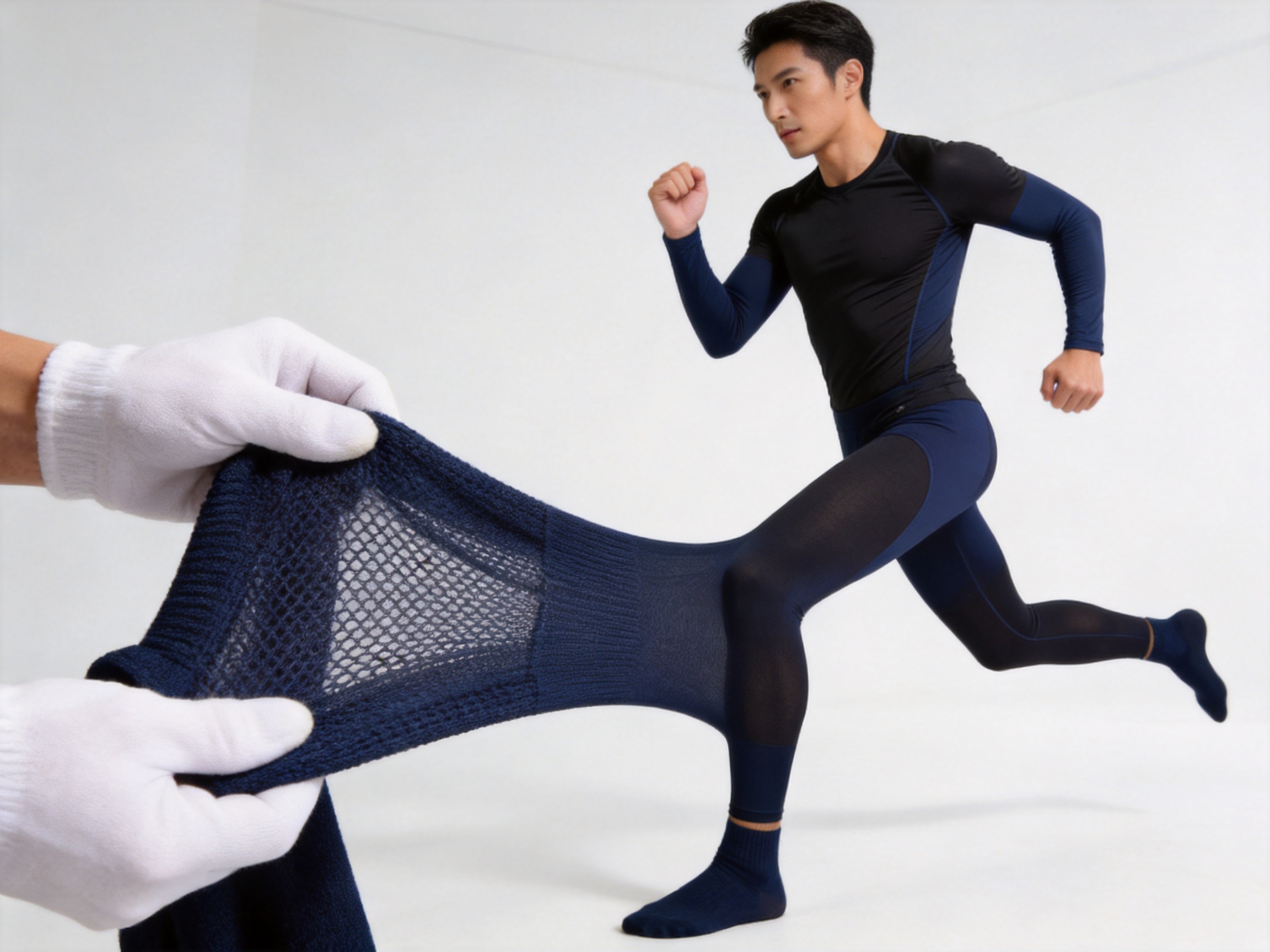
Sports tights require stretch, recovery, comfort, and resistance to repeated movement. Nylon covered yarn can help create a close-fitting fabric that follows the body during running, training, stretching, cycling, and other activities. The nylon surface supports durability, while the spandex core provides the elastic response needed for movement.
For activewear, fabric engineers should evaluate stretch in both directions, recovery after repeated extension, opacity, moisture management, seam behavior, pilling resistance, and colorfastness. The yarn is one part of the system, but its stability directly influences the final fabric.
Hosiery and Socks
Socks and hosiery need to stretch during dressing and remain comfortably positioned during wear. Nylon covered yarn can support elastic zones, cuffs, body sections, and shaped areas. Its smooth filament surface can also contribute to a clean appearance and comfortable contact with the skin.
Different sock constructions require different levels of elasticity and covering. A lightweight fashion stocking may need a different yarn specification from a durable sports sock. Buyers should therefore select the yarn according to fabric weight, machine gauge, stitch construction, and target performance.
Leggings and Fitted Garments
Leggings, fitted trousers, bodywear, and close-fitting tops depend on fabric recovery to prevent sagging and loss of shape. Nylon covered yarn can be incorporated into constructions that require a soft hand, body conformity, and resistance to repeated extension.
Fabric makers should consider how the yarn interacts with other components, including polyester, rayon, cotton, or regenerated fibers. Blending can modify moisture behavior, hand, opacity, appearance, and cost. The covered yarn adds elasticity and resilience while the companion fibers contribute their own characteristics.
Underwear and Intimate Apparel
Underwear requires a balance of stretch, softness, comfort, recovery, and wash durability. Nylon covered yarn can be used in knitted structures where gentle body fit and elastic movement are important. In these applications, surface smoothness and fabric handle are especially significant because the product remains in close contact with the skin.
Processing conditions should be selected carefully to preserve the elastic properties and avoid excessive harshness. Finishing treatments may be used to improve softness, appearance, or dimensional stability, but they should be validated through testing.
Blended Fashion Fabrics
The yarn can also support fashion fabrics that combine stretch with the visual or tactile qualities of other fibers. Polyester and rayon blended fabrics, for example, can be engineered to provide drape, color, softness, and elastic comfort. In such products, the covered yarn may be used in selected courses, structural zones, or as part of a broader blend.
This approach allows designers and fabric manufacturers to create fabrics that are both visually attractive and functional. The correct yarn selection can improve garment fit without changing the overall design language of the fabric.
Technical Considerations for Buyers
Purchasing decisions should be based on a complete technical review rather than on the product name alone. Buyers should request information about the yarn construction, raw material composition, available specifications, package format, recommended machine settings, dyeing guidance, and standard quality indicators.
Specification Confirmation
Before placing an order, confirm what “1000 type” means in the supplier’s internal product system. It may refer to a product series, model, package, or construction category. The buyer should obtain exact information about nylon denier, spandex denier, covering method, number of coverings, yarn length, package weight, and allowable variation.
It is also important to confirm whether the yarn is intended for bare use, covered use, plating, double covering, or combination with other yarns. These details affect fabric design and machine settings.
Stretch and Recovery Testing
Stretch testing should be performed under defined conditions. The buyer may assess elongation at a specified load, recovery after a set extension, residual deformation, and repeated-cycle behavior. Fabric testing is equally important because yarn data does not always predict final fabric performance exactly.
For sportswear and tight-fitting garments, repeated extension testing can reveal whether the fabric maintains its shape after simulated use. For socks and hosiery, testing should include repeated dressing and recovery. For underwear, comfort and dimensional stability should be considered alongside elastic response.
Dyeing and Heat Management
Spandex-containing yarns require appropriate heat management. Excessive temperature or prolonged exposure can reduce elastic performance. Dyeing, heat-setting, drying, and finishing temperatures should therefore be established through trials.
Color matching should be evaluated on the final fabric rather than relying only on a yarn sample. The surrounding yarns, fabric construction, dye recipe, finishing chemicals, and machine conditions can all affect the perceived shade.
Storage and Handling
Yarn packages should be stored in a clean, dry, and temperature-controlled environment whenever possible. They should be protected from direct sunlight, excessive heat, moisture, dust, and physical compression. Packages should remain in their original protective packaging until needed for production.
Careful handling helps preserve package shape and reduces the risk of contamination or unwinding problems. Stock rotation and lot identification are also useful for maintaining consistency in production.
Why an Integrated Supplier Can Reduce Production Risk
Price is an important purchasing factor, but it is not the only measure of value. A low-cost yarn can become expensive if it causes machine stoppages, fabric defects, dyeing variation, rework, rejected goods, or delayed deliveries. An integrated supplier can help reduce these risks by connecting material production with fabric processing and finishing knowledge.
When the supplier understands both yarn and fabric, communication can be more direct. A customer reporting uneven stretch may receive assistance with yarn construction, machine tension, or finishing conditions. A customer experiencing shade variation may benefit from advice on dyeing compatibility and lot control. A customer developing a new fabric may receive support in selecting a yarn specification that matches the intended handle and recovery.
Integration can also simplify supply chain management. One organization may coordinate sampling, production, post-dyeing, finishing, packaging, and export arrangements. This can reduce the number of separate parties involved and make it easier to track responsibilities.
The value of this approach is especially clear for international customers who need reliable communication, documented specifications, consistent packaging, and practical support during product development. A supplier that combines technical capability with export experience is better positioned to support repeat orders and long-term cooperation.
Sustainability and Responsible Manufacturing Considerations
Textile sustainability involves more than choosing one fiber. It includes raw material efficiency, product durability, responsible chemical management, energy use, waste reduction, packaging, logistics, and the useful life of the finished product. Nylon covered yarn can contribute to longer-lasting stretch garments when it is correctly designed and processed, because durability and shape retention may reduce premature replacement.
Manufacturers and buyers should consider how to minimize waste during covering and winding, how to manage rejected packages, and how to reduce unnecessary production trials. Accurate specifications and stable quality can prevent material loss downstream. Efficient dyeing and finishing processes can also reduce water, energy, and chemical consumption, although actual performance depends on the specific production system.
Responsible purchasing may include requesting information about quality management, chemical control, workplace practices, packaging materials, and production traceability. Buyers should match their requirements to applicable market regulations and customer standards. A supplier’s willingness to provide clear information is an important part of professional cooperation.
Recommended Quality Assurance Program
A practical quality assurance program should begin before mass production. The buyer and supplier should agree on product specifications, sample approval procedures, test methods, acceptable tolerances, packaging requirements, and inspection responsibilities.
First, the buyer should evaluate a representative sample in the intended knitting process. The trial should record machine type, gauge, stitch settings, yarn tension, production speed, and fabric construction. The resulting fabric should be examined for surface regularity, stretch, recovery, appearance, and defects.
Second, dyeing and finishing trials should be performed when the yarn is intended for dyed knitted fabric. The trial should evaluate shade, colorfastness, dimensional stability, handle, and elastic performance after finishing.
Third, a small production lot can be used to verify consistency between packages and across the order. The buyer should retain reference samples from approved lots for future comparison.
Finally, each shipment should be checked for package condition, labeling, quantity, lot number, and visible yarn quality. A clear record system helps identify trends and supports efficient resolution if a problem occurs.
| Quality area | Suggested evaluation | Business value |
|---|---|---|
| Raw material consistency | Review fiber type, yarn size, lot information, and package condition | Reduces variation before production begins |
| Covering uniformity | Visual inspection and controlled yarn examination | Supports even fabric appearance and stable elasticity |
| Stretch performance | Measure elongation, recovery, and repeated-cycle behavior | Helps confirm suitability for fitted products |
| Knitting performance | Conduct machine trials under documented settings | Identifies feeding, tension, and breakage risks |
| Dyeing performance | Test shade development, colorfastness, and post-dyeing elasticity | Improves finished fabric quality and color consistency |
| Shipment control | Check labels, quantities, packaging, and lot traceability | Supports efficient receiving and production planning |
Practical Advice for Product Development
Designers and fabric developers should begin with the end use. A light fashion fabric, a compression sports garment, a durable sock, and a soft underwear fabric may all require different covered yarn specifications. The best result comes from matching yarn behavior with fabric structure and garment performance.
It is useful to create several trial constructions with different knitting densities, stitch patterns, and yarn combinations. Testing only one construction can make it difficult to determine whether a result comes from the yarn or from the fabric design. A structured trial plan can reveal the most efficient combination of material and machine settings.
Buyers should also communicate the final market requirements to the supplier. Information about target weight, color range, garment type, expected stretch, washing conditions, performance claims, and delivery schedule can help the manufacturer recommend a more suitable product configuration.
For repeat production, standardization is essential. Once an approved yarn and fabric construction have been established, the same specifications, machine settings, finishing recipe, and inspection method should be maintained as far as possible. Any change in raw material, yarn construction, dyeing process, or finishing condition should be evaluated before being introduced into commercial production.
Q&A
What is nylon covered yarn?
Nylon covered yarn is a composite yarn in which nylon filament wraps around an elastic core, commonly spandex. The spandex provides stretch and recovery, while the nylon covering contributes strength, durability, surface smoothness, and processing stability.
What does the 1000 type designation mean?
The 1000 type is a product designation and should not be interpreted as a complete technical specification without confirmation. Buyers should request the exact yarn size, spandex count, nylon specification, covering method, covering ratio, package details, and applicable tolerances.
Is nylon covered yarn suitable for sports tights?
Yes. Its elastic core and durable nylon surface make it suitable for many sports tights and activewear constructions. The final suitability depends on fabric design, stretch requirements, opacity, recovery, finishing, and the intended activity level.
Can nylon covered yarn be dyed?
Yes. Nylon is generally compatible with established dyeing processes, but the dye recipe and temperature must be selected for the specific nylon and spandex construction. Trial dyeing is recommended before bulk production.
How does it compare with polyester covered yarn?
Nylon covered yarn is often selected for its smooth handle, durability, abrasion resistance, and dyeing characteristics. Polyester covered yarn may be preferred for particular polyester-based constructions, dimensional stability requirements, or process conditions. The correct choice depends on the fabric and end use.
What products can be made with this yarn?
Potential applications include sports tights, leggings, socks, hosiery, underwear, intimate apparel, fitted tops, stretch knitted fabrics, and blended fashion fabrics. The yarn can also be incorporated into selected zones or structures within a larger textile construction.
Why is covering quality important?
Covering quality affects yarn appearance, elastic response, knitting performance, surface protection, and dyeing uniformity. Uneven covering may lead to exposed spandex, inconsistent stretch, fabric lines, or package-to-package variation.
What should be tested before a large order?
Buyers should test package condition, knitting performance, yarn appearance, fabric stretch, recovery, dyeing behavior, colorfastness, dimensional stability, and repeated-use performance. Testing should be carried out using the intended equipment and fabric construction.
What advantages can an integrated manufacturer provide?
An integrated manufacturer can connect research and development, yarn production, fabric processing, dyeing, finishing, sales, and export coordination. This can improve technical communication, simplify project management, and help resolve problems more efficiently.
How should the yarn be stored?
Store the yarn in a clean, dry environment protected from direct sunlight, excessive heat, moisture, dust, and crushing. Keep packages in protective packaging until they are ready for production, and maintain lot identification for traceability.
Conclusion
Nylon covered yarn offers a highly practical combination of elasticity, recovery, durability, smoothness, dyeing potential, and application flexibility. By placing spandex at the core and nylon filaments on the outside, the yarn is designed to support the needs of modern stretch knitted fabrics while protecting the elastic component during processing and use.
The 1000 type all-in-one nylon covered yarn is particularly relevant to manufacturers producing sports tights, hosiery, socks, underwear, leggings, fitted garments, and blended stretch fabrics. Its value is not based only on the presence of nylon and spandex, but on the consistency of the covering process, the stability of the yarn package, the quality of inspection, and the suitability of the product for the customer’s specific fabric construction.
Hangzhou Jinfeng Textile Co., Ltd. brings together yarn production, blended fabric manufacturing, post-dyeing, finishing, research and development, sales, and export operations. Its reported industrial site and integrated business structure provide a foundation for serving textile customers who need more than a standard commodity yarn. Through technical communication, sample trials, controlled processing, and consistent quality management, the supplier can help customers reduce production risk and develop fabrics with reliable stretch and durability.
For the best commercial result, buyers should confirm specifications carefully, conduct application trials, evaluate dyeing and finishing behavior, and establish clear quality standards before mass production. When these steps are followed, nylon covered yarn can become a dependable component in high-value knitted fabrics and performance apparel.
References
1. Textile Institute, Textile Terms and Definitions, terminology related to yarn construction, covered yarns, and textile processing.
2. American Society for Testing and Materials, Standard Test Methods for Textiles, guidance on tensile properties, elongation, recovery, colorfastness, and dimensional stability.
3. International Organization for Standardization, Textile Testing Standards, general principles for yarn and fabric quality evaluation.
4. Synthetic Fibers and Textiles Technical Literature, general principles of nylon filament performance, spandex elasticity, and blended textile manufacturing.
5. Manufacturer-provided product and company information for nylon covered yarn, DTY polyester yarn, blended fabrics, dyeing, finishing, and integrated textile production.