
The Timeless Elegance and Modern Innovation of Houndstooth Jacquard Fabric: A Deep Dive into Its Advantages, Manufacturing, and Applications
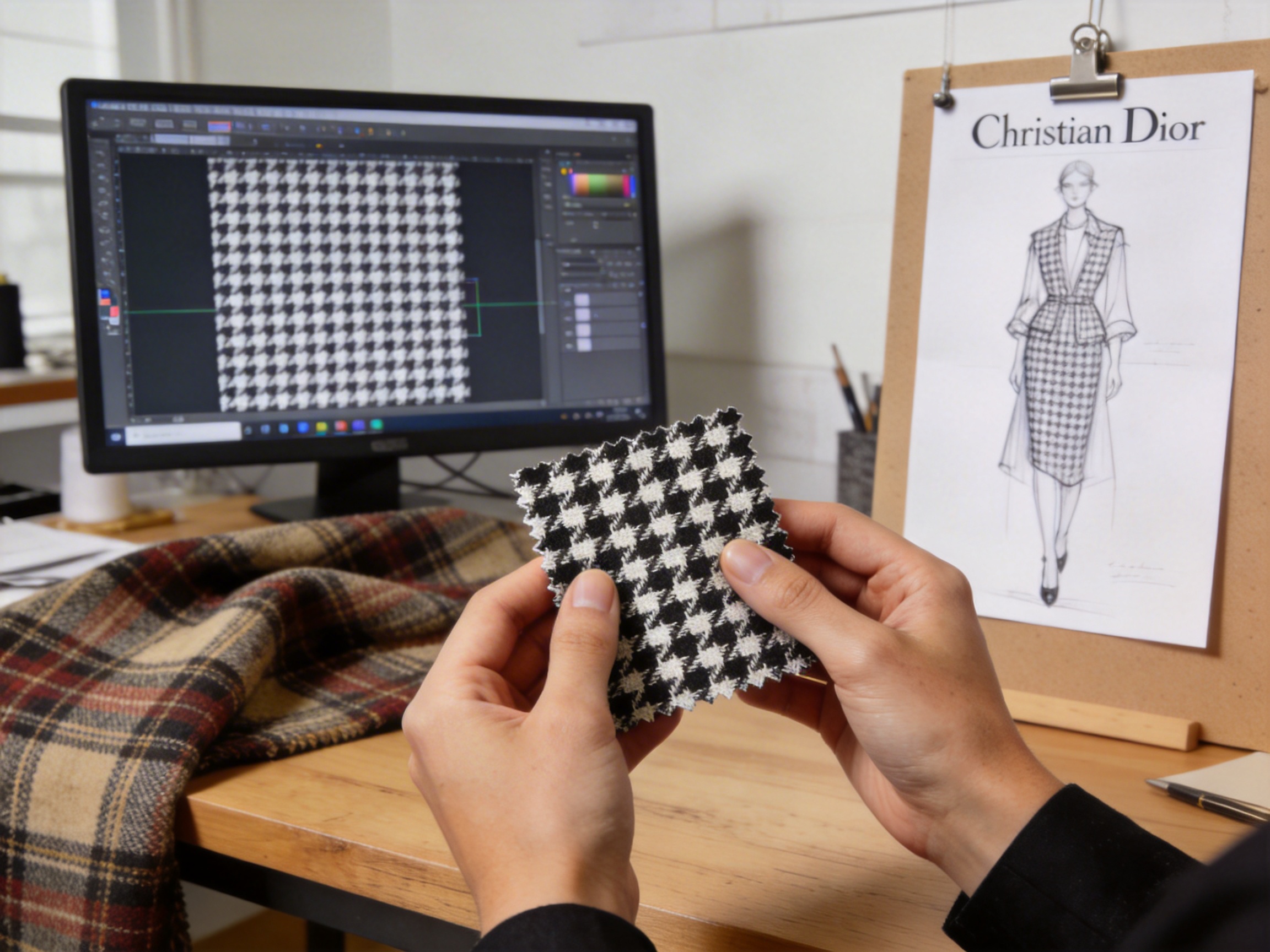
Houndstooth jacquard fabric is more than a textile—it’s a fusion of classic design heritage and cutting-edge manufacturing that has captivated fashion designers, interior decorators, and consumers alike for decades. Rooted in the iconic houndstooth pattern, which traces its origins to 19th-century Scottish tartans and later gained global fame through mid-20th-century fashion icons like Christian Dior, this fabric elevates the traditional houndstooth motif into a tactile, durable, and versatile material suitable for everything from high-end couture to luxury interior design. What sets modern houndstooth jacquard apart, however, is its integration of advanced technology and material science, which has allowed producers to enhance its performance, customizability, and appeal far beyond what traditional versions could offer. In this article, we explore the unique advantages of houndstooth jacquard fabric over its competitors, the sophisticated manufacturing processes that make it possible, its diverse applications across industries, and answers to common questions about this timeless textile.
What Is Houndstooth Jacquard Fabric?
At its core, houndstooth jacquard fabric is a woven textile characterized by two key elements: the distinctive houndstooth pattern and the jacquard weaving technique. The houndstooth pattern is a type of tessellation—an arrangement of repeated shapes that fit together without gaps or overlaps—consisting of small, broken checks or “teeth” that form a jagged, interlocking design. Traditionally, it was created using two colors (most commonly black and white), but modern iterations feature a wide range of color palettes, from muted neutrals to bold, vibrant hues.
The jacquard technique, invented by Joseph Marie Jacquard in 1801, is a method of weaving that uses a series of punched cards to control the loom’s warp threads, allowing for the creation of complex, intricate patterns without manual intervention. Unlike printed fabrics, where patterns are applied to the surface, jacquard weaving integrates the pattern into the fabric’s structure, resulting in a raised or recessed texture that adds depth and dimension. For houndstooth jacquard, this means the pattern is not just visible but tactile—you can feel the ridges and valleys of the design, making it far more visually and physically engaging than printed houndstooth alternatives.
Modern houndstooth jacquard fabrics are typically made from blended fibers, most commonly a combination of polyester and rayon (or viscose), often with a small percentage of spandex for added elasticity. This blend balances the best properties of each fiber: polyester provides strength, durability, and resistance to wrinkles and shrinkage; rayon adds softness, breathability, and a luxurious drape; and spandex enhances flexibility and shape retention. The result is a fabric that is both functional and aesthetically pleasing, suitable for a wide range of uses.
Core Advantages of Houndstooth Jacquard Fabric Over Competitors
To understand why houndstooth jacquard fabric stands out in the crowded textile market, it’s essential to compare it to its main competitors—printed houndstooth fabric, traditional woven houndstooth, and non-jacquard blended fabrics. Each of these alternatives has limitations that houndstooth jacquard addresses, making it a superior choice for many applications.
1. Unmatched 3D Textural Depth
The most striking advantage of houndstooth jacquard fabric is its 3D textural depth, which sets it apart from printed houndstooth fabric. Printed houndstooth is created by applying ink to the surface of a base fabric, resulting in a flat, two-dimensional pattern that can fade over time with washing or exposure to sunlight. In contrast, jacquard weaving embeds the pattern into the fabric’s structure, creating a raised (or “woven-in”) design that is both visible and tactile. This texture adds a sense of luxury and sophistication to garments and interiors, making them look and feel more high-end.
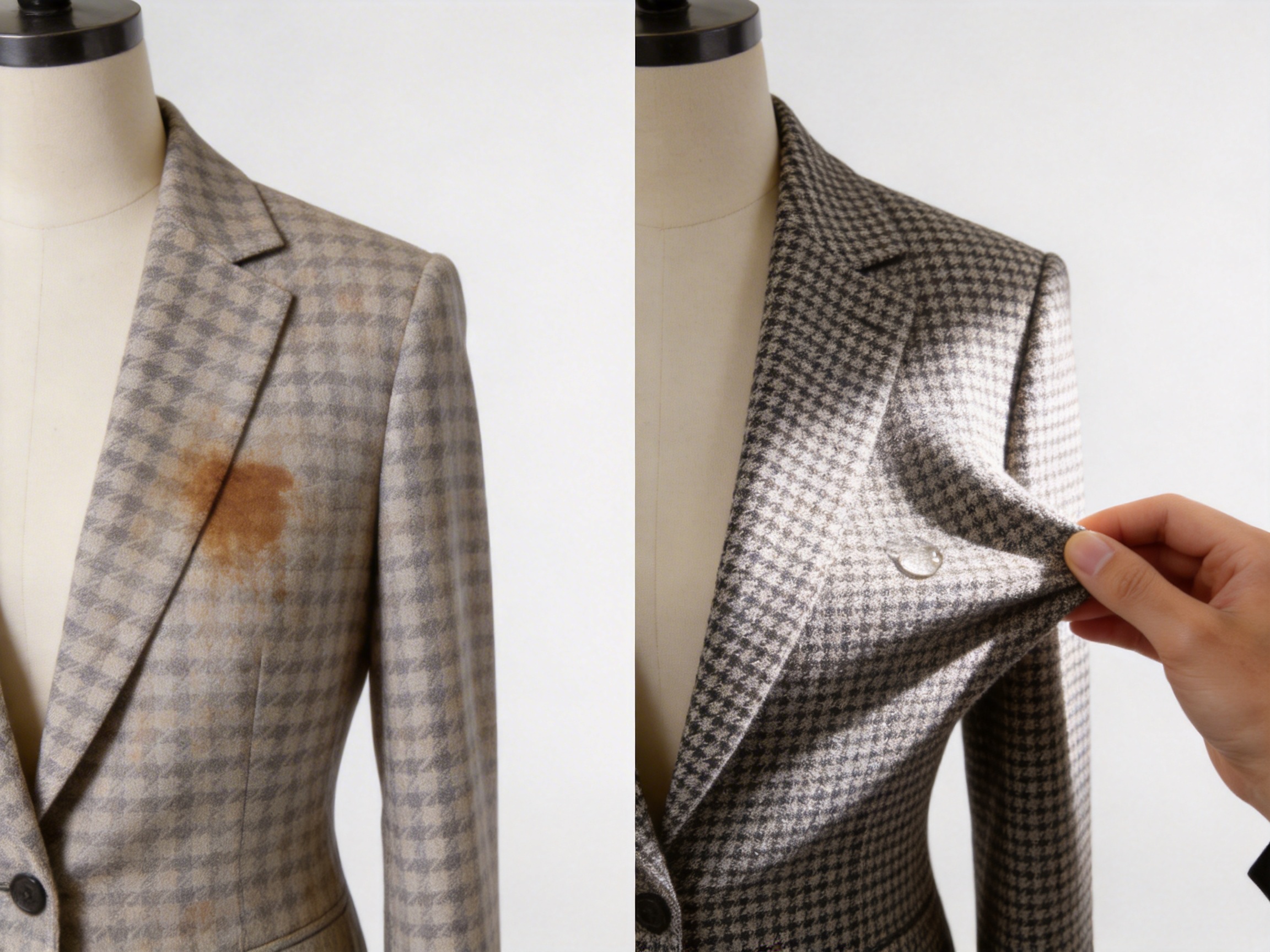
For example, a printed houndstooth blazer may look flat and generic, while a jacquard version will have a subtle, tactile pattern that catches the light and draws the eye. This difference is particularly noticeable in formal wear, where texture can elevate a simple design into a statement piece. Additionally, the 3D texture of jacquard fabric is more durable than printed patterns—since it’s part of the weave, it won’t chip, fade, or wear off with use, ensuring the fabric retains its appearance for years.
2. Superior Comfort and Elasticity
Modern houndstooth jacquard fabrics are engineered for comfort, thanks to their optimized fiber blends and advanced finishing processes. Unlike traditional woven houndstooth, which is often made from 100% wool or cotton and can be stiff, scratchy, or prone to wrinkling, the polyester-rayon-spandex blend used in contemporary jacquard versions offers a soft, breathable feel that is comfortable against the skin. The rayon component adds moisture-wicking properties, making the fabric suitable for year-round wear, while the spandex provides just the right amount of stretch—enough to allow for freedom of movement without losing its shape.
To illustrate, a 100% wool houndstooth suit may be warm but restrictive, requiring frequent dry cleaning to maintain its shape. In contrast, a polyester-rayon-spandex jacquard suit is lightweight, breathable, and resistant to wrinkles, making it ideal for busy professionals who need to look polished without constant maintenance. The elasticity of the fabric also means it will retain its fit over time, unlike non-elastic fabrics that can stretch out or sag with repeated wear.
3. Unprecedented Customizability
Another key advantage of houndstooth jacquard fabric is its high level of customizability, which is made possible by modern computerized weaving technology. Unlike traditional jacquard looms, which relied on punch cards and limited pattern options, today’s digital jacquard machines can produce almost any pattern, color, or thickness on demand. This means producers can customize houndstooth jacquard fabric to meet the specific needs of designers, retailers, or end-users—whether that’s a unique color palette, a modified houndstooth pattern (e.g., larger or smaller teeth), or a specific thickness for a particular application.
For example, a fashion designer creating a winter coat line may request a heavyweight houndstooth jacquard fabric with a water-resistant finish, while an interior decorator may want a lightweight, opaque version for roman blinds. Traditional woven houndstooth fabrics, by contrast, are often produced in limited styles and sizes, making it difficult to adapt them to niche needs. This customizability gives houndstooth jacquard a competitive edge in markets where personalization and uniqueness are highly valued.
4. Exceptional Durability and Versatility
Houndstooth jacquard fabric is also more durable and versatile than many of its competitors. The polyester component of the fiber blend makes it resistant to tears, abrasions, and stains, while the rayon adds a level of softness that doesn’t compromise strength. Additionally, the jacquard weaving technique creates a dense, tightly woven fabric that is less prone to fraying or pilling than looser weaves. This durability makes it suitable for high-traffic applications, such as upholstery, rugs, and workwear, where other fabrics might wear out quickly.
For instance, a houndstooth jacquard sofa upholstery will withstand the daily wear and tear of family use better than a printed cotton fabric, which can fade and pill over time. Similarly, a houndstooth jacquard work pant will resist stains and tears better than a 100% cotton pant, making it ideal for professionals in industries like construction or hospitality. The fabric’s versatility also extends to its care—many modern houndstooth jacquard fabrics are machine-washable (depending on the finish), which is a significant advantage over delicate fabrics like silk or wool that require dry cleaning.
Advanced Manufacturing Processes: Behind the Scenes of Houndstooth Jacquard Fabric
The exceptional quality of modern houndstooth jacquard fabric is the result of a series of sophisticated manufacturing processes, each designed to enhance its performance, appearance, and customizability. From fiber selection to finishing, every step is carefully controlled to ensure consistency and quality. Below, we break down the key processes involved in producing this fabric.
1. Fiber Selection and Blending
The first step in manufacturing houndstooth jacquard fabric is selecting and blending the right fibers. As mentioned earlier, the most common blend is polyester, rayon, and spandex, but the exact ratio can vary depending on the desired properties. For example, a fabric intended for upholstery may have a higher percentage of polyester (for durability), while a fabric for dresses may have more rayon (for softness) and spandex (for stretch).
The selection of fibers is critical—producers often source high-quality, imported fibers to ensure consistency and performance. For instance, polyester fibers may be chosen for their high tensile strength and color fastness, while rayon fibers are selected for their softness and ability to mimic the drape of silk. Spandex fibers are added in small amounts (usually 5-10%) to provide elasticity without compromising the fabric’s structure.
Once the fibers are selected, they are blended using specialized machines that mix them evenly. This blending process ensures that the properties of each fiber are distributed uniformly throughout the fabric, resulting in consistent texture and performance.
2. Computerized Jacquard Weaving
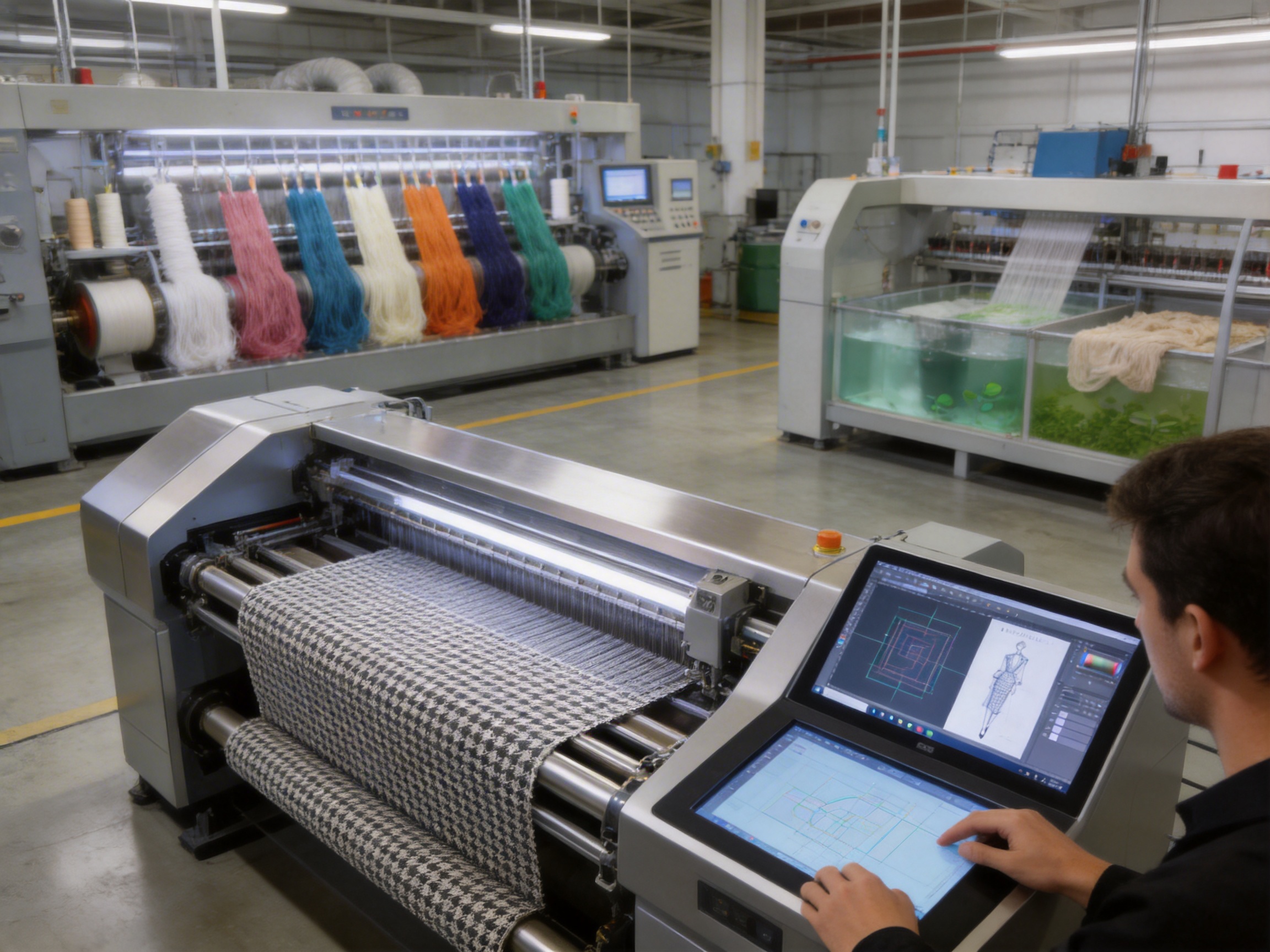
The heart of the manufacturing process is computerized jacquard weaving, which uses state-of-the-art imported machines to create the fabric’s distinctive pattern. Unlike traditional jacquard looms, which used punch cards to control the warp threads, modern digital machines use computer software to design and execute patterns with precision.
The process begins with a digital design of the houndstooth pattern, which is created using CAD (Computer-Aided Design) software. The design is then uploaded to the jacquard machine, which uses electronic signals to control the movement of hundreds or even thousands of warp threads. Each thread is raised or lowered independently, allowing for the creation of complex patterns that would be impossible to produce manually.
Imported jacquard machines are preferred for their reliability, precision, and speed. These machines can weave fabrics at high speeds without compromising quality, and they can handle a wide range of fiber types and yarn counts. For houndstooth jacquard fabric, this means the pattern is repeated perfectly across the entire length of the fabric, with no errors or inconsistencies.
3. Post-Dyeing and Finishing
After weaving, the fabric undergoes post-dyeing and finishing processes to enhance its appearance, performance, and durability. Post-dyeing is preferred over pre-dyeing (dying fibers before weaving) because it ensures even color distribution and better color fastness. The fabric is dyed using high-quality, eco-friendly dyes that are resistant to fading, washing, and sunlight.
Following dyeing, the fabric undergoes a series of finishing treatments, which vary depending on the intended application. Common treatments include:
- Softening: A chemical treatment that makes the fabric feel softer and more comfortable against the skin.
- Water Resistance: A coating or treatment that makes the fabric repel water, ideal for outerwear or upholstery.
- Stain Resistance: A treatment that prevents stains from setting in, making the fabric easier to clean.
- Heat Setting: A process that sets the fabric’s shape and elasticity, ensuring it retains its fit over time.
These finishing treatments are applied using specialized machines that ensure uniform coverage and consistency. For example, heat setting is done by passing the fabric through a series of heated rollers, which locks in the elasticity of the spandex fibers and prevents the fabric from shrinking or stretching out of shape.
4. Quality Control
Throughout the manufacturing process, strict quality control measures are in place to ensure the fabric meets the highest standards. This includes:
- Visual Inspection: Checking the fabric for any defects, such as uneven patterns, color inconsistencies, or frayed edges.
- Performance Testing: Testing the fabric for durability, elasticity, color fastness, and resistance to wrinkles and stains.
- Compliance Testing: Ensuring the fabric meets international standards for safety and environmental sustainability (e.g., OEKO-TEX® Standard 100).
Any fabric that fails to meet these standards is rejected, ensuring that only the highest quality houndstooth jacquard fabric reaches the market.
Diverse Applications Across Industries
Houndstooth jacquard fabric’s unique combination of aesthetic appeal, durability, and customizability makes it suitable for a wide range of applications across fashion, interior design, and other industries. Below, we explore some of the most common uses for this versatile textile.
1. Fashion
Fashion is the most common application for houndstooth jacquard fabric, thanks to its timeless pattern and modern performance. It is used to create a variety of garments, including:
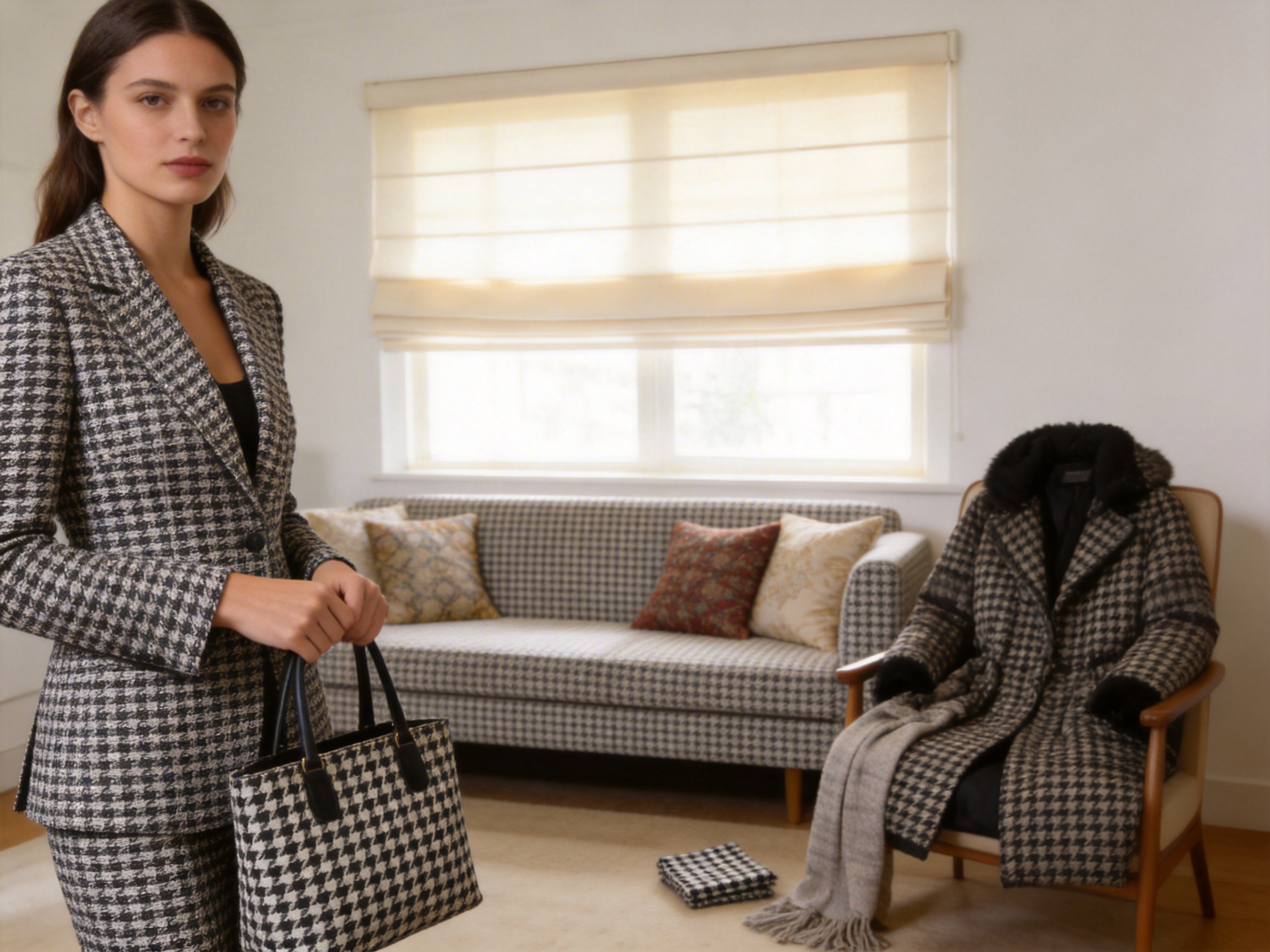
- Suits and Blazers: Houndstooth jacquard suits are a staple in formal wear, offering a classic yet modern look that is suitable for both men and women. The fabric’s elasticity and wrinkle resistance make it ideal for busy professionals who need to look polished.
- Coats and Jackets: Heavyweight houndstooth jacquard fabric is perfect for winter coats and jackets, providing warmth, durability, and style. The water-resistant finish option makes it suitable for rainy or snowy climates.
- Dresses and Skirts: Lightweight houndstooth jacquard fabric is used to create elegant dresses and skirts, with the 3D pattern adding a touch of sophistication. The fabric’s softness and drape make it comfortable to wear.
- Pants and Shorts: Durable houndstooth jacquard fabric is ideal for pants and shorts, offering resistance to stains and tears. The elasticity of the fabric ensures a comfortable fit.
2. Interior Design
Houndstooth jacquard fabric is also popular in interior design, where its durability and aesthetic appeal make it suitable for a variety of applications:
- Upholstery: Heavyweight houndstooth jacquard fabric is used to upholster sofas, chairs, and ottomans, providing a classic, timeless look that withstands daily wear and tear. The stain-resistant finish option makes it easy to clean.
- Drapes and Roman Blinds: Medium-weight houndstooth jacquard fabric is perfect for drapes and roman blinds, offering light filtering and privacy. The pattern consistency of jacquard weaving ensures that the pattern repeats perfectly across the entire window treatment.
- Rugs and Carpets: Heavyweight houndstooth jacquard fabric is used to create area rugs and carpets, adding texture and style to floors. The fabric’s durability makes it suitable for high-traffic areas.
- Pillows and Cushions: Lightweight houndstooth jacquard fabric is used to create decorative pillows and cushions, adding a touch of elegance to sofas, beds, and chairs.
3. Accessories
Houndstooth jacquard fabric is also used to create a variety of accessories, including:
- Bags and Purses: Durable houndstooth jacquard fabric is ideal for bags and purses, offering resistance to wear and tear. The pattern adds a unique, stylish touch.
- Scarves and Shawls: Lightweight houndstooth jacquard fabric is used to create scarves and shawls, providing warmth and style. The softness of the fabric makes it comfortable to wear.
- Belts and Ties: Narrow strips of houndstooth jacquard fabric are used to create belts and ties, adding a classic touch to formal wear.
To summarize the key applications of houndstooth jacquard fabric, we’ve created the following table:
| Application Category | Key Advantage Utilized | Suitable Fabric Variations |
|---|---|---|
| Women’s Tailored Suits | 3D Textural Depth & Elasticity | Medium thickness, matte finish, classic black-white houndstooth |
| Men’s Winter Coats | Durability & Customizable Thickness | Heavyweight, water-resistant finish, bold color combinations |
| Interior Upholstery (Sofas) | Stain Resistance & Wearability | Heavyweight, stain-proof treated, neutral houndstooth patterns |
| Fashion Accessories (Scarves) | Soft Hand Feel & Lightweight | Lightweight, silk-blend variant, pastel houndstooth |
| Roman Blinds | Light Filtering & Pattern Consistency | Medium-lightweight, opaque finish, geometric houndstooth variations |
Q&A Section: Common Questions About Houndstooth Jacquard Fabric
To help readers better understand houndstooth jacquard fabric, we’ve compiled answers to some of the most common questions about this textile:
Q: How does houndstooth jacquard fabric differ from printed houndstooth fabric?
A: The main difference lies in how the pattern is created. Printed houndstooth uses ink applied to the surface of a base fabric, resulting in a flat, 2D pattern that can fade over time. Houndstooth jacquard, however, weaves the pattern into the fabric’s structure using a jacquard loom, creating a 3D, tactile pattern that is durable and won’t fade. Additionally, jacquard fabric is typically made from a blended fiber mix that offers better comfort and elasticity than printed fabrics.
Q: Can houndstooth jacquard fabric be customized for bulk orders?
A: Yes! Modern computerized jacquard machines allow for full customization of houndstooth jacquard fabric. Producers can adjust the pattern size, color palette, fiber blend, and thickness to meet the specific needs of bulk orders. This makes it ideal for fashion brands, interior design firms, and retailers looking to create unique, branded products.
Q: Is houndstooth jacquard fabric suitable for outdoor use?
A: It depends on the finish. Heavyweight houndstooth jacquard fabric with a water-resistant or waterproof finish is suitable for outdoor applications like patio furniture upholstery or outdoor rugs. However, lighter-weight variants without these finishes may not be as durable in outdoor environments, as they can be damaged by rain, sunlight, or moisture.
Q: How should I care for houndstooth jacquard fabric garments?
A: Care instructions vary depending on the fiber blend and finish, but most modern houndstooth jacquard fabrics are machine-washable on a gentle cycle with cold water. Avoid using bleach or fabric softeners, as these can damage the fabric’s finish and elasticity. Hang or lay flat to dry, and iron on a low setting if necessary (always check the care label first).
Q: What makes the manufacturing process of houndstooth jacquard fabric stand out from competitors?
A: The key differentiators are the use of imported computerized jacquard machines (for precision and customizability), optimized fiber blends (for comfort and durability), and advanced post-dyeing and finishing treatments (for color fastness and performance). Additionally, strict quality control measures ensure that every batch of fabric meets the highest standards of quality and consistency.
References
1. Textile Institute of America. (2023). Jacquard Fabric Manufacturing: Modern Innovations and Quality Standards. New York: TIA Publications.
2. Smith, J. (2022). The History and Evolution of Houndstooth Patterns in Fashion and Interiors. London: Fashion History Press.
3. European Textile Federation. (2023). Blended Fiber Performance: Polyester-Rayon Combinations for Enhanced Comfort and Durability. Brussels: ETF Research Division.
4. Wang, L. (2021). Computerized Jacquard Weaving: Precision and Customization in Textile Production. Shanghai: China Textile University Press.
5. OEKO-TEX® International. (2022). Sustainable Textile Production: Eco-Friendly Dyeing and Finishing Processes. Zurich: OEKO-TEX® Publications.
6. Miller, A. (2020). The Art of Jacquard Weaving: From Traditional to Modern Applications. Boston: Textile Arts Press.