
NR Roman Fabric for Comfortable, Elegant, and Reliable Apparel Manufacturing
NR Roman Fabric, especially the cotton and viscose blended version, is a practical and versatile knitted fabric designed for apparel makers who need comfort, stability, softness, and style in one material. As part of the NR knitted fabric category, it brings together the breathable touch of cotton, the smooth drape of viscose, and the structural advantages of Roman knit construction. The result is a fabric that feels pleasant against the skin, supports attractive garment silhouettes, and remains friendly to cutting, sewing, and finishing operations.
In modern clothing production, fabric selection directly influences garment value. Designers and buyers do not only look for color or pattern; they also evaluate hand feel, recovery, elasticity, dimensional control, dyeing performance, durability, production consistency, and supplier reliability. NR Roman Fabric answers these requirements with a balanced profile. It is softer than many dense synthetic knits, more stable than many lightweight single jerseys, and more refined than ordinary casual knits. For brands that want to create dresses, blouses, skirts, cardigans, children’s wear, and fashionable everyday apparel, this fabric provides a dependable foundation.
Hangzhou Jinfeng Textile Co., Ltd. manufactures and supplies blended fabrics and DTY polyester yarn with integrated capabilities in research, production, processing, dyeing, finishing, and sales. With a production base in Xiaoshan District, Hangzhou, the company combines fabric development experience with manufacturing control. Its strengths in polyester, spandex, cotton blended fabrics, and DTY yarn production support a stable supply chain for customers at home and abroad. For NR Roman Fabric, this manufacturing background helps ensure that the material is not only attractive in sample form but also consistent in bulk production.
NR Roman Fabric(Cotton + Viscose)
Understanding NR Roman Fabric
NR Roman Fabric is a knitted fabric with a structure that gives it a compact, smooth, and stable surface. Roman knit is often valued because it has more body than many simple jersey knits while still retaining the comfort and flexibility associated with knitted textiles. In a cotton and viscose blend, the fabric gains a particularly appealing character: cotton contributes natural breathability and a familiar soft touch, while viscose improves smoothness, drape, color richness, and a graceful appearance.
The term “NR knitted fabric” identifies the product category in which this material belongs. Within this category, Roman fabric stands out for its suitability in garments that require a balance between form and movement. It is easy to sew, comfortable to wear, and adaptable to different clothing types. Compared with sheer lace knit fabrics, it offers more coverage and structure. Compared with very lightweight ITY fabrics, it can provide a more substantial hand and better garment shaping. Compared with plain cotton knit, it can appear more elegant and refined, especially after dyeing and finishing.
The cotton and viscose composition is important. Cotton is widely appreciated for comfort, moisture absorption, and skin-friendly wear. Viscose, made from regenerated cellulose, adds softness, fluidity, and a silk-like surface impression. When these fibers are engineered into a Roman knit, the final textile can satisfy both comfort-driven and design-driven needs. This makes it useful for brands that want garments suitable for office wear, casual fashion, travel clothing, seasonal layering, and family apparel.
Why Cotton and Viscose Make an Effective Blend
A good blended fabric is not simply a mixture of fibers; it is a planned material in which each component performs a role. Cotton and viscose are both cellulose-based fibers, but they behave differently in fabric. Cotton offers a natural, dry, breathable comfort that many consumers trust. Viscose offers smoothness, elegant drape, and excellent dye absorption. Together, they can produce fabric that is comfortable, attractive, and commercially flexible.
In NR Roman Fabric, cotton can help improve the fabric’s everyday wearability. It gives the wearer a sense of natural softness and comfort, especially in garments that contact the skin directly. Viscose contributes a smoother handle and helps the fabric fall more gracefully. For dresses and skirts, this drape is valuable because it supports flattering movement. For blouses and cardigans, it helps create a polished appearance without sacrificing comfort.
This fiber combination can also support color performance. Viscose is known for accepting dyes well, often producing deep and bright shades. Cotton also dyes effectively under suitable processes. With careful dyeing and finishing, cotton-viscose Roman fabric can be produced in a wide variety of colors for different apparel collections. This flexibility matters for buyers who need seasonal palettes, brand-specific tones, and repeatable color matching across production orders.
Roman Knit Structure and Garment Performance
The structure of Roman knit gives NR Roman Fabric one of its key advantages. Unlike very loose knits that may distort easily, Roman fabric has a relatively compact and stable construction. This improves its handling during cutting and sewing. It can reduce the risk of excessive curling at the edges, help maintain garment shape, and provide a more controlled production experience for apparel factories.
Garment makers often prefer fabrics that are easy to sew because production efficiency affects cost and delivery time. A fabric that slips, curls, stretches unpredictably, or shrinks excessively can slow down sewing lines and increase defect rates. NR Roman Fabric is positioned as an easy-to-sew knitted fabric, which makes it suitable for many types of clothing. It can be cut accurately, stitched smoothly, and finished into garments with clean lines.
The knitted construction also gives the fabric comfortable stretch. This stretch does not need to be extreme to be valuable. In many garments, moderate flexibility is enough to improve fit and mobility. Roman knit can support movement while maintaining a neat appearance. This is one reason why it is suitable for dresses, blouses, skirts, cardigans, and baby clothes. These applications require fabric that looks good, feels soft, and does not restrict the wearer.
Core Advantages Over Common Competing Fabrics
NR Roman Fabric competes with many other apparel materials, including single jersey, rib knit, interlock, ITY knit, lace knit, woven rayon fabrics, and polyester-heavy blended fabrics. Its competitive advantage lies in balance. It does not rely on only one feature. Instead, it brings together comfort, drape, stability, sewability, and visual refinement.
Compared with ordinary single jersey, NR Roman Fabric usually provides a more substantial and stable hand. Single jersey is popular because it is lightweight and economical, but it can curl at the edges and may distort more easily. Roman fabric is more controlled, making it better for garments that need structure and a polished look.
Compared with heavy synthetic knits, cotton-viscose Roman fabric can feel more breathable and skin-friendly. Polyester-heavy fabrics can be durable and easy to care for, but they may sometimes feel less natural against the skin. The cotton-viscose blend gives NR Roman Fabric a softer cellulose-based touch, which can improve consumer acceptance in comfort-focused apparel.
Compared with pure cotton knits, NR Roman Fabric with viscose can provide improved drape and a smoother surface. Pure cotton is comfortable, but it may lack the elegant fall desired in fashion garments. Viscose helps create a more fluid look, making the fabric suitable for feminine designs, relaxed tailoring, and layered garments.
Compared with lace knit, NR Roman Fabric offers more coverage, more practical durability for daily apparel, and broader use in mainstream clothing. Lace knit can be beautiful for overlays and decorative panels, but Roman fabric is more suitable as a main garment body fabric. It can be used in both casual and semi-formal styles.
Compared with some ITY materials, NR Roman Fabric has a different comfort profile. ITY is popular for dresses and travel garments because of stretch and smoothness, but cotton-viscose Roman fabric can deliver a more natural touch and a more structured body. For buyers who want softness without an overly synthetic feel, NR Roman Fabric can be a strong alternative.
Key Product Characteristics
| Characteristic | Performance Benefit | Value for Apparel Producers |
|---|---|---|
| Cotton and viscose blend | Soft, breathable, smooth, and comfortable | Suitable for skin-contact garments and everyday fashion |
| Roman knit construction | Stable structure with moderate stretch | Improves cutting, sewing, shape retention, and garment appearance |
| Good drape | Creates graceful movement and attractive silhouettes | Useful for dresses, skirts, blouses, and cardigans |
| Easy-to-sew quality | Reduces production difficulty compared with unstable knits | Supports efficient garment manufacturing and consistent workmanship |
| Color and pattern flexibility | Can be developed in various shades and designs | Supports seasonal collections and diverse market needs |
| Comfortable stretch | Allows movement without sacrificing neat appearance | Improves fit and wearer satisfaction |
Applications in Apparel Design
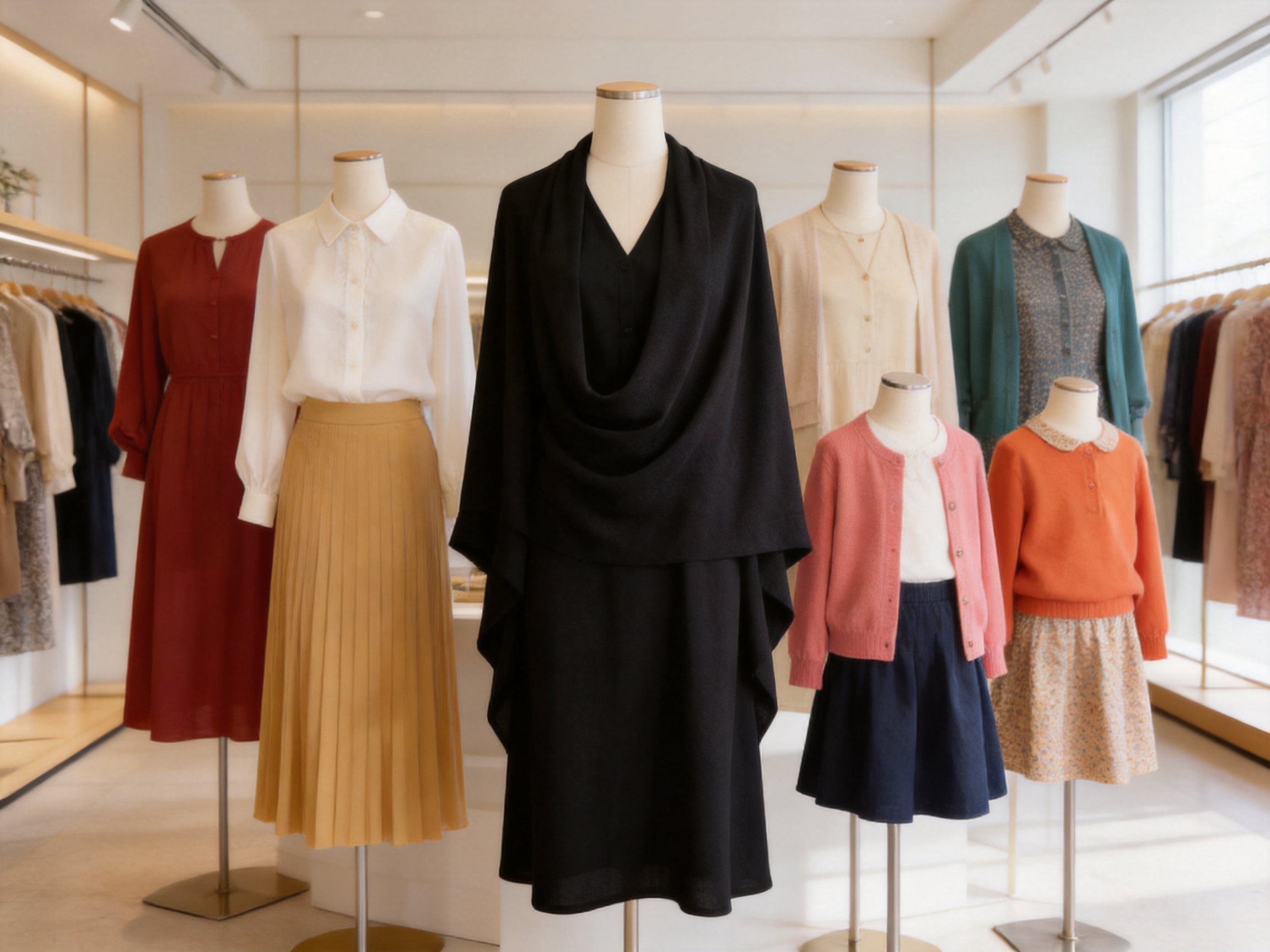
NR Roman Fabric can be used across a broad range of garments. For dresses, its drape and structure help create styles that are comfortable but not shapeless. Designers can use it for fitted dresses, A-line shapes, shift dresses, casual office dresses, and relaxed travel dresses. Because the fabric has body, it can support a clean silhouette. Because it has softness and stretch, it remains comfortable during movement.
For blouses and tops, the fabric offers a smooth and refined surface. It can be used for simple crew-neck tops, soft draped blouses, tunic styles, and layered fashion pieces. The cotton-viscose blend improves comfort, while the Roman knit structure provides better shape than many thin knits. This helps the final garment look more finished and valuable.
For skirts, NR Roman Fabric can create movement without excessive transparency. The fabric can be suitable for straight skirts, pull-on skirts, panel skirts, and casual fashion skirts. Its stretch improves comfort at the waist and hips, while its stable construction supports reliable garment production.
For cardigans, the fabric provides comfort and layering performance. A cardigan must feel soft and move well, but it also needs enough structure to hang properly. NR Roman Fabric can deliver this balance, especially when finished with careful control of shrinkage, hand feel, and fabric width.
For baby clothes and children’s wear, softness and comfort are essential. Cotton-viscose Roman fabric can be used in selected designs where a smooth hand, moderate stretch, and easy sewing are needed. Producers should always select specifications and finishing standards appropriate for children’s garments, but the fabric’s comfort characteristics make it relevant for this market.
Comfort as a Commercial Advantage
Comfort is one of the strongest selling points in apparel. Consumers may be attracted by design, but they continue wearing and repurchasing garments that feel good. NR Roman Fabric supports comfort in several ways. Cotton contributes breathability and moisture absorption. Viscose adds softness and smoothness. The knitted structure allows flexibility and movement. Together, these features create a fabric that can be worn for long periods without feeling stiff or restrictive.
In competitive apparel markets, comfort is not only a personal preference; it is a product strategy. Workwear-inspired fashion, home-to-office clothing, travel apparel, and relaxed lifestyle garments all require fabrics that look presentable while feeling easy to wear. NR Roman Fabric fits this direction well. It can be styled into garments that are more polished than basic loungewear but more comfortable than rigid woven clothing.
Compared with woven fabrics, Roman knit can offer better stretch and freedom of movement. Compared with thin, casual jersey, it can offer a more refined appearance. This middle position gives brands the ability to develop garments for consumers who want both elegance and practicality. The fabric can help brands reduce the gap between comfort clothing and fashion clothing.
Appearance, Texture, and Design Flexibility
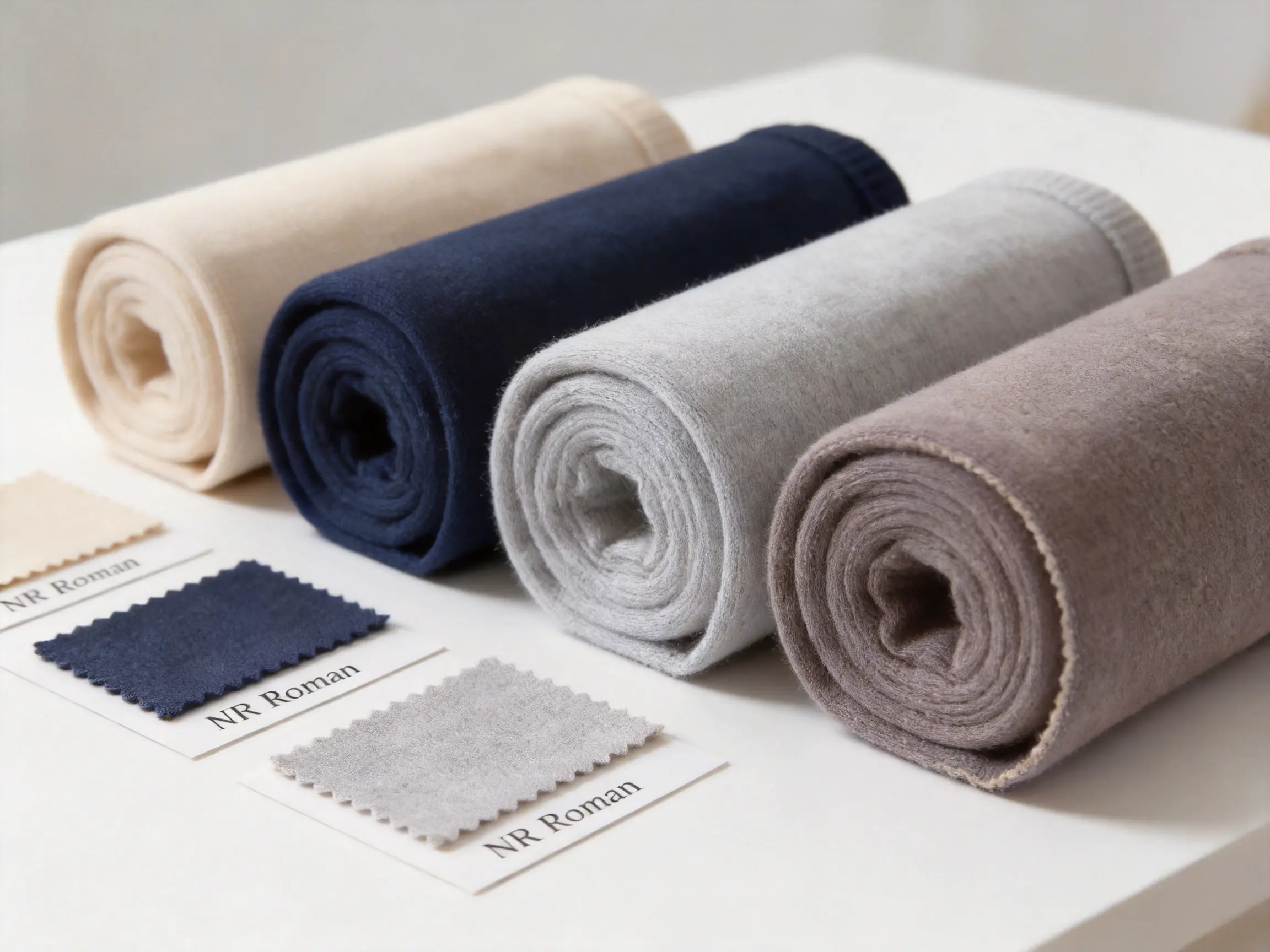
NR Roman Fabric has a surface quality that can work well in many design directions. Depending on yarn selection, knitting settings, dyeing, and finishing, the fabric can be developed with different hand feels and visual effects. It can be produced in various colors, and the product information indicates availability in many patterns. This provides flexibility for fashion development, private-label programs, and seasonal merchandise planning.
The fabric’s limited sheen and smoothness can create a refined look without becoming overly glossy. This matters for brands seeking a fabric that appears elegant but remains approachable. Some high-sheen synthetics can look artificial in certain markets, while rough natural fabrics may look too casual. Cotton-viscose Roman fabric can occupy a balanced aesthetic space: soft, clean, comfortable, and refined.
Pattern development also expands its usefulness. Solid colors are essential for basics and repeat programs. Printed or patterned versions can be used for fashion collections. Textured or jacquard-inspired developments can provide more visual depth. When combined with the manufacturer’s broader experience in knitted jacquard fabric, blended fabrics, and DTY-related textile production, NR Roman Fabric can be adapted to changing market needs.
Manufacturing Strengths Behind the Fabric
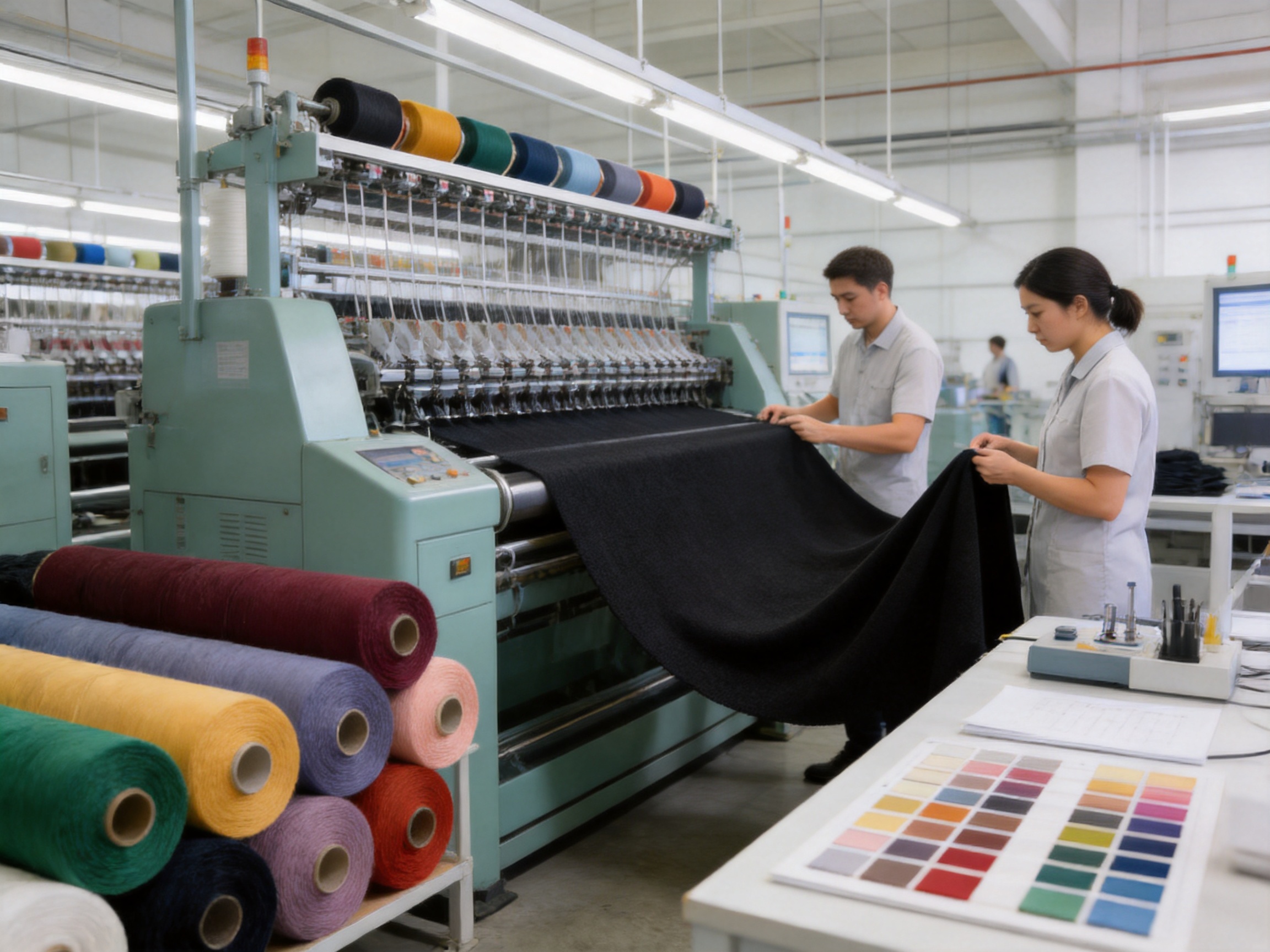
A fabric’s quality depends not only on fiber content and structure but also on the manufacturing system behind it. Hangzhou Jinfeng Textile Co., Ltd. operates with integrated capabilities covering research and development, production, dyeing, finishing, and sales. This integration is significant because each stage affects the final result. When these stages are coordinated, the supplier can better control fabric hand, color, width, weight, shrinkage, and appearance.
The company is located in an established textile region in Hangzhou, Zhejiang Province, and operates a production base with a plant area of about 18,000 square meters. Its business includes production and processing of blended fabrics such as polyester and spandex fabrics, as well as DTY polyester yarn production, processing, and sales. This combination gives the company a broad understanding of yarn behavior, knitting performance, fabric processing, and market requirements.
For NR Roman Fabric, advanced manufacturing begins with material planning. The selection of cotton and viscose quality, yarn count, yarn evenness, and blending approach influence the final fabric. A reliable supplier must manage these elements carefully to avoid inconsistent dyeing, uneven surface texture, excessive pilling, unstable width, or unpredictable shrinkage.
Knitting control is another important stage. Roman fabric requires suitable machine settings, stitch density, tension control, and inspection. If knitting tension is inconsistent, the fabric may show barré, uneven loops, or unstable dimensions. A capable manufacturer uses production experience and process monitoring to reduce such problems and maintain repeatability from order to order.
Dyeing and finishing are equally critical. Cotton and viscose require appropriate dyeing conditions to achieve consistent color and desirable hand feel. Poorly controlled dyeing can cause shade variation, fabric damage, harsh hand, or dimensional instability. Through post-dyeing and finishing capabilities, the manufacturer can adjust softness, appearance, width, and shrinkage to match customer requirements.
Research and Development for Market-Oriented Fabric
The company’s integrated research and development approach is a major strength for customers who need more than standard fabric. Apparel markets change quickly, and buyers often require custom colors, weight adjustments, special hand feel, improved recovery, or design variations. R&D capability allows the supplier to respond to these needs instead of only offering fixed items.
For NR Roman Fabric, development may involve adjusting the cotton-viscose ratio, selecting different yarn specifications, changing knitting density, refining finishing processes, or creating new colors and patterns. These changes can influence drape, softness, thickness, stability, and cost. By working with customers, the manufacturer can recommend suitable specifications for dresses, blouses, skirts, cardigans, and other garments.
R&D also supports problem-solving. If a customer needs better dimensional stability, the finishing process can be reviewed. If a garment style requires more body, knitting density or fabric weight may be adjusted. If a collection needs softer hand feel, finishing auxiliaries and mechanical finishing can be optimized. This responsiveness gives NR Roman Fabric an advantage over commodity fabrics that are sold without technical support.
Quality Control and Consistency
Consistency is one of the most important requirements for wholesale fabric buyers. A sample may look excellent, but if bulk production differs in shade, hand feel, width, or weight, garment production becomes difficult. NR Roman Fabric benefits from a manufacturing system that can coordinate production, processing, dyeing, finishing, and sales communication.
Quality control should begin before knitting, with yarn inspection and material confirmation. During knitting, fabric appearance, loop formation, and defect rates must be monitored. After dyeing, shade matching, color fastness, and fabric hand should be checked. During finishing, width, weight, shrinkage, and surface appearance require control. Before shipment, final inspection can identify defects and help ensure that the delivered fabric matches customer expectations.
Such process discipline provides advantages over competitors that rely on fragmented outsourcing without strong coordination. When yarn supply, fabric processing, dyeing, and finishing are disconnected, communication gaps can lead to unstable quality. An integrated textile enterprise can respond faster, trace issues more effectively, and maintain clearer responsibility throughout production.
Advanced Dyeing and Finishing Value
Dyeing and finishing transform knitted fabric from a greige material into a finished textile ready for garment production. For cotton-viscose Roman fabric, finishing is especially important because both comfort and appearance depend on it. A well-finished fabric should feel smooth, show consistent color, maintain reasonable dimensional stability, and present a clean surface.
Color development is essential for fashion apparel. NR Roman Fabric can be offered in many colors, making it valuable for seasonal programs. Deep shades, soft neutrals, classic black, elegant navy, warm earth tones, and bright fashion colors can all be important depending on the target market. Reliable dyeing helps brands maintain visual consistency across garments and repeat orders.
Finishing can also adjust the tactile profile. Some customers may prefer a soft, flowing hand for dresses, while others may want a slightly firmer body for skirts or cardigans. Finishing processes can influence these effects through controlled drying, setting, softening, and mechanical treatment. The ability to tailor hand feel gives the fabric a broader commercial range.
Shrinkage control is another major concern. Knitted fabrics can change dimensions after washing if they are not properly processed. While final performance depends on exact specifications and care conditions, a responsible manufacturing process aims to stabilize the fabric as much as possible before garment production. This helps reduce size variation and customer complaints.
Supply Chain Advantages for Buyers
Wholesale buyers and garment manufacturers need suppliers who can support stable production, clear communication, and timely delivery. Hangzhou Jinfeng Textile Co., Ltd. operates as a self-employed export company integrating R&D, production, and sales. This structure can simplify sourcing because customers can communicate with a supplier that understands both manufacturing and export requirements.
The company’s broader product categories, including polyester rayon fabric, knitted jacquard fabric, NTR knitted fabric, NR knitted fabric, and slightly intermingled draw textured yarn, show a diverse textile foundation. This diversity helps customers source related materials from a supplier with experience in multiple fabric types and yarn products. For apparel brands, this can reduce supplier management complexity and support fabric development across different collections.
Another advantage is the company’s focus on cooperation and win-win business philosophy. In fabric sourcing, long-term cooperation is often more valuable than one-time transactions. A fabric supplier that understands customer requirements over time can help improve product development, reduce repeated testing, and respond to market changes more quickly.
Why NR Roman Fabric Is Suitable for Modern Fashion Trends
Modern fashion increasingly values comfort, versatility, and easy styling. Consumers want clothing that can transition from home to office, from casual outings to relaxed social occasions, and from one season to another through layering. NR Roman Fabric supports these trends because it combines wearability with a polished appearance.
For women’s wear, it can help create soft tailoring, comfortable dresses, and elegant separates. For casual fashion, it provides a more refined option than basic jersey. For travel-friendly clothing, its stretch and drape support comfort during movement. For children’s apparel, its softness and sewability can be useful in suitable styles. For private-label brands, its adaptability in color and pattern makes it practical for multiple product lines.
Minimalist fashion also benefits from fabrics with clean surfaces and good drape. When garment designs are simple, fabric quality becomes more visible. NR Roman Fabric can support simple silhouettes by providing a smooth hand and stable structure. At the same time, patterned or color-rich developments can serve more decorative fashion directions.
Comparison With Alternative Materials
NR Roman Fabric vs. Single Jersey
Single jersey is common, affordable, and comfortable, but it can be less stable. It often curls at cut edges and may not provide enough body for structured garments. NR Roman Fabric offers improved stability and a more substantial feel, which can reduce sewing difficulty and improve finished garment appearance.
NR Roman Fabric vs. Interlock
Interlock is soft and stable, but it can sometimes feel thicker or less fluid depending on specifications. NR Roman Fabric can provide a different balance of body and drape, making it suitable for garments that need elegance as well as comfort. Its cotton-viscose blend also contributes a smooth, refined hand.
NR Roman Fabric vs. Polyester-Heavy Knits
Polyester-heavy knits can be durable and easy to maintain, but they may not provide the same natural comfort perception as cellulose-based blends. NR Roman Fabric offers a softer cotton-viscose touch, making it appealing for brands targeting comfort-conscious consumers.
NR Roman Fabric vs. Woven Rayon
Woven rayon fabrics can drape beautifully, but they do not stretch in the same way unless engineered with elastic fibers or special construction. NR Roman Fabric provides knitted flexibility while maintaining viscose-enhanced drape. This makes it comfortable for fitted or semi-fitted garments.
NR Roman Fabric vs. Lace Knit
Lace knit is decorative and useful for overlays, but it is usually not the best choice for full-coverage everyday garments. NR Roman Fabric offers broader practicality as a main fabric while still supporting attractive fashion design through color and pattern options.
Sewing and Garment Production Considerations
NR Roman Fabric is known as an easy-to-sew fabric, but professional garment production should still follow good knitwear practices. Needles, thread, stitch type, cutting methods, and seam finishing all influence the final garment. Ballpoint or stretch needles may be suitable depending on the exact fabric specification. Sewing tension should be adjusted to prevent seam distortion or skipped stitches.
Because the fabric has stretch, pattern makers should consider ease and recovery. Garments can be designed with comfort fit, but excessive negative ease may not be appropriate unless the specific fabric has enough stretch and recovery for that purpose. For dresses and skirts, lining decisions should consider drape, opacity, and intended market. For cardigans, hem and edge finishing should preserve the fabric’s natural fall.
Pre-production testing is recommended. Garment makers should test shrinkage, seam strength, spirality, color fastness, pilling resistance, and washing performance according to the intended care label. By working with a capable fabric supplier, customers can define standards and confirm that the material is suitable for their garment program.
Care, Durability, and End-User Satisfaction
End-user satisfaction depends on how a garment performs after purchase. A fabric may look good in the store, but consumers judge it through repeated wearing and laundering. NR Roman Fabric’s cotton-viscose comfort can support repeat wear, while proper manufacturing and finishing help maintain appearance.
Care instructions should be determined based on the final fabric specification, dyeing process, finishing method, and garment construction. In general, cotton and viscose blends benefit from gentle washing, appropriate drying, and avoidance of harsh treatment. Apparel brands should conduct washing tests before finalizing care labels.
Durability is not only about fiber strength. It also includes seam performance, dimensional stability, color retention, pilling behavior, and surface appearance. The compact Roman knit structure can contribute to practical durability, while the manufacturer’s finishing control can further improve commercial performance. Buyers should specify testing standards based on market requirements.
Environmental and Practical Material Considerations
Textile sustainability is increasingly important, and fabric selection must consider comfort, durability, production efficiency, and responsible development. Cotton and viscose are both widely used cellulose-based fibers. Their environmental profile depends on sourcing, processing, dyeing, finishing, and product lifespan. A fabric that lasts longer, sews efficiently, and meets consumer needs can help reduce waste caused by rejected garments or short-lived products.
NR Roman Fabric’s production advantages can contribute to practical efficiency. If a fabric cuts and sews well, garment factories can reduce defect rates. If color and width remain consistent, production planning becomes more reliable. If consumers like the comfort and appearance, garments may remain in use longer. These practical benefits are important parts of responsible textile development.
Manufacturing integration also supports better process management. When production, dyeing, finishing, and sales are coordinated, it becomes easier to track quality issues, optimize processes, and respond to customer standards. Buyers with specific compliance or testing requirements can communicate them during development so the fabric can be produced for the intended market.
Company Strengths That Support Product Reliability
Hangzhou Jinfeng Textile Co., Ltd. is positioned as a manufacturer and supplier of blended fabrics and DTY polyester yarn. Its location in Xiaoshan District, Hangzhou, places it within a region known for textile activity and industrial support. The company’s plant area and integrated operations provide a practical base for fabric production and customer service.
The company’s experience in polyester, spandex, blended fabrics, and DTY yarn production creates technical breadth. Even when producing cotton-viscose NR Roman Fabric, knowledge of yarn behavior, knitting performance, and finishing remains highly relevant. This broad textile background helps the company understand different customer requirements and develop fabrics for varied applications.
Its export-oriented structure is also important. International customers often require clear product communication, stable bulk quality, documentation support, and responsive service. A supplier that integrates R&D, production, and sales can provide more direct answers than a trading structure with limited manufacturing control. This is particularly valuable for customized fabric development and repeat orders.
How NR Roman Fabric Helps Brands Build Better Collections
Brands need fabrics that can support multiple styles without causing production complexity. NR Roman Fabric is useful because it can be applied across different garment categories. A brand can use it for a dress program, then adapt related colors for tops, skirts, or cardigans. This creates collection harmony and can simplify sourcing.
For capsule wardrobes, the fabric can support coordinated pieces. A soft top, a comfortable skirt, and a lightweight cardigan made from compatible Roman fabric can create a complete outfit concept. For seasonal collections, the supplier can develop colors and patterns aligned with trend forecasts. For basic programs, stable repeat colors can support long-term sales.
Private-label buyers can benefit from the fabric’s balanced cost-performance profile. While the exact price depends on specifications, cotton-viscose Roman fabric can deliver a higher perceived value than very basic knits because of its soft hand, drape, and structure. This can help retailers offer garments that feel better to consumers without moving into overly expensive fabric categories.
Technical Development Possibilities
NR Roman Fabric can be developed in different directions depending on customer needs. A lighter specification may suit blouses, tops, or soft dresses. A medium-weight specification may suit skirts, structured dresses, and cardigans. Patterned versions can be used for fashion items, while solid colors can serve basics and uniforms.
Finishing can create variations in softness, surface smoothness, and garment behavior. Customers may request a soft-touch finish for comfort products, a cleaner finish for office-ready garments, or a more stable finish for structured styles. With integrated dyeing and finishing capability, the manufacturer can adjust processes to meet these needs within technical limits.
Color development can also be customized. Fashion brands often require exact shades, and repeatability is essential. Cotton-viscose blends require careful dyeing control, but when properly processed, they can achieve attractive colors. Early communication about color standards, light source requirements, and tolerance levels helps ensure successful bulk production.
Risk Reduction Through Supplier Collaboration
Fabric sourcing always involves risk. Common risks include shade variation, delayed delivery, unstable shrinkage, inconsistent hand feel, and unexpected sewing problems. Collaborative supplier relationships reduce these risks. When buyers provide clear specifications and suppliers provide technical feedback, problems can be addressed before bulk production.
For NR Roman Fabric, collaboration may include sample evaluation, lab dip approval, strike-off review for patterns, shrinkage testing, garment trial production, and bulk inspection. The manufacturer’s integrated structure can support these steps by connecting development, production, dyeing, finishing, and sales teams. This creates a more complete service process.
Compared with competitors that only sell ready stock without customization or technical support, a manufacturer with R&D and processing capability can offer stronger long-term value. The buyer gains not only fabric but also production knowledge, adjustment options, and quality communication.
Q&A: Common Questions About NR Roman Fabric
What is NR Roman Fabric?
NR Roman Fabric is a knitted fabric in the NR knitted fabric category. The cotton and viscose version combines the comfort of cotton, the smooth drape of viscose, and the stable structure of Roman knit construction. It is suitable for many apparel applications, including dresses, blouses, skirts, cardigans, and selected children’s garments.
Why is cotton and viscose a good blend for this fabric?
Cotton adds breathability, natural comfort, and a familiar soft touch. Viscose adds smoothness, elegant drape, and strong color expression. Together, they create a fabric that feels comfortable and looks refined, making it useful for both casual and fashion garments.
How does Roman knit differ from ordinary jersey?
Roman knit is generally more stable and structured than basic single jersey. It can reduce cutting and sewing difficulties and helps garments maintain a cleaner appearance. Single jersey is useful for lightweight casual garments, but Roman fabric often provides a more polished result.
Is NR Roman Fabric easy to sew?
Yes, it is considered an easy-to-sew knitted fabric. Its stable construction helps during cutting and sewing. However, garment factories should still use appropriate needles, stitch settings, and pre-production testing to ensure the best results.
What garments can be made from NR Roman Fabric?
It can be used for dresses, blouses, skirts, cardigans, tops, tunics, and selected baby or children’s clothing. Its balance of softness, drape, stretch, and structure makes it suitable for many styles.
Does the fabric have stretch?
As a knitted fabric, it has comfortable stretch. The exact stretch depends on the specification, yarn, and finishing. Its stretch supports movement and fit while maintaining a neat garment appearance.
How does it compare with polyester-heavy fabric?
Polyester-heavy fabrics can be strong and easy to care for, but they may feel less natural. Cotton-viscose NR Roman Fabric provides a softer cellulose-based touch and can be more appealing for comfort-focused garments.
Can the fabric be produced in different colors and patterns?
Yes, the fabric can be developed in a variety of colors and may be available in many patterns. Dyeing and finishing capability supports seasonal color development and customized apparel programs.
Why is supplier manufacturing capability important?
Manufacturing capability affects fabric consistency, color accuracy, hand feel, shrinkage, and delivery reliability. A supplier with integrated R&D, production, dyeing, finishing, and sales can provide better control and faster problem-solving than a supplier with limited production involvement.
What makes this fabric advantageous for apparel brands?
It offers a balanced combination of comfort, elegant drape, stable sewing performance, versatile applications, and development flexibility. These advantages help brands create garments that look good, feel comfortable, and perform reliably in production.
Conclusion
NR Roman Fabric made with cotton and viscose is a strong choice for apparel producers who need a fabric that balances comfort, structure, softness, and fashion appeal. Its Roman knit construction provides better stability than many basic knits, while its cotton-viscose blend creates a pleasant hand and graceful drape. This combination makes it suitable for dresses, blouses, skirts, cardigans, tops, and other garments that require both style and wearability.
Its advantages over competing fabrics are clear. It is more structured than ordinary single jersey, more natural-feeling than many polyester-heavy knits, more practical as a main garment fabric than lace knit, and more flexible than many woven rayon fabrics. For garment factories, its easy-to-sew nature supports efficient production. For brands, its comfort and appearance support stronger consumer satisfaction. For buyers, its color and pattern flexibility support seasonal and customized collections.
The manufacturing strength behind the product further increases its value. Hangzhou Jinfeng Textile Co., Ltd. integrates R&D, production, dyeing, finishing, and sales, providing a solid foundation for stable quality and responsive service. Its experience in blended fabrics and DTY polyester yarn production supports a broader understanding of textile performance and market requirements. Through careful material planning, knitting control, dyeing, finishing, and quality inspection, NR Roman Fabric can be developed into a reliable material for modern apparel manufacturing.
In a market where consumers expect clothing to be comfortable, attractive, and practical, NR Roman Fabric offers a well-balanced solution. It gives designers creative flexibility, helps garment manufacturers improve production consistency, and allows brands to deliver garments with a refined feel and everyday usability. For buyers seeking a dependable cotton-viscose knitted fabric with competitive advantages, NR Roman Fabric is a material worth serious consideration.
References
Cook, J. Gordon. Handbook of Textile Fibres: Natural Fibres. Woodhead Publishing.
Goswami, B. C., Martindale, J. G., and Scardino, F. L. Textile Yarns: Technology, Structure, and Applications. Wiley-Interscience.
Spencer, David J. Knitting Technology: A Comprehensive Handbook and Practical Guide. Woodhead Publishing.
Kadolph, Sara J. Textiles. Pearson.
Collier, Billie J., and Epps, Helen H. Textile Testing and Analysis. Pearson.
Sinclair, Rose. Textiles and Fashion: Materials, Design and Technology. Woodhead Publishing.