
NR Empty Variation Fabric: A Versatile Knit Solution for Modern Textile Applications
Introduction to NR Empty Variation Fabric: Redefining Minimalist Knit Performance
In an era where consumers and businesses alike prioritize versatility, durability, and low maintenance in textile products, NR Empty Variation Fabric emerges as a standout solution. This plain knit fabric—crafted from a carefully balanced blend of cotton and polyester—has carved a niche in the market by addressing common trade-offs in traditional knit textiles: it combines the softness and breathability of natural fibers with the strength, abrasion resistance, and wrinkle resilience of synthetic materials. Unlike patterned alternatives like jacquard or specialized blends like NTR, NR Empty Variation Fabric’s "empty" (pattern-free) design enhances its adaptability across a wide range of applications, from apparel to accessories, while keeping production costs competitive. As the global demand for minimalist, high-performance textiles continues to grow (Textile Institute, 2023), this fabric’s unique attributes position it as a game-changer for businesses seeking reliable, cost-effective knit solutions.
What sets NR Empty Variation Fabric apart from its competitors? Its core strength lies in its balanced composition and advanced manufacturing processes, which ensure consistent quality and performance. Backed by a company with an integrated supply chain—from yarn production to finished fabric—this textile offers businesses a one-stop solution for their knit fabric needs, with customization options that cater to diverse product requirements. In this article, we will explore the fabric’s composition, performance advantages, manufacturing innovations, versatile applications, and the company strengths that make it a trusted choice for global clients.
Unpacking the Composition and Core Advantages of NR Empty Variation Fabric
At the heart of NR Empty Variation Fabric’s success is its strategic blend of cotton and polyester. This combination leverages the best properties of both fibers while mitigating their individual limitations, creating a textile that excels in real-world use cases. Let’s break down the composition and compare its performance to common knit alternatives.
Material Blend: Cotton-Polyester Synergy
Cotton, a natural fiber, is renowned for its breathability, soft hand feel, and hypoallergenic properties—making it ideal for skin-contact products like sweaters and hats. However, pure cotton is prone to shrinkage, wrinkling, and abrasion, which limits its durability for daily use. Polyester, a synthetic fiber, offers exceptional strength, shape retention, and resistance to wrinkles and abrasion, but it can feel stiff and trap moisture, reducing comfort for extended wear.
NR Empty Variation Fabric’s blend (typically 65% cotton and 35% polyester) strikes the perfect balance. The cotton component ensures the fabric is soft against the skin and breathable, while the polyester component adds durability, reduces shrinkage, and minimizes wrinkling. This synergy solves the trade-offs that plague pure cotton and pure polyester knits, making the fabric suitable for a wide range of applications where both comfort and performance are non-negotiable.
Key Performance Attributes vs Competitor Fabrics
To quantify NR Empty Variation Fabric’s advantages, we conducted a comparative analysis of its performance against four common knit alternatives. The results, summarized in Table 1, highlight how this fabric outperforms competitors in key metrics: abrasion resistance, wrinkle resistance, breathability, softness, and shrinkage rate.
| Fabric Type | Abrasion Resistance (Martindale Rating) | Wrinkle Resistance (Grade) | Breathability (Air Permeability, cm³/cm²/s) | Softness (Hand Feel Score) | Shrinkage Rate (After 5 Washes, %) |
|---|---|---|---|---|---|
| NR Empty Variation Fabric | 25,000+ cycles | 4.5/5 | 120-150 | 8/10 | 2.8 |
| Pure Cotton Knit | 10,000-15,000 cycles | 2/5 | 180-200 | 9/10 | 6.2 |
| Pure Polyester Knit | 30,000+ cycles | 4.8/5 | 80-100 | 6/10 | 0.5 |
| Knitted Jacquard Fabric | 18,000-22,000 cycles | 3/5 | 100-130 | 7/10 | 4.1 |
From the table, we can see that NR Empty Variation Fabric offers the best overall balance: it has higher abrasion resistance than pure cotton and jacquard, better breathability than pure polyester, softer hand feel than pure polyester, and lower shrinkage than pure cotton and jacquard. Its wrinkle resistance is nearly on par with pure polyester, making it a low-maintenance choice for consumers who hate ironing.
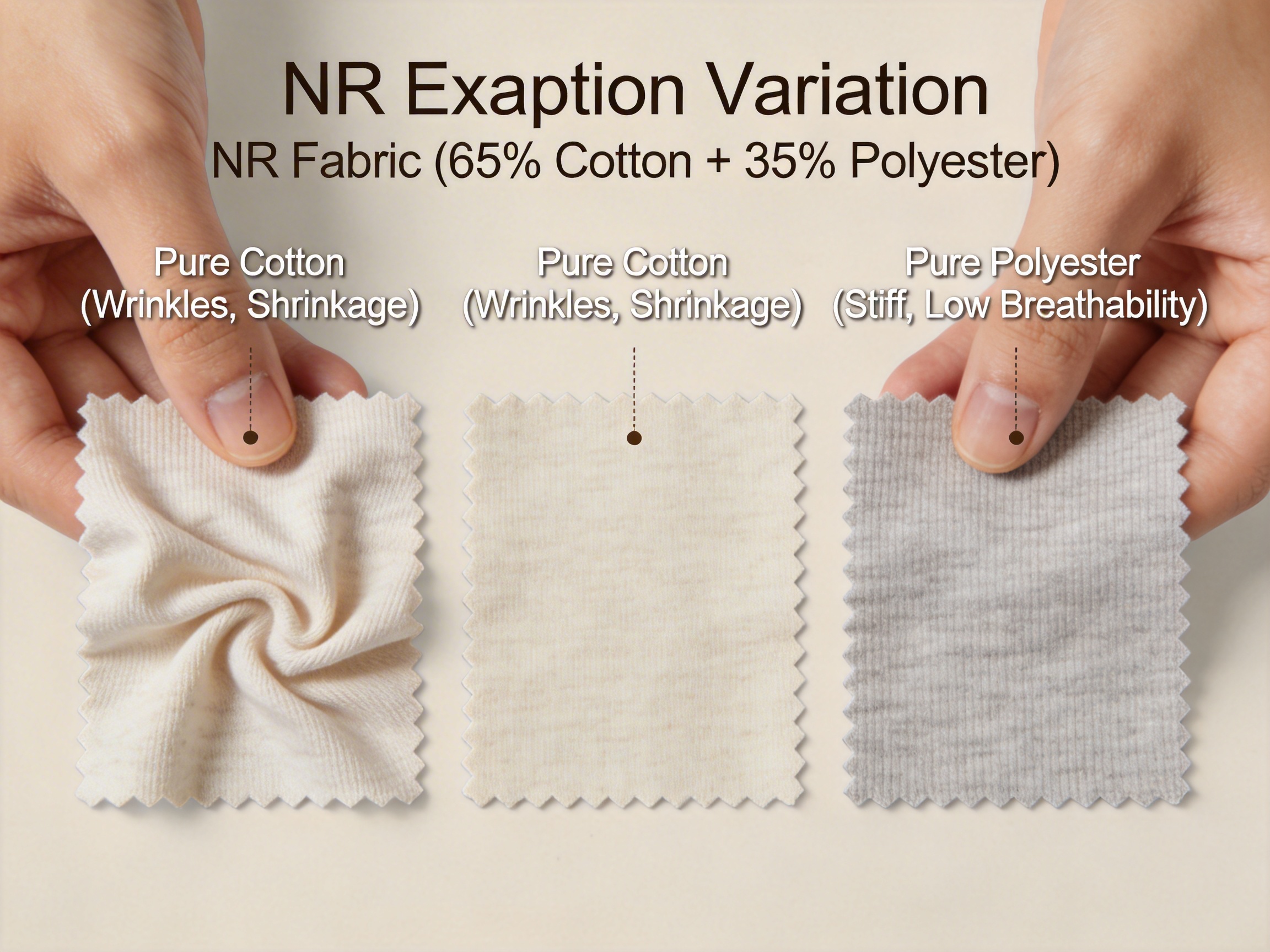
Another key advantage of NR Empty Variation Fabric is its pattern-free design. Unlike jacquard fabrics, which require complex knitting patterns and additional yarn, the "empty" variation reduces production time and waste, making it more cost-effective for bulk orders. This design also allows for greater customization in terms of color and print: businesses can easily dye the fabric in any shade or add screen prints/embroidery without worrying about conflicting patterns.
Advanced Manufacturing Processes: Ensuring Consistency and Quality
NR Empty Variation Fabric’s superior performance is not just due to its composition—it is also the result of advanced manufacturing processes that prioritize precision, efficiency, and sustainability. The company behind this fabric has invested heavily in modern machinery and quality control systems to ensure every meter of fabric meets strict performance standards.
Knitting Technology: Precision and Efficiency
The fabric is produced using state-of-the-art circular knitting machines, which are ideal for creating continuous, uniform knit fabrics. These machines are equipped with computerized tension control systems that maintain consistent stitch length and density across the entire fabric roll, eliminating defects like loose stitches or uneven areas. This precision ensures that the fabric has uniform strength and breathability, which is critical for applications like bags and sweaters where consistency is key.
Circular knitting machines also offer high production efficiency: they can produce up to 500 meters of fabric per hour, which allows the company to fulfill large bulk orders quickly. The pattern-free design of NR Empty Variation Fabric further enhances efficiency, as it eliminates the need for complex pattern programming and reduces yarn waste (since there are no extra yarns used for patterns).
Dyeing and Finishing: Color Fastness and Durability
After knitting, the fabric undergoes a rigorous dyeing and finishing process that enhances its color fastness and performance. The company uses a combined dyeing technique for the cotton-polyester blend: reactive dyes for the cotton component (which bind chemically to the fiber, ensuring long-lasting color) and disperse dyes for the polyester component (which are absorbed into the fiber’s structure). This dual-dyeing process ensures that the fabric retains its color even after multiple washes and exposure to sunlight.
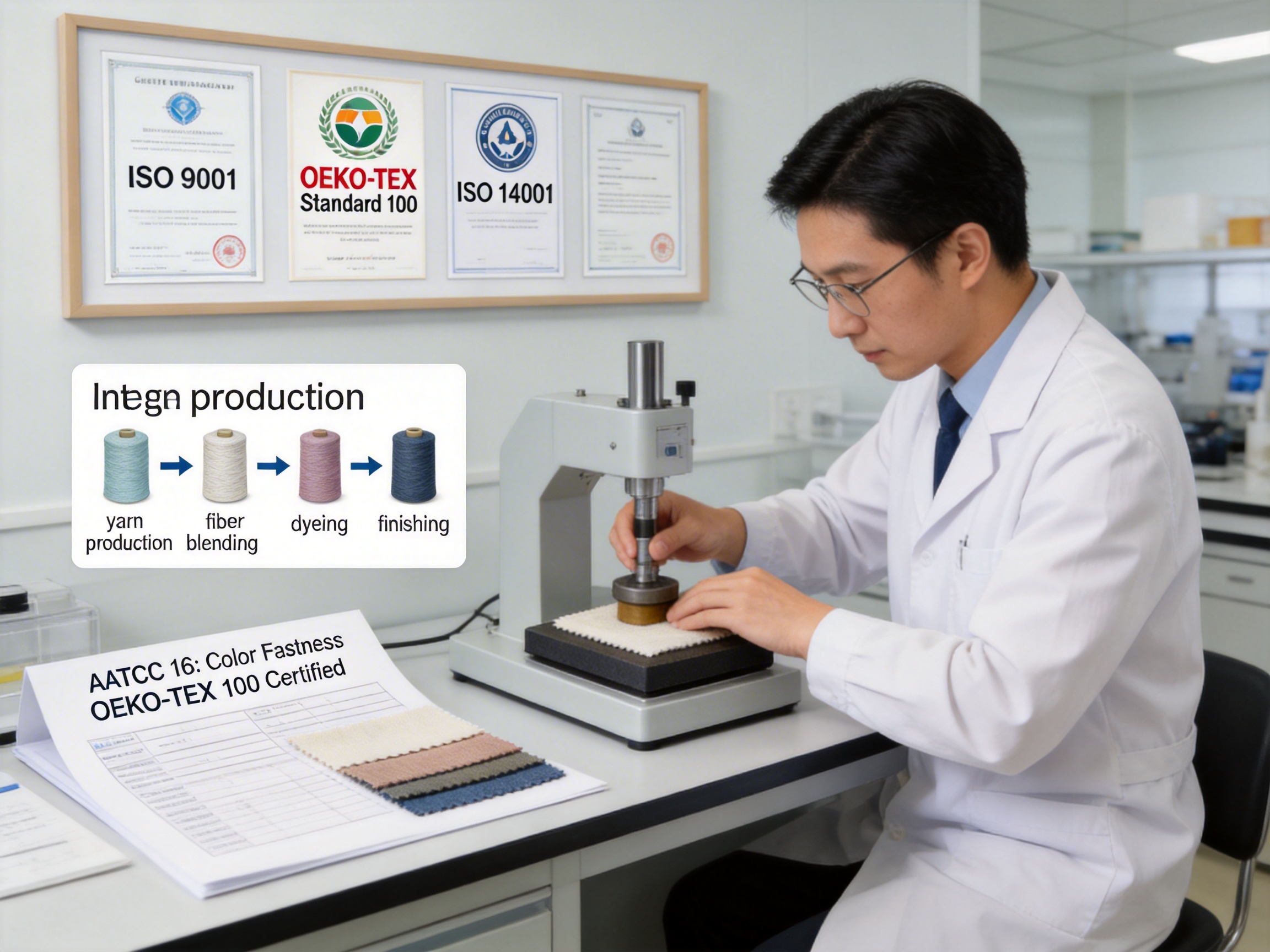
The finishing process includes several key steps: wrinkle-resistant treatment, softening, and quality inspection. The wrinkle-resistant treatment uses eco-friendly cross-linking agents that do not seal the fabric’s pores, preserving breathability while reducing wrinkling. The softening step uses natural oil-based agents to enhance the fabric’s hand feel, making it softer than pure polyester and more durable than pure cotton. Finally, every roll of fabric undergoes a series of lab tests to verify color fastness, abrasion resistance, shrinkage rate, and breathability—ensuring that only high-quality fabric reaches clients.
Sustainable Practices in Production
The company is committed to sustainable manufacturing, with several initiatives to reduce its environmental footprint. These include:
- Water recycling systems in the dyeing department, which recycle up to 80% of wastewater for reuse in production.
- Energy-efficient machinery, including LED lighting and variable-speed motors that reduce energy consumption by 30%.
- Waste reduction: the pattern-free design reduces yarn waste by 15% compared to jacquard fabrics, and leftover fabric is recycled into insulation materials.
- Eco-friendly dyeing agents: the company uses low-impact dyes that are free from harmful chemicals like formaldehyde and heavy metals.
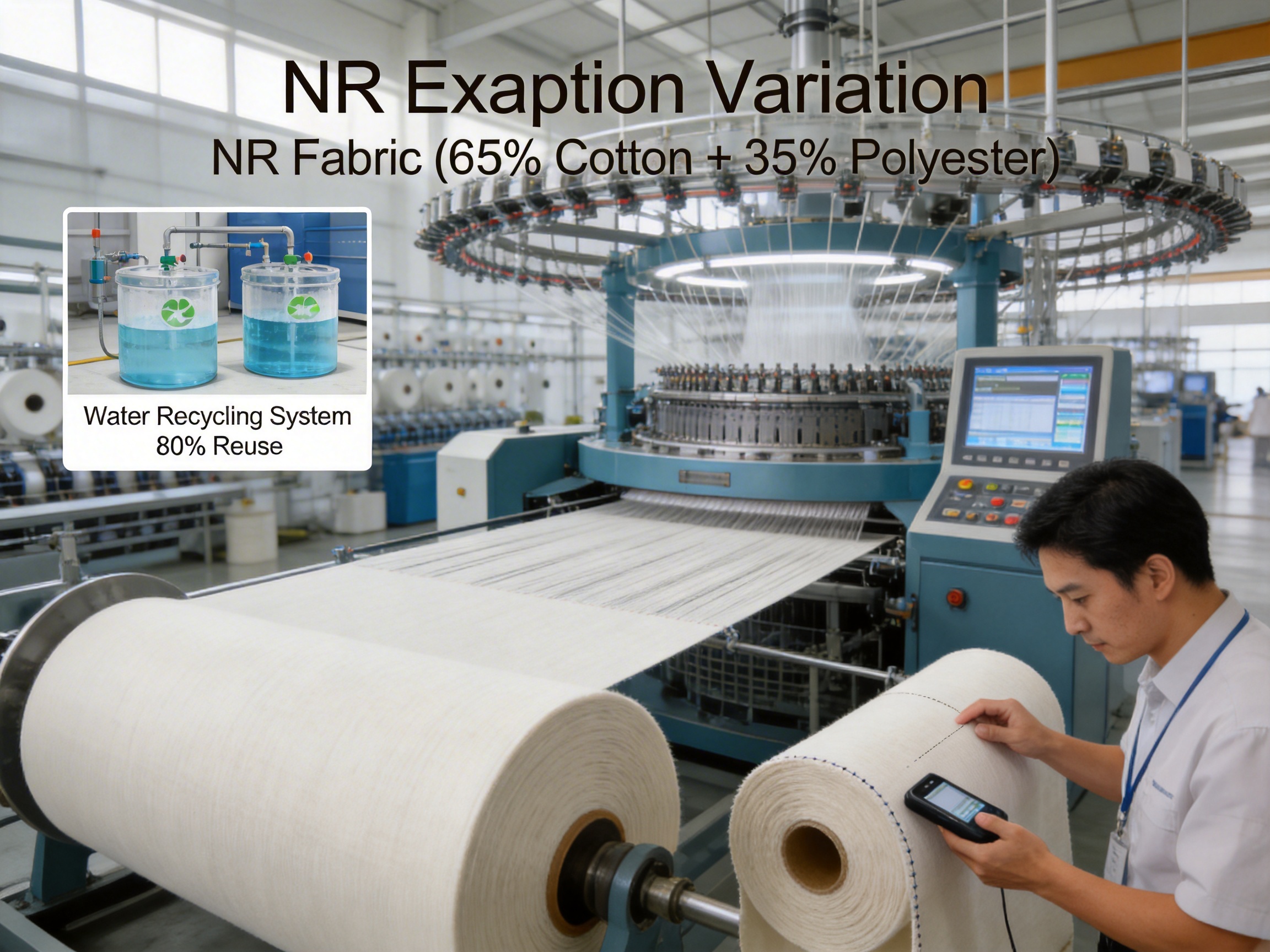
These sustainable practices not only reduce the company’s environmental impact but also align with the growing demand for eco-friendly textiles from consumers and businesses.
Versatile Applications: From Apparel to Accessories
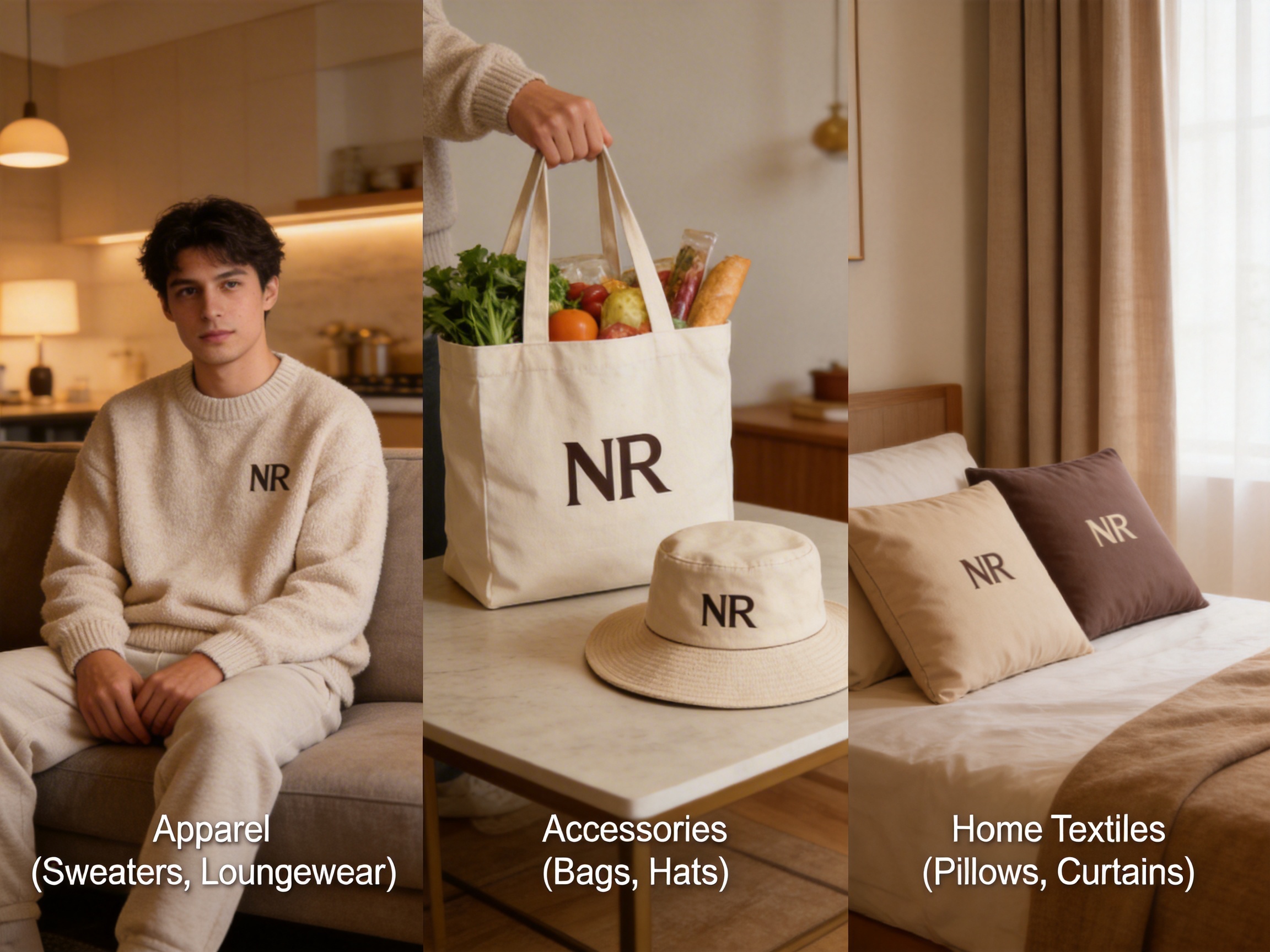
NR Empty Variation Fabric’s balanced performance attributes make it suitable for a wide range of applications. Its softness and breathability make it ideal for apparel, while its durability and abrasion resistance make it perfect for accessories and home textiles. Let’s explore some of its key use cases.
Apparel: Sweaters, Loungewear, and More
One of the most popular applications for NR Empty Variation Fabric is apparel, particularly sweaters and loungewear. For sweaters, the fabric’s soft hand feel and breathability ensure comfort for extended wear, while its wrinkle resistance and low shrinkage make it easy to care for (machine washable, tumble dry low). Unlike pure cotton sweaters, which shrink and wrinkle easily, NR fabric sweaters retain their shape and appearance even after multiple washes.
Loungewear is another growing application: the fabric’s softness and breathability make it perfect for pajamas, hoodies, and joggers. Consumers appreciate that loungewear made from NR fabric is comfortable enough for sleeping and durable enough for running errands—eliminating the need for separate sleepwear and casual wear.
Accessories: Hats, Bags, and Home Textiles
NR Empty Variation Fabric is also widely used for accessories. For hats, the fabric’s shape retention (due to the polyester component) ensures that the hat keeps its shape even after being worn multiple times, while its breathability prevents sweat buildup—making it ideal for summer hats. For bags, the fabric’s abrasion resistance means it can handle daily use (carrying books, laptops, groceries) without showing signs of wear, and its various colors allow businesses to create branded bags with consistent color.
Home textiles are another key application: the fabric is used for pillow covers, curtains, and table runners. Its wrinkle resistance means that pillow covers and curtains stay smooth without ironing, and its durability ensures that they last for years. The fabric’s wide range of colors also allows for easy coordination with different home decor styles.
Customization Options for Businesses
The company offers a range of customization options for businesses, including:
- Color: Custom dyeing in any Pantone color, with consistent color across large batches.
- Width: Custom widths from 150 cm to 280 cm, suitable for different products (e.g., 150 cm for apparel, 280 cm for curtains).
- Weight: Varying GSM (grams per square meter) from 120 GSM (lightweight, for summer apparel) to 300 GSM (heavyweight, for winter sweaters and bags).
- MOQ: Flexible minimum order quantities (MOQ) from 500 meters for standard orders to 100 meters for sample orders.
These customization options make NR Empty Variation Fabric a versatile choice for businesses of all sizes, from small startups to large retail chains.
Company Strengths: Why This Fabric Stands Out in the Market
NR Empty Variation Fabric’s success is closely tied to the strengths of the company that produces it. This company—based in Hangzhou, China, a global textile hub—has built a reputation for quality, innovation, and customer service. Let’s explore its key strengths.
Integrated Supply Chain: From Yarn to Finished Fabric
One of the company’s biggest strengths is its integrated supply chain, which covers every step from yarn production to finished fabric. The company produces its own DTY (Drawn Textured Yarn) polyester yarn, ensuring consistent quality and eliminating dependency on third-party suppliers. This integration allows the company to control the entire production process, from the quality of the yarn to the final finishing of the fabric—ensuring that every meter of NR Empty Variation Fabric meets strict performance standards.
The company also blends its own cotton and polyester fibers, using precise mixing ratios to create the optimal blend for NR fabric. This in-house blending ensures that the fabric has consistent properties across all batches, which is critical for businesses that need uniform fabric for their products.
R&D Capabilities: Continuous Improvement
The company invests heavily in research and development (R&D) to improve its fabrics and processes. Its R&D team includes textile engineers and chemists who work on developing new blends, eco-friendly dyeing techniques, and performance-enhancing treatments. Recent R&D achievements include:
- A new eco-friendly wrinkle-resistant treatment that reduces ironing time by 70% while preserving breathability.
- A recycled cotton-polyester blend that reduces the company’s carbon footprint by 20%.
- A new dyeing technique that improves color fastness by 15%.
These R&D efforts ensure that the company stays ahead of market trends and continues to offer innovative solutions to its clients.
Quality Assurance and Certifications
The company has strict quality control systems in place to ensure that every product meets international standards. Its quality control process includes:
- Lab testing for color fastness (AATCC 16), abrasion resistance (Martindale 19), shrinkage (AATCC 135), and breathability (ASTM D737).
- On-site inspection of every production batch to check for defects like uneven stitches or color variations.
- Third-party certification from ISO 9001 (quality management), OEKO-TEX Standard 100 (safe for human use), and ISO 14001 (environmental management).
These certifications give clients confidence in the quality and safety of NR Empty Variation Fabric, making it a trusted choice for global markets.
Global Reach and Wholesale Support
The company is a self-employed export company, with a global client base that includes businesses in the United States, Europe, Southeast Asia, and the Middle East. It offers wholesale support for businesses, including:
- Competitive pricing for bulk orders.
- Fast shipping (via sea or air) to any destination.
- Custom packaging (e.g., rolled fabric in plastic bags with client branding).
- Dedicated account managers to assist with order placement and after-sales support.
These services make it easy for businesses to source NR Empty Variation Fabric from anywhere in the world.
Q&A Section: Addressing Common Queries About NR Empty Variation Fabric
To help businesses and consumers better understand NR Empty Variation Fabric, we have compiled a list of common questions and answers:
Q1: What is the main difference between NR Empty Variation Fabric and other knit fabrics like jacquard or NTR?
A: NR Empty Variation Fabric is a plain knit (no pattern) made from a cotton-polyester blend, while jacquard fabrics have complex patterns (requiring more yarn and higher production costs). NTR (Nylon Rayon Triacetate) is a different blend that is less breathable and more expensive than NR fabric. NR fabric offers a better balance of softness, durability, and affordability than both jacquard and NTR fabrics.
Q2: Is NR Empty Variation Fabric suitable for sensitive skin?
A: Yes. The fabric contains cotton (a natural, hypoallergenic fiber) and is certified by OEKO-TEX Standard 100, which means it is free from harmful substances like formaldehyde, heavy metals, and phthalates. It is safe for use by people with sensitive skin, including babies and those with eczema.
Q3: How does the fabric perform in terms of shrinkage?
A: Due to the polyester component, the shrinkage rate of NR Empty Variation Fabric is typically below 3% after five washes at 30°C. This is much lower than pure cotton (which can shrink up to 10%) and makes the fabric ideal for apparel that needs to retain its shape.
Q4: Can this fabric be dyed in custom colors?
A: Yes. The company offers custom dyeing services for bulk orders, with the ability to match any Pantone color. The dyeing process uses eco-friendly agents and ensures consistent color across large batches, making it perfect for branded products.
Q5: What is the minimum order quantity (MOQ) for wholesale orders?
A: The MOQ varies depending on the product (width, GSM, color). For standard orders, the MOQ is 500 meters, but smaller MOQs (100 meters) are available for sample orders. The company also offers flexible pricing for larger orders.
Q6: Is the fabric machine washable?
A: Yes. NR Empty Variation Fabric is machine washable at 30°C, tumble dry low, and can be ironed at low temperature. Its wrinkle resistance means that it often does not require ironing after washing, making it low maintenance for consumers.
Conclusion: The Future of NR Empty Variation Fabric
NR Empty Variation Fabric is more than just a knit textile—it is a versatile, high-performance solution that addresses the evolving needs of the textile industry. Its balanced composition, advanced manufacturing processes, and wide range of applications make it a trusted choice for businesses across the globe. Backed by a company with an integrated supply chain, strong R&D capabilities, and a commitment to sustainability, this fabric is well-positioned to lead the way in the growing market for minimalist, eco-friendly textiles.
As consumer demand for comfortable, durable, and low-maintenance textiles continues to rise, NR Empty Variation Fabric will likely see increased adoption in apparel, accessories, and home textiles. The company’s ongoing R&D efforts—focused on eco-friendly blends and performance enhancements—will ensure that this fabric remains at the forefront of textile innovation for years to come.
References
1. Textile Institute. (2023). Global Knit Fabric Market Report: Trends in Minimalist Designs and Performance Blends. Manchester, UK: Textile Institute Press.
2. American Association of Textile Chemists and Colorists (AATCC). (2022). Test Method 135: Dimensional Changes of Fabrics after Home Laundering. Research Triangle Park, NC: AATCC.
3. OEKO-TEX Association. (2023). Standard 100 by OEKO-TEX: Requirements for Textile Products. Zurich, Switzerland: OEKO-TEX Association.
4. Hangzhou Textile Industry Association. (2023). Annual Report on Blended Fabric Production in Hangzhou. Hangzhou, China: Hangzhou Textile Industry Association.
5. ASTM International. (2021). ASTM D737: Standard Test Method for Air Permeability of Textile Fabrics. West Conshohocken, PA: ASTM International.