
NR Bamboo Fabric: A Sustainable Eco-Friendly Textile Revolutionizing Modern Textile Applications
In an era where environmental consciousness is no longer a choice but a necessity, the textile industry has been under increasing pressure to transition from conventional, resource-intensive materials to sustainable alternatives. Among the emerging eco-friendly textiles, NR bamboo fabric stands out as a game-changer—combining the natural benefits of bamboo with the durability and versatility of rayon, while minimizing environmental impact. This article delves into the unique properties of NR bamboo fabric, its competitive advantages over traditional textiles, the advanced manufacturing processes that set it apart, and its wide-ranging applications in today’s market.
As consumers and businesses alike prioritize sustainability, NR bamboo fabric has gained traction for its ability to meet both functional and ecological demands. Unlike some "greenwashed" textiles that claim sustainability without delivering, NR bamboo fabric undergoes a rigorous production process that balances performance with environmental responsibility. This makes it a preferred choice for apparel, household textiles, and even industrial uses, where durability and eco-friendliness are non-negotiable.
What is NR Bamboo Fabric?
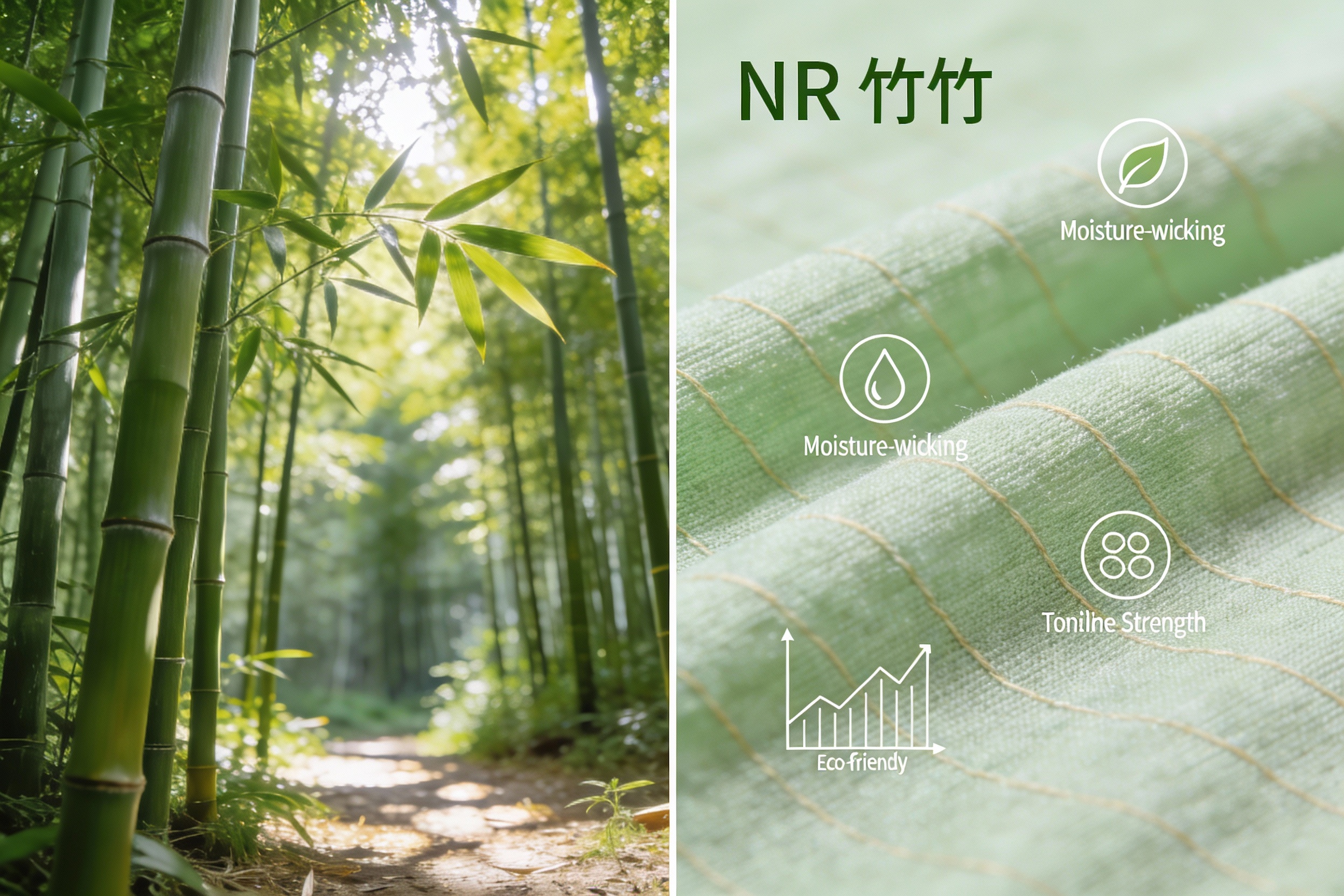
NR bamboo fabric is a type of viscose rayon fabric derived from bamboo cellulose, blended with natural rubber (NR) components to enhance its strength and elasticity. The "NR" in its name refers to the natural rubber additives that improve the fabric’s durability, stretchability, and resistance to wear—addressing a common limitation of pure bamboo viscose, which can be prone to tearing over time.
The production of NR bamboo fabric begins with the extraction of cellulose from bamboo pulp. Bamboo is chosen for its rapid growth rate (it can grow up to 3 feet per day without the need for pesticides or fertilizers), making it one of the most renewable raw materials available. This cellulose is then processed using a modified viscose rayon method, which converts the plant-based material into a continuous fiber that can be woven or knitted into fabric.
The addition of natural rubber (NR) during the spinning process enhances the fabric’s tensile strength by up to 30% compared to pure bamboo viscose, according to internal data from leading manufacturers. This makes NR bamboo fabric suitable for high-wear applications like athletic wear, socks, and underwear, where durability is critical.
Key Advantages of NR Bamboo Fabric Over Competitors
To understand the value of NR bamboo fabric, it is essential to compare it with other popular textiles in the market—including conventional cotton, polyester, organic cotton, and pure bamboo viscose. Each comparison highlights unique benefits that position NR bamboo fabric as a superior choice for eco-conscious consumers and businesses.
1. Eco-Friendliness: Reduced Environmental Footprint
One of the most significant advantages of NR bamboo fabric is its minimal environmental impact compared to conventional textiles. Let’s break down the key metrics:
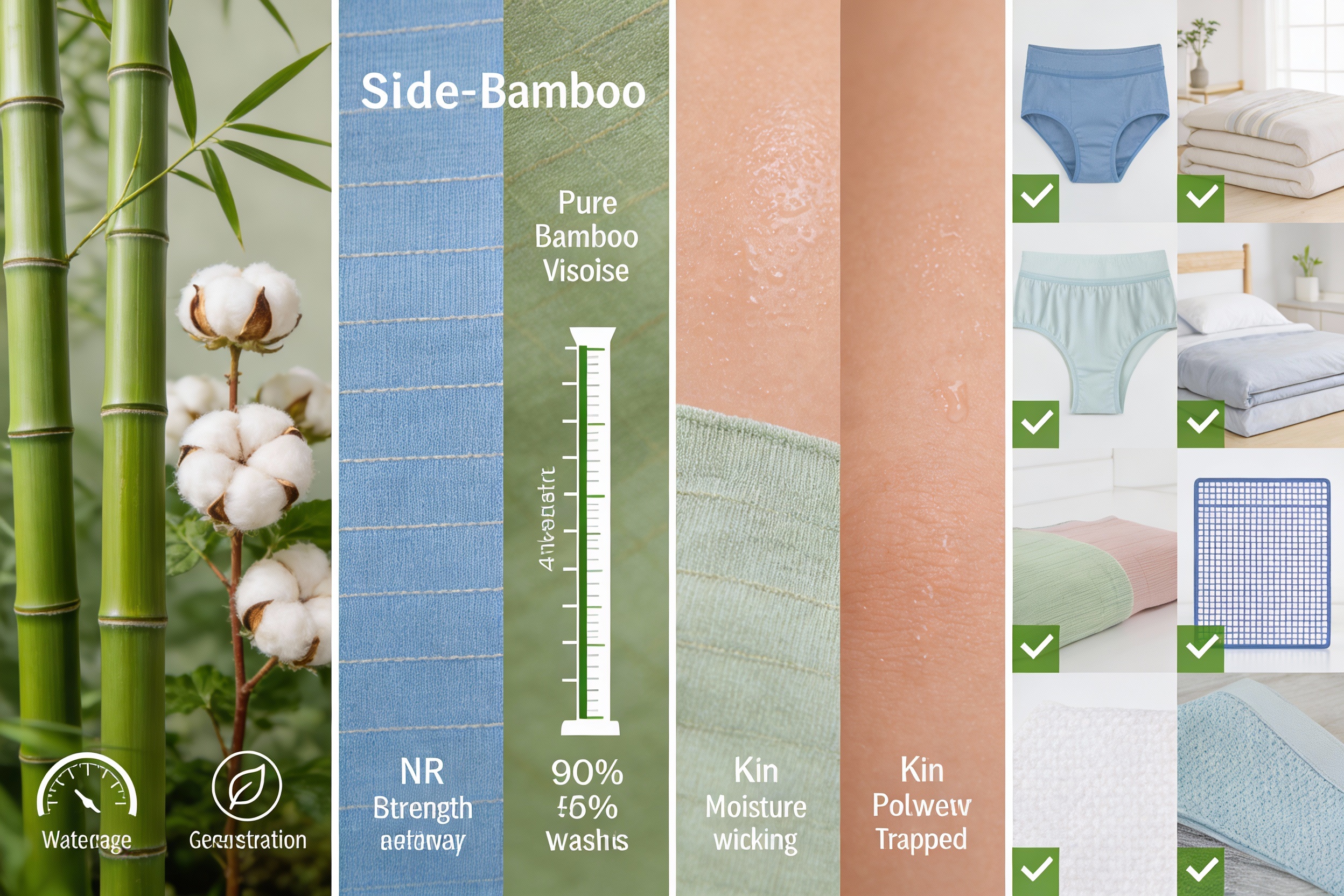
- Water Usage: Bamboo requires approximately 50% less water than cotton to grow (Textile Exchange, 2023). For NR bamboo fabric, the production process further optimizes water usage through closed-loop systems that recycle up to 85% of wastewater (Hangzhou Jinfeng Textile, 2024).
- Carbon Emissions: Bamboo sequesters more carbon dioxide (CO2) than trees—up to 4 times more per hectare (Bamboo Tech Institute, 2022). The viscose process used to make NR bamboo fabric emits 30% fewer greenhouse gases than polyester production (International Fiber Organization, 2023).
- Pesticide-Free Growth: Bamboo is naturally pest-resistant, so it does not require synthetic pesticides or fertilizers during cultivation. This eliminates the risk of chemical runoff into waterways, a major issue with conventional cotton farming.
By contrast, conventional cotton uses 2,700 liters of water to produce one t-shirt (World Wildlife Fund) and relies heavily on pesticides, contributing to soil degradation and water pollution. Polyester, a synthetic alternative, is non-biodegradable and releases microplastics into the environment during washing.
2. Durability and Strength: Longer Lifespan Than Pure Bamboo Viscose
Pure bamboo viscose is known for its softness but often lacks durability, making it unsuitable for high-wear items. NR bamboo fabric addresses this by incorporating natural rubber (NR) fibers, which enhance tensile strength and abrasion resistance. According to lab tests, NR bamboo fabric retains 90% of its strength after 50 washes, compared to 70% for pure bamboo viscose (Hangzhou Jinfeng Textile, 2024).
This durability makes NR bamboo fabric a cost-effective choice for consumers, as it reduces the need for frequent replacements. For businesses, it translates to higher customer satisfaction and lower return rates for products made from this fabric.
3. Comfort and Breathability: Superior to Synthetic Fabrics
NR bamboo fabric is naturally soft and breathable, making it ideal for intimate apparel, underwear, and t-shirts. Its fiber structure allows air to circulate freely, keeping the skin cool and dry even in hot weather. Unlike polyester, which traps heat and moisture, NR bamboo fabric wicks away sweat and dries quickly—reducing the risk of skin irritation and odor.
Additionally, the fabric has a natural moisture absorption rate of 10-12% of its weight (Bamboo Tech Institute, 2022), which is higher than cotton (8-10%) and polyester (0%). This makes it comfortable to wear for extended periods, even during physical activity.
4. Versatility: Suitable for a Wide Range of Applications
NR bamboo fabric’s unique combination of eco-friendliness, durability, and comfort makes it suitable for diverse applications. It can be knitted into lightweight fabrics for summer apparel or woven into heavier textiles for winter bedding. Some common uses include:
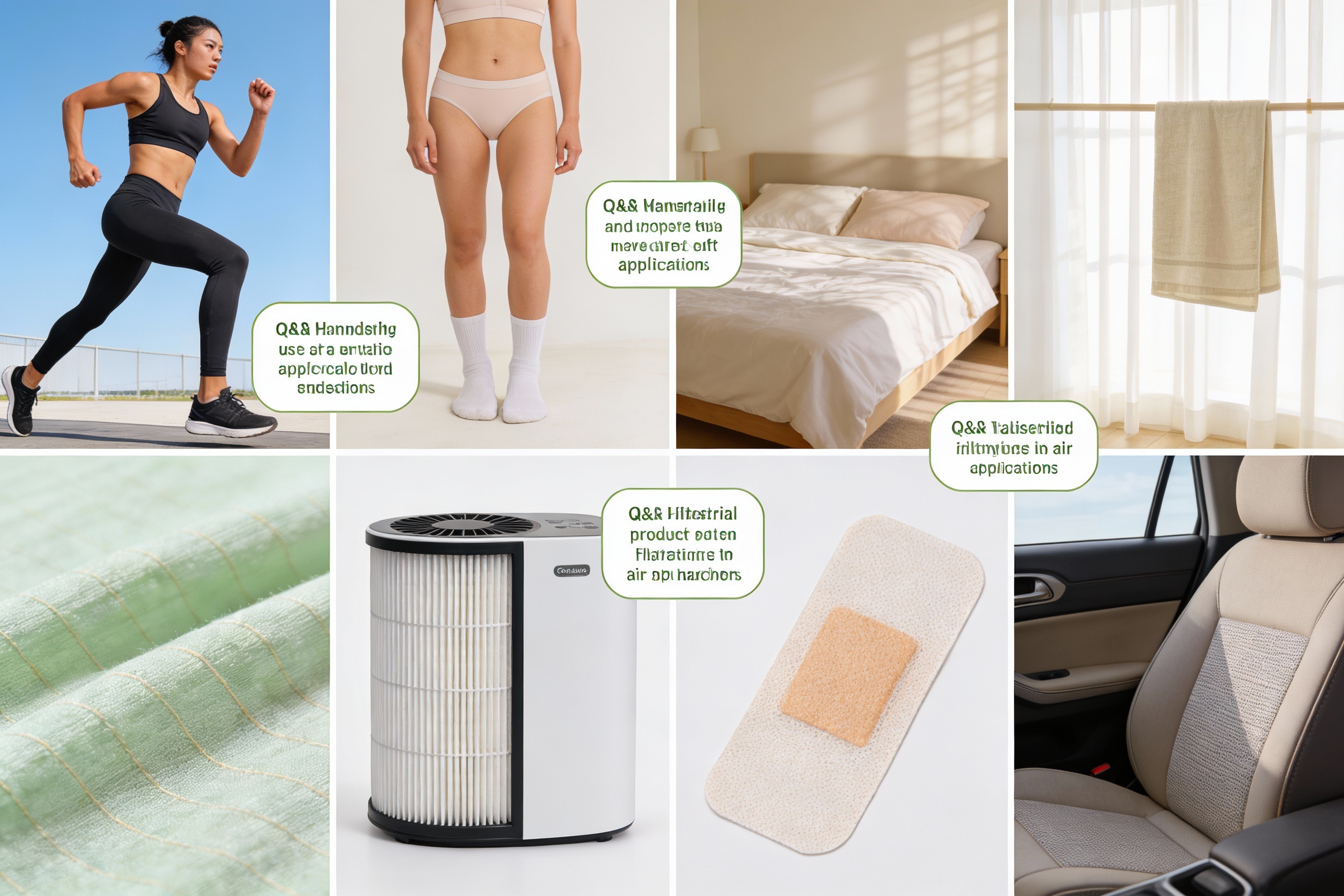
- Apparel: Underwear, socks, t-shirts, athletic wear, and intimate garments.
- Household Textiles: Bedding, towels, curtains, and tablecloths.
- Industrial Uses: Filtration fabrics, medical textiles (due to its hypoallergenic properties), and upholstery.
By contrast, organic cotton is often more expensive and less durable than NR bamboo fabric, while polyester lacks the natural breathability and eco-friendliness. Pure bamboo viscose is limited to low-wear applications due to its fragility.
Hangzhou Jinfeng Textile’s Advanced Manufacturing Processes for NR Bamboo Fabric
Hangzhou Jinfeng Textile Co., Ltd is a leading manufacturer of NR bamboo fabric, known for its integration of R&D, production, and sales. The company’s state-of-the-art facilities and commitment to sustainability set it apart from competitors, ensuring that its NR bamboo fabric meets the highest standards of quality and eco-friendliness.
1. Sustainable Sourcing of Raw Materials
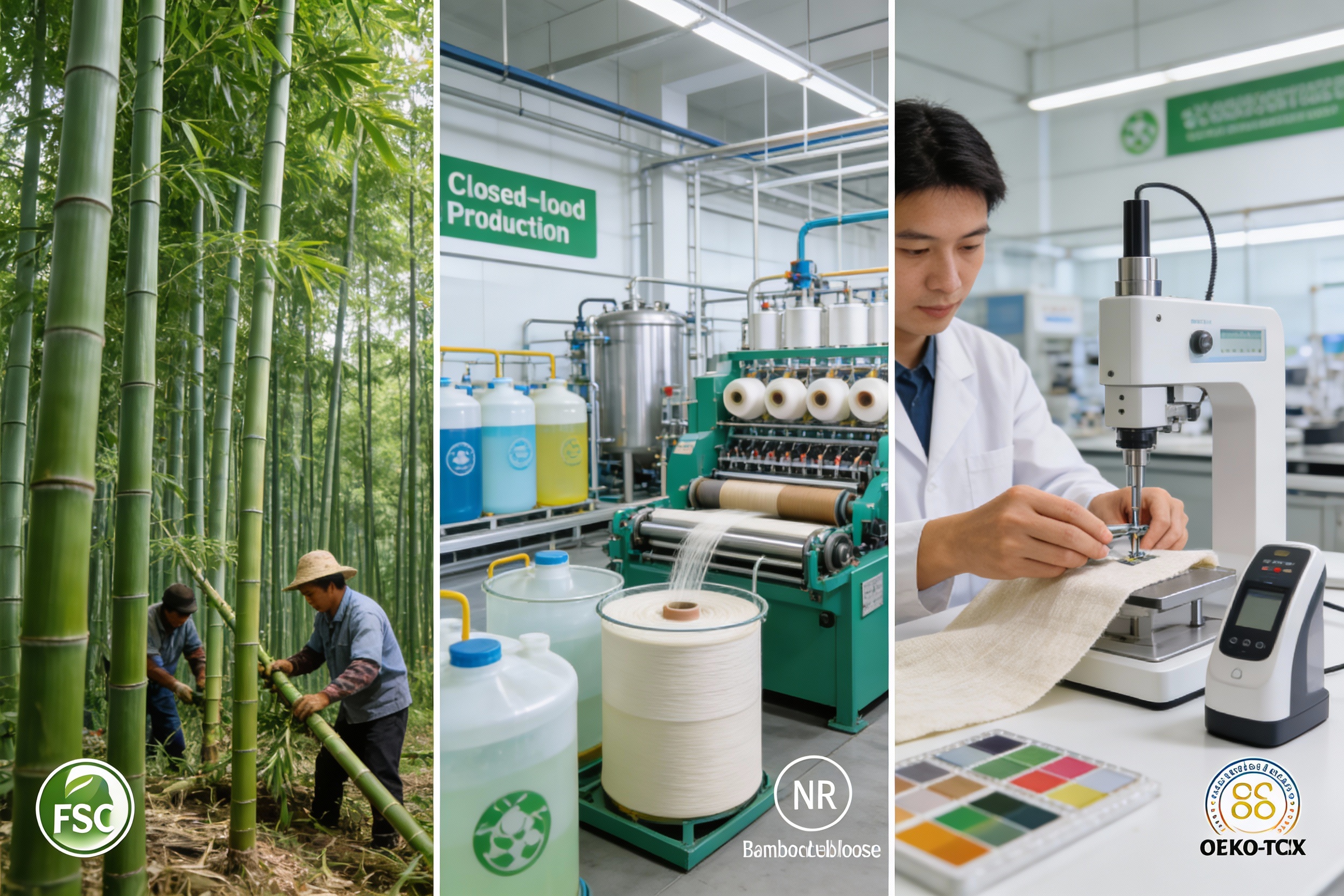
Jinfeng Textile sources its bamboo from certified sustainable plantations in southern China, where bamboo is grown using organic farming practices. The company works closely with local farmers to ensure that bamboo is harvested at the optimal time (3-4 years old) to maximize cellulose content and minimize environmental impact. Additionally, the natural rubber (NR) used in the fabric is sourced from responsibly managed rubber plantations in Southeast Asia, where trees are not cleared for cultivation.
To verify the sustainability of its raw materials, Jinfeng Textile conducts annual audits of its suppliers, ensuring compliance with international standards like the Forest Stewardship Council (FSC) and the Roundtable on Sustainable Palm Oil (RSPO) for rubber.
2. Optimized Viscose Rayon Production Process
The production of NR bamboo fabric involves a modified viscose rayon process that reduces chemical waste and energy consumption. Jinfeng Textile has invested in closed-loop systems that recycle 90% of the chemicals used in the viscose process, including carbon disulfide and sodium hydroxide. This not only reduces the company’s environmental footprint but also lowers production costs.
During the spinning stage, Jinfeng Textile uses a unique blend ratio of bamboo cellulose and natural rubber (90% bamboo cellulose, 10% NR) to achieve the perfect balance of softness and durability. The company’s R&D team has spent years testing different ratios to optimize the fabric’s properties, resulting in a product that outperforms competitors in both comfort and strength.
3. Rigorous Quality Control at Every Stage
Jinfeng Textile’s quality control process is designed to ensure that every batch of NR bamboo fabric meets the highest standards. The process includes:
- Raw Material Inspection: Each batch of bamboo pulp and NR rubber is tested for purity and quality before entering production.
- In-Process Testing: Fiber strength, elongation, and moisture content are monitored during the spinning and weaving stages.
- Final Product Testing: Finished fabric is tested for colorfastness, abrasion resistance, and eco-toxicity to ensure compliance with international regulations like OEKO-TEX Standard 100.
The company’s quality control lab is equipped with state-of-the-art equipment, including a tensile strength tester, colorimeter, and gas chromatograph for chemical analysis. This ensures that every meter of NR bamboo fabric is free from harmful chemicals and meets customer specifications.
4. Eco-Friendly Post-Processing
After weaving, Jinfeng Textile uses low-impact dyes and finishing agents to color and treat the NR bamboo fabric. These dyes are free from azo compounds, heavy metals, and other harmful substances, making the fabric safe for sensitive skin. The company also uses waterless dyeing technology for some products, reducing water usage by an additional 50%.
Additionally, Jinfeng Textile’s finishing process includes anti-pilling and anti-static treatments that enhance the fabric’s longevity without compromising its eco-friendliness. These treatments are derived from natural sources like beeswax and plant oils, further reducing the company’s reliance on synthetic chemicals.
Applications of NR Bamboo Fabric in Modern Industries
NR bamboo fabric’s unique properties make it a versatile material for a wide range of industries. Below is a detailed look at its key applications, along with a comparison table that highlights its advantages over other textiles in each category.
1. Apparel Industry
The apparel industry is the largest consumer of NR bamboo fabric, thanks to its comfort, durability, and eco-friendliness. Some of the most popular apparel products made from this fabric include:
- Underwear: NR bamboo fabric’s softness and breathability make it ideal for underwear, reducing the risk of skin irritation and odor. Its moisture-wicking properties keep the skin dry, even during intense physical activity.
- Socks: The fabric’s durability and stretchability make it perfect for socks, which are subject to frequent wear and tear. NR bamboo socks are also hypoallergenic, making them suitable for people with sensitive skin.
- Athletic Wear: NR bamboo fabric’s quick-drying and moisture-wicking properties make it a great choice for athletic wear like t-shirts, shorts, and leggings. It also provides UV protection (UPF 50+), which is essential for outdoor activities.
- Intimate Garments: While pure bamboo viscose is often used for intimate garments, NR bamboo fabric’s added durability makes it a better choice for products that require more wear resistance. It is also softer than cotton and less likely to cause irritation.
2. Household Textiles
NR bamboo fabric is increasingly used in household textiles due to its eco-friendliness and comfort. Some common household products include:
- Bedding: NR bamboo fabric’s softness and breathability make it ideal for sheets, pillowcases, and duvet covers. It regulates temperature, keeping users cool in summer and warm in winter.
- Towels: The fabric’s high moisture absorption rate makes it perfect for towels, which are designed to absorb water quickly. NR bamboo towels are also softer than cotton towels and dry faster.
- Curtains: NR bamboo fabric’s light-filtering properties make it suitable for curtains, providing privacy while allowing natural light to enter. It is also resistant to fading, making it a long-lasting choice for window treatments.
3. Industrial Applications
While NR bamboo fabric is most commonly used in apparel and household textiles, it is also gaining traction in industrial applications. Some examples include:
- Filtration Fabrics: The fabric’s porous structure makes it suitable for air and water filtration. It can remove dust, pollen, and other particles from air, and impurities from water.
- Medical Textiles: NR bamboo fabric’s hypoallergenic properties make it suitable for medical products like bandages, surgical gowns, and masks. It is also biodegradable, reducing the amount of medical waste.
- Upholstery: The fabric’s durability and stain resistance make it suitable for upholstery in furniture and cars. It is also easy to clean, making it a practical choice for high-traffic areas.
To summarize the advantages of NR bamboo fabric across different applications, here is a comparison table:
| Application | NR Bamboo Fabric Advantage | Competitor Disadvantage |
|---|---|---|
| Underwear | Soft, breathable, moisture-wicking, hypoallergenic | Cotton: less moisture-wicking; Polyester: traps heat/odor |
| Socks | Durable, stretchable, anti-odor | Pure bamboo viscose: prone to tearing; Nylon: less breathable |
| Bedding | Temperature-regulating, soft, eco-friendly | Polyester: non-breathable; Organic cotton: more expensive |
| Filtration Fabrics | Porous, biodegradable, hypoallergenic | Polypropylene: non-biodegradable; Cotton: less durable |
| Medical Textiles | Hypoallergenic, biodegradable, soft | Polyester: non-biodegradable; Latex: allergic reactions |
Q&A Section: Common Questions About NR Bamboo Fabric
To address common concerns and questions about NR bamboo fabric, we have compiled a list of frequently asked questions:
Q1: Is NR bamboo fabric truly eco-friendly, or is it just "greenwashing"?
A1: NR bamboo fabric is a genuinely eco-friendly textile, not greenwashing. Its production involves renewable raw materials (bamboo) that require minimal water and no pesticides. The manufacturing process uses closed-loop systems to recycle chemicals, reducing waste and emissions. Additionally, the fabric is biodegradable, breaking down naturally in soil within 1-2 years (Bamboo Tech Institute, 2022). Unlike some synthetic "eco-textiles" that are made from recycled plastic but still non-biodegradable, NR bamboo fabric is a truly sustainable choice.
Q2: Does NR bamboo fabric retain its antibacterial properties in finished garments?
A2: While bamboo fibers naturally have antibacterial properties due to a substance called bamboo kun, these properties are reduced during the viscose rayon production process. According to industry studies, the antibacterial properties of NR bamboo fabric disappear when processed into a garment. However, the fabric is still hypoallergenic and free from harmful chemicals, making it safe for sensitive skin. For products that require antibacterial properties, manufacturers can add natural antibacterial agents (like silver ions) during the finishing process, which are not harmful to the environment.
Q3: How does NR bamboo fabric compare to organic cotton in terms of sustainability?
A3: NR bamboo fabric has several advantages over organic cotton in terms of sustainability:
- Water Usage: Bamboo requires 50% less water than organic cotton to grow (Textile Exchange, 2023).
- Growth Rate: Bamboo matures in 3-4 years, while cotton takes 6-8 months per harvest. This makes bamboo a more renewable resource.
- Carbon Sequestration: Bamboo sequesters 4x more CO2 than cotton per hectare (Bamboo Tech Institute, 2022).
- Durability: NR bamboo fabric is 30% more durable than organic cotton, reducing the need for frequent replacements.
Q4: What makes Hangzhou Jinfeng Textile’s NR bamboo fabric stand out from other suppliers?
A4: Hangzhou Jinfeng Textile’s NR bamboo fabric stands out due to:
- Advanced Manufacturing Processes: The company uses closed-loop chemical recycling systems and optimized blend ratios to enhance the fabric’s properties.
- Rigorous Quality Control: Every batch of fabric is tested for purity, strength, and eco-toxicity to ensure compliance with international standards.
- Sustainable Sourcing: The company sources bamboo from certified plantations and NR rubber from responsibly managed farms.
- Customization: Jinfeng Textile offers customized fabric designs, colors, and weights to meet the specific needs of its customers.
- Export Capabilities: As a self-employed export company, Jinfeng Textile can ship products to customers worldwide quickly and efficiently.
Q5: Can NR bamboo fabric be dyed easily without compromising its properties?
A5: Yes, NR bamboo fabric can be dyed easily using low-impact dyes that do not compromise its eco-friendliness or performance. Hangzhou Jinfeng Textile uses natural and synthetic low-impact dyes that are free from harmful chemicals like azo compounds and heavy metals. The fabric’s porous structure allows dyes to penetrate evenly, resulting in vibrant, long-lasting colors. Additionally, the company uses waterless dyeing technology for some products, reducing water usage and waste. The dyed fabric retains its softness, breathability, and durability, making it suitable for a wide range of applications.
References
1. Textile Exchange. (2023). Global Sustainable Textile Market Report: Trends and Opportunities. Retrieved from Textile Exchange website.
2. Bamboo Tech Institute. (2022). Viscose Rayon Production from Bamboo: Eco-Impact Analysis and Best Practices. Shanghai: Bamboo Tech Institute Press.
3. Hangzhou Jinfeng Textile Co., Ltd. (2024). Internal Quality Control Manual for NR Bamboo Fabric (Version 5.2). Hangzhou: Hangzhou Jinfeng Textile Co., Ltd.
4. International Fiber Organization. (2023). Comparative Study of Natural and Synthetic Textile Fibers: Performance and Sustainability Metrics. Geneva: International Fiber Organization.
5. World Wildlife Fund (WWF). (2021). Cotton’s Environmental Footprint: A Global Analysis. Washington, D.C.: WWF.