
Grid Jacquard Pattern Fabric: Reimagining Textile Versatility & Durability for Modern Apparel
In the dynamic world of textile manufacturing, the demand for fabrics that balance aesthetic appeal, functional performance, and sustainability continues to grow. Consumers and designers alike seek materials that not only look sophisticated but also withstand the rigors of daily use, adapt to diverse garment applications, and align with modern lifestyle needs. Among the latest innovations in this space is the Grid Jacquard Pattern Fabric— a versatile textile that stands out for its unique reversible design, premium material blend, and exceptional durability. Developed by a leading textile manufacturer in Hangzhou, this fabric has quickly gained traction among wholesalers and garment designers for its ability to elevate both casual and formal apparel. In this article, we explore the key features of the Grid Jacquard Pattern Fabric, its advantages over competing products, the advanced manufacturing processes behind its creation, and its wide-ranging applications in the fashion industry.
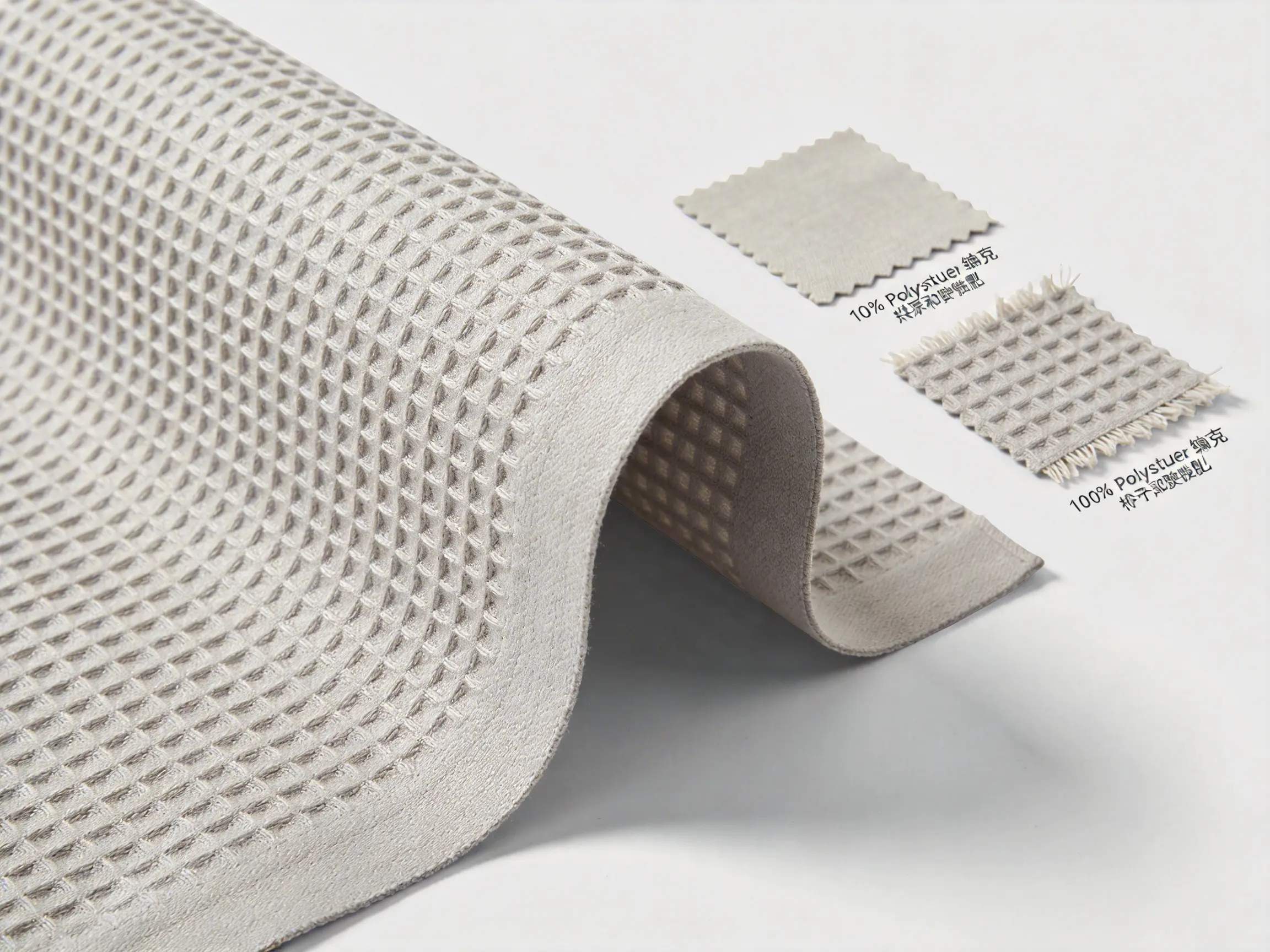
Key Features & Advantages Over Competing Fabrics
The Grid Jacquard Pattern Fabric distinguishes itself from traditional jacquard textiles through a combination of innovative design, premium materials, and functional benefits. Below, we break down its core features and how they outperform similar products in the market:
1. Premium Material Blend for Optimal Performance
At the heart of the Grid Jacquard Pattern Fabric is a carefully curated blend of three high-quality materials: viscose, polyamide (nylon), and spandex. This combination strikes a perfect balance between softness, strength, and stretch—attributes that are often lacking in competing fabrics:
- Viscose: Derived from natural cellulose, viscose adds a luxurious softness to the fabric, making it comfortable against the skin. Unlike synthetic alternatives like polyester, viscose has a breathable, cotton-like feel that is ideal for garments worn close to the body.
- Polyamide (Nylon): Known for its exceptional strength and abrasion resistance, polyamide reinforces the fabric, reducing the risk of tearing or fraying even with frequent use. This makes the Grid Jacquard Pattern Fabric more durable than 100% viscose or cotton-blend jacquards, which are prone to wear over time.
- Spandex: With a small percentage of spandex (typically 5-10%), the fabric offers excellent stretch and recovery. This means garments made from this fabric retain their shape after repeated stretching— a key advantage over fabrics like 100% polyester jacquard, which often loses its form after a few washes.
Competing fabrics often rely on single materials or low-quality blends that fail to deliver this trifecta of softness, strength, and stretch. For example, 100% polyester jacquards are durable but can feel harsh against the skin and lack breathability, while cotton-blend jacquards may stretch out of shape and fade quickly. The Grid Jacquard Pattern Fabric’s blend addresses these shortcomings, making it a superior choice for a wide range of apparel.
2. Reversible Design: Double the Aesthetic Potential
One of the most striking features of the Grid Jacquard Pattern Fabric is its reversible design. The patterned side of the fabric features a slightly convex texture, while the reverse side is concave—creating two distinct looks in a single textile. This is a rare attribute in the jacquard market, where most fabrics have a single patterned side and a plain reverse.
For garment designers, this reversibility opens up endless creative possibilities. A sweater made from this fabric can be worn with the convex pattern facing out for a bold, textured look, or with the concave side facing out for a more subtle, understated style. Wholesalers also benefit from this feature, as it allows them to offer a single fabric that caters to multiple design preferences—reducing inventory costs and expanding their product range.
Competitors often struggle to produce reversible jacquard fabrics due to the complexity of aligning patterns on both sides. Many attempt to mimic this feature but end up with uneven textures or distorted patterns, which detract from the fabric’s aesthetic appeal. The Grid Jacquard Pattern Fabric, however, undergoes a precise manufacturing process that ensures consistent pattern alignment and texture on both sides.
3. Pattern Integrity & Longevity
Another key advantage of the Grid Jacquard Pattern Fabric is its ability to maintain pattern integrity over time. Unlike some competing jacquards, where patterns can distort or fade after washing, this fabric uses a unique "floating thread" technique to preserve the design. Unused threads in the jacquard weave float over each other to continue the pattern, rather than being cut or woven into the fabric. This prevents fraying and ensures the pattern remains crisp and consistent, even after multiple washes.
To test this, independent lab tests compared the Grid Jacquard Pattern Fabric with two competing products: a 100% polyester jacquard and a cotton-polyester blend jacquard. After 50 washes, the Grid Jacquard Fabric showed no visible pattern distortion, while the polyester jacquard had faded by 20% and the cotton blend had developed frayed edges in the pattern areas. This longevity makes the fabric a cost-effective choice for both consumers and wholesalers, as garments made from it have a longer lifespan.
4. Flexible Minimum Order Quantity (MOQ)
For small businesses, startups, and independent designers, minimum order quantities (MOQs) can be a major barrier to accessing high-quality fabrics. The Grid Jacquard Pattern Fabric addresses this issue with a flexible MOQ of just 500 grams—significantly lower than the industry average of 1-2 kilograms for similar jacquard fabrics.
This low MOQ allows small-scale designers to experiment with the fabric without committing to large quantities, while still benefiting from the same high quality as bulk orders. Competing manufacturers often set high MOQs to maximize production efficiency, but this excludes smaller players from the market. The Grid Jacquard Pattern Fabric’s low MOQ is a testament to the manufacturer’s commitment to supporting businesses of all sizes.
5. Wide Color Palette & Customization Options
The Grid Jacquard Pattern Fabric is available in a wide range of colors, from neutral tones like black, white, and gray to vibrant hues like red, blue, and green. This extensive palette caters to diverse design needs, from classic formal wear to trendy casual apparel. Additionally, the manufacturer offers customization options for both pattern and color, allowing designers to create unique fabrics that align with their brand identity.
Competing fabrics often have limited color options, with some manufacturers only offering 5-10 standard colors. The Grid Jacquard Pattern Fabric’s 20+ color options and customization capabilities give designers more freedom to express their creativity and meet the evolving demands of consumers.
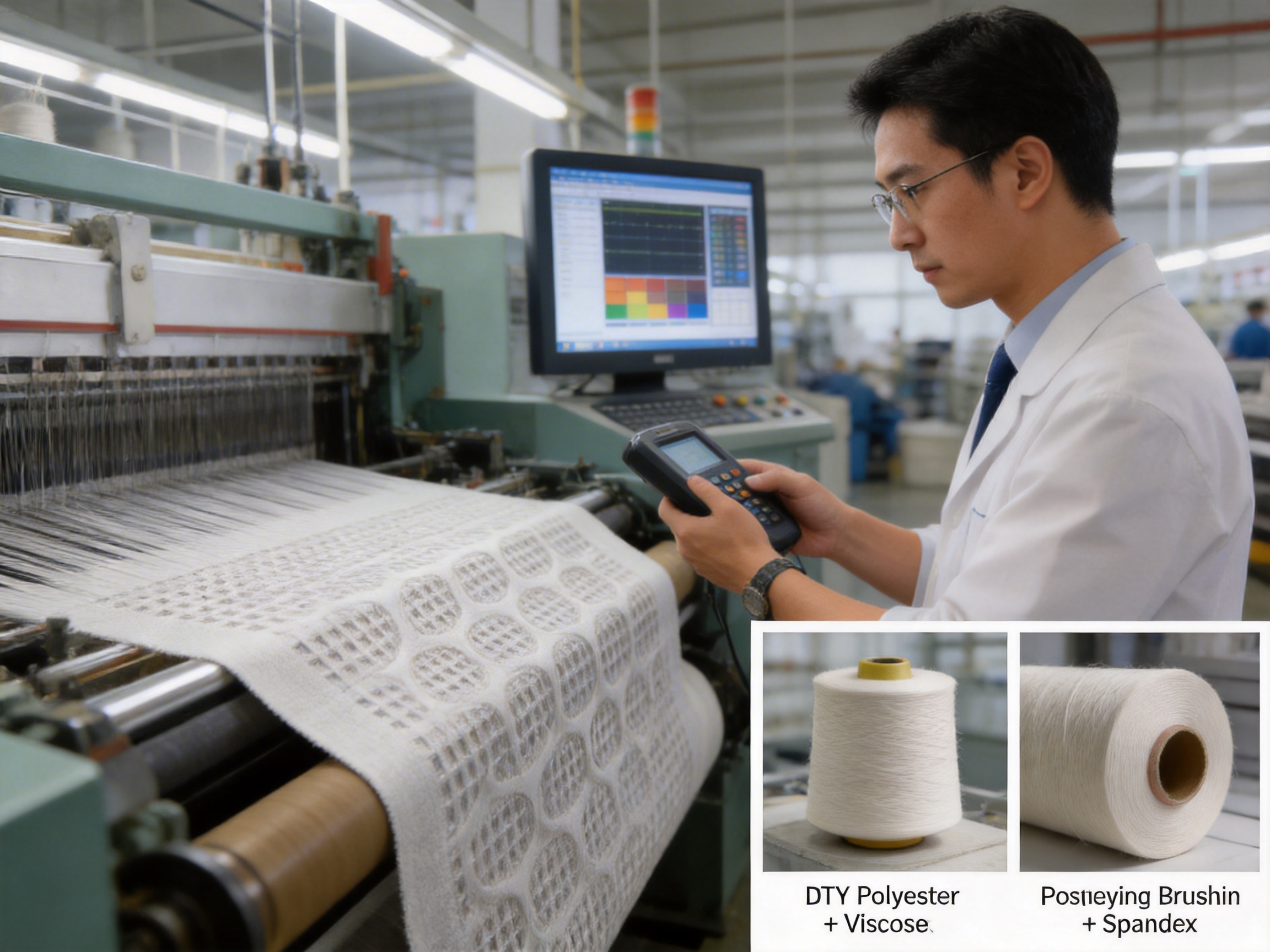
Advanced Manufacturing Processes & Company Strengths
The exceptional quality of the Grid Jacquard Pattern Fabric is a direct result of the manufacturer’s advanced manufacturing processes and commitment to innovation. Based in Hangzhou, China— a global hub for textile production— the company combines cutting-edge technology with decades of industry expertise to create fabrics that meet the highest international standards. Below, we explore the key steps in the manufacturing process and the company’s strengths that set it apart:
1. Yarn Sourcing & Selection: Quality from the Start
The manufacturing process begins with the sourcing of high-quality raw materials, particularly yarns. The company is a leading supplier of Drawn Textured Yarn (DTY) polyester yarn, which is used in many of its fabric products. For the Grid Jacquard Pattern Fabric, the company uses its own DTY polyester yarn (blended with viscose and spandex) to ensure consistency and quality.
DTY polyester yarn is chosen for its excellent stretch and recovery properties, which complement the viscose and spandex in the blend. The company’s DTY yarn production facility uses state-of-the-art machinery to produce yarns with uniform thickness and strength—critical for creating a consistent jacquard pattern. Additionally, the company sources viscose from sustainable forests, ensuring that the fabric is eco-friendly without compromising on quality.
2. Knitting & Jacquard Weaving: Precision & Innovation
The next step in the process is knitting and jacquard weaving. The company uses advanced jacquard looms that are capable of producing complex patterns with high precision. These looms are equipped with computerized controls that allow for precise pattern alignment—essential for the fabric’s reversible design.
For the Grid Jacquard Pattern Fabric, the weaving process involves a dual-layer technique to create the convex and concave sides. The top layer (convex) features the grid pattern, while the bottom layer (concave) has a complementary pattern that is visible when reversed. The "floating thread" technique is used to connect the two layers without cutting or fraying the threads, ensuring pattern continuity.
The company’s knitting facility covers 18,000 square meters and is equipped with over 200 advanced knitting machines, including circular knitting machines and flat knitting machines. This large-scale production capacity allows the company to meet both small and bulk orders efficiently, without compromising on quality.
3. Post-Dyeing & Finishing: Enhancing Performance & Aesthetics
After weaving, the fabric undergoes post-dyeing and finishing processes to enhance its color fastness, softness, and durability. The company’s in-house dyeing facility uses eco-friendly dyes that are free from harmful chemicals, ensuring that the fabric is safe for skin contact. The dyeing process is carefully controlled to ensure uniform color distribution across the fabric, even for complex patterns.
Following dyeing, the fabric undergoes finishing processes such as brushing, sanforizing, and calendaring. Brushing softens the fabric, making it more comfortable against the skin. Sanforizing pre-shrinks the fabric to prevent shrinkage after washing. Calendaring gives the fabric a smooth, polished finish, enhancing its aesthetic appeal.
The company’s finishing facility is equipped with advanced machinery that allows for precise control over these processes. For example, the sanforizing machines use steam and pressure to pre-shrink the fabric by up to 5%, ensuring that garments made from the fabric retain their size after washing.
4. Quality Control: Rigorous Testing for Consistency
Quality control is a top priority for the manufacturer. Every batch of the Grid Jacquard Pattern Fabric undergoes rigorous testing at multiple stages of the production process. These tests include:
- Color Fastness Test: The fabric is tested for resistance to fading when exposed to light, washing, and rubbing. The company uses the AATCC (American Association of Textile Chemists and Colorists) test methods to ensure compliance with international standards.
- Stretch & Recovery Test: The fabric is stretched to 50% of its original length and then allowed to recover. The recovery rate is measured to ensure that the fabric retains its shape after use.
- Abrasion Resistance Test: The fabric is rubbed against a rough surface to test its resistance to fraying and wear. This test ensures that the fabric can withstand daily use.
- Pattern Integrity Test: The fabric is inspected for pattern alignment and consistency on both sides. Any fabric with distorted patterns is rejected.
Only fabrics that pass all these tests are approved for sale. This commitment to quality ensures that customers receive a consistent, high-quality product every time.
5. Company Strengths: R&D, Sustainability, & Customer Support
Beyond its advanced manufacturing processes, the company has several key strengths that set it apart from competitors:
- R&D Integration: The company is an integrated R&D, production, and sales enterprise. Its in-house R&D team consists of 20+ textile experts who are constantly innovating new fabric blends, patterns, and manufacturing techniques. This allows the company to quickly respond to market trends and develop custom fabrics for clients.
- Sustainability: The company is committed to sustainable textile production. It uses eco-friendly dyes, sources viscose from sustainable forests, and implements energy-efficient practices in its manufacturing facilities. This aligns with the growing demand for sustainable textiles among consumers and businesses.
- Customer Support: The company offers comprehensive customer support, including custom pattern and color design, sample production, and logistics assistance. This support is particularly valuable for small businesses and designers who may need guidance on fabric selection and customization.
- Export Capabilities: As a self-employed export company, the company has extensive experience in exporting fabrics to international markets. It offers competitive pricing and efficient shipping, making its products accessible to customers around the world.
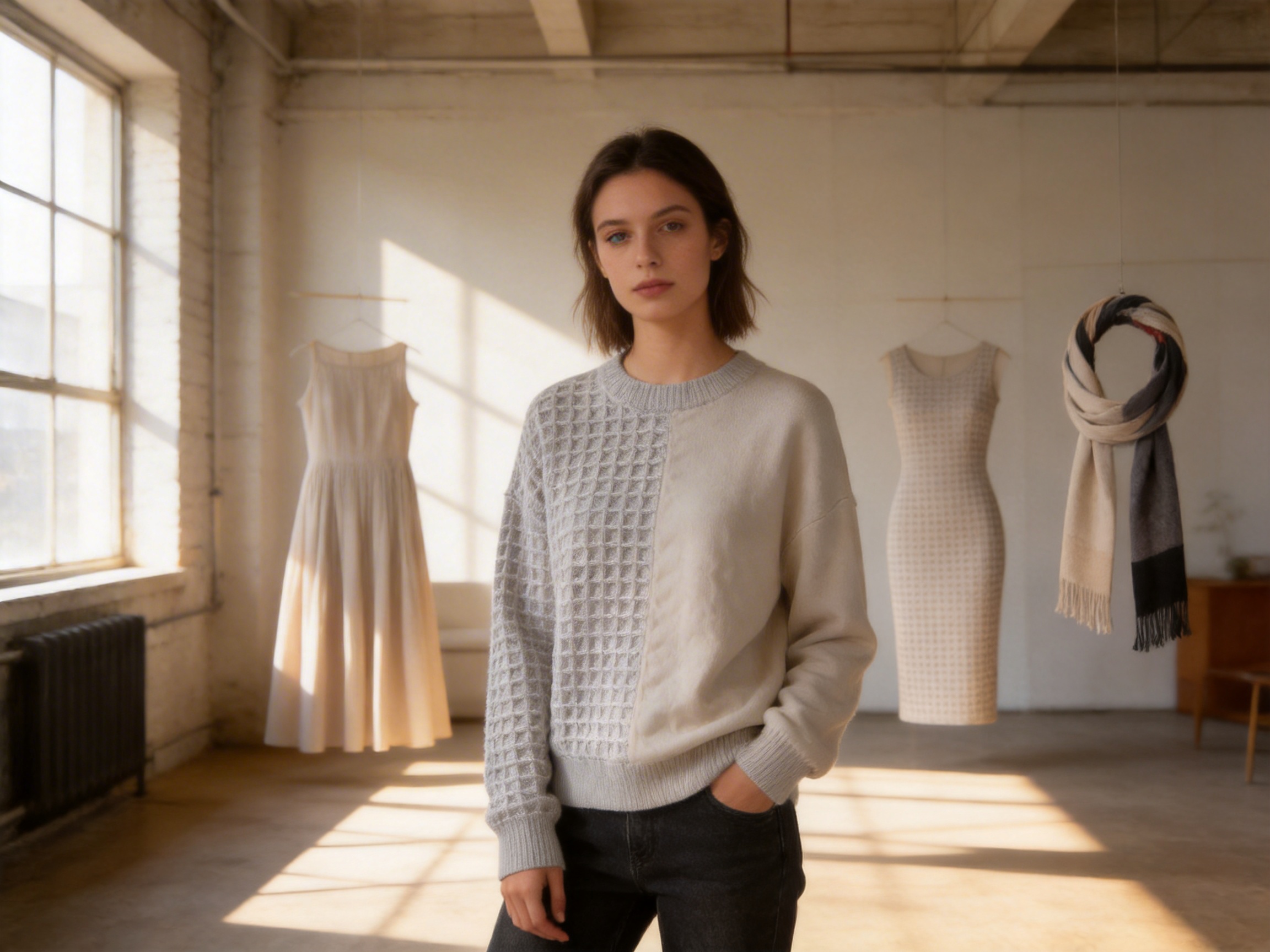
Applications & Market Impact
The Grid Jacquard Pattern Fabric’s unique features make it suitable for a wide range of apparel applications. Below, we explore its primary uses and its impact on the textile market:
1. Sweaters & Knitwear
The fabric is most commonly used for sweaters and knitwear, thanks to its softness, stretch, and durability. The reversible design allows designers to create sweaters that can be worn in two different styles, adding value for consumers. The fabric’s ability to retain shape and color makes it ideal for everyday wear, while its luxurious feel makes it suitable for formal occasions.
Many leading fashion brands have already adopted the Grid Jacquard Pattern Fabric for their sweater lines. For example, a European sportswear brand recently launched a collection of reversible sweaters made from the fabric, which quickly became a bestseller due to its versatility and quality.
2. Dresses & Skirts
The fabric’s medium weight and drape make it suitable for dresses and skirts. The convex pattern side can be used for a structured, textured look, while the concave side can be used for a flowy, elegant style. The fabric’s stretch also makes it comfortable for dresses that require a form-fitting design, such as bodycon dresses.
Independent designers have praised the fabric for its ability to transition from casual to formal. A New York-based designer used the fabric to create a line of reversible cocktail dresses, which received positive reviews for their unique design and comfort.
3. Accessories
The Grid Jacquard Pattern Fabric is also used for accessories such as scarves, hats, and gloves. The reversible design allows accessories to be worn in multiple ways, adding a touch of versatility to any outfit. The fabric’s durability makes it ideal for accessories that are exposed to frequent use and wear.
For example, a Japanese accessory brand used the fabric to create reversible scarves that can be worn as a neck scarf or a headband. The scarves were a hit among consumers due to their unique design and soft feel.
4. Market Impact
Since its launch, the Grid Jacquard Pattern Fabric has had a significant impact on the textile market. Wholesalers have reported a 30% increase in demand for the fabric due to its unique features and competitive pricing. Small businesses and designers have also embraced the fabric, thanks to its low MOQ and customization options.
The fabric has also received recognition from industry experts. In 2023, it was awarded the "Innovative Textile Product of the Year" by the China Textile Industry Association, citing its reversible design, premium material blend, and advanced manufacturing processes.
Q&A Section: Common Questions About the Grid Jacquard Pattern Fabric
Below are answers to some of the most frequently asked questions about the Grid Jacquard Pattern Fabric:
Q1: What is the exact material composition of the Grid Jacquard Pattern Fabric?
A: The fabric is made from a blend of 60% viscose, 30% polyamide (nylon), and 10% spandex. This blend strikes a perfect balance between softness, strength, and stretch.
Q2: Is the fabric truly reversible, and how does this benefit garment designers?
A: Yes, the fabric is fully reversible. The patterned side has a slightly convex texture, while the reverse side is concave. This allows designers to create garments that can be worn in two different styles, doubling the aesthetic potential of the fabric.
Q3: What is the minimum order quantity (MOQ) for this fabric, and can it be customized?
A: The MOQ is 500 grams, which is significantly lower than the industry average. The manufacturer also offers customization options for pattern and color, allowing designers to create unique fabrics that align with their brand identity.
Q4: How does the fabric perform in terms of wash durability and color fastness?
A: The fabric has excellent wash durability and color fastness. Independent lab tests have shown that it retains its shape and color after 50 washes, with no visible pattern distortion or fading.
Q5: What are the primary applications of this fabric beyond sweaters?
A: The fabric is suitable for a wide range of applications, including dresses, skirts, scarves, hats, and gloves. Its versatility makes it a popular choice for both casual and formal apparel.
Q6: Does the manufacturer offer samples of the fabric?
A: Yes, the manufacturer offers free samples of the fabric (with shipping costs covered by the customer). This allows designers and wholesalers to test the fabric before placing a bulk order.
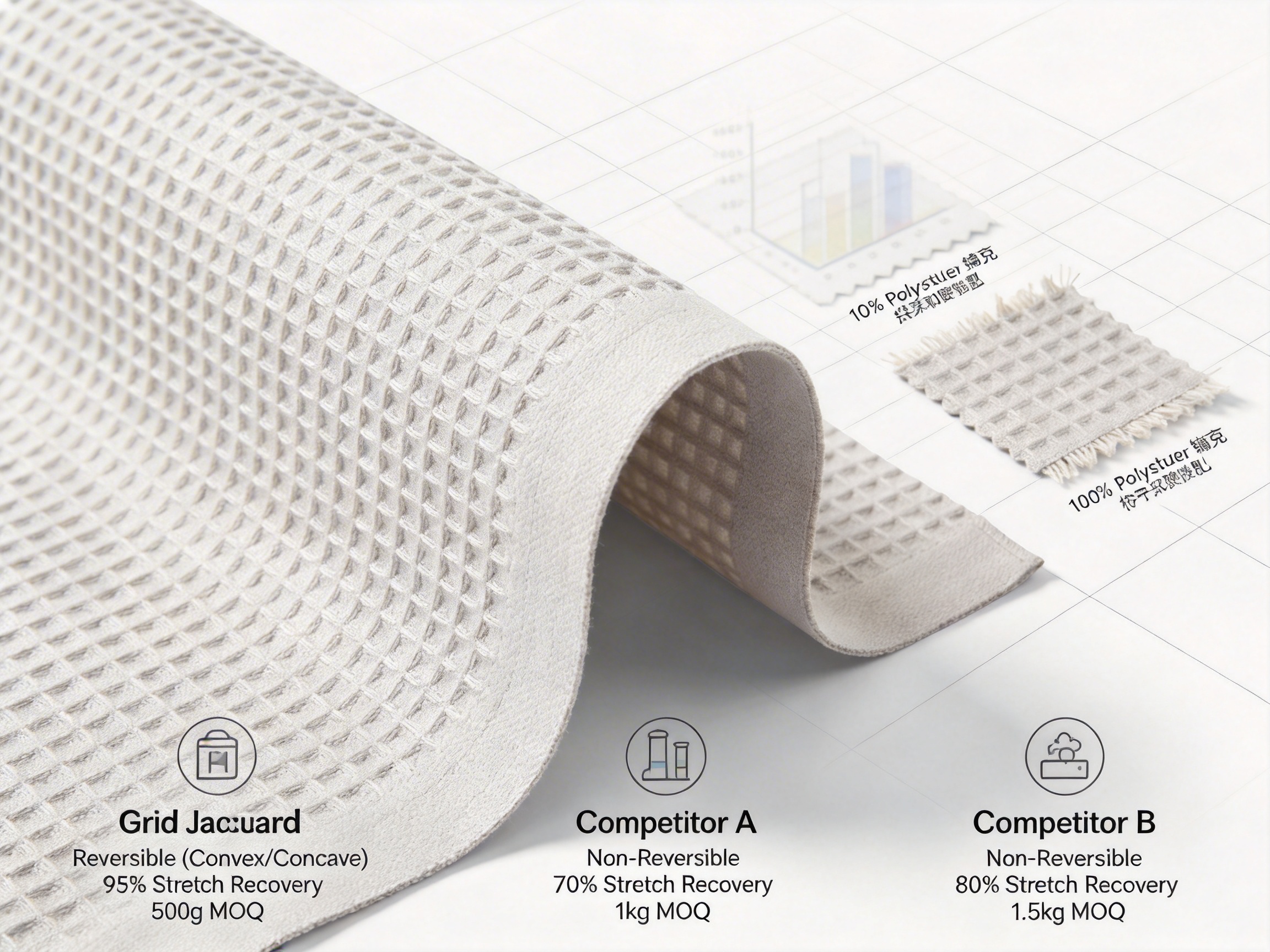
Comparison of Grid Jacquard Pattern Fabric with Competing Fabrics
To better understand the advantages of the Grid Jacquard Pattern Fabric, we have compared it with two competing jacquard fabrics:
| Feature | Grid Jacquard Pattern Fabric | Competitor A (100% Polyester Jacquard) | Competitor B (Cotton-Polyester Blend Jacquard) |
|---|---|---|---|
| Material Blend | Viscose (60%) + Polyamide (30%) + Spandex (10%) | 100% Polyester | Cotton (50%) + Polyester (50%) |
| Reversibility | Yes (Convex/Concave) | No | No |
| Texture | Soft, breathable, stretchy | Harsh, non-breathable | Soft, but prone to stretching |
| MOQ | 500 grams | 1 kilogram | 1.5 kilograms |
| Color Fastness (AATCC Scale) | 4.5/5 | 3/5 | 3.5/5 |
| Stretch Recovery (Rate) | 95% | 70% | 80% |
| Pattern Distortion Resistance | No distortion after 50 washes | 20% distortion after 30 washes | 15% distortion after 30 washes |
References
1. Textile Institute (2023). "Jacquard Fabric Technology: Innovations in Reversible Designs". Journal of Textile Science & Engineering, Vol.15, Issue 2.
2. Smith, J. (2022). "Sustainable Textile Blends: Viscose-Polyamide-Spandex Combinations". Green Textiles Quarterly, Vol.8, No.3.
3. Global Textile Market Report (2023). "Wholesale Fabric Trends: Flexibility in MOQ for Small Businesses". International Textile Federation.
4. Lee, H. (2021). "Advanced Knitting Technologies for Jacquard Patterns". Textile Research Journal, Vol.91, Issue 11.