
Black Slight Intermingled DTY for Consistent Knitting, Dyeing, and Fabric Performance
Black Slight Intermingled DTY is a practical and performance-oriented drawn textured yarn designed for textile producers who need stable processing, balanced fabric appearance, and reliable downstream usability. In modern knitting and blended fabric manufacturing, yarn consistency is not only a raw-material concern; it directly affects machine efficiency, dyeing quality, surface uniformity, fabric hand feel, dimensional stability, and the final commercial value of the textile. Slight intermingled DTY offers a carefully controlled network structure that helps the yarn remain coherent during winding, knitting, weaving, and finishing while avoiding the overly visible network marks that may occur when intermingling is too heavy.
This product belongs to the Slight Intermingled DRAW TEXTURED YARN category. It is especially suitable for manufacturers working with knitted jacquard fabric, polyester rayon fabric, NTR knitted fabric, NR knitted fabric, and other polyester-based or blended textile structures. Its black color makes it relevant for apparel, casualwear, sportswear, home textiles, decorative fabrics, and industrial textile applications where depth of shade, dependable processing, and fabric surface consistency are important.
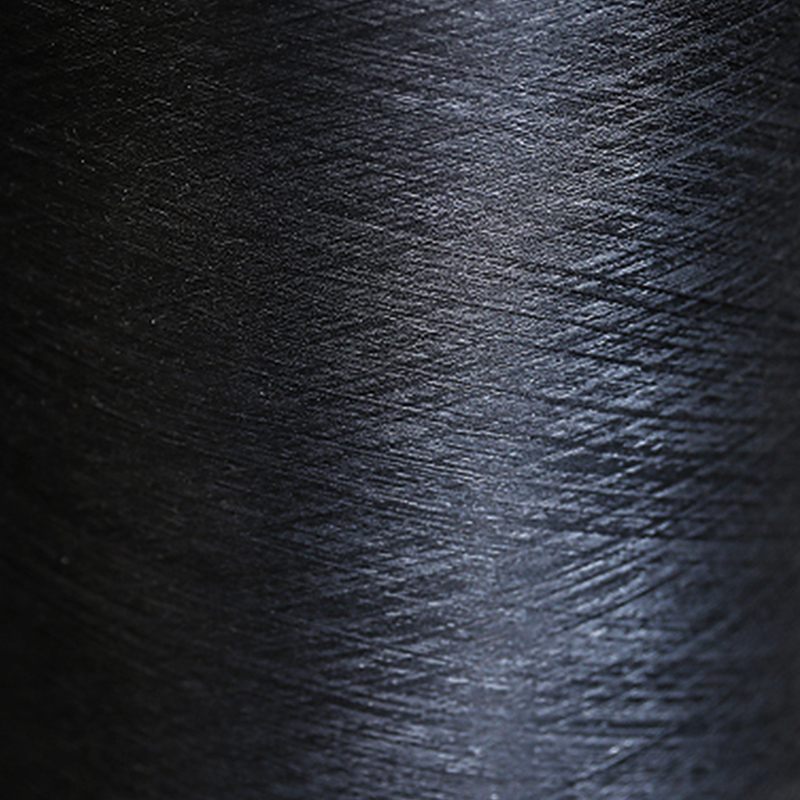
Black Slight Intermingled DTY
Understanding Slight Intermingled Draw Textured Yarn
Draw Textured Yarn, commonly known as DTY, is produced by drawing and texturing partially oriented yarn or similar feed yarn to create a crimped, elastic, and bulked filament yarn. The texturing process gives polyester filament yarn a softer hand, better covering power, improved flexibility, and enhanced suitability for fabric formation. Compared with flat filament yarn, DTY provides a more textile-like touch and better performance in many knitted and woven products.
Intermingling is an additional process in which air pressure is used to create small, periodic network points along the yarn length. These network points help bind the filaments together without the need for high twist. In slight intermingled DTY, the number and intensity of network points are controlled at a lighter level. The purpose is to improve yarn cohesion while preserving softness, flexibility, and fabric smoothness.
The production of DTY with medium and light networks is characterized by varying numbers of networks per meter. These network points are mainly controlled by air pressure and are also influenced by the speed of the texturing machine. If air pressure is too high or the intermingling intensity is too strong, heavy mesh points may appear. These heavy network spots can show on the fabric surface, particularly in fine-gauge knitting, smooth fabrics, or dark solid shades. Slight intermingled DTY reduces this risk by offering a more balanced network level.
For textile mills, this balance matters. A yarn with insufficient cohesion may cause filament separation, fuzz, breakage, uneven tension, and processing instability. A yarn with excessive intermingling may produce unwanted surface marks, reduced softness, or a stiffer fabric hand. Black Slight Intermingled DTY is positioned between these extremes, making it a dependable choice for producers who want efficient processing without sacrificing fabric aesthetics.
Product Characteristics and Functional Advantages
Black Slight Intermingled DTY provides several advantages that are especially valuable in competitive textile production. Its main value lies in controlled network formation, stable filament cohesion, smooth fabric appearance, and compatibility with multiple fabric categories. The slight intermingling structure assists yarn handling and fabric formation while maintaining a softer and cleaner surface than heavier intermingled yarns.
One of the most important characteristics is processing stability. During knitting or weaving, filament yarns must pass through guides, needles, tensioners, feeders, and winding devices. If filaments separate easily, the yarn may generate fly, loops, snags, or broken ends. Slight intermingling helps bind filaments at regular intervals, improving the yarn’s ability to withstand mechanical movement. This can contribute to fewer interruptions and better production continuity.
Another important advantage is fabric surface quality. In fabrics made from heavy intermingled yarn, network spots may become visible after knitting, dyeing, or finishing. This can be particularly noticeable on smooth black fabrics, where surface irregularities may reflect light differently. Slight intermingled DTY is designed to reduce the prominence of such marks. The result is a cleaner surface appearance suitable for fashion fabrics, jacquard patterns, and blended textile structures.
The black color also offers practical benefits. Black remains one of the most demanded colors in apparel and textile markets because of its versatility, perceived elegance, and suitability for multiple seasons. A dependable black DTY can be used in solid fabrics, patterned fabrics, jacquard combinations, or blended constructions. When the yarn is processed consistently, the resulting fabric can show better uniformity and a more reliable final appearance.
| Feature | Practical Benefit | Value for Fabric Producers |
|---|---|---|
| Slight intermingling | Balanced filament cohesion without excessive network marks | Improves processing while maintaining fabric smoothness |
| Controlled network points | More predictable yarn behavior in knitting and weaving | Supports stable machine operation and reduced defects |
| Black DTY appearance | Suitable for classic, fashion, and functional textile applications | Offers broad market adaptability |
| Textured polyester structure | Provides bulk, softness, elasticity, and covering power | Enhances comfort and fabric fullness |
| Compatibility with blended fabrics | Works with polyester rayon, spandex, and knitted constructions | Supports flexible product development |
Why Slight Intermingling Can Outperform Heavier Network Yarn
In yarn selection, more is not always better. A heavily intermingled yarn may appear stronger in terms of filament cohesion, but it can introduce problems in fabric appearance and hand feel. Heavy mesh or heavy network yarn may produce visible network spots on the fabric surface. These spots can reduce the premium appearance of knitted goods and may become more obvious after finishing, especially on dark or smooth fabrics.
Slight intermingled DTY offers a more refined alternative. It provides enough cohesion to support processing, but it avoids excessive network density. For many applications, this is the ideal compromise. It is particularly valuable in fabrics where visual smoothness, softness, drape, and consistent texture are more important than extreme cohesion. This makes it suitable for apparel textiles, knitted jacquard fabrics, polyester rayon blends, and fabrics that require a balanced combination of performance and appearance.
Compared with non-intermingled or poorly controlled yarns, slight intermingled DTY also has an advantage. Non-intermingled filament yarn may be more prone to filament spreading, especially during high-speed processing. This can cause knitting defects, uneven loops, broken filaments, and inconsistent fabric formation. Slight intermingling gives the yarn a manageable structure without making it harsh or overly compact.
Therefore, the competitive advantage of Black Slight Intermingled DTY lies in balance. It is not simply a yarn with network points; it is a yarn designed for controlled performance. It helps textile producers reduce the conflict between processing efficiency and fabric quality. This balance can be more valuable than maximum intermingling, especially for producers targeting stable quality and attractive textile surfaces.
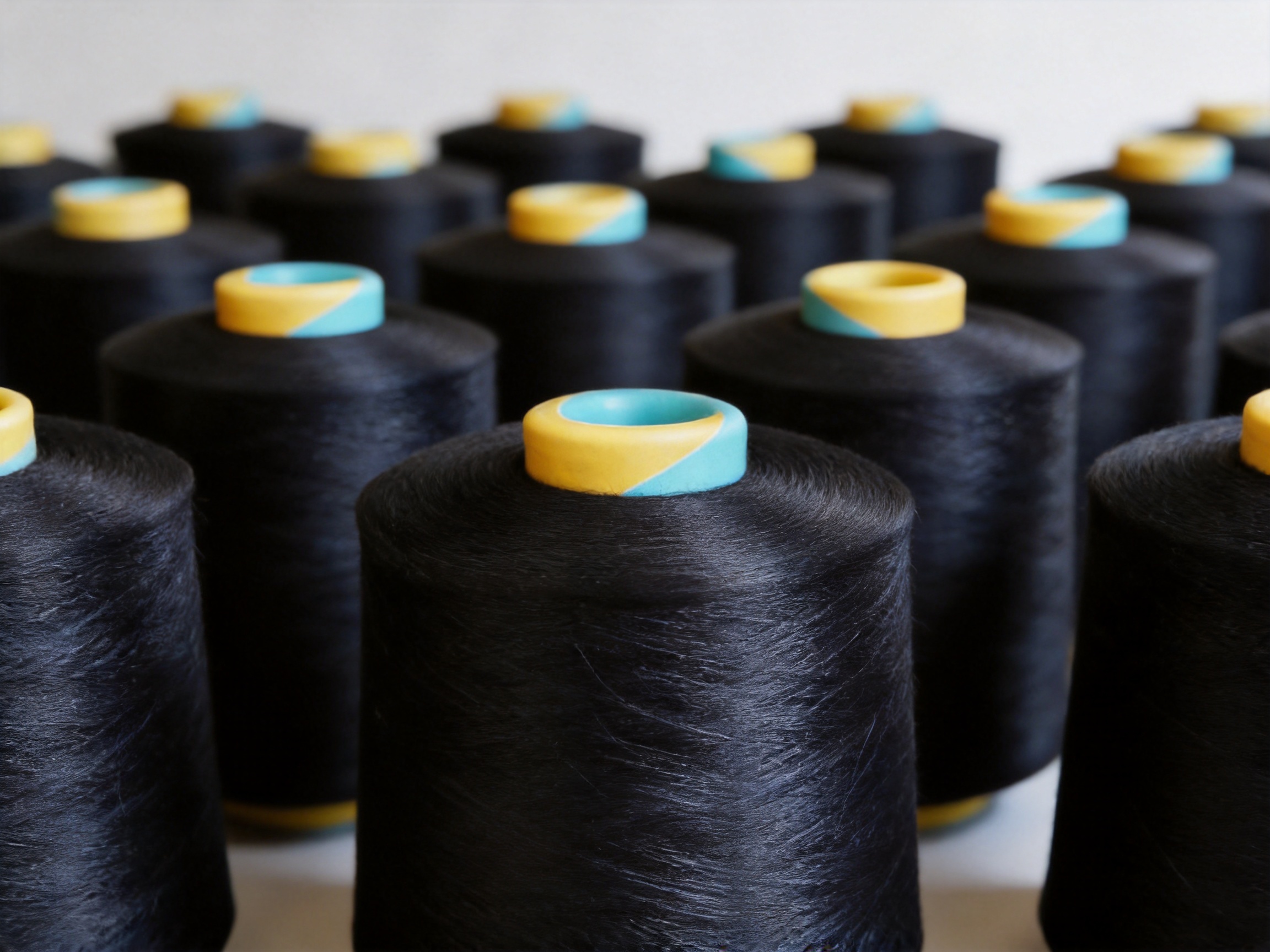
Manufacturing Control: Air Pressure, Machine Speed, and Network Consistency
The quality of slight intermingled DTY depends heavily on manufacturing control. Network points per meter are influenced by air pressure and the operating speed of texturing machines. When these parameters are carefully managed, the yarn can achieve a consistent level of intermingling. When they are poorly controlled, the yarn may show irregular network distribution, inconsistent cohesion, or visible fabric defects.
Air pressure is central to the intermingling process. It creates turbulent airflow that entangles filaments at intervals along the yarn. Higher pressure generally increases the number or intensity of network points, while lower pressure produces lighter intermingling. However, pressure alone is not the only factor. Yarn speed, filament count, yarn tension, nozzle design, temperature conditions, and machine stability all contribute to the final result.
For black slight intermingled DTY, precise control is essential because dark yarn and dark fabrics can reveal surface irregularities. Inconsistent network points may lead to streaks, uneven reflection, or local variation in the fabric. By controlling air pressure and texturing speed, manufacturers can produce yarn with more uniform behavior, helping fabric producers achieve better results in knitting, dyeing, finishing, and inspection.
Hangzhou Jinfeng Textile Co., Ltd. operates with a manufacturing structure that includes DTY polyester yarn production, processing, post-dyeing, finishing, and sales of blended fabrics such as polyester and spandex. This integrated capability is significant because it allows the company to understand the relationship between yarn production and final fabric performance. A yarn supplier that also understands fabric manufacturing can better control yarn properties for real textile applications, not only for laboratory specifications.
Company Strengths Behind Product Reliability
Hangzhou Jinfeng Textile Co., Ltd. is located in Jingjiang Street Industrial Park, Xiaoshan District, Hangzhou City, Zhejiang Province. The company covers an area of 32.6 acres and has a plant area of 18,000 square meters. Its operations include production and processing, post-dyeing, finishing, and sales of blended fabrics, as well as DTY polyester yarn production, processing, and sales. This combination of yarn and fabric capabilities gives the company a strong foundation for serving customers who require stable textile materials and practical production support.
One important company strength is integration. Many textile businesses focus only on yarn or only on fabric. An integrated enterprise can evaluate product performance across several stages, from yarn formation to fabric development and finishing. This is especially helpful for DTY products because the true value of the yarn is proven during downstream processing. A yarn that looks acceptable on a package must also knit smoothly, dye evenly, finish properly, and meet the desired fabric appearance.
The company’s production environment also supports quality management. A plant area of 18,000 square meters allows for organized production, storage, inspection, and processing activities. In textile manufacturing, space and workflow matter because yarn quality can be affected by handling, packaging, humidity conditions, contamination control, and production sequence. A well-structured facility helps ensure that products move through each stage with better consistency.
As a self-operated export company integrating research and development, production, and sales, the company is positioned to serve both domestic and international customers. Export experience is valuable because different markets may require different standards for appearance, performance, packaging, and consistency. A supplier familiar with export requirements is often better prepared to communicate specifications, maintain stable production, and support repeat orders.
Applications in Knitted Jacquard Fabric
Knitted jacquard fabric requires yarns that can support pattern clarity, loop stability, and consistent fabric surface behavior. In jacquard knitting, the structure may involve complex patterns, variable loop formation, and different yarn feeding conditions. If yarn tension is unstable or filaments separate, the pattern may become less precise and machine efficiency may decline.
Black Slight Intermingled DTY is well suited to jacquard applications because the slight network points help maintain yarn integrity during feeding and loop formation. At the same time, the lighter intermingling level helps avoid excessive surface marks that could interfere with the visual quality of jacquard designs. This is important because jacquard fabrics often rely on contrast, texture, and controlled surface detail.
When used in black jacquard designs, the yarn can contribute to a clean and refined appearance. Black may be used as the main shade, a background shade, or a pattern element. A stable black yarn helps ensure that the finished fabric maintains a consistent visual impression. In fashion and upholstery markets, this consistency can influence customer acceptance and repeat orders.
Applications in Polyester Rayon Fabric
Polyester rayon fabric combines characteristics from both synthetic and cellulosic fibers. Polyester contributes durability, dimensional stability, and easy-care properties, while rayon can improve softness, drape, and moisture comfort. When DTY polyester yarn is used in such blended fabrics, it can enhance bulk, elasticity, and surface coverage.
Slight intermingled DTY can be particularly useful in polyester rayon constructions because blended fabrics often require balanced yarn behavior. If the polyester component is too harsh or too visibly intermingled, it may reduce the smoothness and comfort associated with rayon. If the yarn is too loose or unstable, it may create processing problems. A slight intermingled structure supports the fabric’s balance between durability, comfort, and appearance.
For black polyester rayon fabrics, surface uniformity is important. The dark shade can make unevenness more visible if the yarn or fabric structure is inconsistent. Controlled DTY production helps reduce this risk and supports the development of attractive fabrics for shirts, dresses, trousers, casualwear, and fashion garments.
Applications in NTR and NR Knitted Fabrics
NTR knitted fabric and NR knitted fabric require yarns that can perform reliably during knitting and finishing. These fabric categories may be used in apparel, functional textiles, and blended fabric programs where elasticity, structure, softness, and appearance must be balanced. Yarn stability is a key factor in maintaining loop uniformity and fabric quality.
Black Slight Intermingled DTY helps support these requirements by offering controlled cohesion and manageable elasticity. The textured yarn structure contributes fullness and flexibility, while the slight intermingling improves handling through the knitting process. This can assist in maintaining consistent loops and reducing defects associated with filament separation.
In competitive textile markets, fabric producers need yarns that help reduce waste and rework. A yarn that causes frequent stoppages, uneven fabric, or quality complaints can increase overall production cost even if its purchase price is low. The advantage of controlled slight intermingled DTY is that it can contribute to smoother operation and more dependable output.
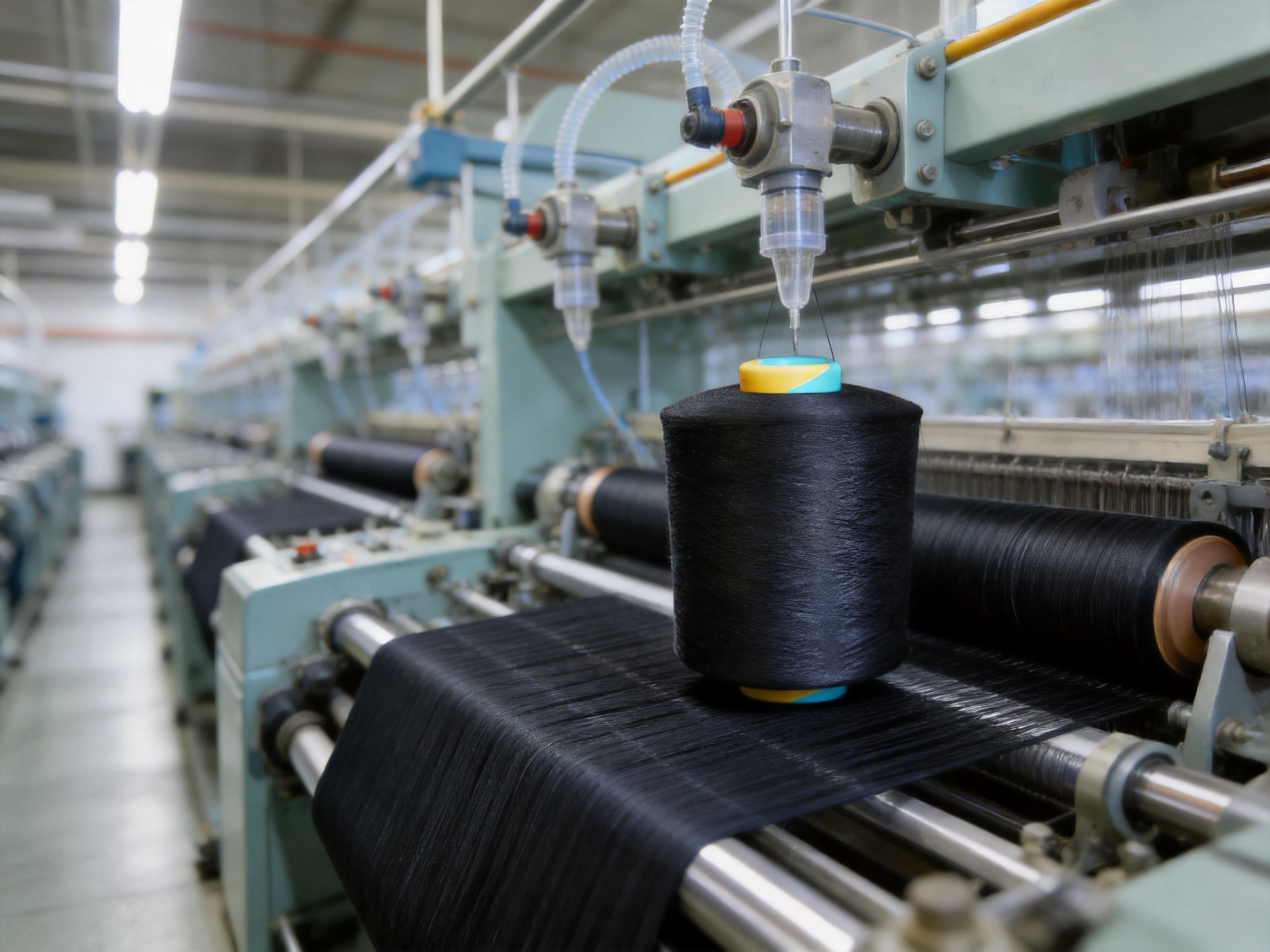
Fabric Hand Feel, Drape, and Surface Quality
The hand feel of a fabric is one of the most important qualities noticed by end users. DTY is valued because texturing creates crimp and bulk, giving the yarn a softer, more comfortable character than flat filament yarn. Slight intermingling helps preserve this softness because it does not over-consolidate the filaments. The yarn remains coherent but still flexible.
Drape is also influenced by yarn structure. Fabrics made with overly stiff yarns may feel rigid and less comfortable. Fabrics made with unstable yarns may lack structure or show unevenness. Black Slight Intermingled DTY offers a balanced structure that can support both fabric fullness and drape. This makes it useful in apparel fabrics where movement and comfort are important.
Surface quality is especially important for black fabrics. Black textiles often depend on smooth reflection and deep visual uniformity. Surface defects such as streaks, mesh marks, broken filaments, or uneven loop formation can be more noticeable. By controlling the network level, slight intermingled DTY supports a cleaner fabric surface and reduces the risk of heavy network spots appearing in the final textile.
Production Efficiency and Cost Control for Fabric Mills
Textile producers evaluate yarn not only by price but also by total production performance. A yarn that runs smoothly can reduce machine downtime, labor intervention, fabric defects, and waste. Slight intermingled DTY contributes to production efficiency by improving filament cohesion and reducing handling problems. This can be particularly valuable in high-speed knitting or continuous fabric production.
Yarn breakage, needle damage, fabric holes, barré, and uneven tension can increase production costs. Some of these problems may be caused by inconsistent yarn quality or poor filament cohesion. While no yarn can eliminate every manufacturing risk, a controlled slight intermingled DTY can help reduce avoidable problems associated with unstable filament behavior.
Cost control also depends on repeatability. If a mill can use the same yarn specification across repeated orders and obtain consistent fabric results, it can reduce testing time, machine adjustments, and customer complaints. The manufacturing experience and integrated production capabilities of Hangzhou Jinfeng Textile Co., Ltd. support this goal by connecting yarn production with downstream textile knowledge.
Comparison with Common Competing Yarn Options
Compared with ordinary DTY without controlled intermingling, Black Slight Intermingled DTY offers better filament cohesion and handling stability. This is important during winding, knitting, and weaving because the yarn must remain organized under tension and friction. Ordinary yarns may be suitable for some applications, but they can be less reliable where processing speed and fabric quality requirements are high.
Compared with heavy intermingled DTY, slight intermingled DTY offers a cleaner and softer fabric surface. Heavy network yarns may be useful in applications where strong cohesion is the highest priority, but they can create visible mesh spots and a firmer hand. For apparel and refined knitted fabrics, slight intermingling often provides a better balance.
Compared with low-grade yarns that lack manufacturing control, this product provides better consistency in the relationship between air pressure, machine speed, and network formation. In textile production, consistency is often more valuable than a single strong specification. A mill needs every package to behave predictably, not only one sample cone. Controlled DTY production helps support more reliable fabric output.
Compared with suppliers who only provide yarn without fabric experience, an integrated textile company can better understand how yarn defects appear in finished fabrics. This is a practical competitive advantage. The ability to connect yarn properties with knitting, dyeing, finishing, and fabric inspection can improve product development and customer support.
Quality Considerations for Buyers
When purchasing Black Slight Intermingled DTY, buyers should consider several key quality factors. Network consistency is one of the most important. The yarn should have enough intermingling to maintain filament cohesion but not so much that it creates visible spots on the fabric. Buyers should also evaluate package formation, yarn tension, shade consistency, denier uniformity, elongation, strength, and compatibility with their machinery.
Fabric testing is recommended before large-scale production, especially when the yarn is used in new fabric structures. Trial knitting or weaving can reveal how the yarn behaves under actual production conditions. Finishing tests can also show whether the yarn creates the desired fabric hand, appearance, and dimensional performance.
Communication with the supplier is also important. Buyers should share intended fabric type, machine gauge, knitting or weaving conditions, finishing process, and quality expectations. This allows the supplier to recommend suitable yarn specifications and help reduce production risk. A supplier with integrated yarn and fabric experience can provide more practical guidance than a supplier focused only on basic yarn sales.
Role in Sustainable and Efficient Textile Production
Efficient yarn performance can contribute to more responsible textile production. When yarn runs smoothly, mills may reduce waste caused by broken ends, defective fabric, rejected rolls, or repeated processing. Although sustainability depends on many factors, including fiber source, energy use, dyeing methods, and waste management, stable yarn quality plays a meaningful role in reducing unnecessary loss.
Consistent DTY can also support better planning. Mills that experience fewer defects can reduce overproduction and improve delivery reliability. In an industry where lead times and quality consistency are critical, dependable materials help reduce operational stress and resource waste.
The integrated manufacturing model of Hangzhou Jinfeng Textile Co., Ltd. can also support efficiency because production, processing, dyeing, finishing, and sales knowledge are connected. This helps align raw material performance with final fabric needs, reducing the gap between yarn production and market requirements.
Why Black Slight Intermingled DTY Is a Strong Choice
Black Slight Intermingled DTY is a strong choice for textile manufacturers who need a yarn that balances processing stability, fabric quality, and broad application potential. Its slight intermingled structure offers a practical level of filament cohesion while reducing the risk of heavy network marks. Its textured polyester character provides softness, bulk, and flexibility, making it suitable for multiple knitted and blended fabric applications.
The product is especially valuable in markets where fabric appearance matters. Black fabrics must look clean, smooth, and consistent. A yarn that produces visible mesh spots or uneven texture can reduce the perceived quality of the final product. Slight intermingled DTY helps address this challenge by maintaining control over network formation.
The company behind the product adds further value through its manufacturing scale, integrated operations, and textile experience. With DTY polyester yarn production, blended fabric processing, post-dyeing, finishing, and sales capabilities, Hangzhou Jinfeng Textile Co., Ltd. is not only supplying yarn; it is supporting a complete textile value chain. This provides buyers with a more reliable foundation for long-term cooperation.
Frequently Asked Questions
What is Black Slight Intermingled DTY?
Black Slight Intermingled DTY is a black drawn textured polyester yarn with a controlled light intermingling structure. It is designed to provide filament cohesion during textile processing while maintaining a smooth fabric surface and soft hand feel.
How is slight intermingling different from heavy intermingling?
Slight intermingling creates fewer or lighter network points along the yarn, while heavy intermingling creates stronger and more visible network points. Heavy intermingling may improve cohesion but can produce mesh spots on the fabric surface. Slight intermingling offers a better balance for fabrics where appearance and softness are important.
What controls the number of network points per meter?
The number of network points per meter is mainly controlled by air pressure during the intermingling process. It is also affected by the speed of texturing machines and other production factors such as yarn tension, nozzle condition, and process stability.
Why is this yarn suitable for knitted jacquard fabric?
Knitted jacquard fabric requires yarn stability and surface consistency. Black Slight Intermingled DTY supports stable feeding and loop formation while reducing the risk of visible heavy network marks that could interfere with pattern clarity.
Can this yarn be used in polyester rayon fabrics?
Yes. It can be used in polyester rayon fabric structures where polyester contributes durability and stability while rayon contributes softness and drape. Slight intermingled DTY helps maintain processing reliability without making the fabric feel overly stiff.
What are the advantages for fabric mills?
The main advantages include smoother processing, improved filament cohesion, reduced risk of fabric surface defects, better suitability for dark fabrics, and broad compatibility with knitted and blended textile applications.
Why does black fabric require careful yarn control?
Black fabric can reveal surface irregularities because differences in texture and reflection may become visible. Controlled slight intermingling helps reduce uneven network marks and supports a cleaner final appearance.
What company strengths support this product?
Hangzhou Jinfeng Textile Co., Ltd. has integrated capabilities in DTY polyester yarn production, processing, post-dyeing, finishing, and blended fabric sales. The company operates from a 32.6-acre site with an 18,000-square-meter plant area and serves domestic and international customers.
Conclusion
Black Slight Intermingled DTY is a balanced and versatile yarn for manufacturers seeking dependable processing and high-quality fabric appearance. Its controlled network structure helps maintain filament cohesion without the surface problems often associated with heavy intermingling. This makes it especially useful for knitted jacquard fabric, polyester rayon fabric, NTR knitted fabric, NR knitted fabric, and other textile products where smoothness, comfort, and consistency are essential.
In a competitive market, the value of yarn is measured by its performance throughout the production chain. A reliable DTY must run well on machines, produce consistent fabric, support finishing processes, and meet customer expectations. Black Slight Intermingled DTY addresses these requirements through controlled manufacturing, practical application flexibility, and a strong balance between efficiency and aesthetics.
Supported by the integrated manufacturing strengths of Hangzhou Jinfeng Textile Co., Ltd., this yarn offers buyers a dependable option for both current production and future fabric development. For textile mills looking to improve quality, reduce avoidable defects, and create attractive black fabrics, slight intermingled DTY provides a smart and commercially valuable solution.
References
1. Hearle, J. W. S., Hollick, L., and Wilson, D. K. Yarn Texturing Technology. Woodhead Publishing.
2. Gupta, V. B., and Kothari, V. K. Manufactured Fibre Technology. Springer.
3. Saville, B. P. Physical Testing of Textiles. Woodhead Publishing.
4. Lord, P. R. Handbook of Yarn Production: Technology, Science and Economics. Woodhead Publishing.
5. Textile Institute. Textile Terms and Definitions. The Textile Institute.