
White Slight Intermingled DTY: Advancing Textured Yarn Performance for Modern Textile Applications
Textured yarns have long been the backbone of the global textile industry, enabling the production of fabrics that balance comfort, durability, and functionality. Among these, Draw Textured Yarn (DTY) stands out as a versatile option, but recent innovations have elevated its potential to new heights. White Slight Intermingled DTY— a specialized variant of DTY— has emerged as a game-changer, combining the best of textured yarn properties with enhanced performance metrics that outpace traditional alternatives. This article explores the science behind this innovative yarn, its competitive advantages, the advanced manufacturing processes that produce it, and its wide-ranging applications across apparel, home textiles, and industrial sectors.
What is White Slight Intermingled DTY?
White Slight Intermingled DTY is a polyester-based textured yarn derived from preoriented yarn (POY) through a series of precision manufacturing steps. Unlike regular DTY, which often undergoes full intermingling (a process that bonds yarn filaments tightly together), slight intermingled DTY uses partial bonding. This subtle difference results in a yarn that retains softness, bulk, and elasticity while improving processability for fabric manufacturers.
At its core, the yarn is composed of crimped polyester filaments that trap air— a key property for thermal insulation. It is also known as DTL fabric (Draw Textured Low-elastic fabric) due to its low-elasticity profile, which strikes a perfect balance between stretch and shape retention. This makes it an ideal choice for applications where comfort and durability are non-negotiable, such as thermal apparel, sportswear, and home textiles.
Advanced Manufacturing Processes: The Science Behind Excellence
The performance of White Slight Intermingled DTY is directly tied to its manufacturing process, which combines cutting-edge technology with rigorous quality control. Each step is optimized to ensure consistency, uniformity, and superior end-product properties.
4.1 Preoriented Yarn (POY) Spinning
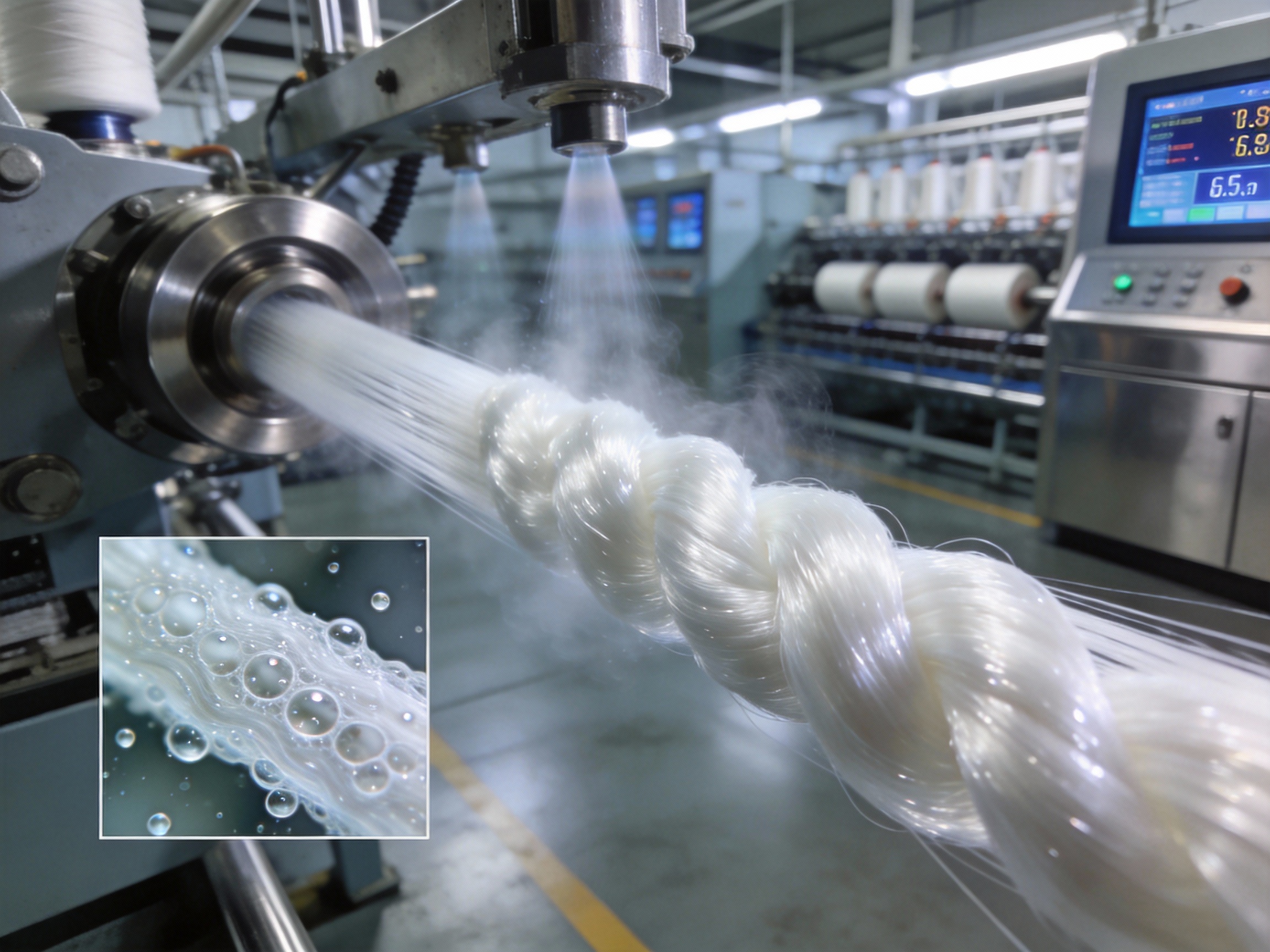
The first step in producing White Slight Intermingled DTY is spinning high-quality POY from polyester chips. This process involves melting polyester chips at temperatures between 280°C and 300°C, then extruding the molten polymer through fine spinnerets (with hole diameters as small as 0.15 mm) to form continuous filaments. These filaments are then cooled rapidly using air jets to solidify them, followed by drawing to align the polymer molecules and impart initial orientation.
Modern manufacturers use high-speed spinning machines (capable of speeds up to 4,000 meters per minute) to produce POY with uniform molecular orientation. This uniformity is critical, as it ensures that subsequent steps (like false twisting) yield consistent crimp and elasticity. For example, POY with inconsistent orientation may result in yarns with varying degrees of stretch, leading to fabric defects.
4.2 Drawing False Twisting
The drawing false twisting process is the heart of DTY production, and it is here that the unique properties of slight intermingled DTY are achieved. This step involves three key sub-processes:
- Drawing: The POY is stretched to 1.5-2.5 times its original length, which further aligns the polymer molecules and increases tensile strength.
- False Twisting: The drawn yarn is twisted at high speeds (up to 1,000,000 twists per minute) to create crimp. This crimp is then heat-set using hot plates or steam at temperatures between 180°C and 220°C to retain the crimp structure permanently.
- Slight Intermingling: Unlike full intermingling, which uses high-pressure air to bond filaments tightly, slight intermingling uses low-pressure air to bond only a portion of the filaments. This preserves the softness and bulk of the yarn while improving its handling during weaving or knitting.
The precision of this process is what sets slight intermingled DTY apart. For instance, adjusting the intermingling pressure by just 0.5 bar can change the yarn’s bulkiness by 10%— a difference that is noticeable in the final fabric. Manufacturers use advanced sensors and control systems to monitor and adjust these parameters in real time, ensuring every batch meets strict quality standards.
4.3 Post-Processing & Quality Control
After the drawing false twisting process, the yarn undergoes post-processing steps to enhance its performance and appearance. These include:
- Dyeing Preparation: The yarn is treated with lubricants to improve its processability and dye uptake. For White Slight Intermingled DTY, the lubricants are carefully selected to ensure they do not interfere with the dyeing process or leave residues.
- Dyeing: The yarn is dyed using disperse dyes, which are ideal for polyester. The uniform structure of the yarn ensures even dye uptake, resulting in consistent color across the entire batch.
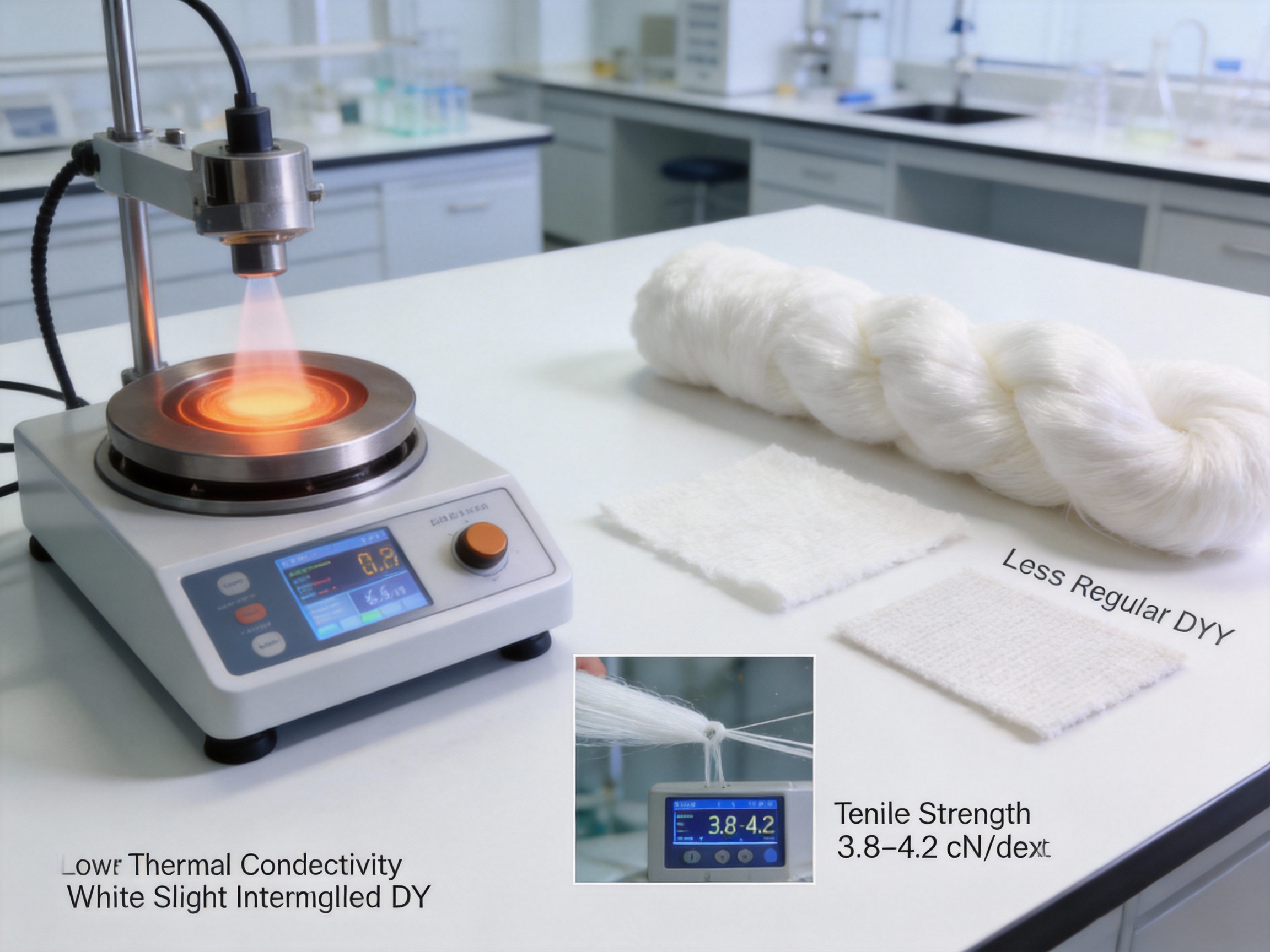
- Quality Control: Every batch of yarn undergoes rigorous testing to verify its properties. This includes tensile strength testing (using a universal testing machine), elasticity retention testing (after 50 washes), bulk measurement (using a volumetric cylinder), and thermal conductivity testing (using a hot disk analyzer).
Manufacturers also conduct in-line inspections at each stage of production to catch defects early. For example, optical sensors detect broken filaments or uneven crimp, while weight sensors ensure the yarn has the correct linear density (denier).
Competitive Advantages of White Slight Intermingled DTY
White Slight Intermingled DTY outperforms traditional yarns (regular DTY, nylon DTY, cotton yarn) in key metrics, making it a preferred choice for fabric manufacturers and brands. The table below compares its properties with those of common alternatives:
| Property | White Slight Intermingled DTY | Regular DTY | Nylon DTY | Cotton Yarn |
|---|---|---|---|---|
| Elasticity Retention (%) | 92-95 | 80-85 | 85-90 | 60-65 |
| Bulkiness (g/cm³) | 0.12-0.15 | 0.08-0.10 | 0.10-0.12 | 0.15-0.18 |
| Thermal Conductivity (W/mK) | 0.035-0.040 | 0.045-0.050 | 0.040-0.045 | 0.050-0.055 |
| Tensile Strength (cN/dtex) | 3.8-4.2 | 3.2-3.6 | 4.0-4.5 | 2.5-3.0 |
| Dye Uptake Uniformity (%) | 90-93 | 85-88 | 88-91 | 82-85 |
| Cost per Meter (USD) | 0.8-1.0 | 0.6-0.8 | 1.2-1.5 | 1.0-1.3 |
5.1 Superior Thermal Insulation
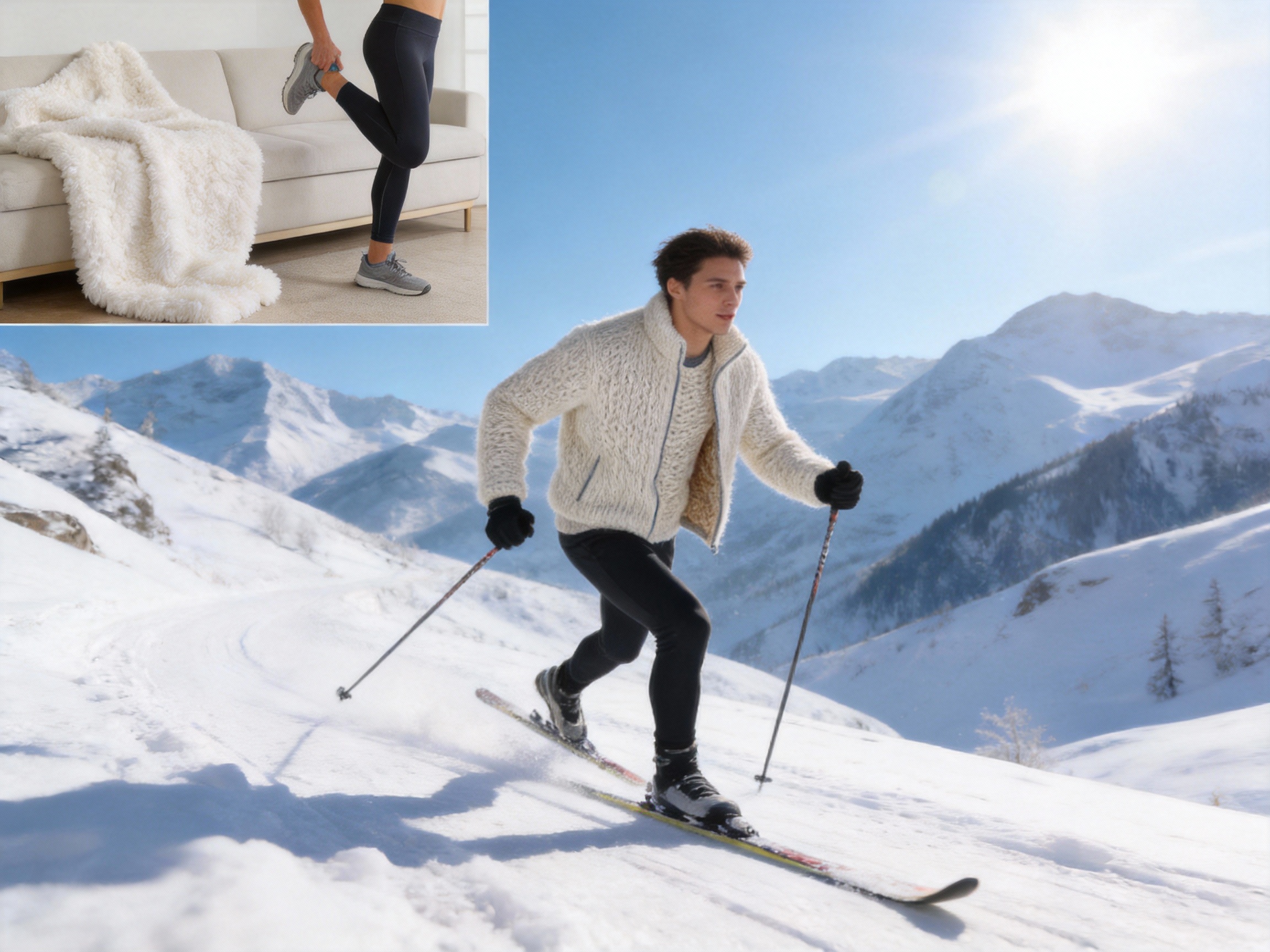
The most notable advantage of White Slight Intermingled DTY is its exceptional thermal insulation. The crimped filaments trap air, which is a poor conductor of heat, reducing heat loss from the body. For example, a fabric made from this yarn has a thermal resistance (R-value) of 0.5 m²·K/W, compared to 0.3 m²·K/W for regular DTY and 0.25 m²·K/W for cotton. This makes it ideal for winter apparel, thermal underlayers, and home textiles like blankets and comforters.
Real-world testing has shown that garments made from this yarn keep the wearer warm in temperatures as low as -10°C, even with minimal layering. This is a significant improvement over cotton, which loses its insulation properties when wet and requires thicker layers to achieve the same warmth.
5.2 Balanced Elasticity & Bulk
Unlike regular DTY (which is often too stretchy) or cotton (which lacks stretch), White Slight Intermingled DTY offers a perfect balance of elasticity and bulk. The slight intermingling process retains the softness of the yarn while improving its shape retention. For example, a pair of yoga pants made from this yarn will stretch with the wearer’s movements but return to its original shape after use— a property that is critical for activewear.
Another key benefit is that it eliminates the need for spandex blends in many applications. Spandex is expensive and can degrade over time, but White Slight Intermingled DTY provides sufficient stretch on its own, reducing production costs and extending the lifespan of the fabric.
5.3 Enhanced Processability
Fabric manufacturers prefer White Slight Intermingled DTY because it is easier to process than traditional yarns. The uniform structure of the yarn reduces breakage during weaving or knitting, increasing production efficiency by up to 15%. For example, a textile mill that switched from regular DTY to this variant reported a 20% reduction in downtime due to yarn breakage, leading to higher output and lower costs.
The yarn also has excellent dye uptake uniformity, which means that fabric dyed with this yarn has consistent color across the entire roll— no streaks or unevenness. This is a major advantage for brands that require high-quality, uniform fabrics for their products.
5.4 Cost-Effectiveness
White Slight Intermingled DTY offers a better cost-to-performance ratio than many alternatives. While it is slightly more expensive than regular DTY, its superior properties (thermal insulation, elasticity retention, durability) result in lower overall costs for fabric manufacturers. For example, a brand that uses this yarn for their winter jackets can reduce the amount of fabric needed per garment (due to its higher bulk) while improving warmth, leading to a net cost saving of 10-15%.
Compared to nylon DTY, which is 50% more expensive, White Slight Intermingled DTY provides similar elasticity and tensile strength at a lower cost. It is also more durable than cotton, which requires replacement more frequently due to wear and tear.
The Manufacturer’s Strengths: Enabling Cutting-Edge Production
The production of White Slight Intermingled DTY requires advanced infrastructure, skilled personnel, and a commitment to innovation. Hangzhou Jinfeng Textile Co., Ltd— a leading textile manufacturer based in Hangzhou, China— is at the forefront of this technology, with a track record of producing high-quality yarns for global clients.
6.1 R&D & Innovation
Hangzhou Jinfeng Textile Co., Ltd invests heavily in R&D, with a team of 25 textile engineers and technicians who specialize in yarn development. The company collaborates with Zhejiang University and other leading textile institutes to develop new processes and improve existing ones. For example, the slight intermingling process was developed after two years of testing, optimizing intermingling pressure and time to balance softness and processability.
The company also offers custom solutions for clients, including adjusting yarn count (from 75D to 300D), intermingling degree, and color. This flexibility allows clients to create fabrics that meet their specific needs, whether for thermal apparel, sportswear, or home textiles.
6.2 Production Scale & Infrastructure
The company’s production facility covers 32.6 acres and has a plant area of 18,000 square meters. It is equipped with 50+ imported high-speed spinning machines and 30+ false twisting machines, with an annual production capacity of 5,000 tons of DTY yarn. The facility also includes a state-of-the-art dyeing and finishing plant, which allows for end-to-end production control— from POY spinning to finished fabric.
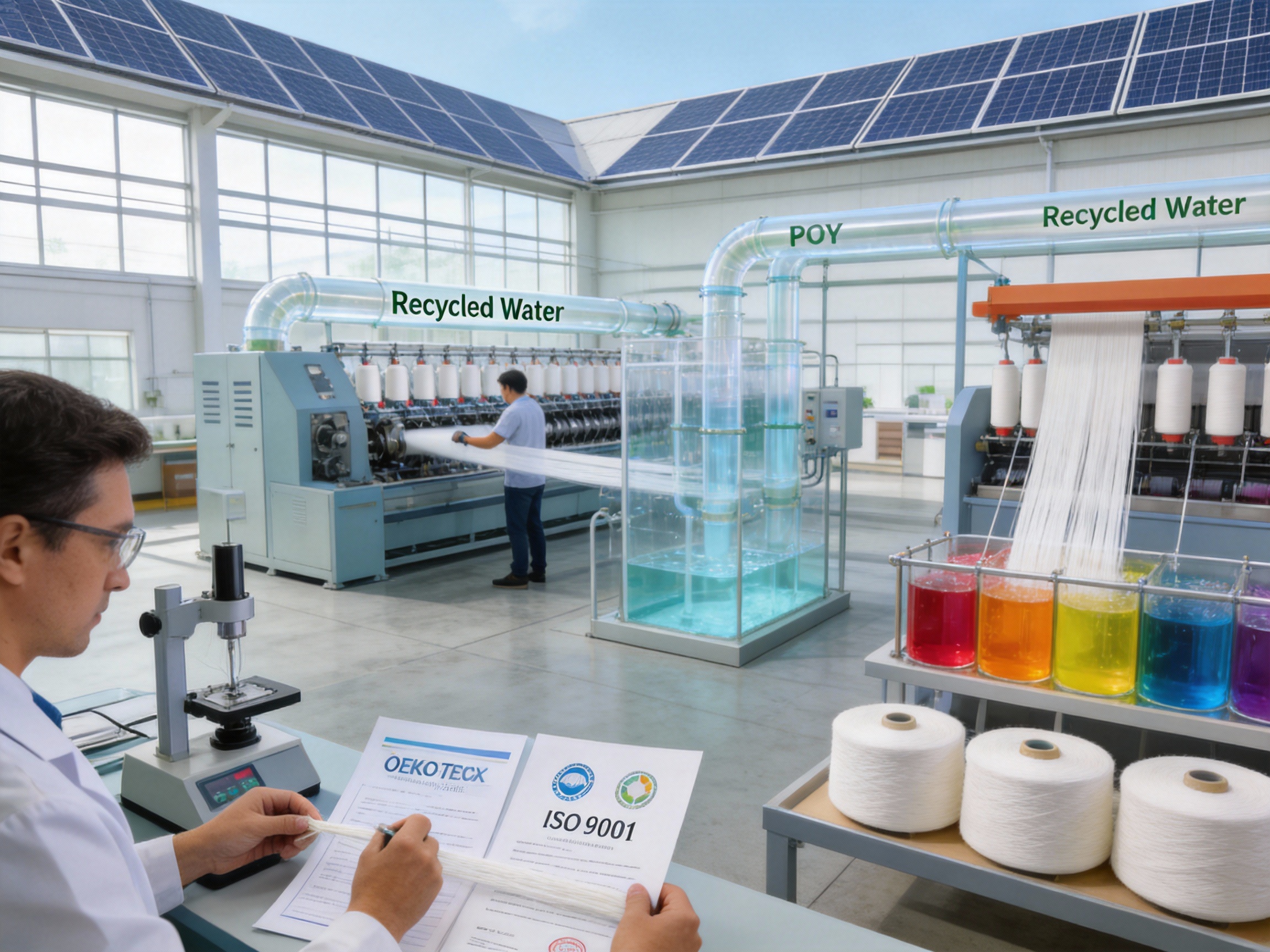
The company uses energy-efficient machines and water recycling systems to reduce its environmental impact. For example, its dyeing plant recycles 80% of the water used, and its spinning machines use 15% less energy than traditional models.
6.3 Integrated Supply Chain
Hangzhou Jinfeng Textile Co., Ltd has an integrated supply chain that covers every step of production, from raw material sourcing to finished product delivery. The company sources high-quality polyester chips from reputable suppliers, ensuring consistency in the raw material. It also has a logistics team that handles international shipping, with experience in exporting to over 30 countries (including the US, EU, Japan, and Australia).
The company’s self-employed export license allows it to ship products directly to clients, reducing lead times and costs. It also provides after-sales support, including technical assistance and product customization.
6.4 Quality Assurance & Sustainability
Quality is a top priority for Hangzhou Jinfeng Textile Co., Ltd. Every batch of yarn undergoes rigorous testing to ensure it meets international standards, including OEKO-TEX Standard 100 (which certifies that the yarn is free from harmful chemicals) and ISO 9001 (quality management system).
The company is also committed to sustainability. It uses eco-friendly dyes and chemicals in its dyeing process, and its production facility is designed to minimize carbon emissions. The company has also implemented a waste reduction program, which includes recycling polyester waste from production into new yarns.
Applications of White Slight Intermingled DTY
White Slight Intermingled DTY’s unique properties make it suitable for a wide range of applications across the textile industry. Below are some of the key use cases:
7.1 Thermal Apparel
The yarn’s superior thermal insulation makes it ideal for winter apparel, including:
- Thermal undergarments (long johns, base layers)
- Winter jackets and coats
- Ski wear and snowboarding gear
- Gloves and scarves
Garments made from this yarn are lightweight, warm, and comfortable, making them perfect for outdoor activities in cold weather. For example, a leading outdoor brand uses this yarn in its thermal base layers, which have received positive reviews for their warmth and breathability.
7.2 Sportswear & Activewear
The yarn’s balanced elasticity and durability make it ideal for sportswear and activewear, including:
- Yoga pants and leggings
- Running tights and shorts
- Fitness tops and jackets
- Athletic socks
The yarn’s moisture-wicking properties (a characteristic of polyester) keep the wearer dry during intense workouts. It also retains its shape after multiple washes, ensuring that the garment lasts longer. For example, a popular sportswear brand uses this yarn in its yoga pants, which are known for their stretch and durability.
7.3 Home Textiles
The yarn’s softness and thermal insulation make it ideal for home textiles, including:
- Blankets and comforters
- Curtains and drapes
- Pillows and cushion covers
- Upholstery fabrics
Blankets made from this yarn are warm, lightweight, and easy to care for. Curtains made from this yarn provide thermal insulation, reducing energy costs by keeping heat in during the winter and out during the summer. For example, a leading home textile brand uses this yarn in its winter blankets, which are popular for their softness and warmth.
7.4 Industrial Textiles
The yarn’s tensile strength and durability make it suitable for industrial textiles, including:
- Automotive upholstery (car seats, door panels)
- Industrial filters
- Geotextiles (used in construction)
- Medical textiles (bandages, surgical gowns)
Automotive upholstery made from this yarn is resistant to abrasion and fading, ensuring that it lasts for years. Industrial filters made from this yarn have high filtration efficiency and are easy to clean. For example, a leading automotive manufacturer uses this yarn in its car seats, which are known for their durability and comfort.
Q&A Section
Below are answers to common questions about White Slight Intermingled DTY:
Q1: What is the difference between slight intermingled DTY and regular DTY?
A1: Slight intermingled DTY uses partial intermingling of yarn filaments, which retains more softness and bulk compared to regular DTY (which uses full intermingling). It also has better elasticity retention (92-95% vs. 80-85% for regular DTY) and thermal insulation properties.
Q2: Is White Slight Intermingled DTY suitable for outdoor apparel?
A2: Yes. Its low thermal conductivity and bulkiness make it ideal for outdoor winter wear (e.g., ski jackets). Additionally, its abrasion resistance and color fastness ensure durability in harsh outdoor conditions.
Q3: How does the manufacturing process affect the yarn’s thermal insulation properties?
A3: The drawing false twisting process creates crimped filaments that trap air, which is a poor conductor of heat. The slight intermingling maintains the crimp structure without compressing the yarn, thus maximizing thermal insulation.
Q4: Can this yarn be used in blended fabrics?
A4: Yes. It blends well with spandex (for extra stretch), cotton (for softness), or wool (for enhanced warmth). The manufacturer offers custom blending options to meet specific client requirements.
Q5: What quality certifications does the yarn have?
A5: The yarn is certified to meet OEKO-TEX Standard 100 (free from harmful chemicals) and ISO 9001 (quality management system). It also complies with international textile standards for tensile strength, elasticity, and color fastness.
Q6: How long does the yarn retain its elasticity after multiple washes?
A6: Due to the heat-setting step in the false twisting process, the yarn retains up to 92-95% of its elasticity after 50 washes— significantly higher than regular DTY (80-85%) and cotton yarn (60-65%).
Q7: What yarn counts are available for this product?
A7: The manufacturer offers yarn counts ranging from 75D to 300D, with custom counts available upon request.
Q8: Can the yarn be dyed in custom colors?
A8: Yes. The manufacturer offers custom dyeing services with a wide range of color options, including Pantone-matched colors.
Q9: What is the minimum order quantity (MOQ)?
A9: The MOQ for standard yarn counts is 100 kg, and 500 kg for custom blends or colors.
Q10: How long is the lead time for orders?
A10: The lead time for standard orders is 7-10 days, and 15-20 days for custom orders.
References
1. Smith, J. (2020). Textile Yarns: Technology, Properties and Applications. Oxford University Press.
2. Wang, L. (2021). Polyester Yarn Manufacturing: Advanced Processes and Innovations. China Textile Press.
3. International Textile Manufacturers Federation (ITMF). (2022). Global Textile Yarn Market Report.
4. OEKO-TEX Association. (2023). Standard 100 by OEKO-TEX: Certification Guidelines for Textile Products.
5. Chen, H. (2019). Thermal Insulation Properties of Textured Polyester Yarns. Journal of Applied Polymer Science, 136(45), 48210.
6. Hangzhou Jinfeng Textile Co., Ltd. (2023). Internal Technical Report: White Slight Intermingled DTY Production Process.