
TR Rome Fabric: A Sustainable, Versatile Solution for Modern Textile Applications
In the fast-paced world of textiles, finding a fabric that balances performance, sustainability, cost-effectiveness, and versatility is a constant challenge for manufacturers, designers, and consumers alike. Enter TR Rome Fabric—a polyester-rayon blended knit that has emerged as a game-changer in both apparel and industrial textile markets. This fabric combines the best properties of its two constituent fibers: the durability and shape retention of polyester, and the softness, breathability, and eco-friendly profile of rayon. Unlike many conventional blended fabrics, TR Rome Fabric stands out for its lack of harmful chemicals in disposal, wide range of customizable finishes, and consistent quality, making it a top choice for a diverse array of applications. In this article, we will explore the unique characteristics of TR Rome Fabric, its advantages over competitor materials, the advanced manufacturing processes that ensure its excellence, and its many real-world uses.
What is TR Rome Fabric?
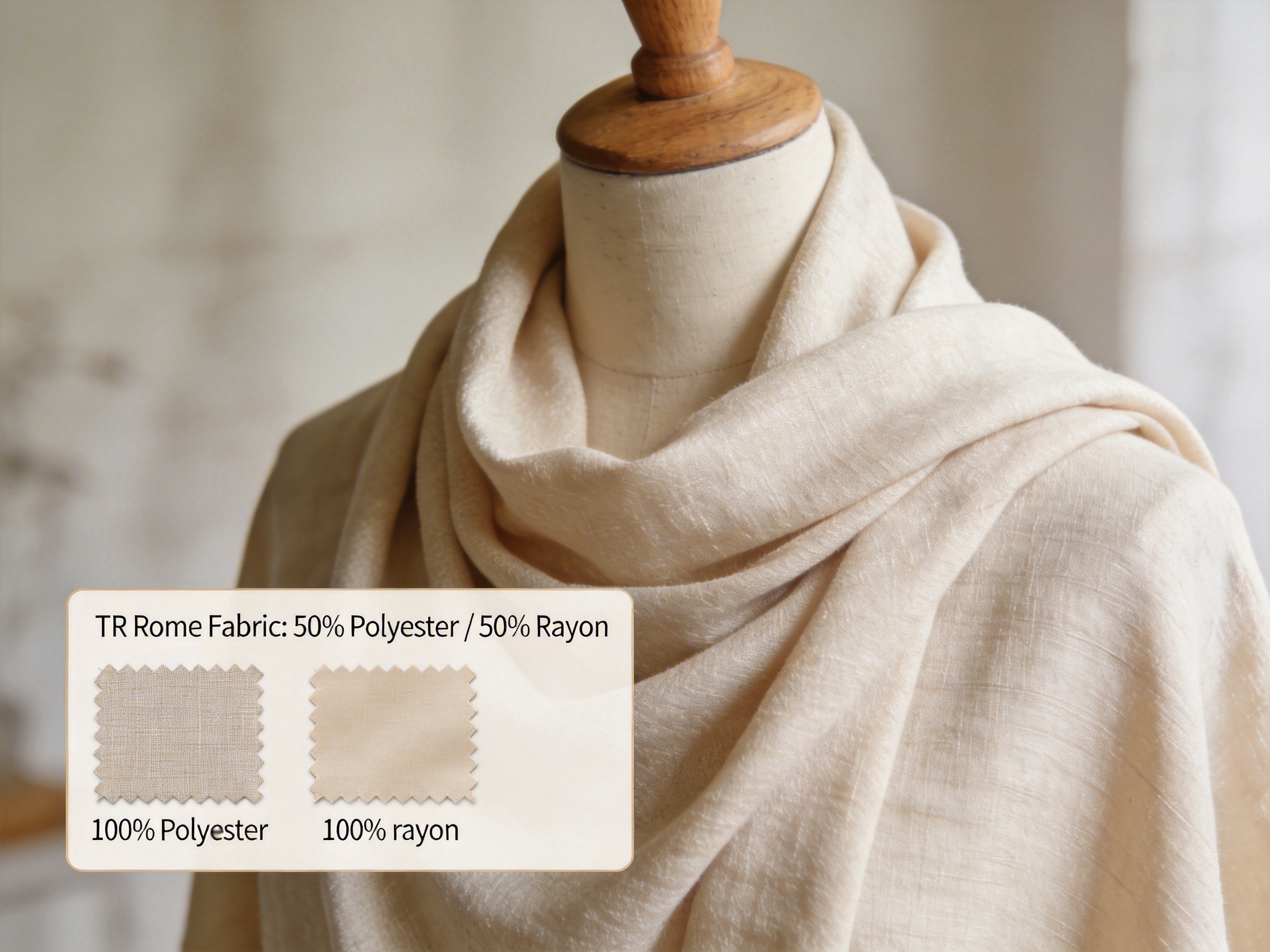
TR Rome Fabric is a knitted textile blend composed primarily of polyester and rayon, with the exact ratio optimized for specific performance needs (typically 50% polyester and 50% rayon for a balanced profile). The "TR" in its name denotes the polyester-rayon blend, while "Rome" refers to its distinct knitted structure—characterized by a smooth, slightly textured surface that offers excellent drape and stability. This fabric falls under the broader category of NTR knitted fabrics, which are known for their flexibility and adaptability to various finishing processes.
At its core, TR Rome Fabric is designed to address the limitations of single-fiber textiles. Polyester, while durable, can trap heat and feel harsh against the skin, whereas rayon (derived from natural cellulose) is soft and breathable but lacks the strength to withstand heavy use or repeated washing. By blending these two fibers, TR Rome Fabric achieves a harmonious balance: it retains the durability and shape retention of polyester while inheriting the softness, breathability, and moisture-wicking properties of rayon. Additionally, the fabric’s knitted construction enhances its elasticity, making it comfortable for active wear and form-fitting apparel.
Advantages of TR Rome Fabric Over Competitor Materials
To understand why TR Rome Fabric is gaining traction in the textile industry, it is essential to compare it to other commonly used fabrics in its category. Below is a detailed breakdown of its key advantages:
1. Balanced Performance: Durability Meets Comfort
One of the most significant advantages of TR Rome Fabric is its ability to combine durability and comfort—two traits that are often mutually exclusive in single-fiber textiles. For example, 100% polyester knit fabrics are highly durable but tend to feel stiff and trap heat, making them uncomfortable for prolonged wear. In contrast, 100% rayon knit fabrics are soft and breathable but are prone to stretching when wet and losing shape over time. TR Rome Fabric solves this problem by blending the two fibers: the polyester component ensures the fabric retains its shape even after multiple washes and wears, while the rayon component adds a soft, skin-friendly feel and improves breathability. This balance makes TR Rome Fabric ideal for both casual apparel and industrial applications where durability and comfort are equally important.
2. Eco-Friendly Disposal and Production
Sustainability is a growing concern in the textile industry, and TR Rome Fabric stands out for its eco-friendly profile. Unlike some synthetic fabrics that contain harmful chemicals (such as azo dyes or heavy metals) that leach into the environment during disposal, TR Rome Fabric is manufactured using non-toxic materials and processes. The rayon component is derived from natural cellulose (typically wood pulp), making it biodegradable, while the polyester component can be recycled through standard textile recycling programs. Additionally, the fabric’s production process minimizes waste: the company uses closed-loop dyeing systems that reduce water consumption by up to 30% compared to traditional methods, and leftover materials are recycled into other textile products. This commitment to sustainability makes TR Rome Fabric a responsible choice for environmentally conscious brands and consumers.
3. Cost-Effectiveness Without Compromising Quality
Another key advantage of TR Rome Fabric is its affordability. As an integrated textile manufacturer, the company behind TR Rome Fabric controls every stage of the production process—from DTY polyester yarn manufacturing to fabric finishing. This vertical integration eliminates middlemen, allowing the company to offer competitive pricing without sacrificing quality. In contrast, many competitor fabrics are produced by separate suppliers, which increases costs due to markups and logistics. TR Rome Fabric’s cost-effectiveness makes it accessible to a wide range of industries, from small apparel brands to large industrial clients.
4. Exceptional Versatility in Finishing and Applications
TR Rome Fabric is highly versatile when it comes to finishing processes. It can be dyed in a wide range of vibrant colors and printed with complex patterns, thanks to its ability to absorb both synthetic and natural dyes evenly. This versatility allows designers to create unique, customized fabrics for specific applications—whether it’s a bold print for a women’s dress or a subtle pattern for industrial uniforms. Additionally, the fabric can be treated with various finishes to enhance its performance: water-repellent treatments for outdoor apparel, stain-resistant coatings for upholstery, and softening treatments for baby clothing. This adaptability makes TR Rome Fabric suitable for a diverse array of uses, from apparel to home textiles to industrial products.
Advanced Manufacturing Processes Behind TR Rome Fabric
The superior quality of TR Rome Fabric is a direct result of the advanced manufacturing processes employed by its producer. The company’s integrated production facility—spanning 32.6 acres with a plant area of 18,000 square meters—houses state-of-the-art equipment and follows strict quality control protocols to ensure consistency and excellence. Below is a detailed look at the key stages of production:
1. Yarn Preparation: In-House DTY Polyester Yarn Production
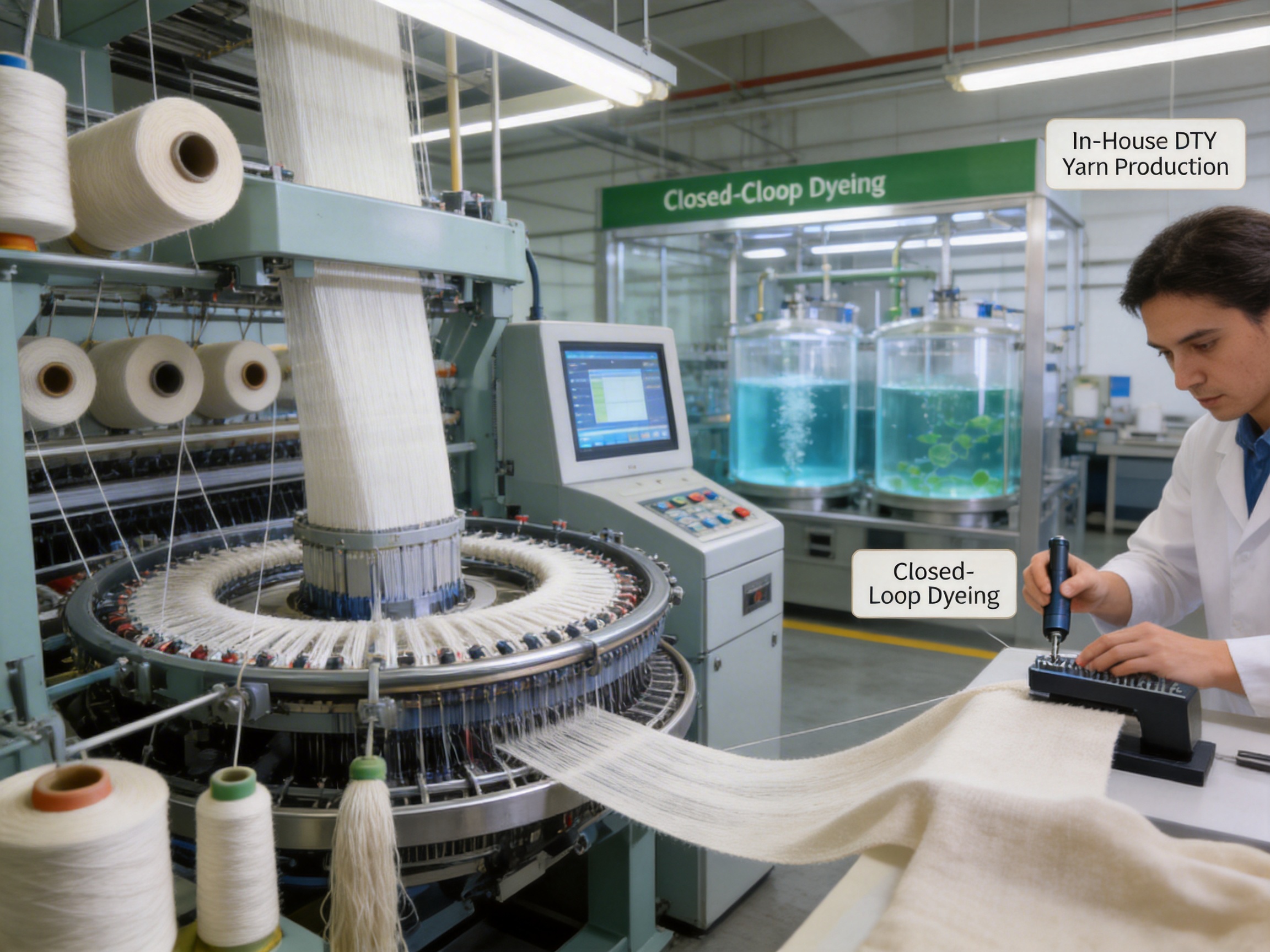
The production of TR Rome Fabric begins with the manufacturing of DTY (Draw Textured Yarn) polyester yarn—an essential component of the fabric. The company produces its own DTY yarn using a continuous spinning and texturing process. This process involves drawing polyester filament to increase its strength and then texturing it to add bulk and elasticity. The in-house production of DTY yarn allows the company to control every aspect of the yarn’s quality, including denier (thickness), texture, and uniformity. This level of control is crucial because inconsistent yarn quality can lead to defects in the final fabric. The company also sources high-quality rayon yarn from sustainable suppliers, ensuring that the raw materials meet its strict environmental and performance standards.
2. Knitting: Precision Computerized Technology
Once the yarns are prepared, they are sent to the knitting department, where TR Rome Fabric is produced using computerized circular knitting machines. These machines are programmed to create the fabric’s distinct Rome structure—characterized by a smooth face and a slightly textured back. The computerized controls ensure that the stitch pattern is consistent across the entire fabric roll, eliminating defects such as uneven stitches or loose threads. The knitting process also allows for customization: the company can adjust the stitch density to create fabrics of different weights (from lightweight for summer apparel to heavyweight for winter wear) and elasticity levels. This flexibility makes it possible to meet the specific needs of different clients.
3. Post-Dyeing and Finishing: Eco-Friendly and Performance-Enhancing
After knitting, the fabric undergoes post-dyeing and finishing processes. The company uses reactive dyes—eco-friendly dyes that bond chemically with both polyester and rayon fibers—ensuring excellent color fastness to washing, sunlight, and rubbing. The dyeing process is carried out in closed-loop systems that recycle water and reduce chemical waste, aligning with the company’s sustainability goals. Following dyeing, the fabric is finished with a series of treatments to enhance its performance: bio-polishing to remove surface fuzz and improve softness, heat-setting to stabilize the fabric’s shape, and optional functional finishes (such as water-repellent or stain-resistant coatings) based on client requirements. Each finishing treatment is tested rigorously to ensure it meets industry standards (e.g., AATCC 15 for color fastness, ASTM D5034 for tensile strength).
4. Quality Control: Rigorous Testing for Consistency
Quality control is an integral part of every stage of TR Rome Fabric production. The company has a dedicated quality control laboratory that conducts a wide range of tests on each batch of fabric, including:
- Tensile strength (ASTM D5034): To ensure the fabric can withstand stretching and pulling without breaking.
- Tear resistance (ASTM D1424): To test the fabric’s ability to resist tearing under stress.
- Color fastness (AATCC 15): To verify that the fabric’s color does not fade when exposed to sunlight or washing.
- Chemical content (Oeko-Tex Standard 100): To ensure the fabric is free from harmful substances such as azo dyes, heavy metals, and formaldehyde.
- Softness (Martindale abrasion test): To measure the fabric’s softness against the skin.
Only fabrics that pass all these tests are approved for sale. This rigorous quality control ensures that every roll of TR Rome Fabric meets the highest standards of performance and safety.
Applications of TR Rome Fabric
TR Rome Fabric’s unique combination of performance, versatility, and cost-effectiveness makes it suitable for a wide range of applications across multiple industries. Below are some of the key uses:
1. Apparel: Casual, Active, and Formal Wear
TR Rome Fabric is a popular choice for apparel due to its comfort, durability, and customizable finishes. Some common apparel applications include:
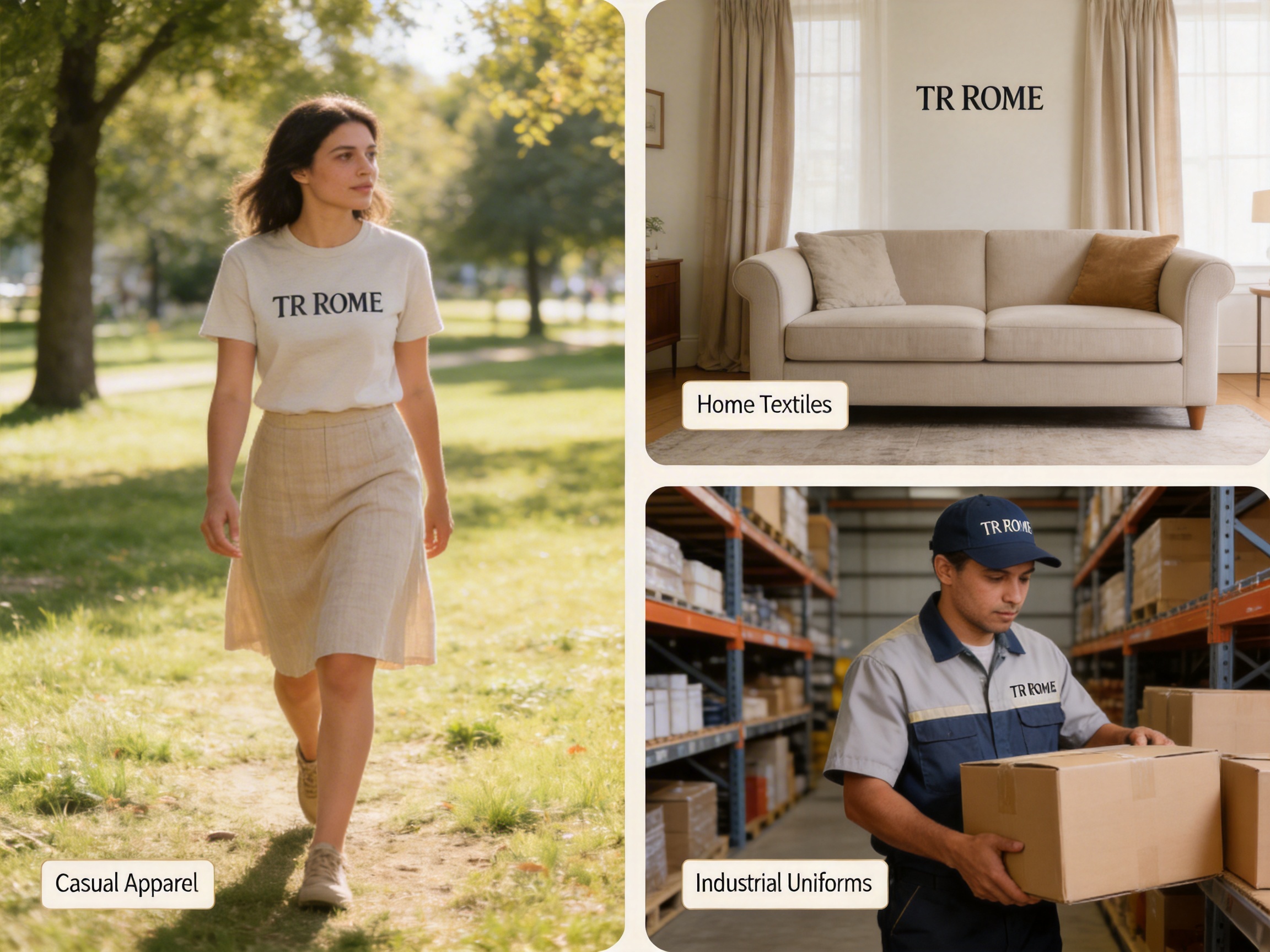
Casual Wear: Men’s and women’s t-shirts, shirts, dresses, and skirts. The fabric’s softness and breathability make it ideal for everyday wear, while its durability ensures it can withstand frequent washing and wearing.
Active Wear: Gym wear, yoga pants, and athletic shirts. The fabric’s moisture-wicking properties (rayon absorbs sweat, polyester dries quickly) keep the wearer dry and comfortable during physical activity, while its elasticity allows for a full range of motion.
Formal Wear: Blazers, trousers, and dresses. The fabric’s smooth drape and ability to hold its shape make it suitable for formal attire, and it can be dyed in classic colors such as black, navy, and gray.
2. Home Textiles: Curtains, Upholstery, and Bedding
TR Rome Fabric is also used in home textiles due to its durability and versatility. Some common home textile applications include:
Curtains: The fabric’s light weight and ability to block some sunlight make it ideal for curtains. It can be dyed in a wide range of colors to match any decor, and it is easy to clean and maintain.
Upholstery: The fabric’s durability and stain-resistant finishes make it suitable for upholstering furniture such as sofas, chairs, and ottomans. It is soft to the touch and can be printed with patterns to add a decorative touch to any room.
Bedding: The fabric’s softness and breathability make it ideal for bed sheets, pillowcases, and duvet covers. It is hypoallergenic (due to its lack of harmful chemicals) and easy to wash, making it a good choice for people with sensitive skin.
3. Industrial Applications: Filters, Uniforms, and Protective Gear
TR Rome Fabric’s durability and eco-friendly profile make it suitable for a variety of industrial applications. Some common industrial uses include:
Filters: The fabric’s porous structure makes it ideal for air and water filters. It can be treated with chemical-resistant finishes to withstand harsh industrial environments.
Uniforms: The fabric’s durability, cost-effectiveness, and ability to be printed with company logos make it ideal for work uniforms. It is easy to clean and maintain, and it can be customized to meet the specific needs of different industries (e.g., fire-resistant finishes for firefighters).
Protective Gear: The fabric’s strength and water-repellent finishes make it suitable for protective gear such as aprons, gloves, and raincoats. It provides a barrier against water, chemicals, and other hazards while remaining comfortable to wear.
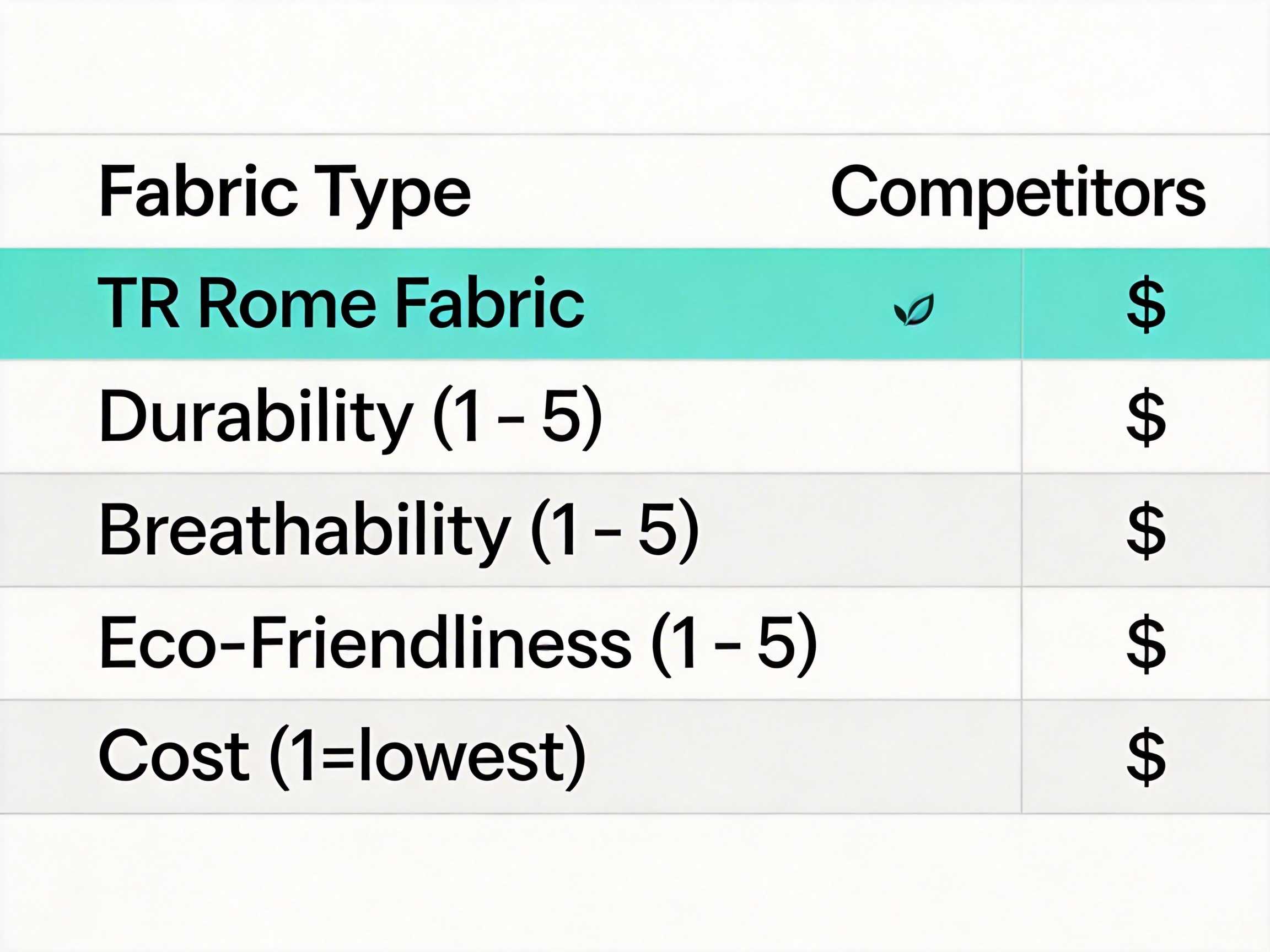
| Fabric Type | Durability (1-5) | Breathability (1-5) | Eco-Friendliness (1-5) | Cost (1-5, 1=lowest) | Versatility (1-5) |
|---|---|---|---|---|---|
| TR Rome Fabric (Polyester-Rayon Blend) | 4 | 4 | 4 | 2 | 5 |
| 100% Polyester Knit | 5 | 2 | 3 | 1 | 3 |
| 100% Rayon Knit | 2 | 5 | 5 | 3 | 4 |
| Cotton-Polyester Blend | 3 | 3 | 4 | 2 | 4 |
This table clearly illustrates the superior balance of TR Rome Fabric across key performance metrics compared to its competitors. While 100% polyester offers higher durability, it lags in breathability and eco-friendliness. 100% rayon excels in breathability and eco-friendliness but falls short in durability. Cotton-polyester blends are a close competitor, but TR Rome Fabric outperforms them in breathability and versatility.
Frequently Asked Questions (FAQs) About TR Rome Fabric
To address common queries about TR Rome Fabric, we have compiled the following Q&A section:
Q1: What is the composition of TR Rome Fabric?
A: TR Rome Fabric is typically a 50% polyester and 50% rayon blend, though the ratio can be adjusted to meet specific performance needs (e.g., higher polyester content for increased durability, higher rayon content for enhanced softness).
Q2: Is TR Rome Fabric safe for sensitive skin?
A: Yes. TR Rome Fabric meets the Oeko-Tex Standard 100, which means it is free from harmful substances such as azo dyes, heavy metals, and formaldehyde. Additionally, the fabric is bio-polished to remove surface fuzz, making it soft and non-irritating against the skin.
Q3: Can TR Rome Fabric be recycled?
A: Yes. The polyester component of TR Rome Fabric is recyclable through standard textile recycling programs, while the rayon component is biodegradable. Some recycling facilities can separate the two fibers for reuse, making TR Rome Fabric a sustainable choice.
Q4: How does TR Rome Fabric compare to cotton-polyester blends?
A: TR Rome Fabric offers several advantages over cotton-polyester blends. It is more breathable (due to the rayon component), more durable (due to the polyester component), and more versatile in terms of finishing options. Additionally, TR Rome Fabric is less prone to wrinkling than cotton-polyester blends, making it easier to maintain.
Q5: What is the minimum order quantity (MOQ) for TR Rome Fabric?
A: The MOQ varies depending on the specific requirements (e.g., fabric weight, finish, color). However, the company offers flexible MOQs to accommodate both small and large orders, making it accessible to a wide range of clients.
Q6: How long does it take to deliver TR Rome Fabric?
A: The delivery time depends on the order size and customization requirements. For standard orders, delivery typically takes 7-14 days. For custom orders (e.g., custom colors or finishes), delivery may take 14-21 days.
References
1. Textile Institute. (2023). Global Textile Trends: Sustainable Blended Fabrics. Manchester, UK: Textile Institute Press.
2. American Association of Textile Chemists and Colorists (AATCC). (2022). Color Fastness Testing Standards for Synthetic Blends. Research Triangle Park, NC: AATCC.
3. Oeko-Tex Association. (2023). Oeko-Tex Standard 100: Requirements for Textile Products. Zurich, Switzerland: Oeko-Tex.
4. Hangzhou Jinfeng Textile Co., Ltd. (2024). Technical Manual for TR Rome Fabric Production. Hangzhou, China: Author.
5. ASTM International. (2021). Standard Test Methods for Textile Fabrics. West Conshohocken, PA: ASTM International.