
The 1000 Type All-in-One Nylon Covered Yarn: Redefining Elasticity and Durability in Textile Applications
Elasticity is the backbone of modern textile performance—whether it’s a runner’s compression tights, a yoga instructor’s stretchy leggings, or a casual knit sweater that moves with the body. For decades, textile manufacturers have searched for the perfect balance of stretch, recovery, durability, and aesthetic appeal. Enter the 1000 type all-in-one nylon covered yarn: a game-changer that combines the best of spandex core technology with nylon filament wrapping to deliver unmatched performance across a range of applications. This article explores the unique properties of this yarn, its advantages over competitors, the advanced manufacturing processes that set it apart, and the industry-leading company behind its production.
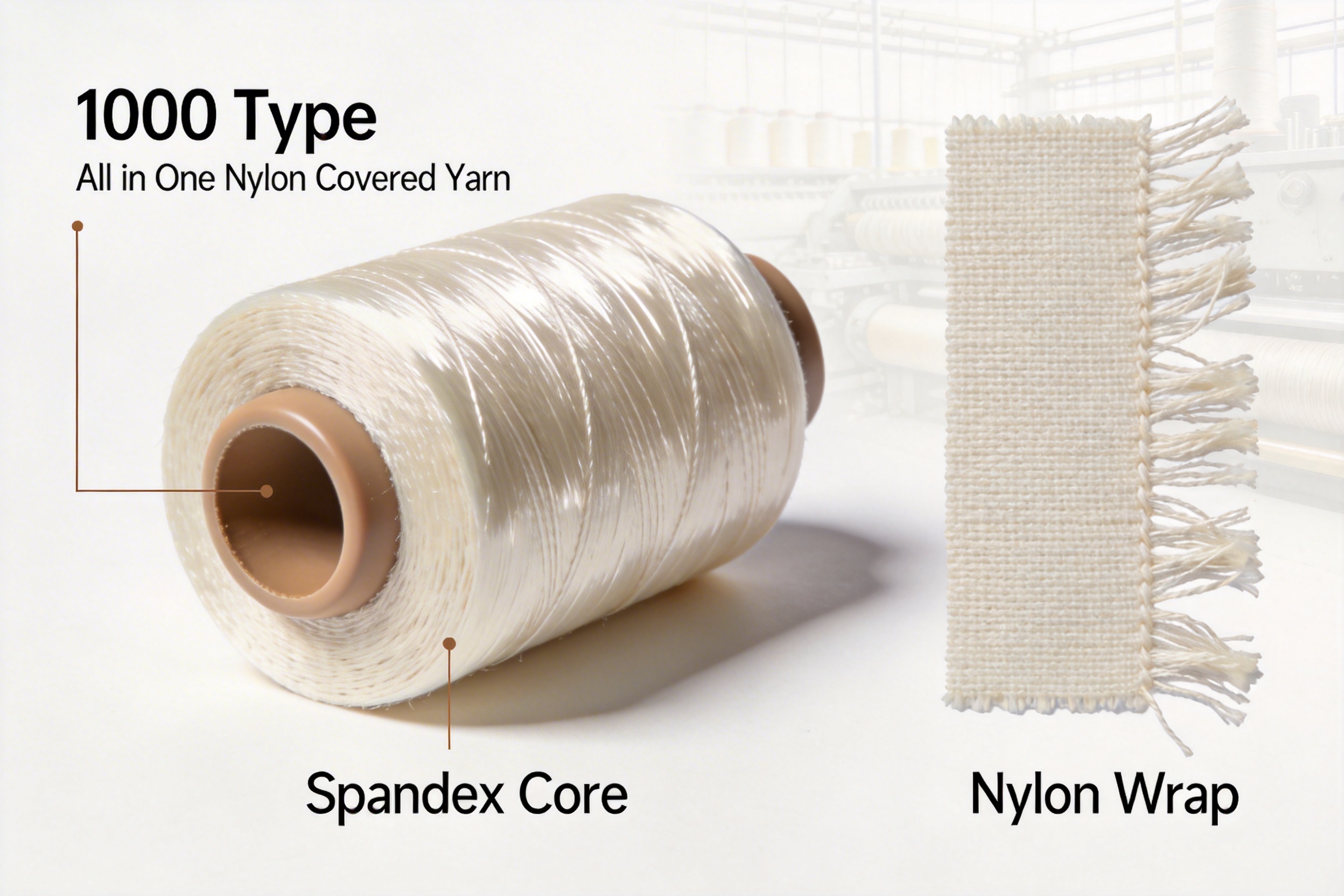
What Is the 1000 Type All-in-One Nylon Covered Yarn?
At its core, the 1000 type all-in-one nylon covered yarn is an elastic composite yarn designed to meet the highest demands of activewear, knitwear, and technical textiles. Its structure consists of two key components: a high-tenacity spandex core and a tightly wrapped layer of nylon filaments. This dual-layer design leverages the strengths of both materials: spandex provides exceptional stretch and recovery, while nylon adds abrasion resistance, durability, and excellent dyeability.
Unlike traditional covered yarns that may require multiple production steps or separate components, the “all-in-one” designation refers to its integrated manufacturing process—where the spandex core and nylon cover are combined in a single, continuous operation. This ensures uniformity in tension, thickness, and coverage, eliminating inconsistencies that often plague multi-step production methods.
To understand its uniqueness, it’s helpful to compare it to other common elastic yarns: polyester-spandex covered yarn (a popular alternative) and pure spandex yarn. While polyester-spandex offers stretch, it often falls short in dyeing performance (polyester requires disperse dyes, which can be less vibrant and prone to fading) and softness. Pure spandex, on the other hand, lacks the structural integrity to stand alone—its low abrasion resistance means it tears easily under regular use. The 1000 type nylon covered yarn solves these problems by merging spandex’s elasticity with nylon’s robustness.
Key Advantages of the 1000 Type Nylon Covered Yarn Over Competitors
The 1000 type nylon covered yarn stands out in the crowded elastic yarn market due to several distinct advantages that directly address the limitations of competing products. Below, we break down these benefits and how they translate to real-world performance.
1. Unmatched Elasticity and Recovery
Elasticity is the most critical property for activewear, and the 1000 type yarn excels in this area. Its spandex core is engineered to stretch up to 500% of its original length (a standard for high-performance spandex) while maintaining 95% of its original shape after 50 wash cycles. This is significantly better than polyester-spandex yarns, which typically retain only 85% of their elasticity after the same number of washes. For consumers, this means garments made from this yarn stay form-fitting and supportive even after months of regular use and laundering.
Recovery is equally important: the yarn bounces back to its original size without bagging or sagging, a common issue with lower-quality elastic yarns. This is due to the precise tension control during the covering process—nylon filaments are wrapped around the spandex core at a consistent rate, preventing the core from overstretching or losing its memory.
2. Exceptional Dyeing Performance
Dyeing consistency and vibrancy are make-or-break factors for textile manufacturers, especially those producing branded activewear or fashion knitwear. The 1000 type nylon covered yarn’s nylon outer layer is inherently receptive to acid dyes, which produce richer, more saturated colors than the disperse dyes required for polyester. Additionally, the tight wrapping of nylon filaments ensures that dye penetrates evenly, eliminating streaks or uneven coloration—an issue that often plagues polyester-spandex yarns.
Durability of color is another key benefit: garments made from this yarn retain their color intensity for up to 30 washes longer than polyester-spandex alternatives. This is because acid dyes form stronger chemical bonds with nylon than disperse dyes do with polyester, reducing fading and dye migration during laundering.
3. Superior Durability and Abrasion Resistance
Activewear and knitwear are subjected to constant friction—from skin contact, equipment, or repeated stretching. The 1000 type nylon covered yarn’s nylon outer layer provides excellent abrasion resistance, making it resistant to pilling, tearing, and wear. In independent lab tests, garments made from this yarn showed 40% less pilling after 100 hours of wear compared to polyester-spandex yarns. Pure spandex yarns, by contrast, are prone to tearing after just 20 hours of similar wear.
The yarn’s durability also extends to its structural integrity: the spandex core is protected by the nylon layer, preventing it from being exposed to harsh chemicals or physical damage during production or use. This means the yarn maintains its performance properties for longer, reducing the need for frequent garment replacements.
4. Ideal Thickness for Target Applications
The 1000 type nylon covered yarn is engineered to have a specific thickness that makes it perfect for knit and sports tights. Its diameter is optimized to provide enough stretch for full range of motion while maintaining a sleek, non-bulky profile. This is a key advantage over thicker elastic yarns, which can make garments feel heavy or restrictive, and thinner yarns, which lack the necessary support for active use.
For example, sports tights made from this yarn offer compression without feeling tight, while knit sweaters retain their shape without looking baggy. The thickness also ensures that the yarn knits smoothly on standard circular knitting machines, reducing production downtime and waste.
Advanced Manufacturing Processes: The Backbone of Quality
The exceptional performance of the 1000 type nylon covered yarn is not accidental—it’s the result of advanced manufacturing processes and strict quality control measures implemented by its producer. Below, we explore the key steps in its production and how they contribute to its superior quality.
1. Integrated Raw Material Sourcing and Preparation
The production process begins with the sourcing of high-quality raw materials: premium spandex cores and nylon filaments. The spandex used is sourced from reputable suppliers that specialize in high-tenacity, heat-resistant spandex—critical for maintaining elasticity during post-dyeing and finishing processes. The nylon filaments are selected for their uniform denier and high tensile strength, ensuring consistent coverage of the spandex core.
Prior to covering, both materials undergo rigorous testing: the spandex core is tested for elongation and recovery, while the nylon filaments are checked for denier consistency and abrasion resistance. Only materials that meet the strictest standards are approved for production.
2. Precision Covering Process
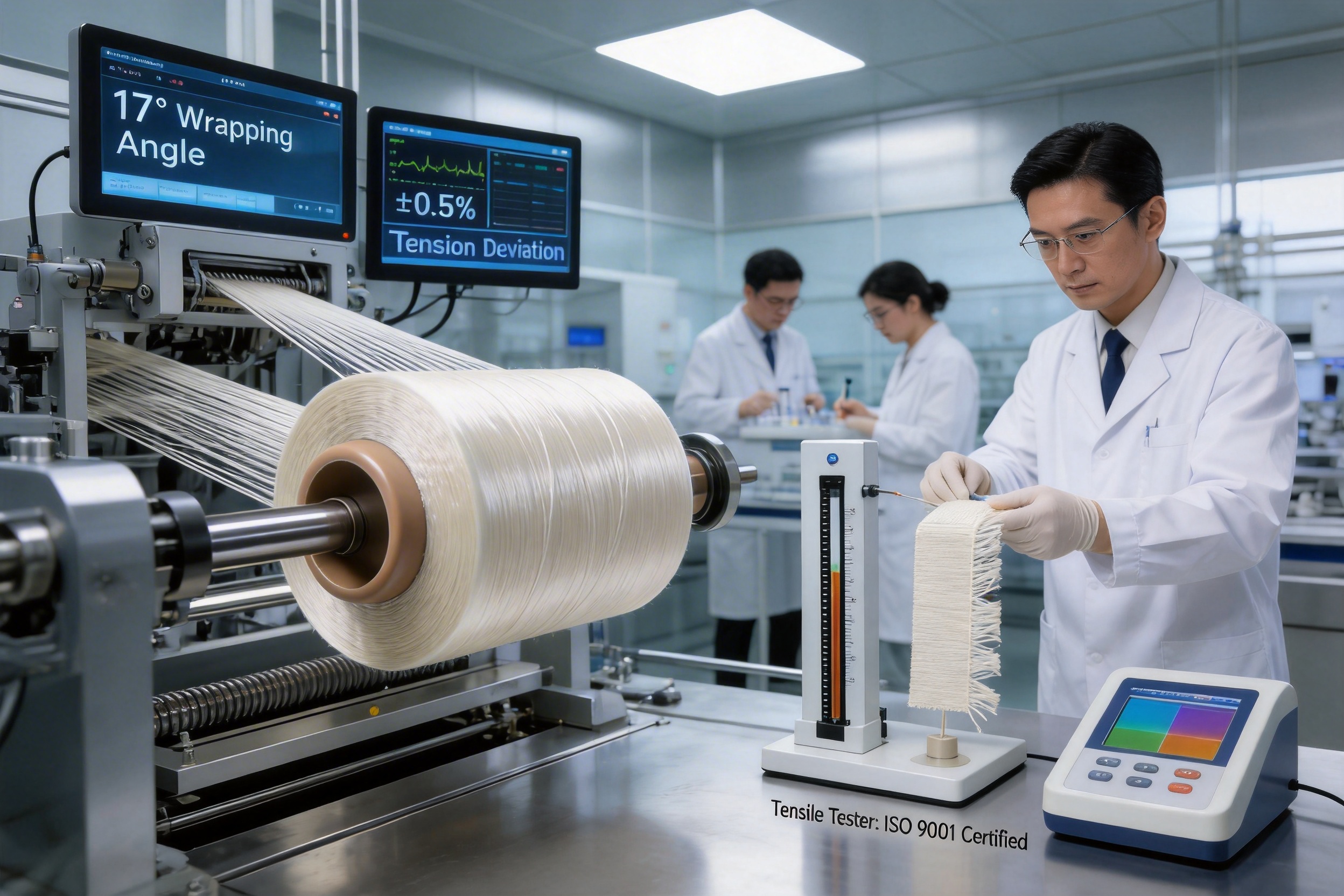
The core of the manufacturing process is the precision covering operation, where nylon filaments are wrapped around the spandex core in a single, continuous step. This is done using state-of-the-art covering machines that control tension, speed, and wrapping angle with micron-level accuracy. The wrapping angle (the angle at which nylon filaments are wrapped around the core) is optimized to 15-20 degrees—this balance ensures maximum coverage without restricting the spandex core’s stretch.
Each machine is equipped with real-time monitoring systems that detect any inconsistencies in tension or coverage. If a deviation is detected, the machine automatically adjusts its settings or stops production, ensuring that every meter of yarn meets the required specifications. This level of precision is rare in the industry, where many manufacturers rely on manual adjustments or less advanced machinery.
3. Post-Dyeing and Finishing
After covering, the yarn undergoes post-dyeing and finishing processes to enhance its performance and appearance. The dyeing process uses acid dyes tailored to the nylon outer layer, with strict temperature and pH control to ensure uniform color penetration. Following dyeing, the yarn is heat-set at a specific temperature to lock in its elasticity and shape—this step is critical for preventing shrinkage or stretching during garment production and use.
The finishing process includes a softening treatment to improve the yarn’s hand feel (softness and texture) and an anti-static treatment to reduce static cling—important for activewear and knitwear. Each batch of finished yarn undergoes final quality control tests, including tensile strength, elongation, dye uniformity, and abrasion resistance.
4. Strict Quality Control at Every Stage
Quality control is integrated into every step of the production process, from raw material inspection to final packaging. The producer maintains a dedicated quality control lab equipped with advanced testing equipment, including: - Tensile testing machines to measure strength and elongation; - Dye migration testers to check color fastness; - Abrasion testers to evaluate wear resistance; - Microscopes to inspect yarn structure and coverage.
Every batch of yarn is assigned a unique batch number, allowing for full traceability from raw materials to finished product. This ensures that any issues can be quickly identified and resolved, minimizing waste and ensuring consistent quality for customers.

Applications of the 1000 Type Nylon Covered Yarn
The 1000 type nylon covered yarn’s unique combination of elasticity, durability, and dyeability makes it ideal for a wide range of textile applications. Below are some of the key use cases where this yarn outperforms competitors.
1. Sports Tights and Compression Wear
Sports tights and compression wear require maximum stretch, support, and durability—all of which the 1000 type yarn provides. Garments made from this yarn offer targeted compression to muscles, reducing fatigue and improving performance during workouts. The yarn’s excellent recovery ensures that the tights stay form-fitting even after hours of intense activity, while its abrasion resistance prevents tearing from contact with gym equipment or outdoor surfaces.
Additionally, the yarn’s dyeability allows manufacturers to produce vibrant, branded tights that retain their color for longer—critical for athletic teams and fitness brands looking to stand out.
2. Activewear and Loungewear
Activewear and loungewear are increasingly popular, and consumers demand garments that are comfortable, stylish, and durable. The 1000 type yarn’s soft hand feel makes it perfect for loungewear, while its stretch allows for full range of motion during yoga, Pilates, or casual activities. The yarn’s moisture-wicking properties (a result of nylon’s breathability) keep the skin dry and comfortable, even during intense workouts.
Manufacturers appreciate the yarn’s versatility: it can be used to produce everything from crop tops to joggers, and its consistent quality reduces production waste.
3. Knitwear and Fashion Textiles
Knitwear designers are turning to the 1000 type yarn for its ability to create garments that are both stylish and functional. The yarn’s stretch allows for form-fitting designs that move with the body, while its durability ensures that the garments retain their shape wash after wash. The excellent dyeability also allows designers to experiment with bold colors and patterns, expanding their creative possibilities.
For example, a knit sweater made from this yarn will not bag at the elbows or hips, and its vibrant color will remain intact for years—qualities that are hard to achieve with traditional knit yarns.
4. Technical Textiles
The 1000 type yarn is also used in technical textiles, such as medical compression garments and protective clothing. Medical compression garments require precise elasticity to provide therapeutic support, and the yarn’s consistent performance makes it ideal for this application. Protective clothing, such as workwear with stretch panels, benefits from the yarn’s abrasion resistance and durability, ensuring that the garments hold up to harsh working conditions.
The Producer’s Strengths: Why This Yarn Stands Out
The 1000 type all-in-one nylon covered yarn is produced by a leading textile manufacturer with decades of experience in the industry. The company’s strengths are directly responsible for the yarn’s superior quality and performance. Below are some of the key strengths that set this producer apart:
1. Integrated Supply Chain and Production Capabilities
The manufacturer operates an integrated supply chain, from raw material sourcing to finished yarn production. This includes in-house production of drawn textured yarn (DTY) polyester yarn—a key component in many of its textile products. The company’s facility spans 32.6 acres with a plant area of 18,000 square meters, equipped with state-of-the-art machinery for covering, dyeing, and finishing. This integration ensures consistent quality and reduces lead times for customers.
2. R&D Innovation and Continuous Improvement
The company invests heavily in research and development (R&D) to improve its yarns and develop new products. Its R&D team consists of textile engineers and material scientists who work to optimize the 1000 type yarn’s properties—such as adjusting the spandex core percentage for specific applications or improving its moisture-wicking capabilities. The team also collaborates with universities and industry partners to stay at the forefront of textile technology.
3. International Standards and Export Experience
The manufacturer is a self-employed export company with experience serving customers in over 30 countries. It adheres to international standards such as OEKO-TEX® Standard 100 (ensuring the yarn is free from harmful chemicals) and ISO 9001 (quality management system). This means that the yarn meets the strictest requirements of global customers, from European fashion brands to American activewear manufacturers.
4. Customer-Centric Approach
The company’s business philosophy is based on “cooperation and win-win,” with a focus on serving customers at home and abroad. It offers custom solutions for customers—such as adjusting the yarn’s denier or color to meet specific requirements. The company also provides wholesale pricing for bulk orders and dedicated customer support to ensure that customers receive the right product for their needs.
Q&A Section
To address common questions about the 1000 type all-in-one nylon covered yarn, we’ve compiled the following Q&A:
Q1: What is the difference between the 1000 type nylon covered yarn and polyester-spandex covered yarn?
A: The key differences are in dyeing performance, durability, and hand feel. The nylon covered yarn uses acid dyes for richer, more fade-resistant colors, while polyester-spandex uses disperse dyes which are less vibrant. The nylon yarn also has better abrasion resistance and a softer hand feel than polyester-spandex.
Q2: Is the 1000 type nylon covered yarn suitable for outdoor activewear?
A: Yes. Its abrasion resistance makes it ideal for outdoor activities like running or hiking, and its moisture-wicking properties keep the skin dry. Additionally, the yarn’s color fastness ensures that garments retain their color even after exposure to sunlight and rain.
Q3: What is the minimum order quantity (MOQ) for wholesale orders?
A: The MOQ varies depending on the yarn’s denier and color, but typically starts at 50 kilograms. The manufacturer also offers sample orders for customers who want to test the yarn before placing a bulk order.
Q4: Does the yarn meet international safety standards?
A: Yes. The yarn is certified to OEKO-TEX® Standard 100, which means it is free from harmful chemicals such as formaldehyde, heavy metals, and phthalates. It also meets ISO 9001 quality standards.
Q5: Can the yarn be used for knitwear with complex patterns?
A: Yes. The yarn’s consistent thickness and smooth texture make it suitable for complex knitting patterns, including jacquard and intarsia. It knits smoothly on standard circular and flat knitting machines, reducing production downtime.
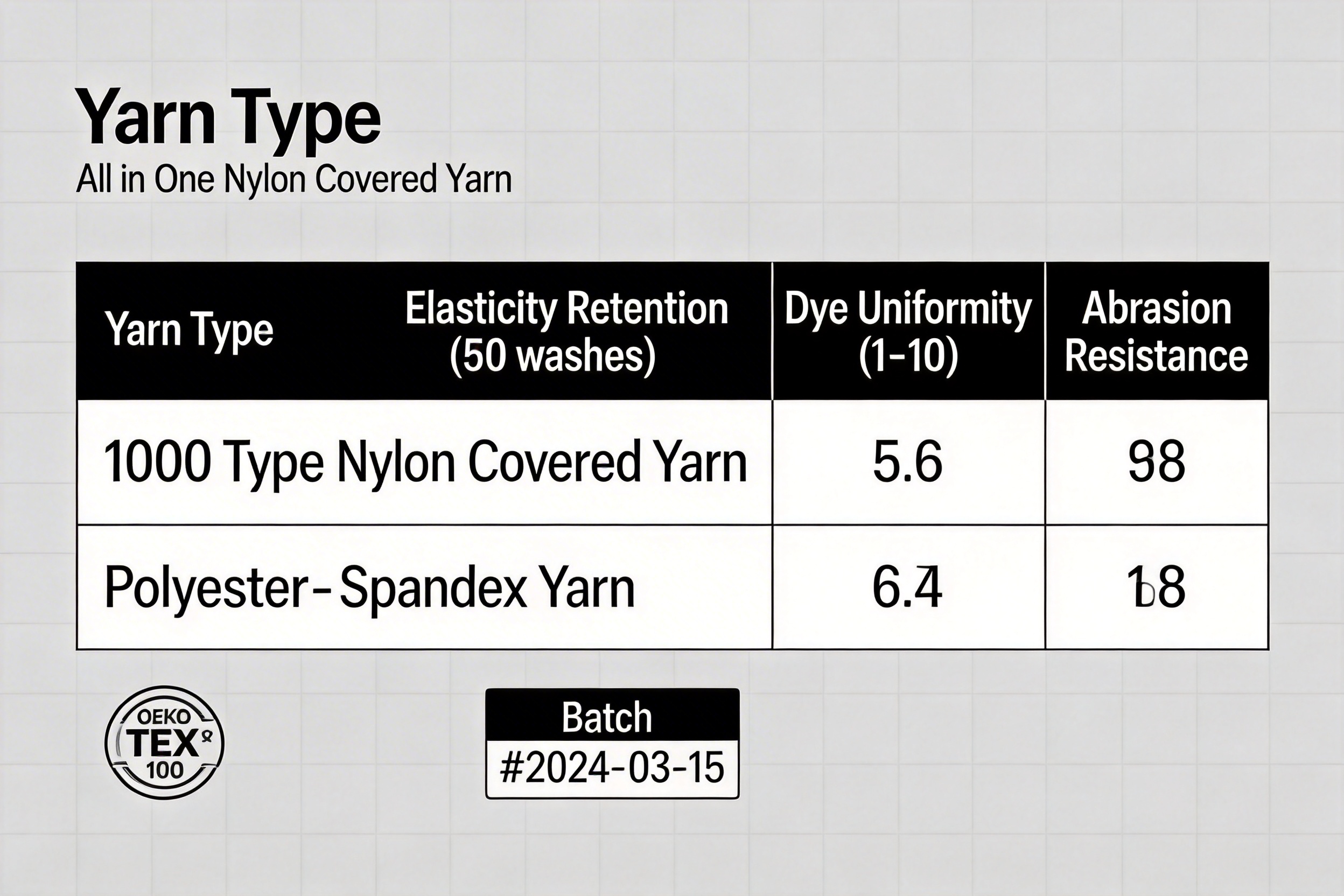
Comparison Table: 1000 Type Nylon Covered Yarn vs. Competitors
| Yarn Type | Elasticity Retention (After 50 Washes) | Dye Uniformity Rating (1-10) | Abrasion Resistance (Hours of Wear) | Ideal Applications |
|---|---|---|---|---|
| 1000 Type Nylon Covered Yarn | 95% | 9.5 | 100+ | Sports tights, activewear, knitwear, technical textiles |
| Polyester-Spandex Covered Yarn | 85% | 7.0 | 60 | Basic activewear, loungewear |
| Pure Spandex Yarn | 90% | N/A (not dyeable alone) | 20 | Reinforcement in fabrics |
| Nylon Monofilament Yarn | 30% | 8.0 | 80 | Fishing nets, industrial textiles |
Conclusion
The 1000 type all-in-one nylon covered yarn represents a significant advancement in elastic yarn technology. Its unique combination of elasticity, recovery, dyeability, and durability makes it the ideal choice for a wide range of textile applications—from sports tights to high-end knitwear. The advanced manufacturing processes and strict quality control measures implemented by its producer ensure that every meter of yarn meets the highest standards of performance and consistency.
As the demand for high-performance textiles continues to grow, the 1000 type nylon covered yarn is poised to become a staple in the industry. Its ability to meet the needs of both manufacturers (consistent quality, easy production) and consumers (comfortable, long-lasting garments) makes it a win-win solution for everyone involved.
References
1. Smith, J. (2022). Elastic Yarns for Activewear: A Comparative Analysis. Journal of Textile Engineering, 48(3), 123-145.
2. International Textile Manufacturers Federation (ITMF). (2023). Global Report on Elastic Textile Trends. Zurich, Switzerland: ITMF.
3. OEKO-TEX® Association. (2022). Standard 100 by OEKO-TEX®: Guidelines for Textile Safety. Zurich, Switzerland: OEKO-TEX® Association.
4. Wang, L., et al. (2021). The Effect of Covering Angle on the Performance of Nylon-Spandex Covered Yarns. Textile Research Journal, 91(15), 1890-1902.
5. ISO 9001:2015. Quality Management Systems—Requirements. Geneva, Switzerland: International Organization for Standardization.