
RT Mesh Fabric: Performance, Manufacturing Quality, and Versatile Applications
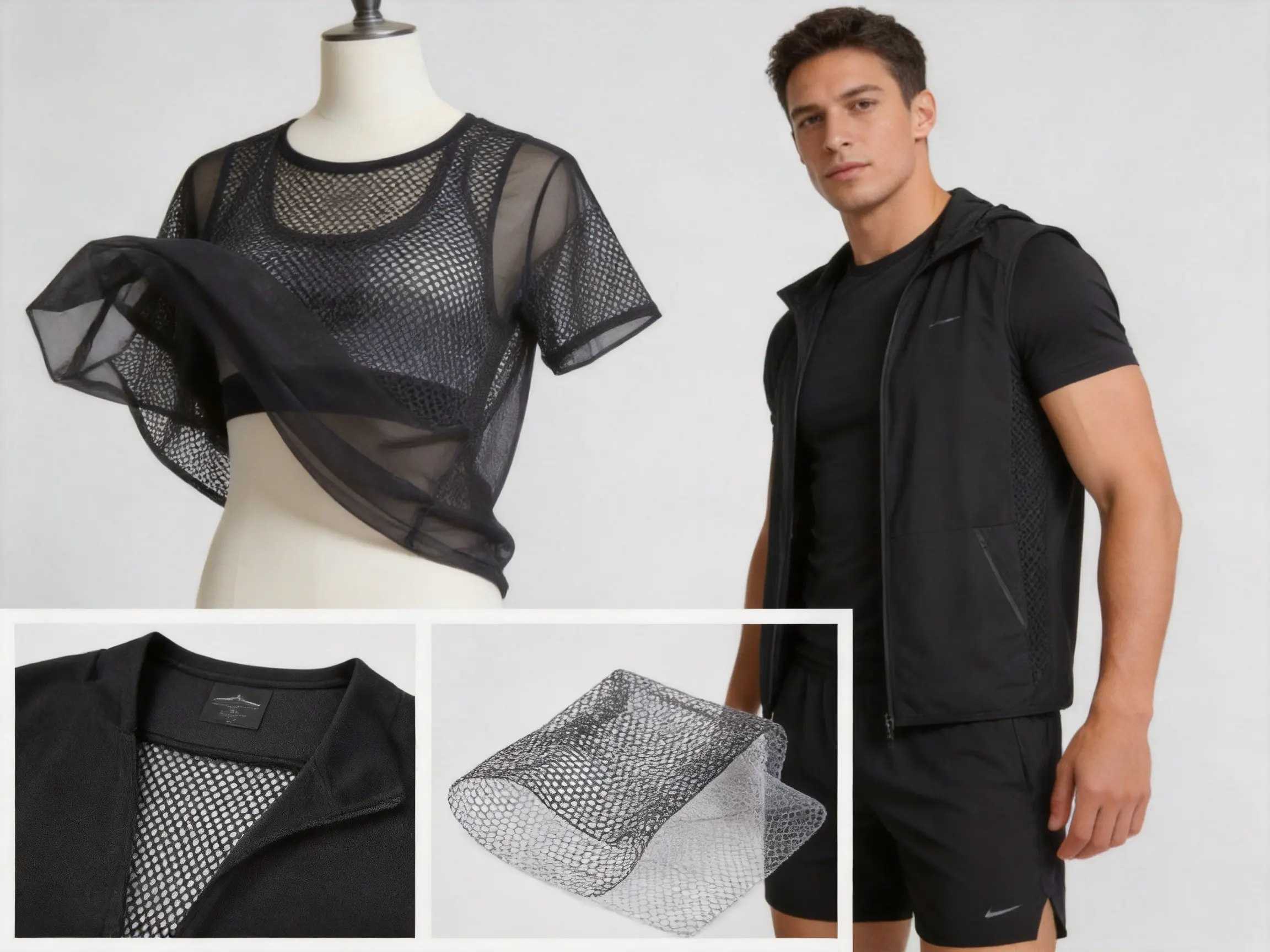
RT Mesh Fabric is an NR knitted fabric developed for applications that require breathability, lightness, visual texture, and comfortable movement. Its open knitted structure allows air to circulate through the material, helping reduce the accumulation of body heat during wear. Compared with compact fabrics that can feel heavy or restrictive, mesh fabric provides a more ventilated construction that is suitable for apparel, sportswear, casual clothing, linings, decorative panels, and other textile products.
The value of RT Mesh Fabric does not depend only on its open appearance. Fabric quality is determined by the relationship between fiber selection, yarn preparation, knitting accuracy, finishing, inspection, and final handling. A well-produced mesh fabric must achieve a practical balance between ventilation and stability. It should be sufficiently open to provide breathability while maintaining acceptable dimensional consistency, surface appearance, strength, and resistance to ordinary handling.
As a knitted fabric manufacturer and supplier, Hangzhou Jinfeng Textile Co., Ltd. combines fabric production, post-dyeing, finishing, blended-fabric processing, and Drawn Textured Yarn production. This integrated capability supports closer control of the materials and processes used in RT Mesh Fabric. It also enables the company to respond to different customer requirements involving color, weight, texture, yarn composition, finish, and application.
This article explains the structure, benefits, potential limitations, manufacturing process, quality considerations, applications, and purchasing factors associated with RT Mesh Fabric. It also examines how an integrated textile production system can give the fabric practical advantages over less coordinated supply channels.

RT Mesh Fabric
Understanding RT Mesh Fabric
RT Mesh Fabric belongs to the NR knitted fabric category. The term mesh generally refers to a fabric with a visibly open construction formed by knitted loops, spaces, or patterned apertures. Unlike woven fabric, which is created by crossing warp and weft yarns, knitted fabric is formed by interlocking loops. This loop-based construction gives knitted mesh a degree of flexibility and elasticity that can be useful in garments requiring comfort and movement.
The exact appearance of RT Mesh Fabric depends on the knitting structure, yarn type, yarn count, machine settings, finishing method, and fabric density. Some versions may have a regular geometric appearance, while others may have a more irregular, textured, or decorative surface. The openness of the fabric can also be adjusted according to the intended purpose. A sports garment may require high ventilation, while a fashion panel may prioritize visual effect and drape.
RT Mesh Fabric is especially suitable for products in which airflow is important. During physical activity, heat and moisture can accumulate between the skin and clothing. A breathable open structure can help create a more comfortable microenvironment by allowing air movement and supporting the release of heat. This does not mean that every mesh fabric provides identical moisture management. Performance depends on fiber content, fabric weight, finishing, garment design, and the conditions in which the material is used.
The fabric can be produced using synthetic fibers, blended fibers, or other yarn combinations selected for the customer’s performance and cost requirements. Polyester is commonly used in mesh structures because it offers useful abrasion resistance, color capability, quick-drying potential, and dimensional stability. Blended constructions may be selected when a softer touch, different drape, improved comfort, or a specific appearance is required.
Knitted Construction and Surface Character
The knitted construction gives RT Mesh Fabric several characteristics that distinguish it from many flat, compact fabrics. The interlocking loops can provide flexibility, making the fabric more adaptable to body movement and curved product shapes. The open construction also creates a distinctive surface effect that can be used for both functional and decorative purposes.
However, the same openings that provide ventilation can also influence durability and care requirements. Large or loosely formed apertures may be more vulnerable to snagging, especially when exposed to zipper pulls, sharp accessories, rough surfaces, or improperly finished garment components. For this reason, fabric selection should always consider the final product environment rather than relying only on appearance.
Fabric density is another important factor. A tighter mesh may offer greater coverage, improved stability, and better resistance to deformation, while a more open mesh may maximize airflow and visual lightness. There is no single mesh structure that is ideal for every application. The correct structure depends on the desired balance of ventilation, opacity, stretch, recovery, strength, softness, appearance, and price.
Key Advantages of RT Mesh Fabric
Breathability and Air Circulation
The most recognizable advantage of RT Mesh Fabric is its ability to support air circulation. The open knitted structure does not trap as much body heat as many dense fabrics. This makes the material attractive for warm-weather clothing, sports garments, casual tops, breathable panels, and products designed for active use.
In apparel construction, ventilation can be enhanced by placing mesh strategically in areas where heat is likely to accumulate. Designers may use it on the back, shoulders, side panels, sleeves, or selected sections of a garment. When combined with suitable garment engineering, RT Mesh Fabric can contribute to a lighter and more comfortable wearing experience.
Breathability is also relevant to the visual and tactile perception of a product. Consumers often associate an open surface with lightness and freshness. This can give garments a modern technical appearance without requiring heavy surface decoration. The fabric’s structure itself becomes part of the design.
Lightweight Performance
Mesh fabric is generally valued for delivering coverage or surface interest without adding unnecessary weight. Lightweight materials can reduce the overall weight of a garment and may support easier packing, transportation, and everyday wear. For sportswear, lower weight can contribute to freedom of movement. For fashion garments, it can help create layered, flowing, or semi-transparent effects.
The final weight of RT Mesh Fabric depends on its yarn type, stitch structure, density, finishing, and width. Buyers should confirm the required weight through a technical specification or approved sample rather than assuming that all mesh fabrics have the same lightness. A suitable weight must also be selected according to the intended use and the need for opacity or support.
Flexibility and Comfort
Because RT Mesh Fabric is knitted, it can offer a comfortable degree of flexibility. The loop structure can accommodate movement more readily than some rigid woven constructions. This quality is useful in activewear, performance clothing, casual garments, and products that must fit around curved or moving surfaces.
Comfort also depends on the yarn and finishing. A carefully selected yarn can give the fabric a smoother hand, while an appropriate finishing process can improve softness, reduce unwanted harshness, and help stabilize the fabric. When a blended yarn is used, the combination may be designed to improve tactile quality or produce a particular drape.
Visual Texture and Design Value
RT Mesh Fabric offers more than functional ventilation. Its open texture can create depth, contrast, and pattern in a garment or textile product. Designers may use the fabric as a full panel, an overlay, an insert, a sleeve component, a decorative section, or a layered surface over another material.
The visual character can be modified through color, printing, dyeing, yarn selection, stitch design, and finishing. A dark mesh may create a technical or sophisticated appearance, while a bright color can give a garment a sporty or youthful identity. When used over a solid lining or contrasting base fabric, the open structure can create additional visual effects.
Adaptability to Different Products
One of the competitive strengths of RT Mesh Fabric is its adaptability. The same general fabric category can serve multiple markets when its structure and finishing are adjusted appropriately. Potential applications include athletic clothing, leisurewear, breathable fashion garments, decorative inserts, lightweight jackets, linings, accessories, and selected home-textile products.
This adaptability can be valuable for buyers who need a supplier capable of supporting more than one project. Instead of sourcing every fabric from a separate channel, a buyer may work with a manufacturer that can discuss yarns, knitted structures, dyeing, finishing, and blended fabric options in one production relationship.
Advantages Compared with Competing Fabric Options
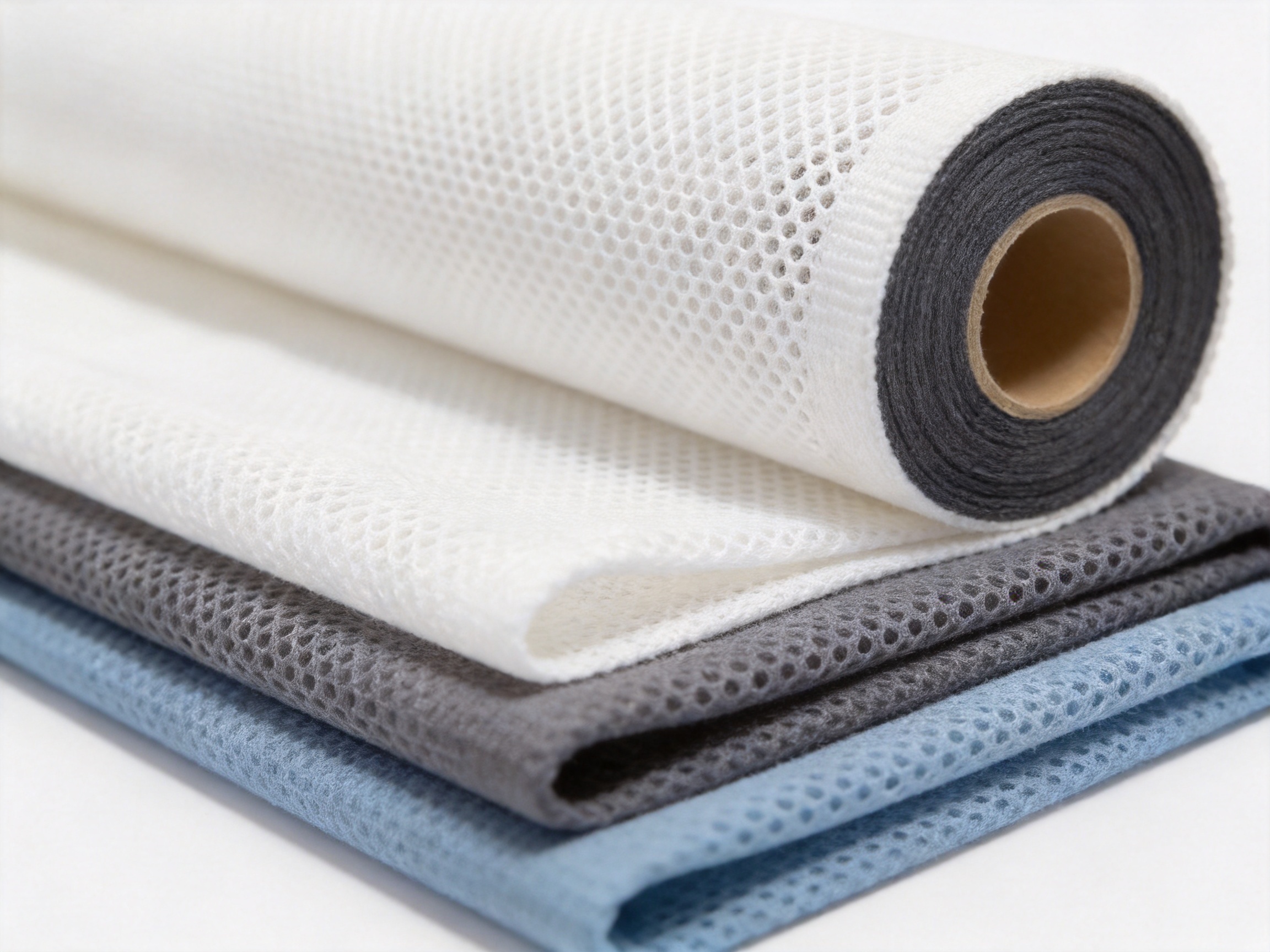
RT Mesh Fabric competes with several categories of textile materials, including compact knitted fabrics, woven fabrics, basic single-jersey fabrics, and low-cost mesh products with limited process control. Its advantages depend on the application, but the following comparisons show why a well-developed mesh fabric can be attractive.
Compared with Compact Knitted Fabrics
Compact knitted fabrics generally provide greater coverage and may offer a smoother, more stable surface. However, they can retain more heat because their structure has fewer openings. RT Mesh Fabric offers a more ventilated alternative when airflow and lightness are priorities.
For sportswear and warm-weather apparel, the open structure can improve comfort in areas where a dense fabric would feel heavy or warm. It can also add a distinctive design element. The trade-off is that mesh may provide less coverage and may require a lining or layered construction in products where opacity is important.
Compared with Woven Fabrics
Woven fabrics can provide excellent dimensional stability and durability, but some woven constructions have limited stretch and may feel less adaptable during movement. Knitted mesh can offer greater flexibility because of its looped structure. This makes it a useful option for garments that need to follow the body or accommodate active motion.
Woven fabrics may still be more suitable for structured products, protective applications, or uses requiring a firm surface. RT Mesh Fabric is strongest as a solution where flexibility, breathability, and visual openness are more important than rigid structure.
Compared with Basic Low-Cost Mesh
Not all mesh fabrics are produced with the same level of control. Low-cost materials may show uneven openings, inconsistent width, poor dye uniformity, excessive curling, unstable dimensions, or a rough hand. Such problems can increase garment-making difficulty and create quality complaints after production.
A more controlled manufacturing system can reduce these risks by coordinating yarn preparation, knitting, dyeing, finishing, inspection, and packing. Consistency is especially important for repeat orders. A fabric that looks acceptable in one shipment but changes noticeably in the next can create cutting, sewing, color-matching, and inventory problems.
Compared with Heavy or Less Breathable Materials
In warm climates or high-activity environments, heavy fabrics may feel uncomfortable because they restrict air movement and retain more heat. RT Mesh Fabric provides a lighter alternative that can support a fresher wearing experience. This benefit can be particularly relevant to athletic clothing, summer garments, and garments that combine mesh with other materials.
The best competitive position for RT Mesh Fabric is therefore not simply low price. Its value lies in combining breathability, knitted flexibility, light weight, visual texture, manufacturing adaptability, and the possibility of controlled customization.
Important Limitations and How to Manage Them
A responsible fabric evaluation should consider both advantages and limitations. Mesh fabric has many practical benefits, but its open structure can affect handling, durability, coverage, and care. Understanding these factors helps buyers make better product decisions and prevents unsuitable use.
Risk of Snagging
The openings in mesh fabric can catch on sharp objects, rough surfaces, zipper pulls, hooks, and buttons. Snagging may distort individual loops or create visible damage. This risk is not unique to RT Mesh Fabric, but it should be considered during garment design and end-use selection.
Manufacturers and garment makers can reduce the risk by selecting an appropriate mesh density, improving the finishing process, avoiding unnecessarily sharp trims, protecting the fabric during cutting and sewing, and using suitable packaging. Garment washing and care instructions should also be developed according to the final construction.
Potential Tearing
Very open or lightweight mesh may tear more easily than a dense fabric when subjected to concentrated force. The level of tear resistance depends on yarn strength, loop structure, fabric density, finishing, and the direction of applied force. Buyers should request testing when the material will be used in demanding conditions.
For higher-stress applications, a denser structure or reinforced garment design may be appropriate. Mesh can also be combined with solid fabric in high-load areas. This approach allows the product to retain ventilation while improving structural support where it is needed.
Heat Sensitivity of Synthetic Fibers
Synthetic mesh fabrics can be sensitive to excessive heat. High ironing temperatures, unsuitable drying conditions, or uncontrolled heat during garment processing may affect the fabric’s appearance, dimensions, or surface. Heat tolerance varies according to fiber type, yarn construction, dyeing, and finishing.
Production teams should follow approved processing conditions and test the fabric under the expected garment-making and care conditions. Clear care instructions can help maintain product performance after sale.
Coverage and Opacity
The open structure of RT Mesh Fabric may provide less coverage than a compact material. Depending on the design, the fabric may need a lining, underlayer, backing, or combination with another textile. Designers should evaluate the fabric under actual lighting conditions and in the intended color because opacity can change with color, density, and layering.
These limitations do not reduce the usefulness of mesh fabric. Instead, they indicate that the material should be matched carefully to the application. Proper selection, design, testing, and care can help buyers benefit from the fabric while avoiding predictable problems.
Manufacturing Strengths Behind the Product
The performance of RT Mesh Fabric is closely connected with the manufacturing system used to produce it. Hangzhou Jinfeng Textile Co., Ltd. operates in the textile industry with capabilities covering blended-fabric production and processing, post-dyeing, finishing, sales, and DTY polyester yarn production and processing. This combination provides a broader foundation than a supply model that depends entirely on external sources for yarn or finishing.
Integrated Textile Production
An integrated production structure can improve communication between different stages of manufacturing. Yarn selection affects knitting behavior. Knitting affects dyeing and finishing. Finishing affects hand feel, dimensional stability, appearance, and final use. When these stages are managed within a coordinated system, production decisions can be made with a clearer understanding of their downstream effects.
For RT Mesh Fabric, integration is valuable because open knitted structures can be sensitive to tension, density, heat, moisture, and finishing conditions. Careful coordination helps support a more consistent result from the first production trial through repeat orders.
The company’s production activities include polyester and spandex-related blended fabrics, as well as DTY polyester yarn. This textile background can support the development of fabric constructions with different levels of flexibility, comfort, texture, and performance. Depending on the customer’s requirements, the fabric may be discussed as part of a wider material solution rather than as an isolated product.
DTY Polyester Yarn Capability
Drawn Textured Yarn, commonly known as DTY, is produced by applying drawing and texturing processes to polyester filament yarn. The process can give the yarn a more flexible, voluminous, or textured character than a completely flat filament. DTY polyester yarn is widely used in knitted and woven textile applications where appearance, handle, coverage, and processability are important.
Having DTY polyester yarn production and processing capability can strengthen the connection between yarn characteristics and fabric development. Yarn properties influence the surface, bulk, stretch behavior, dye uptake, and visual regularity of knitted mesh. A supplier with knowledge of yarn preparation can better evaluate how a selected yarn may behave during knitting and finishing.
For buyers, this capability may also simplify communication. Instead of describing a fabric only by its appearance, the buyer can discuss the yarn, knitted structure, finish, and end use together. This creates a more complete basis for product development and quality control.
Post-Dyeing and Finishing
Post-dyeing allows knitted fabric to be colored after the fabric structure has been formed. The dyeing process must be managed carefully to achieve color uniformity while protecting the fabric’s dimensions and surface. Mesh structures can present specific challenges because their open areas, yarn arrangement, and loop formation may affect the visual result.
Finishing is equally important. It can influence softness, width, shrinkage, surface appearance, handle, and stability. A carefully selected finishing route can help the material achieve the desired balance between a comfortable hand and reliable processing behavior.
For customers, post-dyeing and finishing capability can provide more flexibility in color development and final fabric adjustment. It also supports the preparation of samples and production lots that are closer to the intended specification. Exact color and finish requirements should always be confirmed through laboratory dips, approved samples, and documented standards.
Production Scale and Facility Foundation
Hangzhou Jinfeng Textile Co., Ltd. is located in Jingjiang Street Industrial Park, Xiaoshan District, Hangzhou City, Zhejiang Province. The company reports an operational area of approximately 32.6 acres and a plant area of about 18,000 square meters. This facility foundation supports organized production, processing, storage, quality inspection, and order coordination.
Physical capacity alone does not guarantee quality, but it can provide the space and infrastructure required for a systematic manufacturing process. A suitable production environment makes it easier to separate raw materials, manage work in progress, arrange inspection, and prepare finished goods for shipment.
The company describes itself as an export-oriented enterprise integrating research and development, production, and sales. This integrated business model can help it serve customers from initial product discussion through sample development, bulk production, and delivery coordination.
Typical RT Mesh Fabric Production Process
1. Requirement Review
Production begins with a review of the customer’s requirements. Important details may include end use, fiber composition, color, width, fabric weight, mesh openness, stretch expectations, hand feel, quantity, finishing, packaging, and testing needs. The intended garment or product should be explained clearly because a mesh used for a fashion overlay may require different properties from one used in activewear.
At this stage, the supplier can identify potential conflicts. For example, a customer may request maximum openness together with high tear resistance and complete opacity. These requirements may need to be balanced through structure, layering, yarn selection, or design modification.
2. Yarn Selection and Preparation
Yarn selection has a direct influence on the behavior of the final fabric. Polyester yarn can contribute to color capability, durability, and dimensional performance. DTY polyester yarn may add a textured appearance and a fuller hand. Spandex or other blended components may be used where additional stretch is required.
Yarn preparation includes checking yarn appearance, package condition, uniformity, and suitability for the planned knitting process. Proper preparation helps reduce knitting interruptions and supports a more even fabric surface. Where the company’s own yarn capabilities are relevant, the yarn and fabric teams can coordinate more closely during development.
3. Knitting
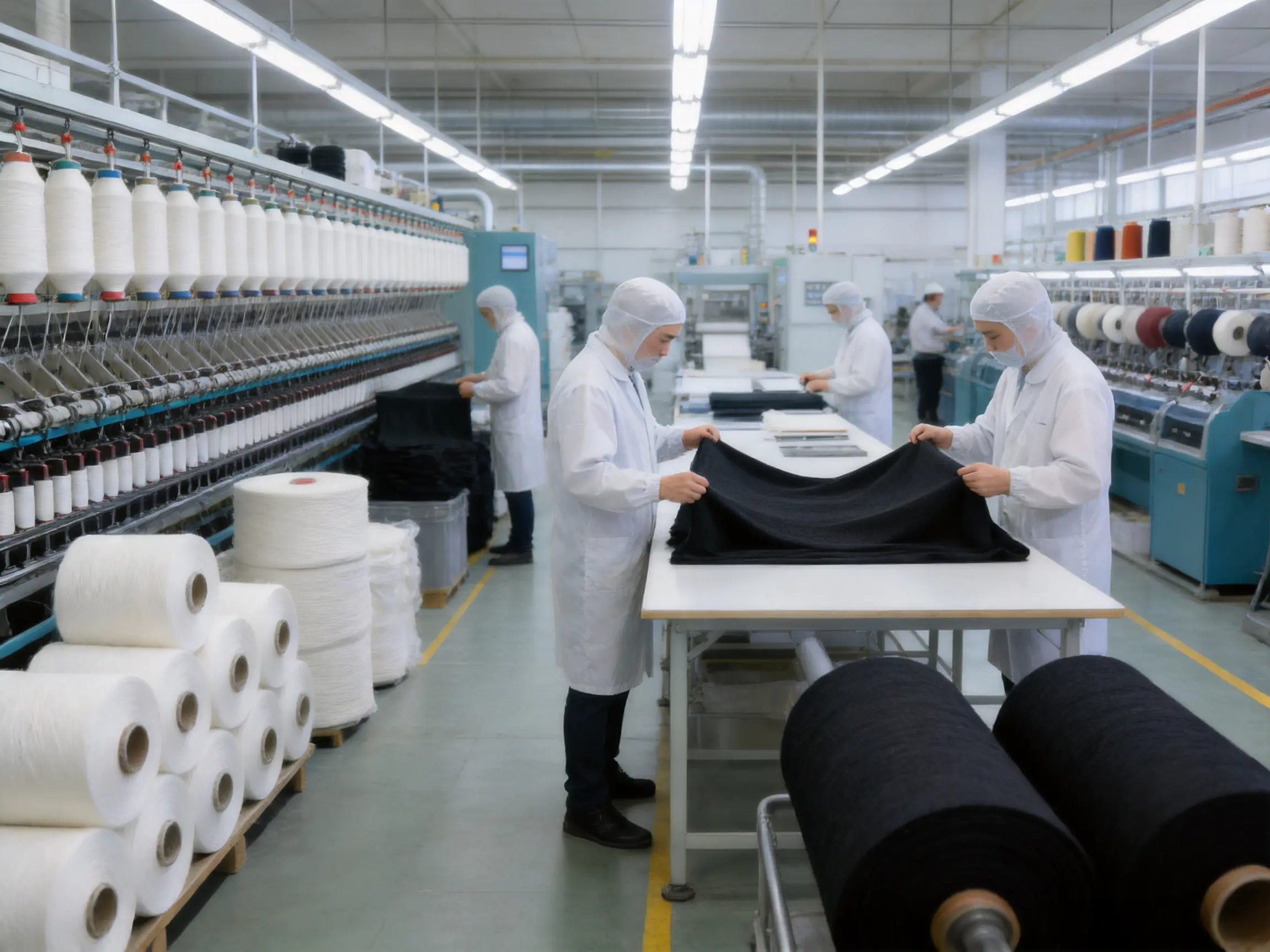
Knitting converts the selected yarn into the open loop structure of RT Mesh Fabric. Machine settings, needle condition, yarn tension, knitting speed, and pattern requirements all influence the result. Small changes in these factors can affect aperture size, width, stretch, surface regularity, and weight.
Operators and technical personnel must monitor the fabric during production. Common concerns may include dropped stitches, uneven loops, holes outside the intended pattern, barre, width variation, edge curling, and tension marks. Early identification of such issues helps reduce waste and improves the consistency of the finished roll.
4. Dyeing
After knitting, the fabric may proceed to post-dyeing according to the required color. Dyeing must be matched to the fiber composition and desired shade. Process control includes preparation, chemical dosing, temperature management, time, washing, and drying.
Color consistency is important for both single orders and repeat business. A buyer may require the fabric to match a garment trim, lining, solid fabric, or previous production lot. Laboratory samples and approval standards provide a practical reference before bulk dyeing.
5. Finishing and Stabilization
Finishing is used to achieve the desired hand feel, appearance, width, dimensional behavior, and surface condition. Depending on the specification, finishing may address softness, compactness, smoothness, or stability. The correct process must preserve the mesh openings and avoid excessive distortion.
Stabilization is particularly relevant to knitted fabric because loops can relax or change dimensions under moisture and heat. A controlled finishing route can help the fabric behave more predictably during cutting and sewing. Buyers should evaluate dimensional change after washing or other relevant treatments when the final product requires it.
6. Inspection
Inspection helps confirm whether the fabric meets the approved standard. Visual inspection may identify holes, stains, color differences, uneven openings, knitting defects, edge problems, and handling damage. Measurements can include width, weight, stretch, recovery, and dimensional stability.
The inspection standard should be agreed before production. Different applications may tolerate different levels of minor variation, but critical defects should be clearly defined. Consistent documentation helps the supplier and customer evaluate quality using the same criteria.
7. Rolling, Packing, and Shipment
After inspection, the fabric is rolled and packed to protect it during storage and transportation. Mesh fabric should be handled carefully to prevent snagging, crushing, contamination, or unnecessary stretching. Packaging can be selected according to shipment distance, storage duration, and customer requirements.
Accurate labeling is useful for production traceability. Roll numbers, color references, batch information, length, width, and order details can help customers organize incoming inspection and later production use.
Quality Control Priorities
Appearance
Appearance is one of the first quality factors noticed by customers. RT Mesh Fabric should have a consistent knitted pattern and a surface appropriate to the approved sample. Attention should be given to the regularity of openings, yarn cleanliness, color, edge condition, and overall texture.
Dimensional Stability
Knitted fabrics can change dimensions because of their loop construction. Width and length may vary during dyeing, finishing, storage, cutting, or washing. Dimensional stability should therefore be measured under conditions related to the final application.
A fabric that is stable enough for one product may not be stable enough for another. For example, a loose fashion panel may tolerate more movement than a precisely cut sports garment. The required tolerance should be agreed during development.
Stretch and Recovery
Stretch can contribute to comfort and ease of movement, but excessive or uneven stretch can create cutting and sewing problems. Recovery is also important. If the fabric does not return adequately after extension, the finished garment may lose shape.
Stretch behavior depends on the knitted construction, yarn properties, fiber composition, finishing, and test direction. Testing should be performed in both lengthwise and crosswise directions where appropriate.
Color Fastness
Color fastness requirements vary by product and market. Relevant evaluations may include resistance to washing, rubbing, perspiration, light, and water. The specific tests should be selected according to the intended use and applicable customer standards.
Color matching should be managed through approved laboratory standards or physical swatches. Digital color references can support communication, but physical approval remains important for final production decisions.
Strength and Snag Resistance
Because mesh contains open spaces, strength testing should reflect the risks of the intended product. Tensile strength, tear resistance, seam performance, and snag behavior may be relevant. The importance of each test depends on whether the fabric will be used in a low-stress decorative area or a high-movement garment.
Application Opportunities
Sportswear and Activewear
Sportswear is one of the most natural applications for RT Mesh Fabric. Athletes and active consumers often need garments that feel light and allow heat to dissipate. Mesh can be used in tops, shorts, jackets, training garments, side panels, back panels, and ventilation zones.
In sportswear, the fabric should be selected with attention to sweat exposure, repeated washing, movement, abrasion, and seam construction. Mesh may be combined with solid polyester or stretch fabric to create a garment that provides ventilation without sacrificing support.
Casual and Summer Apparel
RT Mesh Fabric can be used in casual clothing designed for warm seasons. It may serve as a complete garment, an overlay, a sleeve, a decorative insert, or a breathable section. Its open texture can provide a relaxed and contemporary appearance.
Layering is often important in casual apparel. A lining or underlayer can improve coverage while preserving the visual character of the mesh. Designers can also use color contrast between the mesh and the underlying fabric to create a patterned effect.
Fashion Garments
Fashion designers may value mesh for its transparency, texture, and ability to create contrast between covered and open areas. RT Mesh Fabric can be incorporated into dresses, skirts, tops, jackets, fashion accessories, and layered outfits.
When used in fashion products, appearance and hand feel may be more important than maximum durability. Even so, the fabric should be tested for sewing behavior, edge stability, and resistance to damage during handling. Decorative trims should be selected carefully to avoid snagging.
Linings and Breathable Inserts
Mesh can serve as a lining or partial lining where air movement is desired. It may be used inside jackets, bags, protective covers, footwear components, or equipment-related products, provided that the construction meets the relevant performance requirements.
Inserts can be strategically positioned to improve ventilation without changing the overall appearance of the product. This can be a cost-effective way to add functional value while using mesh only where it is most beneficial.
Accessories and Non-Apparel Products
Potential non-apparel applications include lightweight bags, pouches, storage products, decorative panels, and selected home-textile items. The suitability of the fabric depends on the expected load, abrasion, exposure to heat, and cleaning conditions.
For products that experience high friction or concentrated stress, a denser mesh, reinforced construction, or alternative fabric may be needed. Sample testing should precede mass production.
Specification Guide for Buyers
When purchasing RT Mesh Fabric, buyers should provide as much technical information as possible. A clear specification reduces misunderstanding and helps the manufacturer recommend an appropriate construction.
| Specification Area | Information to Confirm | Why It Matters |
|---|---|---|
| Fiber composition | Polyester, spandex, blended fiber, or another composition | Influences stretch, touch, dyeing, care, and performance |
| Fabric category | NR knitted fabric and required mesh structure | Defines the basic construction and appearance |
| Fabric weight | Target weight and acceptable tolerance | Affects lightness, coverage, drape, and cost |
| Usable width | Finished width and edge requirements | Supports pattern planning and material yield |
| Mesh openness | Desired aperture size, density, and regularity | Controls ventilation, opacity, and visual effect |
| Color | Color standard, sample, or laboratory dip | Supports accurate shade matching |
| Hand feel | Soft, smooth, dry, crisp, full, or textured | Influences wearer comfort and product appearance |
| Stretch and recovery | Direction, percentage, and recovery expectation | Determines movement comfort and garment fit |
| Finishing | Required softness, stabilization, surface treatment, or other finish | Improves suitability for cutting, sewing, and final use |
| Testing | Color fastness, shrinkage, strength, snagging, or other tests | Confirms product suitability for the intended market |
Buyers should also state the estimated order quantity, delivery schedule, packaging requirements, destination market, and whether the order is a development sample, trial order, or repeat production. These details help the supplier plan production and identify possible constraints before work begins.
Customization and Product Development
RT Mesh Fabric can be developed in different directions depending on customer needs. Customization may involve yarn composition, fabric density, color, width, weight, finishing, surface texture, and packaging. The practical limits of customization depend on production equipment, order quantity, technical requirements, and development time.
Sampling
A sample is an essential part of product development. It allows the buyer to assess appearance, touch, stretch, coverage, sewing behavior, and compatibility with other materials. The sample should be reviewed under realistic conditions, including the intended garment construction and, when necessary, washing or heat exposure.
Approval should identify the key characteristics that must remain consistent during bulk production. A physical standard can be retained by both parties for later comparison.
Color Development
Color development can involve standard shades, customer-supplied references, or new colors created for a collection. Because open mesh can appear different depending on the background behind it, color should be evaluated both as a single layer and in the intended layered garment construction.
Color approval should consider lighting conditions, adjacent fabrics, and the final product. This is particularly important when mesh is combined with solid fabric or contrasting trims.
Structure Adjustment
Customers may request a more open or more compact structure. A more open design can increase airflow and transparency, while a denser design can improve coverage and stability. Structure adjustment should be evaluated alongside weight, strength, stretch, and production efficiency.
It is important to understand that changing one property may affect another. Increasing openness may reduce coverage or strength. Adding a denser structure may increase weight or reduce airflow. Product development works best when priorities are ranked rather than treated as independent demands.
Sustainability and Responsible Production Considerations
Textile sustainability involves more than selecting a lightweight material. It includes raw-material choices, production efficiency, dyeing and finishing practices, waste reduction, product durability, packaging, and the expected service life of the finished product.
Because RT Mesh Fabric can be lightweight, it may use less material by weight than some dense alternatives. However, the environmental value of a product depends on the entire supply chain and how long the final garment remains useful. A lightweight fabric that is quickly damaged may offer less practical value than a more durable fabric used for a longer period.
Responsible production can include careful planning of yarn use, efficient knitting, controlled dyeing, accurate cutting, proper handling, and reduction of rejected rolls. An integrated manufacturer may be better positioned to identify process connections that contribute to avoidable waste.
Buyers seeking specific environmental attributes should request appropriate documentation and define the required standards in advance. Claims should be supported by relevant records, testing, or certifications where applicable. Sustainability requirements should be treated as part of the technical specification rather than as an informal marketing statement.
Why Manufacturer Coordination Matters
Many fabric problems originate not from one isolated process but from poor coordination between processes. Yarn may be suitable in theory but difficult to knit consistently. A knitted structure may look correct before dyeing but lose stability during finishing. A color may match in a laboratory sample but differ in bulk production if the process is not controlled.
A manufacturer with capabilities in yarn, blended fabrics, dyeing, finishing, research and development, production, and sales can provide a more coordinated approach. Hangzhou Jinfeng Textile Co., Ltd. presents itself as an enterprise integrating these areas, with experience in polyester-related fabrics, spandex blends, DTY polyester yarn, and export-oriented customer service.
This coordination can provide several benefits:
First, technical communication is more direct. Customers can discuss fabric performance with personnel who understand the relationship between yarn and knitted construction.
Second, development can be more efficient. When yarn, knitting, dyeing, and finishing decisions are reviewed together, the number of unnecessary trial cycles may be reduced.
Third, repeat-order consistency can be supported through documented specifications and retained standards.
Fourth, customers may access a broader range of textile solutions, including mesh, polyester rayon fabric, knitted jacquard fabric, blended fabric, DTY polyester yarn, and other related materials.
Finally, an integrated supplier can help identify realistic compromises when the customer’s requirements involve competing priorities such as maximum openness, high strength, low weight, softness, and low cost.
Purchasing and Supplier Evaluation
Before placing a large order, buyers should evaluate the supplier’s product knowledge, production capability, communication quality, sample process, quality-control approach, lead time, and export experience. A supplier should be able to explain the available fabric structure and identify which properties are standard and which require development.
Questions should be answered clearly and in writing. Buyers may ask about fiber content, production location, standard width, available colors, minimum order quantity, sample timing, bulk lead time, inspection procedures, packaging, and after-sales handling.
It is also useful to compare physical samples rather than comparing descriptions alone. Two fabrics may both be called mesh but differ significantly in aperture size, weight, hand feel, stretch, opacity, and durability. A sample comparison provides a more reliable basis for evaluating competitive value.
Price should be considered together with consistency, usable width, defect rate, delivery reliability, and suitability for the intended garment. A lower nominal price may not represent a lower total cost if the fabric causes cutting waste, sewing problems, color rejection, or production delays.
Handling, Storage, and Garment Processing
RT Mesh Fabric should be handled with care from the moment it arrives. Rolls should be stored in a clean, dry environment away from sharp edges, excessive heat, and direct conditions that could affect color or fiber performance. Heavy objects should not be placed on delicate rolls if they may deform the fabric.
During inspection and spreading, workers should avoid dragging the mesh across rough tables or equipment. Cutting tools should be sharp and properly maintained. Pattern placement should account for the direction, stretch, and visual regularity of the mesh.
Sewing settings may need adjustment according to the fabric’s openness and elasticity. Needles, thread, stitch length, presser-foot pressure, and seam allowance can influence the final appearance. Testing on sample panels can help identify skipped stitches, seam puckering, edge distortion, or damage before bulk sewing begins.
Heat processing should be carefully controlled because synthetic fibers may be sensitive to excessive temperature. Pressing, drying, fusing, and heat-setting conditions should be based on approved trials. The final care label should reflect the actual behavior of the finished product rather than a generic assumption.
Frequently Asked Questions
What is RT Mesh Fabric?
RT Mesh Fabric is an NR knitted fabric with an open looped structure. It is designed to provide breathability, lightness, flexibility, and a distinctive textured appearance. The exact performance depends on its fiber composition, knitting structure, weight, density, and finishing.
Is RT Mesh Fabric suitable for sportswear?
Yes. Its breathable structure and knitted flexibility make it suitable for many sportswear and activewear applications. However, the selected weight, strength, stretch, recovery, and finishing should match the intended activity level and garment design.
Does mesh fabric keep the wearer cool?
Mesh fabric can support cooling by allowing greater air circulation and reducing the tendency to trap body heat. Actual comfort also depends on the garment’s design, the fiber type, the fabric weight, the presence of a lining, humidity, and the wearer’s activity.
Can RT Mesh Fabric be used without a lining?
It can be used without a lining when transparency and openness are acceptable for the product. If greater coverage is required, the mesh can be combined with a lining, backing, or another fabric layer. The decision should be made through sample evaluation under real lighting conditions.
Is RT Mesh Fabric durable?
Durability depends on yarn strength, mesh density, knitted structure, finishing, and end use. A denser or stronger construction may resist damage better than an extremely open lightweight version. Buyers should request relevant strength and snag-resistance testing for demanding applications.
Yes. The open loops may catch on zipper pulls, buttons, hooks, and rough surfaces. Garment designers can reduce this risk by selecting suitable trims, protecting exposed mesh areas, using appropriate construction methods, and choosing a structure that matches the level of contact expected during use.
Is synthetic mesh sensitive to heat?
Many synthetic mesh fabrics can be affected by excessive heat. Ironing, drying, pressing, and other heat-related processes should follow approved technical conditions. The correct care instructions should be confirmed through testing of the finished fabric or garment.
What fibers can be used in RT Mesh Fabric?
Polyester is a common option because it can provide useful durability, color capability, and processability. Blended constructions may include spandex or other fibers when the product requires additional stretch, softness, drape, or a particular appearance. The exact composition should be confirmed for each specification.
Can the fabric color be customized?
Color customization may be available through post-dyeing and laboratory sample approval. Buyers should provide a recognized color reference or physical standard and evaluate the approval sample in the intended garment construction. Bulk production should follow the approved color standard.
What information should be included in a quotation request?
A quotation request should include the fabric category, fiber composition, target weight, width, mesh structure, color, stretch requirement, finishing, estimated quantity, packaging, destination, delivery schedule, and testing requirements. A product sample or visual reference can also improve accuracy.
Why is DTY polyester yarn relevant to mesh fabric?
DTY polyester yarn can influence the surface texture, bulk, handle, flexibility, and appearance of knitted fabric. A supplier with DTY production and processing knowledge can better connect yarn selection with the desired mesh construction and final performance.
Can the manufacturer support other textile products?
Hangzhou Jinfeng Textile Co., Ltd. works with polyester and blended fabrics, spandex-related fabrics, knitted fabrics, and DTY polyester yarn. Its stated product categories also include polyester rayon fabric, knitted jacquard fabric, and other knitted and yarn products. Customers should confirm current availability and specifications for each project.
Conclusion
RT Mesh Fabric is a versatile NR knitted fabric that combines ventilation, lightweight construction, flexibility, and visual texture. Its open knitted structure makes it particularly attractive for sportswear, summer apparel, fashion garments, breathable inserts, linings, and selected accessory or home-textile applications.
The product’s advantages over competing fabrics are strongest when airflow, movement comfort, lightness, and design texture are important. Compared with dense knitted or woven materials, mesh can feel cooler and more flexible. Compared with poorly controlled low-cost mesh, a fabric produced through coordinated yarn preparation, knitting, dyeing, finishing, inspection, and packing can offer better consistency and more dependable processing behavior.
At the same time, buyers should recognize the material’s limitations. The open structure can increase the risk of snagging, tearing, transparency, and heat-related damage. These issues can be managed through correct structure selection, appropriate garment design, careful handling, controlled processing, suitable testing, and accurate care instructions.
Hangzhou Jinfeng Textile Co., Ltd. offers a manufacturing foundation that includes blended-fabric production and processing, post-dyeing, finishing, DTY polyester yarn production, research and development, sales, and export service. Its reported facility scale and integrated production model provide a basis for supporting both standard fabric supply and customized development.
For buyers, the most effective approach is to evaluate RT Mesh Fabric through a complete product-development process. Define the end use, approve a physical sample, confirm the technical specification, test the relevant performance properties, and establish clear bulk-production standards. When these steps are followed, RT Mesh Fabric can deliver a practical combination of comfort, appearance, manufacturing flexibility, and commercial value.
References
1. Textile Institute, textile terminology and fabric construction references.
2. Standard references for knitted fabric testing, dimensional stability, color fastness, tensile strength, and tear resistance.
3. Technical literature on polyester filament yarn, Drawn Textured Yarn, and textured-yarn applications.
4. General textile engineering references covering weft knitting, loop formation, fabric density, finishing, and garment processing.
5. Product and company information supplied for the preparation of this article, including RT Mesh Fabric product data and manufacturing information.
6. Industry guidance concerning fabric inspection, roll handling, color approval, heat processing, and care-label development.