
RT Mesh Fabric: Performance, Manufacturing Expertise, and Selection Guide
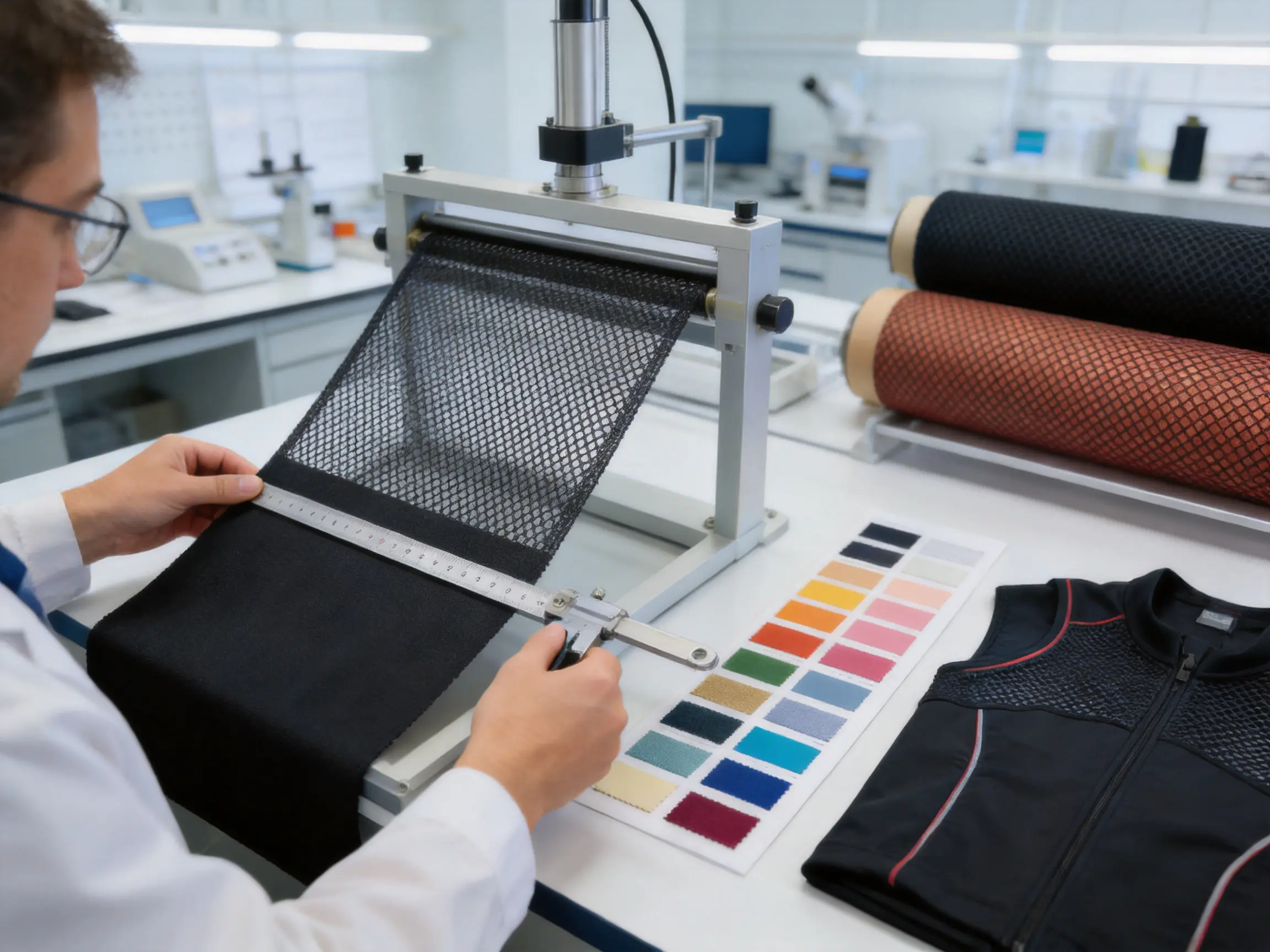
RT Mesh Fabric is a knitted fabric designed for applications that require airflow, flexibility, visual texture, and efficient production. Its open construction allows air to move through the material more freely than through many compact fabrics, making it suitable for apparel, linings, sportswear, casual clothing, decorative panels, and other products where breathability is important. As a member of the NR knitted fabric category, RT Mesh Fabric combines the comfort of a knitted structure with the distinctive appearance of a mesh surface.
Modern buyers do not evaluate mesh fabric only by its appearance. They also consider fiber content, dimensional stability, surface uniformity, resistance to snagging, dyeing performance, production consistency, and the supplier’s ability to provide dependable service. These factors determine whether a fabric performs successfully after cutting, sewing, washing, finishing, and long-term use.
RT Mesh Fabric is manufactured and supplied by Hangzhou Jinfeng Textile Co., Ltd., a textile enterprise based in Xiaoshan District, Hangzhou, Zhejiang Province. The company specializes in blended fabrics, polyester and spandex-related fabric production and processing, post-dyeing, finishing, and drawn textured yarn production. This combination of fabric and yarn expertise supports a more integrated approach to mesh development, quality control, and customer service.
This article explains the structure, benefits, limitations, manufacturing considerations, applications, quality standards, and purchasing value of RT Mesh Fabric. It also examines how an experienced textile manufacturer can help buyers obtain more consistent results than they may receive from suppliers that only trade finished fabric.

RT Mesh Fabric
1. Understanding RT Mesh Fabric
Mesh fabric is generally recognized by its open or perforated appearance. Instead of forming a completely closed surface, its knitted construction creates spaces between yarns. These openings may be regular or decorative, large or small, and closely distributed or arranged in a more complex pattern. The final appearance depends on yarn type, yarn size, knitting gauge, stitch structure, finishing method, and fabric tension during production.
RT Mesh Fabric belongs to the NR knitted fabric category. Knitted fabrics are made by forming interconnected loops rather than crossing yarns in the traditional warp-and-weft method used for many woven materials. This looped structure gives knitted mesh a degree of stretch, softness, and conformability. It can follow body movement more easily than a rigid textile and can often be cut into curved or close-fitting garment components.
The exact performance of a mesh fabric depends on its fiber composition. Polyester is commonly selected for its strength, abrasion resistance, color retention, and relatively easy care. Elastomeric fibers such as spandex may be incorporated when greater stretch and recovery are needed. Blended constructions can provide a balance between durability, comfort, elasticity, appearance, and production cost.
The term “RT” identifies the product designation used for this mesh fabric. Buyers should confirm the precise composition, width, weight, stretch direction, color standard, and finishing requirements before placing an order, because mesh fabrics with similar visual appearances can perform very differently in actual use.
Open Construction and Air Movement
The principal functional characteristic of RT Mesh Fabric is its open construction. The spaces within the knitted structure allow heat and moisture to escape more easily than they would through a dense, heavy textile. This can contribute to a cooler wearing experience, especially when the fabric is used in garments designed for warm climates, active movement, or layered construction.
Air permeability is influenced by more than the visible size of the holes. Yarn thickness, loop density, fabric weight, finishing chemicals, and surface treatments all affect how readily air passes through the textile. A fabric with very large openings may offer strong ventilation but less coverage, while a tighter mesh may provide a more balanced combination of breathability, modesty, and durability.
Flexibility and Comfort
The knitted structure enables RT Mesh Fabric to bend and move with the user. This property is valuable in sportswear, casualwear, fitted garments, and panels that must conform to curved surfaces. When the fiber blend and finishing process are properly selected, the fabric can provide a comfortable hand feel while maintaining adequate recovery after stretching.
Comfort is also related to weight and surface softness. Lightweight mesh may reduce the sensation of bulk and can be useful as a breathable layer. Heavier mesh may provide a more substantial appearance and improved coverage. Buyers should select the fabric according to the intended garment design rather than assuming that the lightest construction is always the best option.
2. Major Advantages of RT Mesh Fabric
RT Mesh Fabric offers several advantages over dense knitted fabrics and certain low-quality mesh alternatives. These advantages are most meaningful when the fabric is produced with consistent yarn preparation, controlled knitting conditions, appropriate dyeing, and careful finishing.
Breathability for Warm and Active Applications
Breathability is the most recognizable benefit of mesh fabric. The open structure helps reduce the buildup of heat and humidity between the fabric and the skin. This makes RT Mesh Fabric suitable for clothing that must remain comfortable during movement or in warm environments.
Compared with compact polyester jersey, interlock, or other closed knitted fabrics, mesh can provide a more ventilated surface at a similar visual weight. In applications such as inserts, sleeves, side panels, linings, and upper garment sections, the fabric can improve air circulation without requiring the entire product to be made from an open material.
Breathability can also benefit interior and decorative applications. Mesh panels may be used where airflow, visual openness, or partial screening is preferred. The product’s value therefore extends beyond clothing, provided that the construction is selected according to the performance requirements of the end use.
Lightweight Structure
Many mesh constructions provide useful coverage without adding substantial weight. Lightweight fabric may reduce shipping weight, support comfortable wear, and allow designers to create layered products without excessive bulk. This is particularly helpful in products where ventilation and freedom of movement are priorities.
A lightweight fabric must still be evaluated for strength and handling. The smallest reduction in yarn content is not automatically an improvement if it causes excessive distortion, poor recovery, or unacceptable snagging. A professional supplier should help the buyer balance low weight with practical durability.
Knitted Stretch and Conformability
Because RT Mesh Fabric is knitted, it can offer greater flexibility than many woven mesh products. The fabric may be easier to shape around the body, fit into curved garment sections, or use in designs that require movement. The degree of stretch depends on the yarn blend and knitting structure, so buyers should request test data or physical samples before finalizing a design.
When spandex or another elastic component is included, the fabric may deliver improved stretch recovery. This is beneficial for sportswear, fitted apparel, and areas that experience repeated extension. Good recovery helps the product maintain its appearance and reduces the risk of permanent bagging during use.
Versatile Visual Appearance
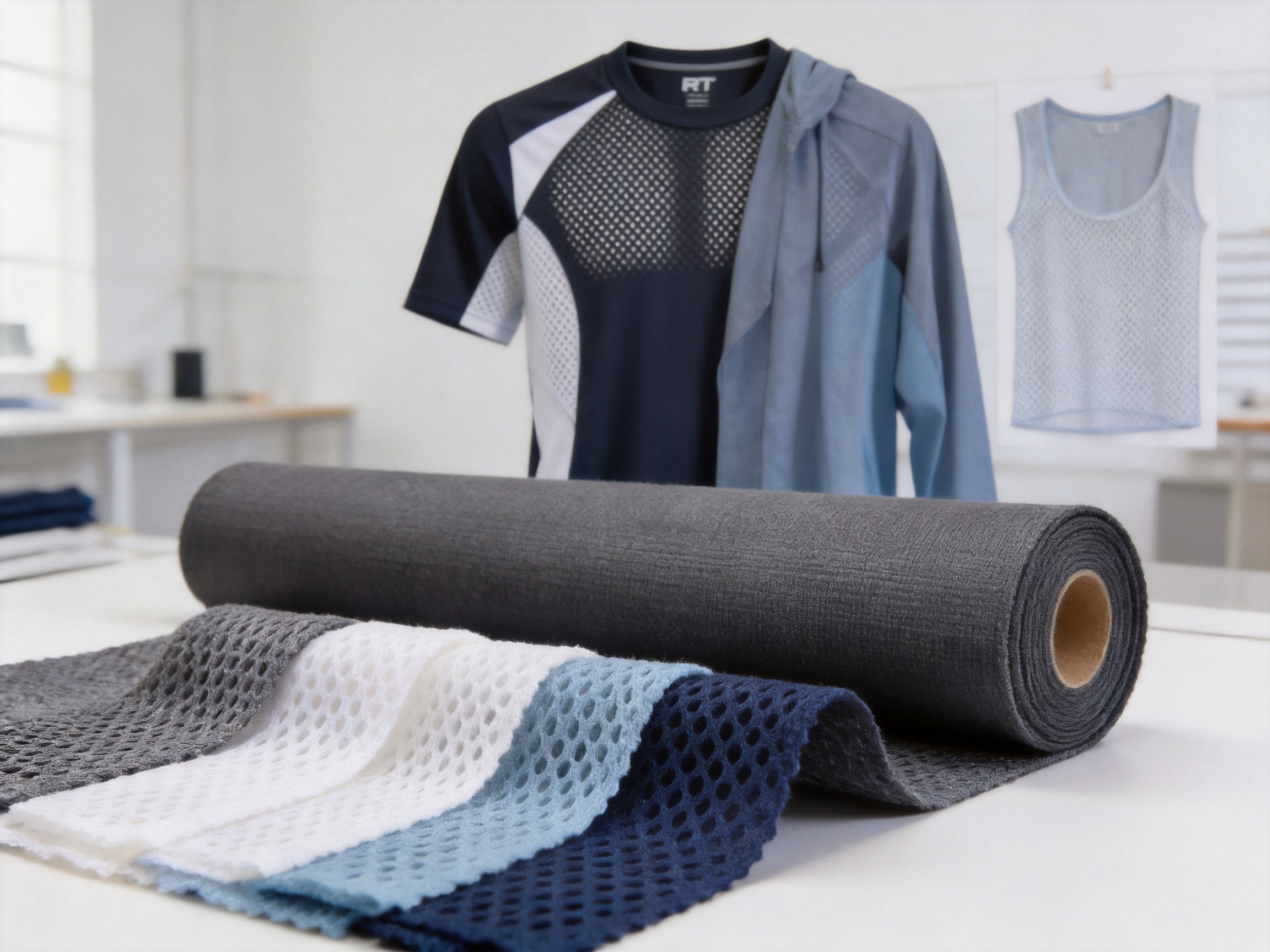
Mesh can be functional and decorative at the same time. The openings create texture, depth, and contrast when the fabric is placed over another color or material. It can be used as a main fabric, an overlay, a panel, a trim, or a lining component.
The appearance may be changed through yarn selection, color combinations, knitting patterns, and finishing. A simple open structure can produce a sporty look, while a more refined pattern can support fashion garments or decorative textile products. This versatility gives product developers more design options than a plain, closed knitted surface.
Compatibility with Blended Textile Development
RT Mesh Fabric can be developed in relation to different fiber combinations. Polyester-rich constructions may prioritize strength, easy care, and color consistency. Blended fabrics can be designed to modify softness, elasticity, drape, or moisture behavior. The appropriate composition depends on the product’s expected life cycle and target market.
Hangzhou Jinfeng Textile Co., Ltd. works with blended fabrics, polyester, spandex-related materials, and drawn textured yarn. Its experience across these materials can support coordinated development rather than treating the mesh fabric as an isolated product. This is particularly valuable when customers require a specific yarn behavior, surface effect, or compatibility with other fabric components.
3. Advantages Compared with Lower-Quality Competitors
Mesh fabric is not a single standardized product. Two fabrics can look similar in a photograph but differ significantly in weight, hole stability, color fastness, stretch recovery, sewing performance, and resistance to damage. The advantages of a professionally manufactured RT Mesh Fabric are therefore connected to process control and technical communication.
More Consistent Fabric Construction
Consistent knitting is essential for a mesh product. If loop size or tension changes across the width, the fabric may show uneven openings, stripes, distorted patterns, or differences in transparency. Such defects can become highly visible after cutting or garment assembly.
Controlled production helps maintain a more uniform surface from one roll to the next. This improves cutting efficiency, reduces panel matching problems, and supports a more consistent finished product. For buyers producing garments in commercial quantities, consistency can be more valuable than a small difference in initial fabric price.
Better Control of Finishing Results
Finishing affects the hand feel, width, appearance, dimensional stability, and usability of mesh fabric. An unsuitable finishing process may close some openings, create excessive stiffness, weaken elastic recovery, or cause unwanted shrinkage. Proper finishing should preserve the intended open structure while improving the fabric’s behavior during sewing and use.
Post-dyeing and finishing capabilities allow the manufacturer to adjust the product according to customer requirements. Different buyers may prefer a softer hand, a crisper surface, a particular width, or a specified appearance. A supplier with finishing knowledge can evaluate these requirements more effectively than a company that only resells unprocessed rolls.
Integrated Yarn and Fabric Knowledge
Yarn quality has a direct effect on mesh performance. Variations in yarn thickness, twist, strength, intermingling, or texturing can appear as irregularities in the finished fabric. Drawn textured yarn, including DTY polyester yarn, can influence bulk, softness, elasticity, and surface character.
Because Hangzhou Jinfeng Textile Co., Ltd. is involved in DTY polyester yarn production, processing, and sales as well as blended fabric manufacturing, it has a broader understanding of how yarn selection affects knitted results. This integrated knowledge can support better communication between yarn specifications and final fabric requirements.
Improved Project Coordination
Customers often need more than a product name. They may require a particular width, weight, color, composition, stretch ratio, roll length, packaging format, or delivery schedule. An experienced textile manufacturer can review these details at the development stage and identify potential problems before bulk production.
Direct communication with a manufacturing company can also reduce the risk of misunderstandings that sometimes arise when several intermediaries handle technical information. Clear communication is especially important for mesh because small differences in openness, stretch, and weight can affect the finished product.
More Suitable Customization Potential
Lower-cost competitors may offer limited standard options. A manufacturer with production and finishing resources may be better positioned to discuss customized specifications. These may include fiber blending, color development, fabric weight, finishing treatment, width adjustment, and packaging requirements.
Customization does not mean that every request is technically or economically practical. The manufacturer should assess the intended use, minimum order quantity, equipment suitability, and expected performance. A responsible development process balances design ambition with reliable production.
4. Manufacturing Process and Technical Strengths
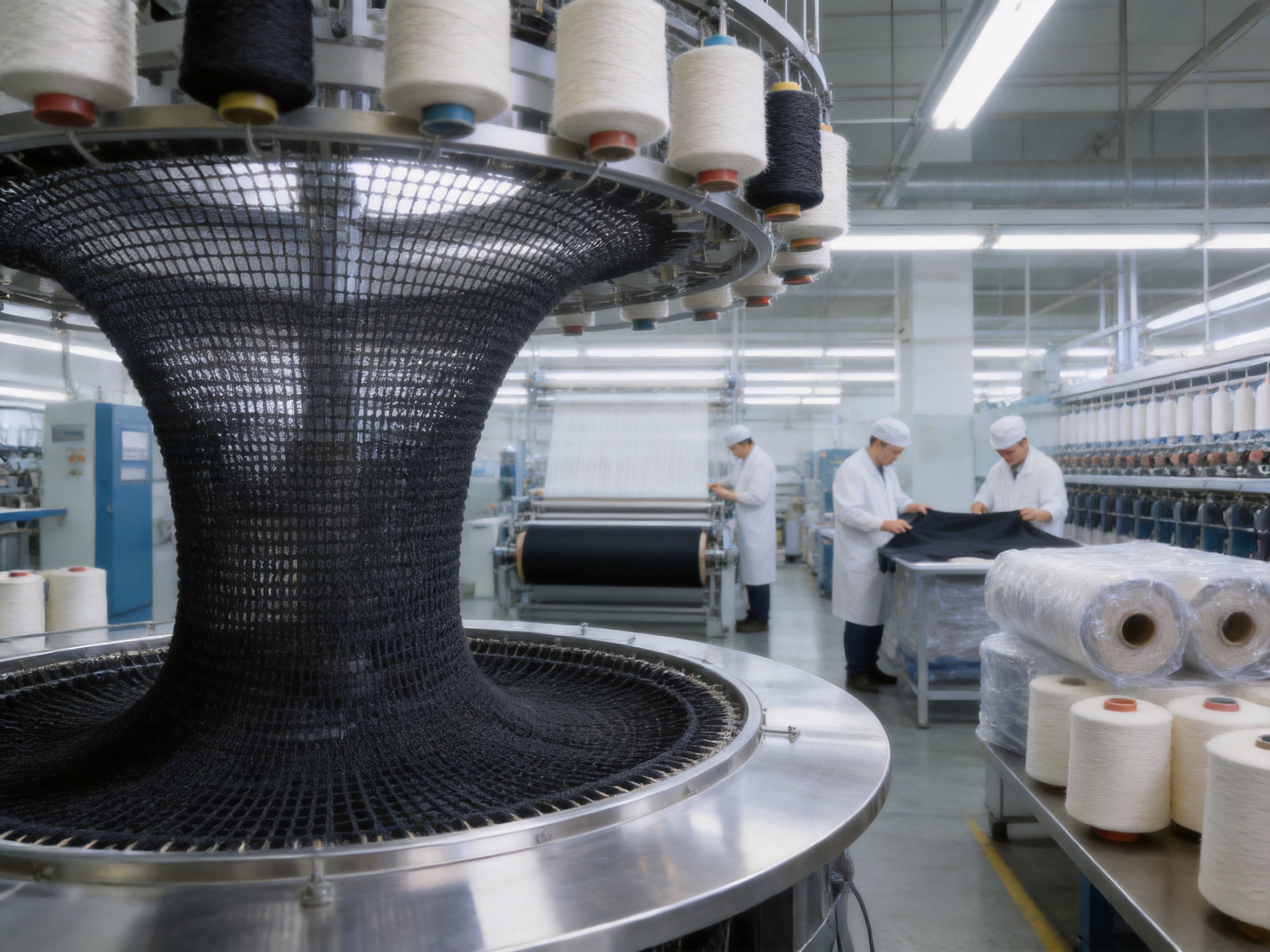
The performance of RT Mesh Fabric is built through a sequence of controlled manufacturing stages. Each stage contributes to the final quality. Although specific machine settings and recipes depend on the required specification, the general process includes yarn preparation, knitting, inspection, dyeing or post-dyeing treatment, finishing, final inspection, and packing.
Yarn Preparation
Before knitting begins, the yarn must be prepared for stable feeding and uniform loop formation. Yarn packages should be handled carefully to reduce contamination, tension variation, and damage. The selection of yarn type is based on the desired fabric weight, surface appearance, strength, stretch, and end use.
DTY polyester yarn is often valued for its textured character and ability to contribute bulk and a softer surface compared with a completely flat filament yarn. Depending on its specification, it may support a more comfortable hand feel and attractive fabric texture. The yarn must still be matched to the knitting structure and finishing conditions.
When blended yarns are used, compatibility between components becomes especially important. Different fibers may respond differently to heat, dyes, moisture, and mechanical tension. Proper preparation helps minimize uneven dye uptake and dimensional differences.
Knitting
Knitting creates the interconnected loop structure that gives RT Mesh Fabric its flexibility and open appearance. Machine gauge, stitch settings, yarn tension, and pattern control all affect the final result. The manufacturer must maintain stable operating conditions so that the mesh openings remain consistent throughout the fabric width and length.
Knitting tension is particularly important. Excessive tension can reduce openness or cause the fabric to contract after release. Insufficient control can create loose areas, uneven holes, or unstable edges. Regular inspection during production helps identify deviations before a large quantity is completed.
Designers should also consider the direction of stretch and recovery. Some mesh fabrics extend more in one direction than another, while others are engineered for multidirectional movement. This information should be communicated to the cutting and garment production teams.
Grey Fabric Inspection
Inspection of grey fabric provides an opportunity to detect knitting faults before dyeing or finishing adds further cost. Common concerns may include broken yarns, missing loops, irregular openings, oil marks, holes outside the intended pattern, edge problems, and width variation.
A suitable inspection system should evaluate the fabric under controlled tension and adequate lighting. Mesh openings can appear different when the fabric is stretched, so inspection conditions should reflect both the relaxed and expected working state of the material.
Dyeing and Color Development
Color is a major part of textile value. A fabric with good construction can still be rejected if the shade is inconsistent or unsuitable for the customer’s product. Polyester-rich fabrics typically require dyeing methods appropriate to synthetic fibers, while blended constructions may need carefully selected processes to achieve balanced color results.
Color development should include laboratory sampling, shade comparison, and approval procedures. The buyer may provide a physical standard, a color reference, or a target based on an established shade system. The manufacturer should clarify acceptable tolerances before bulk production.
Mesh structure can influence visual color depth because the open spaces allow the background or underlying garment layer to affect perception. For this reason, color approval should be based on the fabric in a form that resembles its intended use, not only on a small flat swatch.
Post-Dyeing and Finishing
Post-dyeing and finishing can improve the fabric’s appearance, softness, width, stability, and handling behavior. The appropriate treatment depends on the fiber composition and intended application. Excessive heat or tension should be avoided when it may damage elastic components or distort the mesh pattern.
Finishing can also influence shrinkage and recovery. A buyer should define whether the fabric will be washed before sale, exposed to heat during garment production, or combined with other materials that have different shrinkage rates. A stable finishing process helps reduce unexpected changes after cutting and sewing.
Final Inspection and Packing
Before shipment, the fabric should be checked for appearance, width, weight, color, roll length, packaging, and visible defects. Rolls should be packed to protect the material from moisture, dust, compression, and handling damage. Appropriate labeling helps customers identify lot numbers, specifications, colors, and production details.
Good packing is especially important for open fabrics. Mesh can catch on rough surfaces, sharp edges, zippers, hooks, and other objects. Careful winding and protective packaging reduce the risk of damage during transportation and storage.
5. Limitations and Practical Handling Considerations
Mesh fabric offers valuable advantages, but it is not suitable for every application. Its open structure creates certain limitations that should be considered during design, production, and use.
Risk of Snagging
The holes and loops that make mesh breathable can also catch on zipper pulls, buttons, jewelry, hooks, rough furniture, and sharp objects. A snag may pull one or more loops out of position and create a visible defect. This risk depends on yarn strength, opening size, loop structure, finishing, and the way the product is used.
Designers can reduce snagging by selecting a tighter or more stable construction where appropriate, reinforcing high-contact areas, and avoiding exposed sharp components. Care labels should advise users to keep the fabric away from abrasive surfaces and open fasteners.
Heat Sensitivity
Many synthetic mesh fabrics are sensitive to excessive heat. High temperatures during ironing, drying, pressing, heat setting, or garment finishing may cause deformation, shrinkage, melting, loss of elasticity, or changes in surface appearance. The correct temperature depends on the exact fiber composition and finishing system.
Manufacturers should test the fabric under the expected production conditions. Buyers should also communicate any heat-based processes used after fabric delivery. A mesh fabric that performs well under normal wear may be damaged by an unsuitable industrial pressing operation.
Tearing and Edge Stability
Some lightweight mesh products can tear more easily than dense fabrics, especially when a cut edge is pulled or when stress is concentrated at a seam. This does not mean that all mesh is weak. Rather, the fabric must be selected and constructed according to the forces it will experience.
Appropriate seam design, edge finishing, reinforcement, and stitch selection can improve performance. Samples should be tested after sewing, not only as loose fabric. The interaction between mesh, thread, needle, seam allowance, and stitch density can strongly influence the final result.
Transparency
Open mesh may be more transparent than the customer expects. Transparency can be an intended design feature, but it can also create a problem in garments that require coverage. Designers may use lining, underlayers, color contrast, or a tighter mesh construction to manage this characteristic.
Transparency should be evaluated under different lighting conditions and with the intended base layer. A fabric that appears adequately covered in a showroom may look substantially more transparent outdoors or under strong illumination.
6. Applications of RT Mesh Fabric
RT Mesh Fabric can be used in products where breathability, flexibility, lightweight construction, or textured appearance is required. The best application depends on the fabric’s specific composition and test results.
Sportswear and Activewear
Sportswear is one of the most natural applications for mesh fabric. Ventilation can help manage heat during exercise, while knitted flexibility supports movement. Mesh may be used in complete garments or strategically placed in back panels, underarm sections, side panels, shoulder areas, and inserts.
For activewear, stretch recovery, color fastness, sweat exposure, washing durability, and seam performance should be tested carefully. If the fabric contains elastic fibers, buyers should evaluate recovery after repeated extension and laundering.
Casual Apparel
RT Mesh Fabric can add texture and visual interest to casual garments. It may be used for overlays, fashion panels, relaxed tops, skirts, lightweight jackets, or layered designs. The fabric’s appearance can shift from sporty to decorative depending on the color, opening pattern, and garment construction.
Linings and Inserts
Mesh can serve as a breathable lining or insert in garments, bags, accessories, and equipment. It may improve air movement while reducing the weight of the product. The correct construction should provide sufficient support and resist distortion during assembly.
Decorative and Interior Components
Some mesh fabrics are used in decorative panels, display products, soft furnishings, or interior components. In these applications, appearance, light transmission, dimensional stability, and resistance to handling may be more important than stretch.
Before using RT Mesh Fabric in an interior or technical product, buyers should confirm whether the fabric meets any required standards for flame behavior, abrasion, light exposure, or environmental conditions. Textile suitability depends on the specific end use and applicable regulations.
Fashion Layering
Mesh is often selected for layered fashion because it can create depth without excessive weight. A contrasting base fabric placed beneath the open structure can produce a distinctive visual effect. Designers can also combine mesh with embroidery, printing, bonding, or other decorative treatments after confirming process compatibility.
7. Quality Evaluation Before Purchase
A professional purchasing process should evaluate RT Mesh Fabric through both documentation and physical testing. Product photographs alone cannot reveal all performance characteristics.
Composition and Weight
Confirm the fiber composition and fabric weight. Composition affects dyeing, care, elasticity, strength, and price. Weight should be measured consistently, because small changes can alter transparency, drape, and durability.
Width and Dimensional Stability
Usable width is important for pattern planning and cutting efficiency. The buyer should distinguish between nominal width and usable width after edge treatment. Dimensional stability should be evaluated after the expected washing, drying, pressing, and finishing conditions.
Stretch and Recovery
Measure stretch in the lengthwise and crosswise directions where relevant. Recovery testing can show whether the fabric returns to its original dimensions after repeated extension. These values are essential for fitted garments and activewear.
Color Fastness
Color fastness should be matched to the intended use. Tests may include washing, rubbing, perspiration, light, and water exposure. The required level depends on the product category, market, and customer expectations.
Snagging and Abrasion
Because mesh contains open loops, snagging and abrasion tests may provide useful information. The test method should reflect the product’s expected use. A fashion overlay, sports garment, and equipment lining may require different performance levels.
Seam and Cutting Performance
Test panels should be cut and sewn using the intended equipment and settings. Examine edge fraying, needle damage, seam slippage, puckering, stretching, and distortion. A fabric that appears excellent on the roll may require special handling during garment production.
8. Manufacturing Strengths of the Supplier
Hangzhou Jinfeng Textile Co., Ltd. provides a manufacturing base for RT Mesh Fabric and related textile products. The company is located in Jingjiang Street Industrial Park in Xiaoshan District, Hangzhou City, Zhejiang Province. It covers approximately 32.6 acres and has a plant area of about 18,000 square meters.
The company’s activities include production and processing, post-dyeing, finishing, and sales of blended fabrics such as polyester and spandex materials. It also produces, processes, and sells DTY polyester yarn. This combination gives customers access to a supplier with experience in both yarn-level and fabric-level operations.
Its business model integrates research and development, production, sales, and export activity. This structure can help shorten communication paths between product requirements and manufacturing decisions. It also supports the development of textile solutions for customers in domestic and international markets.
The company emphasizes cooperation and mutual benefit as business principles. For buyers, this can translate into a service approach based on long-term coordination rather than one-time transactions. Textile purchasing often involves repeated sampling, color confirmation, production scheduling, inspection, and after-sales communication. A supplier that is prepared to maintain these communication steps can contribute more value than a supplier focused only on immediate shipment.
Manufacturing scale alone does not guarantee fabric quality, but an established plant, dedicated production resources, and experience with post-dyeing and finishing can provide a stronger foundation for repeatable results. Customers should still confirm specifications, testing procedures, quality agreements, and delivery terms for each project.
9. Sustainability and Responsible Production Considerations
Textile sustainability involves fiber selection, production efficiency, chemical management, product durability, and end-of-life considerations. Mesh fabric may contribute to lightweight product design, but its environmental value depends on how it is manufactured and used.
Longer-lasting fabric can reduce the frequency of replacement. Reliable construction, stable color, and adequate resistance to wear may help extend the useful life of a garment. At the same time, buyers should avoid selecting an unnecessarily complex or resource-intensive construction when a simpler design would meet the same performance need.
Polyester production and dyeing require responsible management of energy, water, and process chemicals. Buyers may ask suppliers about quality systems, wastewater treatment, restricted substance management, and production controls. These questions are increasingly important for international markets and brand compliance programs.
Blended fabrics may offer performance advantages, but fiber blends can be more difficult to recycle than single-fiber products. Product developers should consider the intended service life, repairability, and disposal conditions when choosing a composition. The most suitable fabric is one that delivers the required performance while supporting the broader product responsibility goals of the customer.
10. How to Select the Right RT Mesh Specification
Selection should begin with the end-use requirements rather than with a preferred appearance. Define whether the fabric must prioritize ventilation, stretch, coverage, softness, abrasion resistance, visual texture, or cost.
For warm-weather apparel, air permeability and hand feel may be the primary concerns. For sportswear, stretch recovery, sweat resistance, color fastness, and seam performance may be more important. For decorative applications, color, transparency, dimensional stability, and surface uniformity may take priority.
Next, determine the desired composition. Polyester may offer durability and easy care, while spandex or another elastic component may improve fit and recovery. Blended constructions should be tested for compatibility with dyeing, washing, heat, and sewing.
After composition, confirm fabric weight, width, opening size, stretch direction, color, finish, and packaging. Request a sample that represents the expected bulk production condition. If the product will be produced in several colors, approve each color or establish a clear shade-control procedure.
Finally, conduct performance tests that reflect real use. A fabric intended for a loose fashion overlay does not need exactly the same tests as a fabric intended for repeated sports activity. The closer the evaluation is to the final product, the more useful the result will be.
11. Frequently Asked Questions
What is RT Mesh Fabric?
RT Mesh Fabric is an open-structure knitted fabric in the NR knitted fabric category. It is designed to provide airflow, flexibility, lightweight comfort, and a textured mesh appearance. Its final properties depend on fiber content, knitting structure, weight, and finishing.
Is RT Mesh Fabric suitable for sportswear?
It can be suitable for sportswear when the selected specification provides sufficient stretch recovery, color fastness, seam performance, and durability for the intended activity. Buyers should test the fabric under expected washing, perspiration, and repeated movement conditions.
Does mesh fabric keep the wearer cool?
The open construction can improve air circulation and reduce the buildup of heat compared with many dense fabrics. The actual cooling effect also depends on garment design, ambient conditions, fiber content, moisture, and whether the mesh is covered by another layer.
Is mesh fabric easy to damage?
Some mesh fabrics can be more vulnerable to snags, sharp objects, rough surfaces, and excessive heat because of their open loop structure. Damage resistance depends on yarn strength, opening size, construction, finishing, and use. Proper handling and suitable design can reduce these risks.
Can RT Mesh Fabric be customized?
Customization may be possible depending on the required composition, weight, width, color, stretch, finishing, order volume, and equipment availability. The buyer should discuss the intended application and technical requirements with the manufacturer before confirming a custom development.
What fiber content is used in RT Mesh Fabric?
The exact fiber content should be confirmed for the selected product specification. Mesh fabrics may use polyester, spandex, or blended fibers. Fiber content affects stretch, hand feel, strength, dyeing, care, and price.
How should mesh fabric be tested before bulk production?
Testing may include composition, weight, width, stretch, recovery, dimensional stability, color fastness, snagging, abrasion, seam performance, and washing behavior. The test program should be based on the intended end use and market requirements.
Can mesh fabric be used as a lining?
Yes, mesh can be used as a breathable lining or insert in suitable garments, bags, accessories, and equipment. The selected fabric must provide the necessary support, stability, comfort, and resistance to distortion during assembly.
How does DTY polyester yarn relate to mesh fabric?
Drawn textured polyester yarn can influence the bulk, softness, surface texture, and appearance of a knitted fabric. Yarn specification and knitting structure must be matched carefully to achieve the desired mesh performance.
Why is supplier manufacturing experience important?
Manufacturing experience supports better control over yarn preparation, knitting, dyeing, finishing, inspection, and packing. It also improves communication during sampling and customization. These factors can reduce variation and help the buyer obtain more predictable results.
12. Conclusion
RT Mesh Fabric is a versatile knitted textile that combines breathability, flexibility, lightweight construction, and visual texture. Its open structure can make it valuable for sportswear, casual apparel, overlays, linings, decorative products, and other applications requiring airflow or a distinctive surface.
Its benefits must be considered alongside practical limitations. Mesh can be vulnerable to snagging, excessive heat, tearing at stressed edges, and unwanted transparency. These characteristics are manageable when the product is correctly specified, tested, designed, sewn, and cared for.
The strongest advantage of a professionally manufactured RT Mesh Fabric is not simply its appearance. Consistent knitting, reliable yarn selection, controlled dyeing, appropriate finishing, careful inspection, and protective packing all contribute to the fabric’s commercial value. An integrated supplier with experience in blended fabrics, polyester, spandex-related materials, DTY polyester yarn, post-dyeing, and finishing can provide more effective technical support throughout the development process.
Hangzhou Jinfeng Textile Co., Ltd. combines textile production, processing, finishing, sales, research and development, and export capabilities. Its factory resources and experience with both yarn and fabric provide a useful foundation for customers seeking stable mesh products and related textile solutions.
For the best purchasing result, buyers should define the intended use, confirm the complete specification, request representative samples, conduct application-based testing, and establish clear quality requirements before bulk production. With this approach, RT Mesh Fabric can deliver a practical balance of comfort, ventilation, design flexibility, manufacturing efficiency, and long-term product value.
References
1. Textile Institute. Textile Terms and Definitions. Manchester: The Textile Institute.
2. American Society for Testing and Materials. Standard Test Methods for Textile Fabric Construction, Color Fastness, and Dimensional Stability.
3. International Organization for Standardization. Textile Testing Standards for Fiber Composition, Fabric Performance, and Color Fastness.
4. A. R. Horrocks and S. C. Anand, Handbook of Technical Textiles. Woodhead Publishing.
5. Sara J. Kadolph, Textiles. Pearson Education.
6. Textile Research and Development Materials on Knitted Fabric Structures, Synthetic Yarns, and Fabric Finishing.