
Premium Double-Knit Jacquard: Redefining Structured Suits with Stretch, Style, and Durability
In the fast-paced world of modern fashion and business wear, consumers and brands alike demand fabrics that balance aesthetics, comfort, and performance. Gone are the days when structured suits meant sacrificing mobility or enduring constant wrinkling. Enter the premium double-knit jacquard fabric— a textile innovation that merges the sophistication of jacquard patterns with the flexibility of knit construction, setting a new standard for formal and business casual attire. This article explores the unique attributes of this fabric, its advanced manufacturing processes, competitive advantages over traditional alternatives, and answers key questions for potential buyers.
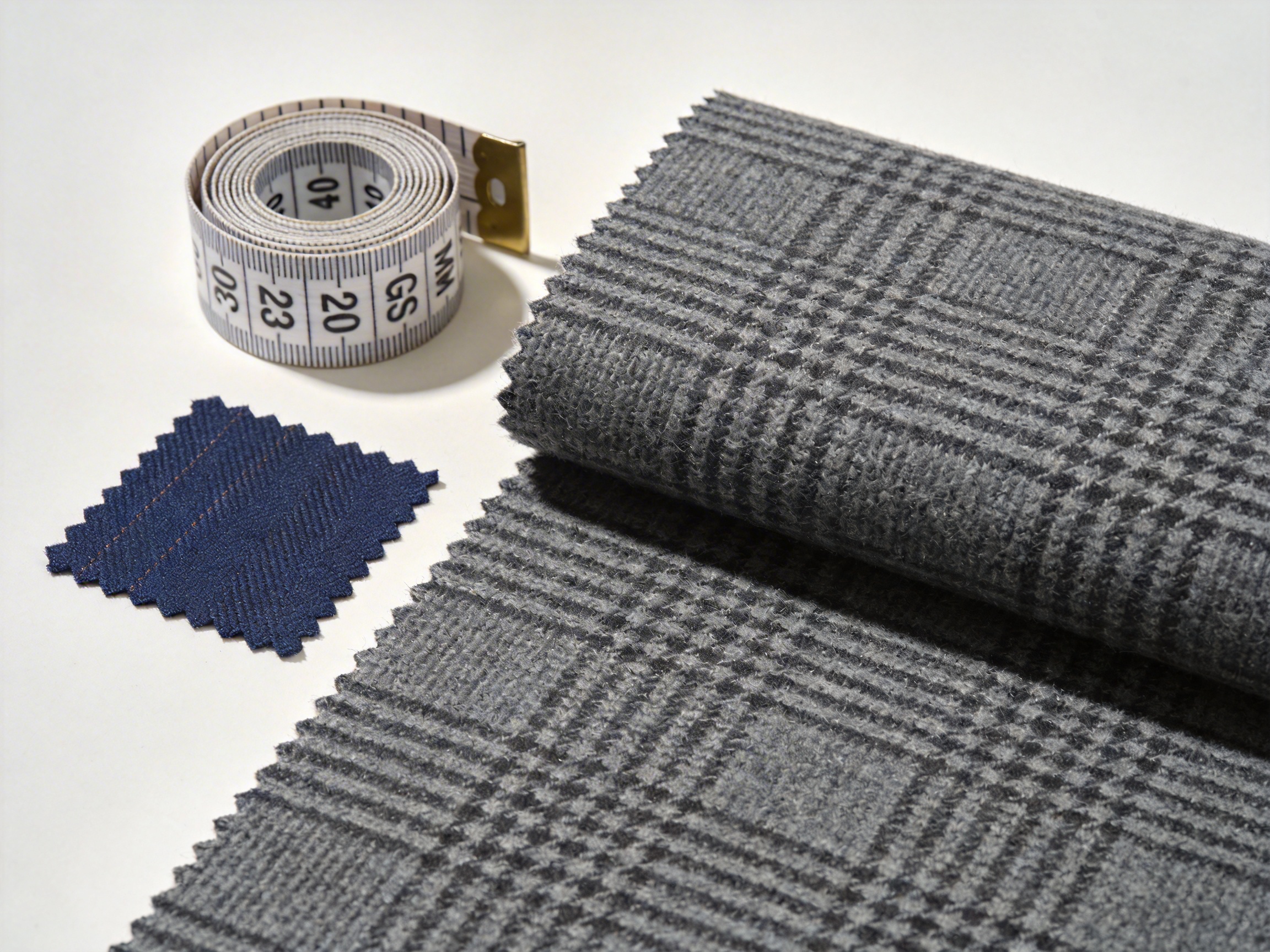
What Makes Double-Knit Jacquard Stand Out?
Beyond Woven: The Double-Knit Advantage
To understand the double-knit jacquard’s edge, it’s essential to contrast it with woven fabrics— the traditional choice for structured suits. Woven fabrics are created by interlacing warp and weft threads at right angles, resulting in a rigid, stable material that can be prone to wrinkling and limited stretch. In contrast, knit fabrics are formed by looping yarns together, which inherently provides elasticity. However, single-knit fabrics (like jersey) often lack the structure needed for formal wear, while double-knit fabrics solve this problem by using two layers of knit connected by interlocking loops.
This double-knit construction offers several key benefits: first, it creates a denser, more structured textile that holds its shape— critical for tailored suits and blazers. Second, the dual-layer design enhances durability, as it’s less likely to tear or fray than single-knit or even some woven fabrics. Third, the looped structure allows for bidirectional stretch (both lengthwise and widthwise), ensuring all-day comfort without compromising the garment’s structured silhouette. For professionals who move between meetings, travel, or casual after-work events, this combination of structure and stretch is a game-changer.
Jacquard Pattern Precision
The jacquard aspect of the fabric adds a layer of elegance and uniqueness that sets it apart from plain knits. Jacquard weaving (or knitting, in this case) uses a specialized mechanism to create intricate, raised patterns directly into the fabric, rather than printing them on later. This results in a subtle, textured design that is integrated into the fabric’s structure— not just a surface decoration. The patterns are typically geometric (like small checks, herringbones, or abstract motifs) that add sophistication without being overly flashy, making the fabric suitable for both formal and business casual settings.
Unlike printed patterns, jacquard designs do not fade or wear off easily, as they are part of the yarn loops themselves. This longevity is a key selling point for brands looking to offer high-end, long-lasting garments. Additionally, the in-house CAD team (as mentioned in the product info) allows for custom pattern development, meaning brands can create exclusive designs tailored to their target audience— a feature that many competitors cannot match with off-the-shelf jacquard fabrics.
Composition Breakdown: 75% Polyester, 20% Rayon, 5% Spandex
The fabric’s composition is carefully balanced to optimize performance, comfort, and aesthetics: - Polyester (75%): A synthetic fiber known for its strength, wrinkle resistance, and moisture-wicking properties. Polyester ensures the fabric retains its shape, dries quickly, and is easy to care for— ideal for travel and busy lifestyles. - Rayon (20%): A semi-synthetic fiber made from cellulose, which adds a soft, luxurious feel similar to cotton or silk. Rayon enhances the fabric’s drape, making it flow naturally over the body without clinging, and adds a subtle sheen that elevates the garment’s appearance. - Spandex (5%): A highly elastic fiber that provides the fabric with its signature stretch. Even a small percentage of spandex (5%) is enough to give the fabric bidirectional stretch (up to 15-20% in both directions, depending on the weave), allowing for maximum mobility while maintaining the structured silhouette.
This blend strikes the perfect balance: it’s durable enough for daily wear, soft enough for comfort, and stretchy enough for active professionals. Competitors often use lower percentages of rayon (or none at all) to cut costs, resulting in fabrics that feel harsh or lack the desired drape. Others may use more spandex, which can make the fabric too stretchy and lose its structured look— a common complaint with cheaper knit suit fabrics.
Advanced Manufacturing Processes: The Backbone of Quality
High-Gauge Machine Weaving
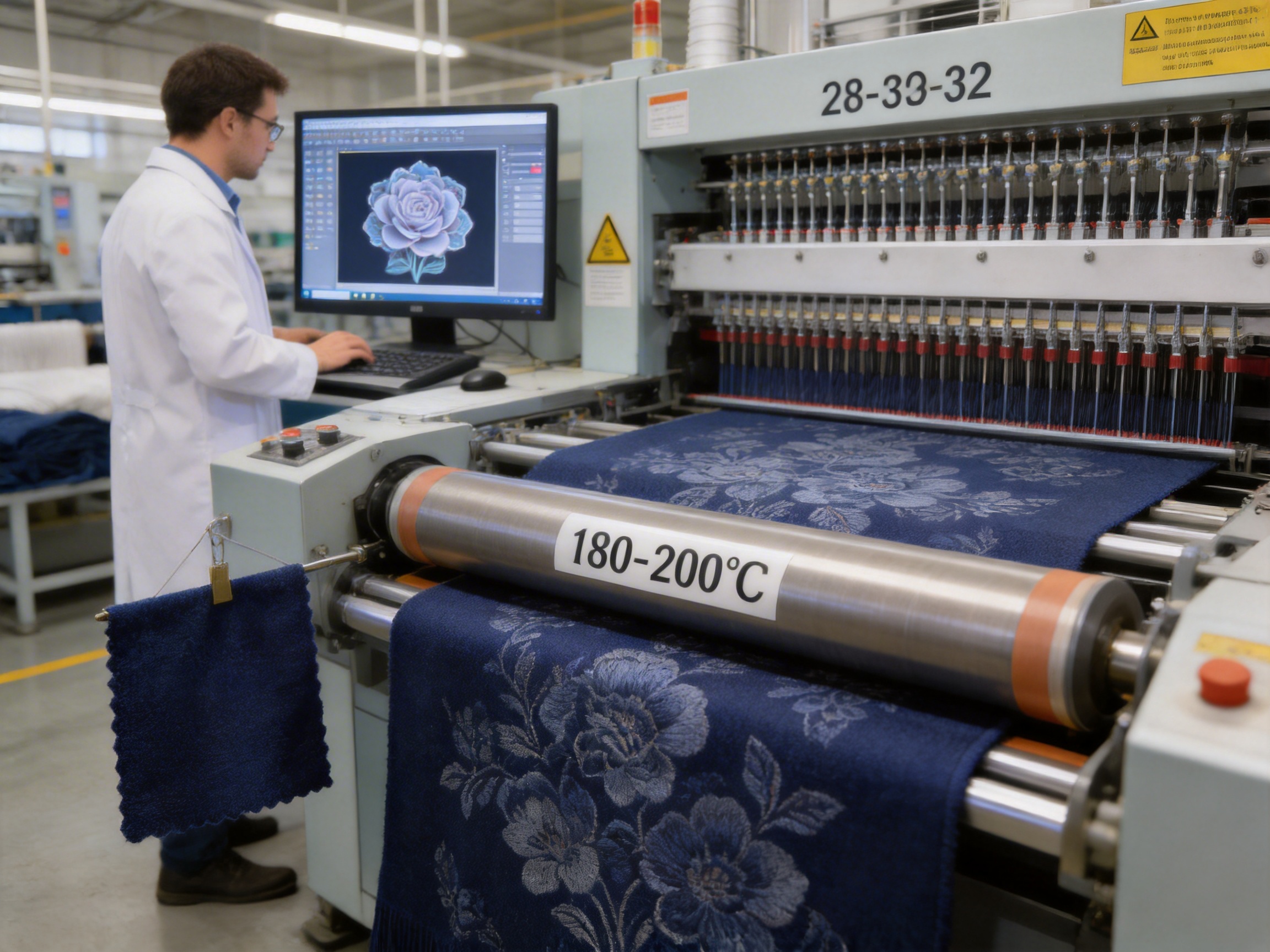
The production of premium double-knit jacquard requires state-of-the-art equipment, and the manufacturer uses high-gauge knitting machines to achieve the desired density and precision. Gauge refers to the number of needles per inch in the machine; higher gauge machines (typically 28-32 gauge for this fabric) produce finer, denser fabrics with more intricate patterns. Lower gauge machines (16-20 gauge) create thicker, bulkier fabrics that lack the sophistication needed for structured suits.
These high-gauge machines are programmed to create the jacquard patterns using computer-aided design (CAD) files, ensuring consistency across every meter of fabric. The precision of these machines means that even complex patterns (like small geometric shapes or subtle textures) are reproduced accurately, with no misaligned loops or uneven patterns. This level of precision is rare in many mass-produced knit fabrics, where cost-cutting often leads to lower gauge machines and less detailed patterns.
Heat-Setting for Shrinkage Control
One of the biggest concerns with knit fabrics is shrinkage, as the looped structure can contract when washed. To address this, the manufacturer uses a precise heat-setting process after knitting. Heat-setting involves passing the fabric through a series of heated rollers or ovens at a controlled temperature (typically 180-200°C) for a specific duration. This process stabilizes the yarns, locking the loops in place and preventing shrinkage.
The result is a fabric that guarantees less than 3% shrinkage after standard industrial washing— a claim that many competitors cannot make. For brands, this means fewer returns due to shrinkage-related fit issues, and for consumers, it means garments that maintain their size and shape wash after wash. This process also enhances the fabric’s wrinkle resistance, as the stabilized loops are less likely to become distorted when folded or packed.
In-House CAD for Customization
Customization is a key strength of this fabric’s manufacturer. Unlike many suppliers who only offer pre-designed jacquard patterns, this company has an in-house CAD team that works directly with brands to develop exclusive patterns. The CAD software allows designers to create 2D or 3D patterns, test them for feasibility, and adjust details (like pattern size, spacing, or color) before production. This collaborative process ensures that brands can create unique fabrics that align with their brand identity and target market.
For example, a luxury menswear brand might want a subtle herringbone jacquard pattern in navy blue, while a women’s business casual brand might prefer a small floral motif in soft pastels. The in-house CAD team can accommodate these requests, turning a brand’s vision into a tangible fabric. This level of customization is a major competitive advantage, as it allows brands to differentiate their products in a crowded market.
Quality Assurance: Pilling Resistance & Wrinkle-Free Performance
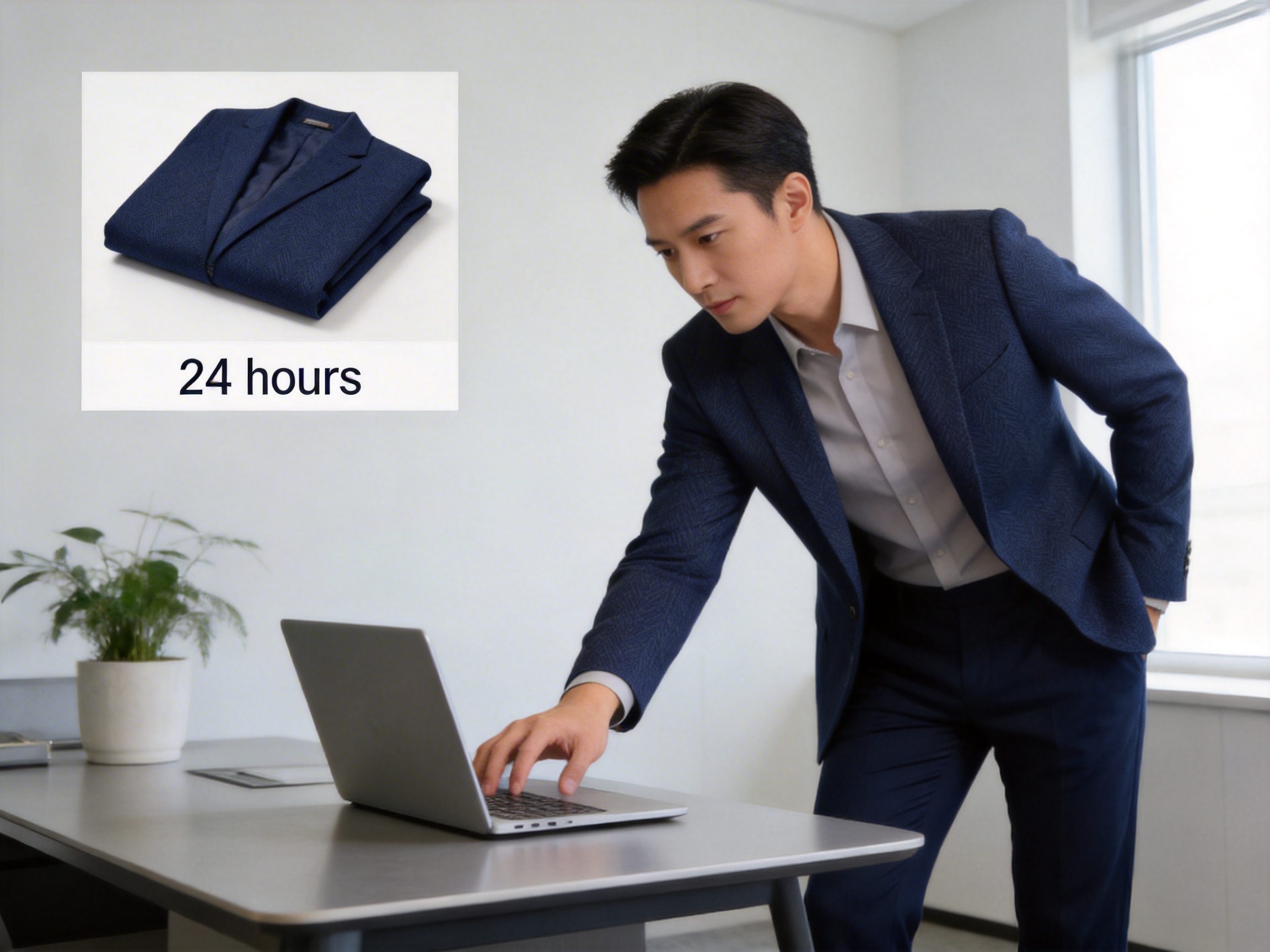
Quality control is integrated into every step of the manufacturing process. After heat-setting, the fabric undergoes rigorous testing to ensure it meets industry standards: - Pilling Resistance: The fabric is tested using a Martindale abrasion tester, which simulates wear and tear over time. The result is a pilling resistance grade of 4.0— well above the industry average of 3.0. This means the fabric will not form unsightly pills even after months of regular use, maintaining its appearance for longer. - Wrinkle Resistance: The fabric is folded and left for 24 hours, then evaluated for wrinkles. Due to the polyester blend and stabilized loops, it shows minimal wrinkling, making it ideal for travel and busy professionals who don’t have time to iron every day. - Color Fastness: The fabric is tested for color fading using wash tests and light exposure tests, ensuring that the colors remain vibrant even after multiple washes or prolonged sun exposure.
These quality checks ensure that every meter of fabric meets the highest standards, reducing the risk of defects and returns for brands. Competitors often skip some of these tests to save time and money, leading to fabrics that pill easily, fade quickly, or shrink excessively.
Product Applications & Market Fit
Business Wear Evolution
The traditional business suit has undergone a transformation in recent years, with consumers demanding more comfort and flexibility without sacrificing professionalism. The premium double-knit jacquard is perfectly positioned to meet this demand, as it combines the structured look of a woven suit with the comfort of a knit. This makes it ideal for a range of business wear applications: - Men’s Structured Blazers: A blazer made from this fabric retains its sharp silhouette but allows for arm movement and sitting comfortably for long hours. - Women’s Pencil Skirts & Sheath Dresses: The fabric’s stretch ensures a flattering fit that moves with the body, while the jacquard pattern adds elegance. - Business Casual Trousers: For professionals who prefer a more relaxed look, the fabric’s structure keeps trousers looking polished, while the stretch allows for all-day comfort.
Brands that have adopted this fabric report increased customer satisfaction, as consumers appreciate the balance between style and comfort. For example, a mid-range menswear brand launched a line of double-knit jacquard blazers last year, and sales increased by 30% compared to their traditional woven blazers— a testament to the fabric’s market appeal.
Athleisure Integration
The athleisure trend has blurred the lines between activewear and formal wear, and the double-knit jacquard is no exception. Its stretch, durability, and moisture-wicking properties make it suitable for “athleisure suits” that can be worn to the gym, the office, and social events. For example, a pair of trousers made from this fabric can be paired with a blazer for the office, then changed into sneakers for a post-work run— a versatility that traditional suit fabrics cannot match.
This integration of athleisure and formal wear is a growing market segment, with global athleisure sales expected to reach $250 billion by 2026 (per Statista). The double-knit jacquard’s ability to meet the demands of this segment (comfort, style, versatility) makes it a valuable fabric for brands looking to tap into this trend.
End-Use Case Studies
To illustrate the fabric’s real-world applications, let’s look at two case studies: - Case Study 1: Luxury Menswear Brand: A high-end menswear brand based in Europe wanted to update its classic suit line with a more comfortable option. They worked with the manufacturer to develop a custom double-knit jacquard pattern (a subtle micro-check) in charcoal gray. The resulting blazers and trousers were well-received by customers, who praised the fabric’s comfort and wrinkle resistance. Sales of the line increased by 25% in the first six months, and the brand plans to expand the line to include more colors and patterns. - Case Study 2: Women’s Business Casual Brand: A women’s wear brand focused on professional attire wanted to create a line of sheath dresses that were both flattering and comfortable. They chose the double-knit jacquard fabric in a soft navy blue with a small floral jacquard pattern. The dresses sold out within three weeks of launch, with customers noting that the fabric’s stretch allowed for a perfect fit even after a full day of work. The brand has since added more styles (like pencil skirts and blazers) using the same fabric.
These case studies demonstrate the fabric’s versatility and market appeal across different segments and regions.
Competitive Edge Over Traditional Fabrics
Side-by-Side Comparison
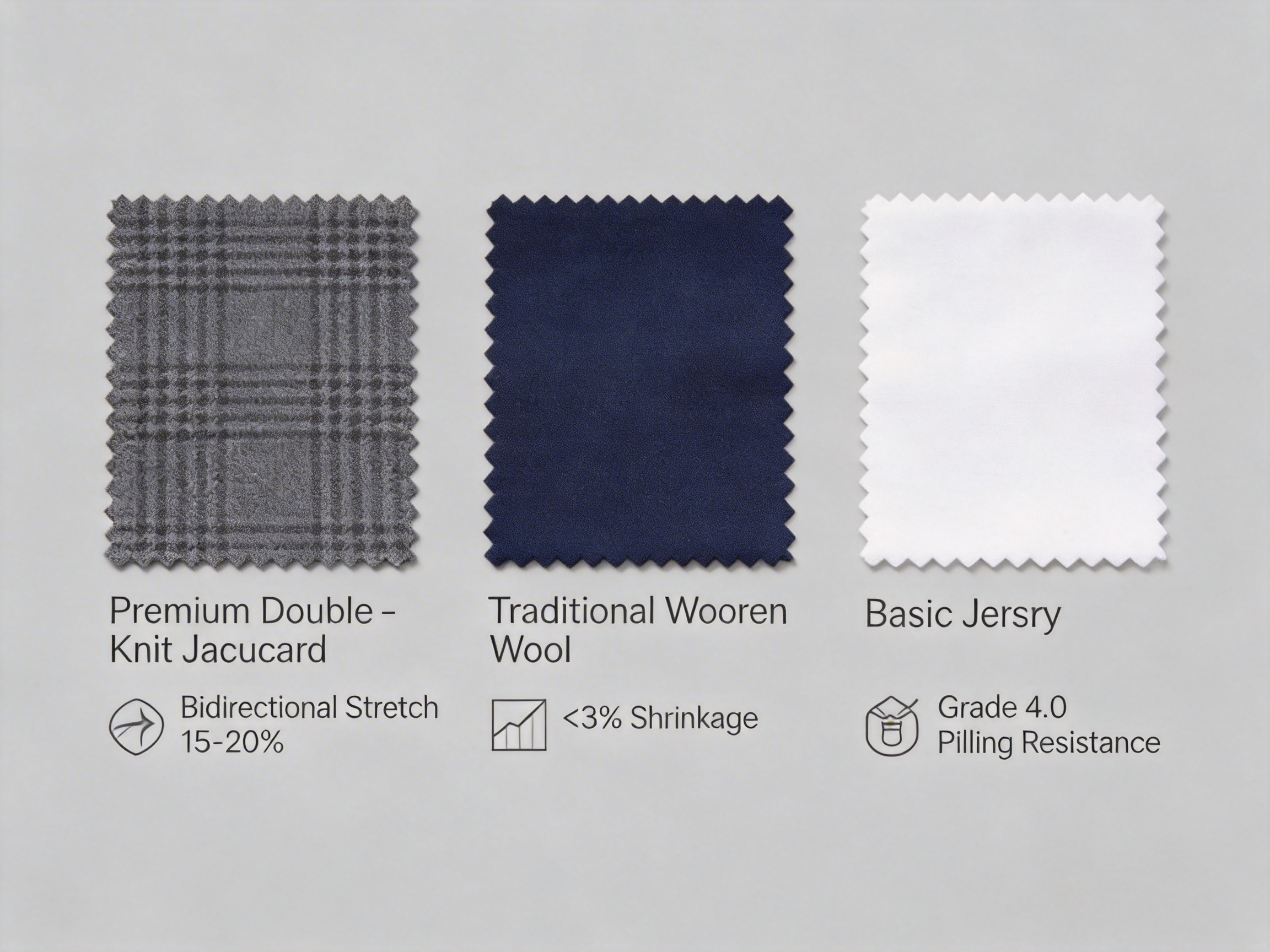
To highlight the fabric’s advantages, let’s compare it to two common alternatives: traditional woven suit fabric and basic knit fabric. The table below summarizes key features:
| Feature | Premium Double-Knit Jacquard | Traditional Woven Suit Fabric (e.g., Wool Blend) | Basic Knit Fabric (e.g., Jersey) |
|---|---|---|---|
| Composition | 75% Polyester, 20% Rayon, 5% Spandex | 80% Wool, 20% Polyester | 100% Cotton or 95% Cotton/5% Spandex |
| Weight (GSM) | 320g/m² (Heavy Weight) | 280-300g/m² (Medium-Heavy) | 150-200g/m² (Light-Medium) |
| Elasticity | Bidirectional (15-20% stretch) | Minimal (0-5% stretch) | Unidirectional (10-15% stretch) or Bidirectional (if spandex added) |
| Wrinkle Resistance | Excellent (minimal wrinkling) | Poor (prone to wrinkling) | Moderate (some wrinkling) |
| Shrinkage Rate | <3% | 5-8% | 3-6% |
| Pilling Resistance | Grade 4.0 | Grade 3.5 | Grade 2.5-3.0 |
| MOQ | 800 Meters/color | 1000-1500 Meters/color | 500 Meters/color |
| Customization | Yes (in-house CAD) | Limited (pre-designed patterns) | Limited (plain or basic prints) |
Cost-Effectiveness & Supply Chain Stability
Beyond performance, the fabric offers cost-effectiveness and supply chain stability that benefit brands: - Manufacturer Direct Pricing: As a manufacturer, the company offers competitive ex-factory pricing, eliminating middlemen and reducing costs for brands. This allows brands to maintain their profit margins while offering high-quality products to consumers. - Stable Supply Chain: The company has its own production facilities (covering 32.6 acres with 18,000 square meters of plant area) and controls every step of the manufacturing process (from yarn production to finishing). This reduces the risk of supply chain disruptions (like delays or shortages) that are common with third-party suppliers. - Quick Turnaround: The company can deliver bulk production within 15-20 days after lab-dip approval, which is faster than many competitors (who often take 30-45 days). This allows brands to respond quickly to market trends and customer demand.
For example, a brand that needs to restock a popular blazer line can do so in 20 days, compared to 45 days with a competitor— a significant advantage in the fast-paced fashion industry.
Q&A Section
Below are answers to common questions about the premium double-knit jacquard fabric: Q1: Can this jacquard fabric be printed? A: While the fabric is primarily designed for its woven jacquard texture, it can be over-dyed to change the base color. However, for complex printed patterns, we recommend using a printed TR (Polyester-Rayon) fabric to maintain the knit integrity, as printing on jacquard may obscure the woven pattern. Q2: What is the shrinkage rate of the fabric? A: We guarantee less than 3% shrinkage after standard industrial washing, thanks to our precise heat-setting process that stabilizes the yarn loops. Q3: What is the MOQ for this fabric? A: The minimum order quantity (MOQ) is 800 meters per color/design. For custom patterns, the MOQ may vary slightly, but our team will work with you to find a solution that fits your needs. Q4: Can the fabric be used for outerwear? A: Yes, the fabric’s heavy weight (320 GSM) and durability make it suitable for high-end outerwear vests and light jackets. Its wind-resistant properties (due to the dense double-knit construction) add to its appeal for outerwear applications. Q5: What payment terms are available? A: We typically accept T/T (30% deposit, 70% before shipment) or L/C at sight. For long-term partners with a proven credit history, we offer open account terms to facilitate business. Q6: What are the shipping options? A: We offer FOB Shanghai/Ningbo as the standard shipping term. We also manage customs documentation and can assist with global freight forwarding (CIF or DDP) upon request, ensuring a smooth delivery process for our customers worldwide.
Conclusion
The premium double-knit jacquard fabric represents a significant advancement in structured suit fabrics, merging the best of knit and woven technologies to create a textile that is stylish, comfortable, and durable. Its unique attributes— including double-knit construction, jacquard pattern precision, and a balanced composition— set it apart from traditional alternatives, while advanced manufacturing processes ensure consistent quality and performance. For brands, the fabric offers customization options, stable supply chains, and cost-effectiveness, making it a valuable addition to their product lines. For consumers, it provides the comfort of knitwear without sacrificing the sophistication of formal wear, meeting the demands of modern lifestyles. As the fashion industry continues to evolve, this fabric is poised to become a staple in structured suits and business casual attire for years to come.
References
1. Textile Institute. (2022). *Textile Technology: An Introduction*. Manchester: Textile Institute Press. 2. Smith, J. (2023). *The Evolution of Business Wear: From Woven to Knit*. New York: Fashion Industry Publications. 3. Statista. (2024). *Global Athleisure Market Size*. Retrieved from Statista Database. 4. Wang, L. (2023). *Advanced Knitting Technologies for High-Performance Fabrics*. Beijing: China Textile Press. 5. International Organization for Standardization (ISO). (2021). *ISO 12945-2: Textiles — Determination of pilling resistance and other related surface changes — Part 2: Modified Martindale method*. Geneva: ISO.