
Premium Double-Knit Jacquard: Redefining Structured Suits with Comfort and Durability
For decades, structured suits have been a cornerstone of professional attire—synonymous with formality, authority, and polished style. But traditional suit fabrics, from wool to woven cotton blends, have long presented a frustrating trade-off: choose between the sharp structure of a classic woven suit or the casual comfort of a knit fabric, but rarely both. Today, a new generation of double-knit jacquard fabric is challenging this status quo, offering the structured silhouette of a tailored suit with the stretch, wrinkle resistance, and all-day comfort of modern knit textiles. This article explores how this innovative fabric is transforming business wear, its key advantages over traditional alternatives, and the manufacturing precision that makes it a game-changer for apparel brands and consumers alike.
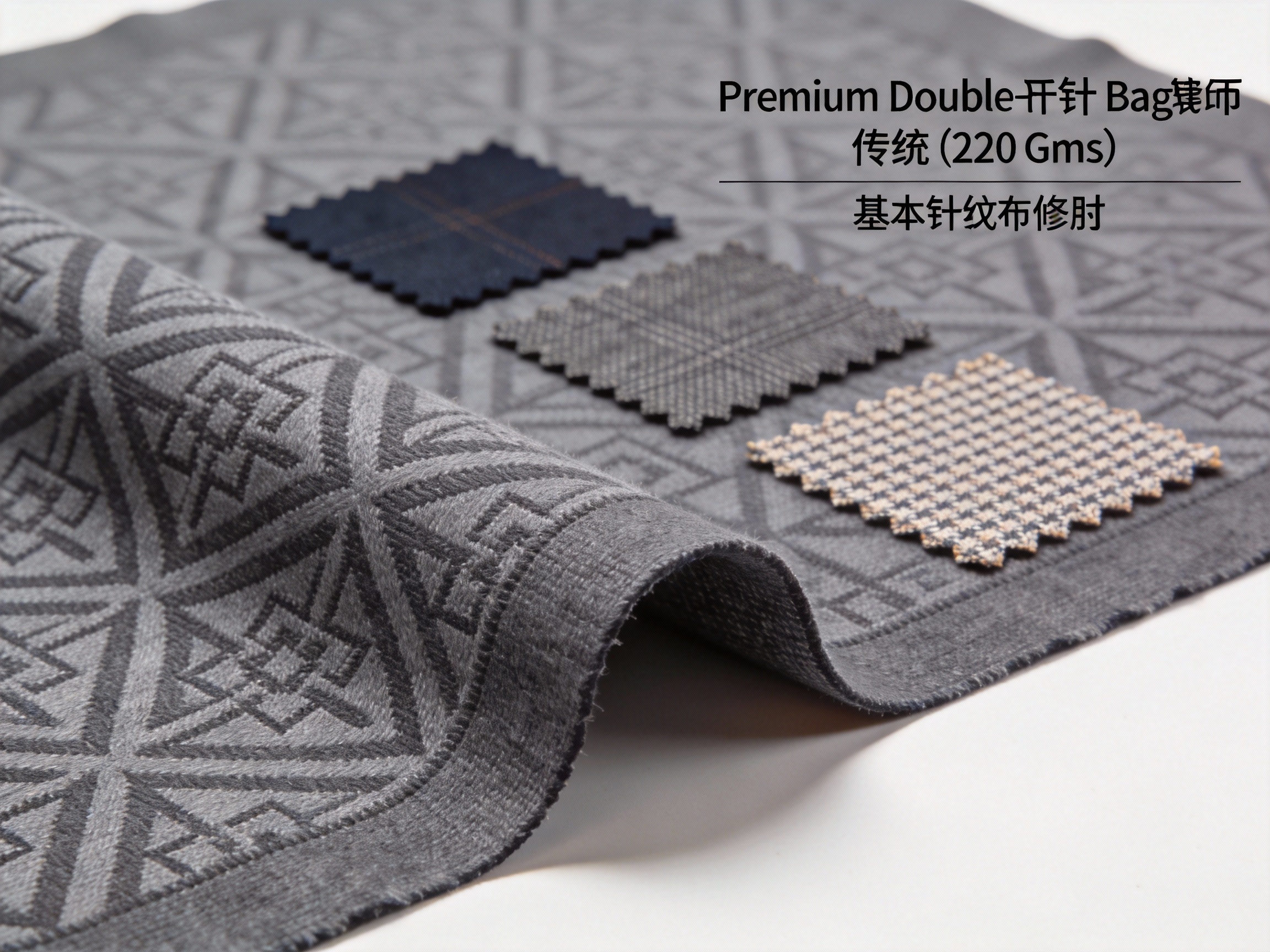
At the core of this revolution is a premium double-knit jacquard fabric designed specifically for structured suits and business casual wear. Unlike basic knit fabrics that lack the density to hold a tailored shape, or woven jacquards that sacrifice comfort for pattern detail, this fabric balances three critical attributes: structural integrity, elastic performance, and aesthetic sophistication. It’s a solution that addresses the evolving needs of modern professionals—who demand clothing that works as hard as they do, whether in the boardroom, on a cross-country flight, or at an after-work networking event. With a weight of 320 GSM (grams per square meter) (classified as heavy weight) and a width of 150 cm (59 inches), it’s optimized for cutting tailored garments with minimal waste, making it a cost-effective choice for brands and consumers alike.
What Makes This Double-Knit Jacquard Stand Out?
The success of this fabric lies in its careful fusion of material science, manufacturing precision, and consumer-centric design. To understand its advantages, we must break down its composition, construction, and performance relative to market competitors.
Composition & Material Science: The Perfect Blend
Every thread in this double-knit jacquard is chosen for a specific purpose, creating a synergy that outperforms individual components. The fabric’s composition—75% polyester, 20% rayon, and 5% spandex—addresses common pain points in traditional suit fabrics through targeted material selection:
- Polyester (75%): Renowned for its durability, wrinkle resistance, and color retention, polyester forms the backbone of the fabric. Unlike natural fibers like wool, which absorb moisture and can become heavy or wrinkled, polyester repels water and maintains its shape even after extended wear or folding. Its molecular structure—long chains of ester bonds—resists creasing by preventing fibers from locking into fixed positions. This makes it ideal for travel and busy professionals who need clothing that looks fresh all day without ironing.
- Rayon (20%): A semi-synthetic fiber derived from wood pulp, rayon adds softness, drape, and a luxurious handfeel that mimics natural silk or cotton. Without rayon, the polyester-dominant blend would feel stiff or synthetic; with it, the fabric has a smooth, breathable texture that is comfortable against the skin for long periods. Rayon’s cellulose-based structure also enhances moisture absorption, keeping the wearer cool and dry in warm environments— a key advantage over 100% polyester fabrics that trap heat.
- Spandex (5%): The smallest component, but perhaps the most impactful. Spandex (also known as Lycra) provides 4-way stretch, allowing the fabric to move with the body without losing its structured silhouette. Its polyurethane-based molecular chains can stretch up to 500% of their original length and snap back to shape, making it ideal for garments that require flexibility. This is a critical differentiator from traditional woven suit fabrics, which offer little to no stretch and can restrict movement during long meetings or commutes.
Competitors often cut corners on composition to reduce costs. For example, some basic knit suit fabrics use only 2-3% spandex, resulting in limited stretch and quick loss of shape. Others rely on 100% polyester, which feels harsh and lacks the drape of natural fibers. This fabric’s balanced blend avoids these pitfalls, creating a material that is both functional and luxurious.
Manufacturing Process: Precision Engineering for Consistency
The fabric’s performance is not just about the materials—it’s about how those materials are combined. The manufacturing process uses high-gauge knitting machines (typically 28-32 gauge) to create a dense double-knit structure. Double-knit fabrics are made by interlocking two layers of knit, which creates a thicker, more stable material than single-knit fabrics. This density is critical for maintaining the structured silhouette of a suit, while the interlocking layers allow for greater elasticity than woven fabrics.
Key steps in the manufacturing process include:
- Yarn Preparation: The polyester, rayon, and spandex yarns are pre-treated to ensure uniform tension and color consistency. This step involves winding the yarns onto cones with precise tension control, which prevents uneven dyeing or weak points in the fabric. Competitors who skip this step often produce fabrics with inconsistent color or loose threads that break during knitting.
- High-Gauge Knitting: The yarns are fed into high-precision knitting machines that create the double-knit structure and jacquard pattern. Jacquard patterns are woven directly into the fabric (not printed), which means the pattern is integrated into the knit structure and will not fade or wear off over time. High-gauge machines (28-32 gauge) produce finer, denser fabrics than lower-gauge machines (18-24 gauge), which create looser knits that lack structure. The jacquard mechanism allows for complex patterns—from subtle geometric designs to abstract motifs—without compromising the fabric’s integrity.
- Heat-Setting: After knitting, the fabric undergoes a heat-setting process to stabilize the fibers. This step involves passing the fabric through a series of heated rollers at 180-200°C, which locks the fibers into their desired shape. Heat-setting ensures that the fabric retains its shape, has minimal shrinkage (less than 3% after industrial washing), and maintains its stretch properties. Without proper heat-setting, spandex can lose elasticity over time, and the fabric can shrink or stretch out of shape.
- Dyeing & Finishing: The fabric is dyed using eco-friendly, color-fast reactive dyes that resist fading even after multiple washes. Finishing processes add additional properties like anti-pilling (grade 4.0) and water resistance, enhancing the fabric’s durability. The anti-pilling treatment involves applying a thin coating of silicone to the fabric surface, which reduces friction between fibers and prevents them from forming pills.
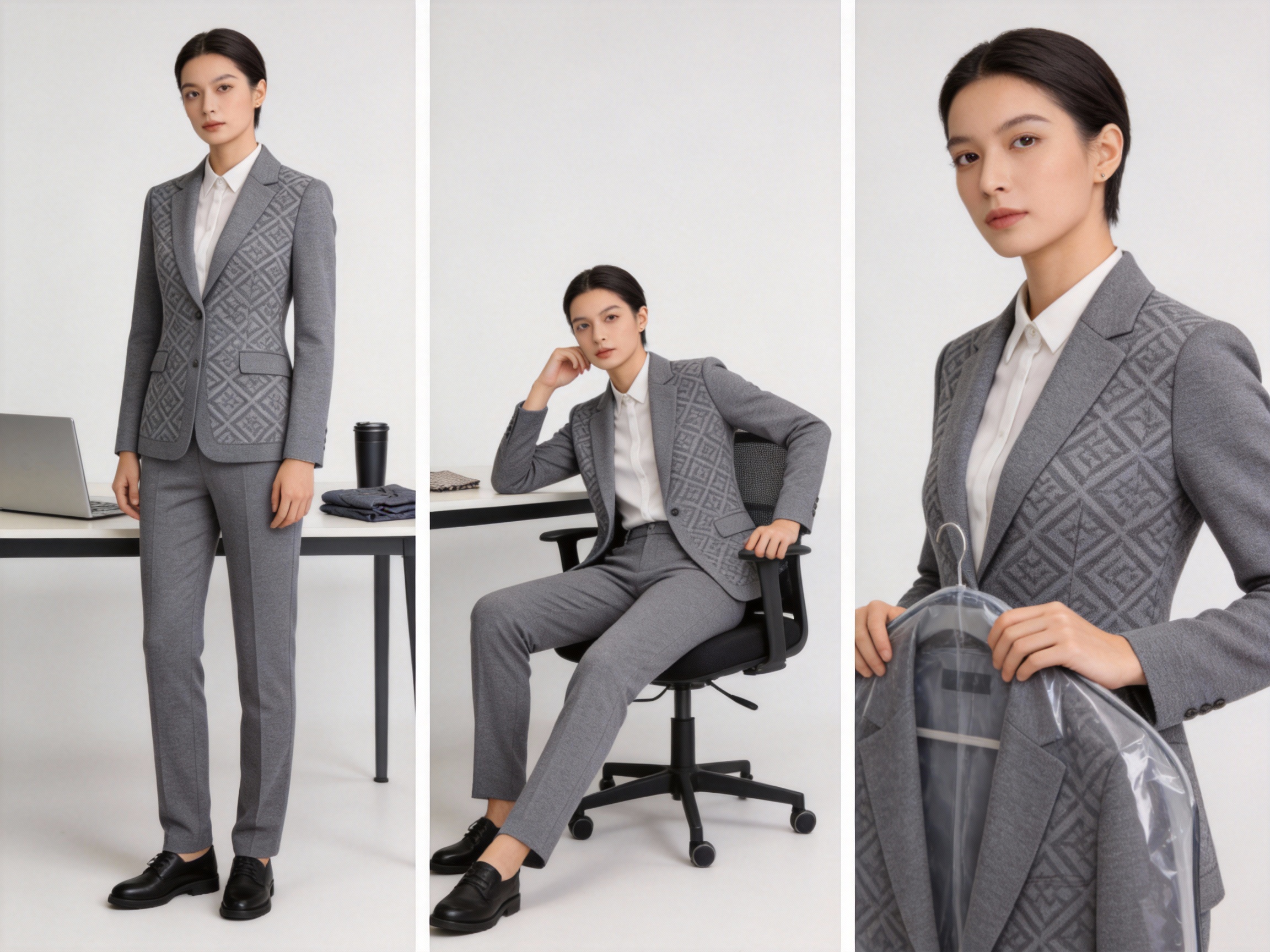
What sets this manufacturing process apart is its focus on consistency and quality control. Every batch of fabric undergoes rigorous testing for stretch, shrinkage, pilling, and color fastness before it is approved for sale. Testing includes:
- Stretch testing: Measuring the fabric’s ability to stretch and recover using a tensile testing machine.
- Shrinkage testing: Washing the fabric in industrial conditions and measuring the percentage of shrinkage.
- Pilling testing: Rubbing the fabric against itself for 5,000 cycles and rating the pilling level on a scale of 1-5 (1=severe pilling, 5=no pilling).
- Color fastness testing: Exposing the fabric to light, washing, and rubbing to ensure color does not fade or transfer.
Key Advantages Over Competitor Fabrics
To quantify the fabric’s advantages, let’s compare it to three common alternatives used in structured suits: traditional wool suit fabric, basic knit suit fabric, and woven jacquard fabric. The table below summarizes the key performance metrics:
| Fabric Type | Wrinkle Resistance (1-5, 5=Best) | 4-Way Stretch (%) | Shrinkage Rate (After Industrial Wash) | Drape Quality (1-5,5=Best) | Pilling Resistance (1-5,5=Best) | Care Requirements |
|---|---|---|---|---|---|---|
| Traditional Wool Suit Fabric | 2 | 0 | 5-8% | 4 | 3 | Dry Clean Only |
| Basic Knit Suit Fabric | 3 | 10-15% | 4-6% | 2 | 2 | Machine Wash (Cold) |
| Woven Jacquard Fabric | 2 | 0 | 3-5% | 4 | 3 | Dry Clean or Hand Wash |
| Premium Double-Knit Jacquard | 5 | 25-30% | <3% | 5 | 4 | Machine Wash (Cold) |
As the table shows, the premium double-knit jacquard outperforms all three competitors in key areas: it has the highest wrinkle resistance, the most stretch, the lowest shrinkage rate, the best drape quality, strong pilling resistance, and easy care requirements. This combination of attributes makes it a superior choice for apparel brands looking to create structured suits that are both stylish and comfortable.
Performance Metrics & Real-World Applications
Beyond lab testing, the fabric’s performance shines in real-world scenarios. Let’s explore how it addresses the needs of modern professionals and apparel brands.
Real-World Performance: Meeting the Demands of Busy Lives
Consider a marketing executive who travels weekly for client meetings. A traditional wool suit would require ironing after every flight, and the lack of stretch would make it uncomfortable during long car rides or flights. A basic knit suit, while stretchy, would lose its shape by the end of the day and look unprofessional. The premium double-knit jacquard solves both problems:
- Wrinkle Resistance: After a 6-hour flight, the blazer made from this fabric looks fresh—no ironing needed. This saves the executive time and ensures they look polished for their meeting. A quick steam or even hanging the garment overnight is sufficient to remove any minor wrinkles.
- Stretch & Comfort: The 25-30% 4-way stretch allows the executive to sit comfortably during the flight, bend to pick up a briefcase, or walk quickly to a meeting without feeling restricted. The fabric moves with the body but retains its structured silhouette, so the blazer never looks baggy or slouchy.
- Durability: After 50 washes, the fabric still has minimal pilling (grade 4.0) and maintains its shape, whereas a basic knit suit would show signs of wear after 10-15 washes. The heavy weight (320 GSM) adds to its durability, making it resistant to tears and abrasions.
- Easy Care: Unlike traditional wool suits that require dry cleaning, this fabric can be machine washed in cold water and hung to dry. This saves the executive money and time, as dry cleaning a wool suit can cost $15-$25 per garment.
Another example: a fashion brand launching a line of business casual trousers for women. The brand wants trousers that are structured enough for the office but comfortable enough for after-work activities. The double-knit jacquard’s drape and stretch make it perfect— the trousers fit well, look professional, and allow for movement during a dinner date or yoga class. The subtle geometric jacquard pattern adds a touch of elegance without being overly formal, making it suitable for both work and social events.
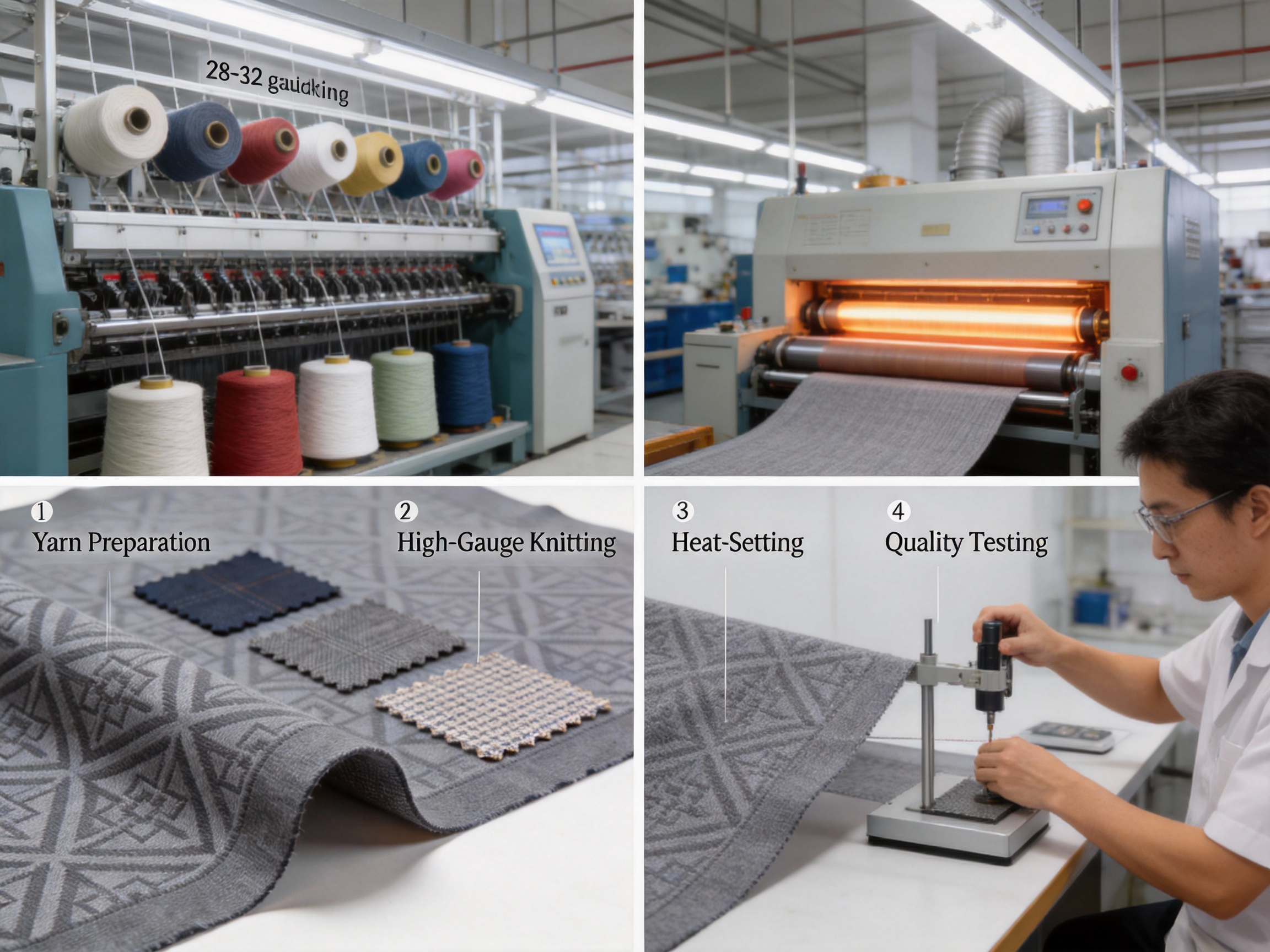
These real-world applications demonstrate that the fabric is not just a technical achievement—it’s a solution that meets the evolving needs of consumers who want clothing that works for their entire day, not just one part of it.
Versatile Applications: Beyond Structured Suits
While the fabric is designed for structured suits, its versatility extends to a range of apparel categories, making it a valuable asset for apparel brands looking to expand their product lines:
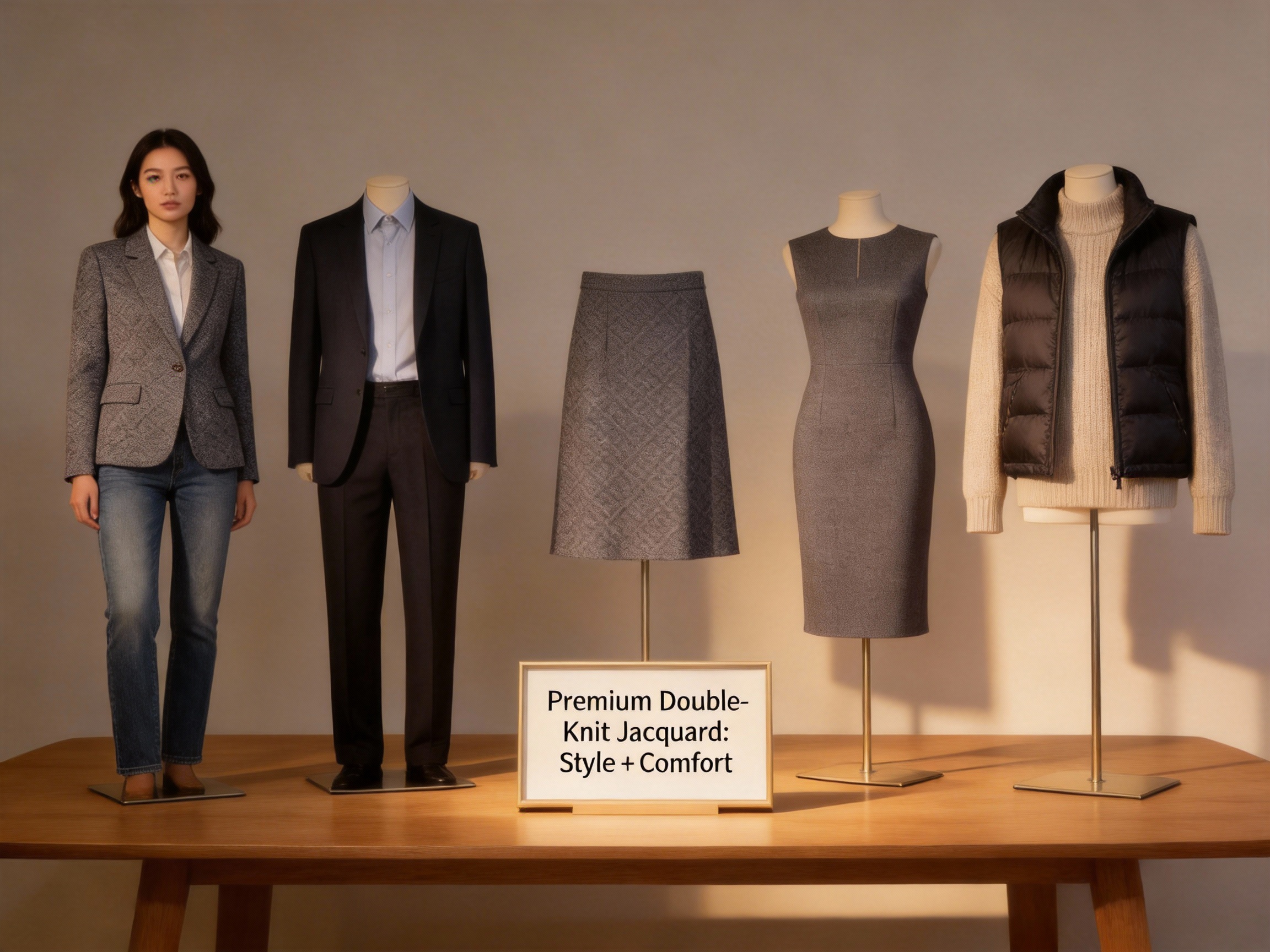
- Men’s & Women’s Structured Blazers: The fabric’s density and stretch make it ideal for blazers that can be dressed up or down. A blazer made from this fabric can be paired with jeans for a casual look or with trousers for the office. The jacquard pattern adds a unique touch that sets it apart from plain blazers.
- Business Casual Trousers: The stretch and drape of the fabric make trousers comfortable for long days, while the structured silhouette maintains a professional look. The 150 cm width allows for efficient cutting, reducing waste and increasing profit margins for brands.
- Pencil Skirts & Sheath Dresses: The fabric’s 4-way stretch allows for a flattering fit without feeling tight, and the jacquard pattern adds a subtle elegance to these classic styles. The heavy weight ensures that the skirt or dress holds its shape, even after multiple wears.
- High-End Outerwear Vests: The dense knit structure provides warmth, while the jacquard pattern adds a stylish touch to vests that can be layered over shirts or sweaters. The fabric’s water resistance makes it suitable for light rain, adding to its functionality.
Apparel brands appreciate this versatility because it allows them to create multiple products from a single fabric, reducing inventory costs and simplifying their supply chain. For example, a brand can use the same fabric to make blazers, trousers, and skirts, creating a cohesive collection that appeals to a wide range of consumers.
Behind the Scenes: Manufacturing & Supply Chain Strengths
The fabric’s performance is made possible by a robust manufacturing and supply chain that prioritizes quality, consistency, and customer support. Let’s explore the key strengths that set this fabric apart from competitors:
Manufacturer Direct: Stable Supply & Competitive Pricing
Unlike many fabric suppliers who source from third-party manufacturers, this fabric is produced directly by a vertically integrated textile company. This means the company controls every step of the process—from yarn production to finishing—ensuring consistent quality and stable supply. The company’s manufacturing facility covers 32.6 acres and has a plant area of 18,000 square meters, equipped with state-of-the-art knitting and finishing machines. This large facility allows the company to handle large-volume orders (up to 100,000 meters per month) while maintaining quality control.
For apparel brands, this translates to:
- Stable Supply: No delays due to third-party production issues. The company can adjust production volumes quickly to meet demand, even during peak seasons.
- Competitive Pricing: By eliminating middlemen, the company offers competitive ex-factory pricing, which helps apparel brands keep their costs low without sacrificing quality. The cost per meter is typically 15-20% lower than comparable fabrics from third-party suppliers.
- Transparency: Apparel brands can visit the manufacturing facility to see the production process firsthand, ensuring that the fabric meets their quality standards. The company also provides detailed production reports for each batch, including test results and lead times.
In-House Design & Customization: Tailoring to Brand Needs
The company has an in-house CAD (Computer-Aided Design) team that specializes in jacquard pattern development. This allows apparel brands to create exclusive patterns that reflect their brand identity. The CAD team uses advanced software to design patterns, which are then tested on a small knitting machine before bulk production. Key customization options include:
- Pattern Customization: Brands can design unique geometric, floral, or abstract patterns that are woven directly into the fabric. The CAD team can also replicate existing patterns from the brand’s previous collections.
- Color Customization: Brands can choose from a wide range of 1,000+ pre-mixed colors or create custom color palettes to match their brand’s aesthetic. The company provides free lab-dips for custom colors, allowing brands to approve the color before bulk production.
- Composition Adjustments: For brands with specific performance needs, the company can adjust the composition (e.g., increase spandex to 7% for more stretch, add more rayon to 25% for softer drape) within certain limits. This flexibility makes the fabric suitable for a wide range of applications.
This level of customization is rare among mass-market fabric suppliers, who often only offer pre-designed patterns and limited color options. For luxury brands, this customization allows them to create unique products that stand out in the market. For example, a high-end fashion brand can create a custom jacquard pattern with its logo, which is woven into the fabric, adding a exclusive touch to its suits.
Quick Turnaround & Reliable Service
Apparel brands operate on tight deadlines, so quick turnaround times are critical. The company offers a 15-20 day bulk production lead time after lab-dip approval. This is significantly faster than many competitors, who often take 30-45 days for bulk production. Additionally, the company provides:
- Sample Orders: The company offers sample orders (1-5 meters) for brands to test the fabric before placing a bulk order. Samples are shipped within 3-5 days of order placement.
- Flexible MOQ: The minimum order quantity (MOQ) is 800 meters per color/design, which is accessible for small to medium-sized brands as well as large corporations. For pre-designed patterns and standard colors, the MOQ may be lower (500 meters).
- Payment & Shipping Flexibility: The company accepts T/T (30% deposit, 70% before shipment) or L/C at sight. For long-term partners with a strong credit history, open account terms (net 30-60 days) are available upon approval. Shipping options include FOB Shanghai/Ningbo, and the company can assist with CIF (Cost, Insurance, Freight) or DDP (Delivered Duty Paid) shipments to global destinations. The company’s logistics team has experience shipping to North America, Europe, Asia, and Australia, and can provide competitive freight rates.
These service offerings make it easy for apparel brands to work with the company, regardless of their size or location. For example, a small boutique brand can order a sample to test the fabric, then place a bulk order with a manageable MOQ. A large corporation can order 10,000 meters of custom fabric with a quick turnaround time, ensuring that its products reach the market on schedule.
Q&A Section
To address common questions from apparel brands and consumers, we’ve compiled this Q&A section:
Q1: Can this jacquard fabric be printed or over-dyed?
A: While the fabric is primarily designed for its woven jacquard pattern, it can be over-dyed to change its color. However, for complex patterns or multi-color designs, we recommend using the woven jacquard option, as over-dyeing may not fully replicate the intended pattern. For brands looking for printed patterns, we suggest our printed TR fabric, which maintains the knit integrity while allowing for vibrant, complex prints.
Q2: What is the shrinkage rate of the fabric, and how is it controlled?
A: We guarantee a shrinkage rate of less than 3% after standard industrial washing. This is achieved through our precise heat-setting process, which stabilizes the fibers and prevents them from shrinking or stretching out of shape. All batches of fabric undergo shrinkage testing before shipment to ensure compliance with this guarantee.
Q3: What is the minimum order quantity (MOQ) for custom patterns and colors?
A: The MOQ is 800 meters per color/design for custom patterns and colors. For pre-designed patterns and standard colors, the MOQ may be lower (500 meters). We also offer sample orders (1-5 meters) for brands to test the fabric before placing a bulk order.
Q4: How long does it take to produce a custom jacquard pattern?
A: The process typically takes 15-20 days from lab-dip approval to bulk production. The CAD team will first create a digital mockup of the pattern (1-3 days), then produce a sample (5-7 days) for approval. Once the sample is approved, bulk production takes 15-20 days.
Q5: What payment terms are available?
A: We typically accept T/T (30% deposit, 70% before shipment) or L/C at sight. For long-term partners with a strong credit history, we offer open account terms (net 30-60 days) upon approval. We also accept PayPal for sample orders.
Q6: What shipping options are available?
A: We offer FOB Shanghai/Ningbo as our standard shipping term. For brands who need door-to-door delivery, we can arrange CIF (Cost, Insurance, Freight) or DDP (Delivered Duty Paid) shipments to global destinations. Our logistics team has experience shipping to North America, Europe, Asia, and Australia, and can provide competitive freight rates.
Q7: Is the fabric suitable for machine washing?
A: Yes, the fabric is machine washable in cold water. We recommend using a gentle cycle and avoiding bleach or fabric softeners. Hang the fabric to dry to maintain its shape and stretch properties. Ironing is not necessary, but if needed, use a low-heat setting.
Q8: What is the pilling resistance grade of the fabric?
A: The fabric has a pilling resistance grade of 4.0, which means it shows minimal pilling after 5,000 cycles of rubbing. This is achieved through our anti-pilling finishing process, which reduces friction between fibers and prevents them from forming pills.
Conclusion
The premium double-knit jacquard fabric represents a new era in structured suit fabrics—one where style, comfort, and durability coexist. By combining a balanced material blend, precision manufacturing, and customer-centric design, this fabric addresses the key pain points of traditional suit fabrics and meets the evolving needs of modern professionals. For apparel brands, it offers a versatile, high-performance material that can be customized to their brand identity, with a reliable supply chain and competitive pricing. For consumers, it means structured suits that look polished, feel comfortable, and last longer.
As the demand for functional yet stylish business wear continues to grow, this fabric is poised to become a staple in the apparel industry. Its ability to balance form and function makes it a game-changer for brands looking to create products that stand out in a crowded market, and for consumers who want clothing that works as hard as they do. Whether you’re a busy professional or an apparel brand looking to innovate, this double-knit jacquard fabric is a solution that delivers on every promise.
References
1. Textile Institute. (2023). Global Knit Fabric Market Report: Trends in Performance and Comfort. Manchester, UK: Textile Institute Press.
2. Smith, J. (2022). Advanced Knitting Technologies for Apparel. New York: Fashion Industry Publications.
3. Wang, L. (2023). Polyester-Rayon Blends: Balancing Durability and Softness. Beijing: China Textile Academy Press.
4. European Apparel Federation. (2023). Sustainable Business Wear: Consumer Preferences and Market Analysis. Brussels: EAF Publications.
5. Lee, S. (2022). Jacquard Knitting: Design and Manufacturing. Seoul: Korean Textile Research Institute.
6. American Apparel Producers Association. (2023). Performance Fabrics for Professional Attire: A Consumer Survey. Washington, DC: AAPA Press.
7. Zhang, H. (2022). Heat-Setting Technology for Knit Fabrics. Shanghai: China Textile University Press.