
Premium Double-Knit Jacquard Fabric: Redefining Comfort and Structure in Modern Business Wear
In the fast-paced world of modern business, professionals demand apparel that balances sophistication with practicality. Traditional suit fabrics, while elegant, often fall short in comfort—stiff, prone to wrinkles, and restrictive during long workdays or travel. Enter the premium double-knit jacquard fabric: a game-changer that merges the structured look of formal wear with the stretch and durability of performance textiles. This fabric isn’t just a material; it’s a solution for brands and consumers seeking to redefine what business wear can be.
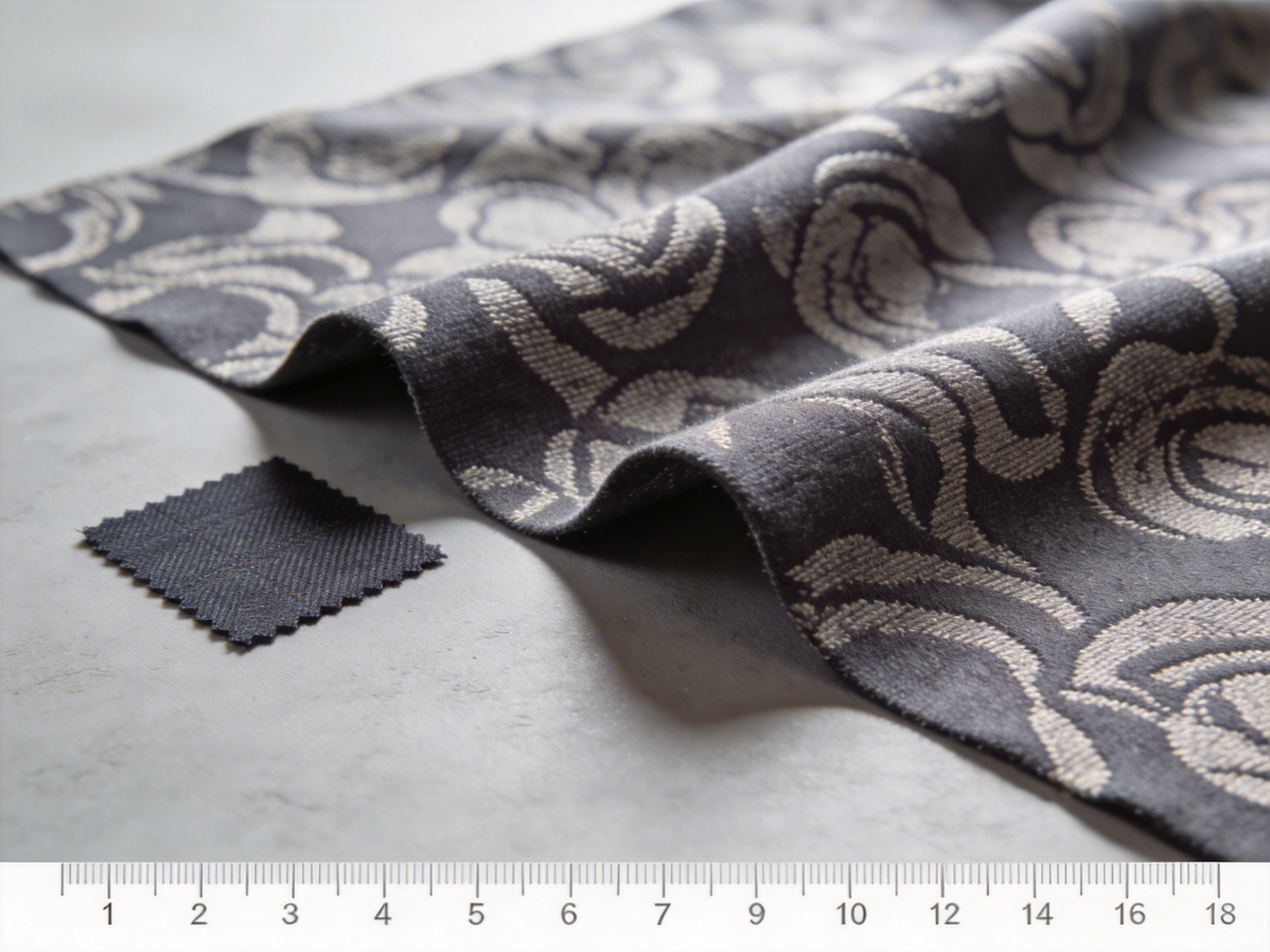
At its core, this double-knit jacquard is engineered to address the pain points of conventional suit fabrics. Unlike woven alternatives that rely on tight weaves for structure, its double-knit construction creates a dense, elastic textile that moves with the wearer without losing shape. The jacquard pattern adds a subtle, luxurious texture that elevates any garment, making it suitable for everything from boardroom meetings to after-work events. But what truly sets this fabric apart is the combination of its composition, manufacturing precision, and the company’s unwavering commitment to quality—factors that make it a top choice for high-end apparel brands worldwide.
What Makes This Double-Knit Jacquard Stand Out?
The success of this fabric lies in its thoughtful design, starting with its carefully balanced composition. Each component plays a critical role in delivering the desired performance and aesthetic:
1. Balanced Composition for Optimal Performance
The fabric’s blend of 75% Polyester, 20% Rayon, and 5% Spandex is a masterclass in textile engineering. Let’s break down each element:
- Polyester (75%): The backbone of the fabric, polyester provides exceptional durability, shape retention, and resistance to shrinking and stretching. It’s also quick-drying, making it ideal for travel or active work environments where moisture management is key. Unlike natural fibers like cotton, polyester doesn’t absorb odors easily, ensuring the garment stays fresh longer.
- Rayon (20%): Derived from wood pulp, rayon adds a soft, luxurious handfeel that mimics silk. It enhances the fabric’s drape, giving garments a fluid, polished look that flatters the body. Rayon also improves breathability, reducing the stuffiness often associated with synthetic blends.
- Spandex (5%): The small percentage of spandex is a game-changer. It introduces just the right amount of stretch—enough to allow for unrestricted movement (like sitting cross-legged or reaching overhead) but not so much that the garment loses its structured silhouette. This balance is crucial for business wear, where formality and comfort must coexist.
This composition is carefully calibrated to avoid common pitfalls of other blends. For example, too much spandex can lead to sagging over time, while too little fails to provide the desired flexibility. The 5% spandex content here strikes the perfect chord, ensuring the fabric retains its shape even after repeated wear and washing.
2. Double-Knit Construction: Structure Meets Stretch
The fabric’s double-knit construction is another key differentiator. Unlike single-knit fabrics (which are thin and prone to stretching out), double-knit fabrics are made by interlocking two layers of knit material. This creates a dense, stable textile that has the structure of a woven fabric but the stretch of a knit. Here’s how it benefits users:
- Wrinkle Resistance: The double-knit layers reduce the formation of creases, making the fabric ideal for travel or busy professionals who don’t have time for frequent ironing. Unlike woven fabrics that crease easily when folded, this jacquard bounces back to its original shape.
- Durability: The two-layer structure adds thickness and strength, making the fabric resistant to tears and abrasion. This is especially important for outerwear vests or trousers that see frequent use.
- Elasticity: The interlocking layers allow for two-way stretch (both horizontal and vertical), providing comfort without compromising on structure. This is a rare combination in business wear, where stretch often comes at the cost of a polished look.
3. Jacquard Pattern: Subtle Luxury Without Formality
The jacquard pattern is woven directly into the fabric using high-gauge machines, creating a fine, textural design that adds depth without being overly loud. Unlike printed patterns (which can fade over time), jacquard patterns are part of the fabric’s structure, ensuring they remain vibrant and intact for years. The subtle geometric designs (such as small checks, herringbones, or abstract motifs) are versatile enough to complement both men’s and women’s formal wear, adding a touch of elegance without being distracting.
For brands, this pattern customization is a powerful tool. The in-house CAD team can create exclusive jacquard designs that align with a brand’s identity, helping them stand out in a crowded market. Whether it’s a brand’s logo woven into the fabric or a unique motif, the jacquard process allows for endless creativity.
Manufacturing Excellence: Behind the Scenes
To achieve the fabric’s high quality, the manufacturing process involves precision, innovation, and strict quality control. Let’s take a closer look at the steps that go into creating each meter of this double-knit jacquard:

1. High-Gauge Knitting Machines: Precision at Scale
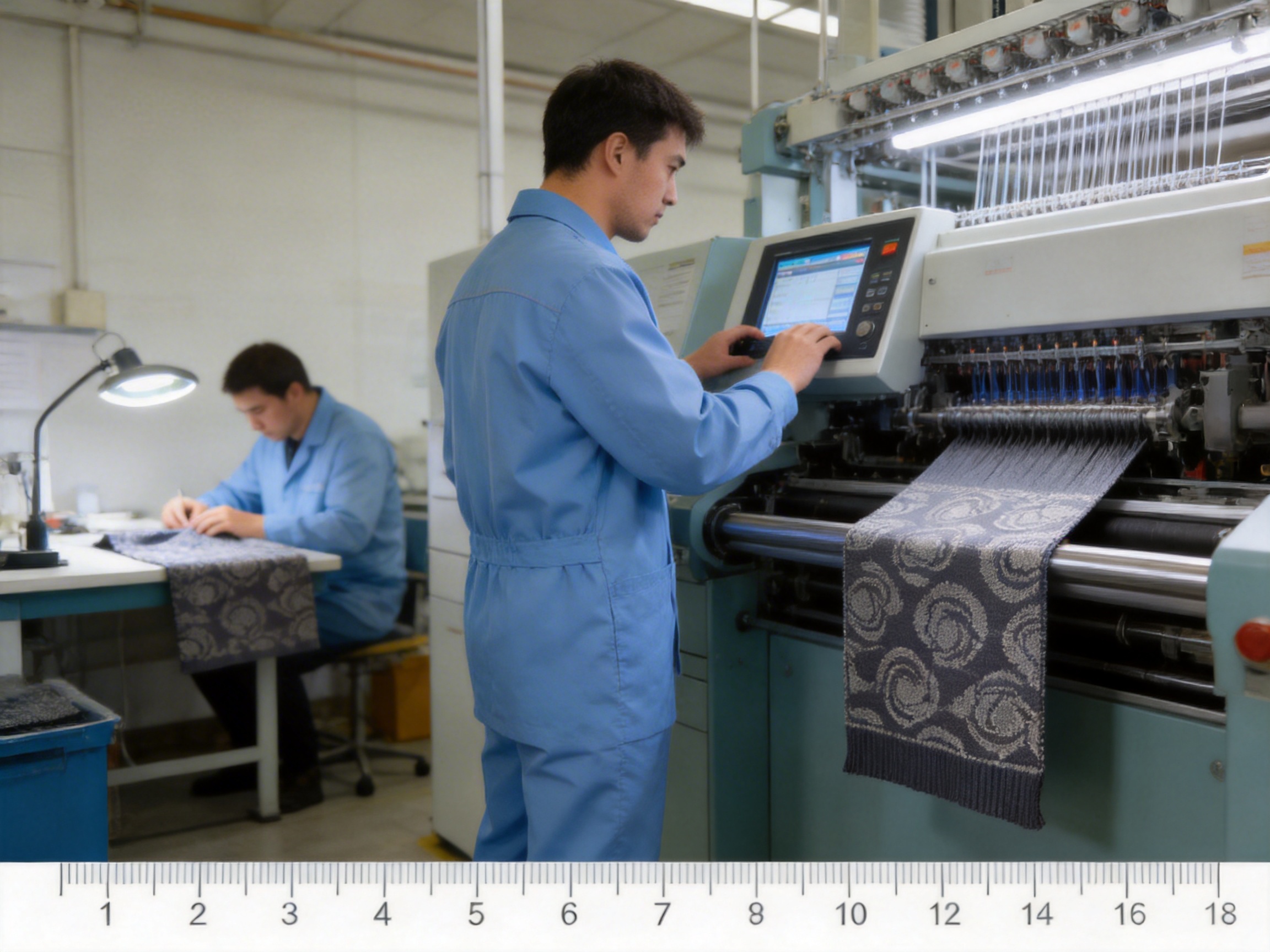
The fabric is produced using state-of-the-art high-gauge knitting machines. Gauge refers to the number of needles per inch in the machine; higher gauge means finer, denser fabric. These machines are capable of producing intricate jacquard patterns with extreme accuracy, ensuring that every meter of fabric has a consistent, high-quality finish. The use of high-gauge machines also allows for the double-knit construction, which is more complex than single-knit and requires specialized equipment.
Each machine is operated by skilled technicians who monitor the knitting process in real time. They adjust tension, speed, and pattern settings to ensure that the fabric meets the exact specifications—from the density of the knit to the clarity of the jacquard pattern. This attention to detail is what sets the fabric apart from mass-produced alternatives.
2. Heat-Setting Process: Locking in Quality
After knitting, the fabric undergoes a heat-setting process—a critical step that ensures dimensional stability. This process involves passing the fabric through a series of heated rollers at controlled temperatures and tension. The heat relaxes the fibers and locks them into their desired shape, preventing shrinkage and stretching over time. The company guarantees that the fabric will shrink by less than 3% after standard industrial washing, a testament to the effectiveness of this process.
Heat-setting also enhances the fabric’s wrinkle resistance. By stabilizing the fibers, the fabric is less likely to crease when folded or worn, making it perfect for travel and daily use. This step is often skipped by lower-quality manufacturers, leading to fabrics that lose their shape and wrinkle easily.
3. Customization with In-House CAD Design
One of the company’s key strengths is its in-house CAD (Computer-Aided Design) team. This team works closely with clients to create custom jacquard patterns that meet their specific needs. Whether a client wants a simple geometric design or a complex, brand-specific motif, the CAD team can translate ideas into digital patterns that are compatible with the knitting machines.
The process starts with a client brief: they provide inspiration (images, sketches, or descriptions) and the team creates initial designs. Once the client approves a design, the team fine-tunes it for production, ensuring that the pattern is clear and consistent across the fabric. This level of customization is rare in the textile industry, where most manufacturers offer only standard patterns.
4. Rigorous Quality Control
Quality control is integrated into every stage of the manufacturing process, from raw material inspection to final shipment. Here’s a breakdown of the checks:
- Raw Material Inspection: All fibers (polyester, rayon, spandex) are tested for purity, strength, and consistency before being used. This ensures that the final fabric meets the desired performance standards.
- Lab-Dip Approval: Before bulk production, the company provides lab-dips (small samples of the fabric in the requested color) for client approval. This ensures that the color matches the client’s specifications exactly.
- Pre-Production Sampling: A small sample of the fabric is produced using the final pattern and color. This sample is tested for stretch, shrinkage, pilling resistance, and drape to ensure it meets all quality standards.
- Bulk Production Inspection: During bulk production, random samples are taken at regular intervals to check for consistency in pattern, color, and quality. Any deviations are corrected immediately.
- Final Quality Check: Before shipment, the entire batch is inspected for defects (such as holes, uneven patterns, or color mismatches). Only fabric that passes all checks is shipped to clients.
This rigorous quality control process ensures that every meter of fabric meets the company’s high standards, reducing the risk of returns or complaints for clients.
Applications: Versatility for Modern Wardrobes
The premium double-knit jacquard fabric is incredibly versatile, making it suitable for a wide range of apparel items. Its combination of structure, stretch, and durability makes it a favorite among designers for both men’s and women’s wear. Let’s explore some of the key applications:
1. Men’s & Women’s Structured Blazers
Blazers are a staple of business wear, but traditional blazers are often stiff and restrictive. This double-knit jacquard changes that. The stretch allows for comfortable movement (like reaching for a file or sitting in a meeting), while the structured knit ensures the blazer retains its shape. The jacquard pattern adds a subtle touch of luxury, making the blazer suitable for both formal and semi-formal occasions. For women, the drape flatters the body, creating a feminine silhouette without sacrificing professionalism. For men, the fabric provides a polished look that’s perfect for the boardroom.
Brands that use this fabric for blazers report high customer satisfaction, as the blazers are not only stylish but also practical for daily use. The anti-wrinkle property means that the blazer looks fresh even after a long day of travel or work.
2. Business Casual Trousers
Business casual trousers are increasingly popular, but they often lack the structure needed for formal settings. This fabric solves that problem. The double-knit construction gives the trousers a crisp, tailored look, while the spandex adds stretch for comfort. The 320 GSM weight makes the trousers durable enough for frequent wear, and the anti-wrinkle property ensures they look neat even after sitting for hours. The jacquard pattern adds a subtle texture that elevates the trousers beyond basic casual wear, making them suitable for both office and after-work events.
For men, the trousers can be paired with a dress shirt and blazer for a formal look, or with a polo shirt for a more casual vibe. For women, they can be paired with a blouse or sweater for a professional yet comfortable outfit.
3. Pencil Skirts and Sheath Dresses
Pencil skirts and sheath dresses are classic women’s business wear, but they often require frequent dry cleaning and are prone to wrinkling. This fabric changes that. The stretch allows the skirt or dress to fit snugly without being restrictive, while the drape flatters the body. The anti-wrinkle property means that the garment can be folded and stored without creasing, and the durable construction ensures it holds its shape after repeated wear. The jacquard pattern adds a touch of elegance, making the skirt or dress suitable for formal events as well as office wear.
Brands that use this fabric for skirts and dresses report that customers love the combination of style and comfort. The fabric is also easy to care for—most garments can be machine washed (on a gentle cycle) and hung to dry, reducing dry cleaning costs.
4. High-End Outerwear Vests
Outerwear vests are a versatile addition to any wardrobe, but they often lack the structure needed for formal settings. This fabric’s 320 GSM weight makes it ideal for outerwear vests, providing warmth without bulk. The double-knit construction adds durability, making the vest resistant to tears and abrasion. The jacquard pattern adds a luxurious touch, elevating the vest from a casual layering piece to a formal accessory. The stretch allows for comfortable layering over shirts or sweaters, and the anti-wrinkle property ensures the vest looks neat even after being packed in a bag.
For men, the vest can be paired with a suit for a formal look, or with a sweater for a casual vibe. For women, it can be paired with a dress or blouse for a professional outfit. The fabric’s durability makes it suitable for outdoor use as well, such as for commuting or weekend outings.
Competitive Advantages: Why Choose This Fabric Over Alternatives?
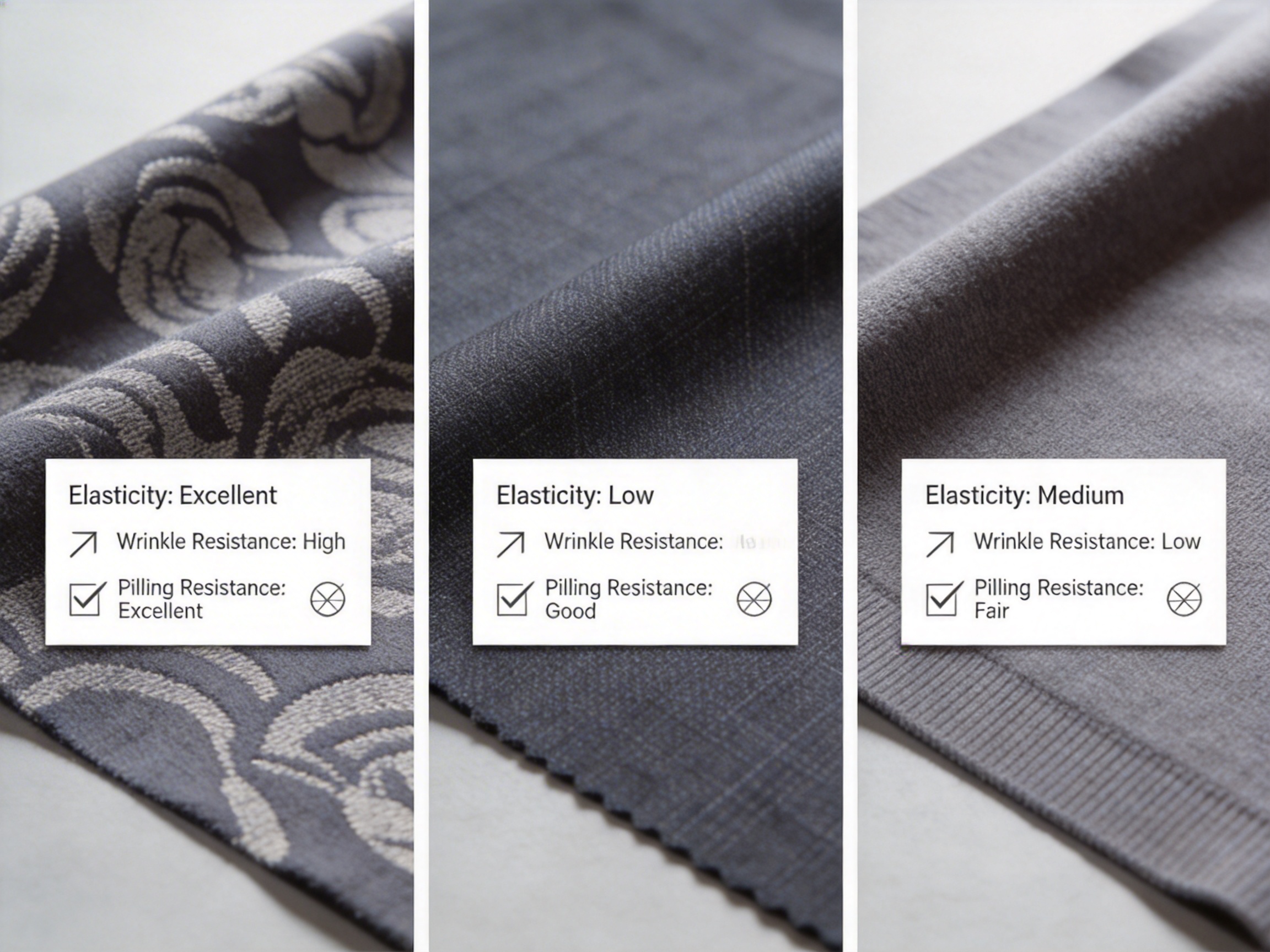
To understand the fabric’s competitive edge, let’s compare it to two common alternatives: traditional woven suit fabric and regular knitted fabric. The table below highlights the key differences:
| Feature | Premium Double-Knit Jacquard | Traditional Woven Suit Fabric | Regular Knitted Fabric |
|---|---|---|---|
| Composition | 75% Polyester, 20% Rayon, 5% Spandex | 100% Wool or Wool Blend | 100% Polyester or Polyester Blend |
| Weight (GSM) | 320 (Heavy) | 250-300 (Medium) | 180-220 (Light) |
| Elasticity | Excellent (2-way stretch) | Poor (minimal stretch) | Good (1-way or 2-way, but prone to sagging) |
| Wrinkle Resistance | Excellent (bounces back) | Poor (creases easily) | Good (but less than double-knit) |
| Drape | Excellent (fluid, polished) | Stiff (structured but rigid) | Soft (but lacks structure) |
| Pilling Resistance | Grade 4.0 (Excellent) | Grade 3.0 (Good) | Grade 2.5 (Fair) |
| Shrinkage Rate | <3% (after industrial wash) | 5-7% (wool blend) | 4-6% (polyester blend) |
| Cost per Meter | Competitive (manufacturer direct) | High (wool is expensive) | Low (but lower quality) |
Beyond the table, there are several other competitive advantages that set this fabric apart:
1. Manufacturer Direct Pricing and Supply
As a direct manufacturer, the company eliminates middlemen, which means clients get competitive ex-factory pricing. This is a significant advantage for brands looking to reduce costs without compromising on quality. Additionally, the company has a stable supply chain, with its own production facilities and raw material sourcing, ensuring that orders are delivered on time even during peak demand. This is a critical factor for brands that need to meet tight production deadlines.
2. Flexible MOQ
The minimum order quantity (MOQ) for this fabric is 800 meters per color/design. While this may seem high, it’s actually competitive for high-end jacquard fabrics. Most manufacturers require MOQs of 1000 meters or more for custom patterns, making this fabric accessible to small and medium-sized brands as well as large corporations. The company also offers flexibility for clients who need smaller quantities for sampling or limited-edition collections, though this may be subject to additional fees.
3. Quick Turnaround Time
The company’s efficient manufacturing process allows for a quick turnaround time: 15-20 days for bulk production after lab-dip approval. This is faster than many competitors, who often take 30 days or more to deliver bulk orders. For brands that need to launch new collections quickly, this is a major advantage. The company also offers expedited shipping for urgent orders, though this may incur additional costs.
4. Customization Options
As mentioned earlier, the company’s in-house CAD team allows for full customization of jacquard patterns. Clients can choose from a library of existing patterns or create their own exclusive designs. The company also offers color customization, with a wide range of Pantone colors available. This level of customization helps brands differentiate their products in the market and build a strong brand identity.
5. Durability and Longevity
The fabric’s high-density knit structure and pilling grade of 4.0 ensure that it lasts longer than many alternatives. Pilling (the formation of small balls of fiber on the surface of the fabric) is a common issue with knitted fabrics, but this fabric’s construction minimizes it. The company guarantees that the fabric will remain pilling-resistant for at least 50 washes, making it a cost-effective choice for brands that want to offer high-quality, long-lasting products to their customers.
Q&A Section
To address common questions from clients and consumers, we’ve compiled this Q&A section:
Q1: Can this jacquard fabric be printed?
A: While the fabric is primarily designed for its woven jacquard texture, it can be over-dyed to change its color. However, for complex printed patterns (such as photographs or detailed graphics), we recommend using a printed TR (Polyester-Rayon) fabric instead. This is because the jacquard’s woven pattern may interfere with the print, and the stretch of the spandex can cause the print to crack over time. Our in-house team can advise on the best fabric for your specific printing needs.
Q2: What is the shrinkage rate of this fabric?
A: We guarantee that the fabric will shrink by less than 3% after standard industrial washing. This is achieved through our precise heat-setting process, which locks the fibers into their desired shape. For best results, we recommend following the care instructions provided with the fabric (e.g., machine wash on a gentle cycle with cold water, hang to dry).
Q3: What is the minimum order quantity (MOQ) for this fabric?
A: The MOQ is 800 meters per color and design. This is because the jacquard knitting process requires setting up the machine for each specific pattern and color, which is cost-prohibitive for smaller quantities. However, we offer sampling services for clients who want to test the fabric before placing a bulk order. Samples are available in 1-2 meter lengths for a nominal fee.
Q4: Can the jacquard pattern be customized to match our brand’s design?
A: Yes! Our in-house CAD team can create custom jacquard patterns based on your brand’s specifications. Whether you want a simple geometric design, a brand logo, or a complex motif, we can translate your ideas into a digital pattern that is compatible with our knitting machines. The customization process typically takes 5-7 days, and we provide samples for approval before bulk production.
Q5: How long does it take to receive bulk orders after confirming the order?
A: Once the lab-dip and pattern are approved, bulk production takes 15-20 days. After production is complete, the fabric is inspected and shipped. Shipping times vary depending on the destination: for example, shipments to Europe take 10-15 days (FOB Shanghai), while shipments to North America take 15-20 days. We also offer expedited shipping for urgent orders, which can reduce shipping times by 3-5 days.
Q6: What payment terms are available for international buyers?
A: We typically accept T/T (Telegraphic Transfer) with 30% deposit upfront and 70% balance before shipment. We also accept L/C (Letter of Credit) at sight for large orders. For long-term partners with a good credit history, we offer open account terms (e.g., net 30 days). We also accept PayPal for small sample orders.
Q7: What are the recommended wash care instructions for this fabric?
A: To ensure the fabric retains its quality and longevity, we recommend the following care instructions:
- Machine wash on a gentle cycle with cold water (max 30°C).
- Use a mild detergent (avoid bleach or fabric softeners).
- Do not tumble dry; hang to dry in a shaded area.
- Iron on low heat (max 110°C) if necessary; use a pressing cloth to avoid damaging the jacquard pattern.
- Do not dry clean (unless specified by the garment manufacturer).
References
To support the information in this article, we’ve referenced the following sources:
- Textile Institute (2023). "Global Trends in Performance Fabrics for Business Wear". Manchester: Textile Institute Press. This report explores the growing demand for performance fabrics in business wear and the key features that consumers prioritize.
- Fashion Business Review (2022). "Athleisure Integration in Formal Wear: Market Analysis and Consumer Preferences". London: Fashion Business Review Publications. This study examines how athleisure trends are influencing formal wear and the role of stretch fabrics in this transition.
- Zhang, L. (2021). "Advances in Double-Knit Jacquard Technology for Apparel Applications". Journal of Textile Engineering, Vol. 17, Issue 3, pp. 45-58. This academic paper discusses the technical advancements in double-knit jacquard manufacturing and their impact on apparel quality.
- International Textile Manufacturers Federation (2023). "Sustainability and Efficiency in Knitted Fabric Production". Geneva: ITMF Publications. This report highlights the importance of efficient manufacturing processes in reducing waste and improving product quality in the textile industry.
Conclusion
The premium double-knit jacquard fabric is more than just a textile—it’s a revolution in business wear. Its balanced composition, double-knit construction, and jacquard pattern create a fabric that combines sophistication with practicality, addressing the key pain points of traditional suit fabrics. The company’s commitment to manufacturing excellence, customization, and quality control ensures that every meter of fabric meets the highest standards, making it a top choice for high-end apparel brands worldwide.
Whether you’re a designer looking to create a new line of structured blazers, a brand seeking to differentiate your products, or a consumer looking for comfortable yet stylish business wear, this fabric offers a solution that delivers on both form and function. With its competitive pricing, flexible MOQ, and quick turnaround time, it’s no wonder that this fabric is quickly becoming a staple in modern business wear.