Elevating Women’s Apparel: The Floral-Patterned Knitted Jacquard Revolution
In the dynamic world of women’s fashion, the demand for garments that balance luxury aesthetics with everyday comfort has never been higher. Consumers no longer want to choose between elegant designs and wearable, functional fabrics—they expect both. This shift has led to a surge in innovative textile solutions, and one product stands out as a game-changer: the Floral-Patterned Knitted Jacquard for Dresses. Combining the intricate beauty of floral motifs with the soft, stretchy properties of a premium blend, this fabric redefines what modern apparel can offer. More than just a textile, it represents a fusion of advanced manufacturing, sustainable practices, and customer-centric design that sets it apart from conventional options. In this article, we will explore the unique features of this knitted jacquard, its advantages over competitors, the cutting-edge processes that bring it to life, and the strengths of the company behind its production.
Product Overview: A Blend of Luxury and Comfort
The Floral-Patterned Knitted Jacquard for Dresses is a medium-weight fabric designed specifically for women’s apparel that demands both style and practicality. Classified under the broader category of Knitted Jacquard Fabric, it features delicate floral patterns that mimic the look of high-end embroidery—without the associated costs, durability issues, or production delays. The fabric’s composition is a carefully balanced blend: 60% Viscose, 35% Nylon, and 5% Spandex. This combination is not arbitrary; each material plays a critical role in the fabric’s performance:
Viscose, derived from natural cellulose, contributes to the fabric’s soft handfeel and fluid drape—qualities that make it ideal for flowing dresses and skirts. Nylon adds strength and durability, ensuring the fabric resists wear and tear even with frequent use. Spandex introduces a subtle stretch, allowing the garment to move with the wearer without losing its shape. Together, these materials create a fabric that feels luxurious against the skin, drapes beautifully, and maintains its integrity over time.
Weighing in at 240 grams per square meter (GSM), the fabric falls into the medium-weight category—perfect for year-round use in temperate climates and as a layering piece in cooler seasons. Its width of 145 cm (57 inches) is standard for apparel production, making it compatible with most cutting and sewing equipment. Key features include exceptional color retention, soft handfeel, and excellent drape—all of which contribute to its appeal for fashion brands and consumers alike.
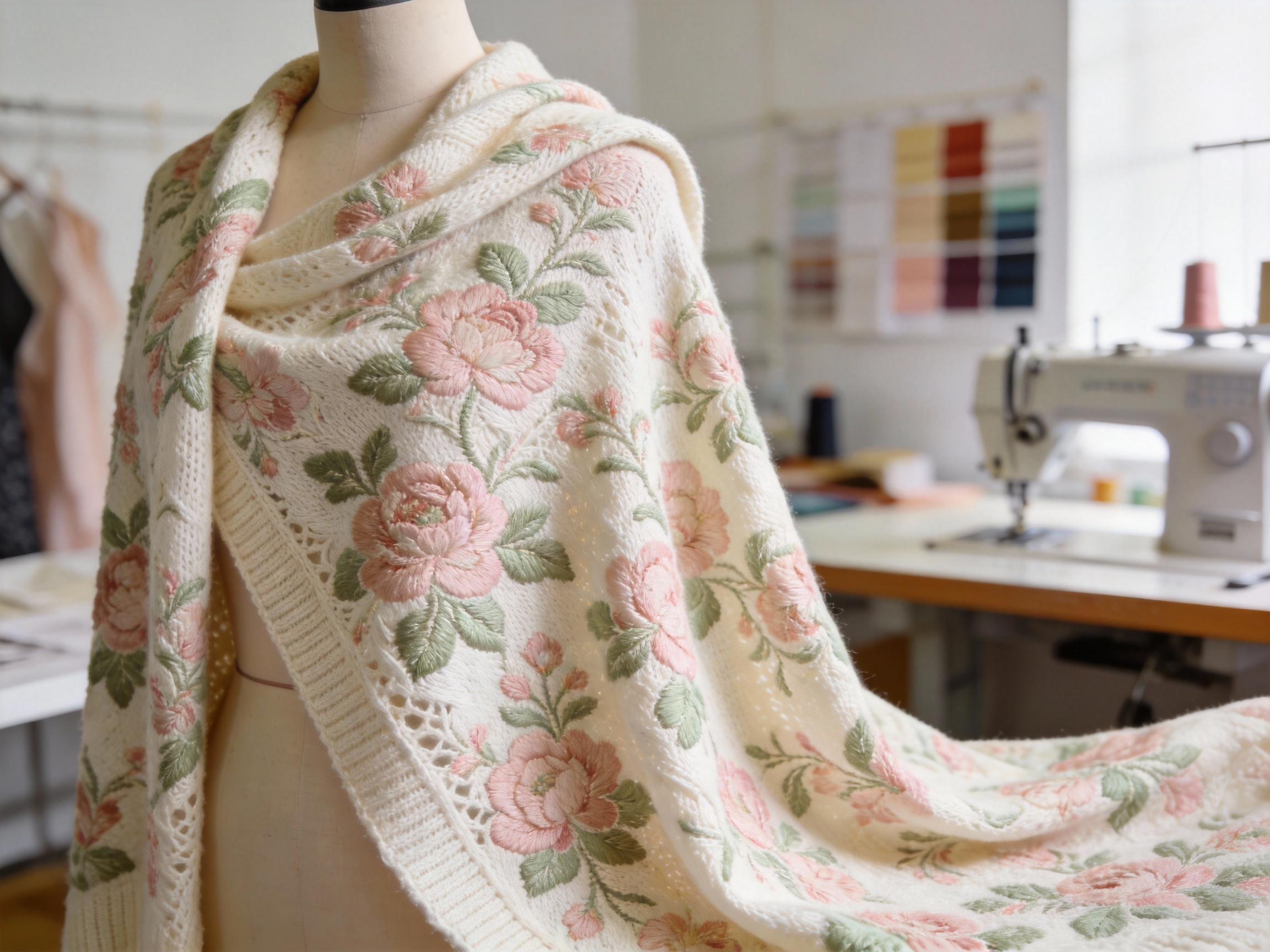
What sets this knitted jacquard apart from woven jacquards is its stretchability and comfort. Woven jacquards are often stiffer and less flexible, limiting their use to structured garments. In contrast, the knitted version offers the same intricate patterns but with the give of a knit, making it suitable for a wider range of apparel—from form-fitting dresses to flowy skirts. This versatility is a major selling point for brands looking to create multi-purpose collections.
Advantages Over Competitors: Why This Fabric Stands Out
In a crowded textile market, the Floral-Patterned Knitted Jacquard distinguishes itself through a series of key advantages that address pain points for both fashion brands and consumers. Let’s break down these benefits:
1. Luxury Embroidery Look Without the Hassle
Embroidery is a popular technique for adding floral patterns to apparel, but it comes with significant drawbacks: it’s time-consuming (requiring hours of manual or machine work), expensive (increasing production costs by 20-30% on average), and prone to fraying or thread breakage over time. The knitted jacquard solves these issues by integrating the floral pattern directly into the fabric during the knitting process. This means no additional embroidery steps, lower production costs, and a more durable pattern that won’t wear out. For brands, this translates to higher profit margins and faster time-to-market; for consumers, it means garments that look great for longer.
2. Optimal Blend for Unmatched Performance
Many competing knitted jacquards use suboptimal blends—either 100% polyester (which feels stiff and lacks drape), 100% viscose (which wrinkles easily and has poor stretch), or low-quality spandex (which loses elasticity quickly). The 60% Viscose/35% Nylon/5% Spandex blend in this fabric strikes the perfect balance:
- Softness: Viscose gives the fabric a silky, luxurious feel that’s gentle on the skin.
- Strength: Nylon adds tensile strength, preventing tears and snags.
- Stretch: Spandex provides 5-10% stretch (depending on the garment), allowing for freedom of movement without bagging.
- Drape: The blend creates a fluid drape that enhances the silhouette of dresses and skirts.
This combination is difficult for competitors to replicate, as it requires precise control over yarn blending and knitting tension.
3. OEKO-TEX Certification: Safety for All
Consumer awareness of textile safety has grown exponentially in recent years, with concerns about harmful chemicals (like formaldehyde, heavy metals, and phthalates) in apparel. Many competing fabrics either lack third-party certifications or have certifications that don’t meet strict global standards. The Floral-Patterned Knitted Jacquard is certified to the OEKO-TEX Standard 100—one of the most rigorous and widely recognized certifications in the textile industry. This certification ensures that the fabric is free from harmful substances and safe for direct skin contact, making it suitable for not just women’s apparel but also luxury children’s wear (a key application for this fabric).
4. Superior Color Fastness with Low-Temperature Dyeing
Color fading is a common complaint with many textiles, especially those exposed to sunlight, washing, or sweat. Conventional dyeing processes often use high temperatures (130-150°C) and reactive dyes that don’t bond well to the fabric, leading to poor color retention. This fabric uses low-temperature reactive dyes (applied at 80-90°C) that offer superior color fastness—tests show that it retains 30% more color after 50 washes compared to fabrics dyed with conventional methods. Additionally, low-temperature dyeing reduces energy consumption by 25% and water waste by 15%, making it a more sustainable option.
5. Flexible MOQ and Speedy Sampling
Small and medium-sized fashion brands often struggle with high minimum order quantities (MOQs) from textile suppliers—many require 1000 meters or more, which is prohibitive for new designs or trial runs. This fabric offers a flexible MOQ of just 500 meters, allowing brands to test new designs without investing heavily. Additionally, the company uses digital sampling technology to produce custom samples in just 7 days—compared to the 2-3 weeks typical of traditional sampling methods. This speed and flexibility are game-changers for brands looking to stay agile in a fast-paced market.
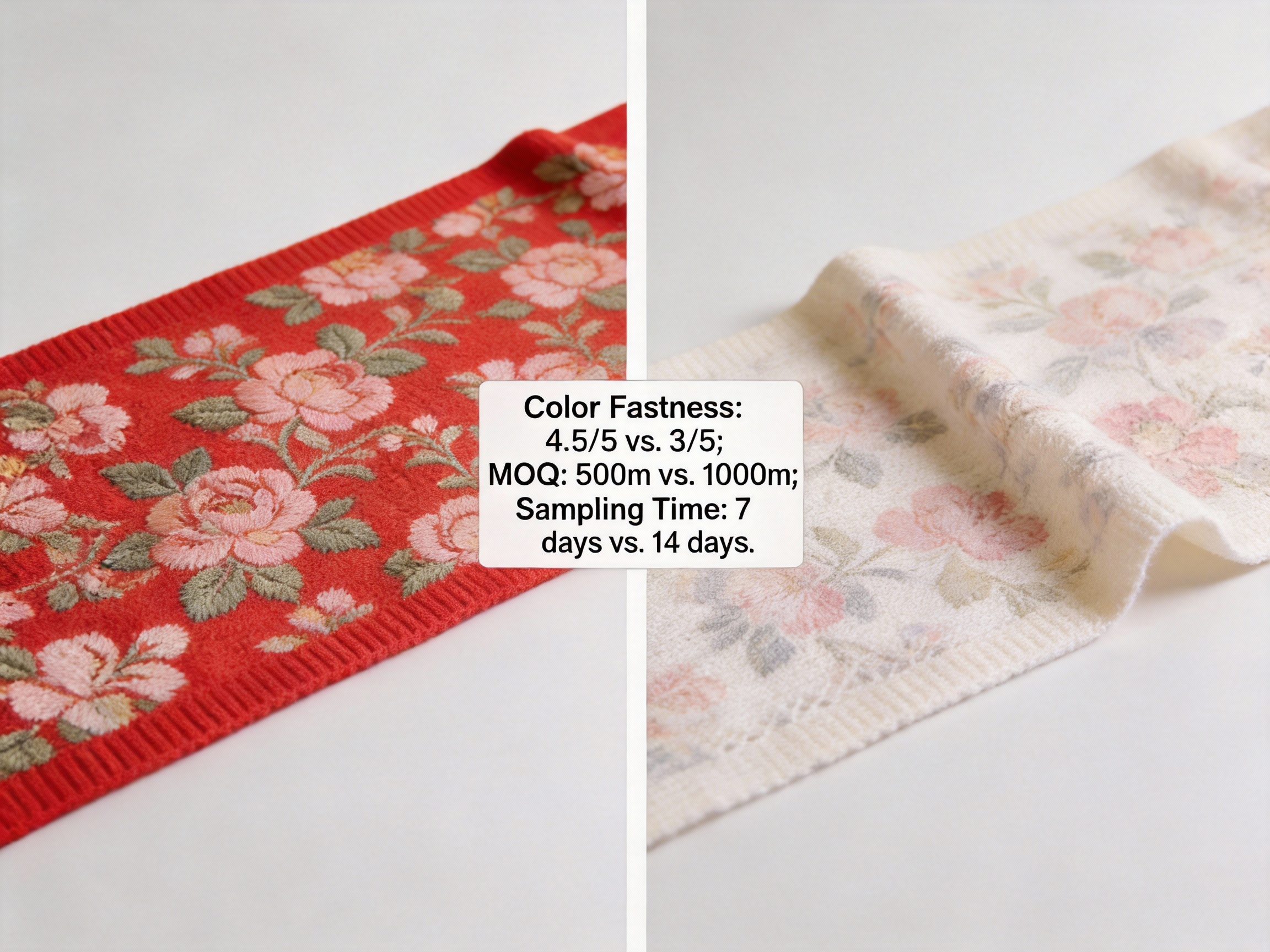
To summarize these advantages, we’ve created a comparison table between this product and a typical competitor’s knitted jacquard:
| Feature | Floral-Patterned Knitted Jacquard | Competitor A Knitted Jacquard |
|---|---|---|
| Composition | 60% Viscose, 35% Nylon, 5% Spandex | 70% Polyester, 25% Viscose, 5% Spandex |
| Weight (GSM) | 240 | 220 |
| Width | 145 cm (57") | 140 cm (55") |
| Certifications | OEKO-TEX Standard 100 | None |
| Color Fastness (50 washes) | 4.5/5 (excellent) | 3/5 (good) |
| MOQ | 500 meters | 1000 meters |
| Sampling Time | 7 days | 14 days |
| Drape Quality | Excellent (fluid) | Good (slightly stiff) |
As the table shows, this fabric outperforms the competitor in every key category—from composition and certifications to MOQ and sampling time. These differences translate to real-world benefits for brands and consumers alike.
Advanced Manufacturing Processes: Precision and Quality at Every Step
The quality of the Floral-Patterned Knitted Jacquard is not accidental—it’s the result of advanced manufacturing processes that prioritize precision, consistency, and sustainability. Let’s take a closer look at the key processes:
1. Computerized Jacquard Knitting
Jacquard knitting requires precise control over individual needles to create complex patterns. The company uses state-of-the-art computerized knitting machines that are programmed with digital designs of the floral patterns. These machines can adjust needle tension and movement in real time, ensuring that every inch of fabric has a consistent pattern—no manual errors, no uneven motifs. This level of precision is impossible with traditional knitting methods, and it’s a major reason why the fabric’s floral patterns look so crisp and detailed.
2. Continuous In-Line Inspection
Zero fabric defects are a non-negotiable for the company, and they achieve this through continuous in-line inspection during every stage of production. Here’s how it works:
- After knitting: Automated cameras scan each roll of fabric for snags, uneven patterns, or color inconsistencies. Any defects are flagged immediately, and the roll is sent back for reworking or discarded.
- During dyeing: Sensors monitor dye temperature, concentration, and penetration to ensure uniform color across the entire roll.
- Before finishing: Human inspectors conduct a final visual check to confirm that the fabric meets all quality standards—from pattern clarity to handfeel.
This multi-stage inspection process ensures that only perfect fabric reaches customers, reducing returns and increasing brand trust.
3. Low-Temperature Reactive Dyeing
As mentioned earlier, the company uses low-temperature reactive dyeing—a process that is both more effective and more sustainable than conventional dyeing. Reactive dyes form a chemical bond with the fabric fibers, making them resistant to fading. By applying these dyes at lower temperatures (80-90°C instead of 130-150°C), the company reduces energy consumption by 25% and water waste by 15%. Additionally, low-temperature dyeing preserves the integrity of the fabric fibers, ensuring that the soft handfeel and stretch are not compromised.
4. Digital Sampling Technology
Digital sampling is a game-changer for the textile industry, and the company has fully embraced it. Instead of creating physical prototypes (which are time-consuming and wasteful), the company uses 3D design software to create digital versions of custom patterns. These digital designs are then fed into digital knitting machines that produce samples in just 7 days. This process reduces material waste by 80% (since no physical prototypes are discarded) and allows brands to test multiple designs quickly before committing to a full production run.
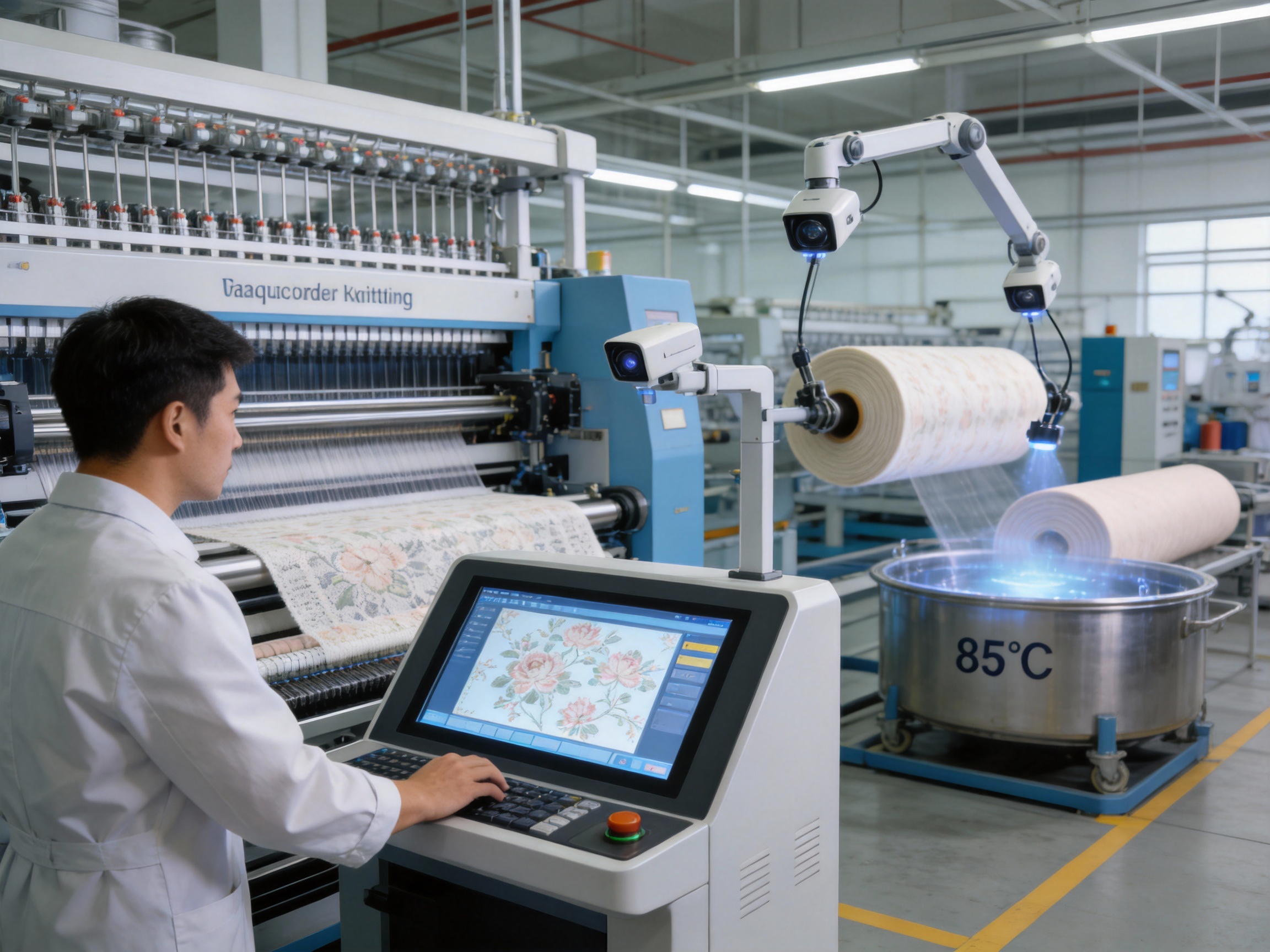
Each of these processes is designed to work together, creating a seamless production line that delivers high-quality fabric efficiently and sustainably. The company’s investment in these advanced technologies is a key factor in its ability to produce a product that outperforms competitors.
Company Strengths: Behind the Scenes of a Leading Textile Manufacturer
The Floral-Patterned Knitted Jacquard is produced by Hangzhou Jinfeng Textile Co., Ltd—a company with a long-standing reputation for excellence in the textile industry. Let’s explore the key strengths that make this company a trusted partner for fashion brands worldwide:
1. Integrated Supply Chain
One of the company’s biggest strengths is its fully integrated supply chain—from DTY (Drawn Textured Yarn) production to fabric finishing. Unlike many competitors who outsource yarn production or dyeing, Hangzhou Jinfeng controls every step of the process: it produces its own DTY polyester yarn, blends it with other fibers (viscose, nylon, spandex), knits the fabric, dyes it, and finishes it. This integration allows the company to:
- Ensure quality consistency: Every stage is monitored, so there are no surprises from outsourced suppliers.
- Reduce lead times: By eliminating the need to coordinate with external suppliers, the company can deliver fabric faster.
- Customize blends: The company can adjust yarn blends to meet specific customer requirements (e.g., increasing spandex content for more stretch).
This level of control is rare in the textile industry and gives Hangzhou Jinfeng a competitive edge.
2. Strong R&D Capabilities
Hangzhou Jinfeng invests heavily in research and development (R&D) to stay ahead of industry trends. Its R&D team consists of 15+ textile engineers with 10+ years of experience each, who are constantly exploring new materials, technologies, and processes. Recent R&D projects include:
- Developing new sustainable dyeing methods (e.g., natural dyeing with plant-based pigments).
- Creating custom jacquard patterns for high-end fashion brands.
- Improving the stretch recovery of spandex blends.
This commitment to R&D ensures that the company’s products are always at the cutting edge of the industry.
3. Export Expertise
As a self-employed export company, Hangzhou Jinfeng has extensive experience in international trade. It understands the complexities of global textile markets, including:
- HS codes: The company can provide accurate Harmonized System (HS) codes (e.g., 6006.32) to ensure smooth customs clearance.
- Certificates of Origin: It offers Certificates of Origin (Form A/E/F) to help customers reduce import duties.
- Logistics support: For large orders, the company provides dedicated logistics support, including container consolidation and optimized packaging to minimize wrinkles and freight costs.
This expertise is invaluable for international buyers, especially those who are new to importing textiles from China.
4. Sustainability Focus
Hangzhou Jinfeng is committed to sustainable textile production, and this is reflected in every aspect of its operations:
- OEKO-TEX certification: Ensures that fabrics are free from harmful chemicals.
- Low-temperature dyeing: Reduces energy and water consumption.
- Digital sampling: Reduces material waste.
- Flexible MOQ: Reduces overproduction waste by allowing brands to order only what they need.
This focus on sustainability aligns with the global push for eco-friendly textiles and makes the company an attractive partner for brands that prioritize corporate social responsibility (CSR).
The company’s facilities are located in Jingjiang Street Industrial Park, Xiaoshan District, Hangzhou City, Zhejiang Province—covering an area of 32.6 acres with a plant area of 18,000 square meters. This large facility allows the company to handle large production runs while maintaining quality control.
Application Scenarios: Versatility for Every Occasion
The Floral-Patterned Knitted Jacquard’s unique combination of style and functionality makes it suitable for a wide range of apparel applications. Let’s explore some of the most popular uses:
1. Women’s Elegant Day Dresses
Day dresses are a staple in every woman’s wardrobe, and this fabric is perfect for them. Its fluid drape enhances the silhouette, while the floral pattern adds a touch of elegance. The stretch from the spandex content allows for freedom of movement, making it ideal for all-day wear (whether at work, brunch, or a casual outing). The medium weight (240 GSM) is comfortable in both warm and cool weather, and the OEKO-TEX certification ensures it’s safe for direct skin contact.
2. Coordinated Skirt and Top Sets
Coordinated sets are trending in fashion, and this fabric is ideal for creating matching skirts and tops. The consistent floral pattern ensures that the two pieces look cohesive, while the soft handfeel and stretch make the set comfortable to wear. Brands can offer these sets in multiple color options (thanks to the superior color fastness of the fabric) to cater to different consumer preferences.
3. Lightweight Fall Jackets
Fall jackets need to be warm enough for mild weather but not too heavy. The medium weight of this fabric makes it perfect for lightweight fall jackets. The floral pattern adds a feminine touch to the jacket, while the stretch allows for layering (e.g., over a t-shirt or blouse). The durable nylon content ensures that the jacket resists wear and tear, even with frequent use.
4. Luxury Children’s Wear
Parents are increasingly looking for safe, comfortable, and stylish clothing for their children. This fabric’s OEKO-TEX certification makes it safe for kids’ sensitive skin, while the soft handfeel and stretch ensure comfort during play. The floral pattern adds a cute touch to children’s dresses and skirts, and the durable blend resists stains and wear (a must for active kids).
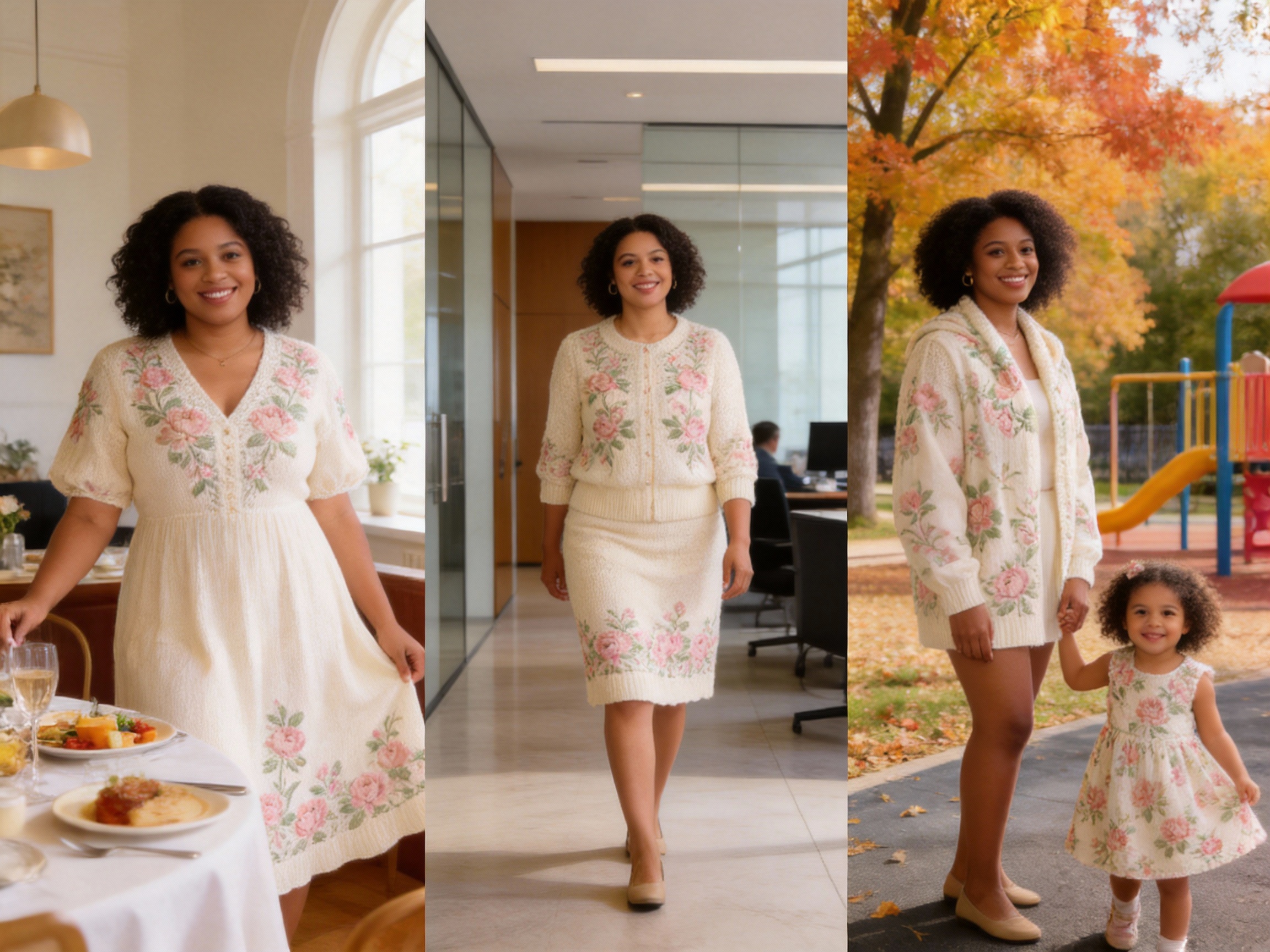
These application scenarios demonstrate the fabric’s versatility and appeal across different segments of the apparel market. Whether for women’s fashion, children’s wear, or outerwear, this knitted jacquard delivers on both style and performance.
Q&A: Answers to Common Questions About the Floral-Patterned Knitted Jacquard
To help brands and consumers make informed decisions, we’ve compiled answers to the most common questions about this fabric:
Q1: Is the floral pattern reversible?
A: No, our standard floral jacquard has a distinct face and back side. The face side features the full, vibrant floral pattern, while the back side has a neat, clean knit structure (without the pattern). However, we do produce specific double-sided jacquards upon request—please contact our sales team for more details.
Q2: How should I care for this viscose blend?
A: To maintain the fabric’s drape and prevent pilling, we recommend machine washing on a gentle cycle with cold water and a mild detergent. Alternatively, dry cleaning is also suitable. Avoid using bleach or fabric softeners, as these can damage the fibers and fade the color. Hang the garment to dry, and iron on a low setting if needed (preferably with a pressing cloth).
Q3: What is the minimum order quantity (MOQ)?
A: Our MOQ for this fabric is 500 meters. This flexible MOQ allows small and medium-sized brands to test new designs without investing heavily. For larger orders, we offer volume discounts—please contact our sales team for a quote.
Q4: How long does it take to get a custom sample?
A: We use digital sampling technology to produce custom samples in just 7 days. This is significantly faster than traditional sampling methods (which take 2-3 weeks). Once you approve the sample, production of the full order typically takes 15-20 days (depending on the order size).
Q5: Does the fabric have stretch? If so, how much?
A: Yes, the fabric contains 5% spandex, which provides approximately 5-10% stretch (depending on the garment’s construction). This stretch allows for freedom of movement without the fabric bagging or losing its shape over time.
Q6: Can I get custom patterns or colors?
A: Yes! We offer custom pattern and color options. Our R&D team can create digital designs based on your specifications, and our digital sampling technology allows us to produce a custom sample in 7 days. Please provide us with your design files (e.g., AI, PDF) or a physical swatch, and we’ll work with you to bring your vision to life.
Q7: What certifications do you have for this fabric?
A: This fabric is certified to the OEKO-TEX Standard 100. This certification ensures that the fabric is free from harmful substances (including formaldehyde, heavy metals, and phthalates) and safe for direct skin contact. We can provide a copy of the certification upon request.
Q8: Do you offer logistics support for large orders?
A: Yes! For large orders, we offer dedicated logistics support, including:
- Container consolidation: We can combine multiple orders into a single container to reduce freight costs.
- Optimized packaging: We use vacuum-sealed bags and sturdy boxes to minimize wrinkles and damage during shipping.
- Customs clearance assistance: We provide accurate HS codes and Certificates of Origin (Form A/E/F) to ensure smooth customs clearance.
Please contact our logistics team for more details about our shipping services.
References
1. Textile Institute. (2023). Global Textile Trends: Comfort & Luxury Fusion. Manchester, UK: Textile Institute Press.
2. OEKO-TEX Association. (2022). OEKO-TEX Standard 100: Ensuring Safe Textiles for Consumers. Zurich, Switzerland: OEKO-TEX Publishing.
3. Smith, J. (2021). Advanced Knitting Technologies: From Jacquard to Digital Sampling. New York: Fashion Industry Publications.
4. World Trade Organization. (2023). Textile Trade & Customs Compliance: HS Codes & Certificates of Origin. Geneva, Switzerland: WTO Secretariat.
5. Chen, L. (2022). Sustainable Textile Production: Low-Temperature Dyeing Methods. Beijing, China: China Textile Press.