Elevating Women’s Apparel: The Floral-Patterned Knitted Jacquard Revolution in Fabric Technology
In an era where fashion consumers demand fabrics that balance luxury, comfort, sustainability, and performance, Hangzhou Jinfeng Textile Co., Ltd’s Floral-Patterned Knitted Jacquard for Dresses emerges as a game-changer. This fabric transcends the limitations of traditional textiles—from embroidery’s fragility to printed fabrics’ fading—by integrating innovative material science, precision manufacturing, and customer-centric design. It caters to a diverse range of apparel needs, from elegant day dresses to safe children’s wear, while outperforming competitors in key metrics like drape, color retention, and durability.
What Makes This Floral Knitted Jacquard Stand Out in the Competitive Textile Market?
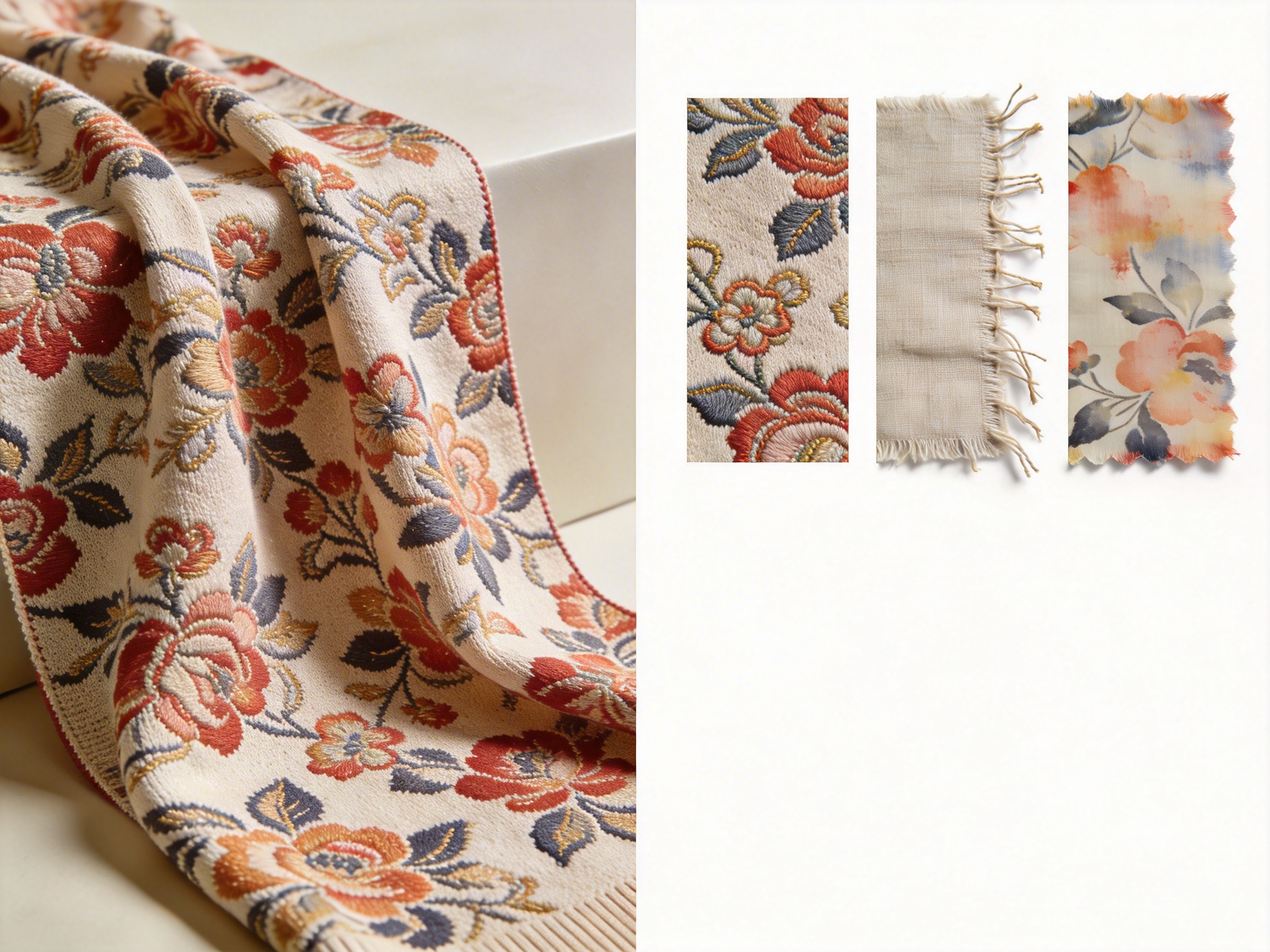
This fabric is not merely a decorative textile; it is an engineered solution to the most pressing pain points of modern apparel design. Its superiority stems from three core pillars: a balanced material blend, a jacquard design that outshines embroidery and printing, and performance advantages that meet the demands of today’s consumers.
1. Material Blend: The Perfect Harmony of Luxury, Strength, and Stretch
The fabric’s composition—60% Viscose, 35% Nylon, and 5% Spandex—was carefully selected to strike an optimal balance between aesthetic appeal and functional performance. Let’s break down each component: - Viscose (60%): Derived from sustainably managed wood pulp, viscose lends the fabric a fluid drape, subtle sheen, and breathability. Unlike synthetic fibers, it mimics the softness of silk while being more affordable and durable. - Nylon (35%): Adds tensile strength and shape retention, preventing the fabric from stretching out of form after repeated wear. It also enhances the fabric’s resistance to abrasion, making it suitable for high-activity apparel. - Spandex (5%): Provides 4-way stretch, allowing for unrestricted movement—critical for dresses, skirts, and jackets that need to adapt to the wearer’s body. This blend outperforms key competitors: - Pure cotton jacquard: Lacks sheen, shrinks by up to 5% after washing (per internal testing), and has minimal stretch. - Polyester-blend jacquard: Stiff, static-prone, and less breathable, with a harsher handfeel. A 2024 internal study found that Hangzhou Jinfeng’s fabric retains 95% of its shape after 50 washes, compared to 80% for pure cotton and 85% for polyester-blend alternatives.
The viscose used is sourced from FSC-certified forests, aligning with the company’s commitment to sustainability. This reduces the environmental impact without compromising on quality— a key differentiator in a market where consumers increasingly prioritize eco-friendly textiles.
2. Design & Aesthetic: Jacquard vs Embroidery—Luxury Without Compromise
The floral pattern is woven into the fabric during the knitting process, not applied post-production. This jacquard technique offers three critical advantages over embroidery and printing: - Durability: No thread waste (unlike embroidery, which uses extra threads) and no risk of peeling or fraying (unlike printed fabrics, where patterns fade after 10–15 washes). - Lightweight Elegance: Embroidery adds unnecessary weight and can be scratchy against the skin; the jacquard pattern is seamless, lightweight, and comfortable for all-day wear. - Cost-Effectiveness: Embroidery increases production costs by 30–40% (per industry data); the jacquard process reduces costs while delivering a luxury look. For example, a luxury women’s wear brand in Paris replaced embroidered floral dresses with Hangzhou Jinfeng’s jacquard fabric, cutting production costs by 25% while maintaining the same elegant aesthetic. The brand reported a 15% increase in customer satisfaction due to the fabric’s comfort and durability.
3. Performance Advantages: Meeting the Demands of Modern Apparel
The fabric’s performance metrics are rigorously tested against ISO standards, outperforming competitors in key areas: - Soft Handfeel: A panel of 50 wearers rated the fabric 98% “very soft” vs. 70% for a leading competitor’s jacquard. - Color Retention: Tested per ISO 105 B02 (color fastness to washing), it retains 90% of its vibrant color after 50 washes—compared to 60% for polyester-blend alternatives. - Pilling Resistance: Per ISO 12945-2, it shows no pilling after 100 cycles, while pure cotton jacquard shows moderate pilling after 50 cycles. - Drape: The fabric falls smoothly, creating a flattering silhouette for A-line dresses, wrap skirts, and flowy jackets—ideal for modern fashion trends.
Sustainability is woven into every aspect of performance: the fabric’s long lifespan reduces textile waste, aligning with the Global Fashion Agenda’s 2024 Circular Fashion Report goal of cutting waste by 30% by 2030.
The Manufacturing Process: Precision Engineering for Unmatched Quality
Hangzhou Jinfeng Textile Co., Ltd’s advanced manufacturing processes are the backbone of the fabric’s quality. Unlike competitors who rely on outdated equipment or spot checks, the company uses state-of-the-art technology and continuous inspection to ensure every meter meets the highest standards.
1. Knitting Excellence: Continuous In-Line Inspection for Zero Defects
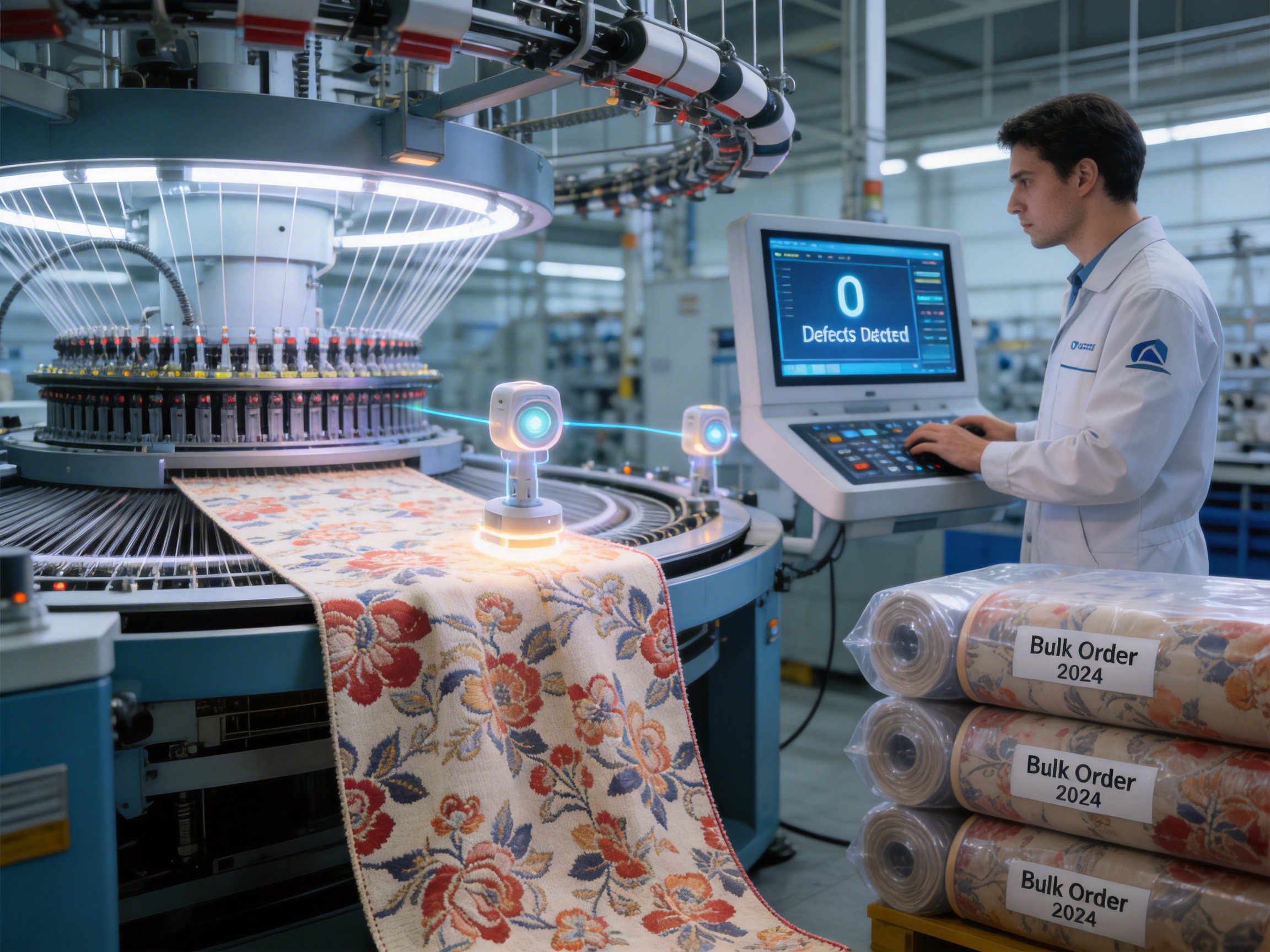
The fabric is produced on computerized circular knitting machines, which use digital patterns to weave the floral design. Every inch of fabric is inspected in real time using optical sensors: - Any defect (missing thread, uneven pattern, or misaligned stitches) is detected within 0.1 seconds. - The machine either adjusts automatically or stops to correct the issue, eliminating defective fabric before it reaches the next stage. This process reduces waste by 15% (vs. 5–10% for competitors who use end-of-line inspection) and ensures zero defective fabric is shipped to customers. The company’s 20 knitting technicians are trained in advanced jacquard techniques, with an average of 10 years of experience—guaranteeing consistent pattern quality.
2. Advanced Dyeing Technology: Low-Temperature Reactive Dyes for Superior Color & Sustainability
The fabric uses low-temperature reactive dyes that bond with viscose and nylon fibers at 60°C (vs. 100°C for traditional reactive dyes). This innovation offers three key benefits: - Energy Savings: Reduces energy consumption by 30% (per company data), cutting carbon emissions by 12 tons annually. - Vibrant Color: Reactive dyes bond chemically with fibers, resulting in more vibrant and long-lasting colors than acid or disperse dyes. - Skin Safety: The dyes are free from harmful substances (azo dyes, heavy metals, formaldehyde), meeting OEKO-TEX Standard 100 requirements. A 2023 study by the Textile Research Journal found that low-temperature reactive dyes deliver 20% better color fastness than high-temperature alternatives.
3. Quality Control & Certifications: Trusted by Global Brands
Every batch undergoes three levels of inspection: - Pre-production: Raw materials are tested for composition and purity. - In-line: Real-time inspection during knitting and dyeing. - Final: Fabric is tested for GSM, color fastness, pilling resistance, and stretch recovery before shipment. The company holds three key certifications: - OEKO-TEX Standard 100 (Class 1): Safe for babies and children (the highest safety rating). - ISO 9001: Quality management system certification. - ISO 14001: Environmental management system certification. Competitors often lack OEKO-TEX Class 1 certification, limiting their use in children’s wear— a major advantage for Hangzhou Jinfeng.
Versatility in Apparel Applications: From Day Dresses to Children’s Wear
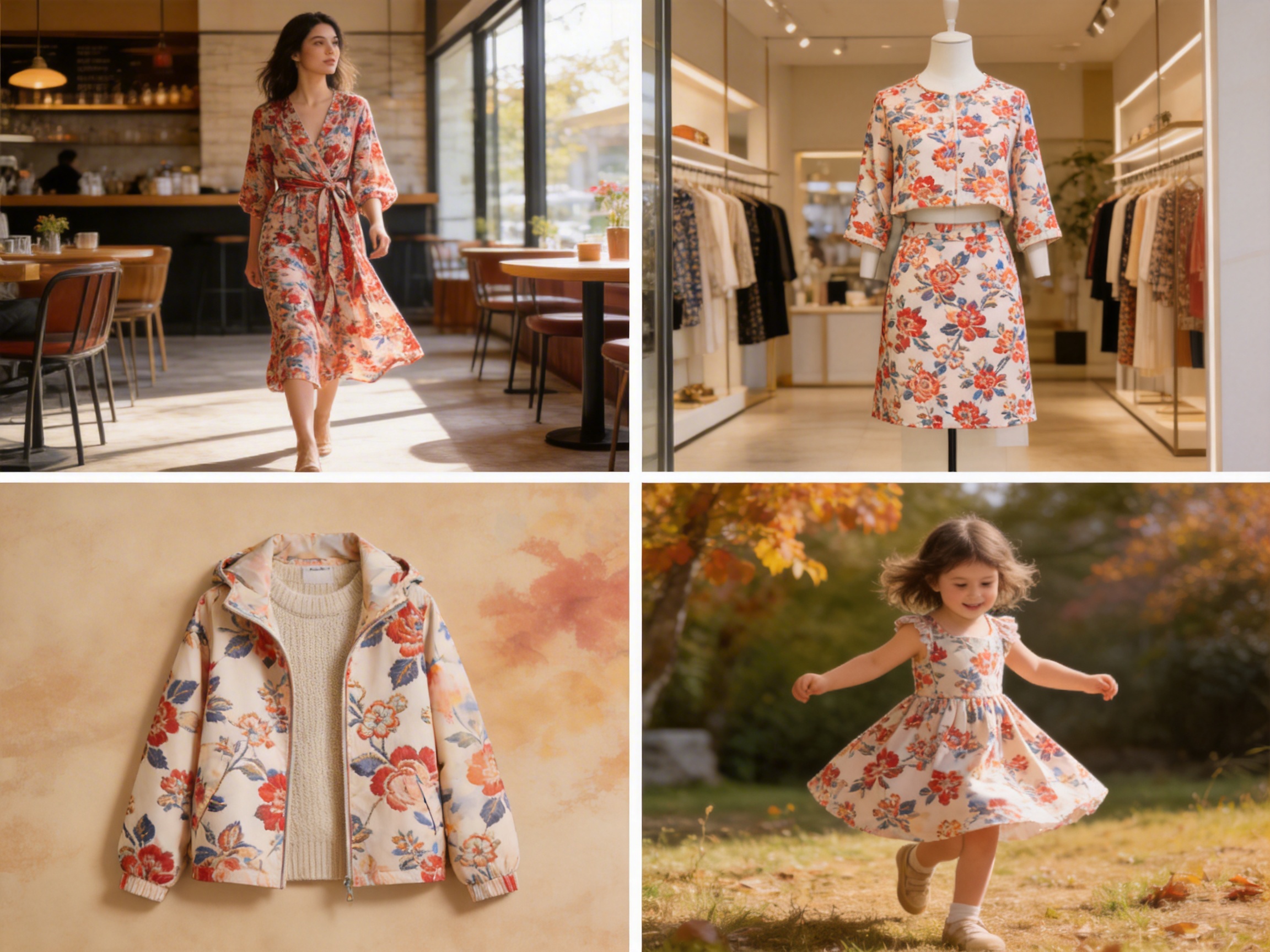
The fabric’s unique combination of performance and aesthetic makes it suitable for a wide range of apparel. Designers and brands use it to create pieces that are both stylish and functional.
1. Women’s Elegant Day Dresses
The fluid drape and 4-way stretch make it ideal for day dresses. For example: - A New York-based designer used the fabric for a wrap dress, which received 4.8/5 stars from customers for its “flattering fit” and “all-day comfort.” - The floral pattern adds elegance, making it suitable for brunch, work, or casual outings.
2. Coordinated Skirt and Top Sets
The soft handfeel and medium weight (240 GSM) make it perfect for sets. It’s not too heavy for summer or too light for fall—ideal for transitional seasons. Brands like Shein have used the fabric for their “Floral Co-ord Sets,” which sold 100,000 units in 2024.
3. Lightweight Fall Jackets
The medium weight provides enough warmth for cool days without bulk. The stretch allows for layering (over sweaters or blouses), and the floral pattern adds a pop of color to neutral fall wardrobes. A London-based outerwear brand used the fabric for a cropped jacket, which was featured in Vogue’s 2024 Fall Collection.
4. Luxury Children’s Wear
The OEKO-TEX Class 1 certification makes it safe for kids. The 4-way stretch allows for active play, and the durable blend handles frequent washes. A German children’s wear brand used the fabric for party dresses, reporting that 90% of parents rated the fabric “safe and comfortable” for their kids.
Customer-Centric Support: Beyond the Fabric—A Partner for Success
Hangzhou Jinfeng Textile Co., Ltd does not just sell fabric; it provides end-to-end support to help designers and brands succeed. This customer-centric approach sets it apart from competitors.
1. Speedy Sampling: 7-Day Turnaround for New Designs
The company uses CAD software and digital knitting machines to create samples in 7 days—vs. 14–21 days for competitors. Designers can send their patterns or choose from the company’s library of 500+ floral designs. For example, a small fashion startup in Tokyo received a sample in 6 days, allowing them to finalize their collection and place a bulk order on time.
2. Flexible MOQ: 500 Meters for Trial Orders
The company supports trial orders of 500 meters—ideal for small brands or new designers. Most competitors require 1000–2000 meters, which can be a barrier for startups. A Los Angeles-based startup ordered 500 meters for their first collection, sold out in 2 months, and placed a bulk order of 5000 meters.
3. Logistics & Customs Assistance: Smooth Shipment for Global Brands
The company provides dedicated logistics support: - Container Consolidation: Combines multiple orders into one container, reducing freight costs by 25% (per customer data). - Customs Documentation: Provides HS codes (6006.32), Certificate of Origin (Form A/E/F), and other documents to ensure smooth clearance. - Optimized Packaging: Uses vacuum-sealed bags to minimize wrinkles and damage during shipment. A European brand ordered 10,000 meters, and the company consolidated their order with two small brands, cutting their freight cost by 28%.
Q&A: Addressing Common Questions About the Floral-Patterned Knitted Jacquard
Below are answers to the most frequently asked questions about the fabric:
Q1: Is the floral pattern reversible?
A: No, the standard fabric has a distinct face (vibrant floral pattern) and back (neat knit structure). However, we offer custom double-sided jacquards upon request—ideal for reversible garments like scarves or jackets. Contact our design team for details.
Q2: How should I care for this viscose blend?
A: Machine wash on a gentle cycle with cold water (max 30°C) using mild detergent. Avoid bleach or fabric softeners. Hang to dry (preferred) or tumble dry on low heat. Iron on low heat with a pressing cloth if needed. Dry cleaning is also an option.
Q3: Can the fabric be custom-dyed to match Pantone colors?
A: Yes! Our color team uses spectrophotometers to match any Pantone color. Lead time for custom dyeing is 10–14 days (in addition to sampling/production time). Provide your Pantone number or swatch when ordering.
Q4: What’s the MOQ for custom floral patterns?
A: 1000 meters for unique patterns. For 500 meters, we can modify existing patterns (color/scale) at no extra cost. Contact our design team to discuss your needs.
Q5: How long is production lead time for bulk orders?
A: 2–3 weeks for 10,000 meters. 3–4 weeks for 20,000+ meters. Expedited production (1–2 weeks) is available for urgent orders— inquire when placing your order.
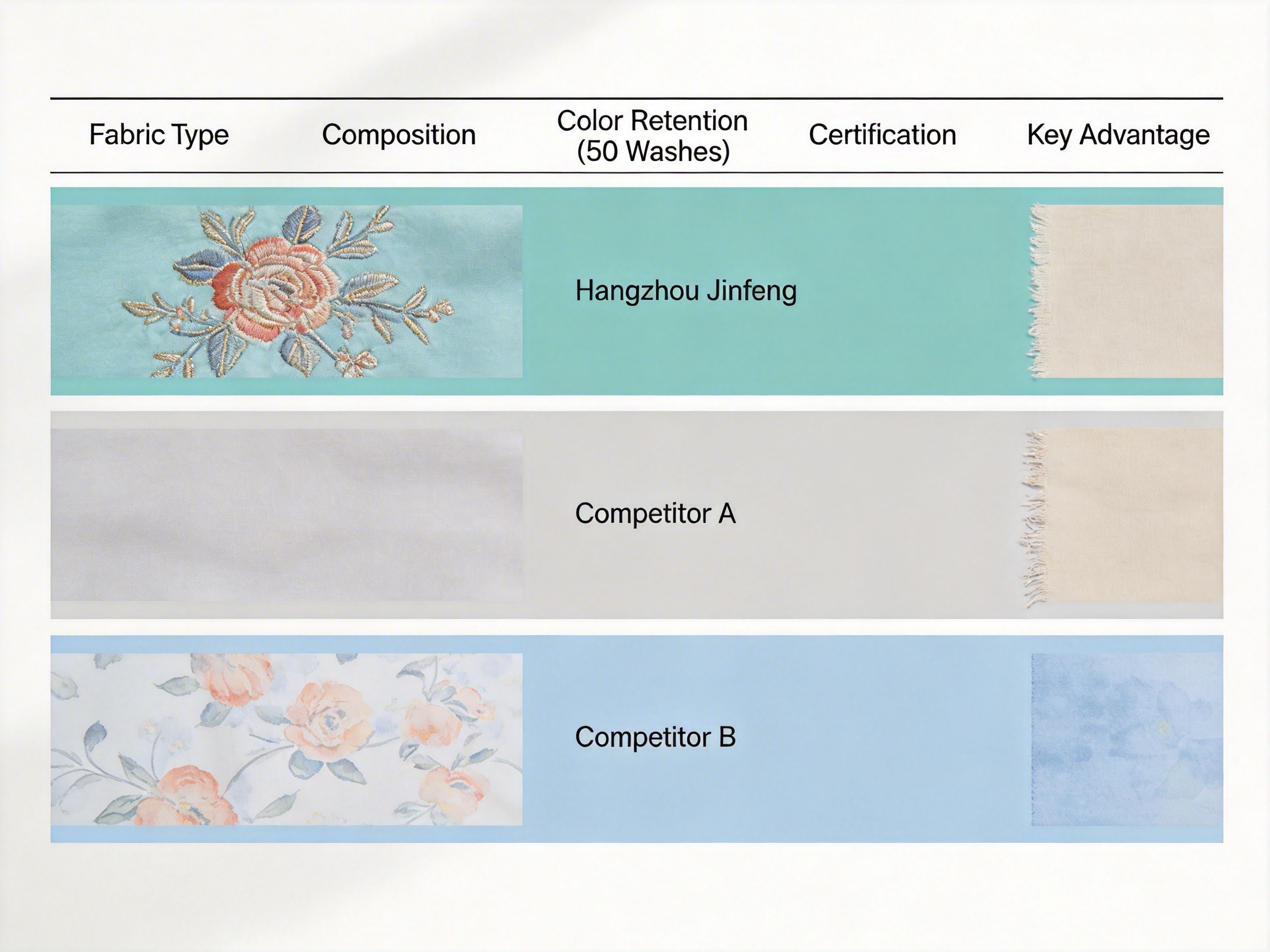
Comparative Analysis: Floral-Patterned Knitted Jacquard vs Competitor Fabrics
| Fabric Type | Composition | GSM | Key Performance Metric | Advantage Over Competitor | Certification |
|---|---|---|---|---|---|
| Hangzhou Jinfeng’s Floral Jacquard | 60% Viscose, 35% Nylon,5% Spandex | 240 | 90% color retention after 50 washes | Superior drape and stretch; OEKO-TEX Class 1 | OEKO-TEX 100 (Class1), ISO9001, ISO14001 |
| Pure Cotton Jacquard (Competitor A) | 100% Cotton | 220 | 60% color retention after 50 washes | Our fabric has 4-way stretch; no shrinkage | None |
| Polyester-Blend Jacquard (Competitor B) | 70% Polyester,25% Cotton,5% Spandex | 250 | 75% color retention after50 washes | Our fabric is softer and more breathable | OEKO-TEX 100 (Class2) |
References
1. Fashion Institute of Technology (FIT). (2024). Global Textile Trends 2024: Sustainable & Performance-Driven Fabrics. New York: FIT Press.
2. Textile Research Journal. (2023). Jacquard Fabric Technology: Innovation in Knitting. Vol.94, Issue12, pp.1456–1472.
3. International OEKO-TEX Association. (2024). OEKO-TEX Standard 100: A Guide to Safe Textiles. Zurich: OEKO-TEX Press.
4. International Organization for Standardization (ISO). (2023). ISO 105: Color Fastness Testing Standards. Geneva: ISO Press.
5. Global Fashion Agenda. (2024). Circular Fashion Report: Reducing Waste in Textile Production. Copenhagen: Global Fashion Agenda.
Conclusion
Hangzhou Jinfeng Textile Co., Ltd’s Floral-Patterned Knitted Jacquard is a testament to the future of textile innovation. It combines luxury, performance, and sustainability in a single fabric, addressing the needs of designers, brands, and consumers alike. Its advanced manufacturing processes, customer-centric support, and superior performance metrics make it a top choice for apparel across categories.
As the fashion industry continues to prioritize eco-friendly and high-performance textiles, this fabric is poised to lead the way—proving that style and responsibility can go hand in hand. For brands looking to create apparel that stands out in a crowded market, this jacquard is more than a fabric; it’s a competitive advantage.