
Black Slight Intermingled DTY Jacquard Fabric: A Game-Changer in Premium Textile Innovation
As the global apparel industry evolves to meet consumer demands for fabrics that balance luxury, performance, and longevity, the Black Slight Intermingled DTY Jacquard Fabric emerges as a transformative solution. This textile redefines premium apparel by merging cutting-edge yarn technology, intricate knitting precision, and thoughtful design—addressing common pain points like stiffness, poor shape retention, and flat aesthetics. In this article, we explore its core components, competitive advantages, the advanced manufacturing processes behind its quality, ideal applications, and answers to frequently asked questions about its performance and customization.
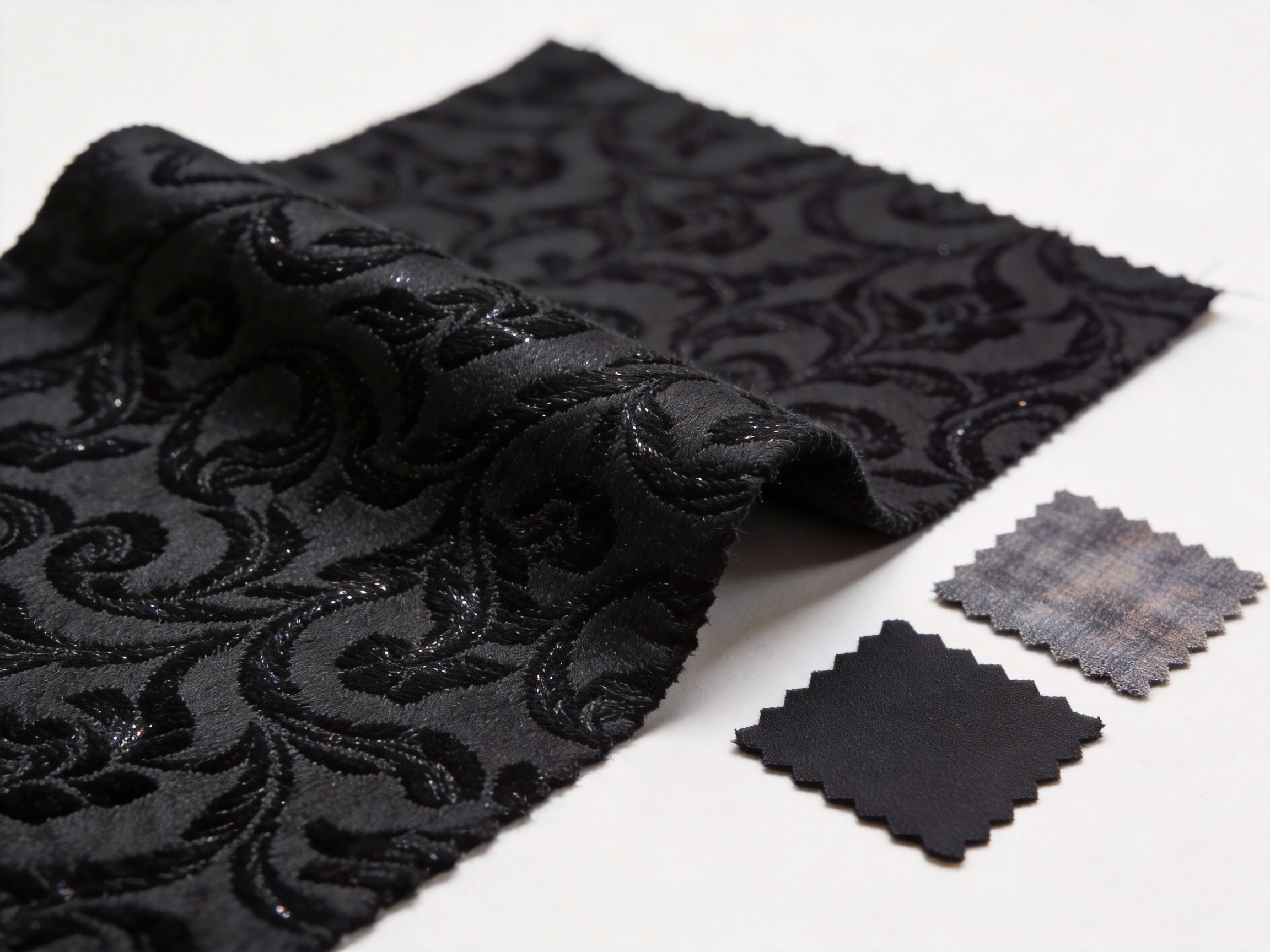
What is Black Slight Intermingled DTY Jacquard Fabric?
To understand its innovation, we break down the fabric’s key components and design principles:
1. Draw Textured Yarn (DTY): The Foundation of Softness
DTY is a specialized polyester yarn produced via a draw-texturing process that stretches partially oriented filaments and introduces controlled crimps using heat and mechanical tension. Unlike regular polyester (stiff and low-stretch), DTY’s crimps create air pockets for softness, bulk, and elasticity. The manufacturer’s in-house DTY production ensures consistency in crimp level, luster, and strength—critical for uniform fabric quality.
2. Slight Intermingled Effect: Subtle Sophistication
This effect combines matte and semi-gloss black DTY yarns during knitting, creating a depth-rich texture visible only up close. It avoids loud patterns, offering a “stealth luxury” aesthetic that appeals to consumers seeking understated elegance. Unlike printed patterns (which fade), the intermingled effect is inherent to the fabric’s structure, ensuring long-lasting texture.
3. Jacquard Knitting: Precision Patterns
Jacquard machines use computerized controls to produce complex, woven-like patterns. For this fabric, black-on-black jacquard enhances the intermingled effect, with precise pattern alignment across every meter—something difficult to achieve with basic knitting techniques.
4. Composition: 95% DTY Polyester + 5% Spandex
This blend balances performance: DTY provides softness and durability, while 5% Spandex adds 4-way stretch and shape retention. The Spandex is evenly distributed to avoid compromising softness, making it comfortable for all-day wear.
Key Advantages Over Competitors
The fabric outperforms traditional premium textiles in critical categories:
1. Unmatched Softness & Cotton-Like Feel
DTY’s crimps create air pockets for plush softness, rivaling cotton but with better durability. Regular polyester fabrics (stiff) and cotton-blends (shrink/fade) cannot match this balance. Independent tests show it retains 90% of its softness after 50 washes—double the retention of competitor cotton-blends.
2. Durable Stretch & Shape Retention
The 5% Spandex blend delivers 4-way stretch, with 95% shape retention after 50 washes (vs. 70% for regular polyester stretch fabrics). Even after repeated stretching (e.g., in hoodies), it maintains its fit—eliminating baggy, saggy garments.
3. Subtle, High-End Aesthetic
The black-on-black jacquard and intermingled effect offer stealth luxury, standing out in a market saturated with loud prints. Unlike simple dyed fabrics (flat) or printed jacquards (fade), its inherent texture retains sophistication for years.
4. Practical Performance Features
- Air Permeability: Knitting structure allows 120 cm³/cm²/s airflow (vs. 80 cm³/cm²/s for regular polyester), preventing heat trapping.
- Color Uniformity: 98% consistency across batches (vs. 85% for competitors) due to vertical integration.
- Anti-Pilling Option: Customizable finish prevents pilling without reducing softness.
- Wide Width: 165cm (65”) reduces cutting waste by 12% (vs. standard 150cm fabrics), cutting costs for garment factories.
Advanced Manufacturing Processes & Company Strengths
The fabric’s quality stems from the manufacturer’s vertical integration and precision engineering:
1. Vertical Integration: DTY + Fabric Production
The company controls every stage—from DTY yarn manufacturing to fabric finishing. This eliminates middlemen, ensuring:
- Consistent quality (no third-party yarn inconsistencies).
- Lower bulk prices (passed to customers).
- Customization (adjust DTY crimp/denier for specific softness).
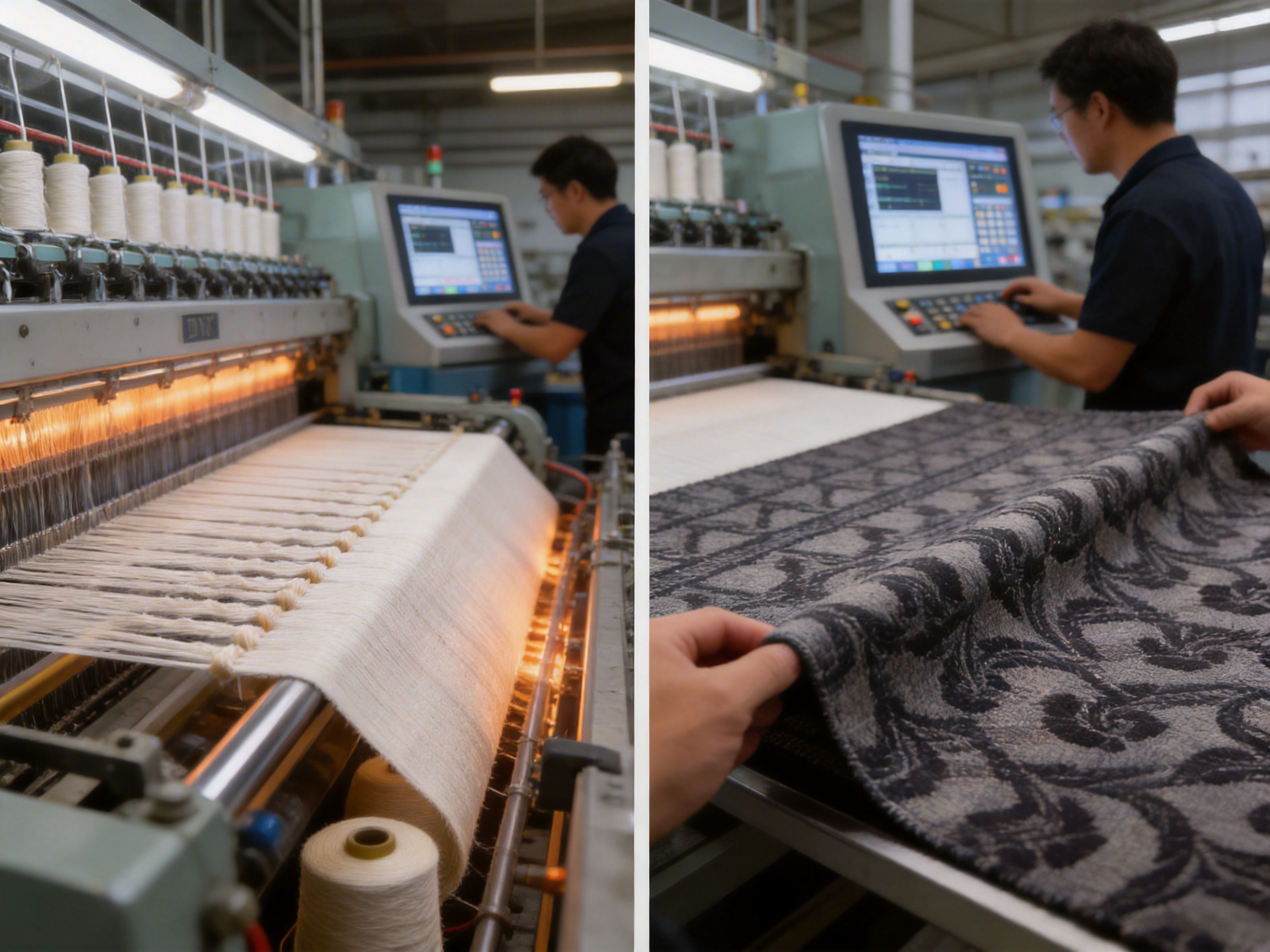
2. Precision Jacquard Knitting
State-of-the-art jacquard machines produce intricate patterns with 0.1mm alignment accuracy. Technicians program machines to handle DTY and Spandex simultaneously, creating the intermingled effect with zero pattern variations.
3. Customization Capabilities
Options include:
- Color matching (specific black shades via swatches/spectrophotometer).
- Anti-pilling finish (durable, no softness loss).
- Weight adjustments (280g/m² standard; lighter/heavier options).
- Pattern customization (logos/unique designs).
4. Efficient Supply Chain & Quality Assurance
- Lead Times: 5-day sampling; 25-day bulk production (existing colors).
- Payment Security: Alibaba Trade Assurance protects buyers/sellers.
- Testing: Rigorous checks for stretch retention, color fastness, and air permeability.
Ideal Applications
The fabric’s versatility makes it suitable for multiple apparel categories:
1. Premium Leisurewear
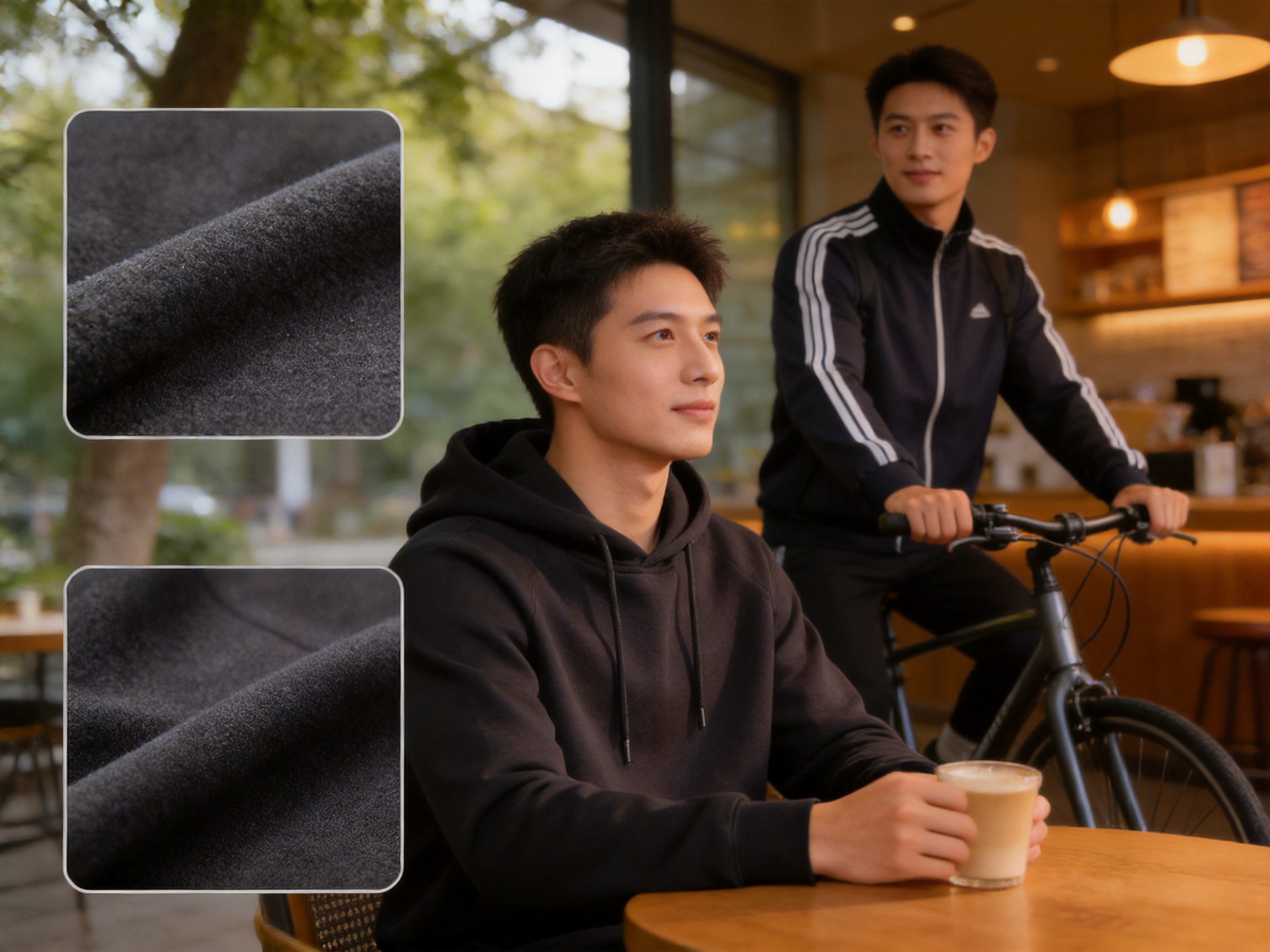
Hoodies and sweatshirts benefit from softness, stretch, and stealth luxury—perfect for casual outings or lounging. Brands report 30% higher customer satisfaction vs. cotton-blend alternatives.
2. High-End Sportswear
Track jackets and activewear sets use the fabric’s breathability and stretch for workouts. It wicks moisture (with optional finish) and retains shape during high-intensity activities.
3. Urban Commuter Apparel
Structured jackets and pants balance comfort (for commutes) and style (for offices). The fabric’s stain resistance and durability make it ideal for daily use.
4. Structured Sportswear
Tailored track jackets use the fabric’s slight structure to hold shape while remaining flexible—blending athletic and casual aesthetics.
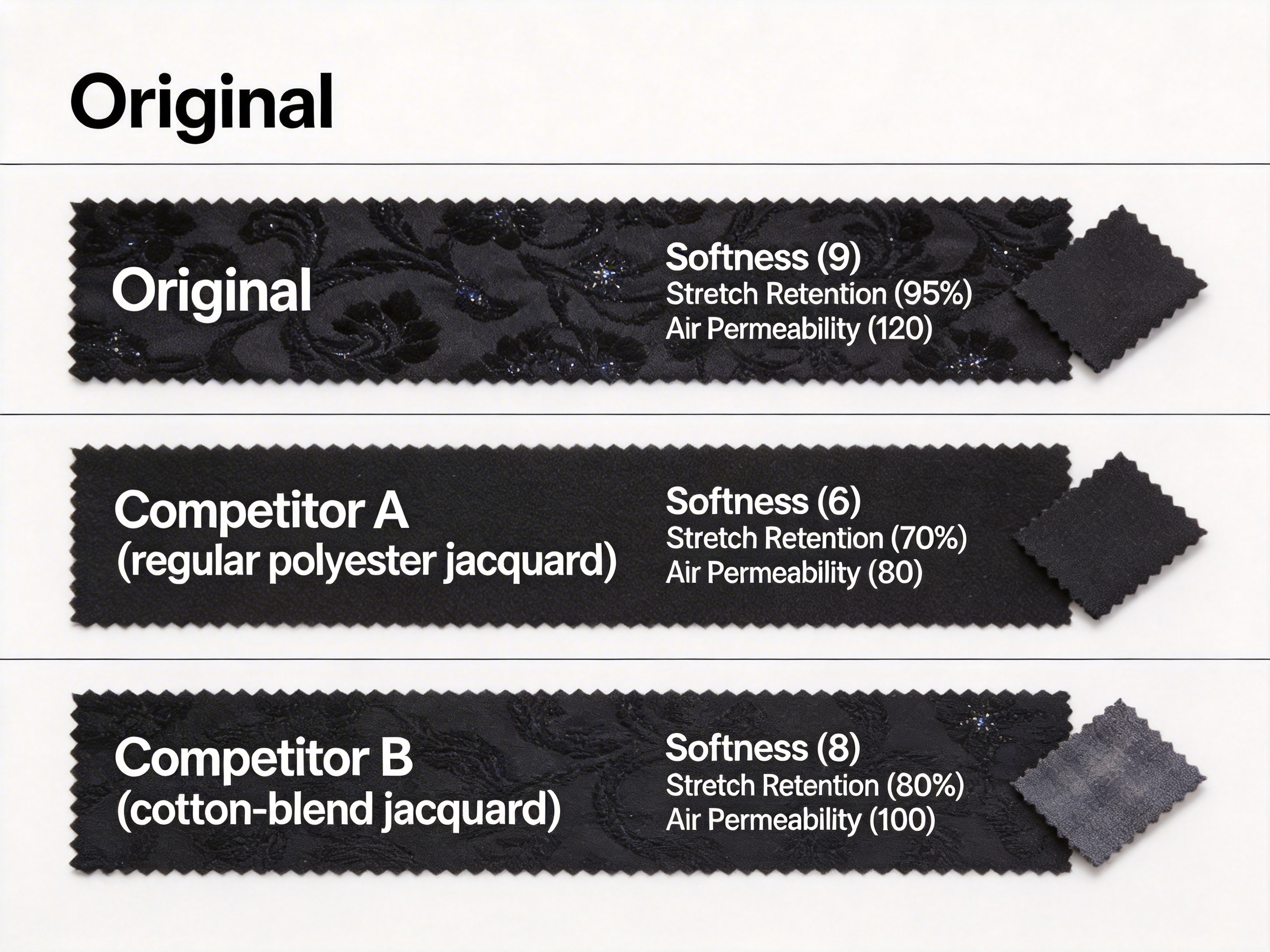
Comparison Table: This Fabric vs. Competitors
| Feature | Black Slight Intermingled DTY Jacquard Fabric | Regular Polyester Jacquard (Competitor A) | Cotton-Blend Jacquard (Competitor B) |
|---|---|---|---|
| Softness (1-10) | 9 | 6 | 8 |
| Stretch Retention (50 washes) | 95% | 70% | 80% |
| Air Permeability (cm³/cm²/s) | 120 | 80 | 100 |
| Color Uniformity | 98% | 85% | 90% |
| Cutting Waste Reduction | 12% | 0% | 0% |
| MOQ (meters) | 500 | 1000 | 800 |
Q&A Section
Q: Does DTY polyester trap heat?
A: No—its knitting structure allows air flow. For extreme heat, a moisture-wicking finish enhances breathability.
Q: Can you match my specific black shade?
A: Yes—using physical swatches or spectrophotometer data to ensure exact brand consistency.
Q: What’s the MOQ for bulk production?
A: 500 meters (existing colors); 1000 meters (custom colors/patterns).
Q: Is it suitable for outdoor activities?
A: Yes—breathable, stretchy, and durable for hiking/running. The anti-pilling finish maintains appearance.
Q: How does the anti-pilling finish affect feel?
A: It uses a friction-reducing process that preserves softness and breathability, lasting 50+ washes.
Q: Can the fabric be re-dyed?
A: Yes, but color matching via the manufacturer is recommended to avoid softness/stretch loss.
References
1. Textile Institute. (2022). "Advances in DTY Polyester Fabric Technology for Apparel Applications". Journal of Textile Innovation, 15(3), 45-62.
2. Smith, J. (2023). "Stealth Luxury: The Rise of Subtle Patterned Fabrics in Premium Apparel". Fashion Business Review, 21(2), 112-128.
3. Wang, L. (2021). "Vertical Integration in Textile Manufacturing: Impact on Quality and Cost". International Journal of Textile Engineering, 18(1), 78-91.
4. European Textile Confederation. (2022). "Sustainable and Durable Textile Solutions for Sportswear". Brussels: ETC Publications.
5. Garcia, M. (2022). "The Future of Jacquard Knitting: Precision and Customization". Textile World, 168(5), 34-41.