
Black Slight Intermingled DTY: Controlled Texture, Reliable Performance, and Versatile Fabric Applications
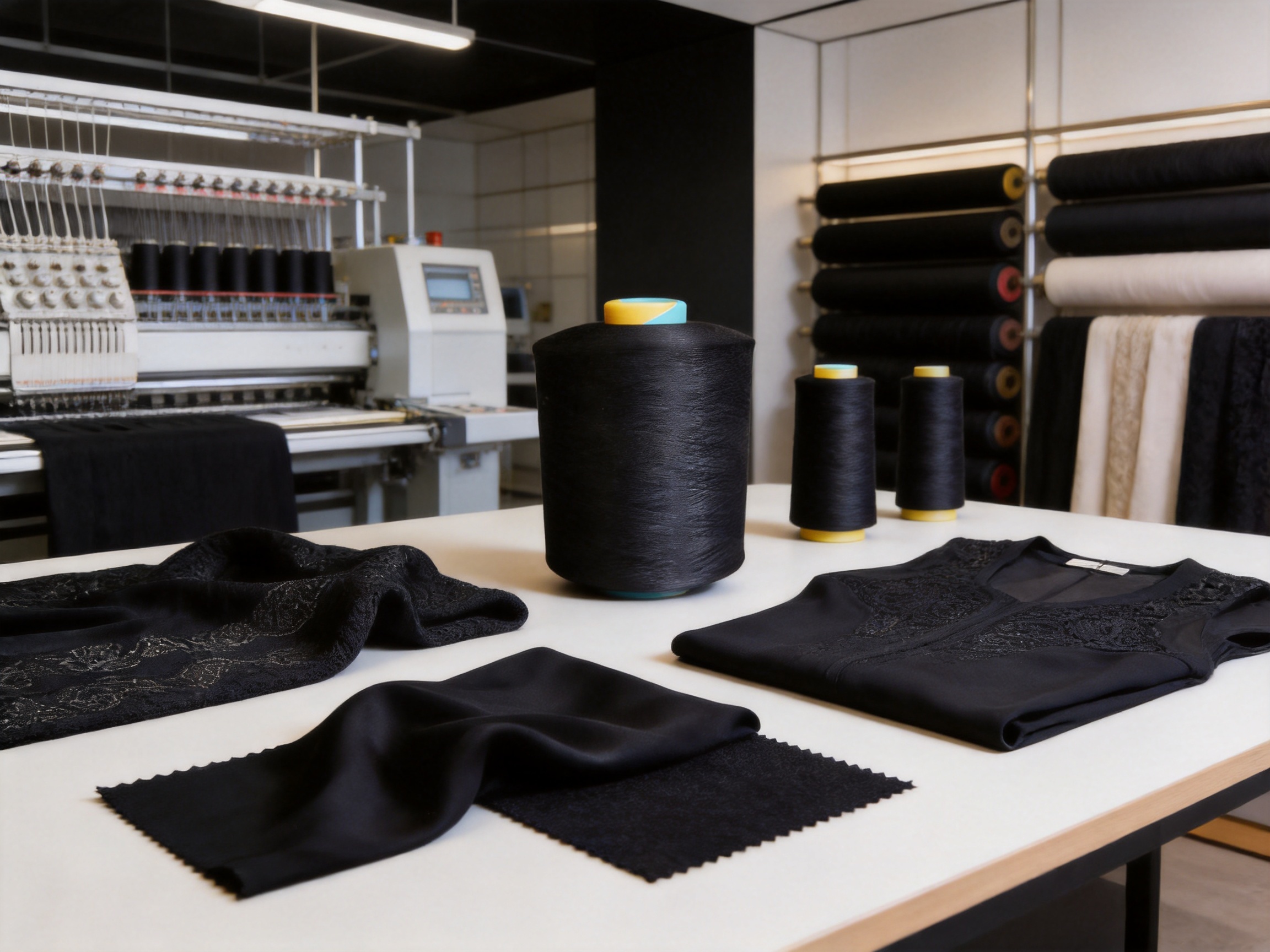
Black Slight Intermingled Draw Textured Yarn, commonly known as Black Slight Intermingled DTY, is a specialized polyester yarn developed for textile applications that require a balanced combination of softness, visual uniformity, elasticity, strength, and controlled surface character. It is designed for manufacturers producing knitted jacquard fabrics, polyester rayon fabrics, NTR knitted fabrics, NR knitted fabrics, fashion fabrics, apparel materials, and other blended textile products.
Unlike ordinary smooth filament yarn, textured yarn has been processed to introduce additional bulk, resilience, and a more natural textile appearance. The texturing process changes the physical arrangement of the filaments while maintaining the advantages of polyester, including dimensional stability, resistance to abrasion, dependable dyeing performance, and relatively easy care. The addition of slight intermingling gives the yarn a controlled level of cohesion between individual filaments. This helps the yarn run more consistently during knitting and weaving while preserving a clean and refined appearance.
The black color provides an especially practical foundation for modern textile production. Black yarn can be used as a finished color for garments and home textiles, or it can be incorporated into blends, jacquard structures, decorative patterns, and fabrics that require depth and visual contrast. Its strong color presence supports a wide range of product designs, from understated basic fabrics to sophisticated fashion textiles.
For textile producers, the value of this product is not based only on its appearance. The yarn must also offer stable processing behavior, reliable network control, suitable filament cohesion, and compatibility with downstream finishing. Black Slight Intermingled DTY is therefore best understood as a functional production material rather than simply a colored yarn. Its performance depends on the interaction between polyester raw material, draw texturing conditions, air pressure, machine speed, intermingling intensity, winding quality, and subsequent fabric processing.
Understanding Black Slight Intermingled DTY
DTY stands for Drawn Textured Yarn. It is generally produced from partially oriented polyester yarn that is drawn and textured to create a more voluminous and flexible filament structure. During texturing, the filaments are stretched, heated, and mechanically or pneumatically rearranged. This process improves the yarn’s bulk and gives it a softer hand than a completely flat filament yarn.
Intermingling is an additional process used to create points of temporary filament entanglement along the yarn length. These points help the filaments remain together during transportation, knitting, weaving, and other operations. A slight intermingled yarn contains a controlled and relatively light number of network points per meter. The result is a useful compromise: enough cohesion for stable processing, but not so much intermingling that the yarn develops excessive hard spots or an undesirable irregular surface.
The term “slight” is important. Intermingling can be produced at different levels, including light, medium, and heavy network conditions. The number of network points per meter affects the yarn’s behavior and can influence the final fabric appearance. A light or slight network is often selected when manufacturers want smooth feeding, a softer handle, and a more even visual effect. A heavier network creates more pronounced network spots, which may become visible on the surface of the fabric after knitting or weaving.
In Black Slight Intermingled DTY, the dark shade adds another performance consideration. Color consistency, package uniformity, and surface regularity are particularly important because black fabrics can reveal streaks, uneven tension, broken filaments, or irregular network spots more clearly than some lighter colors. Controlled production is therefore essential to achieving an attractive and consistent finished material.
How the Intermingling Level Influences Fabric Quality
The network level of a textured yarn is not an isolated technical feature. It can influence fabric formation, fabric appearance, production efficiency, and the final hand feel. The appropriate intermingling level depends on the intended fabric construction, machine gauge, knitting speed, blend composition, and finishing method.
When the number of networks per meter is relatively low, the yarn may have a softer and more open filament character. This can be beneficial for fabrics that need a smooth hand and a delicate surface. However, insufficient intermingling may reduce filament cohesion and increase the possibility of filament separation during processing. The yarn must therefore be controlled carefully so that it is not too loose for the intended application.
A medium level of intermingling provides a greater degree of filament integration. This can improve yarn stability and make the material suitable for a wider range of knitting or weaving operations. Medium network yarns may be selected for fabrics that need a balance between softness, processing reliability, and surface definition.
Heavy intermingling creates more obvious network spots along the yarn. These network points can be useful in applications where stronger filament cohesion is required, but they may also produce visible spots or irregular details on the surface of a fine or lightweight fabric. If the product specification calls for a refined black surface, excessive intermingling may not be the preferred choice.
Black Slight Intermingled DTY is positioned for applications where controlled cohesion is needed without creating a heavily marked surface. This makes it particularly suitable for fabrics where appearance, drape, and smoothness are important. The selected network level can be adjusted according to the requirements of the customer and the fabric construction.
Network quantity per meter is controlled primarily through air pressure and is also affected by the operating speed of the texturing machine. These variables must be coordinated rather than adjusted independently. Higher or lower air pressure can change the intensity and distribution of intermingling, while machine speed affects the time available for the air-jet interaction and the overall formation of the yarn. Stable settings and consistent monitoring are essential for obtaining a repeatable product.
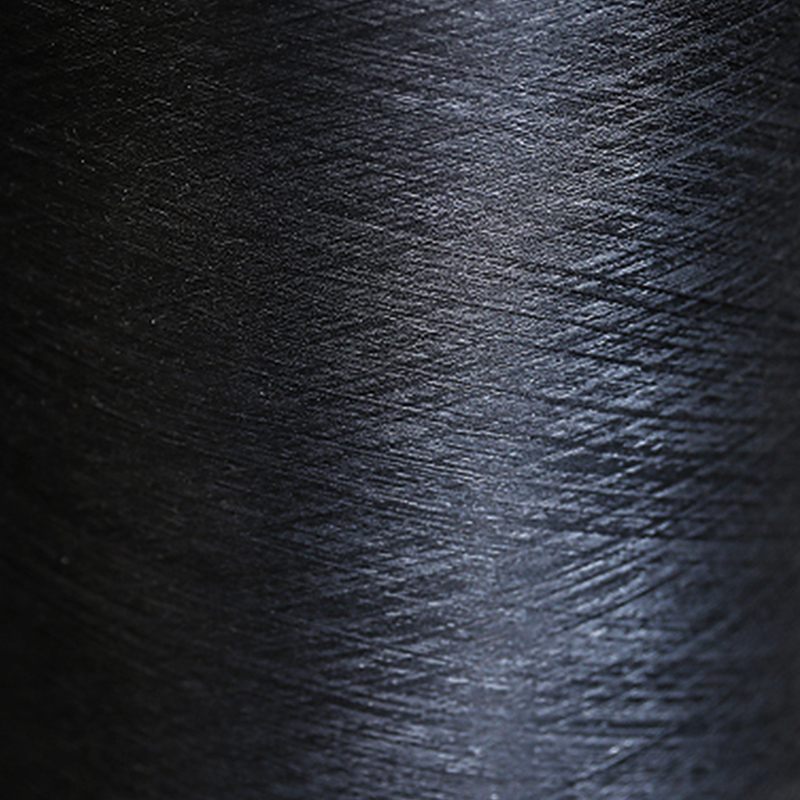
Black Slight Intermingled DTY
Key Advantages of Black Slight Intermingled DTY
Controlled Filament Cohesion
One of the main advantages of slight intermingling is that it helps individual filaments remain together during downstream processing. This can support more stable yarn feeding and reduce the tendency of filaments to separate. For knitting mills, stable cohesion can make the yarn easier to handle and may contribute to more consistent loop formation.
Controlled cohesion is especially useful when the yarn is used in blended fabrics. Polyester may be combined with rayon, cotton, spandex, or other fibers, and each component may respond differently to tension and friction. A well-controlled intermingled polyester yarn can provide a stable technical foundation within the blend while allowing the other fibers to contribute their own properties.
Balanced Surface Appearance
Black Slight Intermingled DTY offers a balanced surface effect. The yarn is not completely flat, so it can help create a fuller and more natural-looking fabric. At the same time, its light network level avoids the strongly marked spots that may occur when a heavy mesh is used in a fine or smooth fabric.
This balance is valuable for apparel manufacturers seeking a clean black surface. It supports fabrics that need visual depth without excessive irregularity. The result can be especially attractive in knitted structures, jacquard patterns, and fabrics that combine different yarns or stitch densities.
Softness and Textile Bulk
Draw texturing gives polyester filament yarn greater bulk and a more textile-like hand. Compared with a flat filament yarn, textured yarn can feel softer and fuller. It may also provide improved coverage in the fabric, helping manufacturers achieve a desirable appearance with an appropriate yarn count and fabric construction.
Softness is important for clothing, lining fabrics, fashion knitwear, casualwear, and other products that come into direct contact with the skin. While the final hand feel depends on many factors, including blending, dyeing, finishing, and fabric weight, textured polyester provides a useful starting point for creating comfortable materials.
Dimensional Stability
Polyester is recognized for its useful dimensional stability. Properly processed DTY can help fabrics retain their shape during normal use and care. This is an advantage in garments and textiles that must maintain a consistent appearance after repeated handling, folding, or washing.
Dimensional stability is also important in manufacturing. Fabrics that respond predictably during heat setting, dyeing, and finishing are easier to develop and reproduce. The yarn does not eliminate the need for process control, but it provides a dependable polyester base for further fabric engineering.
Resistance to Abrasion and Everyday Wear
Polyester yarn is widely used in applications that require resistance to everyday friction. This can be beneficial for apparel, uniforms, upholstery components, decorative textiles, and other products exposed to repeated movement or handling. The textured structure adds bulk and flexibility while retaining the inherent durability associated with polyester filament.
Compared with some more delicate fibers, polyester can offer a practical balance between appearance and service life. When combined with suitable fabric construction and finishing, Black Slight Intermingled DTY can support products designed for regular use.
Compatibility with Blending
The product is suitable for use in blended fabric development. Polyester can be combined with rayon to create fabrics that balance synthetic durability with a softer, more natural visual character. It may also be used with cotton, spandex, or other fibers, depending on the desired stretch, hand feel, moisture behavior, and appearance.
In a polyester-rayon blend, the polyester component can contribute strength, shape retention, and resistance to abrasion, while rayon may add softness and a distinctive drape. The blend ratio, yarn count, knitting structure, dyeing method, and finishing conditions must be selected carefully to achieve the intended result.
Strong Design Potential in Black
Black is one of the most versatile textile colors. It is suitable for basic garments, formalwear, sportswear, fashion knitwear, accessories, home textiles, and industrial or institutional products. Black also creates strong contrast when combined with bright colors, metallic yarns, mélange effects, jacquard patterns, and different surface textures.
A black DTY product can therefore serve both high-volume basic fabric production and more specialized design work. It can be used alone or as part of a multicolor construction. Its visual depth may also help conceal minor surface shadows and support a premium appearance when the yarn is processed consistently.
Advanced Manufacturing Control
The quality of slight intermingled DTY depends on a series of connected manufacturing stages. These stages include raw material preparation, drawing, texturing, intermingling, winding, inspection, packaging, and, where applicable, post-processing. Each stage affects the final yarn’s stability and performance.
Raw Material and Process Preparation
Stable production begins with suitable polyester feedstock and carefully prepared equipment. The feed yarn must be compatible with the selected texturing conditions. Machine cleanliness, heater condition, air system performance, guide alignment, and winding components all influence the consistency of the finished yarn.
Before production begins, process parameters should be established according to the intended product specification. These can include yarn speed, draw ratio, heater temperature, air pressure, intermingling conditions, winding tension, and package density. A controlled setup reduces variation and allows the production team to compare results against a defined standard.
Drawing and Texturing
Drawing changes the orientation and physical properties of the polyester filaments. The drawing ratio must be selected carefully because excessive or insufficient drawing can influence strength, elongation, crimp development, and downstream processability. The texturing stage then introduces bulk and a more flexible filament arrangement.
Uniform heating is important during texturing. If the thermal conditions fluctuate, the yarn may develop variations in bulk, crimp, or tension. Consistent temperature control and stable yarn movement help create a more uniform structure along the package.
Texturing machine speed is another important factor. The production speed affects the interaction between the yarn and the texturing components, including the air-jet system. It can also affect the number of network points formed per meter. For this reason, machine speed must be controlled alongside air pressure rather than treated as a separate production variable.
Air-Jet Intermingling
Air pressure is the primary control used to establish the degree of intermingling. During the process, compressed air creates turbulence that brings filaments together at intervals. The intensity of this turbulence affects the number and strength of network points.
For a slight intermingled product, the air pressure must be set to create sufficient filament cohesion without producing an excessive network. Small changes in pressure can influence the final yarn, especially when combined with changes in machine speed, yarn tension, or air quality. Consistent compressed air supply and accurate pressure regulation are therefore important elements of process control.
The production team can evaluate the network effect through regular inspection and testing. The number of network points per meter, the visual distribution of the network, and the yarn’s behavior during fabric formation all provide useful information. If the mesh becomes too heavy, network spots may become visible on the fabric surface. If the mesh is too light, filament separation or unstable feeding may occur.
Winding and Package Formation
After texturing and intermingling, the yarn is wound into packages suitable for storage and downstream use. Uniform winding tension helps prevent package deformation, yarn slippage, and feeding problems. Package density should be appropriate for the customer’s equipment and the intended knitting or weaving operation.
Good package formation is a practical advantage because it supports efficient transportation, storage, and unwinding. A yarn with excellent intrinsic properties may still create problems if the package is poorly formed. For this reason, package appearance and unwinding behavior should be considered part of the overall product quality.
Inspection and Quality Assurance
Quality assurance for Black Slight Intermingled DTY may include visual inspection, package inspection, yarn count verification, strength testing, elongation testing, intermingling evaluation, color assessment, and downstream trial production. The specific testing program can be adjusted according to the customer’s requirements and final application.
Visual inspection can identify uneven color, abnormal network spots, broken filaments, oil marks, package damage, or other surface issues. Physical testing helps verify that the yarn meets the expected performance range. A knitting trial can provide additional information about feeding stability, fabric appearance, loop formation, and the presence of streaks or irregularities.
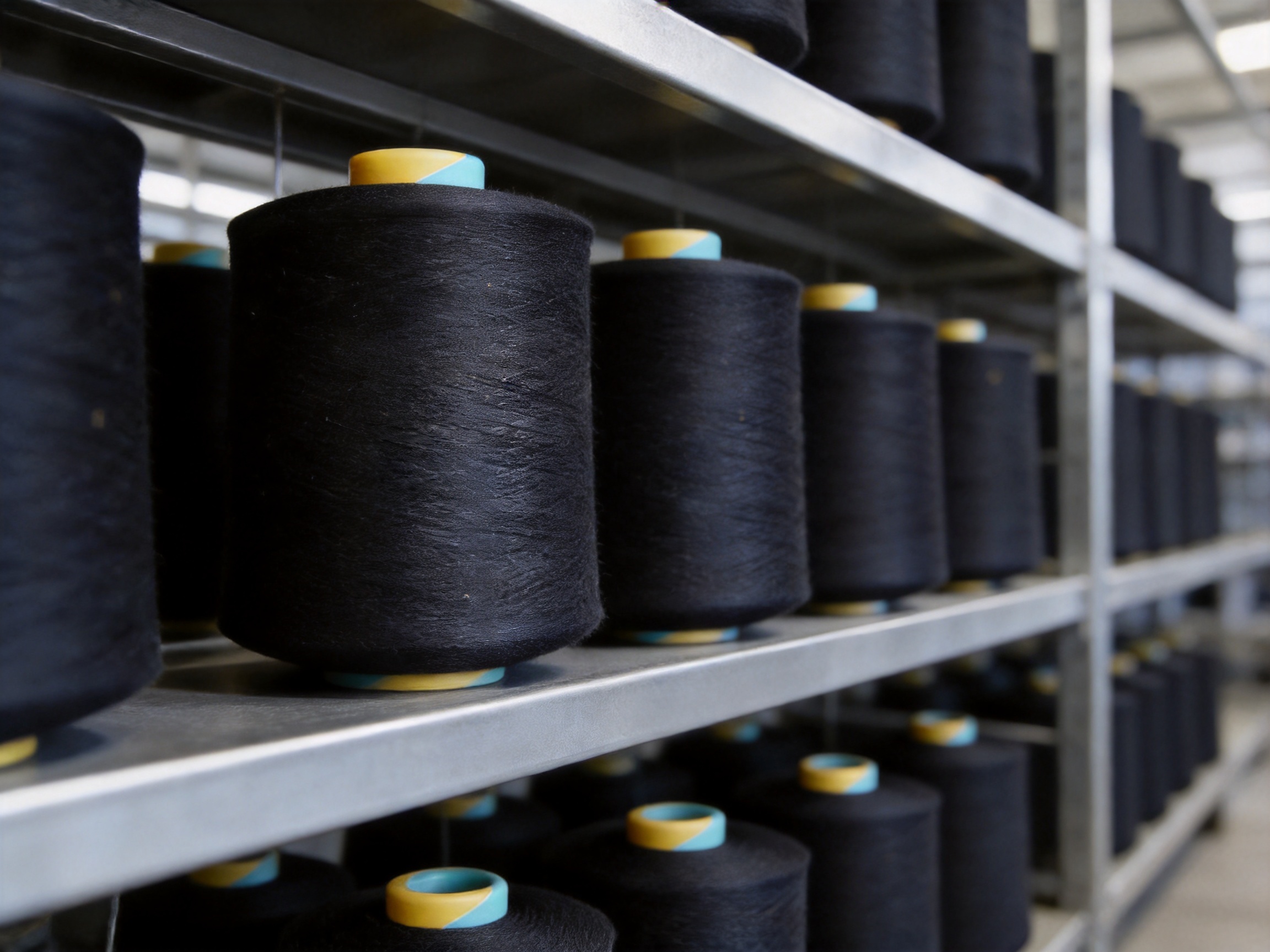
Advantages Compared with Ordinary Smooth Polyester Filament Yarn
Ordinary smooth polyester filament yarn has a relatively flat surface and limited bulk. It can be useful for applications that require a clean filament effect, but it may not provide the same softness, coverage, or natural textile appearance as a textured yarn. Black Slight Intermingled DTY offers a more developed structure for fabrics that need body and surface character.
The textured form can help create a fuller fabric with a softer touch. It may also improve the visual depth of a black material by distributing light differently across the textured surface. This can make the fabric look less flat while preserving a clean overall appearance.
Another difference is filament cohesion. Smooth filament yarn may require other process controls to maintain filament alignment and stability. Slight intermingling creates controlled connection points between filaments, which can support more reliable handling during knitting and weaving.
Compared with heavily intermingled yarn, the slight version is better suited to applications where a refined surface is important. Heavy mesh can create prominent network spots, especially in lightweight or closely knitted fabrics. A slight network reduces this risk while maintaining useful yarn cohesion.
Compared with untextured or poorly controlled yarn, Black Slight Intermingled DTY can provide more predictable fabric development. The controlled production process allows manufacturers to select a yarn with a defined level of bulk, network intensity, and color appearance instead of relying on an inconsistent material.
Suitability for Knitted Jacquard Fabrics
Knitted jacquard fabrics use changes in stitch formation and yarn placement to create patterns, textures, and color effects. These fabrics often require yarns that feed smoothly and maintain a stable appearance across different knitted structures.
Black Slight Intermingled DTY can be used as a primary yarn or as a contrasting component in knitted jacquard designs. Its black shade can define outlines, create background areas, or add depth to a pattern. When combined with other colors or fiber types, it can strengthen visual contrast and support complex design arrangements.
The slight intermingling level is useful in jacquard production because excessive network spots may interrupt the clarity of a fine pattern. A controlled yarn surface allows the knitted structure to remain the main visual feature. At the same time, the added cohesion can help the yarn pass through the knitting system with greater stability.
Fabric designers should still evaluate the yarn on the actual knitting machine and at the intended speed. Jacquard structures can be sensitive to tension differences, stitch density, and yarn exchange. Trial production helps confirm the best machine settings and fabric construction.
Suitability for Polyester Rayon Fabric
Polyester rayon fabric is valued for its combination of practical performance and comfortable appearance. Polyester can contribute durability, shape retention, and easy-care characteristics, while rayon can provide softness, drape, and a more natural visual impression.
Black Slight Intermingled DTY is suitable as the polyester component in this type of blend. The textured polyester can contribute bulk and resilience, helping the finished fabric avoid an overly flat appearance. It can also provide a stable foundation for blending and knitting or weaving.
Blend development requires careful control of the ratio between polyester and rayon. A higher polyester proportion may increase durability and dimensional stability, while a higher rayon proportion may enhance softness and drape. The best balance depends on the end use, fabric weight, customer expectations, and care requirements.
Dyeing and finishing must also be considered. Polyester and rayon may require different dyeing conditions, and the selected process should achieve an even black appearance without damaging the yarn or creating excessive shrinkage. Heat setting, softening, compacting, brushing, and other finishing operations can further influence the final hand feel and dimensions.
Suitability for NTR and NR Knitted Fabrics
NTR and NR knitted fabric categories can include a range of constructions developed for apparel, fashion materials, and other textile products. The appropriate yarn depends on the required weight, elasticity, smoothness, surface effect, and recovery.
Black Slight Intermingled DTY can be selected for knitted fabrics that require a dark base color, moderate bulk, and stable filament cohesion. It can be used in single-yarn constructions, blended structures, or designs that include spandex for additional stretch.
When used with spandex, the polyester DTY can help create a comfortable and resilient fabric suitable for fitted garments, sportswear, leggings, fashion tops, and other stretch products. The knitting parameters and finishing conditions must be adjusted to control fabric recovery and prevent excessive distortion.
For non-stretch knitted constructions, the yarn can contribute a fuller handle and a stable surface. Its actual behavior depends on yarn specification, gauge, stitch length, fabric density, and finishing. Sampling remains important because the same yarn can produce different results in different knitted structures.
Applications Across Textile Markets
Apparel
Black Slight Intermingled DTY is suitable for many apparel categories, including dresses, skirts, jackets, trousers, tops, casualwear, uniforms, and fashion knitwear. Its black color supports both seasonal and year-round products, while its textured structure can provide a comfortable and visually appealing fabric base.
Sportswear and Stretch Garments
When blended with spandex or used in suitable knitted constructions, the yarn can contribute to sportswear and active garments. The polyester component supports durability and shape retention, while the textured structure may improve coverage and comfort. The final performance depends on the complete fiber blend and fabric design.
Home Textiles
The yarn may also be used in selected home textile products, including decorative fabrics, cushion covers, lightweight upholstery materials, curtains, and other knitted or woven items. Black is useful for contemporary interior styles and can be combined with textured patterns or contrasting yarns.
Fashion and Decorative Fabrics
Designers can use the yarn to create black jacquards, textured surfaces, tonal patterns, and fabrics with subtle depth. It can serve as a neutral foundation for colorful effects or as the principal material in minimalist designs.
Blended and Engineered Fabrics
Because polyester DTY can be combined with rayon, cotton, spandex, and other fibers, it is suitable for engineered fabrics developed around specific performance targets. These may include improved drape, stretch, coverage, abrasion resistance, recovery, or visual texture.
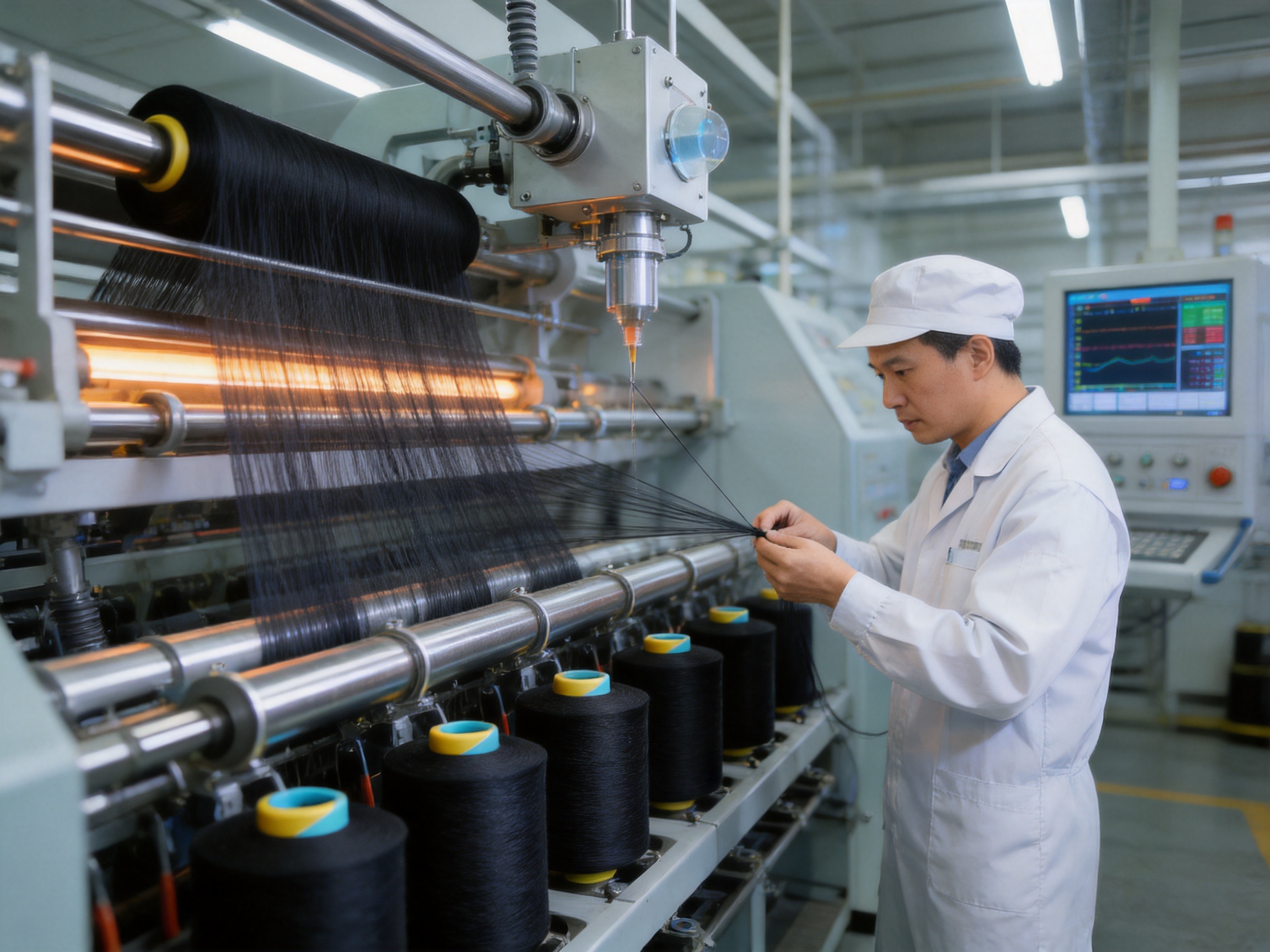
Manufacturing Strengths of the Supplier
Hangzhou Jinfeng Textile Co., Ltd. operates as an integrated textile enterprise involved in production, processing, post-dyeing, finishing, research and development, and sales. This integrated structure is valuable because yarn production and fabric development can be considered together rather than treated as completely separate activities.
The company is located in Jingjiang Street Industrial Park, Xiaoshan District, Hangzhou City, Zhejiang Province. Its facilities cover approximately 32.6 acres, with a plant area of about 18,000 square meters. This provides a substantial base for organized production, storage, processing, quality management, and customer service.
The company’s product range includes DTY polyester yarn and blended fabrics such as polyester, spandex, and related textile materials. Its involvement in both yarn and fabric production supports practical knowledge of downstream applications. This can help the supplier understand how yarn specifications influence knitting, dyeing, finishing, and final fabric quality.
Another strength is the ability to provide post-dyeing and finishing services. Textile customers often require more than a basic yarn package. They may need assistance with color development, fabric hand feel, dimensional control, surface appearance, or final finishing. A supplier with production and finishing capabilities can offer a more coordinated approach to product development.
The company also operates as a self-managed export enterprise integrating research and development, manufacturing, and sales. This structure can support communication with international customers and simplify coordination across different stages of an order. Clear communication is particularly important for products such as slight intermingled DTY, where details about network level, color, package format, and intended fabric application must be understood accurately.
Its stated business principle emphasizes cooperation, mutual benefit, and service to customers at home and abroad. For buyers, this approach can be reflected in product consultation, sample development, specification confirmation, production planning, and after-sales communication.
Why Process Integration Matters to Buyers
Purchasing yarn from an integrated textile supplier can reduce the distance between product development and final fabric production. When a customer describes a target fabric, the supplier can consider the relationship between yarn type, knitting structure, blend ratio, dyeing method, and finishing process.
This is particularly useful when the customer is developing a new fabric rather than purchasing a standard commodity. A new product may require adjustments to yarn count, intermingling intensity, color, blending method, or package size. Technical communication with a supplier that understands both yarn and fabric production can make the development process more efficient.
Integration can also support better troubleshooting. If a customer observes network spots, streaks, feeding instability, excessive hairiness, uneven color, or unexpected fabric shrinkage, the cause may be related to yarn production, machine settings, fabric construction, or finishing. A supplier with broader textile experience can help identify possible causes more effectively.
For larger buyers, integrated production may also support more dependable supply planning. Coordinated facilities and established processing procedures can help manage repeat orders, color consistency, and delivery schedules. The exact service level depends on the confirmed contract and specification, but manufacturing integration provides a strong foundation.
Recommended Purchasing and Specification Considerations
When purchasing Black Slight Intermingled DTY, buyers should define the intended application as clearly as possible. A yarn used for fine knitted jacquard fabric may require a different specification from one used for heavier blended fabric or stretch apparel.
Important points for confirmation may include yarn count, filament number, color standard, intermingling level, network points per meter, elongation, strength, package weight, winding format, oiling condition, and packaging requirements. Customers should also provide information about the knitting or weaving machine, fabric structure, target weight, and finishing process where available.
Color should be confirmed using an agreed physical standard or recognized color reference. Black can vary in depth, undertone, and surface appearance. The customer should specify whether the desired result is a deep neutral black, a blue-black, a soft black, or another visual effect.
Intermingling should be discussed in relation to fabric appearance. If the buyer requires a smooth and refined surface, a slight network may be appropriate. If the application needs stronger filament cohesion, a medium or heavier network may be considered. The right selection should be based on actual trials rather than assumptions alone.
Sampling is recommended before mass production. A sample can be knitted or woven under production-like conditions and then dyed or finished according to the intended process. This allows the buyer to evaluate fabric appearance, hand feel, dimensional stability, color, network visibility, and machine performance.
Storage and Handling Recommendations
Textured yarn should be stored in a clean, dry, and well-ventilated environment. Packages should remain protected from excessive moisture, dust, direct sunlight, and extreme temperature changes. Proper storage helps preserve package condition and reduces the risk of contamination.
Packages should be handled carefully to avoid deformation, impact, or damage to the outer yarn layers. When the yarn is moved from storage to the knitting or weaving area, it should be allowed to adapt to the production environment where appropriate. Sudden environmental changes may affect yarn tension and handling behavior.
During use, the package should be installed according to the machine manufacturer’s requirements. Yarn guides, tension devices, and feeding systems should be clean and properly adjusted. Excessive tension can alter fabric formation and may create problems that are not caused by the yarn itself.
Any opened packages that are not used immediately should be protected from dust and moisture. Clear identification of lot number, color, specification, and production date can help maintain traceability during production.
Quality and Sustainability Considerations
Polyester yarn offers a long service life and strong resistance to many forms of everyday wear. Longer-lasting textile products may reduce the need for frequent replacement, particularly when the fabric is designed and cared for properly.
Responsible production also depends on efficient use of raw materials, stable process control, reduction of avoidable waste, and careful management of energy and water during dyeing and finishing. Suppliers and buyers can contribute by selecting suitable specifications, minimizing trial waste, planning production accurately, and developing fabrics for appropriate end uses.
Recycled polyester may be considered for customers with specific sustainability requirements, subject to availability, certification, and technical suitability. The use of recycled material should be evaluated according to the required yarn performance, color consistency, traceability, and customer standards.
Product durability, color retention, fabric recovery, and resistance to abrasion are also relevant to sustainability. A fabric that performs well during its intended service life can provide value beyond the initial purchase. For this reason, technical quality and responsible resource use should be considered together.
Practical Development Workflow
Step One: Define the End Use
The development process should begin with the intended final product. A lightweight jacquard fashion fabric, a stretch garment, and a heavier home textile each require different performance priorities. Defining the end use helps determine the appropriate yarn structure and processing conditions.
Step Two: Confirm the Yarn Specification
The buyer and supplier should confirm the yarn count, filament arrangement, black color standard, slight intermingling level, package format, and quantity. Technical details should be recorded in a written specification to reduce misunderstanding.
Step Three: Conduct a Fabric Trial
The yarn should be tested on the intended knitting or weaving equipment. The trial should examine feeding performance, fabric formation, surface appearance, tension behavior, and the presence of visible network spots.
Step Four: Apply Dyeing and Finishing
If the fabric requires additional dyeing, blending, heat setting, softening, compacting, or other treatments, these should be included in the evaluation. The finished fabric rather than the unfinished greige fabric is the best basis for judging the final product.
Step Five: Compare Results Against the Target
The finished sample should be compared with the target for color, hand feel, drape, weight, width, shrinkage, stretch, recovery, and appearance. If adjustments are required, the supplier can review the yarn specification or process conditions.
Step Six: Establish Repeat-Order Controls
Once the product is approved, the technical specification, approved sample, color reference, packaging method, and inspection requirements should be retained for future orders. This creates a reference point for consistent repeat production.
Technical Comparison Table
| Feature | Black Slight Intermingled DTY | Smooth Polyester Filament Yarn | Heavy Intermingled DTY |
|---|---|---|---|
| Surface character | Textured, fuller, and refined | Flat and smooth filament appearance | More pronounced network effect |
| Filament cohesion | Controlled and moderate | Dependent mainly on filament alignment and processing | High due to stronger network formation |
| Fabric appearance | Clean with subtle depth | Uniform but potentially flatter | May show visible network spots |
| Hand feel | Soft, fuller, and textile-like | Potentially slicker or flatter | Can be firmer at network points |
| Design suitability | Apparel, jacquard, blends, and fashion fabrics | Filament-effect fabrics and selected technical uses | Applications requiring stronger filament integration |
| Process control priority | Air pressure, machine speed, tension, and color uniformity | Filament alignment, tension, and package formation | Network intensity, spot distribution, and surface control |
Frequently Asked Questions
What does DTY mean?
DTY means Drawn Textured Yarn. It is a polyester filament yarn that has been drawn and textured to create greater bulk, flexibility, resilience, and a more textile-like hand.
What is slight intermingling?
Slight intermingling is a controlled process that creates light network points between individual filaments. It improves filament cohesion while avoiding the heavier network effect associated with strongly intermingled yarn.
How is the number of networks per meter controlled?
The number of networks per meter is controlled mainly through air pressure. It is also affected by the speed of the texturing machine and other process conditions, including yarn tension and air-jet performance.
Why can heavy mesh create spots on fabric?
A heavy mesh produces stronger and more frequent network points. When the yarn is knitted or woven, these points may become visible as spots or irregular marks on the fabric surface, particularly in lightweight or smooth constructions.
What are the main advantages of black DTY?
The main advantages include a full and soft hand, controlled filament cohesion, useful polyester durability, dimensional stability, broad application potential, and strong compatibility with fashion, knitted, and blended fabrics.
Can this yarn be used in polyester rayon fabric?
Yes. It can serve as the polyester component in polyester rayon blends. The final performance depends on the blend ratio, fabric construction, dyeing method, and finishing process.
Can it be used with spandex?
It can be used in fabric constructions that also contain spandex. This combination may support stretch apparel and fitted garments, provided that the knitting, tension, heat setting, and finishing conditions are properly selected.
Is the yarn suitable for knitted jacquard fabric?
Yes. Its black color can provide a strong design foundation, while the slight intermingling level supports a relatively clean surface and stable processing. A trial should be conducted to confirm compatibility with the specific jacquard structure.
How should buyers select the intermingling level?
Buyers should consider the fabric surface, yarn cohesion requirement, machine conditions, and final product. A slight network is generally suitable when a clean appearance and moderate cohesion are desired. The final selection should be confirmed through testing.
What should be checked before placing a large order?
Buyers should confirm yarn count, filament number, color standard, network level, package format, physical performance, fabric application, delivery requirements, and inspection criteria. A production-scale sample is strongly recommended.
Why is an integrated textile supplier beneficial?
An integrated supplier can connect yarn production with fabric processing, dyeing, finishing, research, and sales. This may improve technical communication, product development, troubleshooting, quality control, and repeat-order coordination.
How can network spots be minimized?
Network spots can be minimized by selecting an appropriate intermingling level and maintaining stable air pressure, machine speed, yarn tension, and texturing conditions. Fabric structure and finishing also influence how visible the network becomes.
Does black yarn require special quality control?
Black yarn benefits from careful color and surface inspection because streaks, uneven dyeing, broken filaments, and irregular network points can be visually noticeable. Consistent raw materials and stable process settings are important.
What industries can use this product?
Potential industries include apparel, fashion textiles, knitted fabric production, blended fabric manufacturing, sportswear, uniforms, home textiles, decorative fabrics, and textile product development.
Conclusion
Black Slight Intermingled DTY is a versatile polyester yarn designed to provide a balanced combination of texture, softness, cohesion, durability, and visual control. Its light network structure helps individual filaments remain together during processing without creating the pronounced network spots that can occur with heavy intermingling.
The product is suitable for polyester rayon fabric, knitted jacquard fabric, NTR knitted fabric, NR knitted fabric, stretch constructions, and other blended textile applications. Its black color offers broad design potential, while its textured structure can give fabrics greater fullness, coverage, and depth than ordinary smooth filament yarn.
The most important product advantage is controlled performance. Air pressure and texturing machine speed influence the number of networks per meter, and these conditions must be managed carefully to achieve a stable yarn. Proper drawing, heating, intermingling, winding, inspection, and packaging further support consistent quality.
Hangzhou Jinfeng Textile Co., Ltd. strengthens this product offering through integrated operations covering DTY polyester yarn production, blended fabric manufacturing, post-dyeing, finishing, research and development, and sales. Its factory facilities and export-oriented business structure provide a practical foundation for serving domestic and international customers.
For buyers, the best results come from matching the yarn specification to the final fabric. Clear communication, sample development, production trials, and documented quality standards can help ensure that the selected yarn performs as expected. With the correct process control and fabric design, Black Slight Intermingled DTY can serve as a dependable material for attractive, durable, and commercially useful textile products.
References
1. Textile Institute, “Textile Terms and Definitions,” reference material on yarn structure, filament processing, and textile manufacturing terminology.
2. Polyester Fiber and Yarn Engineering, technical reference material on drawing, texturing, filament behavior, and polyester performance.
3. Knitting Technology and Fabric Construction, reference material on yarn feeding, loop formation, knitted structures, and fabric appearance.
4. Textile Testing and Quality Control Practices, reference material on yarn count, tensile properties, elongation, package inspection, and process consistency.
5. Synthetic Fibers and Their Applications, reference material on polyester properties, blended fabrics, dimensional stability, and abrasion resistance.
6. Fabric Dyeing and Finishing Principles, reference material on polyester, rayon, blended textile processing, heat setting, softening, and dimensional control.